








Transcript: Why is a Southern Illinois mental health center laying off hundreds of workers?
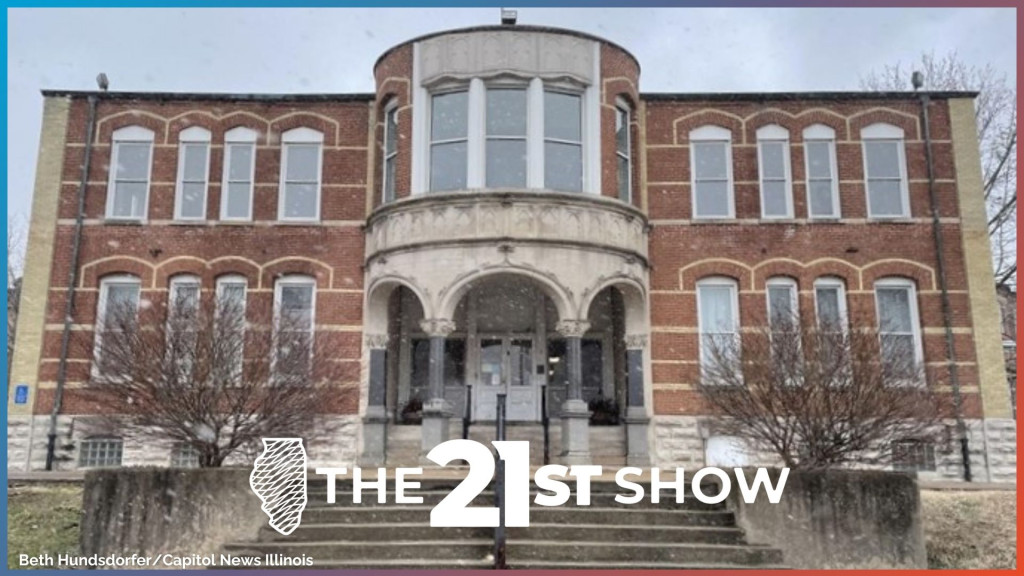
Transcript: Why is a Southern Illinois mental health center laying off hundreds of workers?
The 21st Show
Why is a Southern Illinois mental health center laying off hundreds of workers?
Read the full story at https://will.illinois.edu/21stshow/choate-layoffs.
Transcript
// This is a machine generated transcript. Please report any transcription errors to will-help@illinois.edu.

[00:00:00]
Brian Mackey: From Illinois Public Media, this is The 21st Show. I'm Brian Mackey. For years, workers at the Choate Mental Health and Development[al] Center in Anna have been accused of abusing and neglecting the center's residents. Located in Anna, again, about half an hour south of Carbondale, the center opened in 1873, and it was meant to serve Illinoisans with mental health issues and developmental disabilities. In 2023, Governor JB Pritzker announced plans to repurpose Choate, while also giving its residents a chance to move to other facilities to receive care. Now the state is ending the intellectual and developmental disabilities general units at the center by the end of September, and taking out 75 civil mental health beds by next March. And the union that represents most employees at [Choate] says the state Department of Human Services is planning to lay off 250 of the center's more than 500 employees. Here to talk about all this and the reactions to it is Olivia Olander, state government reporter at the Chicago Tribune. Olivia, welcome back to The 21st Show.

[00:01:15]
Olivia Olander: Hi there. Thanks so much for having me.

[00:01:17]
Brian Mackey: We'll be spending the first 15 minutes of today's program on this topic. If you have thoughts about conditions at [Choate] or the layoffs, or if you have questions about this, you can join us at 800-222-9455. That's 800-222-9455. All right, Olivia, say more than I did in the introduction there about these allegations of abuse and neglect at [Choate] over the years.

[00:01:43]
Olivia Olander: Yeah, so this is really — a few years ago, around 2022, a lot of these allegations were coming out. There was an investigation specifically by ProPublica, Capitol News, and [Lee] that found that state police had started at least 40 — I think dozens of criminal probes into alleged employee misconduct, abuse, different activities at [Choate], a lot of it obviously against residents. And this really got a lot of attention from the — you know, the media certainly at first, but then the state. And in 2023, Governor Pritzker said, you know, we're gonna have basically a three-year transition plan to change things at [Choate] in a pretty major way. So what happened at the end of July with [Choate] was not, I don't think, a huge surprise — hearing that they were, you know, finally sort of fully winding things down, but obviously sort of having this all — you know, for the union, I think it came a bit suddenly after the budget was passed in the spring, not really giving any inkling of this. And then, you know, I think for some of the community as well, it was a bit of a surprise to see something like this, but overall this is sort of part of a bigger plan by the governor's office to say, you know, maybe we should be making some major changes at [Choate].

[00:03:08]
Brian Mackey: Yeah, we've talked on the show about those allegations with those very reporters — that report you cited from Capitol News and [Lee] and ProPublica. But, you know, the term "abuse and neglect" leaves a lot to the imagination. And, you know, we're talking about things like obstructing investigations and lying to police, but also, you know, some really weird behavior. If you can — like, you know, the hot sauce thing stood out to me in your story. Can you just talk a little bit more about what sort of allegations we're talking about here?

[00:03:36]
Olivia Olander: Yeah, really, as you said, it does leave a lot up to the imagination, and there were, you know, again, a lot of allegations — there's a wide range. Certainly no example gives maybe an exact picture of the whole thing, but I think what you're referring to is there was an allegation that employees forced a resident to eat a cup of hot sauce, which again, as you said, is a pretty graphic allegation. And as you said, then there were also allegations of workers essentially covering things up, not reporting things, as these things were happening.

[00:04:20]
Brian Mackey: So I mentioned that Governor Pritzker had announced this repurposing of Choate a little more than three years ago. What has happened in terms of the population there since then?

[00:04:30]
Olivia Olander: Yeah, so it has been reduced quite a bit. In the announcement that the state put out about this — first, the facility itself basically made this announcement, and the union and some other community advocates made it more public — but this is a pretty significant reduction. I mean, in terms of staff, what we're seeing from this latest announcement is a 250 [employee] reduction in staff, and there were only about 500 there at the beginning of the month to start with. But as far as residents, there were about 200 people in 2023, which, as you said, is when the governor made this announcement — and that's in their intellectual developmental disability unit — and then when the governor's team, or I guess the Department of Human Services, made this announcement last month, it's now 16. So 200 to 16, which is pretty significant. There are some other things remaining, like a 40-person forensic unit that's gonna remain down there. That's one of the things that [Choate] specializes in. But overall this is a really significant reduction in residents. A lot of them are going to community placements, which is like group homes — what we sort of think of as in-the-community homes where people can live independently or somewhat independently. But a lot of them are actually going to other state-operated developmental centers, which has been something of a point of contention for some advocates. But in general they are no longer at [Choate], which was one of the big goals of the administration.

[00:06:18]
Brian Mackey: Yeah, this has been a fight that — I mean, when I was a statehouse reporter, even 15 years ago, I remember standing outside Governor Pat Quinn's office at the time as he was trying to do some of this work at other facilities, and parents of some of the people who live there were at odds with advocates who want more people put into sort of more group home-type settings. So you mentioned a lot of residents have already moved elsewhere. What about the 16 who remain? What do we know about what happens to them?

[00:06:47]
Olivia Olander: I don't know necessarily — maybe you know something about that specifically — but I don't know that we necessarily have a total read on what is gonna happen to those last 16 individuals.

[00:07:01]
Brian Mackey: No, fair. It wasn't a leading question. Well, I guess, you know, time will tell. Let me take a moment to remind listeners, this is The 21st Show. We're talking about a reduction in operations and staffing at the Choate Mental Health Center in Southern Illinois — the troubled Choate Mental Health Center in Anna. The state told the union representing most of the center's employees it plans to lay off 250 of them, which is about half the workforce. We've been talking about what led up to this with Olivia Olander, state government reporter at the Chicago Tribune. You can join us at 800-222-9455, 800-222-9455. So we've mentioned the union. This is the American Federation of State, County and Municipal Employees, AFSCME Council 31. That's the big statewide organization. I understand the leadership is not pleased. Say more about why.

[00:07:53]
Olivia Olander: No, not pleased at all. To your point, I mean, there are still a significant number of workers there and a significant number of AFSCME workers there. So just to your last question about, you know, what will happen to the remaining residents — there are still, it seems from the numbers that are publicly available, probably like a couple hundred employees there. So that is, you know, one thing to keep in mind. But yeah, no, they're not pleased at all, and of course AFSCME — and any union — is gonna have an issue when one of their major employers announces layoffs. But I think specifically there was some additional frustration expressed in the announcement from AFSCME that they sent out to reporters and the public, because there were indications during the state budget process — which is in the spring — that this was not a budget that included massive layoffs. I mean, I sat in some of those hearings when the budget was getting discussed and passed, and of course that's something that's asked of the legislators: Is this budgeting in any major layoffs? And I do even remember at that time the answer seemed — that everyone seemed to be on — was no, this is not gonna be a budget that had layoffs. So I think that is why it caught them by surprise a bit. Of course, you know, just in Illinois, this is a place where a lot of folks to get a comparable job might have to drive quite a ways. It's not — you know, I live in Chicago — it's not Chicago, where there are major comparable employers within a short driving distance. So I think for a lot of folks it is, you know, a potentially life-changing thing to lose a job like this.

[00:09:38]
Brian Mackey: Yeah, prisons, developmental centers, universities — all these big state institutions are often the major employer in these towns. And you can only — you have to go to like Jacksonville, Illinois, where there was a developmental center that closed — I don't know, 10, 15 years ago, I don't have the exact date in front of me — and that is still sort of a big hole in the middle of that town, metaphorically and physically. You know, the state Department of Human Services says it's gonna work to find new employment in other state facilities for the staff who are affected by these layoffs. What does the union say about that?

[00:10:12]
Olivia Olander: Yeah, they basically say, you know, that's good, but if it means driving three [to] four hours, it's just not the same. It's still something that they're unhappy about and that they're clearly expressing and fighting about with the state.

[00:10:29]
Brian Mackey: Beyond the union, local lawmakers react to stories like this. What have you heard with regard to that?

[00:10:36]
Olivia Olander: Yeah, you know, a local state senator down in downstate Illinois who is very involved in these issues — [Terry Bryant] of [Murfreesboro] — she was one of the first people to sort of sound the alarm locally on this, saying that this is gonna be, again, just a — she used the word, I think, "devastating blow" to Southern Illinois, just a big deal to a community where a lot of folks are employed there. It's just been a big part of the community for a long time. And those folks are also concerned about patients — as well, residents of these facilities — who then maybe lived close to Anna and now might be moving somewhere else, so I think that is a concern as well.

[00:11:30]
Brian Mackey: So far we've talked mostly about the negative reaction to this. There are some people — as I mentioned, you know, happened 15 years ago with Governor Quinn — who are happy about this sort of news. A group of providers serving Illinoisans with intellectual and developmental disabilities seems to be taking the news well. What did they have to say?

[00:11:47]
Olivia Olander: Yeah, and maybe we should back up a little bit to the reasons that the governor chose to sort of do this wind-down in the first place. Of course, allegations of abuse is a big part of it, but there is sort of this national, societal movement away from keeping individuals with intellectual and developmental disabilities in large, congregate facilities that might operate just more like an institution than like a home. They might work for some people, but a lot of advocates say that that's not maybe what the first choice should be for a lot of adults with disabilities. So that's a big philosophical reason that the state is sort of moving away from that. And yeah, so the community providers that represent some of those group homes that some of these folks might wanna move to — these sort of smaller homes that might have, you know, just a handful of residents and be in the community — those folks are obviously celebrating the closure — not closure, but the continued wind-down of [Choate]. And they're saying that yes, this is an opportunity for some people to be able to get into a less institutional facility. As I kind of mentioned before, one criticism in the midpoint assessment of this transition — from the group [Equipped for Quality] — was that some individuals are just getting moved from one large institution to another, even if they want to move to a smaller home. So I think that's gonna be something that we're gonna be continuing to watch — whether those people are ever able to sort of get off that waiting list, so to speak, and go to the setting that they wanna go to. But yeah, some people are definitely celebrating this wind-down as it happens.

[00:13:43]
Brian Mackey: Yeah, well, and obviously staffing at some of these other care — you know, in the care field in general, right? From — we talked about childcare recently on the program — to care in group home settings, that is a challenge there as well. So — what you mentioned — looking ahead, what are you gonna be watching for as all of this plays out?

[00:14:05]
Olivia Olander: Yeah, that's a good question. I am gonna be watching to see what workers are able to do, what the sort of economic impact is of this. But I think most immediately I'm gonna be watching for individuals who have moved out of [Choate], you know, recently or in the last couple of years — whether they've seen their just sort of day-to-day lives improved. I mean, these are settings where hundreds — more than 1,000 people in Illinois — are currently living their daily lives, in state-operated developmental centers. So I think I'll be watching to see if moving away from [Choate] — whether it is to another state-operated developmental center or a community setting — is improving just the daily lives for these folks. And you know, of course, what their families are saying, because some of these individuals — they're on a whole range of how much they're able to express these things for themselves. So what individuals are feeling, and also what their families are seeing in their loved ones who might be going through a really big transition right now.

[00:15:15]
Brian Mackey: All right. Olivia Olander has been covering this story for the Chicago Tribune. She's a state government reporter there. Olivia, thanks so much for joining us here on The 21st Show and sharing your reporting with us.

[00:15:27]
Olivia Olander: Yeah, thanks so much. I really appreciate it.

[00:15:42]
Brian Mackey: Coming up after the break, we're gonna be sticking with the theme of state institutions, but we'll be talking about the Illinois prison system after we come back. They opened a mental health center in Joliet coming up on a decade ago. It was supposed to lead to more humane treatment for inmates with serious mental illness, but over the past few years, the men incarcerated there say they are being driven to desperation. We'll talk about it with a reporter who did a deep dive into this story after a short break. You're listening to The 21st Show. Stay with us.

---

**Flags for Human Review:**

- **[00:00:00]** "Development[al] Center" — The original transcript reads "Development Dental Center," which appears to be a transcription error. "Developmental Center" has been inferred and bracketed. Please verify against audio.
- **[00:00:00] / [00:01:17] / [00:04:30]** "CHAS" / "CHO" / "CHOT" — These appear to be phonetic transcription errors for "Choate." All instances have been standardized to [Choate]. Please verify all instances against audio.
- **[00:01:43]** "Capital News" vs. "Capitol News" — The original transcript uses "Capital News Illinois," but the outlet is "Capitol News Illinois." Corrected to "Capitol News" throughout. Please verify against audio.
- **[00:01:43]** "Lee" — Referred to as a news organization in context with ProPublica and Capitol News Illinois. This may refer to "Lee Enterprises," a newspaper chain. The reference has been bracketed as [Lee]. Please verify against audio and confirm the full organization name.
- **[00:04:30]** "250% reduction in staff" — The original transcript reads "a 250% reduction in staff," but context strongly suggests this should be "250 [employee] reduction in staff," consistent with figures cited elsewhere in the transcript. Bracketed for review. Please verify against audio.
- **[00:07:01]** "AFSME" — Rendered in the original transcript as "AFSME." Corrected to "AFSCME" (American Federation of State, County and Municipal Employees) throughout. Please verify against audio.
- **[00:10:36]** "Terry Bryant of Murfreesboro" — The original transcript reads "Terry Bryant of Murfreesboro." A search suggests this may refer to an Illinois state senator; however, "Murfreesboro" is more commonly associated with Tennessee and Arkansas. The Illinois city may be "Murphysboro." Both the name and city have been bracketed as [Terry Bryant] and [Murfreesboro]. Please verify against audio and source reporting.
- **[00:11:47]** "Equipped for Quality" — Referenced as a group that conducted a midpoint assessment of Choate's transition. The name has been bracketed as [Equipped for Quality]. Please verify the organization name against source reporting.
- **[00:10:12]** "driving 34 hours" — The original transcript reads "driving 34 hours," which likely represents "3 to 4 hours." Rendered as "three [to] four hours" with the inferred word bracketed. Please verify against audio.
Transcript Assistance
Illinois Public Media may use AI assistance for transcript generation and/or formatting. Transcripts that have not yet been reviewed for accuracy will be labeled.
To report a transcription error, or to request transcription of archival material, please contact will-help@illinois.edu.