Transcript: Is election security at risk in Illinois?
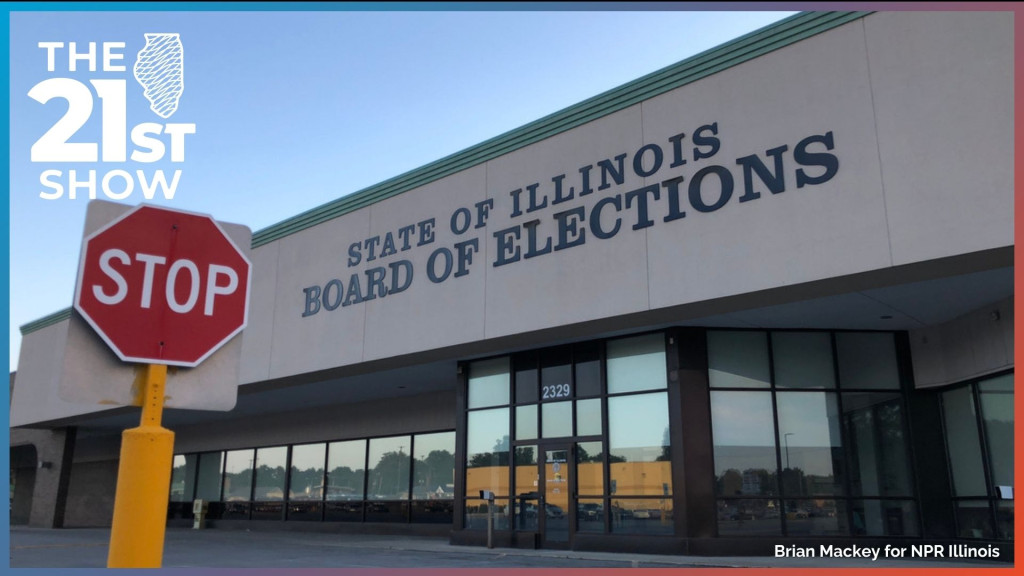
Transcript: Is election security at risk in Illinois?
The 21st Show
Is election security at risk in Illinois?
Read the full story at https://will.illinois.edu/21stshow/election-security.
Transcript
// This is a machine generated transcript. Please report any transcription errors to will-help@illinois.edu.

[00:00:00]
Brian Mackey: Today on The 21st Show, the second Trump administration has tried to assert more control over elections, justifying that with false claims about election security. As we get closer to this fall's voting, we'll talk about security and safety at the polls here in Illinois with a state legislator who works on these issues, a local election official from Sangamon County, and a national reporter who covers not the outcomes of elections, but the people, machines, and policies through which our votes are counted. I'm Brian Mackey. That's all coming up today on The 21st Show, which is a production of Illinois Public Media, airing on WILL in Urbana, WUIS in Springfield, WNIJ in Rockford DeKalb, WVIK in the Quad Cities, and WSIU in Carbondale. But first, news.

From Illinois Public Media, this is The 21st Show. I'm Brian Mackey. A few weeks ago, President Trump gave a primetime address to the nation in which he once again cast doubt on the security and validity of our elections.

[00:01:22]
Donald Trump: If you look at voting today, it's in such bad shape in so many states, and we are committing to fix it. And we're also committing to be working with those states and local jurisdictions to help them fix and patch known technical vulnerabilities before the midterm elections. We have very important elections coming up. We want those elections to be honest.

[00:01:48]
Brian Mackey: I'm gonna read from the U.S. Constitution, Article 1, Section 4, Clause 1. "The times, places, and manner of holding elections for senators and representatives shall be prescribed in each state by the legislature thereof. But the Congress may at any time by law make or alter such regulations, except as to the places of choosing senators." They spell that C-H-U-S-I-N-G. Tell your spelling teachers.

In the second Trump administration, however, the president and his people have tried to assert more federal power over elections. The Department of Justice has sued Illinois and many other states, seeking access to their voter databases in full and unredacted. Almost 2 dozen federal judges have ruled against the administration on that, including last week a judge in Springfield. The Department of Justice also sent a letter to top election administrators across the country last month, threatening criminal prosecution for any official who lets non-citizens cast ballots — [something] that the Illinois State Board of Elections says is extremely rare here. And those examples are a small part of a much larger story.

So, with about 3 months to go until Election Day, what is the state of election security and integrity in America and in Illinois? That is our topic for the hour today.

Joining me to talk about this is Nathaniel Rakic. He's managing editor of Votebeat, a nonprofit news organization that focuses on elections. Nathaniel, welcome to The 21st Show.

[00:03:23]
Nathaniel Rakic: Thanks for having me.

[00:03:24]
Brian Mackey: Also here, Don Gray, the Sangamon County clerk. Don, welcome back to The 21st Show.

Don Gray: Nice to be here, Brian.

Brian Mackey: And as I mentioned earlier, the Constitution gives state legislatures authority over elections. And here to provide some perspective on how that happens in Illinois is State Sen. Julie Morrison. She represents the 29th District, which includes Lake Forest, Highland Park, Deerfield, and Northbrook in the Chicago suburbs. She's served in the Senate since 2013 and is majority caucus whip, the Democratic whip in the chamber. Senator Morrison, welcome to The 21st Show.

[00:03:59]
Julie Morrison: Thanks for having me, Brian.

[00:04:00]
Brian Mackey: Our phone lines are open throughout the hour today. How much confidence do you have that Illinois elections are administered fairly? 800-222-9455 is the number. What concerns about safety, if any, do you have about going to the polls? Again, 800-222-9455. Or maybe you just have a question about how elections are run. We have a county clerk on the show who can answer some of those questions. Again, join the conversation, 800-222-9455. That's 800-222-9455.

All right, Nathaniel Rakic with Votebeat. Let's start with that Trump speech a few weeks ago. I'm gonna read from your story previewing that. Quote, "Trump has said many things about the integrity of U.S. elections, few of them true." End quote. Say more about that.

[00:04:54]
Nathaniel Rakic: Yeah, well, I think obviously President Trump has really had a fixation on the 2020 election in particular, right? That of course is the election that he lost to Joe Biden, but he declined to concede the race, tried to overturn it legally, has continued to claim that there were large amounts of fraudulent votes that were cast for Biden and that Trump himself was the rightful winner of the election. The problem is that obviously when somebody levels those claims, people take them very seriously. The courts take them seriously. There were many independent audits of the results, both routine and kind of extraordinary given the circumstances, and the evidence just has not emerged to support that.

Several states, including Republican-led ones, have done — they do on a regular basis — regular checks of their voter rolls for non-citizens. It's always a microscopic number that are found. So, for example, in Iowa in 2024, there were only 35 non-citizens out of 2.3 million voters. Now, of course that is a concern and that was the reason that election officials audit these rolls to make sure that they are removing those people, but that's not on the scale that can overturn an election or impact an election result. And I think that President Trump's claims — highly exaggerated claims in this regard — are being used by his administration as a way to reach into the administration of elections, which is normally something that is done on, of course, the state and the local level.

[00:06:32]
Brian Mackey: So against that backdrop, did the primetime address add anything new to his questions, or challenges, or accusations about elections?

[00:06:43]
Nathaniel Rakic: It was mostly a rehashing of things that he had said before. He kind of repackaged some stuff. So, for instance, he talked about how various foreign countries like China had the capability to essentially hack voting systems. The problem is that, you know, that sounds scary and it is something worth taking seriously, but it's a very broad statement, right? So first of all, he said that they have the capability. He did not say that there's any evidence that this actually happened. Secondly, he said that voting systems is a very broad category, right? And there's a difference between hacking into a voting machine, which is incredibly difficult to do because, first of all, there are thousands of voting machines around the country and they're not connected to the internet. But even if you were able to tamper with one machine, that wouldn't affect the thousands of others. But there are other things like public-facing websites that, sure, those are maybe vulnerable to hacking, but that is something that people have known about for a long time and that election officials have been working to fix.

He also made claims about 250,000 non-citizens on the voter rolls in just four states, including the swing state of Pennsylvania. He didn't provide a lot of details about the methodology that he used for this, but it is kind of out of a playbook that a lot of the federal government and certain states have used. They have run their voter rolls through a federal database called SAVE. The issue is that that database produces a lot of false positives, so it might come back and say, oh, you have 3,000 non-citizens on your voter rolls. But when the states have gone back — and Texas is currently in the process of doing that, as we've reported here at Votebeat — they found that actually a lot of those people are citizens and maybe they just weren't updated in the federal databases. So, I think some of those specific claims were new from Trump, like specifically about Pennsylvania having X number of non-citizen voters, but they were similar to the general claims that he has made before.

[00:08:48]
Brian Mackey: Senator Morrison, as someone in elected office, as someone who has served in office for several decades now, what goes through your mind when you hear remarks like the kind President Trump has made over the years about elections?

[00:09:02]
Julie Morrison: So I guess my reaction is, have you ever actually been at the grassroots level and seen how elections are administered? I was in township government before I came to the Senate and then we actually had a hand in seeing how the polling places were set up, how votes were transferred, how votes were — this goes back a few years.

I think Illinois does an extraordinary job of protecting the security and integrity of the voting system that we have. Our State Board of Elections recently created a cyber navigator program, which assists the local election authorities — such as Don, who's on with us this morning, who can probably speak to this in greater detail — but they do risk assessments. They make recommendations on making sure that the lists are correct and accurate. There is a little bit of discretion, I believe, from election authority to election authority in how they actually administer that.

Again, as you read the Constitution, the states have the authority. This is not something that was given originally nor later to the federal government, and the integrity of our elections is incredibly important to anyone who is elected, but also to anyone who votes. So I would challenge his claims on this.

[00:10:43]
Brian Mackey: Don Gray, Sangamon County clerk, how do these claims the president makes about elections — how has that affected your work on the ground?

[00:10:52]
Don Gray: You know, it's really turned for election administrators to be very educational, right? We have to spend a lot of time explaining exactly how it is that we operate. And, you know, we welcome that. The more criticisms and the more eyes focused on the process, you know, leads us to be sharper, to put in place good procedural policy. To ensure that we're operating properly, that we're being collaborative with the legislature, with the State Board of Elections, with our federal players, making sure that we're doing all of the right things so that our voters can have confidence and trust in knowing that how we operate is done well, that it's taken seriously, and that we have the right policy and procedures in place to ensure that we're getting an accurate result.

So, you know, we welcome that criticism, but we also want to be based in facts. Nothing more frustrating than dealing with situations which are just not factual, not in reality of how it operates. That's why I constantly encourage — and I know Senator Morrison does as well — that individuals should get involved. They should really see how the operation works. Come and be an election judge, be a poll worker, get involved at the local level. And see exactly how it is that we administer vote by mail, early voting, Election Day — very well-trained election judges — how we go about ensuring that those that are only entitled to take part do, and that it's an actual reflection of the ballots that were cast that day. And that's a collaborative process, and we all work together to push back on that noise of non-facts and instill what's really happening that they should be proud of in their election systems.

[00:12:35]
Brian Mackey: All right, let me reintroduce our conversation. This is The 21st Show. We're talking about elections — the mechanics of elections — not the candidates, but how they're actually conducted, right? How the machines are operated, how votes are counted. We're talking about that with Don Gray, Sangamon County clerk — that's Sangamon County, where Springfield is, the state capital — Julie Morrison, who is a state senator, Democrat from the 29th District in the suburbs of Chicago and is involved in these issues from a legislative standpoint, and Nathaniel Rakic, managing editor of the nonprofit news organization Votebeat, which focuses on these issues nationally. If you want to join us, 800-222-9455 is the number.

And let's go now to the phones. We have Joe calling from Champaign on line one. Joe, thanks for calling in.

[00:13:27]
Joe: Yeah, good morning. I'm calling because I've been in the United States now 46 years, been a resident 40 years, been a citizen 20 years, and in all that time — I'll say 36 years — there was no problem with our election. Until someone who doesn't know how to deal with rejection came to power, we've started having doubts. Even the Heritage Foundation did their research and found that non-citizen voting was less than 0.1% nationally. I mean, it took polls for 20-plus years, so giving this oxygen at all keeps people — some people who are not well-read or not believing in a system that has been in existence for 250 years — [in a state of doubt]. It's appalling to me and it's painful to me to see how the United States has come to this point where one person has been able to make us — as he calls us — [a "banana republic,"] because that is not what we are. This electoral system has been good for the last 250 years, but over the last 10 years we've had this acrimonious person stifle what we believe in, stifle what democracy can be. But that's — I mean, I can stay on the line and answer questions if you need me to.

[00:15:18]
Brian Mackey: Well, Joe, I appreciate that. Let me try to get another caller in here before we go to a break in a couple of minutes. Dave is calling from Sycamore, Illinois, line two. Dave, I understand you've been an election judge for a long time now. What do you see?

[00:15:30]
Dave: I have been working as an election judge for nearly 20 years. Every election, we are retrained. We have people working every precinct that I have worked at from both major parties, and we sit and keep an eye on each other to be sure that everything is legit. There are three different mechanical methods to verify that the votes are not tampered with. The supervisor of elections for the county checks up on us every election. The FBI comes into the precinct and checks every [precinct] to make sure that something is not going wrong. And we all take an oath to uphold the laws of the state of Illinois and the United States of America before we start. Anybody who's arguing that there's any kind of funny business going on with the elections, at least around here, has their own agenda to work, and I don't believe it and I never will.

[00:16:42]
Brian Mackey: Dave, thanks for calling in and sharing your perspective. Joe, thank you as well. You can join us, 800-222-9455. We're gonna continue on this topic for the hour today. Again, 800-222-9455. We'll have more about the integrity of our elections in America and especially here in Illinois. We'll have State Sen. Julie Morrison, Sangamon County Clerk Don Gray, and journalist Nathaniel Rakic of Votebeat. This is The 21st Show. Stay with us. We'll be back in 2 minutes.

It's The 21st Show. I'm Brian Mackey. We are talking about election integrity. As you know, President Trump has been very focused on this issue since he lost the 2020 election, and did not take that well. There was a primetime speech — we heard a little excerpt from that, talked about that in the first segment — that was a couple of weeks ago. Now we are talking about how that is playing out here in Illinois, how things are actually run, and some of the changes that the federal government has been trying to push on states — attempts to get information on voter rolls.

We're talking about this with Nathaniel Rakic, who is managing editor of Votebeat, the nonprofit news organization focused on the sort of machinery of elections, Don Gray, Sangamon County clerk, the chief election official in the capital county of Illinois, and state Sen. Julie Morrison, a Democrat who represents cities including Lake Forest, Highland Park, Deerfield, and Northbrook in the Chicago suburbs. She's also the majority caucus whip. 800-222-9455 to join us today.

And I should say we also asked members of our texting group to chime in on this. We heard from Ricky in Urbana, who says the Trump administration has a record of attempting to falsify valid election results from 2020, from the recorded phone call in Georgia and the fake electors in Arizona to the violent self-coup January 6th. So when they start trying to purge U.S. citizens from voter registration and require documentation they know many citizens do not have, we should all be concerned. Also heard from Wayne in Champaign, who said much confidence in Illinois elections and U.S. elections in general. If the federal government is prevented from interfering, as Trump is desperately trying to do, since he can see the large blue wave coming. Trump is afraid of accountability from a democratic Congress and will do everything he can to try to prevent that from happening regardless of the illegality. Ricky and Wayne, thanks for sharing your thoughts. 800-222-9455 to join us. 800-222-9455.

All right, Nathaniel, let's talk a bit more about what's been happening this year specifically. The Trump administration has been trying, as I mentioned, to get unredacted voter data from states. What is the basis of this? What do they want to do with that?

[00:20:03]
Nathaniel Rakic: Well, that is, I guess, the question, right? So, yes, basically they are trying to get their hands on voter data from every state through a couple of different means. As you mentioned, the Department of Justice has requested the unredacted voter rolls from every state except North Dakota, which doesn't have voter registration, but they've still asked for certain voter data there. And presumably they want to go through this and look through for people — for non-citizens, for people they believe shouldn't be eligible to vote — and then request or demand that the states remove them from the rolls.

In a kind of similar way, as I mentioned, there is this tool called SAVE, which is through the Department of Homeland Security, that the Trump administration last year upgraded and made it easy to upload bulk voter data into. About half of states have voluntarily done that with their data and then returned those results that I was mentioning earlier, which have proven to have a lot of false positives. But I think it is basically an attempt by the Trump administration to have greater visibility into those voter rolls because they believe that they are not well-maintained, that there are a lot of ineligible voters — whether those are non-citizens, dead people is another one that I've heard claims of — and they want to either encourage or force the states to get rid of them.

[00:21:40]
Brian Mackey: Don Gray, you're the clerk in Sangamon County. How do you know non-citizens aren't trying to vote and defrauding your office?

[00:21:49]
Don Gray: So voter registration is the core foundation to the success of the entire system, including the execution of the election. We work — that really is the job, and the security of what we focus most on on a daily basis — on ensuring that we're properly keeping clean, qualified registered voters on our rolls. It's really the most pertinent part. So, we deal with lots of information-sharing categories — in states with the State Board of Elections, from county to county, any changes, other states' information that's shared with us that are part of a sharing agreement on voter registration, national change of address through the United States Postal Service. We take all of this information and ensure that those that are on our rolls are those that are identifying themselves properly, that they're properly registered at the address that they are required to be so at.

And we elicit additional programs like a voter verification program every other year, where we send every registered voter their voter registration card to ensure that it's delivered to the address of the individual that's registered. And if it's returned to us undeliverable, it puts us in a status of suspension for further detailed investigation to requalify them to vote. We also, in the voter registration process, validate IDs upfront. You have to show two forms of ID, and one with the current address — two pieces of information that are absolutely required. At least one of the two is, you know, an active driver's license and/or the last four digits of your Social Security number. Those obviously come with a high level of vetting to ensuring that these are the people who they say they are.

So we do a lot of making sure that our rolls are clean, that we're staying accountable to it in real time, and that we're making the proper necessary changes. In terms of citizenship, it's a testament — the voters themselves are attesting to their citizenship. And obviously, if we were to determine that they weren't an actual citizen, they would be removed from the rolls. But that's very rare, based upon all the scrutinization that we do on voter registration and ensuring that we're staying clean to these measures. It would flush out any forms of those that aren't qualified to vote, including those that are non-citizens.

[00:24:12]
Brian Mackey: Can you say — put a number on it? You've been in this job for what, roughly a decade now. Can you put a number on how many people were, you know, actively trying to defraud you or your office?

[00:24:23]
Don Gray: Yeah, actively trying to defraud — I can't think of an episode, right? Certainly elections are managed by people, so mistakes do happen. They're usually explainable events, and they're not mass in scale in some sort of organized way. And upon identifying those, we make those proper changes. So it does happen, but it's rare. We're constantly working and scrutinizing our systems — our voter registration, our applications to be able to vote, from vote by mail, early voting or on Election Day — and weeding out any possibility of someone trying to fraud the system. Keeping eyes on it, having well-qualified, trained people executing your elections, constantly looking through your systems through audits, post-election audits, pre-election audits, testing of ballots, tabulation equipment, etc., at a very high level, pre and post. You learn a lot, and you realize that it is a system that's secure, works well, and free from those that are trying to make a persistent practice of defrauding the system.

[00:25:35]
Brian Mackey: I'm gonna share here a bit from Capitol News Illinois, the nonprofit group that covers Illinois state government. This is from a story they published: Illinois experienced a glitch in late 2019 when an estimated 545 non-citizens were mistakenly entered as registered voters due to a glitch in the automatic voter registration system that the state had adopted just two years earlier. Of those, 15 individuals were able to cast ballots, although 3 of those turned out to be citizens. So I guess 12 ballots in this election in Illinois — and it was caught after the fact, for what that's worth.

Let's go back to the phones. Scott is calling from Morrison on line three. Scott, thank you for waiting. Thanks for calling in.

[00:26:23]
Scott: Oh gosh, thanks for taking my call. I really love your program. I love the state news. I'm the mayor of this little town of 4,000 people. We're also the county seat of Whiteside County in western — northwestern Illinois, 130 miles from Chicago. Stop before you get to Iowa. We have a great relationship with the county office. I love that you have the county clerk on the line. I used to be city clerk before I became mayor, and had a great working relationship with our county clerk, and the elections just run perfectly here. We're just a wonderful mixed — extremely red corner of the state — with a very libertarian, you know, sort of leave-me-alone view and a lot of open-minded folks here, and I don't see a problem with the elections at all. We have a great working relationship with our state representative and our state senator. They're helping us with the Illinois Department of Transportation and things like that. I don't think — I think there are bigger fish to fry than focusing on elections, and I'll leave it at that. Thanks a lot. I love your program, and I will say I'm halfway between WNIJ and WVIK, and I'm a monthly supporter of both.

[00:27:48]
Brian Mackey: Well, thank you for that. We appreciate it. I'm sure our colleagues at those stations appreciate it. And Mayor, thanks for calling in. 800-222-9455 if you want to join us.

I'm gonna share an email we also got from Charles in Bettendorf, Iowa. Says: I'm a poll worker in neighboring Iowa. Our county auditor makes sure that every precinct has a [mix] of Democrat and Republican workers. Furthermore, our precinct chair makes sure that everything we do during the course of the election has a Republican and Democrat involved. This is an effective way to assure impartiality in our election process.

Senator Morrison, I want to come back to you on that and with another text. Jay in Elburn says: One of the few things that Democratic and Republican officials have agreed on over the years is the integrity of our election process. This administration has attempted to sow seeds of mistrust in all of our institutions, but especially the electoral process. The common denominator of all these attempts is lack of evidence. That is why the overwhelming majority of the court cases were thrown out challenging the results of the 2020 election. Nothing stands up in court and no accusations are ever made under oath, Jay says.

So, Senator, I want to come back to Jay's first point, which is that Democratic and Republican officials have largely agreed on the integrity of elections and the sort of machinery and administration of elections here. To what extent is there still that bipartisan trust when you're working on these issues in the state Senate, or has that broken down as well?

[00:29:24]
Julie Morrison: You know, I'm gonna refer us back to the State Board of Elections, which is a board that oversees from the state perspective the election process — the putting people on the ballot, keeping people on the ballot, and at the end certifying the results of an election. That commission is appointed by the governor, half Democrats, half Republicans, regardless of who's in office. I think that sets the stage for making sure that we are working in a bipartisan relationship from day one.

But the State Board also — some of the comments that were made earlier about what I would call wrong information or voter ineligibility — the State Board also works with all the local election folks, publishes guidance on explaining the difference between misinformation, which could be an error, one of these one-in-a-million errors without the intent to deceive, versus false information, which is given very intentionally. And we encourage voters to verify claims through the official sources. We want accurate information and reliable evidence, and again, going back to the evidence, some of these claims are just off the wall and have no evidence to back them up.

I believe that there is a great deal of bipartisan linking of arms to make sure that — as your friend from Morrison said, great name for a town — that we are working, both Republicans and Democrats together, to make sure that the elections are fair and are conducted with all the credibility that's possible.

[00:31:43]
Brian Mackey: All right, let me remind listeners, 800-222-9455 if you want to join us. Boy, this hour is flying by. Nathaniel Rakic with Votebeat. I want to come back to you with another point on what's been happening this year, and that is vote by mail. The Trump administration tried to restrict mail-in voting through an executive order. I know I've talked to Republicans in Illinois who have said that this has not been good for the party — this sort of distrust of vote by mail that the president has been encouraging among his supporters — that it's actually hurt them electorally. But let's, you know, stick with the sort of mechanics of how it worked. Take me through what the president was trying to do with that order.

[00:32:26]
Nathaniel Rakic: Yeah, so mail-in votes have been a focus of Trump's ever since 2020. Obviously that was the year of the pandemic, and so there were a lot of mail-in votes and — in many states, not in all of them, but in many states — they are kind of reported in bulk toward the end of the night or even in the days after Election Day. And so that's why you see things like in California, which is a state that votes entirely by mail, they count their ballots for days after Election Day, and those ballots tend to be, you know, more Democratic, even more Democratic than California as a whole. They tend to pad Democrats' margins, and so that has given rise to a lot of theories about, oh, they're kind of trucking in ballots, adding them until Democrats do well. Again, that is not based in fact. This is just the counting process in California, a state that is very large and just has a lot of ballots to go through.

But this has been a preoccupation of President Trump's. As you mentioned, earlier this year in March he issued an executive order that basically sought to give the Postal Service the authority to decide who votes by mail, or at least to kind of oversee that process. It basically required states to send the Postal Service a list of people who they thought were allowed to vote by mail, and then the Postal Service could — the mechanics weren't exactly clear, but essentially I think the gist was for the Postal Service to revise that list as it saw fit based on citizenship data or whatever other data the federal government had at its disposal. But this executive order was immediately sued in court, and as you mentioned, the administration has had a lot of losses in court as it has tried to take a broader role in election administration, because of that constitutional provision that fairly clearly sets forth that state legislatures and Congress have the authority over these things, not the president. And so that executive order is currently on hold, but it's actually — the injunction that is keeping that executive order on hold is currently before the Supreme Court. And we are actually expecting —

[00:34:33]
Brian Mackey: We'll have to wait and see what happens there. We're gonna take a break here — I'm sorry to interrupt you — we're on a fixed clock here. We will pick this up, the mail-in voting conversation, when we come back. If you want to join us, if you have a question or comment, 800-222-9455 is the number. 800-222-9455, about the integrity of our elections three months ahead of the midterm elections here in Illinois. This is The 21st Show.

It's The 21st Show. I'm Brian Mackey. We are talking about the state of elections in Illinois and beyond ahead of this fall's midterms. We're just about 3 months away from Election Day here. And we're talking about election security, possible changes to election law and safety at the polls.

A few more listener texts. Steven in Urbana said: I have complete confidence that elections will be conducted fairly in Champaign County, both voting and counting. However, based on statements made by President Trump and his policies to undermine legal voting, I'm less confident that will take place elsewhere. Frivolous, unsubstantiated, politically motivated attacks by Trump and company on the integrity of voting are traitorous and the real source of danger to our democracy.

Also heard from Kevin in [Farina], who said: I have every confidence in the way Illinois administers elections, though not in the way election maps are drawn necessarily. Thank you for that message, Kevin, and also Steven.

We're talking about this with state Sen. Julie Morrison, Nathaniel Rakic, an editor at the nonprofit news organization Votebeat, and Sangamon County Clerk Don Gray. You can join us, 800-222-9455.

Don, we were talking about mail-in voting before the break. It astounds me every time there's national attention on an election in a state like California — there are a couple of others — where you gotta wait days if not weeks to figure out who won. Illinois has a lot of mail-in voting too. What is different about either our practices or our laws that enables us to have definitive — or mostly definitive — results on a much faster timeline, usually within hours if not certainly the next morning, as compared with some of these states where it's days and days if not weeks?

[00:36:58]
Don Gray: Yeah, this is where experience matters, and Illinois has a long history of engaging vote by mail and has taken the time to really put in place the right protocols for success. And I think one of the best things that we do is that we have an authorization that at the start of early voting and vote by mail — when ballots are released — that we can start within that window, which is 40 days in advance of the election, with the return of ballots by mail, that we can get them validated, qualified, tabulated, and ready for release when polls close on Election Day.

So we have the entire time frame within those 40 days, as ballots are being returned, to do our part to ensure that the ballot returned is from the person who returned it. We're doing signature checks, etc. We are tabulating those onto machines, and then we're getting them ready for release after polls close. Now, the tabulated results themselves that are being done in this time frame — that's vote by mail — are obviously locked and secured each evening. And we do not — it would be illegal to do so — run those results. But we're able to report when polls close. Our history here in Sangamon County is to release all ballots that were cast in early voting and vote by mail as soon as polls close, and that really speeds up the process. And it gives confidence, I think, to our voters that they can see those results that quickly, and in knowing that we've taken the time over that 40-day period to really scrutinize the process, ensuring that it's a qualified ballot, making sure the signatures match, and that everything is properly executed. So that is a really great success story for us here in Illinois. It doesn't lead to these weeks and weeks and weeks after the fact of erosion of confidence that you can't have a result, that we see in some other states.

[00:39:01]
Brian Mackey: All right, let's — Nathaniel, let me come back to you. There was a piece from Votebeat a few months ago where you polled more than 3 dozen experts in election law to get their sense of what might happen this year. What were some of the big takeaways? What were some of their concerns heading into this year's elections?

[00:39:21]
Nathaniel Rakic: Yeah, so I would characterize the concerns about the midterms in kind of three buckets. It's basically before the election, during the election, and after the election.

So the before-the-election stuff are things like changing the rules, right? These are things like what President Trump is trying to do with restricting mail voting and passing the SAVE America Act, which is a bill that would require proof of citizenship and voter ID nationwide that is currently stalled in the U.S. Senate. It's things like these kind of voter roll scrutinization processes, taking people off the voter rolls, things like that.

There are the things on Election Day — things like, for instance, sending ICE agents to the polling place, which is something that you hear a lot of Democrats in particular who are worried about.

And then there are the things after Election Day. That's things like impounding ballots — like you saw the FBI raided an elections office in Fulton County, Georgia earlier this year to seize ballots from the 2020 election. Now obviously those weren't live ballots, but it kind of raised the question of what could happen if live ballots were impounded as they were counted or before an election was certified. And then there are of course those legal challenges that we saw in 2020, trying to overturn an election that's maybe close or contested.

And I think in terms of what the experts saw, they really doubted that a lot of the changes before the election would happen. We asked them, do you think that there's going to be legislation successfully passed or that any of these executive orders will successfully go through to restrict mail voters or require proof of citizenship, and they said no. But they were more concerned about these more immediate things like ICE agents at polling places, ballots being seized. In fact, a majority of experts that we talked to thought it was likely that the federal government would deploy some kind of law enforcement personnel near polling places. Obviously we're all just kind of guessing at this point, and we also don't want to make voters be afraid to go to polling places, because that would obviously be bad. Everybody should be able to vote who is eligible to vote. But I think those are the concerns that experts have zeroed in on because of the other legal protections that are in place.

[00:41:48]
Brian Mackey: Senator Morrison, how have you and your colleagues been thinking about these possibilities — you know, National Guard troops, ICE agents at polling places, people trying to seize machines or paper ballots. How are you thinking about this?

[00:42:02]
Julie Morrison: So in this last session I introduced legislation because I heard from people in my district and in the whole Chicago area who were concerned about just what you said — ICE agents in particular being present in polling places. What a fearful place we live in that someone would be standing there as an armed ICE agent at the entrance to a polling place.

The legislation I introduced and tried to work with my colleagues on would prohibit law enforcement from having that kind of presence. It is a complicated issue because law enforcement at different levels do need to be able to intervene if the election authorities call and say, hey, we need some help here. Or in Cook County in particular, there are instances where the election authority is escorted by different members from the sheriff's department. So it is not just a one-and-done easy solution. We are very cognizant that we do not want people to feel intimidated at all when they go to cast their ballots. And unfortunately I think this could be something we have to be extremely careful about in this next election.

I'm hoping that our election judges, who are well-trained and do understand the law and the statute, will be able to intervene if there is anything like that that happens.

My initial work with elections began — I was the chief sponsor of the legislation during COVID that expanded vote by mail. And let me just say to that end, it is becoming increasingly popular because of the convenience, because of lifestyles, because it works and people understand that. Now, with the Postal Service becoming involved, that has given people some pause — well, how will I know for sure that my ballot got there? How will I know that it actually got counted?

In several counties — I can speak to Lake County that I live in as an example — already we have the ability that after we have requested our vote by mail ballot, received it, marked it, and mailed it, we are able to go online to the county clerk's website, very easy to do, and track where my ballot is. And I will be notified that my ballot has been received at the county clerk's office. I then also get a notice later that it actually has been processed and, as Don Gray said, it has been counted. Those numbers aren't going to be released until the polls close, but I know then that my ballot has been received, it has been opened, it has been counted. That gives me a great deal of confidence in the whole situation.

There is the ability also now for someone to receive a vote by mail ballot at their home and decide they want to actually physically walk it in — take their marked ballot and walk it in to a polling place during early voting or on Election Day and deposit their ballot into the hands — or the box, whatever — of the election authority that is sitting there doing early voting. Those are two easy ways that I think we are seeing more and more of.

In this last budget that we just passed and that the governor signed, I inserted a $300,000 request for the State Board of Elections to have the software that they could share with every county. Not all counties had the ability to track those votes — such as Lake and I know Cook and several other of the bigger counties already have that. We wanted every single county to be able to have that same confidence. Their voters could go on to a website or go into the portal and track their votes. That should help people understand that the local county clerks, regardless of the size of your county or your ability to fund it independently, should now be able to access that service for all of your voters. I'm hoping this brings people just extra confidence and extra options when they want to do a vote by mail.

[00:47:06]
Brian Mackey: All right. Don Gray, I want to come back to you to conclude. We only have about a minute and a half, maybe 2 minutes left in the show today. Election judges — we heard from a number of people who wrote in, called in — Democrats and [Republicans] who say they've never had any issues with that. What is your pitch? Do you have a need for election judges? Make your pitch now if you want people to sign up, either in Sangamon County or wherever they're listening in Illinois.

[00:47:37]
Don Gray: The election judges are the key to the success of any election. It takes people, it takes personnel — providing them the tools and the resource of good training like we do in Illinois. It's mandated and required that they take a certain amount of training in advance of elections. They are the linchpin to the success of an election, to the accountability of an election, to vetting the entitlements of the voter that day. They are scrutinizing the signatures, they are scrutinizing the applications of those that are looking to vote. It has, as we've discussed earlier, a partisan balance to it, so that there are multiple eyes on the system.

And they've just been fantastic in ensuring that we're doing things properly, that we're following the law, that it's done correctly, and that the result of an election that evening is a direct reflection of their hard work and accuracy. And I cannot stress enough how it takes people to do that, and how jurisdictions throughout the state are struggling to recruit individuals. But we are focusing on a newer — or younger — generation of service to your county and to your democracy. So certainly, please get involved, because we could use you, we need you. You help us hold it accountable, you help us execute it well. And I guarantee you'll enjoy the moment. You find great relationship to your neighborhood and your community in doing so, and you're doing something great and worthwhile for your community, your state, and your country. So get involved. We'd really love to have you. It's rewarding. It even pays. So that's a nice part as well.

[00:49:34]
Brian Mackey: Don Gray is the Sangamon County clerk. We've also been speaking with State Sen. Julie Morrison and Nathaniel Rakic, managing editor at Votebeat. Thank you all so much for being with us today here on The 21st Show as we've talked about the integrity of our elections. If you know of someone in your life who has questions about elections, maybe you'd consider sharing this episode with them if you think it might make a difference to how they think about these issues. You can find our podcast on Apple, Spotify, YouTube, anywhere you listen, and maybe consider sharing it.

The 21st Show is produced by Christine Hatfield and Jose [Zaeda]. Our digital producer is Colson Kahn. Technical direction and engineering from Jason Croft and Steve Mork, and Reginald Hardwicks, our news director. The 21st Show is a production of Illinois Public Media. I'm Brian Mackey. Thanks for listening.

---

**Flagged for Human Review:**

- [00:01:48] — The sentence "...threatening criminal prosecution for any official who lets non-citizens cast ballots.aks that the Illinois State Board of Elections says is extremely rare here" appears to be a transcript error. The word "aks" (rendered as ".aks") is likely a garbled phrase or sentence fragment. The sentence has been edited to read "— [something] that the Illinois State Board of Elections says is extremely rare here," but the original audio should be reviewed to determine the correct wording.
- [00:13:27] — Caller Joe's remarks include several unclear or fragmented passages. Inferences were made to preserve meaning, but the original audio should be reviewed for accuracy, particularly the phrases "[in a state of doubt]" and [a "banana republic"].
- [00:15:30] — Caller Dave references the FBI coming "into the precinct and checks every [precinct]." The word following "every" was not present in the original transcript. The bracketed word "precinct" is an inference based on context and should be verified against the original audio.
- [00:27:48] — The email from Charles in Bettendorf, Iowa references "every precinct has a. of Democrat and Republican workers." The period following "a" appears to be a transcript error, suggesting a missing word (e.g., "mix" or "balance"). The word "[mix]" has been inferred and should be verified against the original audio.
- [00:35:XX] — The speaker label for Don Gray's response beginning "Nice to be here, Brian" at [00:03:24] appeared within the spk_0 segment in the original transcript. It has been formatted here as a continuation of the same timestamp, with Don Gray's response inline. The audio should be reviewed to confirm the correct timestamp for this response.
- [00:36:15] — Wayne in Champaign's text references "a democraic Congress." This appears to be a spelling error ("democratic") in the original transcript. It has been preserved as rendered, but should be verified.
- [00:36:58] — Kevin's location is spelled "Faarina" in the original transcript. The correct spelling — likely "[Farina]," a village in Jefferson County, Illinois — has been inferred, but should be verified.
- [00:47:06] — Brian Mackey references "Democrats and areas" when introducing election judges. This appears to be a transcript error. The phrase has been rendered as "Democrats and [Republicans]" based on context, but should be verified against the original audio.
- [00:49:34] — The producer's last name "Zaeda" is unclear in the original transcript. The name "[Zaeda]" has been preserved as rendered but should be verified for correct spelling.
- [00:49:34] — "Vote Be" in the original transcript appears to be a truncated rendering of "Votebeat" and has been corrected accordingly. The audio should be reviewed to confirm.
Transcript Assistance
Illinois Public Media may use AI assistance for transcript generation and/or formatting. Transcripts that have not yet been reviewed for accuracy will be labeled.
To report a transcription error, or to request transcription of archival material, please contact will-help@illinois.edu.