








Transcript: Journalist in pursuit of Obama’s infamous tan suit
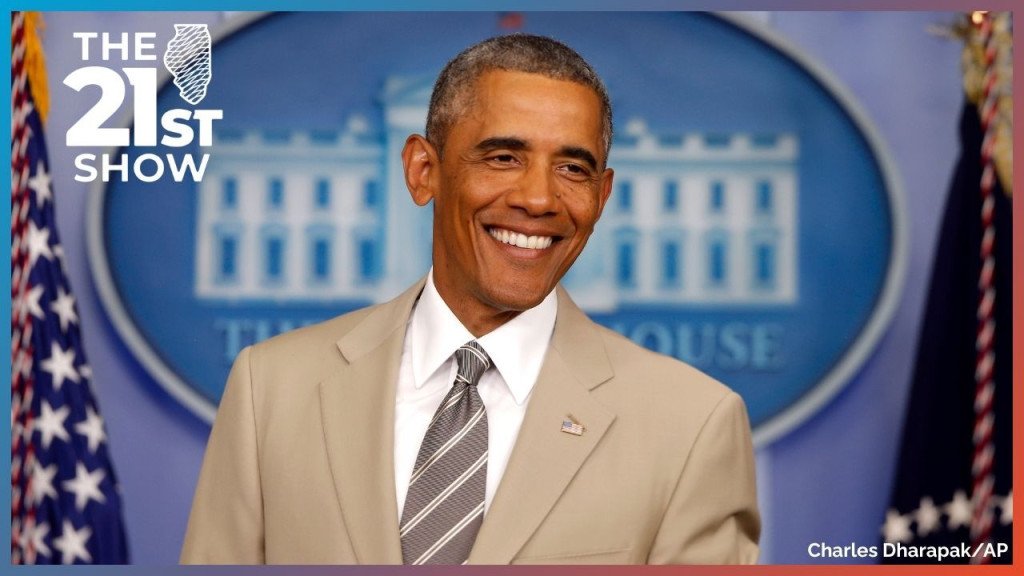
Transcript: Journalist in pursuit of Obama’s infamous tan suit
The 21st Show
Journalist in pursuit of Obama’s infamous tan suit
Read the full story at https://will.illinois.edu/21stshow/journalist-in-pursuit-of-obamas-infamous-tan-suit.
Transcript
Brian Mackey: It's the 21st show. I'm Brian Mackey, and I want to take you back to August 2014, a sad day in American history. Then-President Barack Obama shocked the conscience of the nation by giving a White House news conference while wearing a tan suit.

[00:00:24]
Speaker 1: When was the last time you saw President Obama swathed in beige and earth tones, for crying out loud?

[00:00:32]
Speaker 2: I thought the suit was a metaphor for his lack of seriousness. Only the Democrats and only liberals could actually elect a guy with a tan

[00:00:38]
Speaker 3: suit. Wear a dark color suit when you're a dude.

[00:00:42]
Speaker 4: It's [when] Nixon and Kennedy debated. Nixon wore a tan suit and that didn't bode well for him, did it? It wasn't a suit of strength.

[00:00:47]
Speaker 1: The president is so nattily attired normally that I think it was shocking to a lot of people.

[00:00:54]
Brian Mackey: At the time and in the years since, the tan suit has remained a rich source of humor — from [GIFs] shared in exasperated group chats to comedy TV shows.

[00:01:05]
Speaker 5: I think you should wear the tan suit to the press

[00:01:09]
Brian Mackey: conference. How y'all

[00:01:10]
Speaker 6: like my tan suit? Is the tan suit here? I'm asking if the tan suit is here. Listen, I own that tan suit

[00:01:17]
Brian Mackey: proudly, brother. Well, he did. The suit as a meme and a metaphor has stuck with us, but the suit itself did not stick with Obama. Apparently, it was given away in a closet cleanout, but hope remains that — to borrow a phrase from the X-Files — the suit is out there.

Enter Lynn Sweet, special correspondent for Chicago Public Media, which encompasses both WBEZ and the Chicago Sun-Times. She has been searching for the tan suit and joins us now to talk more about it. Lynn, welcome back to the 21st show. Good to talk with you again.

[00:01:49]
Lynn Sweet: Thanks for having me on. I appreciate it.

[00:01:52]
Brian Mackey: And listeners, you can join us at 800-222-9455. Do you remember that dark day that Obama wore the tan suit? 800-222-9455. All right, Lynn, what brought the tan suit sort of back into your consciousness this year?

[00:02:09]
Lynn Sweet: It was the opening of the Obama Museum at the Obama Presidential Center in Jackson Park on Chicago's South Side. That's what got this ball rolling. In June, there was a press preview, and one of the questions that came up to the Obama Foundation executives who were briefing us was, what's the one thing you wish you had in the museum that you don't have? And one of the executives named Mike [Strat Maunis] said two words: tan suit. Then Valerie Jarrett, who's the CEO of the foundation and a longtime friend of the Obamas, said something that was kind of the bombshell — that Obama gave away the tan suit when he was cleaning out his closet, and they didn't want to have a replica in the museum. So that's the start of the story of my pursuit of Obama's tan suit.

[00:03:05]
Brian Mackey: Yeah. Pursuit of the suit. I heard what you did there. And I know Colbert asked him about it — when Stephen Colbert did a segment on this — and then at the opening itself, it kind of became the fashion of the day, yeah.

[00:03:20]
Lynn Sweet: Well, so when I started on this shortly after the press preview in June — and that period before the June 18 dedication; the opening was on the 19th — I thought, what the heck am I gonna do? And I floundered, but I went to the dedication. So I see Stephen Colbert in a tan suit. I see David Letterman in a tan suit, and then Marty [Nesbert], who's the chair of the Obama Foundation and a buddy of Obama from way back, he goes on the stage in a replica tan suit outfit, and he kind of [sashays] on and brandishes the suit. Obama embraces him, and so now I know it's a thing. It is a presidential artifact that people are still interested in in 2026.

Now, why and what and how this is still a thing is part of my pursuit of the suit, and one of the reasons I appreciate talking to you. Because the meaning, the implication — it's ringing a bell somehow, even unbeknownst to me at the time. And at the time of the June 19 dedication — so a few weeks ago — HBO on Larry David's show does, in their season finale, in the last skit, [a segment that] stars Obama himself in a real comic takeoff of the so-called real story of why he wore the tan suit. Everybody, if you've seen it, two things I need to tell you about that segment. One, it's absolutely untrue. Larry David is playing the role of some staffer who spilled something on the dark suit, so he just happened to have a tan suit hanging around the Oval Office. It's not true, but it's funny. And the other thing that's not true is when you see the suit on the show, it's not the real suit. It's just another suit they found that is a stand-in for the suit.

But Obama is kind of in on the joke — he plays himself. That show, by the way, is co-produced by Barack and Michelle Obama's Higher Ground production company. So if you wonder how did they get him to do it, that's why. It's partly his show.

So I was reassured that what I'm doing is, I'm working on something of interest to some people who want to maybe know more about this episode in presidential history. And the other thing, when it comes to presidents of the United States, is there is a system in place to collect all the artifacts from presidencies.

[00:06:10]
Brian Mackey: How did he get rid of it? Well, that's what I like — do we understand that yet?

[00:06:15]
Lynn Sweet: Well, one, it was his personal property. He bought the suit. And the suit was made — by the way, it has its own interesting backstory, which will be coming up at SunTimes.com/[tansuit] in a few days. The suit was made by a man named Martin Greenfield, who sewed his first stitches when he was a prisoner in Auschwitz. He survived the Auschwitz and Buchenwald concentration camps, came to America, became a famous Brooklyn tailor, and was connected to the Obamas with a Chicago connection. A woman who was the fashion advisor to Michelle Obama put them together.

So anything that is emblematic of an important episode of a presidential term is something that usually is kept. Now, because it was his personal property, he didn't have to keep it. And what I don't know — and it's still the missing piece, and maybe I'll find out — is why did he throw it out? It's a hand-stitched, custom-made suit. Maybe he was just tired of it. I don't even want to speculate, but I'm told he just prunes his wardrobe regularly and gives away stuff.

[00:07:39]
Brian Mackey: You know, you think about what we've learned about his work practices in the White House and how he sort of tried to insulate himself from the chatter on social media and cable news and things. I wonder if he even really kind of understood — maybe is there any question that he understood at the time what a national story this became?

[00:07:57]
Lynn Sweet: Oh, no. Actually, on that day — and I did an interview with Josh Earnest, who was the press secretary that day, and this will be another story that I'll have coming out in the series — that day after the press conference, they knew two things. They thought the story they wanted to get out was about the economy. And then Obama, in their view, potentially misspoke about whether or not they had a plan for dealing with the situation, I think in Syria

[00:08:32]
Brian Mackey: with the Islamic State,

[00:08:33]
Lynn Sweet: right? So that's what they thought the story was, and they thought, oh, we'll have to make good, issue a statement, clarify it. It wasn't as if they knew in real time, or they realized right away, oh my God, this is the thing.

And it also shows that when you have even the best PR people in the business, when you think you're the savviest political analyzer — that's something. It's humbling, and it's why they have to be so careful when you look at a situation, because what you think is the takeaway might not be. And so they knew pretty fast that the tan suit became the story, because the next day at the press briefing, Josh made a pretty funny joke about it.

[00:09:24]
Brian Mackey: I have a GIF somewhere that we share in our group text where it's a picture of Obama at the podium saying, "I was sorely tempted to wear a tan suit today." So I guess he

[00:09:33]
Lynn Sweet: — he would. Obama is really great at self-deprecating humor, which is the best kind of political humor. And that was the joke he made at his final press conference, at the end. That was, yeah, at the end. And actually the joke was better than if he wore the tan suit, because then that would have become the story.

[00:09:53]
Brian Mackey: Yeah. So tell me — we've got about five minutes left — what sort of leads do you have? I mean, what are the odds that this thing was, you know, given to Goodwill and some lanky high school kid wore it for "Death of a Salesman" and it's sitting crumpled at the bottom of someone's closet or something like that?

[00:10:08]
Lynn Sweet: So I think he gave it away in Washington. And I know I'm partnering with Citycast DC. They were kind enough to talk to me about it, to focus on Washington, D.C. And I don't know where it was given to, if it was given to a place where you put all your old clothes — you know, from pants that aren't worth much or jeans, to where you would put a custom-made, hand-stitched suit. There are places that specialize in that.

So I mean, if you're just out of college or you don't own the right clothes, and then you say, I have a job interview and I have to look nice — or, oh my God, what if you had to wear a suit or you wanted to — there are places where you could get used clothing that is pretty high-class and has it organized for you. So if you're a 40 long and about a 33-15 waist, there are two pairs of trousers that go with it, one pleated, one flat front.

I talked to Martin Greenfield's sons — they still run the business in Brooklyn. We could tell in an instant if that's the suit or not. So that's what I'm looking for. I had a false alarm the other day. Somebody sent me a picture from D.C. saying, is this the suit? And at first glance I thought, oh my God, is this it? Just like when I saw the Larry David show on HBO — I thought, oh, did they find it? Did they retrieve it somehow? And then I asked for some other pictures and I realized it wasn't. I know what to look for on it. But my heart raced. It was a physical thing — oh my God, have we found it? But alas, I did not.

[00:11:58]
Brian Mackey: Well, I wish you the best of luck. You know, one of the last things — we've only got a couple of minutes left — just a weird quirk of history: August 28th, the significance of that date. Can you take us through that historically?

[00:12:12]
Lynn Sweet: Yes, I can, and thanks for asking. 1955, Emmett Till, the young Chicago boy who was visiting relatives in Mississippi, was brutally murdered. 1963, Dr. Martin Luther King Jr. delivers his "I Have a Dream" speech on the steps of the Lincoln Memorial. August 28, 2008, then-Illinois Sen. Barack Obama accepts the Democratic nomination for president. And then, yes, August 28, 2014, he wears a tan suit to a press conference.

So there is a lot going on, and you could read my column on the August 28th and see all the videos I'm doing. I'm doing Tan Suit Diaries. Go to [SunTimes.com/tansuit].

[00:13:01]
Brian Mackey: All right, well, we will definitely have a link to that on our website as well, [twentyfirstshow.org], and I suppose if anyone hears this and feels like they have a legitimate lead on the suit, Lynn would probably love to hear from you.

[00:13:12]
Lynn Sweet: Yeah, well, here's how you can find me. [tansuit@suntimes.com], or call me, call Jose, call one of us, and you'll get to

[00:13:23]
Brian Mackey: me. We will definitely keep that in mind, Lynn. Good luck with the hunt. I love this story. It's fun, and I wish you success, because what a great story that would be.

[00:13:34]
Lynn Sweet: Thank you so much for having me.

[00:13:36]
Brian Mackey: Lynn Sweet is special correspondent at Chicago Public Media, which of course includes WBEZ and the Chicago Sun-Times. She is on the hunt for Barack Obama's tan suit. If you have a sense — if you happen to know, maybe you bought a beautiful tan suit with two pairs of pants when you were visiting Washington, D.C. — get in touch. talk@twentyfirstshow.org is our email address. We'll be sure to forward that to Lynn. And again, we'll have a link to her coverage at our website, twentyfirstshow.org, later today.

Coming up on Monday, Juliette [Shore] has spent years documenting how Americans are overworked, but her latest research suggests a solution: shaving one day off the workweek with no drop in pay or, in many cases, productivity. Her book on this is "4 Days a Week." You can hear that on Labor Day.

Then Tuesday, many pregnancies end not with birth, but with loss. And that can leave a lasting mark on the people who experience it. We'll talk with UI author Kate Clancy. Her new book is "Pregnancy Interrupted: The Science and Stories of How Pregnancies Really End."

Those are some of the topics we're working on for next week. If you have other stories you think we should pursue, again, get in touch. talk@twentyfirstshow.org is our email address. You can find that and every other way to contact us on our website, twentyfirstshow.org. You can also find links to subscribe to our podcast, or look us up on Apple, Spotify, YouTube, or wherever you listen.

The 21st show is produced by Christine Hatfield and Jose [Zaeda]. Our digital producer is [Kolsam] Khan. Technical direction and engineering comes from Jason Croft and Steve Mork. Reginald Hardwick is our news director. Thank you to the band Public Access for our theme music. The 21st show is a production of Illinois Public Media. I'm Brian Mackey. Thanks for listening. We'll talk with you again on Monday.

-
Transcript Assistance
Illinois Public Media may use AI assistance for transcript generation and/or formatting. Transcripts that have not yet been reviewed for accuracy will be labeled.
To report a transcription error, or to request transcription of archival material, please contact will-help@illinois.edu.