








Transcript: Lt. Gov. Juliana Stratton on Iran war, ICE accountability, and her campaign for U.S. Senate
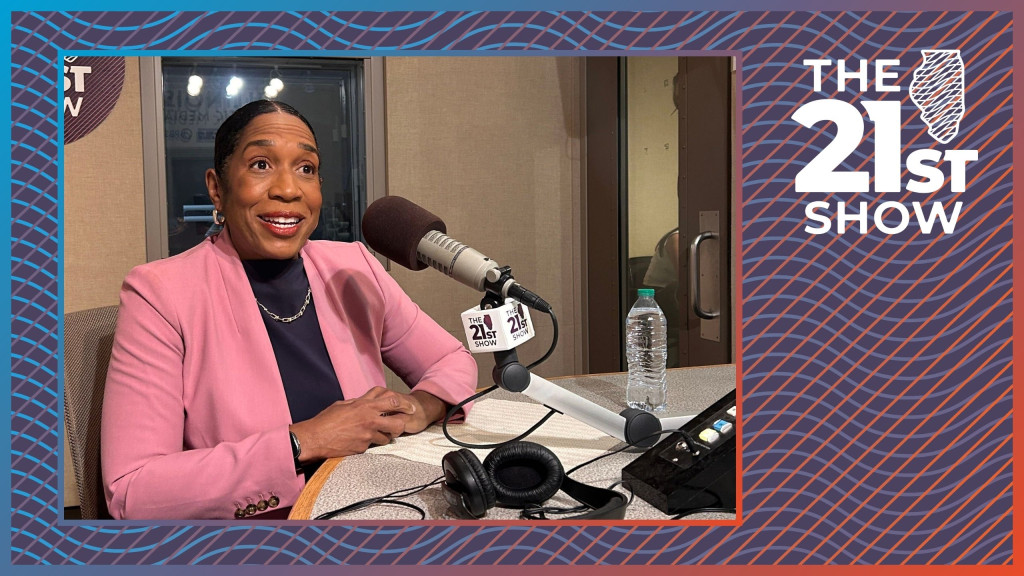
Transcript: Lt. Gov. Juliana Stratton on Iran war, ICE accountability, and her campaign for U.S. Senate
The 21st Show
Lt. Gov. Juliana Stratton on Iran war, ICE accountability, and her campaign for U.S. Senate
Read the full story at https://will.illinois.edu/21stshow/lt-gov-juliana-stratton-on-iran-war-ice-accountability-and-her-campaign-for-u.s-senate.
Transcript
// This is a machine generated transcript. Please report any transcription errors to will-help@illinois.edu.

[00:00:00]
Brian Mackey: From Illinois Public Media, this is the 21st Show. I'm Brian Mackey. Early voting is underway in the fall midterms. In a matter of weeks, we'll know who will be the next U.S. senator from Illinois succeeding Dick Durbin. As he steps down after three decades in office, the two major candidates in the race are Republican Don Tracy and my guest today, the lieutenant governor of Illinois, [Juliana] Stratton. There's also a third party candidate, Whitfield Harrington. We're talking with him next week, but today, Lieutenant Governor Stratton.

She was born in Chicago, raised on the city's South Side. She went on to earn a bachelor's degree in broadcast journalism from the University of Illinois Urbana-Champaign, and a law degree from DePaul. She had a full career as a lawyer, mediator, and administrative law judge before she ran for state representative in 2016. She won against an incumbent Democratic lawmaker in the primary to secure that seat. Then in her first and only term as a legislator, a wealthy political outsider by the name of JB Pritzker tapped her as his running mate. Last year, Stratton announced she would run in the Democratic Senate primary, and of course she went on to win the party's nomination, defeating nine other candidates, including two members of Congress.

And because events move fast, I'll just say we recorded this conversation Friday afternoon, October 9th. I'll also add we've spoken with Stratton's Republican opponent, Don Tracy. You can find that interview on our website, 21stshow.org. Our conversation today is on tape. Part of the reason for that is so we could put it on video. You can watch it on our website or just search the 21st Show on YouTube. Because of that, no calls today, but you can always let us know what you think about our program. Our email address is talk@21stshow.org. Again, talk@21stshow.org. Lieutenant Governor Stratton, welcome back to the 21st Show.

[00:02:01]
[Juliana] Stratton: Thank you for having

[00:02:01]
Brian Mackey: me. All right, let's start with the war in Iran. How do you think it's going? We're [seven-plus] months in at this point.

[00:02:08]
[Juliana] Stratton: Well, remember we have a president who dragged us into this war, told us no plan for what he wanted to accomplish, did not seek authorization. It's an illegal war. It's a war of choice and we are not more clear than we were eight months ago about what the plan is and when it's going to end. And the thing that I think I'm hearing from voters every single day is how they are being impacted by it, whether it's gas prices, just everything that is so expensive. So it's not going well. This is a war that really was, you know, started by this — we were dragged into by this president to really stroke his ego. And I want to get to Washington, D.C., to put a stop to it.

[00:03:01]
Brian Mackey: People who maybe don't like the way the president has prosecuted this phase of our decades-long conflict with Iran will still say, you know, some of this was necessary. Maybe this was the time, something had to be done, right, to prevent a nuclear Iran. How do you think about that?

[00:03:19]
[Juliana] Stratton: Well, I certainly don't want to see a nuclear Iran, but that's not the progress that we're making. I mean, we're seeing Donald Trump and quite frankly, Prime Minister Netanyahu working together and putting us in a position that is not getting any progress. We're not making any progress. Eight months in, when he told us it was going to happen very quickly. In fact, he told us Iran's nuclear capabilities were obliterated last year. And yet now here we are and we're not making any progress, so I don't see them having a real path forward and I don't see them doing — certainly the president doing this in the best interest of the American people. In fact, in so many ways he continues to put us at risk.

[00:04:03]
Brian Mackey: You know, the Congress has spent decades ceding its war powers authority to the executive branch under both Democrats and Republicans. Do you think a rebalancing is necessary there in terms of how much authority the president has to wage war regardless of who the president is?

[00:04:24]
[Juliana] Stratton: Well, what I think is that what we're looking at is right now with this particular president, and that's what I'm focused on, is we have a president who constantly overlooks the fact that we have three, or are supposed to have three, coequal independent branches of government. That's not how he operates. He's making decisions that are best for himself. He's making decisions that make him wealthier, makes his friends wealthier, and the American people bear the cost. I mean, when we even talk about this particular war, what's happening with gas prices? What's happening as we think about how tariffs have been implemented? American people are talking about how everything is too expensive right now, and we need a Congress that's going to stand up to this president. We need a president that's going to follow the Constitution, and we need the three coequal branches of government to operate as intended. And that's not what we're seeing right now. So that's what I want to fight for.

[00:05:28]
Brian Mackey: It seems that one of the big reasons we're in this war is that the prime minister of Israel, Netanyahu, made the case to President Trump and convinced him to do it. At the same time here in America, one thing that we're seeing is in this strange moment of potential political realignment is young people, both young Democrats and progressives and young conservatives — or MAGA or America First, whatever they want to call themselves — kind of coming together on this idea that maybe we need to reevaluate our longstanding relationship with Israel. How are you thinking about that?

[00:06:02]
[Juliana] Stratton: Well, I believe Israel is an important ally, and I believe that Israel has a right to safety and security. I've always said that, but I don't believe that Netanyahu shares that goal of seeing what I want to see — long-term peace in the region and a two-state solution. That's what I want to see and I don't believe that we have the leadership right now that wants to see the same thing, nor is working towards that. They've dragged us into this illegal war and want to see it continue for their own interest, and I believe that Netanyahu should be removed from power.

[00:06:39]
Brian Mackey: There's an election coming up and he may well be removed by the people there. One of the ways that the Senate — one of the few ways it seems that the Senate can exercise control on that — is over how much money it approves, right, for sending weapons and other things to Israel. How would you think about that balance going forward? Do you think that America should be doing less sending of arms and money to Israel, for example?

[00:07:03]
[Juliana] Stratton: Well, what I will always do as a legislator is to look at every piece of legislation and I will look at the conditions we are in, what the circumstances are, and what decisions should be made at that moment. It's why back in — I think April — when Senator Sanders put forth a resolution about halting some weapons to Israel, I said that under the circumstances where we are in a war where the two of them are pushing us forward without any plan and causing more instability in the region, that I would have supported Senator Sanders' resolution. So I will take each piece of legislation as, I think, any legislator should, to say what is the best decision at that time.

[00:07:46]
Brian Mackey: So I asked you about war powers a moment ago. We asked people in our listener texting group to share their questions for you. We heard a sort of related, a little broader question. Adrianne in Carbondale says, "I would like to hear how she and other senators will take concrete steps to take back the powers of Congress." So talk about that. How are you thinking about that?

[00:08:06]
[Juliana] Stratton: Well, I think about it in a couple of different ways. I think number one, I want to see Democrats flip the House and flip the Senate. That's the first step. We have a president who in my estimation is a wannabe dictator, a president who's stomping on the Constitution, a president who has an authoritarian agenda that we see playing out every single day — whether it is restricting access to the press, whether it's trying to suppress voting rights, all of the other things — ICE agents roaming the streets and snatching people off the streets. These are all just a part of the authoritarian playbook. So number one, we have to get in office because the Democrats — because we don't have Republicans who have the courage to stand up to this president and they're rubber-stamping his agenda. So we need to get in there to be a block, a wall of resistance, to really stop what is happening, stop the bleeding, I like to say.

Number two, we have to do whatever we can to try to reverse — or I should say restore — the cuts that have been made that are hurting so many Americans and certainly Illinoisans, whether that's stripping millions of Americans of healthcare, ripping food out of the mouths of hungry children by stripping away SNAP benefits. All of these things that we've seen from, for example, HR 1, or the one big ugly bill as I like to call it, we need to really start that effort.

But we also have to be a real check on this president, and that's when we talk about the three coequal branches of government — that's what's intended to be a check on the president, and I would take on that role. I won't confirm any of this president's nominees, whether it's to a cabinet position, to the Supreme Court. This president is not fit to be able to make such nominations, and I won't support it. I will use my oversight authority to be able to call into question — recognizing that the American people deserve to know exactly what is happening in their government — so this is a time that requires the energy and the courage to stand up to this president. And that's the kind of check I intend to be. So first, let's get in there, but no matter what happens November 3rd, more broadly for the party, I'm going to be someone who gets to Washington to be a check on this president, and I take that very seriously.

[00:10:31]
Brian Mackey: There is going to be, as you know, a push and pull in Washington. Some are going to say, OK, we don't want to look like we're just obstructionists here. We need to be thinking about bread-and-butter issues, right? How are we going to put food on people's tables and increase their pocketbooks? And there's going to be this other side that says, no, we've got to tear down that ballroom — and whatever has been done with building the arch and physical things like that, but also that's just symbolic of the many, many things that have changed in government. How do you think about that balance of investigations, potential impeachments — which of course is the House, but the Senate would have to vote on that if the House does pass [articles of] impeachment[s] — how do you think about striking that balance between, you know, sort of looking forward, focusing on bread-and-butter issues, and actually dealing with some of the abuses of things that we thought we'd kind of settled in American politics, right? Norms, and those kinds of things.

[00:11:27]
[Juliana] Stratton: It's both, and in my book, because right now we don't have what I would consider to be the norm. All of these things that are happening with this president and this administration are abnormal, and they are also dangerous, and so we have to do both. I mean, look, I always say that when I talk about we have to get in there and then we have to deliver for people. When I talk to voters all across the state, there's a lot of frustration. People feel like no matter who's in Washington, it doesn't matter. My life isn't changing, it's not getting any better, and it doesn't matter which party — I'm not feeling the benefits. So we have to get in there and we actually have to do the things that we say that we're intended and set out to do. Now, he might veto any legislation we pass because he'll still be the president, but we need to show as Democrats that we are fighting for healthcare, we're fighting to raise wages, we're fighting to make sure that people's lives are better, because to me government should and can be a force for good, and that's not what we're seeing right now.

But that does not mean that we can absolve our responsibility to also provide that kind of oversight and investigate this president. I mean, we have Republicans that clearly don't have the courage to do it, and we have to step up. And like I said before, make sure that the American people know: this is what your president is doing, this is how this administration is spending your tax dollars, and we want to shine some light on it. I always think about someone that I greatly admire, Ida B. Wells, who said the way to right wrongs is to shine the light of truth on them. And I will shine the light of truth on this administration. I think about what we did here in Illinois with Operation [Midway Blitz] — we started the Illinois Accountability Commission — and the reason why is because we know this president is not going to be president forever. And we're going to collect information and evidence right now so that we can hold this president accountable. So he might try to veto everything, he might try to say, well, it doesn't matter — if we get the House and the Senate, it doesn't matter, I'm still gonna say no — but we'll have the ability to say to the American people, and to Illinoisans for me, look at what we did. He said no, and you need to understand that. He said no to restoring your healthcare. He said no to helping children have a healthy meal. He said no to raising wages or protecting reproductive freedom or preserving voting rights. That's who the Republican Party has become, and we need to deliver. But I also want to be able to say we're holding him accountable. So it's both, and to me.

[00:14:08]
Brian Mackey: How far down the food chain, for lack of a better metaphor, do you go in terms of holding government officials accountable for some of the things that we've seen, right? Be it tear-gassing protesters, shooting American citizens in the street, that sort of thing. Does it stop with the top people? Do you actually think that rank-and-file federal agents should be held up for accountability in some way — truth and reconciliation, whatever form that would take?

[00:14:38]
[Juliana] Stratton: Well, I think we've seen where there have been cases of individuals. I just saw very recently — although I don't want to be quoted on the specific circumstances — where I thought the parents of [Renee Good] from Minnesota have filed a suit. Look, we cannot allow these actions to destroy our democracy go without our understanding what this is about. When we have a president that says, look, there might be a surprise coming up, and we're all sitting around wondering whether there's going to be troops on American soil while people are trying to vote — those kinds of things — this is dangerous and we have to understand what we are facing. So in whichever way accountability can be brought forward, we need to look at that. And again, I'm not going to sit here today and say I know every single aspect, but what I do know is that as a senator, I will have the oversight authority, I will have the ability to investigate, and to the degree that I can bring some sort of light and accountability to this at every single level, I will go as deep as I can to uproot — because the success of this country depends on it. We have to uproot the bad actors who think they can act with impunity, kill people on our streets, and do whatever else they want and no one's going to hold them accountable. Not on my watch.

[00:16:10]
Brian Mackey: To that end, in my interview with your opponent, the Republican nominee Don Tracy, he asserted, "My opponent is for open borders." So let me ask you about that, Lieutenant Governor. Are you for open borders?

[00:16:23]
[Juliana] Stratton: No.

[00:16:25]
Brian Mackey: What sort of border enforcement do you support, if any?

[00:16:29]
[Juliana] Stratton: Well, you know, first of all, I've always said that we need to have border security, but what I've also talked about is what's happening with immigration, quote unquote, enforcement right now. Remember Operation [Midway Blitz], which we all saw carried out here in Illinois, where people saw their neighbors snatched off the street by masked agents stuffed into unmarked vehicles. Even though that official operation has ended, it has not ended. The terror has not ended. That's still happening in our communities to this very day. And I'm talking about in Illinois. We know what we just saw with another individual being shot by ICE yesterday in the Bronx. We know that people are being snatched in California and in communities all over this country. We know that there are so many children who are separated from their parents.

So when I talk about what needs to happen, I'm really talking about an administration that has decided to use cruelty and terror. They said they were going after the worst of the worst, but they've used cruelty and terror to go after our neighbors — and not the worst of the worst. A small percentage of people overall have even a criminal record. I've always said that somebody who has a conviction of a violent crime — yes, we can talk about that enforcement and removal — but that's not by and large what we're talking about here. So let's reform this system. Let's — I should say transform — give people a real path to citizenship. People who have been in this country working, contributing to our communities, a pathway to citizenship. Let's ease the logjam by adding more immigration judges and making sure there are caseworkers and others that can help people get from point A to point B so they can be here legally. Let's look at the fact that ICE was created and put under — it didn't always exist — and was put under the Department of Homeland Security, which already gives it a punitive focus. So let's focus on the fact that we have a system right now, at least the way that it's operating under this president, that's designed to criminalize our immigrant neighbors. That is not what immigration reform is about. So we have to look at what's happening. We're seeing so much cruelty and long-term trauma that is playing out right now. And I've always said I want to abolish ICE. I stand by that because I don't think this agency can be reformed.

[00:19:19]
Brian Mackey: It's an interesting point you make because it was formerly Immigration and Naturalization Services, now it's enforcement. You do hear this phrase "abolish ICE." It used to be on the fringe. Now I'm hearing more and more mainstream people saying it, not in the sense of not having any sort of immigration enforcement — and please clarify on this — but the idea that maybe this agency has so lost the trust of so many Americans that it needs to be rethought. So where are you on that question of abolishing ICE?

[00:19:47]
[Juliana] Stratton: As I said, I want to abolish ICE. I am one of those individuals that does not believe that this agency can be reformed or regain the trust of the American people. And I just, again, have to reiterate that that is the authoritarian playbook — to cause the American people to, using this example in America, to cause us to not have trust in our systems. And that's why we're seeing attacks on our electoral system. It's why we're seeing attacks on our education system. It's why we're seeing attacks on the media. And it's why we're seeing this effort to try to convince people that their neighbors are out to harm them. It is a way to not just sow seeds of distrust, but it's a way of sowing seeds of division so that there's an us-versus-them mentality.

And so this system — after you've watched people be shot and killed, after you've watched this sort of mass recruitment of people with God only knows what kind of training, when you see people driving their trucks through crowds of protesters and snatching children and grabbing people that include American citizens — how do you go back to saying, OK, let's go back to quote unquote normal now, they're all right. It doesn't happen, and the American people know that.

[00:21:22]
Brian Mackey: There's been a groundswell of opposition in the past several months, year or so, to data centers, right? You're really seeing this in cities all over Illinois and I'm sure the rest of the country as well. And it seems to be one of these rare points of agreement among Democrats and Republicans in some places to put a pause on these things. How are you thinking about a federal role for regulating the growth of data centers, which seems to be a huge thing in Illinois, right? We used to have tax incentives. We used to try and lure them here. I remember the governor did a few events two years ago talking about bringing in data centers. Now we're putting the brakes on that. Where are you on this question?

[00:22:01]
[Juliana] Stratton: Where I am is I think we're looking at the ramifications, and we put a pause here and tried to slow things down and put a pause on those tax incentives and breaks because we want to put a pause and slow things down a bit. Look, what I've always said is that they have to pay their fair share. And what that means to me is they have to make sure that their investments in the electric grid so that we have reliable electricity — they have to make sure that they are making investments and not taking away from the fact that there are also consequences to our natural resources. So how are we going to make sure that we're looking at regulations so that water and other natural resources are not impacted? It cannot be something where — we need to see investments in clean energy. It cannot be something where Illinoisans have to shoulder the burden for the expansion, and that's what I want to see. So that's why we put a pause and I think at the federal level, we need to again look at what the implications are.

But here's what's most important when you talk about sort of how these conversations are happening — they're happening in communities. And what's important is communities don't want to feel like things are happening to them. They want to ensure that as people want to construct data centers, that they're being transparent with the community, that the community has an opportunity to voice their concerns and to ask questions. And I think that's really important — community voice being right at the center and being a part of the solution — and then making sure that everyday Illinoisans are not bearing the cost and that we're looking at how to make sure we protect our natural resources as well.

[00:24:01]
Brian Mackey: Sometimes I think — and this is not an original or brilliant thought on my part — but the angst about data centers is really speaking to the anxiety people have about artificial intelligence, right? And wherever one is on that spectrum, from you could unleash some sort of apocalyptic scenario on humankind, to just being disruptive to jobs, or just frustration that if somebody has a problem with their refrigerator, it takes them 20 minutes to get a human being on the phone to actually talk to them, and —

[00:24:29]
[Juliana] Stratton: We've heard all of those and experienced, yes, yes — the 20 minutes.

[00:24:33]
Brian Mackey: Exactly. So how are you thinking about a federal role for regulating artificial intelligence? We even see some of the companies saying, yes, please, please regulate us, and yet nothing has been happening. How are you thinking about breaking that logjam and what role the federal government needs to play in this going forward?

[00:24:52]
[Juliana] Stratton: Well, we have to be a leader and we need guardrails. I mean, I've had so many conversations — it comes up in the way that you just talked about, people feeling like they can't engage with a human being. Although AI is not new — people have been engaging with AI in different ways — but as we continue to see this sort of hyper scaling and continue to see this exponential growth, we've even heard those in the industry say this can be dangerous. So there's a possibility for immense real innovation that we can see come from AI, but also there's immense harm that can come from AI, and we are hearing that every single day of what's possible. And so some of the things that you mentioned, such as protecting jobs, and even just some of the threats that we've seen about some of the harm that can come out of this, we need federal guardrails. That's what I believe. And you know, we've brought some guardrails here in Illinois, but that's not enough. This is a conversation where we need to be talking about this and acting soon at the federal level, and it has to be a global resolution as well, because this sort of patchwork — well, Illinois did it, but all the other states are gonna do their own thing — having this sort of patchwork quilt of solutions doesn't work for guardrails. We need some federal guardrails, and we'll see what's proposed in terms of what that looks like. And then we again need to include the global community as well, because this is something that will affect all of us.

[00:26:31]
Brian Mackey: How do you overcome the fact that there are people with billions, if not trillions — there are trillions, literally trillions of dollars on the other side of this in some ways, right? People — there's so much money. If they don't like the regulations the federal government might propose, it's going to be infinite money dumped against it. How do you approach that? Because I mean, this is a problem in many areas of politics these days.

[00:26:54]
[Juliana] Stratton: Well, it's one of the reasons why I'm not taking corporate PAC money, because what people want to know is that you're not going to get to Washington and say, because of all of that money, I can't do anything. What people want to know is that regardless, I'm going to stand up and fight for you as the people that I represent, and not corporate special interests. It's a reason that I'm going to continue to fight for campaign finance reform, to make sure that we can ban corporate stock trading, to make sure that we get big money out of politics. I mean, those are all things that need to happen. But I think it's one of the reasons — when I mentioned earlier so many people are frustrated with what's happening in Washington — they feel like corporate special interests sort of take precedence over what the American people, or what the voters or the people of Illinois, really want. I'm going to be a fighter for the people of Illinois.

[00:27:50]
Brian Mackey: Let's talk about another domestic policy issue. One of the biggest changes, I think, in Illinois in the past decade has been the legalization of marijuana, right? You are one of the most public elected officials — I think you sort of made a point on January 1st, 2020, went to a Cresco Labs, bought a [Mindy's Edibles glazed clementine] orange gummies, and had cameras on you and everything like that. It's what, five-plus years later now. How do you think it's gone in Illinois in terms of this legalization experiment, this commercialization?

[00:28:24]
[Juliana] Stratton: I mean, I'm proud of what we've done here in Illinois. Number one, remember, as a Black woman, I have seen my community be criminalized at disproportionately higher rates than our white counterparts, where the use might have been the same but one group was being criminalized — Black and brown communities were being criminalized — and it was important on that first day to say to all of these people, we made a decision that you can walk in here and it's not going to subject you to criminalization. And that was an important message to give after years and years of that being the case — of arrest and detention and jailing.

But what I would say is we've done our best to try to address it from multiple areas when we talk about equity being right at the center of our legalization process. We from the very beginning expunged over 800,000 criminal records. That's important. That's 800,000 people — and more since then — who have been able to walk in and get a job or housing or continue their education because they did not have that block on their record. And so we have to talk about and celebrate that access to opportunities.

I lead what's called the Restore, Reinvest and Renew program, or R3 — which I'm grateful we call it R3, there's lots of acronyms in government. Under our cannabis legalization legislation, it included 25% of net tax revenues get reinvested into communities most harmed by the war on drugs — communities that suffer disproportionately from higher rates of violence, higher rates of over-incarceration, poverty. We have already, under a program that was developed under my office and my leadership — I chair the board — invested about $350 to $380 million into communities in every corner of the state who have been disproportionately impacted by the war on drugs. And that's for reentry services, civil legal aid, violence prevention, youth development, and economic development efforts. That's huge. And there are people on that board who have been justice-impacted, and so we're using the voices of those who have been hit by these problems to help us solve the problem. That's to me an innovative way of government working. And of course we have seen more social equity licenses be issued. As with anything, when there's been a concerted effort for decades to try to keep people out, there's always going to be more that we can do and we'll keep working on it. But I'm proud that now there's been some entryway and we're addressing some of these other issues that have disproportionately impacted Black and brown communities.

[00:31:32]
Brian Mackey: Is there any little voice in the back of your head though that says, you know, maybe the idea that this doesn't have any sort of — or has less of a stigma than it used to — that that can genuinely impair people's lives, right? A lot of people — I was talking to a physician of my acquaintance who says people in her practice who have alcohol use disorder, or drunks in the common parlance, know that that's maybe not a good thing. People who maybe have what you might call cannabis use disorder don't always recognize the negative effects it's having in their lives. And I think of that. And I also think of sports gambling being everywhere, and I have to have talks with my kids when we just want to watch a soccer game about what these ads for DraftKings and things like that are about. Is there anything in the back of your head that says, maybe we've calibrated a little too far in the pro-vice society direction?

[00:32:25]
[Juliana] Stratton: I think what you just said is exactly right. As a parent you're having those conversations. I'm a mom. I think we all find ways for things that already exist to talk about them — and you know, we can add social media to that and the work we are doing around that. So safety, of course, safety of every Illinoisan — safety for our children in particular, because remember this is adult-use cannabis legislation. Safety is always an important consideration, and I want to ensure the safety of every Illinoisan, but we have to make sure that there's education, there's resources, just like in any area, to help address those issues.

[00:33:05]
Brian Mackey: Another listener question. Sam in Urbana wants to know, do you support federal funding grants being used to purchase Flock license plate reader cameras? And for any listeners who may somehow not be aware of this, these are cameras that have gone up all over Illinois. Many downstate cities now have them. They can read — you know, police are not allowed to put like a GPS tracker on your car, but they can access this ostensibly private database that shows where vehicles have been, in some cases hundreds and hundreds of cameras in a given city.

[00:33:35]
[Juliana] Stratton: Yeah, and that's the concern that I have — what you just talked about, being able to access this private information and track individuals. And what I always talk about is certainly I want public safety, because some would argue, well, this is one of the ways that we can advance public safety, but I don't think that we should sacrifice our civil liberties to be able to do it. And I think about an issue that I care very much about, such as reproductive freedom, and how that information is used to track people that are seeking reproductive care, or how ICE is using that information — sending that data so that ICE can then detain someone in that way. So again, I just think that when I look at this whole issue of Flock cameras, I don't want to see this sort of mass surveillance system that is jeopardizing our civil liberties and using information against fellow Americans in that way.

[00:34:40]
Brian Mackey: But I mean, as you point out, there are people, including your opponent Don Tracy, who argue that this is potentially a way to enhance public safety. I always think of this episode a few years ago — Peoria set up these armored trucks that would have cameras and stuff in them in different neighborhoods, and civil libertarians were really not happy with this, and you can understand why — but I was talking to the mayor there, Rita Ali, who's a Black woman, and she says people in these neighborhoods, some of them appreciate this, right? They like that maybe the crime is not going to be happening on their block now while these things are there. How do you think about that balance between, you know, attempting to redress the many problems in our criminal justice system with disproportionately targeting Black and brown communities, versus the real desire for increased public safety in those communities?

[00:35:30]
[Juliana] Stratton: Well, I think it even goes beyond that. I mean, yes, I'm always — as you've heard me say a couple of times in our conversation today — the disproportionate impact of some of these efforts certainly concerns me deeply, and we have to look at data and understand how and why it's being used. But I think that in the wrong hands — which I just gave you a few examples — states where we have many abortion bans who are saying we want to track where women are going so that we can prosecute them when they come back to our state, or ICE detentions where they're using this data and tracking so that we can be waiting at your child's school so that when you go to pick them up we can take you. I just don't think that we should be in a place of saying, give up your civil liberties so that we can do this. There's lots of ways that we can think about solutions, and that in so many ways is the job of a senator or a legislator in general — to think about problem-solving, not just say, well yes, there are all these consequences, you're going to lose your civil liberties, but that's all we can do. No, you have to think about what else can we do so that we can have safer communities. And by the way, for me, I always think about ways that we can have safer communities — that includes investments in communities. We have a president that, by the way, is holding back millions of dollars of, for example, violence prevention funding where we could do some other things. So again, I'm just saying that it's concerning to me. I don't think that we should be in a place of sacrificing our civil liberties just for the sake of public safety, and we will continue to have those conversations.

[00:37:05]
Brian Mackey: Another area of public safety that gets a lot of attention from time to time in our politics is guns. Are you a personal firearm owner? I'm not. How do you relate to gun owners who think that Democrats in general and the Pritzker administration in particular are out to get them and take their weapons away? This is something you hear a lot in certain corners of Illinois.

[00:37:28]
[Juliana] Stratton: Well, we're not. I mean, we passed an assault weapons ban in Illinois. We've passed things like safe storage of your weapons in Illinois. We have passed legislation — and because I believe that we don't need weapons of warfare on our streets — we're not in the business of saying we're trying to take away your guns. We want gun safety. Let me put it that way. Gun safety. And there's lots of different ways that we can do that. We've been working on that, and I think one of the ways that you can make sure that you're addressing that is to make sure that you're listening to the real stories of what people are going through. I mean, I think sometimes we get to a place where people just want to use the rhetoric that says, this is all you're trying to do. But if you look at the kinds of legislation that we are passing — the gun safety and storage, by the way, was really because we heard so many stories of children being able to have access to guns that are in people's homes because they weren't in a safe box. So that's the way that legislation has been put forth here in Illinois. By the way, I don't think having just an assault weapons ban in Illinois is enough. We've had a federal assault weapons ban, and it's one of the things that I want to work towards when I get to Washington.

[00:38:48]
Brian Mackey: Last time we spoke last year, you said you supported eliminating the filibuster. Your predecessor, if you were to win this office — Dick Durbin — has been a big supporter of defending the filibuster over the years. Is that still your position? And maybe you can articulate where that falls on the Democratic agenda should they retake the Senate.

[00:39:13]
[Juliana] Stratton: Where does eliminating the filibuster fall on the Democratic agenda? I don't know if I can speak to that. I can speak to the fact that yes, I still believe that when Democrats take back the Senate — and hopefully that is November 3rd, 2026 — that we should end, [or] work to end, the filibuster when we get into office. Look, the filibuster has been used to block so much progress. And when I think about the things that we could get done, what Democrats could get done that Republicans have blocked because of the filibuster — we could pass the John Lewis Voting Rights Act, we could restore the protections of Roe v. Wade and give women the right to decide what's best for their own bodies and their own futures, we could pass some common-sense gun legislation. We can do all of that. We can come back to a place where we can say let's roll back all these cuts to Medicaid and to SNAP benefits that have been made through the one big ugly bill. We can do those kinds of things and deliver for people, and remind Illinoisans and Americans all across this country that we are the party that's fighting for them and we are here to get things done. Now, look, Donald Trump will still be in office and Donald Trump will still try to veto the things that we get passed, but we have to stop what we see as the Trump administration and congressional Republicans that are hell-bent on blocking that progress.

[00:40:44]
Brian Mackey: I want to channel Senator Durbin here. I think if he were with us, he might say something like, well, let's say the Democrats do regain — you know, insecure majorities is the name of a famous book in political science — that's not gonna last. Things go up, things go down in Washington, especially these days. And we might have the SAVE Act as the law of the land today, but for the filibuster. How do you think about that if, again, if you were to win and you're in the minority party someday — maybe you'd want it back.

[00:41:12]
[Juliana] Stratton: Well, look, I'm focused on what it's like right now with a wannabe dictator in the White House, somebody who is every day waking up figuring out how to dismantle every system we have and destroy our democracy. And right now these are not normal times, and it requires that we take unprecedented measures to try to save our country.

[00:41:33]
Brian Mackey: So let's say Democrats are in control, still have President Trump in office for another two years. And then let's say you do get a Democratic president down the line — you're still going to have a Supreme Court that has been opposed to a lot of things that Democrats have tried to do in recent years. What do you think about proposals to modify the Supreme Court — you know, strip its jurisdiction, increase the number of members — to bring it more in line and make it a more small-d democratic institution?

[00:42:07]
[Juliana] Stratton: I spoke earlier about the fact that we're supposed to have three coequal independent branches of government, and I don't believe we have that right now. We have a Supreme Court that also is working to rubber-stamp this president's authoritarian agenda. And I think that everything needs to be on the table to try to figure out what we do differently. You know, I always start by saying we need to enforce strong ethics rules and requirements, and that anybody who does not follow those ethics rules should be removed from the court. But I also know that we have an administration and — to me — many members of the Supreme Court justices where ethics may not be a motivating factor, unfortunately. It should be for anybody who is serving in that capacity, but it's just not, and I'm telling the truth. And so whether it's expanding the court, whether it is term limits, I think we should consider it all. At least look at what should happen, because we have to do something about the fact that there are these lifetime appointments that have really just abandoned what the responsibility is. The other thing that I always say is that I will not — and I might have said this earlier — I will not vote to confirm any nominees to the Supreme Court made by this president, period.

[00:43:34]
Brian Mackey: Any? What if he bumps his head on a rock and nominates Michelle Obama or something like that?

[00:43:45]
[Juliana] Stratton: Well, don't give me that hypothetical. Let me just say that this president — we pretty much have already seen what kind of people that he puts forward.

[00:43:56]
Brian Mackey: If past performance dictates future results, right. Campaign finance — should there be another big attempt to do something? The Supreme Court struck down [campaign finance limits in] Citizens United. That was — I remember that was all anyone talked about for a long time in American politics was campaign finance reform, and the court has blocked that. Should there be another big swing at doing something about money in politics, and what could be done?

[00:44:23]
[Juliana] Stratton: Well, we have to do something about money in politics. I think about what I've heard on the campaign trail almost every single day throughout my primary. Now we're in the general and we're 25 days out or so, 20-plus days from election day. There is a deep, deep frustration that voters have right now. And I'll take healthcare as a good example. You know that I'm going to fight for Medicare for All. I believe that everyone who needs a doctor should be able to see a doctor. And I think it's a false choice for people to have to say, do I pay my rent this month or do I go to the doctor? That is not a choice that I believe Americans should be making. And it came from the fact that I was the caregiver for my mother, who had Alzheimer's, at a time when there were efforts by our previous governor and my state rep at the time to strip healthcare from seniors here in Illinois. And so healthcare is always something that I want to fight for.

So to go back to your question, there are too many forces in this industry where it's not just about — and they have a lot of influence in Washington — it's not just about giving access to care, but there's all of the other factors that they will push for that might be contrary to making sure that we can get to a universal healthcare system. So it's something that people are thinking about in very real ways. They don't talk about campaign finance reform all the time. I mean, sometimes when you say get big money out of politics, people hear that and they say, yes, I want that. But what they know is that it seems like the rich keep getting richer and they keep falling farther behind. To the extent — by the way, Brian — that people don't even know what it means to be in the middle class. Like, you ask people, are you in the middle class? And they say, I'm not sure, because that sounds like a comfortable life to me. It sounds like I can pay my bills, save a little for retirement, spend it on vacation or some extra things, but I don't always feel like that. I feel like more and more I'm living paycheck to paycheck. So we have to do something about the corporate influence. I say this is the most corrupt president that we've ever seen. And the issue of big money in politics with the most corrupt president — that combination especially has shown the real damage that can be done where government is no longer working in the best interest of the American people, it's working in the interest of the highest bidder. And that is not how we're going to save our democracy and it's not how government should work and it's not what's in the best interest of the people that I hope to serve in Illinois.

[00:47:23]
Brian Mackey: We're coming to the end of our time together. One of the big sort of big-picture questions I've tried to ask just about everyone I've interviewed who's running for office this year is about trust in our society, right? Trust in institutions — be that the law, government, media, higher education. We're on a university campus as we're recording this. And just cohesion in our society. It seems to be eroding. What steps can you say that you've taken in your life personally to help build bridges, to help rebuild that trust in our society?

[00:47:57]
[Juliana] Stratton: It's what I've done throughout my entire career as a public servant. It's what I've done on this campaign trail for United States Senate, and it's what I've learned to do throughout my life as a restorative justice practitioner and a mediator, and that is to start with listening. I've always said that in the restorative justice world, we say the wisdom is in the room — that if you want to solve the challenges that are plaguing any community, you don't just go in and tell that community what they need to do. You need to get into that community, you need to build real trusting relationships with that community, and then you have to ask them what are the solutions that they see for their community. I've always led that way. I don't think I'm an expert on every single community. The people who live in that community, who know that community, who love that community, who are raising their families in that community — they're the ones that have the solutions, and we have to make sure that we have a two-way dialogue so that being in an elected office isn't about sitting in your office somewhere and if somebody one day sends you an email or calls the office — it's to also communicate with them and welcome them to communicate as well.

But there's another big piece. So listening is important, it's how I've always led. But the other piece is delivering. The other piece is, when you say what you're going to fight for, that you fight for it. When you say you want to get things done for people, that you do everything within your power to get those things done. And right now, that's what's needed. That's what I'm hearing — that we can't just have rhetoric, we have to have real results. We have to show people and communicate, as I said, in a clear, bold fashion, in an authentic way, that this is where I am. People who have heard me on the campaign trail know I talk about having a daughter who wonders if she's one day going to be able to buy her first home. I have another daughter who has her health insurance under the ACA who called me last year and said, "Mom, let me tell you how much more my insurance is going to be and now I have to pick a plan that has the fewest amount of benefits." I talk about being a caregiver and being a mom while I'm a caregiver. All of those things are real-life stories that show that I understand the struggles of everyday Illinoisans, and I'm going to bring that real-life experience to the role of United States senator when I get to Washington.

[00:50:30]
Brian Mackey: Lieutenant Governor [Juliana] Stratton, thank you for being with us and sharing your perspective.

[00:50:34]
[Juliana] Stratton: Thanks so much for having me.

[00:50:35]
Brian Mackey: Election Day is November 3rd. Early voting is underway across the 21st state. Again, you can find this conversation and our other midterm conversations on our website, 21stshow.org. We've spoken with Stratton's Republican opponent, Don Tracy. We've talked with all three candidates in the governor's race, many of the candidates in downstate congressional races. And I should also say, coming up next week, we'll be speaking with Whitfield Harrington, who's running on the American Center Party ticket for U.S. senator from Illinois. That is it for us today. The 21st Show is a production of Illinois Public Media. I'm Brian Mackey. Thanks for listening. We'll talk with you again tomorrow.
Transcript Assistance
Illinois Public Media may use AI assistance for transcript generation and/or formatting. Transcripts that have not yet been reviewed for accuracy will be labeled.
To report a transcription error, or to request transcription of archival material, please contact will-help@illinois.edu.