








Transcript: Nearly 50 years later, Oscar-winning filmmaker recounts making highly acclaimed documentary
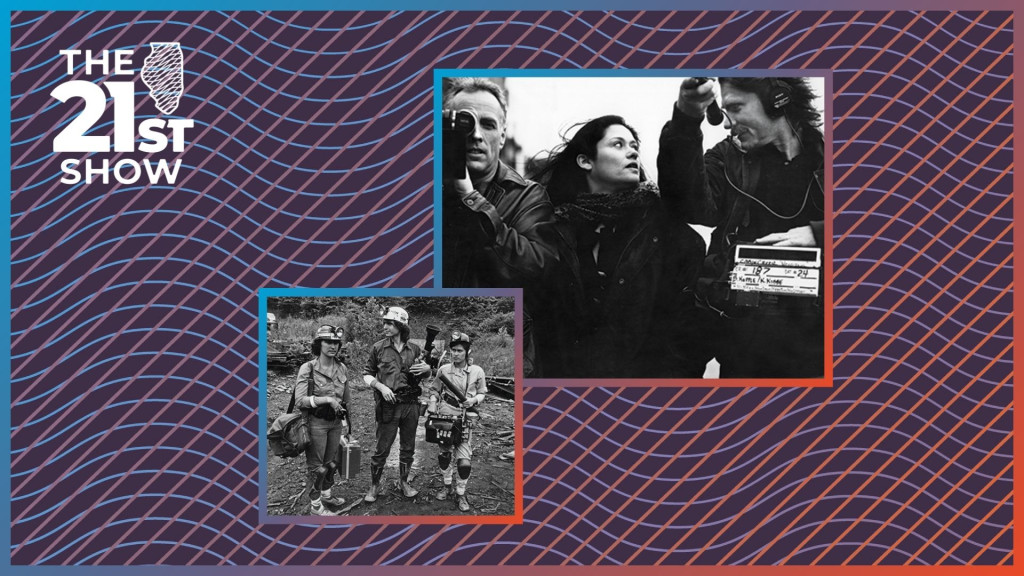
Transcript: Nearly 50 years later, Oscar-winning filmmaker recounts making highly acclaimed documentary
The 21st Show
Nearly 50 years later, Oscar-winning filmmaker recounts making highly acclaimed documentary
Read the full story at https://will.illinois.edu/21stshow/nearly-50-years-later-oscar-winning-filmmaker-reflects-on-making-highly-acclaimed-documentary.
Transcript
[00:00:00]
Brian Mackey: It's the 21st Show. I'm Brian Mackey.

[00:00:04]
Singer: Come on, you poor workers, good news to you. I'll tell how the good old union has come in here to dwell. Which side are you on? On which side are you on? If you go to Harlan County, there is no neutral there.

[00:00:26]
Brian Mackey: In the early 1970s, a filmmaker named Barbara Kopple heard a story on NPR about leadership elections for the United Mine Workers of America, then among the strongest labor unions in the United States. Kopple set out to cover the story, and that eventually led her to Harlan County, Kentucky. That's where the Brookside Miners had recently voted to join the [UMWA]. When the company they work for, Duke Power, refused to sign their contract, they went on strike.

[00:00:53]
Film Audio: And so began the battle of Harlan County, USA. Which side are you on? Organization, you're a lone individual without influence and without recognition of any kind. They're treating us like that we're animals, dogs. Well, we aren't. We're American citizens.

[00:01:13]
Brian Mackey: Kopple followed not only the strikers, but especially the women who were standing behind them, and very often in front of them with sticks in their hands. Kopple and her crew became part of their lives, living in their homes, taking meals with them. Out of this, she made an incredible work of art and journalism. Her film "Harlan County USA" won the Oscar for Best Documentary in 1977, and it went on to shape a generation of filmmakers in and beyond the cinema verite tradition. Kopple will be presenting the film Thursday night as part of the Ebertfest film festival in Champaign. She joins me now in studio in Urbana. Barbara Kopple, welcome to the 21st Show.

[00:01:50]
Barbara Kopple: Well, thank you, and it's a pleasure to be here with you.

[00:01:53]
Brian Mackey: So like I said, I believe that you made this great work of art in journalism. You're still being asked to talk about this 50 years later. How is that for you, 48 years later, I suppose.

[00:02:05]
Barbara Kopple: Uh, it's wonderful. It's my favorite film of all my films. It was my first one, and I understood so much about what life and death was all about, about people who are really standing up for what they believed in, even though, you know, they had nothing and they were willing to give up everything, even their lives to get the union of their choice. Coal mining is very dangerous. You get something called black lung. It's [pneumoconiosis] and it takes a young man's life and they can't breathe from it. And it's also — this film is a film about love and community and the women are incredible. All of their lives they would say things like, you know, my father worked in the mine and my grandfather worked in the mine, and when they had the chance to do something, they just stepped right up and they were there no matter how difficult or how tough it was.

[00:03:08]
Brian Mackey: Well, let's dive right into it then, because one of the key characters in the film is a woman named Lois Scott. Tell me about how you came to know her and how she came to be this leader of a group of — really, when you think of coal miners, you think of men, but it's the women who are front and center in this film.

[00:03:26]
Barbara Kopple: Well, the men could only have, I think, three people on the picket line. So the women said, we can have as many as we want. And Lois Scott was the leader. She was so determined and so incredible. I met them all on my very first day in eastern Kentucky. We had come, and we had gone down Pine Mountain and it was pouring rain that morning and there were no side rails and another car sort of sped by us and our car dumped over the hillside and nobody was hurt and we crawled out with our equipment, went down to the picket line and, you know, in eastern Kentucky, Harlan County, everybody knows everything in a minute. And so when we came they heard about it. But the first day that we were there, they didn't trust us at all. They gave us phony names — they called us Martha, they called themselves Martha Washington, Florence Nightingale, and, you know, we looked like a bunch of hippies from New York.

[00:04:38]
Brian Mackey: And you were indeed, in some ways. So how do you develop — I mean, one thing that's so remarkable about the film when you're watching it, and especially — I first saw it, I don't know, 20 years ago on a small tube television. Now I get to watch it on a nice big LCD screen, which is, I'm sure, a little closer to the actual theatrical experience people will have Thursday night. You feel so close to these people. The faces fill the frames. Talk about achieving that level of intimacy and being in there with them.

[00:05:07]
Barbara Kopple: Well, once they realized that we were there for good purposes, they just took us into their homes. They fed us, they cared for us. There was no running water, so we'd have to pump water to take baths and things like that. I remember I slept with Angela Johnson, who was a little girl, and she would wet her bed all the time. So those were the kinds of feelings and sensibilities of really getting close to people.

[00:05:41]
Brian Mackey: And so what draws you to do this sort of work, to make documentaries about labor workers? I mean, you're in New York City at the time, you're on the East Coast, you went to college on the East Coast. What draws you to eastern Kentucky?

[00:05:59]
Barbara Kopple: Uh, well, as you had said earlier, I heard about it on NPR — my favorite station and now my son's favorite station — and they were talking about going on strike, that Arnold Miller was gonna run against W.A. "Tony" Boyle, who was later convicted for paying for the murders of [Joseph Yablonski], his wife and daughter, who were gonna run against him. And he was found guilty. And one of Arnold Miller's promises when he became president was to organize the unorganized, and I wanted to make sure that he was telling the truth. And so that's what drew me there. And I also filmed with Arnold Miller. I filmed with Tony Boyle. I filmed the campaign. I filmed old miners talking and singing and telling stories. This one guy named Nimrod Workman, who said he worked in the mine and if a man got hurt, that was nothing because they could always hire another man, but if a mule got hurt, they were very upset because they had to buy that mule.

[00:07:15]
Brian Mackey: I remember that scene. It's so wrenching to hear somebody talk about their life that way. How did you — so you went in there, it sounds like you had a point of view, and this is something we talk about today in journalism, right? Should journalists have this point of view? Talk about what formed your point of view. What made you think that it was your role to hold the United Mine Workers accountable for their campaign promises?

[00:07:39]
Barbara Kopple: Uh, I just felt as a human being that I wanted to see it. I was curious because I was interested in politicians who said that they were going to do something and didn't do something. But I lost that point of view immediately because I just got wrapped up in the people — who they were, what they were doing, what they were willing to give up. And also, a big part of this film is the music. Everybody at night sits and plays the banjo and sings and the music connects the storyline and it's quite amazing. So I wasn't there with preconceived notions. I was there as part of the community. I was there as somebody who didn't want their voices to be silenced, because nobody would know about their story if we weren't there. We were the only film crew that was there.

[00:08:39]
Brian Mackey: Let me take a moment to remind listeners this is the 21st Show. We're talking with filmmaker Barbara Kopple about her documentary "Harlan County USA." She's a two-time Oscar-winning director — for this film and "American Dream" in 1991. She's also a special guest at this year's Ebertfest, which is running today through Saturday at the Virginia Theater in Champaign. "Harlan County USA" is going to be screened at 5 p.m. Thursday. If you want to join us today on air, 800-222-9455 is the number. That's 800-222-9455.

[00:09:13]
Barbara Kopple: And my dream would be to have different people — if you're a member of the union here, like SEIU, you would come and you would bring friends and bring people and look at the film and then let me know what the union movement is now in this community. That would be so wonderful.

[00:09:35]
Brian Mackey: Well, maybe that's a good bridge to talk about where the union movement is today, because I went back and looked at some of the election records for Harlan County, right? And it was kind of a bellwether county and I think it had voted for Nixon in '72 and then it went with Carter in '76. And now it's, you know, Trump — Trump 88%, I think last time around. Talk about what has happened to labor in America.

[00:10:03]
Barbara Kopple: Well, it's interesting because I guess I'm doing my third labor film now and it's on modern-day labor. It's the Teamsters, UPS, Amazon — workers fighting for a union. It's the baristas with Starbucks and it's the [delivery workers] who are the people who deliver to you, you know, your noodle soup or whatever. And each one has just incredible stories. The [delivery workers], unfortunately — I had to go to a funeral of one who was killed. They have to buy their own bikes, they have to buy their own warm clothes. They're not a part of anything. Most of them could get deported, so that's very frightening right now. The baristas are kept so that when they're very close to getting medical benefits, their hours are dropped. And with Amazon, the people work so hard and their trucks are 100 degrees and every part of their body hurts. It's a tough situation out there.

[00:11:24]
Brian Mackey: What do you think — do you think that labor in America is so much less organized than it was at the time of "Harlan County USA?"

[00:11:33]
Barbara Kopple: When I started "Harlan County," there were 150,000 miners. Now there's 25,000 miners. So miners have stopped. But I don't know — just going back to Harlan County, these people are the salt of the earth. They're decent, they're human. They're really people who care about each other and help each other. And I mean, we were machine-gunned with semi-automatic carbines. A miner was killed by a company foreman. Women took over the picket line. So you can imagine what was happening. At nights we slept on the floor with mattresses because people would shoot into, you know, the people's homes.

[00:12:23]
Brian Mackey: So, do you get the sense though — did the unions lose people? Did the companies break the people? What is —

[00:12:32]
Barbara Kopple: Today they have something called union busters, who get paid an exceedingly large amount of money to break the union, and they have private [meetings] with them, and people get fired if they're a union organizer inside their plants or wherever they're working.

[00:12:52]
Brian Mackey: Which is supposed to be illegal.

[00:12:54]
Barbara Kopple: Supposed to be.

[00:12:55]
Brian Mackey: Supposed to.

[00:12:55]
Barbara Kopple: Supposed to be.

[00:12:55]
Brian Mackey: Supposed to.

[00:12:55]
Barbara Kopple: Supposed to be.

[00:12:57]
Brian Mackey: All right, let's go to the phones at 800-222-9455. We have Dennis calling from Decatur. Dennis, thank you for calling in.

[00:13:07]
Dennis: You're welcome and thank you for being on the show today. I just watched the [film] maybe within the last two weeks. It just mesmerized me. I just couldn't believe this had happened not that long ago. It was just such a great film. I wonder what happened after that — [Beryl]. I think he was a union — anti-union guy, some Beryl something.

[00:13:29]
Barbara Kopple: Basil Collins.

[00:13:31]
Dennis: Basil. Basil.

[00:13:32]
Barbara Kopple: Yes, Basil Collins, yeah.

[00:13:35]
Dennis: [Basil Collins] and he worked for the coal company, ma'am.

[00:13:38]
Barbara Kopple: Yes, he was the chief manager, the chief henchman. And he was twirling a gun. He wanted to know who I was and he said, "Come over here, honey." And he was twirling a gun and it was pretty scary. He said, "Do you have press credentials?" And I actually did from United Press. And so I yelled for Anne Lewis, who worked with me, to get it, and she was taking her time, and I started asking him questions about the people out there and how he felt about it. And then he said, "Now, where's this press thing you have?" And I said, "Do you have identification?" And he said, "Well, I swear I might have lost mine." And I said, "I might have misplaced mine also." And he went across the bridge and the women said to me, "He's gonna kill you." And I went, "Oh no." But when you're young and in your twenties, you don't think about that. You think you're gonna live forever.

[00:14:45]
Dennis: You're right. These people are the salt of the earth, and the conditions they lived in were just appalling to me. But anyway, it was a wonderful film, and thank you for doing that.

[00:14:55]
Barbara Kopple: Oh, and thank you for calling in. Are you gonna come tomorrow and see it again on a big screen?

[00:15:01]
Dennis: It's — I'm in Decatur. What is it, 9 o'clock tomorrow?

[00:15:04]
Brian Mackey: No, 5 o'clock tomorrow in Champaign.

[00:15:06]
Dennis: I might, I might do that.

[00:15:08]
Barbara Kopple: That would be so great. Will you introduce yourself to me?

[00:15:12]
Dennis: I will. I will. Champaign, correct?

[00:15:14]
Barbara Kopple: Yes. Yes, at the Victoria Theater.

[00:15:18]
Brian Mackey: The Virginia Theater. Virginia Theater.

[00:15:20]
Barbara Kopple: Sorry. Virginia Theater.

[00:15:21]
Brian Mackey: You can find — we'll have information about Ebertfest on our website, [21stshow.org]. Thank you so much for calling in, Dennis. I appreciate it. Thanks.

[00:15:30]
Barbara Kopple: Bye, Dennis.

[00:15:31]
Brian Mackey: We need to take a break in about a minute and a half, but maybe talk about that. I think people would be surprised at — you mentioned lack of running water. What was daily life like, especially for these people who had had no income, or just minimal strike income, for a year by the time you get there?

[00:15:47]
Barbara Kopple: They lived in houses where they had newspaper on the walls as wallpaper and also to make sure that the rain didn't come in. It was an outhouse in the back. And it was very tough living, but their lives were so full because they sang and they talked and they gossiped and they were a real community of helping each other — if somebody got sick or something happened, people were there for them, and that's sometimes richer than anything else you could ever want.

[00:16:24]
Brian Mackey: All right, we're going to take a break. We'll have more with filmmaker Barbara Kopple. We're talking about her landmark documentary "Harlan County USA." It won an Oscar in 1977. She's going to be presenting it tomorrow night at the Virginia Theater as part of Ebertfest, 5 p.m. in Champaign. More to come after a short break. This is the 21st Show. Stay with us.

[00:16:49]
Singer: Remember the disaster at the [Manning]. Where good men [so useless]. Oh, don't [unclear]. There's a man in a big house, far, far from the shack where the poor [unclear]. He's got —

[00:17:31]
Singer: [We're] 42 years, [and] a mighty long time. [Hollybergan]. All down in a coal mine. Down in the [deep] hole where the bright lights [that] glow. Back in the [dark room], I [staying] up cold.

[00:18:08]
Brian Mackey: It's the 21st Show. I'm Brian Mackey. We're listening to one of the voices in the documentary "Harlan County USA," made by filmmaker Barbara Kopple and her team. It came out in 1976 and won the Oscar in 1977. She is presenting the film this year as part of Ebertfest, Thursday, 5 p.m. at the Virginia Theater in Champaign. She joins me in studio. If you want to call in, 800-222-9455. That's 800-222-9455.

Can you just talk a little bit about the music in the film? We excerpted that — you were the sound for the film, you worked with a camera person and other crew, but you captured so much great music of these people.

[00:18:56]
Barbara Kopple: Well, I'll tell you one story, which is Hazel Dickens, who's a wonderful singer. She was a coal miner's daughter, and I used tons of her music without asking her. And I remember she was playing at the Smithsonian in D.C. and I went and I spoke to her and I said, "Hi, I'm doing a film on coal miners and I've used a lot of your music and I want you to come see it and let me know if it's OK." And she sort of looked at me and I said, "I'll pay your way. You can stay wherever you want." And she said of course. And she came and she loved it and she gave me all her music for free and she wrote the last song of the film, "They'll Never Keep Us Down."

And what happened with that was — when we were showing the film at Lincoln Center, where it had its premiere at the New York Film Festival, I Xeroxed 1,000 copies of the song and we put it in people's playbills. And she came out and we asked everybody to sing along and they sang along. And it was beautiful. And then Lois Scott, who's one of the great women in the film, had just been made head of the Black Lung Association, and she decided this would be a good group to raise money for — for black lung. And so there she is, standing on the stage and telling them all about black lung and how they need money, and people are throwing $5 and $10 and $20 bills at Alice Tully [Hall]. My first film, and I'm in a corner laughing. I didn't know what to do. And she forgot she was mic'd and she said, "Barbara, you stop that laughing and you pick up that money and stuff it in your bra. We need it." So that's part of the music.

[00:21:04]
Brian Mackey: And really keeping in character with her from what we see in the film.

[00:21:07]
Barbara Kopple: Absolutely. But it was great. And the head of the festival, Richard Ro[u]t, said, "OK, Barbara, next year you'll do it on rollerblades." I said, "Wow, I'd love that."

[00:21:18]
Brian Mackey: All right, so one of the things that we talked about a little bit earlier that I want to dive deeper into is some of the violence in the film. The caller mentioned Basil Collins — Basil, Basil, thank you — yes, Basil Collins. At one point he points a gun at you and your crew and the other people who are out there. Talk about that day. What was that experience like for you?

[00:21:41]
Barbara Kopple: Well, Basil Collins survived the Bataan Death March. So that makes him a pretty tough character. And he came — he was coming in to go to work — and I don't know whether it's our fault or not, but Ann had the lights and maybe they were shining in his eyes. And so he took his [gun] out and he pointed it at us and I could just hear myself screaming, "Don't shoot!" at the top of my lungs. And they went across the bridge and then they came back. And I figured, I brought people here, I have to protect them, so I moved forward and of course they got me. They kicked me, but I had a Nagra on that had a plastic top, so I didn't —

[00:22:35]
Brian Mackey: A large recording device, for people who are not familiar with that.

[00:22:37]
Barbara Kopple: Yes, and I was swinging my mic at them furiously as they were kicking me. They went after Hart Perry, who was the camera person, trying to break his camera and hurt him. And also Ann Lewis, who had the lights, [they] broke the lights, so they thought that we couldn't film because it was dark. But we filmed anyway, of course. But it was pretty frightening. You feel those juices in your mouth, you know, when that happens — that sense of fear.

[00:23:12]
Brian Mackey: It's amazing that the cameras kept working, that the film wasn't destroyed. I don't know if they just didn't understand how —

[00:23:19]
Barbara Kopple: Yeah, we gaffer-taped the lens together, you know. And there was also another film group in Whitesburg, Kentucky, and so the next day we went and we asked them if we could borrow a few cables and things like that, and they were very nice and let us have them.

[00:23:37]
Brian Mackey: Oh, that's wonderful. You know, the violence is such a part of this film, and you mentioned earlier one of the young miners was killed. There are people who have said — and I can't remember if it was in the film itself or in some of the extras that people can find if they watch the Criterion edition of your film — that if the cameras hadn't been there, there might have been more violence.

[00:24:00]
Barbara Kopple: Oh, absolutely. Yes, and we would be there even if we didn't have film in our camera. And what we would say is, you know, nobody wants to, you know, kill people in living color. And so that's why they also wanted to destroy us. Houston Elmore, who was one of the organizers, told me, "Barbara, there's a $5,000 ransom on your head. So if you get killed, somebody will get $5,000." And he told me afterwards, and I said, "Houston, why didn't you tell me?" And he said, "Because we didn't want you to leave." And I said, "I wasn't gonna leave."

[00:24:41]
Brian Mackey: Are there lessons for today? We're in another era now, and there have been these cycles of political violence in American history. The period of '68 through the 1970s was certainly another one. Are there lessons for what we're experiencing today as people are starting to get back to the streets to take on what's happening in Washington?

[00:25:01]
Barbara Kopple: Yes, I mean, I think we just don't know what's going to happen. I mean, you think of Charlottesville, where a woman was killed by the [car attack during the Unite the Right rally]. People are very angry. The country is very split. And you just don't know what to expect. People are doing mass shootings at universities still, and it's a very frightening time.

[00:25:29]
Brian Mackey: Let me remind listeners this is the 21st Show. If you're just joining us, we're speaking with Barbara Kopple, who is the filmmaker behind "Harlan County USA," the Oscar-winning documentary. It's going to be screened as part of Ebertfest at 5 p.m. Thursday at the Virginia Theater in Champaign. 800-222-9455. And let's go now to the phones. Rebecca is calling from southern Illinois, or at least heading towards southern Illinois. Rebecca, thank you for calling.

[00:25:53]
Rebecca: Thank you for having me. I don't know if you are familiar with the town of [Herrin], Illinois, but it too had some pretty violent activity in the mines back in 1922. There was a [Herrin] massacre that happened between the miners there and the company. And I would — I'm very interested in your movie and would like to see it, but I will not be able to make it to Champaign. Where can I see this?

[00:26:35]
Barbara Kopple: The Criterion Collection has it. And if you're really nice, I can send you a link.

[00:26:45]
Brian Mackey: There's a streaming service called the Criterion Channel. I know you can find it on Blu-ray or DVD from the Criterion [Collection] online, or Barnes & Noble sometimes will have them in stock. I think somebody has told me it was also on Prime, or — no — Max, or whatever HBO is calling [itself now].

[00:27:03]
Barbara Kopple: HBO Max. And if you can't get it from there, you know, leave your email with the station, OK? And thank you for wanting to see it. That means a lot to me.

[00:27:17]
Brian Mackey: All right, stay on the line —

[00:27:19]
Rebecca: Both of my grandfathers — yeah, both of my grandfathers were coal miners, so we understand that lifestyle. So thank you.

[00:27:29]
Barbara Kopple: Thanks for calling. I'll definitely send you a link.

[00:27:33]
Brian Mackey: Stay on the line, Rebecca. One of our producers will talk to you and get your contact information. So we're coming to the end of our time together.

[00:27:41]
Barbara Kopple: That's too bad.

[00:27:42]
Brian Mackey: I appreciate that. I've really enjoyed talking with you. What does it mean to be talking about this work at Ebertfest? I mean, he was a champion of your film in particular. Roger Ebert was. He's obviously a big figure. He's from Urbana, Illinois, originally. He's a big figure here. Talk about that.

[00:28:02]
Barbara Kopple: Yeah. Well, Roger Ebert means the world to me. I knew him, and he was the kind of guy who was really straight with you, so intelligent. And he really was a humanitarian and he really cared about films and he pushed films. I mean, his festival at the beginning was for films that people didn't really ordinarily get to see. So you can see what kind of person he is. The way he wrote was beautiful and clear and precise, and plus he was a lot of fun. He was a lot of fun to be with.

[00:28:44]
Brian Mackey: Yeah, he's a great, great man. Are there particular memories about how he approached your films, in particular "Harlan County USA?"

[00:28:56]
Barbara Kopple: Yes, he told me that it was one of the films that he really loved and that he so respected the film and the people in the film, and if more films could be made like this, we'd be able to communicate a lot better with each other.

[00:29:15]
Brian Mackey: Yeah. I wonder if there are any other films you're looking forward to watching at Ebertfest, if you've had a chance to look at the [program].

[00:29:21]
Barbara Kopple: Well, I've seen a lot of them, and I'm looking forward to seeing "Desperately Seeking Susan" again — Susan Seidelman's film — and I have to leave on Friday, but one of my favorite films is "I'm Still Here," Walter [Salles'] film, and people should see that. It's tremendous. It won an Oscar for Best Foreign [Language] Film this year, and he's done other great films, like "Central Station."

[00:29:51]
Brian Mackey: Last thing I want to ask you about — I was looking at the categories for the Oscars in Best Documentary 1977 when you won, and this is perhaps more of an indictment of my own lack of film literacy, but those other films — I don't know that they're certainly not as much discussed as "Harlan County USA." What makes a documentary stand the test of time?

[00:30:11]
Barbara Kopple: Well, I don't know what makes a documentary stand the test of time, but they placed that year all the documentarians together in the theater where the Oscars were gonna be called, and when our category came up we all linked arms, and when "Harlan County" was called, I could feel my heart beating somewhere in the auditorium and there were these arms on either side of me that pushed me up. So I think it's — we as documentarians, there's a lot of solidarity and we want each other to succeed, and it's very important.

[00:30:51]
Brian Mackey: Barbara Kopple is the filmmaker behind "Harlan County USA" and many other documentaries, including the other Academy Award winner in her background, "American Dream" from 1991. She received a Lifetime Achievement Award at the 44th Annual News and Documentary Emmys in 2023, and she is a guest at this year's Ebertfest, which runs today through Saturday at the Virginia Theater in Champaign. "Harlan County USA" is going to be screened at 5 p.m. Thursday. Barbara Kopple, what a pleasure. Thank you for being here today.

[00:31:22]
Barbara Kopple: It was a pleasure, and so much fun. And thank you to the callers who called in. Absolutely.

[00:31:28]
Brian Mackey: We are going to leave you with Hazel Dickens. We mentioned this song earlier. We're gonna go out with that. Thank you for listening. The 21st Show is a production of Illinois Public Media. I'm Brian Mackey. We'll talk with you again tomorrow.

[00:31:54]
Singer: Every dime. Use your power, the key to liberty. Don't [unclear]. There ain't no way they can ever keep us. Ain't no way they can ever keep us. We won't be [sold to be] treated right. We've been shot and we've been [jailed]. Little children stood right by [us]. We got that union contract to work. And they'll never — never [unclear] — that [unclear].
Transcript Assistance
Illinois Public Media may use AI assistance for transcript generation and/or formatting. Transcripts that have not yet been reviewed for accuracy will be labeled.
To report a transcription error, or to request transcription of archival material, please contact will-help@illinois.edu.