








Transcript: Recapping the only debate in the race to be Illinois’ next U.S. senator
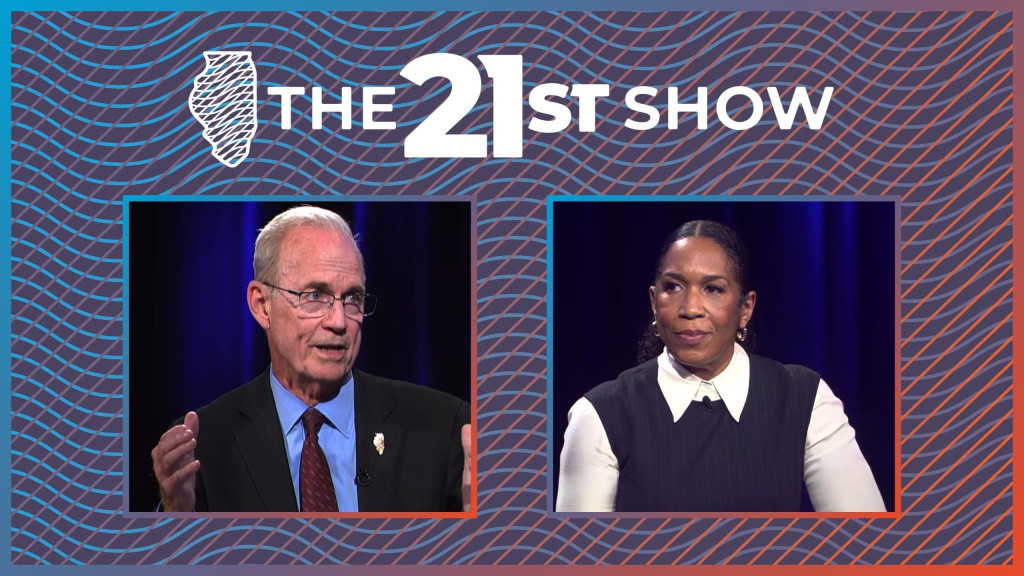
Transcript: Recapping the only debate in the race to be Illinois’ next U.S. senator
The 21st Show
Recapping the only debate in the race to be Illinois’ next U.S. senator
Read the full story at https://will.illinois.edu/21stshow/recapping-the-only-debate-in-the-race-to-be-illinois-next-u.s-senator.
Transcript
// This is a machine generated transcript. Please report any transcription errors to will-help@illinois.edu.

[00:00:00]
Brian Mackey: From Illinois Public Media, this is the 21st Show. I'm Brian Mackey. The major party candidates in the race to succeed Illinois U.S. Senator Dick Durbin met in Chicago last night for a live forum hosted by the PBS station WTTW. Democratic Lieutenant Governor [Giulliana] Stratton and former state Republican Party chairman Don Tracy talked through issues including tariffs, the Iran war, and as we'll get to later in today's show, agriculture. Joining us again to talk about all this is Mawa Iqbal, state House reporter for public radio stations across Illinois. Mawa, thank you for your service watching this debate so the rest of us didn't have to.

[00:00:50]
Mawa Iqbal: Anytime.

[00:00:51]
Brian Mackey: So, uh, all right, listeners, we're taking calls on this — 800-222-9455. Uh, did you watch the forum Tuesday? Uh, what did you think? What did you learn? Are you still undecided about this year's election? We'd love to hear from you. If so, 800-222-9455 is the number. We're on this just for the first part of the program today. So, Mawa, you and I talked last week after the gubernatorial debate about how contentious it got. How did this Senate debate compare?

[00:01:22]
Mawa Iqbal: Well, it's a pretty stark contrast, I would say, you know, like the gubernatorial forum last week — you saw Pritzker and Bailey just going at it, like talking over each other, interrupting each other, calling each other like liars and other names, um, like JB Pritzker called Darren Bailey a conspiracy theorist. But with this forum, it was a lot more civil. I mean, there were no like back and forths really. There was no interrupting or talking over each other or over the moderator. And even at one point, Don Tracy commended Juliana Stratton for how she had been her mother Velma's caregiver for when her mother was going through Alzheimer's. So it was definitely a real departure from what we saw last week.

[00:02:12]
Brian Mackey: Yeah, so, all right. How would you describe the candidates' message to voters, you know, broadly speaking?

[00:02:20]
Mawa Iqbal: Yeah, broadly speaking, I think they've stayed on message with what we've heard throughout the campaign season, you know, like [Giulliana] Stratton, of course, is running on like a more Democratic, kind of almost progressive-leaning platform where she's calling for Medicare for all, raising the federal minimum wage to $25 an hour, abolishing ICE, and, you know, codifying abortion access. And really just like going after Trump, you know, that's something that was definitely mentioned a lot in her opening remarks — or I guess like the first comments she made, just like a minute or two in, she mentioned Donald Trump and how, you know, she's going to hold herself as like a check on President Trump. Whereas, you know, Tracy, he talked about a lot of what his platform was, which is supporting small businesses, encouraging job growth, lowering taxes overall, supporting police. And like he has done on the campaign trail, last night he was trying to paint Stratton as a democratic socialist who is just way too extreme for Illinois and for the country and someone who is running on an agenda to just impeach Trump and nothing else.

[00:03:34]
Brian Mackey: So, OK, we talked a lot about how Trump's actions have factored into the gubernatorial debate. What specifically about Trump came up in this conversation with the Senate candidates?

[00:03:47]
Mawa Iqbal: Yeah, so basically like what we saw in the gubernatorial debate, you know, Stratton, much like her former — or I guess her longtime partner [Jamie] Pritzker — you know, she really was focusing on the war in Iran. She also focused on tariffs and talking about, you know, how the Trump administration dissolved the Department of Education. She also mentioned [Operation Midway Blitz] and some of the consequences from that, and she was really trying to pin Tracy on that, you know, trying to make him sort of wear the collar, so to speak, of these policies of the Trump administration. But honestly, in my opinion, it kind of fell flat just because I didn't think she was as argumentative about it. Like Pritzker definitely was much more forceful in trying to tie Bailey to Trump. But Stratton was not that forceful. And also what didn't help was that Tracy did kind of push back on some Trump policies, you know — he acknowledged that [Operation Midway Blitz] was messy and chaotic, and he did also really, really heavily criticize Trump for his relationship with Vladimir Putin and how they've been handling this war on Ukraine.

[00:05:02]
Brian Mackey: All right, let me take a moment to reintroduce our conversation. If you're just joining us, this is the 21st Show. We're talking for the first part of the program today about last night's debate between U.S. Senate candidates [Giulliana] Stratton, the lieutenant governor, a Democrat, and Don Tracy, an attorney, former Republican Party chairman, who is the Republican nominee, obviously. My guest is Mawa Iqbal, state House reporter for public radio stations across Illinois. We asked members of our texting group for their thoughts ahead of our conversation today. Lisa in Bloomington said, "I could only watch for a short time, too frustrating. Neither candidate nor the moderator insisted on clarifying assertions that were likely false or very exaggerated. Leaves the voters still looking for the truth about why things are and how each is realistically going to change things. Why bother?" Lisa asks. Also heard from Randy in rural Peoria County, who said, "Neither one of them has bothered to come here to rural small farm culture where many of the swing voters are. Also, here we are working and no candidate has bothered. In the past they did. It's here that water and land environmental health is made. In the end, little difference between them. Neither of them drives a combine." All right, if you want to join us, 800-222-9455. 800-222-9455. Mawa, we are going to talk on our program today about agriculture later in the hour, but the candidates were asked a question about how to protect Illinois farms. Where did they take that?

[00:06:34]
Mawa Iqbal: Yeah, it's interesting. Stratton, similar to Pritzker, took it as kind of redirecting the blame to President Trump, you know, talking about how his tariffs, which the Supreme Court have found to be illegal, have really affected the United States' relationships with other countries that we would export a lot of our crops to. So of course Illinois is a big soybean and grain exporter. And so she was really underscoring that point. She was also talking about how diesel fuel has gone up because of this war in Iran. So that's also affected farmers. And really also just, you know, they did mention the farm bill, which is this comprehensive five-year federal plan for farmers. And she took it in a direction that I guess I wasn't totally expecting, which — she talked about SNAP and how — which essentially is the federal program for food assistance for low-income families — and she says that that's something that she would want to see in the farm bill, but Republicans in Congress have sort of held SNAP hostage, quote unquote, meaning that they've really rolled back on eligibility requirements. And so people — and this is something that we've been reporting on too — that enrollment rates have been dropping.

Um, of course, like Don Tracy, you know, he talked a lot about farmers and protecting farmers' ability to use corn products like E15 year-round. He also talked about, you know, just all the things that he would do to support agriculture across the country. But it is interesting, like what some of the texters into the show mentioned — you know, neither of them have really toured downstate as much. They've really focused their campaign efforts on Chicago and the [collar] counties even though Don Tracy is from Springfield. Um, he has some pretty deep ties to central Illinois, but really, you know, I think for a lot of candidates in Illinois, if they're running especially for a statewide office or a federal position, you know, that represents the whole state — you know, they're going to focus on the areas that have the most concentration of people, and unfortunately that does mean that places like central and southern Illinois do sometimes get left out or just shoved to a lower priority for these campaigns.

[00:08:55]
Brian Mackey: You know, it's interesting, this idea of marrying food assistance — or what we used to call food stamps — with the farm bill. I thought it was a relatively recent thing. Turns out it goes — I had to do a little quick googling — it goes back to 1973. And I guess, you know, the idea is simple, right? Urban legislators tend to want food assistance, rural legislators want the farm bill. How do you get them to vote for each other's packages? Well, you make it one big thing. And you know, I guess it's a testament to the fact that that kind of compromise and deal making is yet another thing breaking down in the Congress these days. Um, apparently there was also some discussion about Lieutenant Governor Stratton's call for a $25 minimum wage. Can you talk about that?

[00:09:41]
Mawa Iqbal: Indeed, this is something that she has been campaigning on. It's one of her hallmark issues during the campaign cycle, and basically the federal minimum wage right now is $7.25 an hour. And in Illinois, for those who don't know, lawmakers passed a plan to essentially increase the state minimum wage to $15 by a certain period. So now, Illinois workers can see at least $15 an hour unless you're tipped, of course. But the $15 minimum wage is in place for Illinois. And [Giulliana] Stratton was saying that, you know, she wants to see the federal minimum wage go up from $7.25 to $25 an hour, which of course is quite the significant jump, but, you know, she said that it could be something — she sees it where it could be like how they did in Illinois, how her and Governor [Pritzker] did it in Illinois where they phased it in over several years. She promised that small businesses would be at the negotiating table when they talk about this policy, but of course Don Tracy, who has been running on more of a protecting-small-business-minded platform, he said that this would essentially be a death sentence to businesses.

[00:10:59]
Brian Mackey: Well, you alluded to this idea of — or I should say maybe it was actually Randy in rural [Peoria] County — of upstate, downstate, Chicago and the rest of Illinois. There was a question about balancing funding and attention between Chicago and the rest of the state. Um, what did Stratton and Tracy have to say about that?

[00:11:19]
Mawa Iqbal: Well, Stratton, of course, you know, she's run on just — as someone who's a lieutenant governor, so holding a statewide office, she's often said that she likes to marry both, right, that — that the downstate — that even though the Chicago area is the economic engine of the state, that it's really the industry in central and southern Illinois, like our agriculture industry, that really helps the state flourish and is such a big exporter of these grain and soybean crops. So she was saying — I mean, it's hard, I think, for any candidate to just promise anything, especially again when they're looking for a federal position in D.C., you know, like they have to kind of combine all the interests from all over the state. But she just, you know, as she was saying on the campaign trail, she was like, we're going to have to make sure that all the needs of both urban voters and urban constituents in Chicago are met as well as people in rural and downstate.

You know, but like I said, she hasn't campaigned as much in central and southern Illinois. She's really focused much of her efforts on the Chicagoland area — that seems to be where the nucleus of her operations are. And Don Tracy, too — you know, it's interesting because Darren Bailey, the Republican challenger in the gubernatorial race, has in the past been very critical of Chicago and has even called it a hellhole. And this time around, you know, he's trying to soften his rhetoric around Chicago and, you know, say that it's actually a beautiful place, you know, and it's so wonderful — I guess in an effort to try to court Chicago and Cook County voters. But Tracy, you know, he did mention that it's again an economic engine. You know, it's a wonderful city, suffered by poor management. He said that Brandon Johnson has been a pretty bad mayor and that Chicago crime is always a problem. Um, but you know what's interesting is that I think like for any candidate, right, they have to focus on the population centers, which would mean that putting Chicago and the [collar] counties in the priority for their campaigning and their media targeting is kind of what any statewide candidate needs to do in Illinois at least to become successful.

I will say though, the one thing is that they didn't really bring up the [collar] county voters, you know. I think Cook County and Chicago voters are different from suburban voters. Suburban voters tend to be a little bit more moderate, and that's where I think a Republican like Don Tracy could pick up some extra support, but he didn't really do that. And that's something that I was talking about with my editors last night — that like, neither candidate, and I think Lisa, who wrote into the show, said this too, that neither candidate was really inspiring, you know, or really — there was no like viral moment. There was no major gaffe committed by either candidate. It was just kind of dull. Yeah.

[00:14:26]
Brian Mackey: I don't know. Maybe dull's OK in politics. I'm here to stand up for dull in politics, you know.

[00:14:32]
Mawa Iqbal: We've had enough of the —

[00:14:35]
Brian Mackey: Yes, yes. Uh, I'll also say it's interesting thinking about downstate. I mean, so Tracy, I gather, is based in Springfield. But, um, you know, if — if, as every statewide election has gone for a decade now, the Democrat does win — that would be a departure because like Dick Durbin lived in Springfield. Well, and God knows I had to do many Sunday morning news conferences in front of his house, which is a great opportunity, but also, you know, something that I don't think we would be seeing in Springfield, for example, with Lieutenant Governor Stratton were she to win. So just about a minute left, what are you keeping track of — you know, not just in the Senate election, but what is the main thing you're looking at heading into this final, you know, week or two from now to Election Day?

[00:15:22]
Mawa Iqbal: You know, I think the Democrats feel pretty comfortable in Illinois. Like, I think Governor Pritzker, [Giulliana] Stratton, some of these legislative races too — like a lot of Democrats are feeling like, OK, we've got the money, we've got the financial backing, you know, we're in a solidly Democratic state like Illinois, you know, we're good to go. But I do think that with these other candidates like Tracy, Erin [Del Mar], who's Darren Bailey's running mate, Darren Bailey himself — I think that, you know, it just, if they lose these races, it doesn't mean that it's the end of the story for them, right? Like they could be eyeing positions in the future, like maybe even other congressional positions.

[00:16:03]
Brian Mackey: And if they run for governor, who knows.

[00:16:05]
Mawa Iqbal: Right, or they run for governor as well, right?

[00:16:07]
Brian Mackey: All right, we're going to have to leave it there. Mawa Iqbal covers state government and politics for public radio stations across Illinois. Thanks so much for being with us, Mawa.

[00:16:17]
Mawa Iqbal: Thank you.

[00:16:18]
Brian Mackey: More to come after a short break. We're going to the farm. This is the 21st Show. Stay with us.
Transcript Assistance
Illinois Public Media may use AI assistance for transcript generation and/or formatting. Transcripts that have not yet been reviewed for accuracy will be labeled.
To report a transcription error, or to request transcription of archival material, please contact will-help@illinois.edu.