








Transcript: Senate candidate Whitfield Harrington Jr. wants Illinois to move beyond two-party system
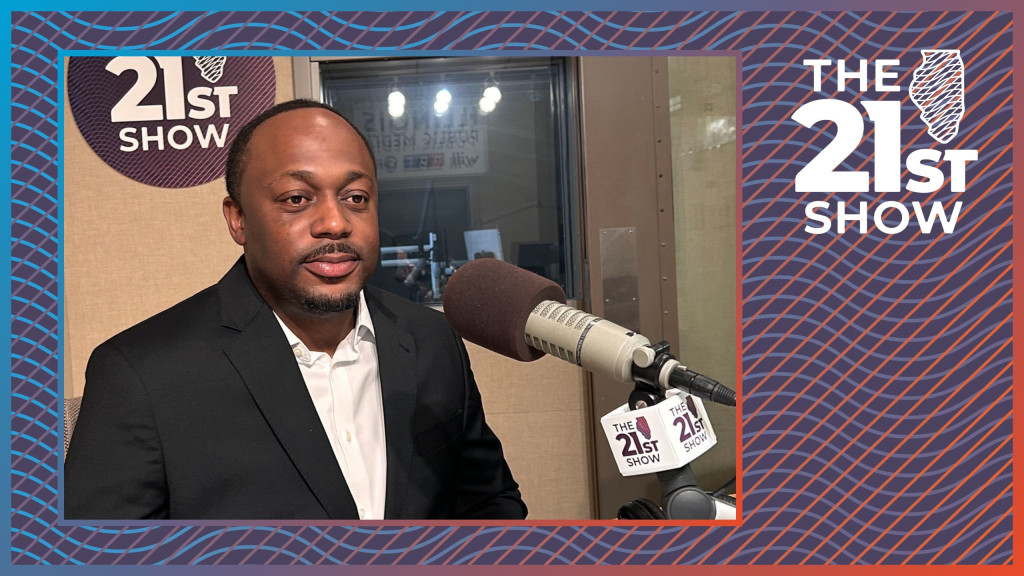
Transcript: Senate candidate Whitfield Harrington Jr. wants Illinois to move beyond two-party system
The 21st Show
Senate candidate Whitfield Harrington Jr. wants Illinois to move beyond two-party system
Read the full story at https://will.illinois.edu/21stshow/senate-candidate-whitfield-harrington-jr-wants-illinois-to-move-beyond-two-party-system.
Transcript
// This is a machine generated transcript. Please report any transcription errors to will-help@illinois.edu.

[00:00:00]
Brian Mackey: Today on the 21st show, there is a debate tonight featuring the two major party nominees to be the next U.S. senator from Illinois. Not invited is the only other candidate on the ballot, Whitfield Harrington Jr., a pastor from Chicago. He's running as the candidate of the American Center Party, which he also founded. He may not be in the debate, but he joins us live for a conversation on policy, his view on where exactly the American center actually is, and what it means to campaign outside the two-party system. We'll also take your questions at 800-222-9455. 800-222-9455. I'm Brian Mackey, and that's coming up today on the 21st show, which is a production of Illinois Public Media. But first, news.

From Illinois Public Media, this is the 21st show. I'm Brian Mackey. Tonight, the two major party nominees in the race for U.S. Senate from Illinois will be taking part in a live debate in Chicago, hosted by PBS station WTTW. That'll be between Republican Don Tracy and Democratic Lieutenant Governor [Giliana] Stratton. We'll have some discussion about that with Illinois Public Radio reporter [Mawa Iqbal] on tomorrow's program. But if you have already voted or when you go to vote, you will see there's a third name and a different party also on the ballot for Senate. And today, that name is with us for the hour. Whitfield Harrington Jr. is a pastor from Chicago who's running as a candidate under the American Center Party label. His campaign website describes it as a new party dedicated to practical, center-focused leadership. We'll get into what that means as we go on. Mr. Harrington was born and raised in Mississippi, went on to a career in the financial industry, and moved to Chicago in 2013. Now he's running for Senate. He's the only — the third party, I should say he's the only third party candidate on the ballot, and we can talk about the challenges of third parties in American politics too. Whitfield Harrington Jr. joins us live in our Urbana studios. Mr. Harrington, welcome to the 21st show. Thank you for being with us.

[00:02:30]
Whitfield Harrington Jr.: Brian, thank you for having me, and it's a pleasure to be here with you.

[00:02:33]
Brian Mackey: Listeners, we want to hear from you throughout the program today at 800-222-9455. What does it mean to you to be in the center of American politics? And what role does the center play in this moment in American history? And what would it take for third parties to gain meaningful representation and traction in American politics? 800-222-9455 is the number. 800-222-9455. All right, Mr. Harrington, we usually start these interviews with a bit of biography. I understand you were the 20th of 21 children. What was that like growing up?

[00:03:11]
Whitfield Harrington Jr.: That is correct. Um, my father was about 18 years older than my mom, and his first wife passed, and then he married my mom, and of those two wives, he had a total of 21 children. So I am number 20 out of 21. Um, being that it was in Mississippi, I found myself in the home of a civil rights leader and I didn't even know it until I was in the 11th grade, when I discovered that my father was actually a chairman of the um NAACP. And so that was right in the middle of the civil rights movement. And so I was raised by, you know, that old school mentality of the people in the South, what they train you — with respect for all law enforcement as well as for yourself as well. And so I will say that there was never a dull moment growing up because, you know, uh, thank God my father was a carpenter. Other than that, I didn't know how he would house us sufficiently.

[00:04:08]
Brian Mackey: I don't, uh, when, when were you born, so just so people have a sense of like what era, because Mississippi, boy, that brings up a lot of connotations.

[00:04:14]
Whitfield Harrington Jr.: It does, and unfortunately for me, I was born in 1980, all right, so by that time I came along, everything had sort of started leveling off tremendously.

[00:04:25]
Brian Mackey: What did you learn or understand about politics growing up in Mississippi in the 1980s and [1990s], I guess?

[00:04:32]
Whitfield Harrington Jr.: More so, one of the things that I think we learned about politics is myself as others, because we were in the Mississippi Delta, we were sitting sort of in the ground zero of the civil rights movement. But for me, it was just another black history report once a month in the month of February, until one particular teacher who was a Caucasian challenged me. I was at another school and he challenged the students to go find someone from the community who had some knowledge of the civil rights movement, interview them, and write a report. I was a bit heated. I didn't say anything to the teacher. So I go home and I tell my mom, this guy wants me to go interview somebody in the community that knows about the civil rights movement. And so my mother says to me, you need to go talk to your father. It's like, what? Go talk to your father. So all of my life up until that point, I didn't know how involved my dad was in the civil rights movement. Um, and this really began to open my eyes.

And just so you, the audience, will understand — a lot of people are familiar with the Reverend George Lee. The Reverend George Lee was considered the first martyr of the civil rights movement. Well, my father cut the Reverend George Lee's hair the night before he was assassinated. Um, and then they put in another chairman of the NAACP and there was an assassination attempt on his life. And my father and another gentleman drove him to [Mount Bayou], Mississippi, which is an all-black city at the time, to a hospital, to ensure that he got the care that he needed. And once he got, you know, the care that he needed, he moved to Chicago. And then my father became the chairman of the NAACP there in Humphreys County, and he stayed in that position for seven years. And these were things that I did not even know, because my father didn't talk about it a lot. There's a lot of things that you hear, you know, on the news and you hear in history books that is, um, not a full description of everything that happened during the movement. And so for that reason, he just kind of figured that he had done his [due] and he shared what he needed to share when it was time to share it with me.

And from that point, I went on and started studying government more in school. I was in [Boys State]. Um, a lot of people around the state probably know what that is. I was a Boys State governor in 1997, where they teach you how to operate the government on a state level, as well as I was a Boys Nation senator, which — two young men from every state um are invited to Washington, D.C., to learn how the federal government operates. And then I also went to college later on and I majored in political science. So politics is not foreign to me. I grew up in the house and I've also, you know, had a passion for it for a while. So that's kind of how I got into politics.

[00:07:15]
Brian Mackey: So I mentioned you came to Illinois, or at least Chicago, in 2013. What, what brought you here?

[00:07:20]
Whitfield Harrington Jr.: It was primarily the Lord's calling. Um, I was in the process of starting a church in Mississippi and I was trying to force God to choose between either Greenwood, Mississippi, or Jackson, Mississippi. And it was like the Lord spoke to me and says, instead of you telling me what to pick, why not ask me where I want you to be? And that night I had a dream. I had a dream that I was in Chicago, and I started a ministry out of a library. And people just kept coming and all of a sudden it just became a movement. And so I knew that when I graduated from college that that was where I was supposed to be, was in Chicago. And so that's how I came here, primarily for the purpose of doing ministry. I did some other things um in the process of doing just strictly ministry, but that's what led me to Chicago.

[00:08:08]
Brian Mackey: So why do you want to be a U.S. senator?

[00:08:11]
Whitfield Harrington Jr.: I think one of the things about a U.S. senator is that it's a role that's more of a wise elder. That's the original intent of the upper chamber of the U.S. government — is you look for individuals who have the wisdom or the insight or the foresight to be able to guide the nation through the challenges that we face, and can foresee the challenges that we will face, and offer advice around the table to otherwise councilmen and councilwomen, as well as to the president, on how we can best move the nation forward. And I think that's what the original intent of the U.S. Senate was. Um, the House of Representatives is more of a hustle and bustle, you know, um, position, to where as soon as you get in, you're running for reelection again. But a senator sort of has that capacity to be able to speak the truth and to also say let's pause and let's make certain that we're making the right decisions, and call the president out, call anybody out that's in government that needs to be called out, and recognize that your time for reelection is six years out. It's not something that someone can force you or twist your arm as it relates to trying to get reelected again. So it's really about offering wisdom and a vision to the nation that senators, in my opinion, are supposed to bring to the nation.

[00:09:36]
Brian Mackey: Is this your first campaign for office?

[00:09:39]
Whitfield Harrington Jr.: No, it's not. I actually ran for an office when I was in Mississippi as a state representative, but unfortunately in the middle of that campaign, my mother was diagnosed with cancer, and I had to make a decision whether I go out and campaign or whether I take care of my mom, and it was an easy decision. I said I could always run for office again — not even knowing that I would run again — but I only get one mother. So I opted to take care of my mother, get her back and forth to her um appointments, and this was happening while I was in school as well. So this is not my first rodeo.

[00:10:09]
Brian Mackey: Yeah, well, I'm sorry to hear that about your mother. You know, there will be those who say you're, you're aiming pretty high then as a second-time candidate, first time in Illinois, I gather. You know, why not start with school council or even state legislature or something like that?

[00:10:25]
Whitfield Harrington Jr.: Well, here's the truth. I had no intentions of running. Um, one of the things about myself and my family is we're a family of dreamers. My father was a pastor, I'm a pastor. Um, and on my birthday in 2024, I woke up from a dream, and in that dream, I heard the voice of the Lord tell me in 2024 that in two years' time, there's going to be a U.S. Senate race in your state. You have to be in that race. That's why I'm in the race. It wasn't that I decided to do it on my own. It was the voice of the Lord speaking to me and told me to get in. You know, I thought, Brian, that maybe uh I get in and I won't get on the ballot because it's so hard to get on the ballot. And I figured I'd just, you know, do the best I can, because ultimately I decided to do it, but I was really hesitant about doing it, for the very reason that you just asked the question. But I decided, well, maybe let's see if we can get to 25,000 signatures. But if we don't, then I'll just say, OK, God, I obeyed you, but I didn't get on the ballot. Well, surprise, surprise, I survived. I'm on the ballot, and I have a vision that I think the nation needs to hear, especially the people of Illinois, because they're the ones that would have to elect me um to carry out the vision that I've been given. And I think it's important to stress that where there is no vision, the people perish. And so running for office, I saw my vision more of a national vision versus a state or local vision, and that's the reason why I'm running for U.S. Senate.

[00:11:56]
Brian Mackey: Yeah, and I'll, I'll put a fine point on what you just said in case some listeners didn't catch it or aren't familiar. If you're in an established party, which in Illinois is typically Democrats and Republicans — there have been a handful of exceptions — in the past, 5,000 signatures to get on the ballot for U.S. Senate. If you're running as an independent, or there really is no formal third party candidate, but if you're running as, uh, not as one of the major established parties, 25,000 signatures — so five times as many signatures. And of course you typically need to file many more than just that minimum number, because a lot of them will be struck for various reasons.

Let me remind listeners, this is the 21st show. Uh, we're talking with Whitfield Harrington Jr., who's running as a candidate uh of the American Center Party for U.S. Senate uh in — from Illinois. Um, there is a forum happening, a debate happening tonight between the Republican and Democratic candidates. Uh, Mr. Harrington was not invited to that, but here we are. We did ask members of our uh listener texting group for comments and questions ahead of today's conversation. Wayne in Savoy says we need politicians who will once again come to the middle and negotiate compromises, otherwise this country is going down in flames. The old business-friendly Republican Party is no more, having been replaced by MAGA folks and right-wing nuts, he says. The Democratic Party has tilted too far left. It's OK to favor social justice, but its progress must be incremental. Someone once said a leader has to be out in front of his followers, but not too far out in front. Many Democratic headliners have left their constituents behind and lost them, Wayne says. You can join us today at 800-222-9455. That's 800-222-9455.

Well, before we get into some specific policy issues — and I should say we need to take a break here in a few minutes — but what does it mean to you to be in the center of American politics? How are you thinking about that?

[00:13:55]
Whitfield Harrington Jr.: I think it means to be in the majority. Most Americans expect Congress to do their jobs, just like any other profession or professional would have to do their job at their place of work. I mean, how many businesses in the world, let alone in America, are OK with their employees coming to work every day, arguing and accomplishing next to nothing? We simply elect leaders because we expect them to go to Washington or go to the state capitol or the city hall or wherever it is, and simply fix and address the issues that are before them. That's what sensible people in the middle expect.

And we also recognize that everybody won't get what they want. All right. And so we feel that the government should be in a position to where it's doing what's in the best interest of the people as a whole, and not representing just one particular faction and trying to oppress another faction. But I think that's what it means to be in the middle, where you find those particular individuals, whether it's a senator or congressman, um, who are willing to say, listen, we have to compromise to get some things done. We cannot expect, you know, the polarization of politics to produce progress. It just doesn't. Um, and what I would say to colleagues in Washington — hopefully future colleagues in Washington — you have to learn to move incrementally. Sometimes you find extremists who want everything now, all right, and they're not willing to negotiate. But rather you should be looking to do things in steps. All right. Let's address this issue first. Let's address the cost of living first. Let's move on to this, and let's make certain that we're addressing the things that Americans expect us to do. And I think that's what it means to be in the middle.

[00:15:48]
Brian Mackey: All right, we need to take a break in about a minute here, but let's, let's start to get into some of the issues. Our country has been at war with Iran for most of this year. Do you think that war is justified?

[00:16:01]
Whitfield Harrington Jr.: Well, it depends on the way you, you word the question, but I will say this, it's certainly not going according to plan. And number two, we have to ask what is the objective? What was the objective? The objective supposedly was supposed to be to prevent Iran from getting a nuclear weapon. All right. So, what is the prescription that we've prescribed for that? All right. And then what are the side effects that we're now looking at? And it seems like the side effects may be questionably worse than the actual disease. And I'm thinking that right now, the justification would be necessary only if we stay to the original intent, which is to prevent Iran from getting a nuclear weapon. But I don't think the United States should have gotten involved in it, all right? I think that should have been a regional decision by Israel — long if it wanted to do that. So the United States could have remained a neutral partner, to be able to negotiate an agreement to come to an end. But now we're stuck in a quagmire. And you know, that's something that I think I want to get a little deeper into, and I know we gotta take a break. So yeah.

[00:17:07]
Brian Mackey: We'll, we'll come back to that. All right. We are speaking with Whitfield Harrington Jr. He is running as the candidate of the American Center Party for the U.S. Senate seat, which is an open seat here in Illinois. We'll continue after a short break. This is the 21st show. Stay with us.

It's the 21st show. I'm Brian Mackey. We are talking today with Whitfield Harrington Jr. He's running for U.S. Senate for the seat being vacated by Dick Durbin. Uh, he is running under the American Center Party against the lieutenant governor of Illinois, [Giulliana] Stratton, a Democrat, and Don Tracy, the Republican nominee. We've spoken with both of them, and you can find links to their conversations with this one uh on our website, twentyfirstshow.org. If you want to join us today, 800-222-9455. That's 800-222-9455.

Before the break, we were talking about the war with Iran that America began waging — or I should say the latest phase of which America began waging — earlier this year. The, uh, as, as you were saying, the stated reasons for the war from uh President Trump were to prevent them from uh gaining nuclear weapons, although there was also an attack that the president said had obliterated their nuclear [capability] last summer — summer 2025, I should say at this point. You know, there are those who say, look, we should have done this decades ago with Iran, right? There are those who say we should not go to war at all. There are others who say, you know, maybe we should do this, but I don't trust President Trump and, you know, Defense Secretary [Hegseth] to be the ones to lead us here. So where are you on — you know, with the government we have, with the situation as it was back in February, March — would you, if you were in the U.S. Senate and a vote had come up, would you have supported this war as it's being waged now?

[00:19:11]
Whitfield Harrington Jr.: Absolutely not. Number one, as it relates to the Middle East, especially Iran, let's think back for a moment. Just a few years ago, um, there were a lot of protests in Iran, and you had protesters on the street who were upset with the regime in Iran, and they were carrying American flags and Israeli flags. I saw that with my own eyes, right? And now we have mothers who are training, you know, with military weapons to fight against American and Israeli forces inside of Iran. How do we go from a crowd [streaming] to be liberated, calling on America and Israel to help them, to now they're back to the regular "death to America, death to Israel" chants?

And I think the reason being was the original objective of the policy in the Middle East was containment of Iran — to contain them and to prevent them from ever getting to a place of producing a nuclear weapon, because historically in the last few decades, Iran doesn't attack. Iran gets attacked. But rather Iran also does its dirty work through proxies. So they have terrorist organizations that will carry out their work for them so they don't have to do it themselves. But with that being said, the containment policy — which was why President Trump went in, and they felt that, you know, Iran had gotten to a critical state in the development of a nuclear weapon — because the fear is, and it's a reasonable fear, that once they get a nuclear weapon, they're just going to pass it off like a football to a terrorist organization, and God forbid it shows up downtown near Soldier Field. All right? And we don't want that to happen, and any wise, you know, person that's in office will do whatever is necessary to prevent that ultimate objection. But I think that was the original intent of the first strike. And I don't think many people in America had a problem with the first strike, because you just simply dropped a few bombs on a nuclear facility that was in the process of developing nuclear arms, what they believe, and you sort of eliminated that threat.

Then all of a sudden the discussion and the narrative changed. Oh, Iran is almost on the verge of building a new bomb. Excuse me? Didn't we just blow up their facilities? So now you're saying with the lack of facilities, somehow they figured out what they couldn't figure out with the facilities, and now we have to go in and topple the regime to make certain that they don't get a nuclear weapon? And I think that was a moving of the goalposts. It changed the narrative. And then not only that, we found ourselves sucked into the cyclone, and now we don't have a clear way out — or should I say the administration doesn't have a clear way out. And this is now affecting everything, not just, you know, in the Middle East, but also at home, to where you've driven up the price of oil, driven up the price of diesel, and the cost of living was already ticking upwards consistently just due to inflation, and now Americans are hurting because of a decision that's being waged by leaders who I would have to call, you know, before the [heel] and say, do you really know what you're doing? I understand that the military takes orders from civilian officers or civilians in leadership, but it is the president, it is the secretary of defense that has to define the winning policy, not the military. And that should be distinguished, you know, so the military would know that I understand it's not the military that makes the call, it is the leaders that we elect that make the call on how they decide the policies that determine victory. And that's not the case right now. It's like they took a [pipe ho] by the tail and swung it at a hornet's nest, and they're surprised that we are getting stung by the effects of it.

And so I think, you know, as a senator, you have to be able to call those who are making these policy decisions before you and put them on notice in front of the world that, hey, I'm not sure if you have the wisdom to run the Department of Defense, all right. I'm not sure if you, you know, really have the policies in place to bring about an end, because everybody in Washington knows it needs to come to an end. Some are fighting for a continuation of it, but how do you bring it to an end? And that's sort of the policy discussions that need to be happening, you know, more so in our government, rather than, you know, Republicans being afraid to take a position against Trump and Democrats just screaming impeach. How do we bring it to an end? Brian, and I think that's what people want to know. How do you actually bring that conflict to an end? And I would suggest that you have to, number one, do two things. You have to have a regional strategy. And you have to, number one, make the Strait of Hormuz obsolete. It's very important now. On average, before the war, 20 million barrels of oil would pass through the Strait of Hormuz daily, and then it dropped down to as little as 2 million. The United States has drawn down on its oil reserves. The rest of the world are now having to drop, you know, their oil reserves on the market as well to be able to accommodate for the shortage that has happened because of this war. And [strategic —]

[00:24:25]
Brian Mackey: So how does a U.S. senator make the Strait of Hormuz obsolete?

[00:24:28]
Whitfield Harrington Jr.: You have to begin to speak to the president of the United States, because it appears he listens to everything that's on the news, all right, if nothing else. And number two, you have to pitch the idea. There's several ideas that I have. Number one, you have to make it obsolete, which is what I feel the Saudis are doing already. The Saudis are now trying to build a pipeline to bypass the Strait of Hormuz, which is why the [Houthis] started attacking Saudi, because Saudi says, you know, we cannot allow our destiny to be tied up into the hands of Iran, so let's find a way to circumvent this by building a pipeline around the Strait of Hormuz. And I think that's what you have to do. You have no other choice now. You've set off something in motion that historically you're going to have to readdress uh with a long-term strategy as well as a short-term strategy as well.

[00:25:17]
Brian Mackey: So many topics to get to and we're already halfway through our time today. Let me just [make] at least one more point on foreign policy here, which is one of the few areas of agreement that seems to be developing among younger people on the left and the right in America, is that we are overdue for reevaluating our relationship with Israel. What do you think of that?

[00:25:37]
Whitfield Harrington Jr.: I think we are overdue for reevaluating our relationship with all of our allies, including Israel. And let me say it in this way so people can understand it, and can take it. I have a philosophy that America needs to step back so our allies can step up. And what do I mean by that?

There's a difference — and let me say this in relationship to the United States and Israel — there's a difference between a friend and a flunky. I believe that the United States and Israel are friends and should continue to be friends, but the United States is acting like a flunky right now. And even young people can see that, to where whatever Israel wants, the American government does. That's not a real friend. A real friend will tell you when you're wrong. A real friend will call a timeout when a timeout needs to be called. But a real friend will also stand with you in tough times when you need someone to stand with you. And I think that's what America needs to get back to.

You think about in 1967, um, during the Six Day War, um — I think it was the Lyndon Johnson administration chose not to get involved in the Six Day War, and it turned out OK for Israel, because Israel, um, feel and know that they have a covenant with God for their divine protection. But what happens when you try to replace God with the government of the United States? You get stuck in a quagmire. That's what happens. And I think from a spiritual perspective, as well as from a political perspective, the United States needs to reevaluate whether or not we're trying to play God on Israel's behalf and save them from whatever excursion they get into.

Now, that doesn't mean I'm anti, you know, Israel, because I'm not, all right? But at the same time, I am anti being a flunky. And I think that's what we need to have. We need to have a reevaluation not just with Israel but with other nations around the world. Are we really in alliances with other nations as it relates to their security, or are we just — we have a bunch of subsidies around the world, that we're subsidizing their security and they're doing many things in their economies that we can't do in ours, because we're simply spending money propping up bases all around the world to protect other people who won't spend the money to protect themselves.

[00:28:05]
Brian Mackey: All right, let's talk about another issue. This is sort of domestic and foreign at the same time, and that is tariffs, right? We've seen this having big effects. Illinois farmers have lost significant markets for soybeans overseas as a result of this tariff battle. We've seen tiny effects. I was talking with a friend of mine who has a, a coffee maker that he bought from, I don't know, from Italy or something, and he can't get a part because this company won't ship to America now because of the tariffs — to repair the thing. So he's been without this, this coffee for some time. You know, what do you think about the way President Trump has pursued this sort of tariff system that he has implemented in the past couple of years?

[00:28:45]
Whitfield Harrington Jr.: One of the things I think President Trump is doing correctly is he's trying to give America the advantage that we once had in trade. All right. That's his motive. But I think his method is flawed, right? And the reason I say that is because he's negotiating out loud, and the markets respond to many of the things that he tweets or he says, and it has this up-and-down ripple effect that affects not just his policy, you know, negotiations, but also the American people and other nations around the world. And he's using tariffs in such a way that it's inviting retaliation, rather than using tariffs in a way to where you want to simply level the playing field.

And I think, you know, historically speaking, prior to the North Atlantic Free Trade Agreement that was signed — I think under the Clinton administration and a Republican Congress — America had an established, you know, system for having reasonable tariffs in place. And I think Donald Trump is trying to get us back to a system similar to that, but the manner in which he's doing it is causing a lot of, um, you know, pushback from around the world. I'm open to reasonable tariffs that protect American jobs, that protect American businesses. But you have to do it in a way that doesn't invite retaliation. You know, the public sparring with, you know, national leaders from around the world, um, international leaders from around the world — that's inviting retaliation. And so you get into a trade war. But the thought that we have to just basically let other nations put tariffs on our goods that, you know, we're exporting to them, but then they expect us to do the same thing — well, they don't expect us to do the same thing. They expect us to be suckers, as the president says, and just let them bring their things into our nations at no cost. That's not fair. That's not free, all right? And free trade then at that point becomes a myth. And I think that's what we need to make certain that we're doing — this in a manner that invites um sort of the spirit of compromise rather than, you know, an atmosphere of contention. And I think that's what's happening in the White House right now.

[00:31:05]
Brian Mackey: One little fact-check, and I got to admit, I had to look this up. I was in high school too. President George H.W. Bush signed NAFTA late '92. Congress approves it '93, Democratic Congress, and then Bill Clinton does sign it into law. So you're right about that. Um, minor point. You know, what the, the Trump administration though says it's using these tariffs to bring manufacturing back to America. And that doesn't seem to have manifested, at least so far, right? What, what do you see as the future of work, right? Paid work, labor in America?

[00:31:37]
Whitfield Harrington Jr.: One of the things I think we need to do is what I [call] — we need to renovate the American dream, all right? And when you renovate something, you find out what works well, you keep it, you take out the things that are outdated, and you bring them up to standard. And that's a vision that I lay out on my website, that anybody is welcome to visit. My website is WHIT the number 4 IL Senate, and you can see my vision that I have to sort of resurrect the American economy as far as manufacturing.

And one of the philosophies that I have — that, you know, corporate America, some corporations probably won't like this — is I believe in, if you build it here, you sell it here. Right now, there's a discussion in the U.S. Senate as to whether or not to ban — outright ban — Chinese vehicles, all right? Um, because they feel that the Chinese government has subsidized their companies, and they have, and it gives them an unfair advantage, and it does. And therefore the U.S. companies are saying that they don't want those particular vehicles to come to America because it would give them a competitive disadvantage. But at the same time, I also noticed how one major investment in my community when I was in Mississippi, when Nissan came and they opened up a plant in Canton, Mississippi, it changed everything. They hired about 5,000 people. It changed the community, it changed the region. Just one company coming in doing something of that magnitude. And I can understand that, you know, the automakers in Detroit want to make certain that they can remain profitable, but at what expense should the American public continue to finance that, when the price of the Escalade is now what, $150,000? Have you seen that?

[00:33:24]
Brian Mackey: I'm not shopping for Escalades. I drive a Toyota.

[00:33:27]
Whitfield Harrington Jr.: Exactly. All right, and the prices of those vehicles continue to rise as well. So I say, let's open the door to those international manufacturers who want to sell in the American market to build their products here in America. That's something that President Trump is pushing for, but he's getting some pushback in the Senate, and I think it's common sense that if someone wants to come here and hire 5, 10,000 people in Illinois so that they can build a product that all the world can use, then I think that we should take a serious look and open the door. And this would be a stepping stone — just one stepping stone — in reviving our manufacturing, because it's going to be a trickle-down effect if you get something of that magnitude to start happening. And I think that's how we do it. And, um, you know, I could go even deeper into how I think, you know, from a military standpoint, we should be giving more weapons to our allies at a discounted rate. And I think we should be manufacturing those things and selling it at a discounted rate so we can put Americans back to work.

[00:34:26]
Brian Mackey: All right, let's — we need to take another break on the program. We will continue with Whitfield Harrington Jr. He is a candidate for U.S. Senator from Illinois running on the American Center Party uh label. You can join us today at 800-222-9455. That's 800-222-9455. We will be back after a short break. This is the 21st show.

It's the 21st show. I'm Brian Mackey. We're talking today with Whitfield Harrington Jr., who is candidate of the American Center Party for U.S. Senator from Illinois. You can hear our interviews with the Democratic and Republican candidates, respectively, Lieutenant Governor [Giulliana] Stratton and uh Republican Don Tracy, at our website twentyfirstshow.org. They'll be along with this conversation there. You can also join us for the next 14 minutes or so, 800-222-9455. That's 800-222-9455.

You know, uh, in the time we have left, I want to ask you about this idea of third-party candidacies. We heard from a number of people about this. Um, a couple, few weeks ago, we talked with [Colin Corbett], who's running as an independent for governor. And at the time, we got a text message from Karen in [Champaign]. She said in part, there are laws in Illinois and local government that prevent other parties from being on the ballot. Libertarian Party, Tea Party, Green Party, or independent have all tried. Um, I, I take Karen's point. I would say it's more precise to say the laws don't prevent it, it just makes it more difficult. We talked about the higher signature requirement. Talk about that, though. How, how difficult was it for you to actually gather the 25,000-plus signatures needed to get on the ballot here?

[00:36:24]
Whitfield Harrington Jr.: You're given 90 days to collect 25,000 signatures. The Democrat and Republican candidate were also given 90 days to collect 5,000 signatures. Let that sink in for a moment, all right? So it took us 45 days to get the 5,000 signatures, with 45 days remaining to collect over 20,000 signatures. And maybe three weeks out, we still hadn't hit 20,000. Within the last two weeks, we were able to get 14,000 signatures in two weeks. Um, and so I said the process was like climbing Mount Everest just to fight Bruce Lee. All right.

Because once you collect the signatures, now you have to survive a challenge. Well, fortunate for us, um, the Republican Party challenged us and they didn't have their stuff together, to make a long story short. Um, they wanted to challenge the governor's third-party candidates, lieutenant governor, and the senators. Well, they started, you know, the process of trying to kick the governors off, then they went on to the lieutenant. And by the time they got to the Senate, they ran out of time, because they only had one week to put everything together. But nevertheless, they still submitted um a petition on challenge, but they didn't submit any evidence. All right. So basically it was a bad-faith um [objection] that they put in place. And um — and I would even say this, that I saw in a dream that I wouldn't be challenged. And so when I saw the challenge, I was concerned. But then lo and behold, we hired an attorney and told them that we were going to file a motion to strike, and they withdrew the objection. And so that's how we actually got on the ballot. It was sort of miraculous, if you ask. And I was just talking to someone yesterday — sort of legal experts in ballot access — they still can't believe that we managed to get on the ballot. But it's like — it's like an act of God, um, as it relates to what we spent to get those amount of signatures and then survive a challenge. It's like an act of God. And I give God the glory, because I truly believe and know that it was his will for me to be on the ballot. And so I'm, I'm still here.

[00:38:43]
Brian Mackey: So I, I know it's been an uphill battle, uh, to say the least, right? I mean, you're, you're not in the debate tonight. I know that there have been other news stories where we've gotten messages from your team that are like, hey, we're here, don't just say there are two candidates in this race. Um, you know, what — how are you gonna define success uh at the end of this election?

[00:39:04]
Whitfield Harrington Jr.: I think it's important for me to define my effort and let God define my success. Um, and that being — just simply doing everything that I know that I can do, because it's going to take an act of God for me to win, all right? Um, and I think I'm thankful for the opportunity to even be before your audience now, simply sharing my vision, because where there is no vision, the people perish. And I think as it relates to, you know, the polarization of politics around the world — especially in the U.S., I should say, across the country — it once was a time when Democrats and Republicans presented a vision to America. You know, you go all the way back to FDR, um, the Great Deal — and, um, you talk about Eisenhower, the interstate highway system, you talk about Kennedy wanting to put a man on the moon. They had ambitions to move the nation forward. They had a vision. But now the Democrats and Republicans, all they offer is division instead of a vision. And I think that's where our campaign is starting to shine, to where we've laid out a vision online. Um, you know, we have a website and we're driving people to our website so that they can see the vision that we have — the things that we want to do to bring down the cost of living, um, to revitalize Southern Illinois, and you know, and to refortify America as well. So as it relates to those things, I think it's important to have a vision. And that's how we're on the ballot, that's how we got on the ballot, and that's how we intend to spread our message to the people of Illinois.

[00:40:31]
Brian Mackey: You know, can I, can I get real with you for a second? Because like I — I hear you talking about Americans want a vision, and, and you know — and I'm going to exclude, what I'm about to say, if you're listening to this program, you're listening to a public affairs hour-long talk show that we have on a third-party candidate, you know, because we think it's important to air views and, you know, he made the effort to get on the ballot, so that's why we're here. Um. But I don't know that Americans really want a vision. They want 30-second videos that they can keep scrolling on their phones, right? Is it part of the blame here with the American people that they're not demanding more from their candidates? And the reason candidates do these quick hits and, and, you know, ads or, or uh short videos or things like that is because that's, that's all the attention span that people have for politics. How do you re-engage with, you know — the vast majority of Americans are not Democrats or Republicans. They're, what? There's an election? Oh, well, whatever, maybe next time. That's where the majority of people are. How do you reengage that?

[00:41:34]
Whitfield Harrington Jr.: You have to have something that captures people's attention, and I think that's what the vision does, or actual vision. You know, content creators will tell you that if you don't have content that's relevant to your viewers, they're going to keep scrolling. So it might be 30 seconds, 15 seconds, 5 seconds. If it's not relevant, they're going to keep going. And when you put together a campaign that's nothing but slogans but no solutions, all right, that's nothing but arguments but no answers, that's why people are turned off by it.

And I think people are starting to be turned on to our campaign because we've actually put together a vision. These are things that Americans need to be aware of — of how to address the issues that we face — rather than just giving you a quick slogan where you've got to choose between this or that. No. Away with that foolishness. We need to get down to serious business and politics in America. And we need to start forcing government officials to put together a plan, discuss their policies, rather than to assume that they're just gonna be [coordinated] into a position because they were selected by their party and this state always votes blue, all right? No, what are your policies? What is your vision for America? And I think that's what Americans are demanding, but they're just silent. There's a silent majority that are so turned off by the slogans with no solution that they're not saying anything. But once they see that there are some candidates that can actually put together a vision to move the nation forward, then they will reengage. And I believe that this candidacy is the candidacy that's going to jumpstart that re-engagement of the American public and believing that we as a nation can put together a vision that will move this nation forward forever and backwards, never.

[00:43:26]
Brian Mackey: So, a lot of the Democratic Party has traditionally had a very strong base of support among Black voters in particular. And in the last election, we actually saw President Trump improve his vote share, especially among Black men in 2024. Not a majority, but a notable improvement. I wonder, you know, to what you attribute that. Have you seen — you know, what do you see in your, in your ministry, for example, that might help people understand what has changed about American politics that made that shift possible?

[00:43:59]
Whitfield Harrington Jr.: I think what has changed in American politics is people are becoming more informed. You know, social media has found a way to give us tidbits and 30-second soundbites of information that can capture our attention. If we want more, we can click on the link below and we can hear and read more about it. And I think after COVID-19, more people became more um in tune to the voice of politics in America, especially when the government tells you to go in your house, sit down, and shut up, and don't go anywhere, all right, because we're the government. So people then became more inclined to really pay more attention to the government. And I think, you know, the voice of President Trump when he came in was an outside voice. But he's been in the system for a while, and I hate to say this, but I think he's becoming what everybody feared he would become, which is a politician.

And you're seeing the exodus of a lot of African Americans from the Democratic Party, because it's like we've been a part of the Democratic Party for so long out of tradition, but what have been the benefits, especially as it relates to African American males? You know, we have things for African American women, you know, because they just typically do better. Oh boy, I wish I had more time. I could really dig into this. All right. Um, but I think ultimately it's a matter of a shifting of the cultures, to where they want to see more for themselves as young men. Um, and I think that's why African Americans were open to some of the struggles that they saw Donald Trump going through, being arrested, all right. There are a great deal of African Americans in this state that know how it feels to go apply for a job and you can't get it because you've got a record, all right? And which is why I support the Clean Slate Act, to where we can give those who have been locked up and done their time the ability to reenter society. It's as if we lock people up, and then when we let them out, we lock them out. And that creates sort of the — in my opinion, that's creating some of the crime, because if you can't get a regular job, you're forced to do what you got to do to survive. And we need to find a way to work those young men and women back into society.

And I think people heard and saw the struggle of Donald Trump, you know, and they connected to that. But now Trump is about to be a lame-duck president, all right. Whether or not the Make America movement continues is a to-be-continued series, you know, I guess on "The Apprentice." And so we just have to see where we go from here. And I think it's time now that we make the shift to the middle ground, because there's no guarantee. There are people inside the Republican Party who can't stand Trump, all right, and they're ready for him to hit the door, um, so they can take the party back to what it used to be. And I think that's going to turn a lot of people off.

And you speak about African Americans — did you think about this? That out of all the African Americans that are in the U.S. Congress who are Republicans — Republicans in the U.S. Congress, not the Senate — who are up for reelection, not a single one of them chose to run for reelection. They ran for governor, they ran for positions that many of them knew that they would not win, but yet they walked out the door and left. So I think there's something to be said that it's going to be a move back to the middle. Move to a new movement that's more focused on getting things done versus just saying that you have to choose between Democrats and Republicans. Know who has the best offer on the table, who has the best vision on the table to move the nation forward. And I don't think it's going to just be limited to African American males, but to America as a whole.

[00:47:40]
Brian Mackey: We're coming to the end of our time together. You know, one of the things I've been most interested in — and I've asked many candidates about this year — is the decline in trust in America, right? Both in, you know, sort of the major truth-seeking pillars of American civic life, right? If you want to be highfalutin about it: the law, the media, universities, government. But also just among each other. We just don't trust each other the way we used to. Maybe with good reason in some cases. So, tell me, what would you do — in just about a minute and a half left, I know it's a big question — but what would you do? What have you done to rebuild trust across American society?

[00:48:19]
Whitfield Harrington Jr.: Well, Brian, I have to actually answer that question by experience. Um, growing up, I was raised to do things in a way that made you trustworthy. And I'll say this story real quickly. When I was young, my sister was going to stay with one of my older sisters in Detroit, and my mother wanted to send her a $50 money order so she'd have some money for the summer. And my mother was about to, you know, mail the letter, and she noticed that the $50 money order was actually a $500 money order. And we're children, you know, they're in Mississippi struggling. Oh, we thought we had an extra $450. And my father said, no, we have to take this back. And he explained to us that when this woman closes out her drawer, she's going to be $450 short. And we didn't understand it as children, but they taught us that this is how you're supposed to live.

Later on in life, when I was in high school, in the band, and there was a young man — we were on a band trip — he came on the bus and he says, hey man, I gave the clerk $5 and she gave me change back for $20. And I told him, you should give it back. He's like, why? I said, that lady could have a family at home that's dependent on her income, but at the end of the night, her drawer's going to be short and her employer may lay her off. So he took it back in the store.

And those are things that I've learned to do over the years. And one real quickly — we just purchased a church and we had a contractor that put in a bid for something, and we had to go make some adjustments, and the price went up a couple thousand dollars. But when he sent the paperwork through, he forgot to make the adjustment. And I didn't hesitate. I told him, hey, you got to make a price adjustment. And I think that's what I've tried to live most of my life — is just to be a trustworthy person. And that's what I hope people will see when they hear this interview.

[00:50:02]
Brian Mackey: Whitfield Harrington Jr. is running as the American Center Party candidate for United States Senator from Illinois. You will find him on your ballot alongside the Democrat and the Republican. Mr. Harrington, thanks for being with us today here on the 21st show. That is it for us. The 21st show is a production of Illinois Public Media. I'm Brian Mackey. Thanks for listening.
Transcript Assistance
Illinois Public Media may use AI assistance for transcript generation and/or formatting. Transcripts that have not yet been reviewed for accuracy will be labeled.
To report a transcription error, or to request transcription of archival material, please contact will-help@illinois.edu.