








Transcript: What does tourism look like in Illinois’ smaller cities?
Transcript: What does tourism look like in Illinois’ smaller cities?
The 21st Show
What does tourism look like in Illinois’ smaller cities?
Read the full story at https://will.illinois.edu/21stshow/tourism-in-downstate-illinois.
Transcript
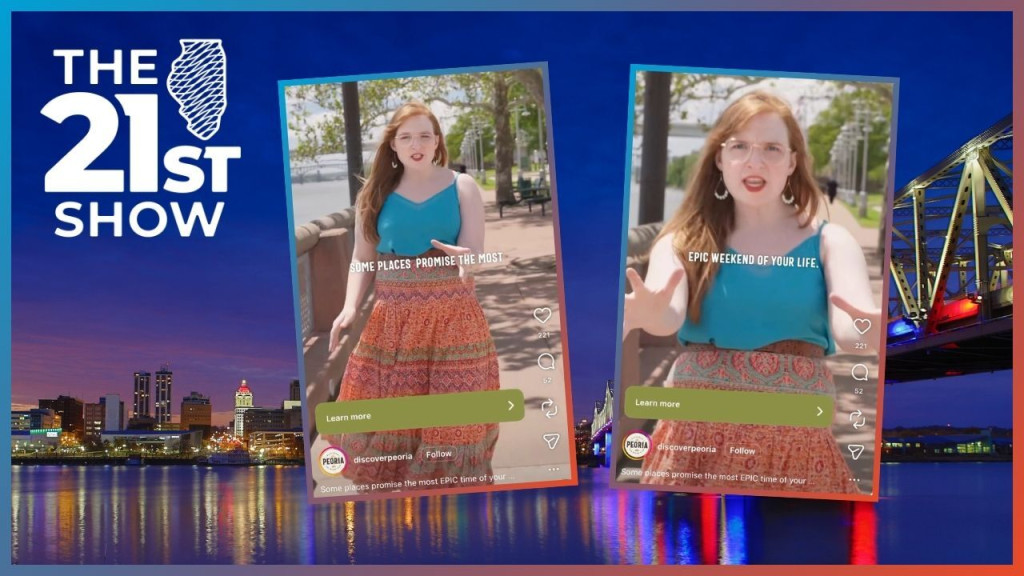
Brian Mackey: From Illinois Public Media, this is the 21st Show. I'm Brian Mackey. Labor Day weekend is upon us. That means some of you are thinking about late summer getaways. For your consideration, why not check out a downstate Illinois community? Take Peoria, which, as a recent tourism video suggests, has things to offer.

[00:00:30]
Speaker 1: Some places promise the most epic weekend of your life. Yeah, we don't promise that. Oh wait, I'm kind of hungry. What we can promise is a perfectly reasonable weekend. Go downtown and see a show, see some art, or eat something you'll want again later, all without taking out a second mortgage. What do you think?

[00:00:51]
Brian Mackey: A perfectly reasonable weekend is not the usual tourism hype video, but it is honest, and this one sparked a bit of a debate online, making it go, well, somewhat viral. People seemed to appreciate the honesty, though others said it might have been a little too truthful. Either way, it got us thinking about what it takes to draw people to some of Illinois's smaller cities. Forget Chicago, forget St. Louis, they sell themselves. How do you get people to Peoria, or a place like Quincy, or Galena? Why has that been such a tourist draw for such a long time?

Joining us to talk about precisely that is J.D. Dalfonso , chief executive officer for Discover Peoria. J.D., welcome to the 21st Show.

[00:01:33]
J.D. Dalfonso : It's a pleasure to be with you. Thank you for having me.

[00:01:34]
Brian Mackey: Also with us, Holly Cain, executive director for See Quincy. Holly, welcome to you as well.

[00:01:41]
Holly Cain: Good morning. Great to be here.

[00:01:43]
Brian Mackey: And last but not least, Terry Mattson is the president and CEO of Galena Country Tourism. Terry, welcome to you.

Terry Mattson: Good morning, Brian.

Brian Mackey: Listeners, you can join the conversation at 800-222-9455. Have you visited some of Illinois's smaller cities as a tourist? What was it like? And would you consider such a trip if you haven't?

We did ask our texting group about this. Aaron in Springfield says, I like to explore the small festivals. Annie in DeKalb said, I've been to Bishop Hill, a utopian 19th century village, several times and tell friends and family to visit. It's a fun day trip. The Illinois [Museum there] has a collection of wonderful portraits and landscape paintings with a folk art theme, [a] Swedish grocery store, a bakery, and a couple of nice restaurants — a must-see.

If you have favorite tourist spots downstate, especially downstate cities, let us know. 800-222-9455. That's 800-222-9455.

All right, I want to start by just sort of getting a temperature check, if you will, about the tourism scene in each of your areas. J.D., I'll start with you. What is tourism like in Peoria?

[00:02:54]
J.D. Dalfonso : Well, it's a — I'm proud of my market, uh, of, of Peoria. We cover seven counties of central Illinois, which is something people may overlook, uh, sometimes from the name or just the understanding that we, we cover an urban and rural, uh, landscape. Uh, so it brings a great diversity of opportunity when it comes to highlighting what you can do in the city of Peoria, just across the river in East Peoria or in, you know, the, the more rural landscape like Marshall County, uh, and Woodford County and all the things they have there.

So, uh, it's, it keeps you on your toes, I think, in the sense that we have a great, uh, unique asset of the Peoria Civic Center in the heart of downtown that provides a space that you can't really find south of Chicago except for here, you know, the, a theater, uh, 15,000-seat arena, exhibition space, ballroom space, all under one roof, uh, right in the heart of downtown, uh, sports tourism in both Peoria and East Peoria. Uh, and then, uh, plenty of leisure activities, uh, you can immerse yourself in if you want to, to take in a part of those fall festivals or get out to the great outdoors, uh, what we consider ourselves a leisure destination, I wouldn't categorize this as that, uh, but we have those leisure opportunities.

What we get to do in our market is really emphasize on how, uh, tourism affects both the resident and a visitor alike and how do we incorporate our residents to also partake in tourism in our own backyard. So much of our strategy hits here at home and also those looking to visit more than 50 miles away. So the, the best part of the opportunity is to continue, continue to try and be creative on how you just motivate visitors to come visit, enjoy your destination, as well as getting your residents to engage at the same time.

[00:04:29]
Brian Mackey: Yeah, and we're gonna come back to that point a little later. Holly Cain, [See] Quincy, let me, let me bring you in. What, what is tourism like in Quincy?

[00:04:37]
Holly Cain: Well, like J.D. said, we're a bureau that markets three very diverse counties. So from Quincy being kind of the county seat and the largest community to north of us in Nauvoo, which is a large Latter-day Saints community and attractions, and then south of us in Pike County, which is a very well known deer hunting outdoor recreational, uh, area, um, so again, like J.D. said. Very, you know, city urban, um, architecture in Quincy is our main focus and then also, you know, outdoor recreation with our other communities and then church history and other, you know, significant, um, museums and such with Nauvoo and the communities north of us. So we've tried to advertise them all in one ad. It doesn't work. They're all different and unique, but it's a good thing.

[00:05:25]
Brian Mackey: And Terry, uh, Mattson with uh, Galena Country Tourism, same, same question. What is, what is tourism like in Galena?

[00:05:34]
Terry Mattson: Well, it's been, it's been very robust. We're, we're beginning our, our third consecutive year of, of record revenues. So, um, we've been busy. We're primarily a leisure travel destination, uh, not much on the corporate business side. If people are familiar with Galena in northwest Illinois, um, we don't have the facilities for the sports marketing, and, and not much for meetings and conventions. So, um, it's package travel, it's leisure vacationers.

Uh, what makes it popular? Um, well, obviously we're the, the destination marketers, so we have a role in all of these partnerships, but it's place — it's with Galena, it's a historic Main Street, its connections to Ulysses Grant, the landscape here in the Driftless, spectacular, one of the prettiest places in the world. So that alone makes it very popular and the, and the people, it's interacting with the owners, the makers, the guides and the hosts and all of our partners who bring it alive. And, and our role is to help introduce people to the area, to discover the area, to plan their visits and connect with all of these local businesses that bring dollars into the economy, make it a better place to live, work and play.

And as mentioned earlier, a destination has to work as a great place to live, and, and that's what attracted me to the area. I'm not originally from here. Uh, I've been here about 2.5 years, uh, grew up on Lake Superior in, in northern Wisconsin, and I've spent time in, in, uh, northern Minnesota and big cities in Minneapolis and in St. Paul, and I'm drawn to the area because of probably what it doesn't have. Uh, it's, it's a different lifestyle, a different pace. It's country roads, it's those conversations, uh, with the shop owners and, and the, the quiet moments in a historic downtown.

And it, it isn't just Galena, uh, most of downtown Galena is on the National Historic Register, but we uh, include all of Jo Daviess County with other communities like Elizabeth, Hanover, um, and the, the beautiful countrysides that gives, uh, people a myriad of different reasons to explore and, and stay longer.

[00:07:43]
Brian Mackey: I visited all three of your locations. I will say I was just in [Jo Daviess] County — I think it's [Jo Daviess] County — to climb Charles Mound, Illinois's highest point, last year, and I hadn't been there since I was a kid. It really feels like you're in Vermont. It does not feel like the rest of Illinois, the Driftless. We can come back to that though.

Uh, J.D., let me, let me — let's get into the ad. Talk me through the thinking behind what went in, because I've looked at some of the other ads you do. There is like this self-effacing thread that runs through some of these, some of these. So talk me through your thinking behind that.

[00:08:15]
J.D. Dalfonso : Yeah, so, um, you know, I, I run a destination marketing agency, uh, or, you know, um, organization. Uh, but I'll be first to, to tell you I'm not, I'm not the most creative, it's, and, uh, in a sense, so what I, I love to do is, is task, uh, you know, our team to go out there and think, uh, but I encourage them to be authentic. Um, you know, I would say realistic and, and, and, and how we promote our destination.

One of the things we gotta do is continue to try and separate ourselves as a tier 2 city, if you want to classify us as that. Um, you know, how do we continue to try and punch above our weight? And we do that in sales strategies and marketing strategies. Uh, last year, we ran a, a, a campaign called Doorway to Discovery Campaign, which highlighted an orange door that transported you across the different experiences you can have. And while it served the purposes, we're looking for something a little bit more authentic, may bring a personality to light, bring them into focus. And so we did some local casting calls to, to find somebody that could help represent, you know, not just the messaging and the destination, but hopefully engage and, and do time with the community, be a recognizable face that can help promote all the great things that we have to offer while being authentic, you know, and trying to be realistic.

And, and when they brought the ideas, um, you know, we have two dozen scripts, you know, either some shots, some supposed to be shot throughout the year, you know, this is one that, you know, we, we took a, took a hard look at, uh, just to see, all right, we asked for authenticity, can we play a little joke to it? Uh, can be real? Um, and, you know, internal discussions like, we can't say that — we're gonna, you know, you can talk about Las Vegas or Nashville to be epic weekends, but let's be realistic in the way in which we can promote a great weekend and a great experience. And I think what we try to hit on, and that was that we are, we are gonna call this what we are, a great opportunity to have a good weekend, uh, and you're not gonna have to take out a second mortgage or break the bank, while also trying to enjoy all the same amenities you can have in some of these big city fields.

So, uh, trying to hit on that, and as we woke up one morning, we saw, and many of my text messages were filled with a, a video, uh, responding to it. Uh, generated some conversation. And so it was an interesting weekend that weekend, but we had some internal discussions and, and we're, we're, we're still enjoy the fact that it's, it's generated some conversation, which is why we're here today.

[00:10:32]
Brian Mackey: Yeah, let me, let me, uh, share some of the replies, uh, that, that our producers pulled. This is from Twitter. So, uh, we're leaving out the Star Wars bar scene stuff, but, you know, some of the, some of them are included: I've been to Peoria once, I can confirm it's all right, I guess. Uh, now I want to visit Peoria as a challenge to have the most epic weekend of my life. Uh, I came here for a mid-term, not a long time, and, uh, in a K-shaped economy, I get it, to be honest. Um, so yeah, tell, tell me more about the, uh, sort of your experience of this going viral.

[00:11:03]
J.D. Dalfonso : Yeah, we, we see, we'll be able to hear, uh, some local perspective and those online and, um, you know, one of the first persons I texted on the, on the weekend was, uh, our director of marketing, and I said, look here, and he goes, he goes, this is great. It's kind of his first conversation. I said, OK, well, let's talk about your perspective. Uh, and —

[00:11:23]
Brian Mackey: All publicity is good publicity, right?

[00:11:25]
J.D. Dalfonso : Well, in a sense, in a roundabout way, he goes, well, listen, this, this creator doesn't — I, I don't see him talk about cities very often, and it's generat — he's, he's, he says it kind of hits on the points we were trying, you know, we, we kind of intended for. Now, all the residual conversation, you know, we, we, we're taken in stride and we had, he came with a couple of plans to, to engage, uh, with the conversation that was happening from the Discover Peoria standpoint, in, in, in a way of recognizing the point, uh, being made. Not to, not to combat any comments, but to engage in dialogue and, and, uh, I, I actually, uh, said, why don't we — this is the first time we've kind of been in this arena. Why don't we sit back? Well, what we — and if we, we hit it again, then, uh, maybe we can properly engage.

So we had, we had some great, but he shifted my perspective and understanding like this is what we kind of drafted up the script to be and the execution. It is what it is at this point and we can engage in this conversation, but, you know, we love to see people understand the point of the script and that, that scene. Uh, and not all of them are gonna hit on that topic, but it was one that we did take a look at and, uh, uh, you know, I, my, my position is a little bit different than the marketing position is, um, to navigate the representation of the bureau. And so, uh, you know, my heart rate raised a little bit. I'll be honest, but, you know, working and leaning on my creatives that helped guide, uh, and, and execute it, um, you know, it, it brought my heart rate down on that Saturday morning.

But also in the background, people didn't know that we had already conducted an audit on the campaign just to see how it performed in the first, first sprint out, and we were already making some tweaks. So it came at a unique time for us to say, well, is it working or not?

[00:12:59]
Brian Mackey: Holly, I wonder if any of that resonates with you, with, you know, how you advertise and market, uh, [See] Quincy to, to attract tourists.

[00:13:07]
Holly Cain: It really does, and half of the battle sometimes is keeping our locals and our area residents engaged so they're not the first naysayers on a campaign or a social media post to say, you know, oh, there's nothing to do here, or this is such a, you know, dirty community or this is this, you know, it's really making sure that we're also letting our locals know all of the great things and the places to see and things to do here too.

So we, we understand that part of it too, and social media has allowed us to do that, you know, to invite those local leaders oftentimes to see what we're doing. And you know they're not seeing our advertisements all the time because we're typically marketing outside of our area, but we do know the value of keeping our locals engaged and sometimes posting posts that might just be of our bridge lit pink for Dolly and then they're sharing it and going crazy over it because they're very proud of it. So, that's one component that we also look at too, making sure, you know, that we're not the only ones selling our community.

[00:14:13]
Brian Mackey: Terry, Galena is in a, a little bit of a different situation from Peoria and Quincy in that it has, you know, maybe a track record of attracting tourists more organically. Why is that?

[00:14:23]
Terry Mattson: Um, well, first of all, Galena's been here for 200 years. Uh, this is the bicentennial in 2026, so, we're very proud of that. I concur with what the two other leaders said about engaging residents, and we've done some deep research on resident sentiment, and about 80% of the local population is very supportive of tourism. They want to be engaged. There's a lot of details to share there, but we're primarily destination marketers, as we've touched on.

So being creative is important. Being authentic is very important, and it's our role to start the conversation from digital and social media campaigns to our public relations efforts and various event promotions, and all these strategies are designed to attract very diverse audiences and extend those stays. And as marketers we know that in order to keep all of the lodging facilities, the restaurants, the attractions full, it's, it really takes a coordinated strategic effort and frankly, nothing happens until you sell it. There, there just wouldn't be the type of demand without the public-private partnerships that we engage in along with, with local businesses to, to generate that interest and, and bring people to town.

So we're proud of the work we do. My background has been in destination marketing over my entire career, whether it's, uh, in Duluth, Minnesota, uh, and building the industry there or running a convention center in the Twin Cities, um, so I said, I, I think bringing that type of experience really helps in how we communicate with, uh, with the residents as well. And I, and we hope, yeah —

[00:16:07]
Brian Mackey: So I'm, I'm sorry to interrupt you. We're gonna have to take a break. We're on a fixed clock on our program and we will continue this conversation on the other side. If you want to join us, 800-222-9455. We're talking about marketing downstate communities to tourists. This is the 21st Show. Stay with us.

It's the 21st Show. I'm Brian Mackey. We're talking about small city tourism across downstate Illinois with three representatives of local tourism bureaus, Holly Cain from the Quincy area, Terry Mattson from Galena, and J.D. Dalfonso  in Peoria. Uh, notably an ad from Discover Peoria went a little viral, uh, recently, uh, specifically because of its promise of a reasonable weekend as opposed to an epic weekend. It also mentioned that visiting the Peoria area wouldn't, uh, take out a second mortgage or require the taking out of a second mortgage on your house.

You can join us today, 800-222-9455. What do you think about self-effacing tourism ads, honesty in this sort of advertising? Uh, maybe you visited some of Illinois's smaller cities or towns as a tourist. Uh, would you consider such a trip if you haven't? 800-222-9455 is the number. 800-222-9455.

So, um, J.D., talk to me more about, you know, selling a perfectly reasonable weekend rather than an epic weekend in Peoria.

[00:17:44]
J.D. Dalfonso : Yeah, yeah, I mean, uh, I, I keep thinking about an example I, I recently had with a close friend of mine visiting from, um, Austin, Texas. And, uh, he and his wife were up here on their way up to Michigan and they stayed with us and, and we, we as, um, husbands had the opportunity to get out and we went to a local bar, Schooner, right there on War Memorial Drive in the heart of, uh, city of, of Peoria, and we sat down and we weren't, we didn't eat, we just, we just caught over, over beverages and, and, uh, well, we each had, uh, maybe three beers over an extended time and a couple of other drinks, uh, you know, the tally had come and as we were fighting over the check, he won, uh, and was bringing out his cash and he brought out a $100 bill and uh, the check came saying $17 and change. He couldn't believe what he was seeing.

And so, while we were catching up over the weekend, uh, he just, he just could not get over the fact that we could have what would be a $90 night in Austin, Texas for less than $20. Uh, and, and you know, that's before we got into any activities, right? And for anybody visiting, maybe you do that, maybe you don't, but what we get to push is, is, is greater opportunities to explore, whether that's the Promise of Freedom exhibit at the [Peoria] Riverfront Museum, right across the street from our [Door Breads and Provisions] where you'll have great meals. We're trying to push that experience. And I think when you engage with the destination, you start to see that you can have whatever — we call it a reasonable weekend. Uh, but sometimes paying less than $20 is pretty epic, uh, for your meal, uh, with your family. And so, we're trying to get you here to see it and, and, and understand it for yourself. Uh, another reason why in the long term, many people are trying to move back to raise their families because they get that 24/7. So we're trying to push that, and just try to push those stories, inspire people to understand the destination we call home.

[00:19:30]
Brian Mackey: I want to talk more about this idea of engaging local residents. Holly, you, you mentioned this earlier, I, I think, and, you know, I, I follow the — because of my job partly — I follow the, uh, Reddit threads for a number of downstate Illinois communities and one of the most common posts I see is, hey, I'm thinking about moving to, you know, Springfield, Bloomington-Normal, Champaign-Urbana, whatever it would be. Um, what is there to do there? And you do get that nothing, you know, uh, don't bother kind of thing. You get, you definitely get that like classic internet negativity. So, you know, talk to me about your sort of like, do you do rapid response? How, how are you monitoring this? How are you actually — what is like engaging the community actually look like in practice?

[00:20:13]
Holly Cain: We do and we, we try to just invite so many locals to either get our e-newsletter or receive, you know, um, follow us on Facebook or social media just so they know what's going on. And, you know, we did a 50 great things to see and do brochure 20 years ago, sitting at an RV show board and um, created it, but it's just kept evolving because we did it for our local frontline workers. Instead of saying there is nothing to do here, which we had heard, we said, let's give them a brochure with no ads in it and update it every year and tell them 50 places to see and do in the area.

We've also done a free museum passport. Our locals oftentimes don't even know we have 13 museums just in Quincy, and this gives them free admission into all of them. Some of them don't charge, but it's really a thing that we give to our visitors. We've now offered our bicycles at our visitor center free of charge just as a hospitality tool to get, you know, people to come to Quincy. Don't mess with having to bring bikes or kayaks. We've got them here now for you. So it really is keeping those locals engaged so they know what to do here if they've got people coming in or just, you know, don't, um, have the negative responses on our social channels. If you are a local resident, here are all the things you can do, and it is part of our marketing, really, it is.

[00:21:49]
Brian Mackey: Terry, what about, what about, um, you know, managing expectations, right? You promise a good time, you don't want to overhype it, so people are leaving disappointed. How do you say, you know, Galena, we've got that historic charm, you know, maybe it's not Bruges, or, uh, you know, some European destination or something like that. How, how do you strike that balance?

[00:22:08]
Terry Mattson: Well, well, affordability is important here too in all of these destinations, and I, and I think there's that thread throughout the Midwest. Um, but we have everything from budget-friendly to very luxurious as well. So, um, whether it's strolling the historic streets or, or being on the outdoor sites, um, there's a lot of different variety.

And we've also focused on our residents as well. In fact, in the last year we developed a new app, um, something very cutting edge that was designed just as much for the locals to be immersed in everything in their backyard as it was for visitors, along with developing a series of different trails where people can check in at these businesses, the [Coffee and Culture] trail, for example, and claim some, some really meaningful prizes. So, all of it's with the goal of, of, of hoping people develop an affection for this place and, and its people. And, um, we see that working.

[00:23:07]
Brian Mackey: Terry, how important is tourism to the Galena economy?

[00:23:12]
Terry Mattson: It's — I don't think it's a stretch to say that it's everything. There's two primary drivers of the economy here, agriculture and tourism, and between the two of them support just about everything else, including the trades and public services. And, and tourism marketing isn't just about attracting visitors. The end goal here is about cultivating a very vibrant community. The revenues that we generate by visitors directly and indirectly support everything from government to schools. And Galena Country Tourism creates and enhances all of the amenities and quality of life for residents that otherwise wouldn't exist, so it's very valuable to this region.

[00:23:53]
Brian Mackey: Holly, what about in Quincy? Um, is it, how, how would you rate, you know, the importance of tourism to the overall sort of economic picture there?

[00:24:01]
Holly Cain: It's very important, you know, it employs over 1,000 people in our county alone, in Adams County, and it is a dollar that keeps turning over and creating a vibrant downtown. You know, hotels — we've got new hotels popping up that are going to be a boutique one and then one right on our riverfront. You know, it's really, it's, it's something that's important.

We're a full service bureau, so we are marketing leisure, you know, as the other communities are too, but again, we're looking at building our — our council just passed funding for a new clay shooting complex and a sports complex. So that's part of it and that affects our locals as well, you know, they can stay here and have a local tournament that they are not traveling for or they can bring some of their teams into our community for sports tourism. So it is a big part of our fuel and I think our locals are really seeing it more so as these are passing city council. And in the news lately, and you know, development of our mall possibly for the future. Um, so yes, it is something that's very top of mind and very important to our, our three counties definitely.

[00:25:12]
Brian Mackey: You mentioned sports tourism and that's interesting. I haven't heard as much about that. Is that like youth sports, you know, these, these, uh, baseball teams, soccer teams? Yeah, say more about that.

[00:25:20]
Holly Cain: Yes, probably our largest tourism event are sports, uh, sports events. We do have baseball tournaments that bring people in every weekend from the spring all throughout to mid-July and, um, you know, with that coming along we've got development for soccer and indoor, a dome facility that will also allow us to grow some of our basketball tournaments. We've got two colleges here with Quincy University and John Wood Community College, but we're having trouble getting our tournaments onto their courts because their courts are valuable for their teams and their practices.

And so this sports complex will bring a great blend of, you know, local use, but also providing a daycare and possibly an entertainment complex that we know our community also needs, you know, with the affordability of daycare and the, and the need for it, um, I think that was part of the sell to our city council for our city to invest in the sports complex that also has other uses and will also bring more growth to our community too.

[00:26:25]
Brian Mackey: So as we mentioned earlier, money is becoming tighter for a lot of people these days. And uh, uh, J.D., let me come back to you. How, how has that affected, uh, tourism in Peoria? How does it look this summer?

[00:26:41]
J.D. Dalfonso : Yeah, tourism, well, in Peoria has been, has been strong in the sense of some statistics we, we continue to follow. One, we're always looking for heads and beds, despite our role expanding further than that, right? We want those torsos through turnstiles and people in the seats and all that, uh, shopping in the stores. But, you know, hotel health is always a barometer for us, and we're seeing a growth in occupancy. Uh, a really strong growth in the average daily rate our hotels look for and, and the RevPAR is nearly double digits. So, when we, when we get back to the brass tacks of what we're called to do is to fill the heads and beds, those indicators seem to be pretty strong.

Uh, other metrics that we see too, total trips to the area, uh, are up 3%. Um, and now it's, now it's diving — and where are they coming from? Are these driving distances, uh, right? Um, how is the [port's] tourism, how [are] the tournament's uh, performing, right? I think the affordability that we're all facing in, in different aspects of our life plays into travel and tourism. I think travel, tourism, vacations is vital to the health of every family. Uh, and, uh, as we plan our trips, uh, depending on where we sit, um, you know, that could be a driving distance or maybe we're flying. Uh, but whether that's, uh, just driving down the road to, to visit a destination for a day trip, uh, it is vital for just the health and of each family, I believe.

And, and if we can do that even here, we are gonna explore our own destination over Labor Day weekend because there's just many things our family has not been able to get to. And I think that's the case for many, uh, here in central Illinois. So, uh, while the numbers are rising, uh, it's always fluctuating as to how the travel trends are, are kind of coming through the summer. But right now we're, we're pleased with where the numbers are going and we just wanna try and continue that into the fall.

[00:28:18]
Brian Mackey: To share another listener comment, uh, John in Lawrenceville emailed in, said my spouse and I moved here last year from the Chicago area. Uh, love the lower cost of everything. We really like the ad campaign years ago that touted Illinois a million miles from Monday, attracting weekend visitors to all parts of the state. Our favorites have been the numerous zoos and animal and natural areas unlike anything up north, and especially the white squirrels of Olney. Thanks for another great show. Well, thanks for the message, John. Appreciate you writing in. 800-222-9455 if you wanna join us in the next five minutes or so.

Um, Terry, let me ask you, who — you know, that Enjoy Illinois, that put me in mind. I actually saw an Enjoy Illinois ad on the, uh, uh, giant screens in Times Square a couple of years ago when I was visiting New York City. I'm imagining that maybe that might be a little outside of the Galena Country budget. I don't know. Who are — how big a net are you casting? Who are you trying to reach?

[00:29:16]
Terry Mattson: We have, uh, well, our primary market — our draw, I should say — is Chicago. 30 to 40% of our visitation naturally comes from that area. We know when economic times are more challenging, that people tend to travel closer to home. They also likely spend less per visit, but it underscores the importance to, to be strong in your marketing because there still is a desire, a want, and a need to travel.

Our other markets include Iowa, Illinois, Wisconsin, and some new growth markets. We've, we've have research that, that proves the fact that the further we can draw people away from [home], the longer they'll stay and, and, and the more money they spend. So that's proving to be very lucrative for us as well. And we've got a number of different numbers that I could bore everyone with, like tourism in Jo Daviess County is over a half a billion dollars a year industry, which is pretty incredible for a town of only 3,200 people. So, there's more than 3,000 jobs in the local economy directly related to tourism, and it's really the, the entire economy is lifted through these concentrated efforts.

[00:30:33]
Brian Mackey: All right, I'm gonna share one more listener comment. Ann in Urbana texted, said we have many positive experiences in small towns in southern Illinois. We used to stay in Jonesboro and eat at the Brick House Grill in Anna. There was a really nice bed and breakfast in Jonesboro. We visited about three times a year on our way to see family in Arkansas. Also mentioned some of the natural areas down there, Giant City State Park, Garden of the Gods. Thanks for the message, Ann.

Um, just about, uh, three minutes left. So I wanna go sort of around the horn, uh, so to speak, and ask each of you to just make a pitch. People might be making plans for the Labor Day weekend. Uh, Holly, I'll start with you.

[00:31:12]
Holly Cain: Thank you. We think, you know, our architecture is our best asset here and we've got a fantastic Main Street mile and we've got 17 homeowners that will actually let you tour the inside of their home. So it's not just the architecture, but it's oftentimes the treasures, the gardens, the ghost stories, and more. So we think our architecture is fantastic year round and it's something unique that you can go inside and just, um, snoop everything you want to see and hear from the homeowners. So let us know if someone would like to come to Quincy for a personal private home tour. It's $30 and, um, you won't be, uh, you will be definitely satisfied and, um, leave with a great appreciation of a city within, you know, a large community of anywhere in 10 minutes, free parking, 13 museums, and a lot of free fun activities.

[00:32:07]
Brian Mackey: And, uh, Terry, what about you?

[00:32:10]
Terry Mattson: Uh, well, coming up on Labor Day, but that, that isn't the end, uh, for, for Galena Country by any stretch of the imagination. The, the fall and leading into the holiday season is some of our busiest times. Um, we encourage everyone to visit. I'd, I'd ask them to go to our website, visitgalena.org, where they learn everything about how being original never gets old.

Uh, if you're looking for, um, less crowds, I'd encourage midweek, and please, uh, enjoy and appreciate the fact that it's not just summer vacations, it's a year-round destination. We have Chestnut Mountain, uh, a wonderful outdoor facility with, uh, believe it or not, some fabulous skiing. And, uh, we just keep doing what we're doing and we invite everyone to come and just really stress that Galena is affordable and it's welcoming to everyone.

[00:32:55]
Brian Mackey: All right, J.D., 30 seconds and I'm gonna have to hold you to it. Sell me on a perfectly reasonable weekend in Peoria.

[00:33:02]
J.D. Dalfonso : An incredibly week — a reasonable weekend in Peoria. I'm gonna highlight our Peoria Riverfront Museum. I just left a press conference in which they are in direct collaboration with the 9/11 Museum in advance of next year's remembrance of 9/11. Uh, that is going to be coupled with their ongoing exhibit, Promise of Freedom, which is the most comprehensive collection of American artifacts that we have that has helped shape our nation over the last 250 years, including an original document of the Declaration of Independence. Visit the Riverfront Museum, go across the street to the Caterpillar Visitors, uh, Center, uh, and just enjoy the restaurants right on that same block. And, uh, if you want to stay at the Pier Marquette Hotel right downtown, make it even more —

[00:33:41]
Brian Mackey: And we're, and we're gonna have to leave it there. J.D. Dalfonso  with Discover Peoria, Terry Mattson with Galena Country Tourism, Holly Cain with [See] Quincy. Thanks so much for being with us. More to come here on the 21st Show after a short break. Stay with us.
Transcript Assistance
Illinois Public Media may use AI assistance for transcript generation and/or formatting. Transcripts that have not yet been reviewed for accuracy will be labeled.
To report a transcription error, or to request transcription of archival material, please contact will-help@illinois.edu.