








Transcript: We interviewed all three candidates for Illinois governor — hear the highlights
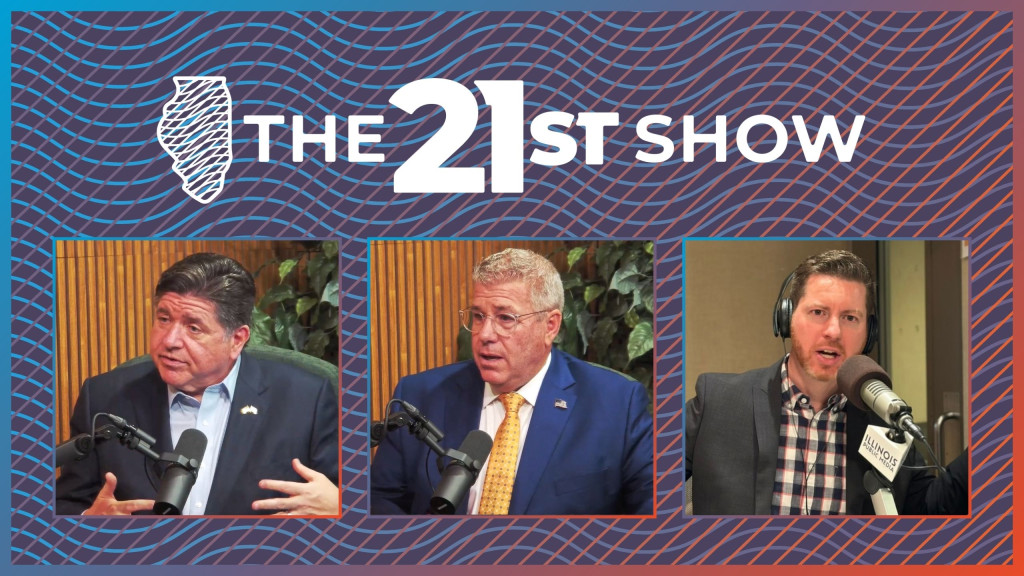
Transcript: We interviewed all three candidates for Illinois governor — hear the highlights
The 21st Show
We interviewed all three candidates for Illinois governor — hear the highlights
Read the full story at https://will.illinois.edu/21stshow/we-interviewed-all-three-candidate-for-governor-hear-the-highlights.
Transcript
// This is a machine generated transcript. Please report any transcription errors to will-help@illinois.edu.

[00:00:00]
Brian Mackey: Today on the 21st show, we are less than a week out from election day. Among the choices before voters is who should be the governor of Illinois. Incumbent Democrat JB Pritzker is seeking a third term. He's once again being challenged by Republican Darren Bailey, representing his party for the 2nd election in a row. And there's also an independent campaign from Colin Corbett, a former Republican political consultant hoping to build a political movement from the center of Illinois politics. We've spoken with all three men on our show, and we'll listen to some of the highlights from those interviews today. I'm Brian Mackey, and that's coming up on the 21st show, which is a production of Illinois Public Media.

But first, news.

From Illinois Public Media, this is the 21st show. I'm Brian Mackey. We're now less than a week away from election day, and early voting has already been underway for more than a month. Over the next two days, we are bringing you recaps from our conversations with the people running for some of the top races on the ballot. Tomorrow, the U.S. Senate election. Today though, the campaign for governor of the 21st state. There are 3 candidates in the race, incumbent Democrat JB Pritzker, Republican Darren Bailey, who ran against Pritzker previously in 2022, and independent Colin Corbett. Over the past few months, we've talked on the program with all of them, and for the hour, we're going to share highlights from each of those conversations. If you want to listen to the full interviews, you can find them on our website, twentyfirstshow.org. And if you have thoughts on the program, you can always send us an email, talk@2firstshow.org is the address.

OK, on with the show, and we begin with Democratic Governor JB Pritzker. He's seeking a 3rd term in office. If the voters approve, he would join Jim Thompson as the only man ever to earn that privilege here in the 21st state. I spoke with Pritzker in early August. I should say we offered Pritzker's campaign a full hour interview as we did with the other candidates in those top of the ticket races. They gave us a half hour, which we accepted. We started off by talking about conditions in Illinois prisons and the humanity of people in those prisons. That is something that is not always common from politicians, and Pritzker and his wife have made a point of it during his time in office. So I asked him, what does he see that others don't?

[00:02:52]
JB Pritzker: Look, they're in prison for a reason, right? They've committed a crime and they've been sentenced, and there are many of them that don't reform in prison and don't try to better themselves, and many of them who never get out. But there are also a lot of people who go to prison who see it as an opportunity to reform themselves, to rehabilitate, and if we give them the opportunity to do that, um, you'll often see real transformation. And so it's just recognizing the humanity in everybody. People make mistakes, sometimes terrible, terrible mistakes. That's not to say they shouldn't be punished for those mistakes, but it does mean that after some number of years, recognizing that they can improve themselves and sometimes they can be examples to others in prison — we want our prison system to operate properly, you know, in a way that doesn't just have people, you know, constantly at war with the officers in the prison. So I, so that's all it is, just a recognition that everybody's human and that wherever we can, we should recognize that humanity and reward good behavior when that's something that people exhibit.

[00:04:06]
Brian Mackey: We went on to talk about some recent reports at the time of dozens of fires at the Joliet Treatment Center that is meant for people with serious mental illness and reportedly conditions deteriorated significantly in the years since the facility opened, leading to inmates setting fires in what seemed to be a cry for help. The governor of Illinois is essentially the chief executive of a company that employs 60,000 people, the state government of Illinois, and with that in mind, I asked him how he found out what was happening at Joliet.

[00:04:41]
JB Pritzker: You know, when the individual reports come, I often will read about it, sometimes I don't, sometimes I don't know about it either because I didn't read that particular newspaper that covered it or something, but often it's either that I read the report or somebody in my administration comes to me and says, here's what's happening and gives me a description of it, or maybe they have the article and shows, show it to me.

[00:05:05]
Brian Mackey: But I guess I'm wondering, did somebody say, hey, you know, there have been a dozen fires in Joliet, 20 fires, 70 fires. Yeah.

[00:05:12]
JB Pritzker: Yeah, I will — I will not — I will say that that it isn't as if all along I've been made aware that there are, you know, that that led up to this moment, you know, and we've just ignored it. That's not the case. Indeed, I can say that when I find out about these things, I take action, and indeed that's something that we're engaged in right now. You know, you talked about the state government being a 60,000-person corporation, sort of, um, and I know, I, you know, I was in business before. I had 10,000 employees across several different divisions and companies, and I can tell you it's a hard endeavor to manage that many people. You can't do it yourself because you're not directly interacting with all those people, in my case, 10,000 people. You're indirectly often, um, and so you have to rely upon people reporting up the chain. You have to rely upon good people around you to make sure they're monitoring properly. So that's a lot of what goes on, and, um, and, uh, I can say that I know how to manage, um, and at the same time we rely upon people to do their best, right, and be good public servants. Sometimes people don't want to let others know that something's gone wrong in their part of the department, um, or sometimes there are things that happen that really are out of the control of the people that are above those situations. So, um, anyway, but there's a wide variety of circumstances, and as you said with 60,000, roughly 60,000 employees, a whole lot can happen.

[00:06:46]
Brian Mackey: All right, if you're just joining us, it's the 21st show. We're listening back to parts of my interviews with the three candidates in next week's election for governor of Illinois. Right now we're hearing from the incumbent Democrat JB Pritzker. Again, he's running for a third term. And I also asked him what he still wants to do in that office.

[00:07:06]
JB Pritzker: Well, you know, I came into office with a whole lot of, uh, of things that needed to be accomplished, and I would say we have only accomplished some and not all of those things. Um, and those challenges that states face, in many ways they've increased. Think about the challenge that's now upon all of us, of the really transformation that's going to occur in our economy as a result of AI. The challenges that have been brought upon our children and all of us really by the failures of social media companies and the fact that social media has really divided us all and caused mental health challenges for people. These are new things that we're now trying to address. AI is very new and the solutions to it are still being explored. But I guess what I would say to you is my job as governor is to make sure that we're constantly trying to stay ahead of, or at least up with, all the things that are coming at us.

So I'll give you the example of something else new that is really, really challenging because the Trump administration has now cut drastically Medicaid coverage and food assistance for people who need it most. We as a state government have to figure out, how are we going to address the needs of people who are going to be thrown off of food assistance and healthcare for no reason other than Donald Trump wants to eliminate those programs. That really is what he's going after, but can't announce it that way. And so we can't fill the hole. We don't have enough money to do what the federal government has been doing up to now, and so we have to find new and different ways to do it. So those are parts of my job, and then I'll just talk about the things that have been in progress and more to do, um,

[00:08:55]
Brian Mackey: You know, can we stick with the money question for a second?

[00:08:57]
JB Pritzker: Yes, because I just want to point out education, uh, growing the economy — these are things that we are in the process of succeeding at. But there's so much more to do, and we've got to move Illinois forward, and those are things that motivate me to want to serve a third term.

[00:09:12]
Brian Mackey: You heard me jumping in toward the end there with what I call the money question, namely where do you find the money to sustain programs like Medicaid and food assistance without federal help, especially when budgeting is already a precarious task here in Illinois.

[00:09:27]
JB Pritzker: There's no way to backstop the $7 billion that would have come, well, you know, should have come for Medicaid, uh, in the coming years, uh, the $8.5 billion roughly that's being cut — grants and other things that they're taking — there's no way for us to backstop that, right? Our whole budget is $55 to $56 billion. We're not going to be able to find the 15 to 20, $25 billion that the federal government is taking away from us. So the question is, when you think about the fact that we have to address the needs of people who are being ill-affected — indeed they're being tormented by what the federal government is doing — so those are, I mean, not easy things.

But I will point out this: when I came into office, I think you know that we had $17 billion of unpaid bills. I mean, we'd borrowed money to pay for about $8 billion of it, but the other 9 still there, and the $8 billion, by the way, you still have to pay debt off — it just wasn't in the form of, you know, overdue bills. So that's $17 billion, we've paid almost all of that off. We also have the largest, at least on a per capita basis, largest pension debt of any state in the country. We also had structural deficits. So, you know, it's not like I don't understand the challenges that we have faced and know how to overcome them, because guess what — after 21 credit downgrades, 10 credit upgrades, balanced the budget 8 years in a row, reduced that structural deficit down to, you know, less than a billion dollars, we have accomplished a lot.

Can we take all the stresses here? I don't know. But here's what I can tell you. I've had 4 real crises. I've been governor for 8 years, and these were all things foisted upon the state of Illinois. One was from my predecessor, which was the leftover budget problem. How do you balance the budget of the state when he'd done such a terrible job and we had hollowed out government? So that was my first crisis. Second, of course, was COVID, and that we know all the challenges of that. The 3rd crisis was the migrant crisis foisted upon us by a terrible governor of Texas who was trying to make some political point but of course hurting the people of Illinois and hurting the migrants themselves. And then the fourth is whatever you would call what's going on right now, where the federal government under Donald Trump is literally attacking states and the people of our state. So, uh, all I'm saying is that we've been able to overcome, and I would say going forward, we shall overcome.

[00:12:01]
Brian Mackey: The last question we're going to hear came from a listener. Throughout this campaign, we've put many of your questions to the politicians seeking offices. Beth in [Champaign], for example, wanted to ask the governor: speaking as someone who is very wealthy and yet has still managed to have compassion for others, what is to be done about the ultra-rich? How do we meet basic human needs when the most powerful people see no value in it?

[00:12:27]
JB Pritzker: Well, I believe that it's a responsibility of all of us to make sure that we have a government that works for the most vulnerable, that works for the working families of our state and that works for the middle class, and that we create an environment in which people can succeed. If they want to make an investment in themselves to build a business and create jobs, we should want that, and those small businesses that get created often become large businesses. And so when we talk about the big businesses that are in the state of Illinois, they were all small businesses once upon a time.

So look, I view, you know, when people are criticizing me or criticizing people who are wealthy, they should ask the question: OK, but what is it that they've done to make the world a better place? What is it that their values are? What do they believe? Because I absolutely understand people's skepticism. And look at what Elon Musk did — he created an unbelievably profitable business in Tesla and other, PayPal and other things he was involved in, but he also was somebody who doesn't give a darn about working families or about the vulnerable in our country, and, you know, took out his chainsaw and went at it with DOGE and truly ruined, ruined people's lives. And I can see why someone looks at that billionaire and says, oh my God, we don't need any more of those. And that's true. I think you could name a few more. But I do think that you can be a terrible person and have no money, and you can be a terrible person who has a lot of money, and the real question about a public servant is, what are they doing to make other people's lives better? And I think I have dedicated myself and shown myself to be somebody who stands up for and believes in the fundamentals of what it is, the reason that I became a Democrat, which is we are all about fighting for the little guy, we're all about fighting for the most vulnerable and the working families of our state and our country. And I'm going to continue to fight like that.

It shouldn't matter how much money I have. What should matter is, am I helping to create jobs in the state? Are we making the state better for our children and our grandchildren? Are we improving healthcare? Are we providing people with enough food who otherwise wouldn't have it? These are all, you know, among the challenges that I take very seriously, and I think I've demonstrated to people — there were people who were skeptical. You may recall when I ran in the Democratic primary, lots of people on the Democratic side who were skeptical, hyper skeptical, right? Here's some wealthy guy, and here we've got a terrible wealthy governor who's failing the state, we had a terrible wealthy president who's failing the state. Why do we need some wealthy guy on the Democratic side? I remember all that. But I think I would say that people have seen that I did the things that I said I wanted to do and were the best things for the people of the state of Illinois — raising the minimum wage, investing in our roads and bridges, making sure that we're creating jobs. And we're now the 5th-best education system in the country, in the state of Illinois, 5th, and we have the highest graduation rate ever in the history of the state of Illinois, for everybody but also now for our Black residents, our Black students, and our Latino students, um, and I just make that point only to say we're making a lot of progress.

And I think the measure of me, certainly as people go into the voting booth in November, should be: has he done the things that he said he was going to do? Has he made life better, or at least, you know, made sure that the diminution that is being foisted upon them by Donald Trump is being ameliorated and that we're trying to address things as best we can given all the terrible circumstances that are being foisted upon us? And I think we've made a ton of progress. And so I'm proud of what I've done, and I'll, you know, whatever criticism people want to throw my way, I'd throw that back at them.

[00:16:21]
Brian Mackey: Once again, that is Democratic Governor JB Pritzker, one of 3 candidates in this fall's gubernatorial race in Illinois. He is seeking a third term.

A quick programming note: after the polls close on Tuesday, join me for hourly statewide updates during NPR's national election coverage. That's between 7 and 10 p.m. on many of the same stations that carry this program. We're also trying something else that's new this year. If you want live analysis as the county and statewide numbers come in, join us on the Illinois Public Media YouTube channel for a live stream starting at 8 p.m. We'll have real-time breakdowns and analysis as the results come in. Again, tune in to this NPR station for on-air updates Tuesday night, or join us on YouTube for our live stream.

OK, we need to take a break. When we return, we'll listen back to parts of my interview with the Republican nominee for governor, Darren Bailey. This is the 21st show. Stay with us.

It's the 21st show. I'm Brian Mackey. For the hour today, we're recapping our conversations with the three candidates in the race for governor of Illinois. Early voting is open already and election day is next week, Tuesday, November 3rd. If you want to hear the full interviews with each of these candidates, you can find those at our website, twentyfirstshow.org.

All right. We come now to Republican Darren Bailey, who's trying for the second time to unseat Governor Pritzker after his failed attempt in 2022. Bailey is a farmer from Southern Illinois. He started his political career on the North Clay Board of Education in Louisville. From 2019 to 2023, he served one term in the Illinois House and one in the Illinois Senate. After his first campaign for governor, he also ran in the Republican primary for the 12th congressional district. That was two years ago, but that race was narrowly won by the incumbent congressman Mike Bost. Bailey and I spoke in mid-August. Early in our conversation, he brought up high taxes, so I asked him what he would do differently about that as governor.

[00:18:42]
Darren Bailey: It was a $34 billion budget the first year I stepped in as a state representative, the first year JB Pritzker stepped in as governor. Today it's a $56 billion budget. I think we honestly have to ask ourselves, are we comfortable with that? Is that necessary? Is that money being spent wisely?

[00:19:01]
Brian Mackey: To be fair, a big chunk of that was inflation, not all of it though.

[00:19:05]
Darren Bailey: Yeah, and I will argue that, you know, a big chunk of it — you know, maybe we're talking 10 to 20%. Are we OK with the fact that nine years later, we're sitting on a $56 billion budget and during that time, probably pushing $80 billion of excess tax dollars has been brought in, you know, out of the pockets of the taxpayers? That's excluding the COVID money that was hundreds of billions of dollars that was brought in, and we have no accountability for it.

Why? Why is the state of Indiana — which has, we have, you know, 12.5 million population — the state of Indiana has about 7.5 million population. So they're a little over half of what we are. Yet their budget this year is a $24 billion budget, definitely a little under half of what we are, and they're sitting on a $5 billion surplus in their budget. Um, their pension debt is $1 billion. Ours is $140 billion. And we have to ask ourselves, over the last eight years, where have we gone? Has it gotten better? Has it gotten worse? Has it maintained? Um, Republicans, Democrats, that's what I'm hearing. This is what is different right now today than it was 4 years ago. Everybody — everyone, especially our friends that we're meeting every day in Chicago — are feeling the pinch and they're tired of it. They want to know where their money is going, where it's went, and why we are still sitting in this position of, you know, more taxes.

[00:20:36]
Brian Mackey: Even if Bailey is elected governor, the odds are good that he would be working with a legislature controlled by Democrats. So I asked him, how do you work with a possible supermajority of Democrats as a conservative downstate Republican?

[00:20:50]
Darren Bailey: I think that's what sets this election cycle up as an amazing opportunity for Illinois. So first and foremost, especially our friends up in the Chicago area in these highly populated areas — I ask a lot of people, when I ask that question, who's your state rep, who's your state senator? I say, well, we'll go figure out who yours is. And if they served with me, ask them what they think of me. And several did, and most of them came back with the same answer: well, I don't agree with Darren Bailey, but I respect him.

And there were bills that, you know, floor leader [Greg Harris] in the house came with pharmaceuticals that he couldn't get enough support on, and one of his staffers saw me talking about, you know, the high cost of, uh, of medications to our senior citizens, and we were able to get a bill passed. JB did not sign that. In the Senate, [Senator Passionzayes] came and needed some help, uh, with some, you know, junior colleges, community colleges, and I was able to get help from our side of the bench and we did get that passed and signed into law.

So my messaging — affordability, safety, and education — those are the only three things I've pushed out. Everything else that, you know, I probably was carrying along with me four years ago — those are not just I've-discovered 80/20 issues, those are 90/10 issues. So we get elected — let alone the shock waves that it's going to send across Illinois, it's going to send those across the nation. Many elected officials have discovered they have one priority that sometimes supersedes your campaign promises, and that's getting reelected. Well, in order to get reelected, hopefully the education that I'm going to bring to the people — people are going to start realizing that their struggle to financially survive in Illinois, the fact that they're concerned about the Safety Act failing, the fact that they're concerned about our schools failing, it's all coming from Springfield.

So I believe that my door will be open. We are only going to deal with those issues. Why everybody shows up and writes up, you know, 8,000 bills is beyond me. A lot of time and a lot of energy taken up with that. We need to give people the satisfaction of understanding that they can afford to live in Illinois, that they're safe, that their children are going to be properly educated. And I think when we do that, when we start making Illinois a more business-friendly place instead of exiting — I think business, everybody seems to want to be in Illinois just because of our location, the rivers, the Great Lakes, the rails, the roads — it's more affordable and, uh, you know, convenient and efficient for them to be here. I think we will see a return when they realize and have some faith and trust that, OK, I can come here, be safe, and make money.

I think that's the answer, and I think that any Democrat — I've always had respect for them, they had respect for me. I think that's going to reciprocate as a governor, and I think they're going to want to come to the table and focus on those issues and come up with real solutions.

[00:23:46]
Brian Mackey: All right, moving on, we also spent time talking about the SAFE-T Act, the legislation that made changes to our criminal justice system in Illinois, in part by getting rid of cash bail. Many Republicans here, including Bailey, argue that it has been a failure.

[00:24:02]
Darren Bailey: I mean, I'm hearing from Department of Corrections workers every day as far as the inmates having really more rights than the, than the, you know, the people that are supposed to be keeping them safe and correcting their, you know, their nature, and that's unfortunate. So likewise out on the street, it's really the same way — when the law enforcement brings someone in, that person's usually out on the street before law enforcement, you know, fills out their papers.

I think the most recent example of the failure of the Safety Act is this felon who had an ankle monitor winding up in JB's backyard, jumping the fence, being in his backyard — about what, that's been about a month ago. Um, you know, thank goodness there were cameras, there were state police. Uh, things came to an abrupt halt. Later when this felon was interviewed, he had no idea it was JB's backyard. Let's consider if that was my backyard or if that was your backyard. Let's consider what could have been drastically different. I think that exemplifies the failure of the Safety Act more than absolute anything else, that it's not working.

There's reports of, you know, we read every day about the crimes that are committed in Chicago by people who should have had an ankle monitor on and it was cut off, the battery was dead, and there's days sometimes without, you know, being able to follow up and fix this situation. So no, I think we've got to go back. If we need to address safety issues, no doubt, but the Safety Act, there's no fixing it. If there's a problem, let's address the problem.

Because honestly, I was a state representative when the problem first came, you know, on the floor, and that was that, uh, [Kim Foxx] couldn't keep up with the full jails in Chicago. So many of these, uh, many of these people, you know, owed $150 to get out. They couldn't afford the $150. So let's just — they needed a break. And I stood at that time and I said, OK, Chicago representative, if that's what life's like up there, you represent your area, I will trust you, but I can tell you that that's not what I need for, you know, Clay County. That's not what I need for, you know, my district. So I'll support that if you just want to do that for Cook County and exempt any other county, you know, under 2 million population or whatever. But they refused to do that, and then before we knew it, it morphed into what it is now without any law enforcement, without any state's attorney, without the people, you know, who live this and work this having any say whatsoever. It was all done behind closed doors. It came out and it was brought up at 2 a.m. in the morning and it passed at about 7 a.m. the next morning.

[00:26:44]
Brian Mackey: So what, what do you do? Do you build more jails, do you think? I mean, what should be the population of our jail system if people are not gonna be getting out on bond or on bail while they're still, you know, accused but innocent until proven guilty under our system. Um, yeah, do you build more jails?

[00:27:01]
Darren Bailey: What do you do? So again, you know, sometimes that question's asked and I think that's the wrong question. I think we give law enforcement the ability, you know, to do their job so that people think twice before they commit a crime. But then we have to back up and we have to ask, why is this such a problem?

And that's what Cindy and I are seeing on the south and the west sides of Chicago — this lack of opportunity. Uh, young people, young men, young women, 24 hours a day — when we're going back up to our apartment at midnight, 1 in the morning — seeing people out on the streets walking around. We've been to the businesses in [Inglewood] and on [Kinwood] and in [Oaklawn] and just seeing and understanding, gosh, there's no grocery stores around here. The grocery stores, the Walmarts — they packed up and left. And recently a Walgreens closed their doors because, you know, supposedly they had a million dollars stolen, you know, last year alone, and they can't do anything about it because you can't go and arrest a person walking out the door with a 55-inch TV on their shoulder because it's going to cost them more to prosecute that and know that that person's going to be let go. It is, I mean, it's an absolute failure. And recently Save A Lot stores completely pulled out of the area. So there's these vast food deserts, shopping deserts. These people need hope and they need help.

So instead of spending $3 billion on people who are here illegally, we need to be putting that money back into these communities and giving these young people some hope. Because Cindy and [I are] seeing them, talking to them, uh, you know, behind some of them are serving as baristas at coffee shops and stuff, and they just, as you're talking to them, there's just no hope to some of these people. So you create a different atmosphere so that they can get educated, thrive, and survive.

But then to our current Department of Corrections system, which is again absolutely failing because of the directors and such and the course of action that it's on. After all, what is the Department of Corrections? It's supposed to correct behaviors, but many times we're finding that these inmates are, you know, being locked up in overcrowded jail cells and sometimes locked down for hours and days and weeks at a time.

[00:29:15]
Brian Mackey: Bailey also talked about the conditions in state prisons.

[00:29:18]
Darren Bailey: They're understaffed. Uh, we still have paper mail coming in that's laced with fentanyl, and these prison guards are walking by these jail cells and someone blows dust on them and the next thing you know they're in the emergency room. So yeah, I, I wish this was live so people could — so I'm, you know, Department of Corrections, anybody out there, you need to speak up and get your message out, because I'm hearing it every day, a lot of frustrated people, and concerned that this system isn't working because it doesn't allow them to perform their duties for a host of various reasons.

We need to stop the drugs coming in the prisons, number one. We need to let this system begin to work. Why are they overcrowded? Maybe they're overcrowded because of, as I mentioned before, lack of opportunity in many of these communities, that these young people — or whoever, you know — are making bad decisions out of desperation. You're right, this is a serious, packed question, but it doesn't have to do with just the prison workers, the prisons. It's a broad array of really, in my opinion, of what's all wrong with Illinois.

[00:30:25]
Brian Mackey: When Darren Bailey ran last time, 2022, he touted his endorsement from President Trump. This year, he got the president's backing again, but he has been less vocal about it. And as we got toward the end of our time together, I asked him about the difficulties Republicans have faced in statewide elections since Trump came onto the political scene. Bailey brought up Governor JB Pritzker's rhetoric toward the president.

[00:30:50]
Darren Bailey: He obviously hates Donald Trump more than he loves Illinois, because his solid focus is continually on that man and he can't focus on his own governorship. So one message — because there are a lot of independents, a lot of moderate Democrats coming and talking with me, and that's a question they have — I said, President Trump has nothing to do with me serving as governor of Illinois. It's me, it's the people of Illinois and it's the General Assembly, and that's the way that it should be.

I mean, even JB Pritzker is obsessed with President Trump because I, I assume he's running for president. So you know, that brings in a whole other question of what are we going to do for somebody that's running for governor who's going to turn right around on November 4th, or shortly after, and address his time and energy announcing for president? Because his campaign stops and his moves and everything the man's doing seems to be focused on issues outside of Illinois more so than, you know, our state itself. As a matter of fact, he was at a Caterpillar event, you know, what, a few months ago, and was asked that question about the frustration of the people of Illinois, and he said, if you don't like it here, move. That seems to be his solution.

So no, uh, it doesn't matter who the president is. If I were elected the last time and Joe Biden was president, I would be working with him. I would be bringing all the money, the assets and resources, uh, that we need as a state from DC and utilizing those for the people of Illinois, because they're — again, that is a problem that we're suffering from the lack of. So I don't care who the president is. Um, all I want to do is get Illinois turned around and restore voters' confidence in government, which it is severely lacking right now.

[00:32:34]
Brian Mackey: But you have been, you know, a supporter of the president all along, in front row at, you know, some of his rallies and things like that. How do you think he's doing? In terms of Illinois, a lot of funding held up, things like that we've heard —

[00:32:46]
Darren Bailey: The funding held up — everything that he's doing for the funding being held up is JB Pritzker's problem. That's not — that's not a DC even —

[00:32:53]
Brian Mackey: For disaster declarations and things —

[00:32:55]
Darren Bailey: There's JB Pritzker. Yeah, there's no reason — I don't believe that DC — these are agencies, it's not always just the president. There's a reason I think JB is playing a game with us by not allowing this money to find its way here so that he can point and blame it on Trump. Now I believe that wholeheartedly.

[00:33:04]
Brian Mackey: Do you have evidence for that?

[00:33:05]
Darren Bailey: Well, do you have evidence that he doesn't? I mean, other states are getting it. Why are other states getting it? Why is Colorado, New York, New Jersey — he's not — where else is he holding it up at? California. Well, there you go. So how do you know — the exact same, you know, Gavin Newsom was a, uh, you know, a former son-in-law of his. How do we know that that's not the case?

Let's — we just, what we really need in Illinois is to clear the table of these issues. JB Pritzker hasn't worked for us. A third term — why on earth, how on earth can he stand, regardless of who the president is? He had everything at his fingertips with Joe Biden being president. How did that help us? There is no one I can talk to — no one. I can find no one that can honestly sit here and tell me that life is more affordable for them today, that they feel better about Illinois today than they did eight years ago, because it's simply not true. Everybody's pocketbook is feeling that, and I think we need to face reality and say we need a change. What do you have to lose? Let's get something different. Let's create a new roadmap, and I think we're going to have that opportunity on November 3rd.

[00:34:21]
Brian Mackey: Republican Darren Bailey is running for governor of Illinois in this fall's [midterm] elections. A quick note on something Bailey said in the last clip: an analysis earlier this year by the Associated Press found President Trump approved more than 75% of disaster funding requests from states that voted for him in 2024, but less than half the requests were approved in states that chose Kamala Harris.

That said, we need to take another break on the program. When we return, we'll hear from the independent candidate, Colin Corbett. This is the 21st show. Stay with us.

It's the 21st show. I'm Brian Mackey. We've been recapping our interviews with the three men running in the race for Illinois governor. Again, early voting is open already across the state. Election day is next week, November 3rd. As I've mentioned, these are excerpts from longer interviews and you can listen to the full version at our website, 2firstshow.org.

Colin Corbett is the independent candidate in this race. Until a few months ago, he was a Republican. He worked for many years as a political consultant, and he hosted an Illinois politics podcast called Smoke-Filled Room. He left all that behind to mount this campaign for governor. I spoke with him in late September, and I'm gonna be upfront that this was a different sort of interview than with the other candidates. As Corbett himself has acknowledged, running outside the two major parties is an uphill battle. So while we did talk some about policy, we also spent a lot of our conversation talking about the nature of our politics and what it would take to bring about real independence, real change.

[00:36:10]
Colin Corbett: Right now with the two-party system, especially with gerrymandering and everything else, because there's a lack of competition in politics, most of these elected officials on both sides of the aisle really take votes for granted. They take their reelections for granted, and most of that is because voters in the middle — the mainstream, the independents — either stay home or are irregular voters. If we're going to get change to happen in Illinois and around the country, it takes bringing people back to the political system, getting people to participate in primaries, to participate in general elections, to participate in the process. And so what I want people to recognize is that there is a different option. It doesn't have to be red or blue. It doesn't have to be Republican or Democrat. And if we can do that — I'm not saying we're going to go elect independents in every seat. Frankly, this has been a two-party country for a very long time, and I respect that fact. But if we can get the two parties to recognize that if they don't stop this destructive path that they're on chasing the two extremes and force them to come back to the middle, then maybe independents, maybe a third party could rise and dwarf them in the political process. And so that's the change we can create in our politics.

[00:37:19]
Brian Mackey: We also talked about what it means to be in the political center.

[00:37:23]
Colin Corbett: I'm frustrated with this thought process that many people have that if you're in the mainstream, if you're a moderate or if you're an independent, you're just half a Republican and half a Democrat, that you really are just somebody who, you know, puts your finger up in the air, feels where the wind is blowing, and that's the direction you go. I resent the idea that those of us who are the mainstream don't have strongly held beliefs just because we aren't on the far end of each of the spectrum.

[00:37:47]
Brian Mackey: Corbett says he's rolling out a platform reflecting that idea.

[00:37:51]
Colin Corbett: I've got years and years of polling data on specific issues where I know where the mainstream position is on every single position, and I can tell you that it's typically a 70, 80% positive position when you pick that mainstream position. In fact, one of the things we're doing in our campaign that no one else has access to — but we bring 56 regular people around the table, we pick a hot-button issue. Take abortion, guns, immigration, something that, you know, tends to light people on fire a bit. We put them around the table and every single time, in less than a half hour, everyone arrives at a consensus that they all agree with. The only thing that tends to make us disagree with each other is the influence of partisan politics. Once you remove that, there's a common-sense position on every single issue, and frankly, it's not hard to find, and we're going to emulate that with our platform in this campaign.

[00:38:38]
Brian Mackey: As I said earlier, we did get into policy some, especially when it comes to taxes. And one of Colin Corbett's major proposals is to lower property taxes, but also, as he says, to fully fund education and pensions. I asked him where the money for all of that would come from.

[00:38:57]
Colin Corbett: I'm coming at this clear-headed knowing that this is going to be incremental and take time. But that additional revenue is going to come from modernizing the sales tax. Our sales tax system is regressive in this state. We tax the basic necessities that people rely on while higher-end services have no tax whatsoever, and that's highly regressive — even more regressive than our flat income taxes. And so if we're going to do something to not only bring more revenue to try to solve this problem and lower property taxes, this will also help us solve the regressivity of our tax system in this state, where we can extend the sales tax to higher-end services and then reduce or eliminate it on those basic necessities like diapers and formula and school supplies and groceries and all the things that are basic human necessities. That's our plan on the regressive tax system, plus also generating that additional revenue that you're going to need if you're going to make our property tax plan work.

[00:39:52]
Brian Mackey: So you're talking about a service tax here in Illinois, right? So the idea is my kids go to buy Legos, they know that whatever the price they see on the sticker, they got to add 10% to that. Um, but somebody who hires someone to clean their house or mow their lawn or do their taxes or whatever, they are not paying any tax on that. You would change that. How, why hasn't that happened before now? How do you get to 60 plus 30 on that in the Illinois General Assembly?

[00:40:17]
Colin Corbett: Yeah, the reason that hasn't happened — nobody's been willing to take the political hit, because my opponents very easily can say — and by the way, one of them has said a few times — oh, he just wants to raise taxes, because you ignore the fact that the end result of this is lower taxes for working families on their sales tax and lowering property taxes long term. So the goal of this is lower taxes, uh, but what will happen if any politician proposes this, all of their opponents will immediately say he wants to raise taxes on your services and ignore the rest of it. And so that's the political liability.

Uh, but if you have independent leadership in the government, in the governor's office, uh, you've got people who, frankly, we don't have to answer to party bosses, we don't have to answer to special interests. We can take those politically risky positions where we say, you know what, if I don't get reelected, I don't get reelected. It was a lightning-in-a-bottle sort of thing that even got me elected in the first place. So I'm not going to sit here and just focus on my reelection. I'm going to do the things we need to do, including taking those tough choices.

If you have leadership on the top, then that allows your legislators to blame you while they ultimately vote for that thing that they're blaming you for. I mean, that's how politics works. So if you had a stronger leader in the governor's mansion — which we don't have right now. JB Pritzker, every problem is somebody else's fault, every problem is you've got to solve this. You hear him on the Bears and on energy and while I'm waiting for the legislature on data centers to do what they need to do. In states where you have strong governors, they step up and say, here is what we need to do. That gives cover to those legislators — they'll vote for you, and then in their ads or their mailers say, well, it was all the governor's fault. I don't mind if they blame me, as long as we make things better for working families in Illinois.

[00:41:54]
Brian Mackey: All right, if you're just tuning in, it's the 21st show. We're listening to some recaps of the interviews I've done with the men running for governor of Illinois. And right now, we're hearing excerpts — I should say — of my conversation with Colin Corbett, the independent candidate.

During our conversation, we came to a text from Karen in [Champaign] who said, what does Corbett think about instant runoff voting, IRV or ranked choice voting? Basically, would he be willing to change the two-party system to allow for a more than two-party system? Karen also references laws in Illinois that make it hard for other parties — Libertarians, Tea Party, Green Party, independents — to get on the ballot. So I put all of that to Corbett.

[00:42:36]
Colin Corbett: Yeah, I lived it. I mean, I had to get 5 times as many signatures just to get on the ballot. Then I was challenged by one of the two parties and I had to spend an enormous amount of time and money defending my petitions to stay on the ballot. There's a reason why I'm only the 3rd independent for governor in 86 years because of that problem that was just mentioned.

Uh, so yes, you are right. I believe we need to pair an open primary system with instant runoffs. One or the other doesn't solve the problem. You've got to have both. So the idea would be that you open up the primary process so we don't have a situation like this last March where fewer than 23% of voters participated because the rest either didn't see a candidate they liked or didn't want to have to declare a party. You should have an open primary system where the top 4 or 5 make it to the general election, and then you do instant runoff or ranked choice in the general election. That's how we could have a truly open process. And while we're trying to fix gerrymandering, this is how we could actually bring competitive elections back, because over 80% of our districts in this state on the November ballot will not be competitive because the district is either deep red or deep blue, and so the nominee from the primary has already won. The race is already over before we started. If we're going to change things in politics, we've got to bring back competition to our election process.

[00:43:53]
Brian Mackey: Another text came from Kevin in [Faina]. As a former Republican, are you running interference for Mr. Bailey? I mean, I like what you claim to be doing, but I'll not take the risk of that man winning the race. I asked Corbett what he had to say about that.

[00:44:09]
Colin Corbett: It's a really good point, and I can tell you that we made a pledge both publicly and privately that if Republicans were to nominate somebody reasonable, we would not have done this, which is why we were starting behind the eight ball because we had to wait until March 18th to see who the voters nominated. They ultimately chose Darren Bailey, and all respect to this person putting in this question — uh, that race was over when Republicans nominated Darren Bailey. I have no impact on that result. Uh, Darren is polling anywhere from 14 to 20 points down. He's already lost the race. The race will be called at 7:01 or 7:05 whether I'm in this race or not. I do have a better chance of winning should he get out, but he's not going to. Let's be real.

Um, so it's not my fault that, uh, Darren Bailey is likely to lose that race. What we have to start to do, though, is start to create some balance in this state, and that's what I'm trying to do. This is step one of a long-term plan to actually create some balance in Illinois. It's why when I go to Democrat events and talk to Democratic voters and even leaders, they have told me they hope I succeed — not against Pritzker. They're with Pritzker in this race, and I respect that. But post-November, they hope I succeed because even they recognize that we need some balance in our politics. And in Illinois, there is no balance. The Republican Party has failed to provide that. And so an effort like what we're bringing forward — which is, you know, center-right on fiscal issues, center-left on social issues, you know, more mainstream — we could succeed at actually providing some balance in our politics in Illinois, and we need that.

So, yes, 2026 — I don't want to see Pritzker win either, but you know what, that's the fault of all y'all who nominated Darren Bailey in the Republican primary. I didn't choose that.

[00:45:47]
Brian Mackey: All right, to that end, I also asked him a question I've put to politicians multiple times this year. Is there a difference between being conservative, being Republican, and being Trump right now?

[00:45:59]
Colin Corbett: I mean, Trump has created MAGA, right? This sort of — and on the Republican side, you've got your MAGA, on the Democratic side it's the DSA, you know, you've got these groups that are outside the mainstream. And I think people on the right of center need to recognize that what is left of the Republican Party is the people who didn't leave to create this MAGA organization that's behind Trump. And they are tremendously fractured in those two groups. And you're not going to win an election if you take your entire side of that equation and split it up like that — just like the left runs into problems during their primaries where you've got more progressive candidates who maybe are outside the mainstream of their districts. It's a problem on both sides, but Donald Trump is not the head of the Republican Party. He's the head of MAGA, and those are two very different things, and that's going to continue to be a problem for Republicans for the foreseeable future.

[00:46:57]
Brian Mackey: In Illinois, maybe not nationally though, right?

[00:47:00]
Colin Corbett: I mean, I see that problem in plenty of other states. The only difference is, in states that are actually in play, you see MAGA and the Republican Party lock arm in arm and work together to win elections — just like we see in Illinois where you see progressives and the Democratic Party lock arm in arm. Winning solves a lot of problems. And the only states I see that are like Illinois, where right of center they're as dysfunctional as Republicans are, are states where Republicans have been losing for a long time. So you want to win something? Fine, I'll turn my guns on my own side and create the circular firing squad because then it feels good that I can actually win something. You see this in other states like Illinois where, you know, you still see the split — in states like Ohio, Pennsylvania, North Carolina, even Texas — have done a lot of work there — you still see that split, but they work together.

[00:47:47]
Brian Mackey: Coming to the end of our time, and as I said at the outset, Corbett himself has acknowledged his campaign is a long shot. So as we were ending our conversation, I asked him how would he define success in this election.

[00:48:00]
Colin Corbett: I'm an overachiever, so I'll tell you that my goal is higher than it should be. The rule in politics is you should always set expectations as low as possible to maximize your odds of beating those expectations. Third-party candidates, independent candidates in Illinois, almost never get more than 3 to 5%. Only once did a third-party candidate get over 10%, and that was a protest vote against [Blagojevich] and [Topinka] in that race. So, you know — if I was to the Green Party? Yeah. So if I were to set reasonable expectations and a goal to try to beat it so I could look good, I'd say upper single digits. But I'd be lying. I'm shooting for more like 15%. I'm unlikely to get there. I'll be honest. I understand I'm setting a high bar, but that's how I've achieved success in the businesses that I've built and the organizations that I've built. I always set a high goal.

I would love to see mid-teens, and the reason for that is for what this looks like post-election day. We don't need 50% to succeed and to change our politics. We only need to control the middle, control the margin in our elections. And so if we control that 10 to 15% in your battleground areas of the state, that's the winning margin. So we don't have to go elect an independent in every position to change our politics. All we need to do is provide an anchor at the mainstream, so that the two parties have to come to us. And that's why we went independent instead of going third party — because we're going to work with reasonable Democrats, we're going to work with reasonable Republicans moving forward, because the goal is to create an incentive for people to be reasonable, to govern instead of playing this two-party game and joining the two-party circus.

Um, it's OK if you're an R or a D, as long as you're willing to actually help people — we'll have your backs. And so if we can create that kind of an era in our politics in Illinois, we don't need more than 10 to 15% to change how everything works in Illinois politics.

[00:49:46]
Brian Mackey: That is Colin Corbett, independent candidate campaigning to become Illinois governor. Again, the full interviews with Corbett, Bailey, and Pritzker are all on our website, 2firstshow.org. And again, you can join me for hourly statewide updates Tuesday night during NPR's national election coverage on most of the stations where you're hearing us, between 7 and 10 p.m. If you want live analysis as the results come in, you can also join us on the Illinois Public Media YouTube page for a live stream beginning at 8. The 21st show is a production of Illinois Public Media. I'm Brian Mackey. Thanks for listening. We'll talk with you again tomorrow.
Transcript Assistance
Illinois Public Media may use AI assistance for transcript generation and/or formatting. Transcripts that have not yet been reviewed for accuracy will be labeled.
To report a transcription error, or to request transcription of archival material, please contact will-help@illinois.edu.