








Transcript: Congresswoman Lauren Underwood: ‘I’m not asking for people to make politics their hobby’
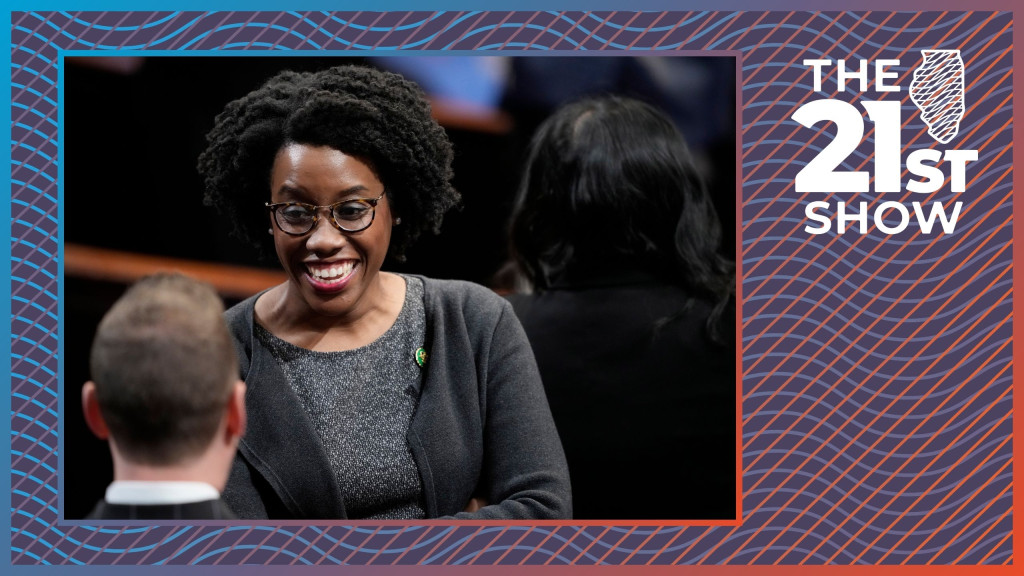
Transcript: Congresswoman Lauren Underwood: ‘I’m not asking for people to make politics their hobby’
The 21st Show
Congresswoman Lauren Underwood: ‘I’m not asking for people to make politics their hobby’
Read the full story at https://will.illinois.edu/am/congresswoman-lauren-underwood.
Transcript
// This is a machine generated transcript. Please report any transcription errors to will-help@illinois.edu.

[00:00:00]
Brian Mackey: Today on the 21st Show, Democratic Congresswoman Lauren Underwood has represented parts of northern Illinois since 2019. She's joining us live ahead of next week's midterm elections in which she's up for reelection against a challenge from Republican Jim Marter. We'll talk with Underwood about the economy, foreign policy, and the democratic agenda in the next Congress. Plus, whatever is on your mind, give us a call throughout the hour at 800-222-9455. That's 800-222-9455. I'm Brian Mackey with Congresswoman Lauren Underwood for the hour today on the 21st Show, which is a production of Illinois Public Media. But first, news.

From Illinois Public Media, this is the 21st Show. I'm Brian Mackey. We are one week out from Election Day. Of course, early voting has been underway for more than a month. Tomorrow and Thursday on the program, we're planning to bring you recaps of our conversations with the candidates for Illinois governor and U.S. senator. But today my guest is Congresswoman Lauren Underwood, who's running for a 5th term. She represents the 14th district in northern Illinois, which consists of a triangle, roughly bounded by DeKalb, Joliet, and the communities of La Salle and Peru. She was born in Ohio, and her family moved to Naperville in the Chicago suburbs a few years later. She earned her bachelor's degree and a master's degree in nursing, along with a master's in public health, and she went on to work in the field of healthcare policy.

Back in 2017, she announced a run for Congress. She won the majority of the vote against six opponents in the Democratic primary the next year, then unseated [Randy Holtgren] in the general election. She narrowly won reelection in 2020 against Jim Oberweis and won her last couple of races more comfortably with around 55% of the vote. That said, among the 14 House seats held by Illinois Democrats, hers was the 2nd closest in the last presidential election, with voters choosing Kamala Harris over Donald Trump by fewer than 5 percentage points.

In any case, she's now seeking a 5th term in Congress. Her opponent Jim Marter, whom she already defeated once back in [2024] — uh, we, uh, spoke with Marter on the program last month. You can find that interview on our website twentyfirstshow.org.

Lauren Underwood joins us live for the hour today. Congresswoman, welcome to the 21st Show. Thanks for being here.

Hi, Brian.

Listeners, if you have questions for Congresswoman Underwood, you can join the conversation: 800-222-9455. But not only if you're in the 14th district. What do you think of your representation in Congress? What priorities would you like to see from your representative and Democrats more broadly, should they regain control of the House as the forecasters are projecting next year? 800-222-9455 is the number, 800-222-9455.

All right, Congresswoman, let's get right into it with issues. So we're coming up on 8 months since we launched a hot war against Iran. How's it going for the U.S.?

[00:03:32]
Lauren Underwood: Well, I think the war's been a disaster, and you know, the president, Mr. [Hegseth] had no plan for sending in our troops. They couldn't articulate a plan to the American people. They didn't seek permission from the Congress. The Congress has voted a number of times to say that this war is unconstitutional and that it is not the will of the people of the United States to be in this conflict.

And now we are living with the economic repercussions. You know, the cost of gas has continued to rise. The cost of diesel is so high during this harvest season, it's really taking a toll on our farmers and producers across our rural communities in the 14th. And then obviously it's been holding up goods that are passing through the Strait of Hormuz and really driving up the costs. And you know, we've been grappling with high prices since Trump initiated his failed tariff policy. And so it's just been one failed economic policy after another, but this war in Iran has been a disaster.

[00:04:32]
Brian Mackey: Yeah, I want to come to tariffs in a minute. But you know, we hear conflicting messages on this from the president and the vice president and others in the administration. It's a war. OK, it's not a war, it's a conflict. We're gonna have a deal very soon, but, you know, actually it won't be resolved until after the election. We're working on peace, but maybe we'll annihilate Iran. What do you make of that?

[00:04:54]
Lauren Underwood: Well, I think that the war really ties directly into the most salient issue for voters, and it speaks to a real betrayal that they feel from President Trump and Vice President Vance, which is they campaigned on no more endless wars in the Middle East. And here we are finding ourselves in a conflict that nobody wanted and it's driving up costs. So I'm not surprised to hear them flip-flopping and trying to make every single excuse to try to deflect from this, you know, war that has taken the lives of at least 21 service members, injured hundreds more, and has literally cost the American people hundreds if not thousands of dollars per household.

[00:05:38]
Brian Mackey: You know, maybe there are people I've spoken with — some are Republicans, even some Democrats — who say, you know what, I don't like the way President Trump has done it, but we had to do it. We can't allow Iran to get a nuclear weapon. What do you make of that sort of argument, that rationale for what's happening here? Maybe support the goals, if not the sort of strategy, such as it is.

[00:05:59]
Lauren Underwood: I mean, people can have whatever feeling that they want to have, right? I'm not going to say that they're bad people for supporting the president. But you know, it's very clear to me that there was an Iran nuclear agreement that prevented Iran from getting a nuclear weapon, and that that worked, and President Obama and the Congress negotiated and advanced that policy on behalf of the United States. This war, which is taking American lives and, you know, really harmed our American economy with no discernible goals and certainly no positive outcomes, has been a failure. I don't know what metrics someone could use to support this.

[00:06:36]
Brian Mackey: All right, you mentioned tariffs. This has been a major economic pillar of the 2nd Trump administration. Talk more about the effect that's had in your part of Illinois.

[00:06:46]
Lauren Underwood: Well, the tariffs — I mean, first of all, the idea that the president is going to initiate, instigate a trade war with our closest ally and partner, and certainly our regional economies are intertwined — I'm talking about the Canadians — it is absurd, Brian. And you know, just talking with small business owners, farmers and producers, folks, and then, you know, just moms in our community. Everybody can tell us that everything is more expensive. Everything. Across the board, it's more expensive. And that, you know, the administration even continues to defy court orders which tell them that these tariffs are illegal. It's the Congress's role in Article One of the Constitution to advance tax policy, and tariffs are taxes. And what we have seen is this administration defying the law to advance these tariffs that raise costs on American consumers.

And even as some companies get relief — meaning these refunds — they are not passing those savings along to their consumers. Costs continue to go up. And so, you know, I look forward to the American people voting next week on Tuesday. First of all, friends, early voting's already begun. If you haven't voted yet, what are you waiting for? And you know, I think a lot of voters are gonna have this tariff policy, this failed economic agenda, top of mind as they go and vote for Democrats. And you know, with the Democratic majority, we will be able to take action to reassert the role of the Congress in setting tax policy in this country, to lower out-of-pocket costs for working families and save families money.

[00:08:30]
Brian Mackey: Yeah, how is that actually gonna work? What can the Congress do to counteract the president and the executive branch on tariffs in particular, and this, you know, this trade war, as you said, with our closest trading partner, Canada, and, you know, most other countries on earth?

[00:08:44]
Lauren Underwood: Literally, we go country by country. And we say, we do not support the tariffs on Canada, and then we overturn the Canadian tariffs. We do not support the tariffs for Mexico and we overturn those. You go country by country. And we have advanced that strategy through something called discharge petitions, where, you know, members of Congress literally sign a petition and you can force a floor vote. And we were getting too close to being successful, and the Speaker of the House, Mike Johnson, clamped down and started threatening the Republicans who agreed with us that this tariff policy is reckless and out of control.

But with the majority, we control the floor and we will be able to overturn these Trump tariffs. At least — I mean, do our part in the House. We've got to have a Senate majority, obviously, but, you know, we'll do our part.

[00:09:32]
Brian Mackey: So the president's stated reason for tariffs is to revive domestic manufacturing, right — the little screw in toasters, or little screws in iPhones, maybe, you know, washing machines in Galesburg. I know that's just outside your district, but, you know, what policies would you support with that end in mind? Is that the right goal that we should be pursuing in our economy — reviving domestic [manufacturing]?

[00:09:52]
Lauren Underwood: The number one goal for our economy is to lower costs for working families. Nowhere in that statement was that centered. The president has found every excuse to ignore the challenges that families are facing right now. We got folks in our community that cannot afford their groceries and fill up their car. Their rent is high, their healthcare is high, their childcare is high, and that's before they fed a single child that they have. And so, you know, the idea that the president is going to be raising costs on every single working person in this country in order to, you know, advance some agenda that he says puts America on equal footing — like, that's, you know, that's a nice goal, I guess. But not when we continue to suffer. I just think that his priorities are in the wrong place. The American people have resoundingly rejected this economic policy and he's just doubled down.

[00:10:53]
Brian Mackey: All right, if you're just joining us, we're speaking with Congresswoman Lauren Underwood, running for reelection in the 14th district, which encompasses Joliet, DeKalb, and La Salle, Peru, and everywhere in between, basically, in northern Illinois. 800-222-9455 if you want to join us today. 800-222-9455.

Congresswoman, it's estimated more than 100,000 Illinoisans lost SNAP or food assistance benefits because of expanded work requirements, and there are work requirements for Medicaid set to take effect in the new year. What is the path forward for people losing that coverage?

[00:11:32]
Lauren Underwood: Well, you know, the reason that people lost that coverage is because Donald Trump and the Republicans in charge — including the three Republicans in Illinois, [Darren LaHood], Mary Miller, and [Mike Bosst] — all voted for it. Let's just start there. This didn't magically happen. It's not like, hmm, I wonder why, that's so sad. No. These people intentionally chose to take food out of the mouths of hungry children. Seniors who rely on Meals on Wheels, or veterans who have so capably and heroically served this country — they have chosen to cut off these folks from their nutrition assistance, meaning that these folks are going hungry. Let me just really start there. This is a choice. It was part of the big ugly bill that Donald Trump signed into law July 4th, 2025.

So obviously this has been unpopular. Our food banks have lines, have waiting lists. The demand for our food banks — in my community we use the Northern Illinois Food Bank, unless you're far out west and there's like a Quad Cities food bank that those folks participate in, based out of Iowa, that serves the western part of my district. But my point is, the folks at the Northern Illinois Food [Bank] have told me that demand is almost exceeding COVID-level demand. Like those early phase-one pandemic days when there was high need for food assistance — that's where we're at, singularly because of this cruel, reckless policy.

And so the way that we move forward is that there is a bipartisan agreement, at least in the Senate, to overturn these SNAP requirements, and it's in the farm bill. Now, Brian, I think that you know, just based on the geography of where you are physically located in central Illinois, that farm bill's really important for Illinois's economy. It's important for farmers and producers. It's important for working people all over our state because it funds our nutrition assistance programs and also supports our rural economies. And it takes a careful bipartisan agreement to advance the farm bill because you have to satisfy both constituencies.

The House has taken a partisan approach, which is to support farmers and producers only. That is why you have not seen a farm bill successfully advance out of the House. But the Senate has come to an agreement to get rid of these SNAP changes that have harmed millions of people across this country. And I hope that the Speaker of the House, Mike Johnson, understands the wisdom in that approach of the Senate to advance that type of a farm bill.

[00:14:16]
Brian Mackey: Yeah, and I was just doing some reading on this not too long ago. I know that it was merged — I didn't realize until recently that it went back to the early 1970s when they brought food assistance and the farm bill together into one, you know, sort of piece of mega-legislation.

You know, the other piece of this is healthcare and Medicaid work requirements taking effect in the new year, as I mentioned. In a general way, I'm hearing more and more Democrats — including Lieutenant Governor [Stratton], who is running for U.S. Senate — expressing support for something like Medicare for All or some sort of universal healthcare. I know you were not supportive of that, at least when you joined the Congress. Where are you today? What would you do to make healthcare more accessible to people, broadly speaking?

[00:14:59]
Lauren Underwood: Yeah, healthcare is a human right, and everybody should have high-quality, affordable healthcare no matter where you live. That means that we have to have enough providers so that folks can have a choice in provider. It means that we have to lower the cost of healthcare, lower the cost of prescription drugs. It means that we have to overturn these Medicaid cuts. You know, Donald Trump and the Republican Congress took $1 trillion out of Medicaid — $1 trillion with a T. What that means is that that is the largest healthcare cut in U.S. history. Hurting seniors, hurting people who are very sick, like the long-term disabled, hurting kids. It's just unacceptable what they have done.

[00:15:45]
Brian Mackey: And I — I'm sorry to interrupt you, but we have about a minute and a half before we take a break. I was talking with Congressman Mike Bost, whom you mentioned earlier, a couple weeks ago, and he said, "We didn't cut anything. We just said, hey, if you're able-bodied, you have to work." And you know, that's what I hear from Republicans. Where is the disconnect on the way you see this and what he says they did?

[00:16:04]
Lauren Underwood: The disconnect is that we are in a healthcare system, and so if people are inundated with paperwork requirements that, for a variety of reasons, they are not able to complete every month — and I'm not talking about just like, oh, sign your name. No, this is arduous, strenuous, difficult-to-prove paperwork — then they will lose their healthcare. Which means that when they go to, let's say, a hospital, a safety net hospital that takes Medicaid, that is not going to be paid for. Which means that then that hospital starts to function at a loss. That is why we've started to see unit closures across the 14th district: pediatrics, ICUs, mother-baby units. We have, you know, for-profit healthcare systems in my region, people like Prime Healthcare, who are pointing to the big ugly bill and the projection — not even the reality of the Medicaid cuts, but the projected Medicaid cuts — as an excuse to close the necessary healthcare system in our region.

[00:17:08]
Brian Mackey: All right, we have to take a break. We'll have more with Congresswoman Lauren Underwood when we return. If you want to join us again, our phone lines are open: 800-222-9455. This is the 21st Show. We'll be right back.

It's the 21st Show. I'm Brian Mackey. We're talking with Congresswoman Lauren Underwood, who represents the 14th district, which connects Joliet, DeKalb, and La Salle, Peru in northern Illinois. Her opponent is Republican Jim Marter. We spoke with him on the program last month. You can find that interview at our website, twentyfirstshow.org. And you can join us today: 800-222-9455, 800-222-9455.

So before we move off of healthcare, I did want to ask you — Medicare for All, where are you on that issue today? As many Democrats increasingly are, you know, sort of after shying away from it for a long time, are sort of proudly embracing this idea now.

[00:18:18]
Lauren Underwood: As I shared with you before your break, healthcare is a human right, and I've been working to expand access to affordable healthcare coverage. And that's why I wrote the bill to expand the ACA tax credits, which allowed 4 out of 5 people to get a healthcare plan for $10 or less a month. We lowered the uninsured rate to the lowest level in U.S. history. And, obviously, we are working hard to make those tax credits permanent. I think it's really important for us to try to actualize the promise of, you know, everyone getting access to high-quality healthcare, including healthcare free of disparities. And, you know, literally high quality. And that's the work that I've done throughout my career and will continue to do.

[00:19:00]
Brian Mackey: What's the downside of a sort of Bernie Sanders-style program, government-funded?

[00:19:05]
Lauren Underwood: Well, I think there's a difference between a healthcare guarantee, a universal healthcare, single-payer healthcare, and Medicare for All. Those are all different things. And, you know, I think we have to really be realistic about what that means for people in terms of how much they would pay out of pocket in taxes in order to transition to that program and to sustain it. And, you know, that cost is a real concern.

[00:19:37]
Brian Mackey: OK. You know, I think we may look back on this election, when it's all over, and see that AI was a bigger issue than perhaps we appreciated before it. How are you thinking about the potential effects of, you know, artificial intelligence on our country and on our economy?

[00:19:55]
Lauren Underwood: Well, I think that it is a significant change that is going to impact all aspects of our economy. Right now, I think the most salient has been the data center issue. And I've written legislation to increase transparency on the cost — particularly related to electricity and water usage — for surrounding communities that are, you know, seeing data center development come in, and, you know, there's a lot of fear.

But beyond that, I think, you know, certainly in the near term, we can be facing significant unemployment. There are real national security risks — like urgent, urgent, urgent national security risks — associated with these AI capabilities. And then, you know, more broadly, our economy — when you look at the stock market, the most successful, most profitable, the fastest-growing companies are all in this AI industry. Our economy is really intertwined with artificial intelligence, and that wealth generation is really concentrated. And I think that we need to be open-minded to things like a sovereign wealth fund, you know, and an idea that all Americans could benefit from the global use and the U.S. role in developing and sustaining these, you know, extremely profitable, successful AI companies.

[00:21:29]
Brian Mackey: A sovereign wealth fund — that's interesting. Like, you know, oil-rich countries have, right? Norway, I think, has one of these things, for example. What would fund that? Say more about that.

[00:21:40]
Lauren Underwood: What do you mean, what would fund it? I mean, literally — I mean, the American people would benefit from the financial success of the AI companies. So in the same way that, like, if you live in, I don't know, Kuwait, and you're a Kuwaiti national, you get a check every year because of the oil revenues, and that's how the Kuwaiti people have a very comfortable, upper-middle-class lifestyle.

[00:22:12]
Brian Mackey: Would that mean nationalizing these — you know, OpenAI and Anthropic and companies like that?

[00:22:19]
Lauren Underwood: I think that, you know, we're in the very early days of this technology development and deployment, and they are asking for greater involvement of the U.S. government. Literally, the CEOs are asking. And so if the United States government, on behalf of the American people, wants to make a deal to benefit the American people, I think a financial benefit needs to be part of the discussion. It should not just be, we are going to prohibit X, Y, and Z, or we're going to impose guardrails. Like, let's have a conversation on how everybody can benefit.

[00:22:52]
Brian Mackey: Fascinating. OK. Let's move on to some social issues, right? You have talked often about the restrictions on abortion that have been put in place in many different states, especially after Roe v. Wade was overturned a few years back by the U.S. Supreme Court. Where should the country go from here on that issue?

[00:23:13]
Lauren Underwood: I think that codifying Roe is like the baseline. I mean, obviously we have a real need to affirm a right to privacy. You know, there are a variety of — like, states are literally trying to get access to folks' cell phones to try to figure out if they traveled out of state, trying to get access to your period tracker app. You know, like, things like that — the government does not need to be tracking your menstrual cycle, period. And I think that that needs to be included in any kind of, you know, modern legislation, modern law to codify access to abortion care.

I also think that we need to affirm that we have a right to contraception. Because, you know, our Republican colleagues do not support that, and contraception is the next step, and that's very harmful, I think, to all Americans' economic success. And I think that we need to, you know, really be serious about women's health more broadly, investing in women's health. It cannot just be a conversation about abortion.

[00:24:29]
Brian Mackey: You know, the Hyde Amendment — as you, I'm sure, well know — is named for an Illinois congressman, prevents federal funds from paying for an abortion, and limits it to save the life of the woman or if the pregnancy is because of incest or rape. It's one of these things that kind of goes back and forth depending on, you know, which party is in power. Should that be repealed? And I guess more broadly — do you support that? I mean, every Democrat, or most —

[00:24:54]
Lauren Underwood: No, it's not true.

[00:24:55]
Lauren Underwood: It's — yes.

[00:24:58]
Brian Mackey: Yeah, no, no, no. I don't mean to minimize that. I guess what I wonder is — how do you, or maybe it will — is abortion just going to be one of these issues now where, depending on which party is in power, it's like a pendulum swinging back and forth, in terms of whether, you know, people have rights in red states in America? Yeah, go ahead. How do you prevent that then? How do Democrats prevent that?

[00:25:20]
Lauren Underwood: I mean, first of all, it had been established federal law. Let's just really be clear about that — it had been upheld in the courts prior to 2022's Dobbs decision, and those justices that overturned Roe broke the promise that they made to the American people in their confirmation hearings. So this is not some kind of issue where, you know, we are deeply divided. Like, no. America is like a 65-35 country on this question of abortion. And that's why when abortion is on the ballot, it passes with an overwhelming margin, including here in Illinois.

And so, like, I just really — people look at politics as if it's like this 50-50 thing and we're evenly split. Like, that is not true, and it is not a reflection of the American people's opinions on issues broadly, or certainly on the issue of reproductive freedom. And so, you know, what we are talking about is people being able to get access to life-saving healthcare. We are talking about making sure that moms don't die during their pregnancies, and we are also talking about making sure that healthcare providers are not being put in jail for giving accurate medical information to someone who is seeking it. That is what this question is about. And on that question — people getting access to life-saving healthcare, moms not dying, and providers not being put in jail — again, the American people are like 65-35 on the side of reproductive freedom.

[00:26:59]
Brian Mackey: Yeah, I'll just say, fact check true. Pew has a survey out — it was 60% say abortion legal in all or most cases, 38% illegal in all or most cases.

[00:27:11]
Lauren Underwood: Look at that real-time fact check.

[00:27:15]
Brian Mackey: Another issue that has been made more salient in recent years than it had been — a lot of people thought this was settled — are LGBTQ rights in America. How are you thinking about the erosions that have been happening there?

[00:27:30]
Lauren Underwood: Well, I don't support them. I support the Equality Act, which would provide, in federal law, civil rights protections — in the same way that you can't discriminate on the basis of sex, you can't discriminate on the basis of race, religion — we would add gender identity and sexual orientation as a protected class under federal civil rights law.

[00:27:53]
Brian Mackey: What do you make of this — sort of, why trans people in particular are such a focus of political discourse in America? What do you understand to be behind that?

[00:28:04]
Lauren Underwood: I think that the Republican Party traffics in fear, and that they don't have an economic agenda that lifts up the majority of Americans. They have an economic agenda that centers billionaires and wealthy corporations and tries to drive down their tax rate. And, you know, they ask the American people to sacrifice their healthcare and their nutrition benefits in order to subsidize low taxes for billionaires and wealthy corporations. That in the core is what the Republican Party has to offer, and they try to distract people by using fear and division.

And one of the ways that they have done so over the last five years successfully is lifting up transgender individuals and really trying to bully transgender children, and making them an "other," and trying to strip away their core civil and constitutional rights, to alienate them from society, and give a permission structure for people to punch down on their fellow Americans. And I think it's disgusting and I think it's wrong, and I do not in any way participate in that.

[00:29:05]
Brian Mackey: What do you say to your fellow Democrats who are increasingly supporting restrictions — not just on, you know, sports participation, which maybe surveys show is more broadly, uh, accepted or controversial — but even like healthcare for trans people? Iowa Democratic Senate nominee [Josh Turrick] in a campaign ad says, "I'm against taxpayers paying for sex changes too. Anyone tells you any different is lying." As an example.

[00:29:28]
Lauren Underwood: Mmm. Like, what do I say to —

[00:29:30]
Brian Mackey: Yeah, what do you say to your fellow —

[00:29:32]
Lauren Underwood: I tell them I don't agree.

[00:29:38]
Brian Mackey: Let's talk about immigration and the American border. Since the start of the 2nd Trump administration, at least nine people's deaths have been linked to the administration's campaign of mass deportations. High-profile examples, of course, are the deaths of [Alex Preddy] and [Renee Good] in Minnesota. How would you rate the actions of ICE and the Border Patrol in the last two years?

[00:30:03]
Lauren Underwood: Well, Brian, I just want to be really clear, because your number that you're quoting is very low. ICE has had the deadliest year on record so far this year, and it's exceeding last year. 2025 was the deadliest year on record. I mean, Trump's mass deportation agenda has been unbelievably cruel and an unequivocal failure. The idea that they're going to send masked, armed federal law enforcement into our communities to brutalize Americans — pulling up to school pickup lines, pulling up to churches and hospitals, and, you know, causing incredible violence and destruction across our communities. I'm talking about federal law enforcement doing this and trying to, you know, again, make us fear our neighbors who we have worked with, lived beside, our kids are friends at school with, just because they were born someplace else. It's something that does not reflect our American values.

And I think that, you know, we have been on the front lines of this issue here in northern Illinois. Folks don't like it. ICE has been throughout my community every day, every day this fall — specifically Kane County and Will County. And I think that, you know, we need to get back to the core issue, which is, yes, we need border security. We need safe and secure borders. Yes, we need to be clear in applying federal law. And if you are a violent criminal and you are undocumented, you should be deported. But all this — the way that they are doing it — is something that folks in my community do not support.

[00:31:47]
Brian Mackey: How far up and down the sort of chain of command do you go — and do you think Democrats should go, and the government should go, a future potential Democratic government — in holding ICE and Border Patrol agents and leaders accountable for their actions here?

[00:32:02]
Lauren Underwood: In Illinois, and no one's above the law, Brian. I mean, I don't know how else to say it. On our Appropriations Committee, over the last couple of years, I've been the senior Democrat in charge of funding the Department of Homeland Security, and held [Kristi Noem] accountable for her misuse of taxpayer dollars, for her softness on the 4th, 5th, and 6th Amendments to the Constitution, which apply to everybody in this country. We questioned the director of ICE before our committee, asked him about why so many people were dying in his custody and why he seemed to be OK with it, why they didn't advance a policy that said that there should be zero deaths of detainees in custody. And guess what — literally three hours later, after he left our hearing, he resigned because of his incompetence.

Now we got a new secretary of [HHS], [Mark Wayne Mullin], and we will hold him accountable. Like, listen, these officers that are on camera killing people should be prosecuted, without a doubt. No one is above the law. And, you know, we are prepared to have a vigorous oversight agenda over the entire Department of Homeland Security to get information on the use of taxpayer dollars. You know, the Department of Homeland Security has gotten over $200 billion in the last, I'd say, like 15 months. And that represents like a tripling of their budget. OK? And we want to know where that money's going, how it's truly protecting the American people, because from everything that I can see, Brian, everywhere I look, we are more vulnerable. They have weakened our cybersecurity protections. And guess who has strong cyber capabilities? The Iranians. They have caused so much fear — palpable fear — across our communities because of this mass deportation agenda.

And, you know, they are stealing dollars. I mean, the president even admitted it himself. He's taking money from the DHS budget to fund these ads praising himself. These MAGA Inc. ads that they've been running on TV came out of the Homeland Security budget. It is — they are out of control. Abuse of power, misuse of taxpayer dollars, you know, breaking their oaths of office. They have disgraced — well, in my opinion, obviously — [Kristi Noem], who's gone, but she needs to be held accountable, and [Mark Wayne Mullin] have disgraced the offices that they hold, and they need to be held accountable. And I look forward to conducting that oversight in a Democratic majority.

[00:34:36]
Brian Mackey: All right, we'll continue with Congresswoman Lauren Underwood after a short break. 800-222-9455 if you want to join us, 800-222-9455. This is the 21st Show. We'll be right back.

It's the 21st Show. I'm Brian Mackey. We'll get back to my conversation live with Congresswoman Lauren Underwood in just a moment. I do want to mention, after the polls close next Tuesday, Nov. 3rd, election night, you can join me for hourly statewide updates during NPR's national election coverage. We'll be on most of the stations that carry our program, quarter after every hour. We're also trying something new: live analysis as county and statewide numbers come in on Illinois Public Media's YouTube channel. We'll have a livestream starting at 8 with real-time breakdowns and expert analysis as the results come in.

So if you want to join us today though, 800-222-9455 is the number. We're talking with Congresswoman Lauren Underwood, who represents the 14th district — Joliet, DeKalb, La Salle, Peru in northern Illinois — running for reelection against Jim Marter, the Republican nominee. We spoke with him last month. Again, 800-222-9455.

There is so much anger out there right now. There was an Associated Press poll earlier this month that found 97% — I'll say that again, 97% — of registered Democratic voters want to see substantial change in how the country is run. Of that group, more than half said they want complete and total upheaval. And the same goes for a third of registered voters overall. So what does change in our politics look like to you?

[00:36:35]
Lauren Underwood: Well, I think change looks like a variety of things. The average American doesn't have a representative who's willing to do a town hall meeting. We've had over 85 since I was first elected, right? It's a really important opportunity to be able to talk about what's going on in the community, in our country, and get answers. That looks like change.

A lot of people have representatives who go to Washington and, you know, do the wining and dining and backslapping, but they don't really do a lot of legislating. I've had 19 bills signed into law under both President Biden and President Trump. And, you know, when they want someone who's gonna get things done on their behalf, they want people who are going to be legislatively productive. This Republican Congress under Mike Johnson's leadership has been the least productive Congress, I believe, in history. And it's just really disappointing given all the challenges that families are facing.

And I think that change looks like people electing a majority that wants to stand up for their communities and fight back against the harm that the president is causing. You know, it's clear to me that Donald Trump is deeply unwell. He is not someone who has the temperament or demeanor to really be successful in leading our country in this moment. But he won the election. And that doesn't mean that he is a king. And we have a system of checks and balances where we need a strong legislative branch to advocate for the American people. And I think that level of discontentment that you are seeing in the polling data, that you hear anecdotally, is a reflection of the failure of the Congress under Mike Johnson's leadership and, you know, a real desire to get a Democratic majority filled with next-generation leaders who share values around things like healthcare being a human right, and a focus on fighting for an affordable America, and who are just, like, nice, normal people, to come in and get things done to put our country back on track.

[00:38:41]
Brian Mackey: I'm gonna share a few messages we got from listeners. Tony in Champaign says, "If you're taking a poll, I'm for charging this administration with as much as possible." I guess he means like criminal charges. "If you don't, you're inviting more of the same. I would advise making sure you aren't overly punitive though. Half the country is unstable and misled."

Also heard from Frannie in Hinckley, Illinois. "I live in a small town. Lauren got us a million dollars for our new library. She also got us money to help with new fire equipment for our volunteer department. I think she's awesome. She definitely has my vote," Frannie says.

And we also heard from Ryan in Champaign, who wants to know, does she support the DSA's platform — Democratic Socialists of America's platform? How are you thinking about that? You're on this policy and communications committee. There are people out there who are a little worried that maybe Democrats are going to turn on each other after they regain power next year. How do you prevent that? How do you, you know, keep your eye on the ball, so to speak?

[00:39:48]
Lauren Underwood: Well, I'm a Democrat, and so I support the Democratic Party and the Democratic Party's platform. I'm not a member of the DSA. I understand that there are going to be members joining the next Congress who are members of the Democratic Socialists of America Party. They are certainly welcome in our Democratic caucus. I look forward to working with them. And, you know, I think that we share goals of fighting for working people.

And I think that, you know, the goals I outlined just like two minutes ago, of, you know, why people want change — I think that speaks to why, you know, some communities have been open to electing members who have a DSA affiliation. The current environment, this status quo, is not working for folks. It's not working. And do we need to raise the minimum wage? Yes. Do we need to make sure our labor unions are strong and fighting for working people? Yes. Do we need to have healthcare as a human right? Yes. Do we need to have clean air and clean water? Yes. Do we need to be able to live free of gun violence in this country? Yes. And I think that those are opinions and policy positions of the Democratic Party and something that we agree with with the folks from the DSA.

[00:41:12]
Brian Mackey: You know, it seems like maybe we're entering the sort of millennial moment in American politics. I mean, we already have been, but like, really, people who are rising to sort of national prominence now — you're seeing a lot of them in that sort of millennial cohort, yourself included. But I'm thinking [AOC] and Pete Buttigieg and, you know, Jon Ossoff and [El Sayed] and [Zoran Mamdani] and all these sort of people rising up. There have been calls for age maximums on elected officials to go along with age minimums. What are you thinking about? How do you think about that?

[00:41:45]
Lauren Underwood: I mean, I know that people are really concerned about the rise of what they call the gerontocracy, and I get it. I mean, listen, I work with these folks, and we have colleagues in their 20s and colleagues in their 90s, and an intergenerational workplace like that is something to behold. Let me tell you, it is —

[00:42:02]
Speaker 2: A —

[00:42:04]
Lauren Underwood: Yes, so —

[00:42:06]
Brian Mackey: Tell me a story. Give me an example.

[00:42:08]
Lauren Underwood: I mean, folks — some folks don't use cell phones. Like, they literally don't have a cell phone number. I had to learn how to use a filing cabinet when I got this job. And it's just different. It's just different.

But my point is, I understand why people are concerned. I want people to know that the next-generation leaders are serving in the Congress, but we are also leading in the Congress. I am in Democratic leadership. I'm the first Black woman elected to Democratic leadership since the great Shirley Chisholm. And I'm not the youngest person at that leadership table. Maxwell Frost is also in Democratic leadership. We have the same position. And he's in his 20s. And so while there's lots of attention being paid to the most senior-in-age members of our caucus, they are not the only ones in charge. Their voices are not the only voices that matter. No. And the next-generation leaders are capable, and we are, you know, assertive, and we are holding it down, and I think — I hope — making you guys proud.

[00:43:13]
Brian Mackey: You know, speaking of younger people — younger voters in particular — in the last election, 2024, we saw young men, including young Black and Latino men, had a shift towards President Trump. What do you understand about what they were not hearing from Democrats that made that possible?

[00:43:30]
Lauren Underwood: Well, oftentimes they just weren't hearing from us. Like — let me just say it like this. Prior to, like, two years ago, the average Dem didn't have a YouTube account. Like, just didn't even have a presence on the platform. Didn't have a TikTok. You know, maybe posted on Instagram three times a week. Like, in that kind of environment — where you talk to this demographic, but really any American, any American regardless of age, will tell you that they get, on average, their news online, on their phones, from their social media feeds. Like, the days of — sorry, Brian, not to talk about traditional news, but like, this is not how most people get their news. Certainly not radio, certainly not local TV, and for sure not your local print newspaper.

And so, if we as electeds are not showing up in the spaces where people are spending time, how can we ever expect them to vote for us? And so, you know, after the 2024 election, my colleagues — they knew who Joe Rogan was because of the whole situation with Kama[la] and Joe Rogan. But folks didn't know who he was. They didn't know what a podcast was. And so, I think there's been a real shift to be digital-forward. I think that's positive. And I think that you will see a greater openness across those demographics that flirted with Trump in the past to be more open to Democrats, because not only are they hearing from us, but they're liking our emphatic fight for an affordable America.

[00:45:02]
Brian Mackey: You know, we're in this time now where — I mentioned the anger earlier — there's also a lack of trust. I think this is one of those big-picture ideas where, whether it's trust in institutions — whether, you know, journalism, courts, the law, government, Congress — but also trust in our fellow Americans, it's eroding. What should we be doing to rebuild that trust in our society?

[00:45:29]
Lauren Underwood: I mean, we've got to call out the corruption and just end it. Like, the self-dealing, the self-enrichment, the abuse of power, the fact that Donald Trump's personal wealth has increased $2.2 billion over the last year and a half while the average working person is just getting crushed in this economy. You know, he's putting gold on everything. Like, what are we talking about?

You know, the Supreme Court and these lavish vacations that they're taking with their wealthy donors. It's the stock trading that my colleagues are doing to enrich themselves while they hold office, and sometimes even using insider information that they have to dump stocks or to buy in a certain industry. It's just wrong. And I think that people are sick of it, and they're looking to elect people who have integrity.

And so, you know, I think that we have to be serious about an anti-corruption agenda. We have to be willing to look on our side of the aisle and impose, you know, significant consequences for people who really destroy the public's trust, who break the law, who get indicted, who, you know, just don't uphold their oath of office. This is a serious time. This is serious business, and serving is an honor. It is a privilege. And we are not entitled to these roles. And I certainly try to honor the people who voted for me and those who don't throughout the 14th district, because I understand how important this job is and the expectations that they have of me.

[00:47:07]
Brian Mackey: We're coming to the end of our time together. You know, one of the biggest divides in American life — and this is not my original idea, right? There's political science research on this — is not necessarily left and right. It's between people who sort of follow politics and government and, you know, pay attention and care enough to vote, and the people who are just totally disconnected. How do you think about — as a member of Congress, as somebody who's focused on communication among your colleagues — how do you think about trying to bring more people into our civic life?

[00:47:39]
Lauren Underwood: Well, I just really encourage us to think about why people are disconnected. You talk about the lack of trust. You know, we know a lot of people are just trying to get by. They're trying to just survive this moment, Brian. And for a lot of families, that means they have to work multiple jobs. They don't have the luxury of making politics a hobby. They have so much stress — financial stress, economic stress. They're trying to pay their rent. The kid needs a refill on their medication. Their other kid has a permission slip that comes along with a $40 fee for the bus and the entry to a museum or whatever. It's just expensive. My point is, everything's expensive. Everything's expensive. And the idea that somebody wants to just obsess over politics for fun — like, the average person has no interest in that. And I don't blame them, because everywhere you look, it's just chaos, dysfunction. And we've got to turn this around.

And so I'm not asking for people to make politics their hobby, to be like obsessed and, you know, comment on every post and show up at every — like, no. People are busy and they're trying to live their lives. And I just want people to take advantage of the opportunity to vote. If you are dissatisfied with what's going on in this country, your vote matters a lot. And if you go online, the president on down will be telling you — like, shut up, you don't matter. I'm talking about these Republicans: shut up, you don't matter, your voice doesn't matter. I don't say that at all. What I'm saying is, you are powerful. Your voice matters. This election is hugely important across the state of Illinois. So if you haven't voted yet, early voting is happening now. You can go vote today through Tuesday. You can vote on the weekends. Yes, you can vote on Sunday. If you haven't registered to vote, we have same-day voter registration here in Illinois. So just go ahead and take care of it, because you'll feel better after it's done and you know that you have been part of, you know, restoring sanity and getting rid of the chaos in this country.

[00:49:35]
Brian Mackey: Congresswoman Lauren Underwood represents the 14th district. She is seeking a 5th term in Congress, running against Republican Jim Marter. Congresswoman, thanks so much for taking the time to talk with us, even here on Dinosaur Public Media.

[00:49:50]
Lauren Underwood: Thanks, Brian. Take care. Have a good day.

[00:49:54]
Brian Mackey: That is it for us today. Again, coming up tomorrow and Thursday, we're gonna be recapping our interviews with all six of the men and women running for governor and U.S. senator from Illinois. You can catch that tomorrow on the program. You can find our interview with Jim Marter, Congresswoman Underwood's opponent, on our website, twentyfirstshow.org. The 21st Show is a production of Illinois Public Media. I'm Brian Mackey. Thanks for listening.
Transcript Assistance
Illinois Public Media may use AI assistance for transcript generation and/or formatting. Transcripts that have not yet been reviewed for accuracy will be labeled.
To report a transcription error, or to request transcription of archival material, please contact will-help@illinois.edu.