







Transcript: Journalist Niala Boodhoo on seeking spiritual wisdom
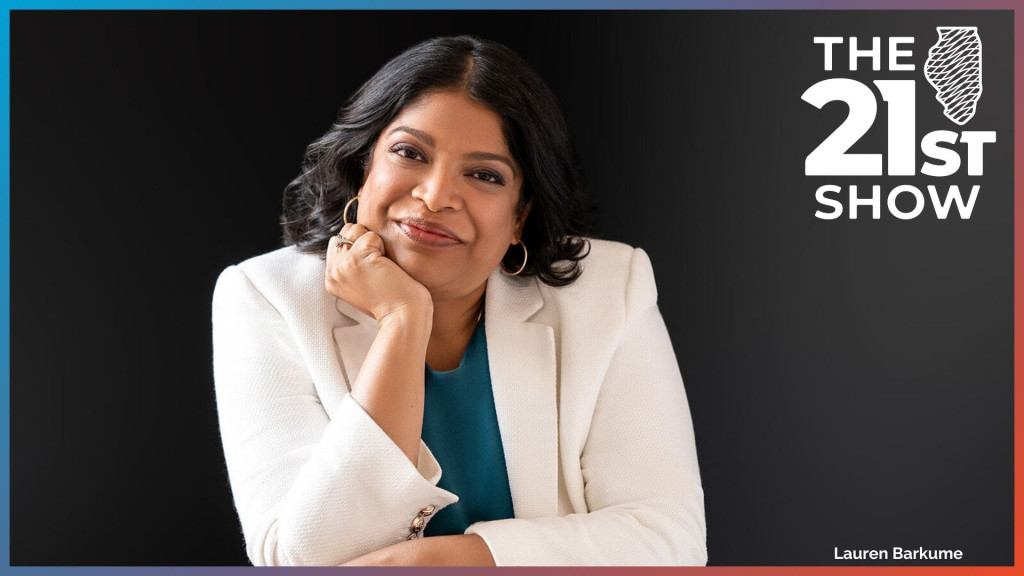
Transcript: Journalist Niala Boodhoo on seeking spiritual wisdom
The 21st Show
Journalist Niala Boodhoo on seeking spiritual wisdom
Read the full story at https://will.illinois.edu/am/seasoned-journalist-niala-boodhoos-new-podcast-explores-intersection-of-politics-and-religion.
Transcript
// This is a machine generated transcript. Please report any transcription errors to will-help@illinois.edu.

[00:00:00]
Brian Mackey: Today on The 21st Show, Nya Boo has more than two decades of experience in journalism at publications ranging from the Miami Herald to the NPR show 1A, where she's a guest host. She was also the founding host of this program, but now she's independently launching a new podcast called "Oh God, Now What?" The aim of the show is to seek spiritual wisdom as an aid for helping us find peace in these troubled times. This

[00:00:30]
Nya Boo: isn't yet another news show. This is a show about how to live with the news.

[00:00:36]
Brian Mackey: I'm Brian Mackey with Nya Boo for the hour today on The 21st Show, which is a production of Illinois Public Media, airing on WILL in Urbana, WUIS in Springfield, WNIJ in Rockford DeKalb, WVIK in the Quad Cities, and WSIU in Carbondale. But first, news. From Illinois Public Media, this is The 21st Show. I'm Brian Mackey, and my guest today has a voice that will no doubt be familiar to many of you.

[00:01:20]
Nya Boo: This is 1A. I'm Nya Boo in for Jen White. Good morning. Welcome to Axios Today. I'm Nya Boo, and from Axios, this is One Big Thing. Welcome to The 21st. I'm Nya Boo. As the Zika virus spreads throughout the Americas, uh,

[00:01:33]
Brian Mackey: Zika virus, that's a blast from the past. Nya Boo has more than two decades of experience in journalism, including, as you heard, as the founding host and executive producer of this very show. Aside from guest hosting 1A and time with Axios, she's also worked at the Miami Herald, Reuters, and Chicago public radio station WBEZ. Now Nya has gone indie, launching a podcast called "Oh God, Now What?" In it, she's interviewing religious scholars seeking ancient wisdom for a modern age from a spiritual point of view. In the first episode, she explains, this isn't another news show, this is a show about how to live with the news. Nya Boo, welcome home.

[00:02:17]
Nya Boo: So good to be with you, and I love hearing that music again. Theme music. It's like right back here.

[00:02:23]
Brian Mackey: It takes you back, doesn't it? All right, before we get into it, I want to say our phone lines are open throughout the hour today at 800-222-9455. Especially if religion has helped you live with the news in these years of endless sorrow. 800-222-9455. Whether it's the Torah or the Gospels, the Quran, or the Bhagavad Gita, if you have found inspiration or solace in the old ways, let us know, 800-222-9455. That's 800-222-9455. All right, Nya, let's jump into the deep end. Tell me about your faith.

[00:03:05]
Nya Boo: Hi, [Brian]. You know, this is something that has been interesting for me to start the show because I feel like it's not something that I've spent a lot of time talking about publicly. Uh, I am a Christian. That's the way — I'm actually like fourth-generation Presbyterian. It's always been a really important part of my life, um, not something that I've necessarily shared, uh, on the air with listeners, I think very much. Uh, but as I just started thinking a couple of years ago about just from a really deep place in need of thinking about journalism and the way that I live with the news, but also really thinking about how to do journalism differently, that came — that's kind of where the idea of this show came from.

[00:03:47]
Brian Mackey: Um, so you're Presbyterian. How — how is that different, for those who are not familiar? How is that different from other Christian denominations? Give us maybe, you know, the highlights, the stereotypes, however you want to take it.

[00:03:57]
Nya Boo: Yeah, so I should specify, right, because people are always like, what kind of Presbyterian are you? And, uh, so I will say I was raised in a southern branch of the Presbyterian Church in Miami. Uh, the PCA, which is, I would say, fairly evangelical. I am now, uh, a member and, uh, actually have been ordained as an elder, which is like church leadership, in the PCUSA, which is, uh, I would say most people describe it as a mainline Protestant denomination. Uh, I probably — like, a progressive mainline church would be the best way to describe it. I went to Calvin University for my undergraduate degree, which is what I like to call Reformed — capital R. Um, Calvin is affiliated with the Christian Reformed Church. We're going to get into, if you want to, we could do like the alphabet soup of denominations all day, Brian. But, um, the CRC is a Dutch Reformed, um, church, and I do think that like my time at Calvin was very fundamental to me thinking about — my notion of Reformed Christianity — it's a lot about asking questions and the idea that to be reformed is always to be reforming. And, uh, Calvin was a place where I felt like I could very openly talk about doubts or big questions and have conversations. So I will say like, in some ways, I think even going back to my undergraduate degree, I was really thinking about building the tools for, uh, "Oh God, Now What?"

[00:05:23]
Brian Mackey: Yeah. What — I was also curious — what is, uh, and correct my pronunciation here — [Verititas] Labyrinth facilitator?

[00:05:31]
Nya Boo: So that's another part of my spiritual journey, is working with labyrinths. And [Verititas] is a labyrinth organization that's based, uh, out on the West Coast in California. Um, labyrinth —

[00:05:43]
Brian Mackey: — literally like a maze, like a hedge maze or something?

[00:05:46]
Nya Boo: Labyrinths are essentially not mazes, because mazes are designed to confuse you. And people think labyrinths are mazes because when you're walking in a labyrinth, you don't know where you are, but you actually don't have to make a choice. So you follow the same path in that you do out, and it's just one path. And that's the difference between a labyrinth and a maze. And they are walking patterns that have actually been found through — like, I think, we — there are, there's like pottery from like 3000 BC that has like ancient scene patterns of like Greek labyrinths. Um, but the sacred circles are found throughout, um, religious traditions all throughout history. Christians have used them, um, particularly — um, [Verititas] works with a labyrinth that was a pattern that was put into the floor [of] Chartres Cathedral at the beginning of the 13th century. Um, and people use them as forms of walking prayer or meditation, but they're also used in a lot of secular settings. So a lot of hospitals have them. Um, other university campuses do. And they're just places for you to just take some time, have like a whole-body meditation exercise, whether that is religious or not.

[00:06:58]
Brian Mackey: I love that idea of having it into the built environment, as we say. So you've said that spiritual wisdom has been an important part of how you have coped with being a daily news journalist for much of your career. I'm paraphrasing something you wrote on your Substack describing the launch of this program. Tell me more about that.

[00:07:17]
Nya Boo: So, Brian, I think — I think all of us who are in the news, but also those listening who, uh, love — all the 21st listeners who are listening — because I know also very deeply engaged in the news, uh, it's troubling. It's been troubling for a long time. Uh, I will say that, but I think there are — like, I just think there's sort of a cadence to the level of unease that we have with news stories, and I feel like it's been kind of a doozy for quite a while now, right? And I will say as a journalist, you know, you cover — like, I've covered some pretty traumatic events. Like, I was in Haiti during the earthquake, um, or right after the earthquake. Um, you know, we talk about things, we talk about school shootings, like we cover things that are really difficult. And for me, I've always just found that time away from the news, time in community, uh, time with people, away from devices, time meditating and praying has been just a good way for me to cope and to make sense of things as well. And so that's a large part of where this show came from, is the idea that there is spiritual wisdom that is applicable to this time. I think oftentimes, particularly when you're in the news, it feels overwhelming. It feels like no one has ever gone through this before. But what I love about the millennia of wisdom from these religious traditions is a lot of these things have happened before, and there have been conversations and answers and deep discussions about how to grapple with things, how to live your life. And for me, that was such an important part of my personal life that I started thinking about what would it be like if we started having these conversations, and I started having these conversations as a journalist, and not just about my faith, about other people's — like learning about other religions as well. And I will say, our deepest hope for this show is that it's also for people who maybe don't want to be affiliated with organized religion anymore, which is a pretty big swath of the American public, um, people who don't want to — the

[00:09:28]
Brian Mackey: "Nones" — not the N-U-N-S, but the N-O-N-S — in the, in the surveys, yeah.

[00:09:33]
Nya Boo: So people who don't want to be affiliated with organized religion doesn't mean that they aren't still interested in this, right? Like, if you look at Pew data around this, it's so interesting. Like, 86% of Americans believe in a soul. 83% of Americans believe in God or other sort of universal higher spirit. Um, and so I think this is a big part of what Americans believe in. And I also think that having these kind of conversations can take us out of the binaries that we often associate with news events, and mostly I mean politically.

[00:10:09]
Brian Mackey: Before we get into the, you know, the actual content of the show — how has it been for you talking, you know, like you're used to being in the host chair, now you're in the guest chair?

[00:10:20]
Nya Boo: It's very uncomfortable.

[00:10:24]
Brian Mackey: Especially about something so personal as your faith.

[00:10:27]
Nya Boo: Yeah, I mean, it is in a way. I also just feel like this is also part of my journey as a journalist, right? I think that when you and I both started in this industry, it really was not, uh, a thing that people talked about themselves very much. And I just sort of have come to realize as a journalist that I think it's important — for people to understand my background and where I'm coming from. I think that's part of my, uh, transparency as a journalist. And it's like — I feel particularly, um, strong about just sort of explaining, this is where I'm coming from, so you know where I'm coming from. It's very helpful for you to understand how that, um — you know, what my perspective brings to the conversation. And whether that's like the fact that I was born in Miami and my parents are immigrants, or, uh, I lived in the Midwest for 10 years and all of my schooling was pretty much in the Midwest, or I'm Presbyterian — like, all of these things are part of what make up how I view the world. And I think that's an important thing for people to know.

[00:11:30]
Brian Mackey: All right, let me remind listeners this is The 21st Show. We're speaking with Nya Boo, who happens to be the former founding host of this program, but is now, uh, has created a podcast called "Oh God, Now What?" Not to be confused with the British politics podcast, "Oh God, What Now."

[00:11:47]
Nya Boo: We really wanted this title, and I was like, well, hopefully people aren't looking for Brexit podcasts.

[00:11:52]
Brian Mackey: You know, they both came up in the Google search, so I guess you're doing OK on that regard. Um, [she — ] we have also heard her guest hosting 1A, as well as, as we just said, [two] decades in journalism. Um, so let's get into episode one, which is about voting your morals. Uh, what questions were you trying to answer here?

[00:12:13]
Nya Boo: Well, again, it's very interesting, right? The idea of going beyond, um, the binary. But as, um, you know, listeners probably know, I host the Friday News Roundup, um, with [Todd's Willick] — and I, uh, host the Friday News Roundup on 1A — and so people often probably hear me like every other Friday, uh, talking about all the big news of the day. And one of the things we talk about a lot, as I imagine you have also talked about on The 21st, is the idea of the slate of candidates that we have for this midterm elections. And, uh, I don't think it's a stretch to say that we have candidates who have raised a lot of moral questions, not just in this cycle, but I think particularly as we look at people on both sides of the aisle, right? Whether that's Max Miller in Ohio or [Graham Plattner] in Maine, um, some pretty serious allegations raised about them, which they have both denied, but have raised a lot of questions for people. Do I vote for a candidate — do I vote for a candidate who maybe I have questions about their morality, or do I vote for issues? And so that was sort of the guiding principle behind this conversation. Uh, do you have to choose between voting for someone's character and voting for someone who has a policy position you think is really important for you?

[00:13:31]
Brian Mackey: Right? He likes Medicare for all. He's also been, you know, credibly accused of assaulting women. What do we do about that? Or, you know, he's going to put the people on the Supreme Court that, uh, you know, will overturn abortion or something, but credibly accused of sexual assault. Um, it is a dilemma. We have a clip, um — it's an extended clip, a little longer than we usually do. This is about 90 seconds. One of your guests for this program was Rabbi Jill Jacobs. Um, and this comes talking about that very thing you just mentioned: what deciding what to do when you prefer a candidate on their political ideology, there's something about them you find morally objectionable. Let's listen to this.

[00:14:09]
Speaker 2: As we're recording this, it's the afternoon before Tisha B'Av, which is the, the saddest day in the Jewish calendar. It's the anniversary of the destruction of both temples and many other catastrophic events in Jewish history. And there's this amazing story in the Talmud that I've been thinking about a lot recently, because it feels like it was written yesterday, where basically the city of Jerusalem is under siege by the Romans, and there's a few very wealthy people who come and they say, OK, we have enough supplies that we can support the people for 21 years. Like, this one has grain and this one has wood for, you know, for cooking. And basically the people can outlast the siege. But in the city there's a group of zealots, and the rabbis of the city say, well, let's go make peace with the Romans, and the zealots say, let's go to war with them, and the rabbis are like, that is not going to work out for us, we're going to lose. And so the zealots go and they burn down these storehouses that have all the food and the firewood that the people need, basically to force them into starvation, so that they'll be forced to fight. And so, for these zealots, they decided to force a war that ended up with death and destruction because of their purity of politics, right? We have to fight the Romans. We can't just try to survive and to save lives. The position of the zealots is, if we can't have what we want, just burn it all down. And there's another position that says we're losing, and let's try to get what we can, and let's try to save as many people as we can. Let's try to save this tradition. And, you know, if it hadn't been for that rabbi, maybe I wouldn't be here today.

[00:15:43]
Brian Mackey: Right. So Nya, we need to take a break in about a minute and a half, but talk to me about what you hear when you were having that conversation in real time.

[00:15:53]
Nya Boo: I mean, that's wild, right? Like what the original — like, we use the word "zealot" or not like regularly, but I mean just hearing the history of like the original zealots — like, I loved learning that. And it's kind of to my point of, um, you know, we sort of faced these issues before. And Rabbi Jill's, um, was such an interesting person to have this conversation with, because she's — by the way — a rabbi who trains other rabbis around civic engagement. And when I asked her that question, it was very, um, [telling] of her that she told me this story, which I appreciated, um, just the idea of purity of politics and where that will get you. So which gives you a little sense of how she answered the question. After the break, maybe we could talk about how my other guests answered the question.

[00:16:37]
Brian Mackey: Yeah, and it's so relevant, right? Because you do hear this like, well, maybe we have to let it burn down, and then people will realize that they really want XYZ type candidate. All right, let me, uh, we're gonna take a break. Let me reintroduce our conversation. We're talking with Nya Boo, who is the host of the new podcast called "Oh God, Now What?" I feel like I have to say it that way every time. "Oh God, Now What?" It is looking for spiritual wisdom, uh, for helping us cope with these troubled times. If you want to join us today, 800-222-9455. 800-222-9455. This is The 21st Show. We'll be right back.

It's The 21st Show. I'm Brian Mackey, and we are talking today with Nya Boo. You know her as one of the rotating hosts of the Friday News Roundup on 1A from NPR, and you might remember her as the founding host of this very program, 2016 to 2019. Uh, she also had time with Axios and the Miami Herald and a long career in journalism. And now she has, uh, she's launched a podcast — [two] episodes published so far. It's called "Oh God, Now What?" And it's seeking spiritual wisdom for a modern age. And before the break, I should say, you can join us today, 800-222-9455. Maybe you have found, uh, maybe reconnected with your faith in recent years — we'd love to hear that story. Maybe you feel alienated from your spiritual background or you're seeking something new. Uh, I'd love to hear about that as well. 800-222-9455.

Um, so, uh, before the break, we were talking about episode one, which is voting your morals. Another moment from that episode that's really stuck with me is, again, this same, uh, guest, Rabbi Jill Jacobs, um, talking about New York City Mayor Zohran Mamdani. He is, as many of our listeners will know, he's been outspoken on behalf of Palestinians, but he ran into some trouble when he was campaigning. Um, because I — I don't think he used this phrase himself — "globalize the intifada," which is a rallying cry among some people who support Palestinians. Um, but he would not condemn other activists using that phrase. And Rabbi Jill explains why many Jewish people have a big problem with that and how Mayor Mamdani responded once he learned more about the issue.

[00:19:24]
Speaker 2: I don't want to try to explain why people use it, because I really don't agree with the usage of the term and I don't want to try to put words in other people's mouths. But I'll say that when Jews hear that term, what many of us think about is the second Intifada in Israel in 2000 to 2001, where — I was living personally, I was living in Jerusalem. I lost a friend and her boyfriend who were killed in a bus bombing. I remember that feeling of trying to figure out: is this restaurant safe, or is anybody gonna bomb this restaurant this moment? Like, it's very scary. You know, and we also just passed the anniversary of the AMIA bombing in Buenos Aires in the '90s, that was most likely carried out by Hezbollah. And when many Jews, myself included, hear the term "globalized intifada," we think about the violence of the second Intifada, and we also think about those who are taking their anger about Israel out on Jewish communities in the United States, in Europe, and Australia. But I think once Mayor Mamdani heard from Jewish community members that when many of us hear that phrase, we hear "carry out a terror attack against a synagogue in New York City" — he went on NY1 actually, and talked about how he had heard that from members of the Jewish community and how therefore he would discourage the use of the phrase. And that is through conversation and relationship. It doesn't come through yelling at people in op-ed pages or on social media. And I also think that there's a lot of things that the Jewish community and he can really agree on. And I think it's a mistake — a huge mistake — that some part of the New York Jewish community has just declared war on him and said, we want nothing to do with the mayor of New York City, who has so much responsibility for day-to-day life in New York City — [whether that's] our kids' daycare, what our apartments cost, etc. — and has very little impact on the Middle East. And it's OK and reasonable to hold him to using language that's going to keep Jews safe. And you do that in conversation, um, not just through declaring him to be the enemy.

[00:21:30]
Brian Mackey: All right. Uh, so that is Rabbi Jill Jacobs, who is a guest on my guest's, uh, first episode of her new podcast. Nya Boo — uh, the show is "Oh God, Now What?" So Nya, um, conversation and relationship, not yelling on social media. Uh, I find a lot of value in that. Obviously as the host of a talk show. What do you make of that?

[00:21:50]
Nya Boo: Yeah, and I think this is like — this is why we do what we do, Brian — because, you just playing that, that took like two minutes to explain. And if you listen to the episode, there's another few minutes where she talks about her definition of Zionism, and her definition of antisemitism and where those two intersect.

[00:22:12]
Brian Mackey: Uh, and it was actually — I considered the clip, but it was four minutes long.

[00:22:15]
Nya Boo: No, no, no, I know, but that's the right — that's the point. These are conversations that require nuance. Like, it's very hard for us to put this into a 10- or 15-second soundbite, and that doesn't do anyone a service, because these are difficult conversations that require nuance that you can't answer in 10 seconds. And that's why you love public media, I'm assuming, Brian. And the same reason why I, uh, am loving this format for this podcast, because it does really go beyond just sort of these labels that we often apply to people. You know, he started the conversation asking me like, you're a Christian, and I started that show saying, OK, so we have an evangelical Christian and a Jewish rabbi. What people automatically are going to start assuming a lot of things about you because I've applied those labels. So what do you want people to know? And I think that's how we get beyond — I think, frankly, a lot of the difficulty in the polarization that we're having in this country is by having honest conversation, which is what she was talking about as well with Mayor Mamdani.

[00:23:25]
Brian Mackey: Let's go to the phones. 800-222-9455. We have Joe calling from Champaign. Joe, good to hear from you. Thanks for calling in.

[00:23:34]
Speaker 3: Hey, good morning. Um, I mean, I like hearing Nya being back in — Champaign. I know she's not in Champaign right now, but when you were here the first time, I think I was on your show a couple of times. However, the whole idea of religion or religiosity — it seems to — not — it's a bother to me in the sense that most of the difficulties that we face in the world, like going back to Judaism versus Zionism or evangelical Christians versus Catholics and all those different machinations of what religion is, kind of creates much more tension. And I tend to believe — I mean, I attend the UU church when I can, but it's also — I tend to believe if you're in a group of like-minded people who kind of care about what happens in this world, then you're in a spiritual space. You're in a space where we could create and recreate it. And if we're created in the image of God, as Judaism and Christianity and Islam say, then we are going to keep creating what is right in our societies. And hey, there is no perfection in humanity. We all keep working together. And I'm not someone that believes that there is a deity out there telling us what to do and what not to do, but we have this innate ability to believe that there is goodness in all of us. Yes, there are people who do bad things, but there is goodness in all of us. And I'm glad that you're doing a show like that, because I think it gives us an opportunity to find out a lot about ourselves. And I think — I love what [she's] trying to do. And yes, people paint Islam with a broad brush of violence. I grew up in Lagos, Nigeria. We have Muslims and we have Christians. I attended a Catholic school, and I would say probably 25% of my classmates were Muslim in a Catholic school. And my best friend was Hindu — Shankar Subramanyan. And I mean, so there are lots of things that we can get from religion, but we can also get our humanity from just being human.

[00:25:42]
Brian Mackey: Humanity from just being human. Joe, appreciate the thoughts. Thanks for calling in. Nya, a lot to respond to there. I'll let you take it where you will.

[00:25:51]
Nya Boo: Yeah, Joe, thank you. Thanks for calling in. Thanks for listening for all these years. And I mean, two things were kind of coming to mind as he was talking about this. The first thing I want to say is that, um, we actually also plan to have, uh, secular humanists on the show. So like there's a, uh, there's a chaplain at MIT — uh, [and] Harvard — Greg Epstein. Uh, he's actually a chaplain for atheists, uh, and he and I are trying to figure out the best show to do with him, but he's going to be coming on. Um, I do think that's also an important voice in this conversation. Um, because I think that ultimately, and Joe started talking about this, I think when you focus conversation around morals and values, I think you center things differently for people. And I think that's a way for us to — and as he was talking about, as he started the conversation saying how religion has been used, uh, so badly, right, which I don't think anyone's going to disagree with. Um, it brought to mind, Brian, my second episode, which is about the idea of just war theory, in particular, one of my guests, uh, the theologian Miroslav Volf, who, um, is a Croatian Protestant and grew up, uh, in those wars. And I'm just thinking particularly as we saw last week, um, the death of one of the most notorious war criminals, uh, the Butcher of Bosnia. Um, I'm just thinking about what Miroslav said in that episode, which is that his philosophy is that the solution to people misusing religion is what he calls — he sees that as what he calls thin religion. And so his idea is that we need to have more conversation around religion and more education and more knowledge, and that's how you work against people using religion to justify things that he thinks go against theological belief.

[00:27:42]
Brian Mackey: Yeah, it put me in mind of Christopher Hitchens, the late, great, uh, writer and thinker, um, who was sort of sometimes lumped in with these four horsemen of the sort of new atheist movement, right? Although he himself described himself not as atheist but anti-theist, because as he — you know, as Joe articulated, right — religion has been used to justify a lot of bad stuff in human history. Um, and that to him was sort of his baseline. But let's get into your second episode. Uh, can war ever be justified? As you mentioned, just war theory is something that has been much discussed in American life these days. We've heard some of America's top leaders invoking their religion to not only justify but to sanctify military action, um, and I'm borrowing from your work and that of your producers here, a clip of Defense Secretary Pete Hegseth from March.

[00:28:42]
Speaker 4: Grant this task force clear and righteous targets for violence, surround them as a shield, protect the innocent and blameless in their midst. Make their arrows like those of a skilled warrior who returned not empty-handed. Let every round find its mark against the enemies of righteousness and our great nation.

[00:29:02]
Brian Mackey: That's a pretty long way from, uh, "do not resist an evil person. If anyone slaps you on the right cheek, turn to them the other cheek also." Nya, why — why did you take this on?

[00:29:12]
Nya Boo: OK, so I should point out — that's not actually what he said — is not from the Bible. We talked about that in the episode. It sounds like it's a Bible verse, but, um, and that was from a prayer he was doing, because there have been, um — Secretary Hegseth has been doing a prayer, Christian prayer services, uh, at the Defense Department. And so we took that clip from that. Um, we've also heard J.D. Vance, um, speaking a lot about, um, particularly engaging with the Pope on the idea of just war theory, um, and particularly quibbling with the Pope, um, on the right of — what I think what J.D. Vance and the Pope have a big disagreement about is what is self-defense, uh, because certainly when you think about the idea of just war theory, the idea of self-defense is an integral part of that — that like every nation has a right to defend itself.

[00:30:04]
Brian Mackey: Um, I think — don't get me started as a, as a cradle Catholic, with Catholic high school, Catholic elementary school. Uh, you know, not much. What

[00:30:12]
Nya Boo: did you learn about just war theory?

[00:30:13]
Brian Mackey: I learned that you don't challenge the Pope, for one thing, but, uh, we don't have to get into the cradle versus convert Catholic.

[00:30:20]
Nya Boo: No, I think his exact words [were] the Pope needs to be careful when he talks about theology. That's the exact quote that he used.

[00:30:26]
Brian Mackey: Did not — did not learn that one at Queen of Apostles, but I'm sorry I interrupted you, please.

[00:30:33]
Nya Boo: But I think just — but the idea though that we're having — and so for this episode, Miroslav Volf, uh, who I mentioned, um, was in conversation with Rabbi David Saperstein, who is actually the first U.S. rabbi to ever be appointed, uh, to a U.S. ambassadorship. He was appointed, I believe, by President [Obama] to be an ambassador of religious freedom. He's also an attorney. Um, and so I do think he has a unique perspective on international law and human rights, and it was a conversation I thought — actually, ironically — with a Protestant and a Jewish rabbi about the Catholic Pope's encyclical about just war theory. But there are a lot of nuances, and what I appreciate about the conversation — what really stuck with me — was David talking about the fact that before we engaged in like military conflict in Iraq, before Afghanistan, there were very long moral conversations that happened in the halls of Congress, for people deliberating across the country for months about whether or not this was a morally justified thing for the U.S. to do. And we didn't have that this time with Iran. And I think that's —

[00:31:43]
Brian Mackey: Yeah, and like, yeah, Illinois U.S. Senator — people can say what they will about him, um — voted against both Iraq wars uniquely, right? That even the first one back, you know, the, the quote-unquote good one, under George H.W. Bush. I have another clip. I have a clip actually of Rabbi David Saperstein, um, who you just mentioned, uh, slightly orthogonal to what you're saying, but talking about how we can reconcile religious texts, including the Bible, that seem to justify war or even war crimes. He said this:

[00:32:13]
Speaker 5: I'm part of a liberal theological tradition that doesn't accept the idea that every word of the Bible is the word of God. Rather, we see that the Bible and our sacred texts [were] written mostly by men, but men and women striving to understand what God called them to do and putting it down as best they could — a process that continues over all the centuries until us today, putting a responsibility on us. I believe in a God who doesn't intervene here on earth in each individual person's life, but rather has called humanity — called God's own creation — to complete the creation of a world of justice and peace. It will come because of what we do. Therefore, if we're looking around the world and we see God's children suffering, we have a moral obligation to work to protect them, work to bring peace, work to bring justice wherever it might be. It is particularly true where we — let's say, in Israel's case, if it has indeed, in pursuing a just war, engaged in unjust means, [in] violating international law — we are complicit. We as Americans are complicit because we're their biggest supporters. We as Jews, because this is someone doing it in our name in part as a Jewish state, are complicit, and therefore have a particular obligation in that case to speak out. You can't do everything, but you should never let the argument that you can't do everything everywhere prevent you from doing anything anywhere.

[00:33:57]
Brian Mackey: Well, just about 30 seconds, but it's at its core, it's about what we owe each other, right?

[00:34:03]
Nya Boo: About what we owe each other. Go back to what Joe said — the idea that in Judaism and Christianity, the foundational belief is that people are all created equally in the image of God and all deserve equal respect and dignity. And that's, you know, sort of the foundational principle that David and Miroslav were talking about.

[00:34:22]
Brian Mackey: All right. My guest is Nya Boo. She is the former host of this program, and now you can hear her, uh, hosting her own show, "Oh God, Now What?" — seeking spiritual wisdom for helping us cope with the troubles of our modern times. If you want to join us, 800-222-9455. We're gonna continue after a short break. This is The 21st Show.

It's The 21st Show. I'm Brian Mackey, talking today with Nya Boo, who is the host of the new podcast "Oh God, Now What," which is about seeking spiritual wisdom — using the knowledge of the past to help us cope with modern times. You can also hear her doing the Friday News Roundup on 1A. She's also worked at Axios and print news publications in a long career in journalism.

Uh, in — you know, we sometimes get emails about our theme music. Uh, people should know, uh, it's by a band called Public Access. They had a self-titled album, uh, 2016. Each track was the name of a different public radio host — Ira Glass, Steve Inskeep, uh, Jack Speer, Dave Mattingly. But track one, side one — Nya Boo — um, that's not actually the main theme of the show, but we do believe —

[00:36:01]
Nya Boo: It's Yuki Noguchi.

[00:36:02]
Brian Mackey: Yeah, we do, uh — I get it mixed up, frankly, but, uh, we do use it from time to time. So, uh, little 21st Show lore there for us.

I want to share another, uh, email from a listener. Jane in Pawnee, uh, wrote in, says: "One, Nya, welcome back to The 21st Show. I so enjoyed your hosting of the show and your subsequent work. Two, how does faith help us cope with the suffering of the innocent — children, non-combatant civilians? Especially how does faith enable you to continue to cover such tragedies?"

[00:36:37]
Nya Boo: It's a great question. Um, thank you for writing in. And I think that's, you know, that's the question I actually put to Miroslav Volf, um, because he was just talking as someone who grew up — he grew up in like the Serbian, Croatian — I guess I think we call them now like the Yugoslav Wars of the 1990s. Um, you know, it's been so foundational to his work, and he talked about the fact that he has an 8-year-old daughter. And he said that his Christian faith tells him that he has an obligation to every other 8-year-old child in the world, whether they're in Gaza or Sudan or, uh, across the United States, to do as much as possible within his realm, uh, to ensure that that child has a good life. And that's, he thinks, his Christian obligation. I will say as a Christian, I also believe that, um, you know, I think that one thing I would say is that I think that as someone who — um, really, my faith has helped me provide answers. I don't know that there are always going to be clear answers, or there are always going to be like, do this leads to that, everyone like — um, like I think at the beginning of the show, Brian, you said, um, the podcast might help you make peace. Um, and I would say that I'm not sure we can do that, right? Like, I don't know that I can provide peace for people. I think I can provide wisdom, which helps you feel like you can do things, um, to cope or to live your life in a way that helps you make sense of things. What I have — it's very early days with the show, but I will say that what we're hearing over and over from our guests from different religious leaders is that community, and working in your own community, is the most important thing, they think — um, working within your local community to uphold the values that you think are important. Um, so I would say that's sort of a roundabout answer to the question about, um, you know, faith and how it can sort of deal with suffering of other people.

[00:38:50]
Brian Mackey: Well, community is important. This gets back to what Joe, our caller, said as well earlier: one of the things we have lost with um the decline of organized religion, right — weekly church attendance or synagogue attendance or whatever it would be — is this sense of community. And it's beyond that, right? There's "Bowling Alone," those ideas, the loneliness crisis we hear about, um. And I guess, you know, maybe spirituality is the answer for that. Maybe it's not. I, as you said, you're gonna have a secular humanist on the show coming up. Talk about that approach. So far it's been Christians and people of the Jewish tradition — correct me if I'm wrong on that. How are you going about trying to expand, uh, you know, and take in the incredible global diversity that is, you know, humankind's faith traditions?

[00:39:43]
Nya Boo: Yeah, last week's episode we had a rabbi and, um, Phil Cousineau — I don't know how you would — Phil's interested — I guess he would call himself like a spiritual guide. Uh, I don't know if he would affiliate with Christianity. Um, Phil is someone who wrote "The Art of Pilgrimage." Um, he believes deeply in spiritual pilgrimage, um, but he's sort of more in — I would say like the Jack Kerouac sort of like vein of, um, and, um, Joseph Campbell kind of vein of thinking about spirituality and wisdom. Um, next week's episode, I'll give everybody — because it's The 21st, everybody gets a sneak peek. Uh, this Saturday's episode is actually about 9/11, and I'm in conversation with, uh, Haroon Moghul, who on Sept. 11 was the head of the Muslim Student Association of NYU. So [he] was a senior, I believe, in college, and he's currently a Muslim chaplain at Xavier University in Cincinnati. And I was really interested in talking to him about Islam and what Muslim faith offers him, has offered him as he dealt with the aftermath of 9/11, as we look at Islamophobia as it continues today and this current political moment where, as we said, the mayor of the largest city in New York is Muslim. We might have our first Muslim senator in Michigan. Um, but we also have, you know, congressman saying — and this is a direct quote — "we need more Islamophobia, not less." So what does Islam offer him in this political moment? That's a conversation that we have, um, that will be this week coming up.

I have a conversation with, um, a Buddhist, uh, monk who started MIT's Center for Transformational Ethics, and I have paired him in conversation with, um, the Jesuit Father James Martin about the Pope's encyclical around AI. Um, and then I feel like we have sort of plans to have conversations — we hope with, um, folks who represent Native American spirituality. Uh, we're really hoping to engage across lots of different faith traditions. Um, I would love to, you know, have different like belief systems that are represented, including — I mean, obviously I feel like when you think about America, Christianity and Judaism and Islam are, are, um — and by the way, it's interesting, actually, how small the percentage of the population is actually Muslim in the U.S. I think people don't realize that. Haroon and I talk about that in the episode, uh, but we want to cover lots of different faith traditions.

[00:42:15]
Brian Mackey: Oh, that's a whole separate conversation about — pick your subgroup, whatever it is, and survey 100 Americans. Most people are gonna guess that it's way bigger than, you know, whether we're talking about LGBTQ people or Muslims.

[00:42:29]
Nya Boo: Right, but that's the whole point of like news literacy, right, and religious literacy, right? And I mean, news literacy is something I know you care very deeply about. It's something that it's been a huge part of, um, my career just — I believe very firmly that people having knowledge and information is foundational to democracy. I'm also sort of coming more around to the idea that I think religious literacy is also maybe just as, if not more, important, um, for people to understand, uh, even if you're not from that religion, just to understand the different faith traditions that have influenced different countries. So —

[00:43:05]
Brian Mackey: Yeah, yeah. So just, uh, just seven minutes left on the clock on the show today. So let's talk about the business of creating a podcast, right? There's this idea out there — anyone can do a podcast, you know, it's become such a meme that there have been literally multiple "SNL" sketches on this point over the years now. So obviously you're bringing journalistic values and professional production quality to bear on "Oh God, Now What," but it's still an independent effort. So how was the startup process?

[00:43:34]
Nya Boo: Yeah, so an independent effort with — I will say — an enormous amount of help. So, um, PRX is our distributor, and, um, we are housed in PRX Productions. Um, my production partner Dan Bobkoff and I, um, own our own production companies. And so while we own the show, PRX is our distributor and PRX Productions is helping us. And I would also like to, um, at this point also say thank you very much to the John Templeton Foundation, whose support has made this first season possible. Uh, so we would not be able to do the show without, uh, the support from the Templeton Foundation and their belief in the idea that these conversations are really important. So, independent, but I will say I've had a lot of help.

[00:44:19]
Brian Mackey: Are you looking to — I mean, is — you know, over-the-air radio is still, you know, we've been hearing predictions of its demise since the advent of television in the 1950s, but it's still a big thing. Is that something that you're working toward, or are you committed to, like, you know, podcast only? And how does that affect how you approach it?

[00:44:38]
Nya Boo: So actually, we are already on the air because PRX has, uh, an [Xup] series channel. So the show will be on that. Um, and we aren't — we are talking about the idea of making the show available — within — this is like a very public radio, but I'll just share it for this audience — there's a Public Radio Exchange, which PRX was sort of the beginning of that. Um, they're a big public media distributor. So the show will be up there for that as well. Um, we don't unfortunately have the budget this first year to have a dedicated producer for it, making it distributed as a full show. Um, obviously we don't have the resources of a podcast like The New York Times and The Daily. Um, it does require at least one full person to do that. Um, but we have — the way I'm thinking about this show is it's a podcast. Uh, there is some radio distribution, and, um, it's also an email. It's a Substack. And that's also completely me — as just, if you were someone who is like, I don't listen to podcasts, you can sign up for my email. Just look for me or the show on Substack, and every week for free, you'll get an email every Saturday morning. And that's how you can listen to it too.

[00:45:50]
Brian Mackey: And we'll be sure to put a link to that on our website, twentyfirstshow.org, so people don't have to, uh, try to figure out how to Google it, um, if they don't want to. But, um, so how do you feel about the future of this medium, right? Talking, conversation — as I mentioned, the predictions of demise have been a consistent thing throughout my career. But, um, how do you feel about it?

[00:46:13]
Nya Boo: I firmly believe, and I think particularly in the age of artificial intelligence, that there is already underway — as we've seen — a backlash, and people really value human conversation. I think there will always be — and even as we look at the research, uh, preparing for this conversation this morning, I was rereading — the Reuters Institute does this like huge report on news literacy and news — uh, it's basically like a state of the industry, right? And while it continues to decline, the number of people who say they trust news sources or people who consume traditional news sources, there is a subset of the population that is very deeply committed and engaged to news, and that's really important. And this show is certainly for that population. Um, and my hope is it would also be for the growing number of people who do not, uh, listen to traditional news sources and are looking at podcasts, and that's how they're consuming information, right? And we know that the way that people are consuming information is by going more to individual content creators. Well, I think those content creators should be journalists who have journalistic values. Um, so — you know, exactly — you know, like I say on my Substack, like, this is where funding comes from. Like, I think you should know. I don't accept political advertising. Uh, there's been a lot of news in the past couple of weeks about how different content creators are taking money from different dark money groups. Like, I think people should know who's funding you. That's an important part of independent journalism. That's a tenet of journalism ethics I believe in strongly. So I think that while there's always going to be, I believe, like, a portion of the population that cares very much about traditional news, I want to create a show that's also for people who maybe aren't going through those methods too.

[00:48:05]
Brian Mackey: And probably briefly, last question — you've touched on this a little as we've gone on, but I really appreciate right at the top of your Substack, you have, uh, sort of a pinned article — I guess you'd call it — on the mission and values of your program, how you use artificial intelligence, if you do, um. I don't know if you can just touch briefly on, you know, again, why you think that's important and what you're trying to achieve with that.

[00:48:28]
Nya Boo: Yeah, I will say one value that we haven't talked about that I think — there's two things that I would love to say about the values of the show. The first is that I do believe that the show is about realism, right? Like, we're talking about the news. We are not going to shy away from — think not talking about the reality of what is happening, which is hard. But I also believe — I kind of went down this really deep dive about Ernest Shackleton like a couple of years ago, and just like his idea that optimism requires true moral courage is something that animates us as we're putting the show together, because I do think optimism is a choice, and I think it's a moral choice that you have to make. And so I think those are two values that are really important to the podcast. Um, and then I think in terms of artificial intelligence, like, I think you should disclose what you do, right? And everything that we do on the show is done by humans, but there is, of course — you cannot help — like, there's AI that's used in our transcription, and so I feel like people should know that. Um, I — because I'm doing the Substack on my own — I built an AI agent to help me copy edit, and I taught it NPR style and Associated Press style and Axios Smart Brevity, and so it copy-edits my posts for me. Um, so I want people to know that that's how I'm using AI, um, but yeah, I just think it's important to be upfront with everyone about it.

[00:49:49]
Brian Mackey: Absolutely. Nya Boo, realistic optimist. Uh, you can hear her on 1A, uh, co-hosting — or I should say alternate hosting — the news roundup. And seek out her new podcast, "Oh God, Now What?" Great talking with you again. Thanks for

[00:50:05]
Nya Boo: making the time.

[00:50:07]
Brian Mackey: That is it for us today. The 21st Show is a production of Illinois Public Media. I'm Brian Mackey. Thank you for listening, and we will talk with you again tomorrow.

---

**Flagged for Human Review:**

- **[00:01:20] / [00:01:33]** — The guest's name is spelled inconsistently throughout the original transcript: "Nyla Boo," "Nila Boo," "Nya Butoo," "Nya Buoo," "Nyaboooo," "NyaBuoo," and other variations. The name has been standardized throughout as **Nya Boo**, based on the most common rendering in the transcript, but the correct spelling should be verified against station records or official sources before publication.

- **[00:03:05]** — Speaker 1 addresses the host as "Hi, Ryan" — but the host has identified himself as Brian Mackey. This appears to be a misidentification and has been rendered as [Brian], but should be verified against the audio.

- **[00:05:23] / [00:05:31] / [00:05:46]** — The labyrinth organization is rendered as "Verititas" in the original transcript. The correct name is likely **Veriditas** (veriditas.net). This has been preserved as [Verititas] pending human verification against the audio.

- **[00:05:46]** — "incharttes Cathedral" in the original transcript appears to be a transcription error for **Chartres Cathedral**. This has been corrected in the refined transcript, but should be verified against the audio.

- **[00:12:13]** — The co-host of the Friday News Roundup on 1A is referred to as "Todds Willick" in the original transcript. This has been preserved as [Todd's Willick] pending verification of the correct spelling (possibly "Todd Zwillich" or similar).

- **[00:12:13]** — "Graham Plattner in Maine" — this name could not be confirmed. It has been preserved as [Graham Plattner] pending human verification against the audio and contemporaneous news sources.

- **[00:17:00] (approx.)** — Speaker 1 refers to "Rabbi Jills" — likely "Rabbi Jill's" — and uses the word "remitting" where "telling" or a similar word may have been intended. The latter has been rendered as [telling] in the refined transcript; "Rabbi Jill's" has been corrected in context.

- **[00:25:34]** — Joe (caller) refers to his best friend as "Shankar Subramanyan." This spelling has been preserved as transcribed but may require verification.

- **[00:30:33]** — Speaker 1 refers to the theologian as "Marislav Wolf" and elsewhere as "Miroslav Wolf." The correct name is likely **Miroslav Volf**, a well-known Croatian-American theologian. This has been standardized as "Miroslav Volf" throughout, but should be verified against the audio.

- **[00:30:33]** — Speaker 1 states Rabbi Saperstein "was appointed, I believe, by President Biden." David Saperstein served as Ambassador-at-Large for International Religious Freedom under President Obama (2014–2017), not President Biden. This has been rendered as [Obama] in the refined transcript but should be verified against the audio, as the speaker may have misspoken.

- **[00:31:43]** — Brian Mackey refers to an "Illinois U.S. Senator" who "voted against both Iraq wars uniquely." The senator is not named in the transcript. This reference has been left as transcribed; editorial staff may wish to consider whether to identify the senator for reader clarity.

- **[00:35:45] (approx.)** — Brian Mackey refers to "re episodes published so far" — likely "[two] episodes" — which has been rendered as such in the refined transcript, but should be verified against the audio.

- **[00:39:43]** — The guest's name "Haroon Mogul" is rendered inconsistently in the original transcript ("Haroun," "Haroon Mogul"). The correct spelling appears to be **Haroon Moghul**, based on publicly available information. This has been standardized in the refined transcript but should be verified.

- **[00:44:38]** — "Xup series channel" — this appears to be a transcription error for a PRX distribution product. The correct name could not be confirmed and has been preserved as [Xup] pending human verification.

- **[00:49:28] (approx.)** — Speaker 1 says "it copy outs my posts" — likely "copy-edits my posts" — which has been rendered as such in the refined transcript. Please verify against the audio.
Transcript Assistance
Illinois Public Media may use AI assistance for transcript generation and/or formatting. Transcripts that have not yet been reviewed for accuracy will be labeled.
To report a transcription error, or to request transcription of archival material, please contact will-help@illinois.edu.