







Transcript: Danville native commits to protecting Mahomet Aquifer if elected to Illinois House District 104
Transcript: Danville native commits to protecting Mahomet Aquifer if elected to Illinois House District 104
Dialogue
Danville native commits to protecting Mahomet Aquifer if elected to Illinois House District 104
Read the full story at https://will.illinois.edu/dialogue/danville-native-commits-to-protecting-mahomet-aquifer-if-elected-to-illinois-house-district-104.
Transcript
// This is a machine generated transcript. Please report any transcription errors to will-help@illinois.edu.

[00:00:00]
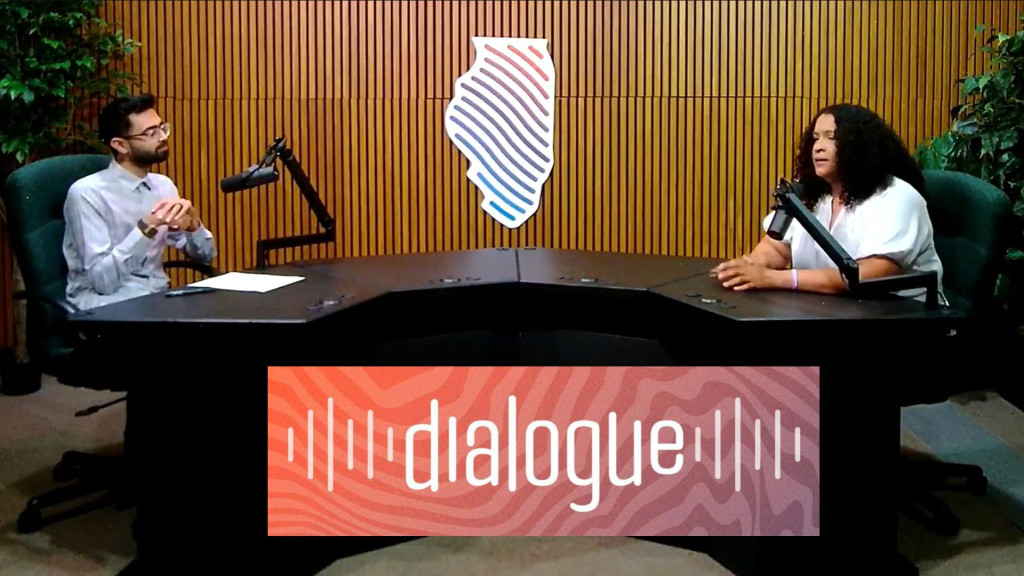
Reginald Hardwick: From Illinois Soul, this is Dialogue. I'm Reginald Hardwick. Dialogue is an exchange about culture straight from the soul. The November 3rd midterm election is closing in. In the past month we've shared interviews with the candidates for the governor's race, the Champaign County clerk and recorder, and the Champaign County Sheriff's Office. Today we bring you an interview with a candidate for state Representative District 104. In a moment you'll hear from the Democratic challenger Mary Catherine Roberson. Our partners in this series, the League of Women Voters of Champaign County, have reached out to the Republican incumbent Brandun Schweizer, but he has not responded to requests to be interviewed or take part in a forum. Now to IPM senior editor Arjun Thakkar and his interview with candidate Roberson.

[00:01:04]
Arjun Thakkar: The 104th district includes much of Champaign and Vermilion counties, including much of Urbana, Champaign, Rantoul, and Danville, among other areas. In 2024, Vermilion County residents voted for Donald Trump by nearly 67% to Kamala Harris's 31%, while Champaign County voters chose Harris, 59% to Trump's 38%. As of the 2020 census, Illinois state representatives represented an average of 108,667 residents. The district is currently represented by Republican Brandun Schweizer. His opponent is Democrat Mary Catherine Roberson, who we have in our studio with us. We're taping this interview on September 9th. Roberson is a former aide to Congresswoman Robin Kelly, and a quick note before we jump into our conversation, it's being produced by Illinois Public Media in partnership with the League of Women Voters of Champaign County, the NAACP of Champaign County, and the News-Gazette. The league has reached out to Representative Schweizer but has not been able to organize a time with him so far. With that, Ms. Roberson, I'll give you a moment to introduce yourself and tell us a bit about your background.

[00:02:16]
Mary Catherine Roberson: Hey, sure, thank you so much for having me here, [Arjune]. It's a beautiful day here. My name is Mary Catherine Roberson. I am a lifelong Danville resident, born and raised in this district. My mom was a retired [schoolteacher] and my dad worked at General Motors. I've been serving this community for much of my adult life.

You know, one of my earliest memories growing up in Danville was an incident in which the police beat my father outside of our family home. And at a young age, I knew that I wanted to be a fighter and I knew that justice was going to be an important part of the work that I did before I had words for accountability or, you know, all the jargon that comes along. And so that is the fight that has driven me my entire life.

Growing up, as I stated, I'm the daughter of a teacher and I said, I'm either gonna be a teacher or I'm gonna be the president because I knew that my life would go down a path of education or a path of governance. And like many of us, I came from a background where I didn't have a lot of people in my family who were in government, so I didn't necessarily have that clear path of what that would look like. And for me the path to government went through education and community organizing. I spent years working as a site coordinator for [Project] Success of Vermilion County, working with young people, not just in homework but in academic and enrichment activities to make sure that they were getting that kind of well-rounded experience, also learning about community service and organization and how we all have that obligation to give back to our communities.

And it was through that work that we saw the issues that were impacting our young people and one that really stuck out was the violence in Danville. We had a high amount of gun violence and so even though, like I said, I was a community organizer, I'm a mother of three — I often say I started showing up with a baby on each hip — not necessarily knowing the answers but being willing to show up and talk to the people to figure them out. And so when gun violence was on the rise, I started connecting with groups like Moms Demand Action over here in Champaign actually, connecting with families, supporting survivors, and [I] realized that, you know, you can support in the aftermath but we really need to take more proactive approaches. And that work actually led me to the city of Champaign and the Champaign County Community Coalition where I worked for several years and, among other things, [we] developed the Community Gun Violence Reduction Blueprint over here. And I think that that's a timeline that shows how community members can go from being concerned citizens and mothers to organizers to actually impacting the policy that changes the way that communities live and organize.

And so it's that lens that I've always brought to the field and to my career and to my life. And so that work ultimately led me — and I'm gonna [clarify] — I'm currently director of constituent services for U.S. Congresswoman Robin Kelly. You had mentioned former staffer. I still serve in that role, so I oversee federal casework from the Hyde Park area of Chicago, south to Westville and west to Pontiac by day. So that constituent services lane really gives me an opportunity to bridge the resources to the communities that we serve, and that has always been my goal, even before I had access to those resources myself as I was learning and developing and growing — just making sure that we always had a hand back to bring people forward, to make sure that people know about the resources that are available and are connected to them. So for the last few years, I have served with Congresswoman Robin Kelly while still organizing in the community around issues that matter to our community.

[00:05:50]
Arjun Thakkar: Thank you and thanks for that clarification, a correction on your part. How would you represent two counties that seem to be on opposite ends politically, at least in terms of how they voted for president in

[00:06:03]
Mary Catherine Roberson: 2024. Sure, sure. Well, and I think, you know, my experience working for Congresswoman Robin Kelly has really given me that experience, right? We serve all the way to the Hyde Park area of Chicago and to Westville. Those are two different political landscapes. We have some similar issues in terms of like affordability, right? Everything's too expensive. Everybody on both sides is buying this expensive gas, right? Everybody wants public safety. So there's some things that we all have in common and agree on that impact across the board.

But my work with the congresswoman has given me that actual on-the-ground experience of working with the farmer in Vermilion County and the business owner in Cook County, and we've represented people regardless of what side of the political spectrum that they fall on. And I think that that's an important piece that I bring as a community member, that I bring with the congresswoman, and that I will bring as your next state representative. I don't treat people in Vermilion differently because they have, you know, overwhelmingly voted for the Republicans. I don't, you know, favor the people in Champaign any different because they overwhelmingly voted for Democrats. And Danville is this unique purple space, right, where it has kind of gone either way. And so what I bring to the table is an ability to work across the aisle, experience working with both parties to deliver results for the people, and that's the lane that I'll take to Springfield as well.

[00:07:23]
Arjun Thakkar: How would you — or rather, what would you see as the most pressing challenges in the 104th district right now?

[00:07:31]
Mary Catherine Roberson: That's a good question. I think the most pressing challenges right now have to do with jobs. You know, we have lost — in Danville alone — [Hyster], we've lost Quaker, you know, so we're seeing jobs going out and not the same level of jobs coming back in. You know, I mentioned just a few minutes ago that the prices of everything — working families are being squeezed from every direction. And so when you couple that with not having the level of paying jobs, right, we're having people who are having to figure out what they need to cut, rob Peter to pay Paul. And as a working mother, a single mother of three, I understand that, right, because I face those same decisions at the grocery store, right? Shopping sales instead of, you know, shopping for what you really wanted to get for dinner. And so every decision that I make comes through that lens of what will provide relief for our working families. But what I'm hearing mostly from our constituents and seeing is just, you know, like I said, we just don't have the solid jobs and we're just paying way too much for everything across the board right now.

[00:08:33]
Arjun Thakkar: I'll ask one more general question then we'll get into some more specific issue-based questions, but you've talked about working for and with Congresswoman Robin Kelly. What has that process taught you about the district and just more broadly working in politics?

[00:08:50]
Mary Catherine Roberson: Yeah, so I think across the district it's really taught me — it taught me that we have a lot of the same struggles. And again, we don't ask who you vote for when you call our office when we help you with the Social Security issue or an IRS issue. And when you work in those lanes, strictly constituent services, you realize that we have a lot more in common than [differences], right? A lot of times we hear the noise of what we disagree with and we don't always focus on the results that we provide for families and people in our district.

And more broadly, you know, the congresswoman does an amazing job of working across the aisle. And, you know, we worked with [LaHood's] office and, as a constituent services director, I work with Representative [Bunting's] office and [Representative] Senator [Balkeman] — before that [Bennett], right? We don't separate across party lines when it comes time to delivering for our constituents. And working for the congresswoman has given me not only that theory but that practice, because when they call us — when a person reached out to their office but it was a congressional issue and not a state issue — they know they can call us and it doesn't matter, you know, what party we represent, that we're going to serve the people. And I think the congresswoman has done a great job of teaching me that and I've been able to put it in practice also.

[00:10:07]
Arjun Thakkar: All right. What have you heard from Champaign and Vermilion County residents about data centers, and how would their thoughts and concerns influence your work if you're elected and sent to Springfield?

[00:10:19]
Mary Catherine Roberson: Sure, sure, yeah, that is a very popular conversation that we're hearing right now. I think the people are saying that we're moving a little bit too fast. The people are asking to make sure that they understand the impact on our water, on our environment. Do the benefits outweigh the risks, right? We want to make sure that we're having these good jobs that come in, that they're going to local people, that they're good-paying union jobs. And so I think that we need to hear what the voters are asking, and that is to slow down a little bit and understand the impact before the construction of the data centers. I want to keep an eye and an ear on the impact. We want to make sure that we understand the impact of data centers, and I think that the voters are asking us to slow down and make sure that we understand that before we move forward — is what I'm hearing in Champaign and Vermilion.

[00:11:11]
Arjun Thakkar: OK, all right. How do you weigh the calculus? I've heard — we've talked about data centers with a lot of folks from a range of federal, state, different positions, and I think the debate is often about protecting the environment, hearing resident concerns. I've also heard folks talk about the economic development perspective that sometimes data centers can bring — tax revenue and economic benefits to a community. How would you weigh that balance that I've heard others talk about?

[00:11:44]
Mary Catherine Roberson: Sure, yes. I don't think it should have to be an either-or. I think that we can have strong economic development while at the same time protecting our natural resources, and those have to be conversations with the data centers to make sure that we understand what those impacts are and we're not trying to fix it after the construction's already started, right? Can you repeat your question? I'm sorry.

[00:12:12]
Arjun Thakkar: Yeah, essentially how do you balance the dynamic between wanting to protect the environment, which sometimes involves setting limits or guidelines, restrictions on data center development, and also the desire for encouraging development — because data centers can bring in revenue and economic development benefits. It's a calculus that different municipalities in Illinois have taken different positions on. So how do you weigh that?

[00:12:42]
Mary Catherine Roberson: I think, you know, as the representative, I'm tasked with hearing what the voters are saying and leading with what they're asking, and they're asking that we slow down. And so I think we weigh the benefits of how many jobs this is gonna bring, how much money will it bring into our economy, and so what are the organizations and businesses willing to put into place as guardrails to protect our drinking water, to protect — to make sure that our voters aren't bearing the cost of additional energy bills — because we're already paying really high bills right now. Every decision that I make for our district is gonna be from the frame of what has the best impact on our working families, and so I think that that's the lens that we need to look at everything. And yeah, I just think the voters are asking right now that we slow down until we have a better understanding.

[00:13:28]
Arjun Thakkar: All right, and this ties into my next question. Residents in the district often express concerns with protecting bodies and sources of water in the area. How would you work to protect water quality in areas like the [Mahomet] Aquifer, the Middle Fork River, and also what role does runoff from farms play in this effort?

[00:13:52]
Mary Catherine Roberson: So I'm actually a student of the late great Senator Scott Bennett, and when I started coming into the fray, he was working and he was a strong proponent of protecting the [Mahomet] Aquifer, and I would take that stand also — that we have to protect our drinking water at all costs. And so, yeah, I would protect the [Mahomet] Aquifer and our water sources at all costs.

[00:14:15]
Arjun Thakkar: Yeah, what measures — obviously there was the carbon sequestration moratorium that passed either in this past session or in the previous session, I believe. What other measures or ideas do you think are worth considering, if you were elected, as part of that effort of protecting

[00:14:36]
Mary Catherine Roberson: the [aquifer]. Sure, I think the most important thing is that we're hearing from the people who are most impacted. So I'm gonna want to hear from the farmers. I'm gonna hear from the people in the district how this will impact them. But we cannot — you know, the [Mahomet] Aquifer provides drinking water for like a million people in our district, so we have to make sure that that's protected.

[00:14:55]
Arjun Thakkar: OK, all right. You mentioned jobs earlier and economic development in the district. The 104th district includes both Rantoul and Danville, which are areas that have lost considerable population and industry since the 1960s and 1970s. Danville has about 29,000 people living in the city, down from about 42,000 in the 1970s. What do you think needs to be done from a state representative perspective — or a state perspective, let's say — to enhance economic development in these areas of the district that you could say have seen better days, and how will you support that development?

[00:15:37]
Mary Catherine Roberson: Sure, sure, sure. I think one thing that we have to do is make sure that we have a trained workforce so that when these industries come, we have people ready to work in the fields. And so I think partnering with Parkland and Danville Area Community College and ensuring that we're on the front end of clean energy jobs, so that when they come we have the workforce to support them.

I also often talk about public safety as kind of the bedrock for economic development and things that want to come into your community. So I think when we talk about addressing — I mentioned earlier the violence and issues — when we address those, we also create communities that people want to come and build in and that their workers want to come and live in. And I've always been a bridge builder, I mentioned that earlier, so working to make sure that we're highlighting the 104th district and all of the positive things that we do have here, right? We've got tourist attractions in our beautiful parks, we've got the U of I over on this side, we've got a lot of positive things in our community, and we have to make sure that when we're recruiting businesses to come, we're highlighting them while also addressing, you know, the issues that we have that might make our communities not as favorable to people who want to move to them or build in them.

[00:16:49]
Arjun Thakkar: OK. And as a follow-up on that, you mentioned your work with the Champaign County Community Coalition, I believe it's called, and other areas in terms of the gun violence reduction blueprint. How does that work influence how you would work in the realm of public safety for the district?

[00:17:15]
Mary Catherine Roberson: So working with the Community Gun Violence Reduction Blueprint, I started as the community relations specialist. I'm born and raised in Danville, so I was new to this community. So we started by going out and talking to the community members to see how is violence impacting you, what could — you know, we had community safety meetings. We often say that the people who are closest to the problem are closest to the solution. So we started working, talking with them also.

We simultaneously worked with law enforcement. Before the city got the funding for the Community Gun Violence Reduction Blueprint, they were already doing a lot to address gun violence — sitting down one-on-one with offenders and offering resources — because we recognize that gun violence is a symptom of a larger problem of poverty and underinvestment, right? And so what the blueprint did was help provide funding to provide resources for people who may be at risk. We want to make sure that we're providing alternatives and options other than picking up a gun, right, in our neighborhoods. And we also have to work with our law enforcement and our providers to make sure that we have strong relationships. We know that there is a history of distrust between communities impacted by gun violence and law enforcement. So the city of Champaign — and I, in my role — served as a bridge between those two. Here's what we're hearing in the community. Here's what law enforcement needs from us. And on a larger level, here's what's working in cities across the nation, right? So we went and looked to see what best practices worked. But we had a lot of people all at the table, different backgrounds — you know, we used to say not everybody in this room is a natural partner, right? You don't always see a formerly incarcerated community member, an officer, a pastor, and a social service provider all together. But we all had that common goal of reducing gun violence. And when you start there, then you realize that we can build on that. And so I think the Community Gun Violence Reduction Blueprint is a beautiful model of community, nonprofit, faith leader, community organizer partnership — highlighting the voices of those most impacted and also connecting them with the resources that they need to choose an option other than violence.

[00:19:33]
Arjun Thakkar: OK. We've discussed this a bit earlier, but as a state representative, part of the job involves partnering with other state, local, and federally elected officials to deliver for the district. How would you navigate building and leveraging relationships with a range of politicians from local mayors to Gov. Pritzker to members of Congress like the successor to Congresswoman Robin Kelly or Congresswoman Mary Miller?

[00:20:02]
Mary Catherine Roberson: Sure, sure. Well, in my experience, both as an organizer and as a city staffer and working for U.S. Congresswoman Robin Kelly, that's exactly what we've done — work across the district with stakeholders. And so as I mentioned earlier with the congresswoman, we work with Republican senators and state representatives all the time. You know, when the community project funding came through, we worked with mayors to make sure that the community project funding — it's like congressionally directed spending — we worked with the mayors to make sure that they had the strongest application, right? The mayors and the state reps and the electeds in this area know that they can call our office and get support, and I know I've been doing that on behalf of the congresswoman. And I'm looking to do that on behalf of myself as your next state representative. But I've got over a decade and a half of experience building across from the community to the stakeholders and also elevating the voices of people who have not been at the table and helping them understand that these mayors and electeds also serve you. So I think while we're building and strengthening those relationships with our electeds, we're also highlighting the voices of the people in the district that are impacted by these decisions. But I've had years of experience working across that with people from different backgrounds, and I look forward to bringing that same energy to the state house.

[00:21:27]
Arjun Thakkar: What local projects or initiatives would you work to secure funding for if elected?

[00:21:33]
Mary Catherine Roberson: Well, I know we keep coming back to community safety, but I really want to see more investment in preventative and proactive strategies. You know, I do a lot of work with young people, and they're asking for employment and, you know, could we bring back some funding for some summer employment or some youth-specific funding. So I'd like to see more work done around that for sure. And I'd also like to see more — can you ask the question again?

[00:22:00]
Arjun Thakkar: Yeah, essentially what local projects or initiatives would you work to secure funding for in the budget?

[00:22:04]
Mary Catherine Roberson: Yeah, yeah, no, definitely for our youth. Yeah, I would lead with that — with making sure that our youth have other opportunities and employment opportunities, you know, to be able to contribute back to our local economy.

[00:22:22]
Arjun Thakkar: Yeah. I think the last question I have before we approach the closing remarks would be, what do you see as District 104's greatest strength, and — I know we touched on broader challenges — but what do you see as its greatest overall challenge?

[00:22:44]
Mary Catherine Roberson: I think our greatest strength is, even when times are hard, we show up. We work, you know, we have people who are working two and three jobs to make sure that they can provide for their family. We are a resilient community. We take the hits, we keep showing up. We lose the jobs, we show up for work. You know, when we have families who've been traumatized by unbelievable amounts of loss, they show up the next day — and that is what gives me hope and the strength to keep fighting for them and to make sure that the fight that I've started and been doing my whole life is taken to the state house so that it can invest in sustained policies for our residents of the state and of the district.

[00:23:26]
Arjun Thakkar: And the greatest challenge as well.

[00:23:34]
Mary Catherine Roberson: I think the greatest challenge is — you know, anytime I talk about being resilient, it makes me think about the fact that we have to be resilient because we keep taking it on the chin, right? And so I think the challenges of high areas of poverty, which leads to not being able to buy your groceries, not being able to have adequate healthcare — I think those are our biggest challenges and they all relate to a lack of resources in a community that suffers from poverty. And so even under that umbrella, we're still able to fight back, we're still able to keep working, we're still able to trudge ahead. But imagine what investment would look like in that community if people didn't always have to be resilient, if we could just focus on thriving and not always surviving.

[00:24:25]
Arjun Thakkar OK. With that we're approaching the end of our time together, so I just want to give you a chance now to share any closing remarks you'd have or anything that we haven't touched on, or anything else you'd like to say to the voters.

[00:24:37]
Mary Catherine Roberson: Sure, sure. As I've stated, I am a fighter for this community and have been for a really long time. I started as a community organizer, a single mother of three, facing the same challenges that impact many of our community members. And I did not just try to overcome those challenges for myself. I have tried to overcome those challenges for myself so that I could give back to the community and show other people that it's possible. The campaign we're building is not just about Mary Catherine for state rep. This campaign we're building is about empowering people to use their voice and make sure they are heard at every level of government and within their community. And I just want to make sure that people know that when they send Mary Catherine Roberson to the 104th district, they are sending someone who stood up before her name was ever on a ballot, a person who showed up in our community when our community has needed us most. And that's the energy — protecting working families, fighting for jobs, protecting healthcare, and making sure that we have a representative who knows this community because she's lived in it her entire life. That's the energy I'm going to take to Springfield.

[00:25:44]
Reginald Hardwick: That was our interview with Mary Catherine Roberson, the Democratic candidate for Illinois State Representative District 104. Again, the Republican incumbent [Brendan] Schweizer has not responded to multiple requests to be interviewed or take part in a forum by our partners, the League of Women Voters of Champaign County. When we return, a discussion about Black American and Black immigrant communities.

[00:26:07]
Speaker 3: There's a sense that the new Black people in America are sometimes accepted by the white folks in this community a whole lot easier.

[00:26:19]
Reginald Hardwick: You're listening to Dialogue, an exchange about culture straight from the soul.

---

**Flags for Human Review:**

- **[00:00:00] / [00:25:44] — "Brendan" vs. "Brandon" Schweizer:** The host Reginald Hardwick uses "Brendan Schweizer" in both the introduction and the closing segment, while Arjune Tucker uses "Brandon Schweizer" at [00:01:04]. These may refer to the same person. Please verify the correct spelling of the incumbent's first name.

- **[00:00:00] — Timestamps out of order in source transcript:** The source transcript listed the [00:01:04] segment before the [00:00:00] segment. Segments have been reordered chronologically in this refined transcript. Please verify that this reordering accurately reflects the audio.

- **[00:00:00] — "November 3rd midterm election":** The audio references a "November 3rd midterm election," but the interview was taped on September 9th and references 2024 voting data. November 3rd was the date of the 2020 general election. Please verify whether this is a misstatement in the audio or a contextual error.

- **[00:02:16] — "schoolte":** The source transcript reads "schoolte," likely an incomplete transcription of "schoolteacher." Marked as [schoolteacher] and flagged for verification.

- **[00:02:16] — "forject Success":** The source transcript reads "forject Success of Vermillion County," likely "for Project Success of Vermilion County." Marked as [Project] and flagged for verification.

- **[00:07:31] — "Heister":** The source transcript reads "Heister" in the context of Danville job losses. This may refer to Hyster, a forklift manufacturer with historical operations in Danville. Marked as [Hyster] and flagged for verification.

- **[00:08:50] — "LaHd's office":** The source transcript reads "LaHd's office." This likely refers to a government official's office — possibly U.S. Secretary of Transportation Pete Buttigieg's predecessor, or a state or local official. Please verify the intended name.

- **[00:08:50] — "Representative Bunting" and "Senator Balkeman":** These names appear in the source transcript. Please verify the correct spellings and titles of these officials.

- **[00:13:28] / [00:13:52] / [00:14:15] / [00:14:36] — "Mohammad Aquifer" / "Muhammed Aquifer" / "Mahammed aquifer" / "Mahomet Aquifer":** The aquifer is referred to inconsistently throughout the source transcript. The correct name is the Mahomet Aquifer. All instances have been rendered as [Mahomet] Aquifer and flagged for verification.
Transcript Assistance
Illinois Public Media may use AI assistance for transcript generation and/or formatting. Transcripts that have not yet been reviewed for accuracy will be labeled.
To report a transcription error, or to request transcription of archival material, please contact will-help@illinois.edu.