








Transcript: Political heavyweights Juliana Stratton and Don Tracy make the case for replacing US Senator Dick Durbin
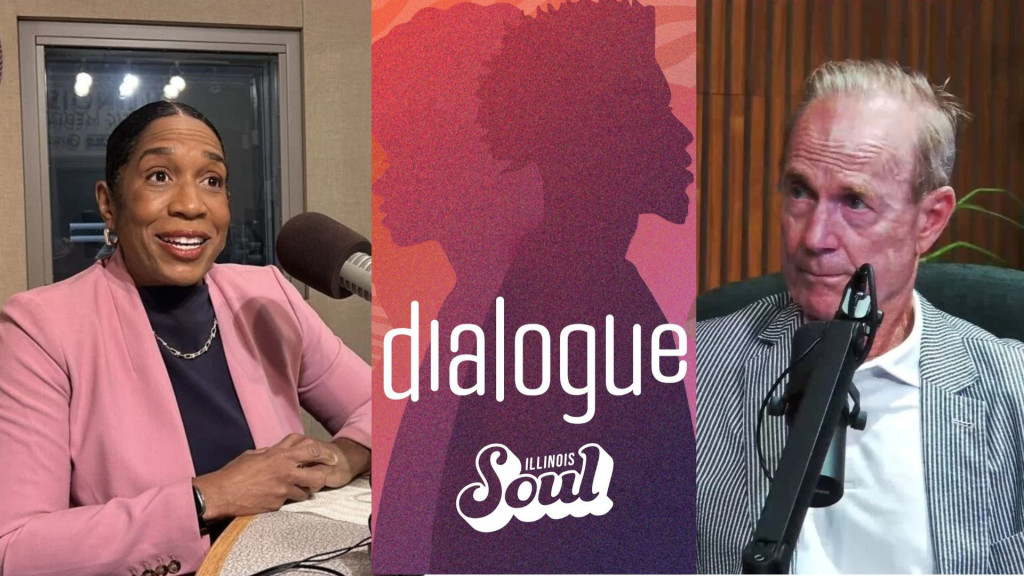
Transcript: Political heavyweights Juliana Stratton and Don Tracy make the case for replacing US Senator Dick Durbin
Dialogue
Political heavyweights Juliana Stratton and Don Tracy make the case for replacing US Senator Dick Durbin
Read the full story at https://will.illinois.edu/dialogue/political-heavyweights-juliana-stratton-and-don-tracy-make-the-case-for-replacing-us-senator-dick-durbin.
Transcript
// AI-assisted formatting failed. Using simple formatter.

// This is a machine generated transcript. Please report any transcription errors to will-help@illinois.edu.

[00:00:00] Reginald Hardwick:  From Illinois Soul this is Dialogue. I'm Reginald Hardwick, news and public affairs director at Illinois Public Media. Dialogue is an exchange about culture straight from the soul. The 2026 midterm election is now weeks away. Among the races that you're being asked to vote on a replacement for the retiring US Senator Dick Durbin. Today you'll hear from the candidates hoping to replace him. Don Tracy is an Urbana native and former chair of the Illinois Republican Party. You'll hear from him in a little bit, but we start with the Democratic candidate Juliana Stratton. The Chicago native earned a bachelor's degree from the University of Illinois Urbana-Champaign and law degree from DePaul. She was a lawyer, mediator, and administrative law judge before running to become a state representative. Stratton is now in her 8th year as the lieutenant governor. Earlier this year, she defeated congress members Rajakrishnamurthy and Robin Kelly and many other candidates to become the Democratic nominee for US Senate in Illinois. Stratton talked with my colleague Brian Mackey on October 9th during the 2first show. He started by asking her about the war in Iran.

[00:01:35] Brian Mackey: Lt. Governor Stratton, welcome back to the 21st show. Thank you for having me. All right, let's start with the war in Iran. How do you think it's going? We're 78 months in at this point.

[00:01:44] Juliana Stratton: Well, remember we have a president who dragged us into this war, uh, told us no plan for what he wanted to accomplish, did not seek authorization. It's an illegal war. It's a war of choice and, uh, we are not clear, more clear than we were 8 months ago about what the plan is and when it's going to end. And the thing that I think I'm hearing from voters every single day is how they are being impacted by it, whether it's gas prices, just everything that is so expensive. So, uh, it's not going well. this is a war that really was, you know, started by this, you know, we were dragged into by this president to really stroke his ego and um I want to get to Washington DC to put a stop to it.

[00:02:37] Brian Mackey: People who maybe don't like the way this, you know, the president has prosecuted this phase of our decades-long conflict with Iran will still say, you know, some of this was necessary. Maybe this was the time. Some had to be done, right, to prevent a nuclear Iran. How do you think about that?

[00:02:55] Juliana Stratton: Well, I certainly don't want to see a nuclear Iran, but that's not the progress that we're making. I mean, we're seeing Donald Trump and quite frankly, Prime Minister Netanyahu working together and putting us in a position that is not getting any progress. We're not making any progress. 8 months in when he told us it was going to happen very quickly. In fact, he told us Iran's nuclear capabilities were obliterated last year. And yet now here we are and we're not getting any making any progress. So I don't see them having a real path forward and I don't see them doing certainly the president doing this in the best interest of the American people. In fact, in so many ways he continues to put us at risk.

[00:03:39] Brian Mackey: You know, the Congress has spent decades ceding its war powers authority to the executive branch under both Democrats and Republicans. Do you think a rebalancing is necessary there in terms of how much authority the president has to wage war regardless of who the president is?

[00:03:57] Juliana Stratton: Well, what I think is that what we're looking at is right now with this president, and that's what I'm focused on, is we have a president who constantly Overlooks the fact that we have 3 or supposed to have 3 coequal independent branches of government. That's not how he operates. He's making decisions that are best for himself. He's making decisions that make him wealthier, makes his friends wealthier, and the American people bear the cost. I mean, when we even talk about this particular war, what's happening with gas prices? What's happening As we think about how tariffs have been implemented. American people are talking about how everything is too expensive right now and uh we need a Congress that's going to stand up to this president. Uh, we need a president that's going to follow the Constitution, and we need the three coequal branches of government to operate as intended. And that's not what we're seeing right now. So that's, that's what I want to fight for.

[00:05:01] Brian Mackey: It seems that one of the big reasons we're in this war is that the Prime Minister of Israel, Netanyahu made the case to President Trump and convinced him to do it. At the same time here in America, one thing that we're seeing is in this strange moment of potential political realignment is young people, both young Democrats and progressives and young conservatives or MAGA or America first, whatever they want to call themselves, kind of coming together on this idea that maybe we need to reevaluate our longstanding relationship with Israel. How are you thinking about that?

[00:05:34] Juliana Stratton: Well, I believe Israel is an important ally. And uh I believe that Israel has a right to safety and security. I've always said that, but I don't believe that Netanyahu shares that goal of seeing what I want to see, Trump or Netanyahu, which is long term peace in the region and a two-state solution. That's what I want to see and I don't believe that we have the leadership right now that wants to see the same thing, nor is working towards that. They've dragged us into this illegal war and want to see it continue for their own interest, and I believe that Netanyahu should be removed from power.

[00:06:12] Brian Mackey: One of and there's an election coming up and he may well be by the people there. One of the ways that the senate, one of the few ways it seems that the senate can exercise control on that is over how much money it approves, right? for sending weapons and other things to Israel. How would you, how would you think about that balance and going forward, right? Do you think that America should be doing less sending of arms and money to Israel, for example?

[00:06:35] Juliana Stratton: Well, what I will always do as a legislator is to look at every piece of legislation and I will look at the conditions we are in, what the circumstances are, and what Decisions should be made at that moment. It's why back in, I think April when Senator Sanders put forth a resolution saying that, uh, about, you know, halting some weapons to Israel that I said that under the circumstances where we are in a war where the two of them are pushing us forward without any plan and causing more instability in the region. that I would have supported Senator Sanders' resolution. So I will take each piece of legislation, as I think any legislator should to say what's, what is the best decision at that time.

[00:07:19] Brian Mackey: So, I asked you about war powers a moment ago. We asked people in our listener texting group to share their questions for you. We heard a sort of related power a little broader. Adrianne in Carbondale says, I would like to hear how she and other senators will take concrete steps to take back the powers of Congress. So talk about that. How are you thinking about that?

[00:07:39] Juliana Stratton: Well, I think about it in a couple of different ways. Um, I think number one, I want to see Democrats flip the House and flip the Senate. That's the first step. we have a president who in my estimation is a wannabe dictator, a president who's stomping on the Constitution. A president who has an authoritarian agenda that we see playing out every single day, whether it is restricting access to the press, whether it's trying to suppress voting rights, uh, all of the other things that ICE agents roaming the streets and snatching people off the streets, um, these are all, all just a part of the authoritarian playbook. So number one, we have to get in office because the Democrats. Because we don't have Republicans who have the courage to stand up to this president and they're rubber stamping his agenda. So we need to get in there to be a block, a wall of resistance to really stop what is happening, stop the bleeding, I like to say. Number 2, we have to do whatever we can to try to, uh, just sort of reverse or I should say restore, uh, the cuts that have been made that are hurting so many Americans and certainly Illinoisans, whether that's stripping millions of Americans of healthcare, ripping food out of the mouths of hungry children by stripping away, you know, SNAP benefits. All of these things that we've seen from, for example, HR 1 or the one big ugly bill that I like to call it, we need to really start that effort. But we also have to be a real check on this president, and that's when we talk about the three coequal branches of government, that's what's intended to be a check on the president. and I would take on that role. I won't confirm any of this president's nominees. Whether it's to a cabinet position, to the Supreme Court, uh, this president is not fit to be able to make such, um, you know, nominations, and I won't support it. Uh, I will look at, you know, I will use my oversight authority to be able to call into question recognizing that the American people deserve to know exactly what is happening in their government. So, this is a time that requires the energy and the courage to stand up to this president. And that's the kind of check I intend to be. So first, let's get in there, but no matter what happens November 3rd, more broadly for the party, I'm going to be someone who gets to Washington to be a check on this president, and I take that very seriously.

[00:10:04] Brian Mackey: There is going to be, as you know, a push and pull in Washington. Some are going to say, OK, we don't want to look. Like we're just obstructionists here. We need to be, you know, thinking about bread and butter issues, right? How are we're going to put food on people's tables and and increase their, their pocketbooks. And there's going to be this other side that says, no, we got to tear down that ballroom and whatever, you know, has been done with building the arch and, you know, physical things like that, but also that's just symbolic of the many, many things that have changed in government. How do you think about that balance of investigations, potential impeachments, which of course is the House, but the Senate would have to vote on that if the House does pass impeachments to to senators. How do you think about striking that balance between, you know, sort of looking forward, right? Focusing on bread and butter issues and actually dealing with some of the abuses of Things that we thought we'd kind of settled in American politics, right? Norms and those kind of things.

[00:10:59] Juliana Stratton: It's both and in my book, um, because right now we don't have what I would consider to be the norm. Uh, all of these things that are happening with this president and this administration are abnormal. Uh, and they are also dangerous and so we have to do both. I mean, look, I always say that when I talk about we have to get in there and then we have to deliver for people. When I talk to voters all across the state, um, there's a lot of frustration. People feel like no matter who's in Washington, it doesn't matter. My life isn't changing, it's not getting any better and it doesn't matter which party I'm not, you know, I'm not feeling the benefits. So we have to get in there and we actually have to do the things that we say that we're intended and set out to do. Now, he might veto any legislation we pass because he'll still be the president, but we need to show as Democrats that we are fighting for healthcare. We're fighting to raise Wages we're fighting to make sure that people's lives are better because to me government should and can be a force for good and that's not what we're seeing right now. But that does not mean that we can absolve our responsibility to also provide that kind of oversight and investigate this president. I mean we have Republicans that clearly don't have the courage to do it and we have to step up. And like I said before, make sure that the American people know this is what your president is doing. This is how this administration is spending your tax dollars and we want to shine some light on it. I always think about someone that I greatly admire, uh, Ida B. Wells, who said the way to right wrongs is to shine the light of truth on them. And I will shine the light of truth on this administration. I think about what we did here in Illinois when uh with Operation Midway Blitz, we started the Illinois Accountability Commission and uh and the reason why is because we here's what we know this president is not going to be president forever. And uh we're gonna collect information and evidence right now so that we can hold this president accountable. So he might try to veto everything, he might try to say, well, it doesn't matter that you have if we get, you know, the House and the Senate, it doesn't matter. I'm still gonna say no, but we'll have the ability to say, look to the American people and to Illinois. for me, look at what we did. He said no, and you need to understand that. He said no to restoring your healthcare. He said no to helping children have a healthy meal. He said no to raising wages or protecting reproductive freedom or preserving voting rights. That's who the Republican Party has become and we need to deliver. but I also want to be able to say um we're holding him accountable. So it's both and to me.

[00:13:41] Brian Mackey: How far down the the Food chain, for lack of a better metaphor, do you go in terms of holding government officials accountable for some of the things that we've seen, right? Be it tear gassing, you know, protesters, uh, you know, shooting American citizens in the street, that sort of thing. Does it stop with the top people? Do you actually think that rank and file federal agents, uh, should, should be, you know, held up for accountability in some way, truth and reconciliation, whatever form that would take?

[00:14:11] Juliana Stratton: Well, I think we've seen where there have been cases of individuals. I think I just saw very recently, although I don't want to be quoted on the specific circumstances where I thought the parents of Renee Good from Minnesota have filed a suit. Um, look, we cannot allow uh this these actions to destroy our democracy go without our understanding what this is about. When we have a president that says, look, there might be a surprise coming up and we're all sitting around wondering whether there's going to be troops on American soil during, you know, while people are trying to vote, those kinds of things, this is dangerous and we have to understand what we are facing. So in whichever way accountability can be brought forward. We need to look at that and I again, I'm not gonna sit here today and say I know every single aspect, but what I do know is that as a senator, I will have the oversight authority, I will have the ability to investigate and to the degree that I can bring uh some sort of light and accountability to this, at every single level, I will go as deep as I can to uproot because the success of this country depends on it. We have to uproot the bad actors who with, you know, think they can act with impunity. Kill people on our streets. And uh do whatever else they want and no one's going to hold them accountable? Not on my watch.

[00:15:41] Reginald Hardwick: You're listening to Dialogue from Illinois Soul, and this is an October 9th interview with Democratic US Senate candidateiliana Stratton, who is running to succeed Dick Durbin. You'll hear from her opponent, Republican Don Tracy in a few minutes. Now, back to the conversation taped on October 9th.

[00:16:01] Brian Mackey: Another listener question, Sam in Urbana wants to know, do you support federal funding grants being used to purchase flock license plate reader cameras? And for any listeners who may somehow not be aware of this, these are these cameras that have gone up all over Illinois. Many downstate cities now have them. They can read, you know, police are not allowed to put like a GPS tracker on your car, but they can access this ostensibly private database that shows where vehicles have been, in some cases hundreds and hundreds of cameras in a, in a, in a given city.

[00:16:30] Juliana Stratton: Yeah, and that, that's the concern that I have what you just talked about being able, I mean, there's several concerns, but one of the main ones is accessing. This, uh, private information and tracking individuals, um, and, uh, what I always, you know, talk about is certainly I want public safety because some would argue, well, this is a part of one of the ways that we can advance public safety, but I don't think that we should sacrifice our civil liberties to be able to do it. And I think about an issue that I very care very much about such as reproductive freedom. And how that information is used to track people that are seeking, you know, reproductive care or how ICE is using that information to send that data, uh, so that ICE can then now, you know, detain someone, uh, in that way. So again, I just think that when I look at this whole issue of flock cameras, I don't wanna see this sort of mass surveillance system. That is jeopardizing our civil liberties and using information against fellow Americans in that way.

[00:17:35] Brian Mackey: But I mean, as you point out, there are people, including your opponent Don Tracy, who argues that this is potentially a way to enhance public safety. I always think of this episode a few years ago. Uh, Peoria set up these like armored trucks that would have like cameras and stuff in them in different neighborhoods and civil libertarians were really not happy with this and, and you can understand why, but I was talking to the mayor there, Rita Ali, who's a Black woman and says, People in these neighborhoods, some of them appreciate this, right? They like that maybe the, you know, the crime is not gonna be happening on their block now while these things are there. How do you think about that balance between, you know, attempting to redress the many uh problems in our criminal justice system with disproportionately targeting uh black and brown communities versus Um, the, the real desire for increased public safety in those communities.

[00:18:26] Juliana Stratton: Well, I think it even goes beyond that. I mean, yes, I'm always, as you've heard me say a couple of times in our conversation today, the disproportionate impact of some of these efforts certainly concerns me deeply, and, and we have to look at data and understand how it's and why it's being used. But I think that in the wrong hands, which I just gave you a few examples, uh, states where we have many abortion bans who are saying we want to track where women are going so that we can prosecute them when they come back to our state or ICE detentions that we're using this data and tracking so that we can try to uh be waiting at your child's school so that when you go to pick them up, we can take you. Um, I I just don't think that we should be in a place of looking at Give up your civil liberties so that we can do this. There's lots of ways that we can think about solutions and that in so many ways is the job of a senator or a legislator in general to think about problem solving. That you don't just say, well, we have, yes, there there's all these consequences. you're gonna lose your civil liberties, but that's all we can do. No, you have to think about what else can we do. So that we can have safer communities and by the way, for me, uh, I always think about ways that we can have safer communities that includes investments in communities. We have a president that, by the way, is holding back millions of dollars of, for example, violence prevention funding where we could do some other things. So, again, I'm just saying that um it's concerning to me. I don't think that we We should be in a place of sacrificing our civil liberties just for the sake of public safety, and we will continue to have those conversations.

[00:19:59] Brian Mackey: Last time we spoke last year, you said you supported eliminating the filibuster. Your predecessor, if you were to win this office, Dick Durbin has been a big supporter of defending the filibuster over the years. You still, I guess one, is that still your position and maybe you can articulate, you know, where that falls on, on the Democratic agenda should they retake the Senate.

[00:20:24] Juliana Stratton: Where does eliminating the filibuster fall on the Democratic agenda? I don't know if I can speak to that. I can speak to the fact that yes, I still believe that when Democrats take back the Senate, and hopefully that is November 3, 2026, that we should end the work to end the filibuster when we get into office. Um, this is, look, the filibuster has been used to block so much progress. And when I think about the things that we could get done, what Democrats could get done that Republicans have blocked because of the filibuster, we could pass the John Lewis Voting Rights Act. We could restore the protections of Roe versus Wade and uh give women the right to decide what's best for their own bodies and their own futures. You know, we could um we could pass some common sense gun legislation. We can do all of that. Uh, we can come back to a place where we can say let's, you know, roll back all these cuts to Medicaid and to, uh, SNAP benefits that have been made through the one big ugly bill. We can do those kinds of things and deliver for people and remind, um, Illinoisans and Americans all across this country that we are the party that's fighting for them and we're here to get things done. Now, look, Donald Trump will still be in office and Donald Trump will still try to veto the things that we get passed, but we have to stop what we see as the Trump administration and congressional Republicans that are hell bent on blocking that progress.

[00:21:55] Brian Mackey: So let's say Democrats are in control, still have President Trump in office for another 2 years. And then let's say you do get a Democratic president down the line, you're still going to have a Supreme Court that has been opposed to a lot of things that Democrats have tried to do in recent years. What do you think about proposals to modify the Supreme Court, you know, strip its jurisdiction, increase the number of members, uh, to, you know, bring it more in line and make it a more small d democratic institution.

[00:22:26] Juliana Stratton: I spoke earlier about the fact that we're supposed to have 3 coequal independent branches of government and I don't believe we have that right now. We have a Supreme Court that also is working to rubber stamp this president's authoritarian agenda. And uh I think that everything needs to be on the table to try to figure out what we do differently. You know, I always start by saying we need to enforce strong ethics rules and requirements. Uh, and that anybody who does not follow those rules, those the ethics rules, uh, should be removed from the court. But I also know that we have an administration and to me, many members of the Supreme Court justices where ethics may not be a motivating factor, unfortunately, should be for anybody who is serving in that capacity, but it's just not and I'm telling the truth. And so, uh, whether it's expanding the court, whether it is term limits, I think we should consider it all. at least look at it, what should happen because we have to do something about the fact that there are these lifetime appointments. That have really just abandoned what the responsibility is. The other thing that I always say is that I will not, and I might have said this earlier, I will not vote to confirm any nominees to the Supreme Court made by this president, period.

[00:23:51] Reginald Hardwick: That was Democratic candidate for US Senate, Juliana Stratton. She taped her interview with Brian Mackey of the 21st show back on October 9th. Because of time restraints, we can't bring you the entire interview. You can do it yourself on the Illinois Public Media YouTube channel. Coming up next, her opponent Don Tracy, the Urbana native and former chair of the Illinois Republican Party, shared his views on abortion actions carried out by immigration and Customs enforcement officers and how the war in Iran is going. That's next on dialogue in exchange about culture straight from the soul. From Illinois soul this is Dialogue. I'm Reginald Hardwick, news and public affairs director at Illinois Public Media. Dialogue is an exchange about culture straight from the soul. The 2026 midterm election is now only weeks away. After three decades in the US Senate, Dick Durbin is stepping down. You just heard from the Democratic nominee who hopes to replace him, Lieutenant Governor Julian S.stratton. Now let's talk with Don Tracy. The Urbana native and attorney is the former chair of the Illinois Republican Party. He is the oldest of 12 children. He defeated 5 other candidates for the nomination. This interview with Brian Mackey of the 21st show was recorded on July 29th. Brian started with Tracy's political philosophy.

[00:25:39] Don Tracy: Well, I'm running to defend the American dream and to reduce the cost of living for all Illinoisans, especially working families, and to bring common sense solutions to Washington DC and to represent all of Illinois, not just Chicago.

[00:25:55] Brian Mackey: Can you be a little more academic than that, right? What do you think? How do you think of American democracy, right? What is your approach? Who, who do you look to as examples from history?

[00:26:04] Don Tracy: Yeah, I think it's the greatest democracy in the history of the world, and we've been very fortunate to have 250 years of mostly honest, uh, good, and, uh, competent leaders, um, and I think we've to some extent been spoiled by that. And, and so if we're going to keep going another 250 years, I think more people need to get involved in politics because I think politics is a very honorable profession. I like, as I like to tell people, politics, even though sometimes it seems like more like mud wrestling than a civil society debate, it's the alternative to war and violence. And so I, uh, but I do think that too many of my friends and and people around the country have gotten used to other people, you know, governing for them and doing and investing in politics and being involved in politics, and I think, um, you know, if our founders had taken that approach, we would still be a colony because they they sacrifice their reputations, their families and their fortunes. Uh, to challenge the the king of England, and we don't ask people now to do that kind of investment in politics, but more people, you know, need to vote and more people need to be educated about their vote and more people need to be, you know, help if if they don't want to run for office, and I think everybody should, they need to help people who do run for office more.

[00:27:39] Brian Mackey: You don't hear people making a defense of politics and politicians as an honorable vocation, right? Mostly good and competent men is the book of Illinois governors

[00:27:48] Don Tracy: I have read that book, it's a pretty mostly good and competent book. How do you,

[00:27:53] Brian Mackey: uh, How do you reconcile that with someone who's running in an era when people wanna hear politicians are terrible. we need to kick, throw the bums out, right? They want fighters, they want change.

[00:28:05] Don Tracy: Well, um, I, I say this, I say what I said to you a lot, not just on NPR. Uh, and I, uh, yeah, you know, you, you, you do need to be, if you're going to be elected to a public office, you, you, you, you've got to be ready to take on the other side, and, but there are ways to do that, I think that are less polarizing and more productive. and one of the things that attracts me to the US Senate is that there is more bipartisanship in the US Senate than there is in the US House, and that's partly due In large part maybe to the filibuster. And, and I, I just think to, you know, for the really big stuff, you know, healthcare and other things like that, it really it needs to be bipartisan with bipartisanship, you get a better bill because you have checks and balances. I think one of the problems here in Illinois is that it's a one-party state. So in a one-party state, uh, you get extreme legislation that's not checked by the other side. Um, because they're not even let in the room, and the other side in Illinois being Republicans, I suppose in some of the red states it works the opposite, so it's the Democrats that are shut out of the discourse. so yeah, I just, I think we need more bipartisanship.

[00:29:27] Brian Mackey: Do you sense an appetite for that in Washington on your own side of the aisle these days, bipartisanship?

[00:29:33] Don Tracy: I do in the Senate, but, very much so. the House,

[00:29:36] Brian Mackey: The White House.

[00:29:38] Don Tracy: Uh, the, I, I, I don't study the House like I study the, uh, the Senate. Uh, the, um, uh, yeah, I, there's, there's not a, that's, that's a, that's a tough one. that's a very, uh, tough question because, uh, the president was elected by, I think a lot of Democrat voters in order to get elected. and a lot of the positions that he has taken are sort of, you know, populistic positions supported by Democrats alike. Um, But I haven't, to your point, I haven't seen a lot of um Bipartisan legislation passed recently in Washington DC I, but I think the people are hungry for that, for bipartisanship, you know, the growing voter population are independents, not Republicans and not Democrats.

[00:30:35] Brian Mackey: Yeah, and among them you can count people like former Governor Jim Edgar, the late Governor Jim Edgar, I should say, um. I don't know if he counts himself as a former, but there's a lot of Republicans who were leaders in the party in Illinois, uh, 10 years ago who are now doing other things because there's been a change in the party and that's something else while we're on this, you know, big topic of big picture political philosophy. Do you see divisions among being conservative, being Republican, and being pro-Trump? Are those different things or

[00:31:07] Don Tracy: Brian, you know, I was chairman of the Illinois Republican Party and so I saw, uh, lots of, uh, divisions and, uh, uh, you may recall I resigned because some of the, some of the infighting that I was trying to quell left and right throughout the state, uh, finally made it to the board level and, uh, it made it, um, very unmanageable. And you know, and I put a lot of blood blood and sweat and money into uh into building up the party and uh and that infighting really kind of um stopped the progress and made them continuing the mission impossible, you know, which is why I resigned um at that time a little early, you know, my term had a little bit to go, but you know, the average tenure of a E of a Republican chair of a state party's only about 1.5 years. I did 3.5 years, doesn't pay and you always get blamed no matter, you know, what, what, what happens. If, if you win, you get zero credit for it and your main job is, is raising raising money. So yes, the answer to your question, there's a lot of infighting in the Republican Party, but there is the Democrat Party now has You know, a major divide between the Democrats, socialists and the what they call the establishment Democrats. So and that's a that's a as serious a divide, I think, and maybe more so than any divide in the Republican Party right now.

[00:32:41] Brian Mackey: Yeah, well, we'll see how that plays out on both sides this November. Well, let's, let's talk about some policy areas you mentioned already in this conversation, the cost of living. That's been a big theme in your campaign as it is in many campaigns. What do you do about that as the US Senator from Illinois?

[00:32:57] Don Tracy: Well, in Illin you know Illinois is a particularly high costst state. You know, we're one of the, we are either the highest property tax state or second to New Jersey. We go back and forth on that. and that is what I hear the most complaints about on the trail. I mean, the property taxes are so high, they're like taxing people out of their houses or they're basically creating a second mortgage on a house. And so, you know, that has got to be brought under control. Um, and, uh, Pritzker Stratton just make it worse by, you know, reducing, uh, revenue sharing with localities, uh, and unfunded mandates because if you get unfunded mandates from the state, how do you pay for it but

[00:33:38] Brian Mackey: You're running for the what does the US senator do about those are, those are general assembly issues pretty much, yeah, and the, and the governor. But can you do

[00:33:46] Don Tracy: something well, a fiscal responsibility is a place to start, um. One of the reasons why cost of living is such an issue now and such a problem for so many people out there that really are struggling to stretch their paychecks, uh, to, to buy groceries and and fuel is because of um Biden inflation, you know, uh, that COVID required a lot of extra spending by the federal government and we did that twice under the, uh, the Trump administration and then President Biden was elected. And then he did like a 3rd, a 3rd and 4th round, which I believe are unnecessary, and it's that 3rd round what was misnamed the Inflation Reduction Act that caused what I think everybody agrees was the highest inflation in 40/40 years since the Carter years, the Jimmy Carter years, in excess of 20, 20%, and that 20% is still there, you know, it hasn't, so we're still dealing with that on top of, you know, regular inflation. So, so, you know, reducing being more fiscally responsible about government spending is part of it. because that will help reduce interest rates. Um, You know, shop people don't talk about shoplifting, you know, law enforcement can help reduce the cost of living, you know, the, um, the a lot of the a lot of the um Uh, big city prosecutors stopped prosecuting shoplifting unless it was above a very high level, and that has produced, I think, a national shoplifting epidemic. Even in my hometown of Springfield, go up to any store clerk like at a CVS or Walgreens or a Kohl's or Target and ask them if people walk out with stuff, and they'll say all the time, and they're, and they'll say, what can you do about it? Nothing. We can't do anything. We just let them go. Well, that adds to the cost of everything that can be carried out of a Of a store,

[00:35:43] Brian Mackey: is there a federal policy you would recommend to address that issue at the, you know, CVS and Walgreens in Springfield

[00:35:49] Don Tracy: from yes, through the power, the power of the purse, which I think would address all of, you know, say public safety issues that's being done in Chicago now as I understand it, that some of the funding for mass transit has been held up or maybe paused, was paused until the the CTA. added real police to patrolling the trains which have become very dangerous so that people, a lot of people are afraid to ride the trains up there though it's getting better because they had unarmed security forces on the trains patrolling the trains, but now they have real police there and I think it was because of federal federal policy that did that and I've I've ridden the trains over the years many, many times there. But I don't know that I would do it at night by myself, and I, and I, and I, it just seems like there's more traffic than ever around Chicago and I spend a lot of time there now, and I suspect it has something to do with fewer people riding the trains. and I know whenever I've, you know, seen some numbers on it, I know their the train revenues, ride revenues are way down and ridership's way down. And so that sort of thing. So on the shoplifting thing, you, you could, to the extent that the federal government funds, uh, say local prosecution offices, you could, you could add some sttras to that, say, you know, we're only going to fund you if you prosecute, you know, you're not the real crimes.

[00:37:12] Brian Mackey: You, you mentioned this idea of Biden inflation. It's been a year and a half now. I wonder at what point does, you know, do continued economic problems become Trumpflation or federal Republican inflation.

[00:37:23] Don Tracy: Depends on which side of the aisle you're talking to. I mean, according to the other side, uh, it's, you know, it's happened on day one, right when he was sworn in. But well,

[00:37:32] Brian Mackey: I did a little research before this conversation. I paid 250. There's a gas station just a few blocks away from where we're talking. In the studio now, $4.40 a gallon as we are taping this on a Wednesday afternoon. I paid 250 cents a gallon in central Illinois back in January. So there's a, there's a big price increase, right,

[00:37:52] Don Tracy: and that's due to the Iranian war. But right after the Biden administration finished its term, I think at that time it was in the $4 range and it came down quite a bit to $250 as you say. And now it's temporarily spiked and that that's that's hurting the cost of living. There's no doubt about that. But

[00:38:12] Brian Mackey: does the administration bear responsibility for doing something to address that?

[00:38:18] Don Tracy: Yes, but it is, you know, it's, it's the price we have to pay, you know, for national security and

[00:38:27] Reginald Hardwick: You're listening to Dialogue from Illinois Soul. This is a late July interview with Republican US Senate candidate Don Tracy, who is running to succeed Dick Durbin. You can see videos of Tracy and his Democratic opponent Juliana Stratton interviewed on the Illinois Public Media YouTube channel. Now back to this conversation taped in late July.

[00:38:49] Don Tracy: Well, as I said before, I, I'm a, a fan of legal immigration. We're a nation of immigrants and we need probably more uh legal immigration, uh, not less. Um, and we do now, as I understand it, um, naturalize more citizens through immigration policy than I think any other country in the world already. But birthright, um, Birthright citizenship is just such a weird concept, you know, and as a result, there are companies, I understand in China and elsewhere that they are in the business of what's called birthright tourism where people will pay them to go to the United States just to have a baby and have a baby that's a US citizen, and then they return to their place so they have a child that can be, I guess, a dual citizen and and qualify for certain benefits even though they're, they're away. Uh, so I, there, I, there are very few, if any major countries in the world besides the US that have that. There, there are countries there, there are no, there are countries in the, um, in, in, in Europe that had it, and then they got rid of it because it was such a strange thing. I don't think Mexico allows birthright citizenship. No, I, I, I, I, the Supreme Court, I, I respect the Supreme Court and Um, I thought it was kind of a close issue, but

[00:40:12] Brian Mackey: would you remove it? Would you support an amendment to change the

[00:40:16] Don Tracy: constitutional amendment? Yes, I would. I think it's just, it's it what, what is, what public policy does does that serve? We, we need, you know, good immigration policy. We need a good process, a due process procedure for citizenship shouldn't be that somebody pays a Chinese businessman, you know, $50,000 to have a child who's an American citizen through just by making a trip to the United States. I think that's wrong policy. So yes, I would support a change in the law, a legal, a lawful change in the law.

[00:40:47] Brian Mackey: I wanna come back to this idea of bipartisanship in the Senate you talked about earlier. Um, Lloyd in Danville sent us a text message, says, I'd like to know if he, you, Mr. Tracy are willing to reach across the aisle to cause substantive change in the Illinois economy. More of the same is unacceptable. If he's not willing to work with the other party, he shouldn't run. Voters are tired of lip service and division. What would you say to

[00:41:11] Don Tracy: Lloyd? I'd say he's right on. I have to agree. I think I agree with everything that Lloyd said there. I think we do need more bipartisanship. I plan to reach across the aisle, uh, and the US Senate has a storied tradition of reaching across the aisle, and you know, partly because they have to because of the filibuster. Um, but, uh, that's, that is the, the US Senate. It's, and I, I, I look forward to reaching across the aisle because to get really big stuff done and we need some big stuff done like immigration reform, it it has to be bipartisanship, right? bipartisan, I mean. I mean, if you look at, for example, you know, the the Affordable Care Act, which has really become, I think the unaffordable Care Act, that was done on a strictly partisan basis and we're still fighting, there's still problems with it. It has become unaffordable. what, almost 20 years later, 18 years later, had that been a bipartisan bill that had come out of the Senate with 60 votes instead of with some Republican votes, they're all Democrat votes though, yeah, if it had come out of the Senate with some Republican votes, I expect it wouldn't have had to have been amended so many times, including right out of the chute by through reconciliation because of a big glitch, and I think it would be a better, it would have been a better Uh, Bill, I think healthcare would be better and more affordable today, and we wouldn't still be fighting over it 18 years later.

[00:42:37] Brian Mackey: Is it really possible though, because if it's going to be a win for one party. Why would the other party get on board both ways

[00:42:44] Don Tracy: that's not my idea. My idea of legislating my idea of legislating is not, you know, wins. You know, it's not about winning. It's about serving the people. It's about addressing problems that you, that you that we agree are our problems and then coming up with a reasonable solution to those problems. that's what that's what government is for.

[00:43:05] Brian Mackey: But we've seen time and again if the president is strong, you know, depending on the issue, and gets on the phone and says, I need you to not vote for this, especially President Trump. He seems to have a special persuasive ability that You know, Republicans will not get on board if it's something like that. We had a question about this. Jane in Pawnee wants to know on what issues have you differed from President Trump and why.

[00:43:29] Don Tracy: I'm not going to be a rubber stamp for anybody, whether it's a Democrat president or a Republican president, and I agree with the president on some things and disagree on other things, and When I'm asked this question, I usually say ask me an issue, you know, I'm not, I'm not gonna try to guess what you wanna ask about, but I will say this, I'll, I'll say the filibuster since I've talked about it so much, that is, that is one issue where Uh my opponent. Uh, Lieutenant Governor Stratton and President Trump are in lockstep. They both want to abolish the filibuster, and I disagree completely with that. I think it's the filibuster is what encourage requires bipartisanship on really big stuff. and I think it also provides stability to our government, otherwise we'll be more like a banana republic, and every time we have a slight majority and maybe one vote. In one house and one vote in the Senate, the complete 180 degree turns in policy. So so I think the filibuster is a very important part of the success of this American democracy. And so I do disagree. I understand. The president's view on this that his thinks, well, the Democrats are going to abolish it as soon as they get in, you know, back in the White House, so we better do it first, and I understand that argument, and that is the best argument for abolishing the filibuster, but I, I have confidence that there are enough reasonable Democrats in the US Senate that even when they get back in control, which is probably inevitable at some point. That they, there will be some new mansions or cinemas or federman's who will who will not go along with abolishing such an important good governance aspect of American governance.

[00:45:23] Brian Mackey: The, uh, the reason the president wants to abolish the filibuster is to pass, uh, this legislation called the Save Act. Among its many provisions, uh, would require both ID to vote and proof of citizenship to register to vote for federal elections, as well as things involving transgender people and, and many other things that have been thrown in there. Do you support that legislation, the SAVE Act?

[00:45:44] Don Tracy: First of all, I, I, everybody should have the every citizen should have the right to vote. Non-citizens should not be voting. Uh, I believe that voting should be in with voting policy, voting rules, voting laws should make it easy to vote. But hard to cheat. Uh voter ID. is easy, relatively easy, you know, people died for the right to vote. And are you gonna tell me that somebody can't, can't go to the trouble of getting, you know, a voter, an official voter ID? To vote for a right that people died for, I don't understand that. Just to give 80%

[00:46:28] Brian Mackey: to give voice to the opposition, I think they would say yes, it's OK. That's one thing for, you know, a lawyer, journalist, people with cars, we can go get, I can if I need to get my birth certificate, it's up in the Chicago area to prove that I'm a US citizen to vote or I happen to have a passport because You know, I'm fortunate enough to be able to travel outside the borders of our country from time to time, but like for somebody who's like living paycheck to paycheck or no paycheck, maybe it is harder to go to the state they were born in and get their birth certificate, and they don't have a passport just to give voice to the opposition.

[00:46:59] Don Tracy: Well, Brian, you're doing what is some of my Some of my Democrat friends on the other side of the aisle are doing you're conflating the two issues voter ID and proof of citizenship. Well, it's both in the same. Well, I'm addressing it one at a time. OK, forgive me. So, voter voter ID, voter photo ID is like an 80/20 issue.

[00:47:18] Brian Mackey: 71% Democrats

[00:47:19] Don Tracy: support it and we should have voter ID in Illinois and the Illinois voters support it, but the Illinois Democrat leaders do not. There's no justification for opposing a voter ID, right stipulated, OK, um, then, uh, proof of citizenship, uh, uh, because of the conflation, and I've heard some like Democrats do say this on national TV. Um, kind of what you just said is that you know you have to prove citizenship every time you vote. That's not what's being proposed. All that's being proposed is that when you first register to vote, you have to prove your citizenship. Or when you change your registration, like if you change address or something like that. Now that's a little bit more um inconvenient than uh pulling out your driver's license, but because you, you might have to get a birth certificate, which I've had to do, you know, time from time to time for various reasons, it's not that hard to do. And I don't think it's, you know, when you have people who have died for the right to give you the right to vote, I don't think it's asking that much to get a birth certificate or pull your passport out of your lockbox or wherever you keep it or some other, you know, proof of citizenship.

[00:48:42] Reginald Hardwick: That was Republican candidate for US Senate Don Tracy. He taped his interview with Brian Mackey with The 21st Show back on July 29th. This was not the entire interview. You can view that on the Illinois Public Media YouTube channel. You can also find the interview with Lieutenant Governor Juliana Stratton, the Democratic candidate there. That's all for this edition of Dialogue. Our editor and producer is University of Illinois student Curtis Beasley IV. Jill Clements is Illinois Soul station manager. Lamont Holden composed our theme. Dialogue and Illinois Soul are part of Illinois Public Media, a service of the University of Illinois Urbana-champaign. I'm Reginald Hardwick. A reminder, early voting is currently underway. The election is November 3rd, so don't forget to vote. We'll talk with you again next time.
Transcript Assistance
Illinois Public Media may use AI assistance for transcript generation and/or formatting. Transcripts that have not yet been reviewed for accuracy will be labeled.
To report a transcription error, or to request transcription of archival material, please contact will-help@illinois.edu.