







Transcript: Vietnam’s ‘Queen of Soul’ prepares for Illinois appearance
Transcript: Vietnam’s ‘Queen of Soul’ prepares for Illinois appearance
Dialogue
Vietnam’s ‘Queen of Soul’ prepares for Illinois appearance
Read the full story at https://will.illinois.edu/dialogue/vietnams-queen-of-soul-prepares-for-illinois-appearance.
Transcript
// This is a machine generated transcript. Please report any transcription errors to will-help@illinois.edu.

[00:00:00]
Reginald Hardwick: From Illinois Soul, this is Dialogue. I'm Reginald Hardwick, news and public affairs director at Illinois Public Media. Dialogue is an exchange about culture straight from the soul. You know America's queen of soul, the late Aretha Franklin.

[00:00:41]
Speaker 1: Music from "Natural Woman"

[00:00:49]
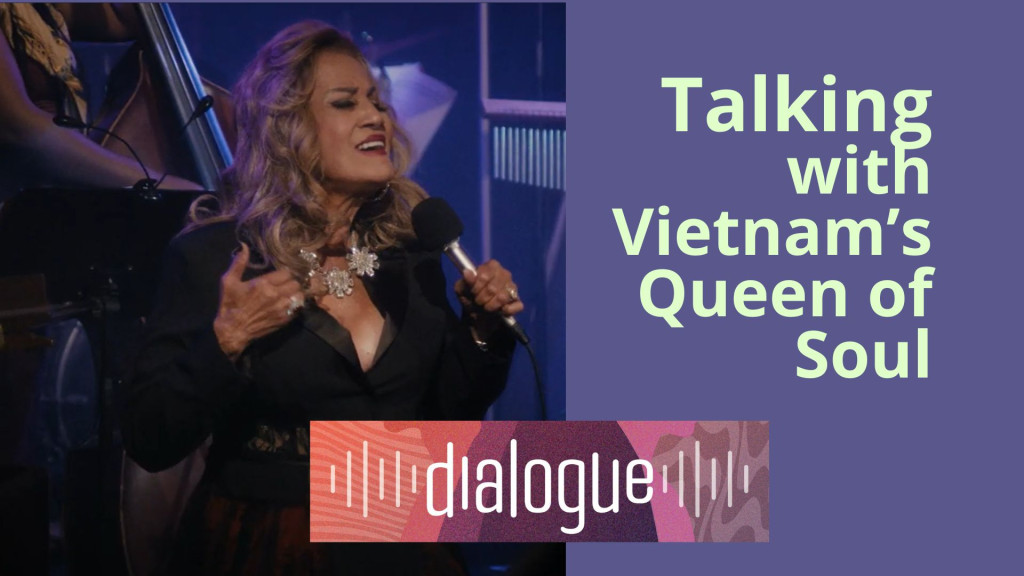
Reginald Hardwick: But did you know Vietnam has a queen of soul? That is Carol Kim. She is the featured performer of the Saigon Jazz Revival in Chicago on Saturday, August 29th. The concert is a benefit for the Vietnamese Association of Illinois, which helps immigrants and residents of all backgrounds across the state. It's an organization I know because I'm part of the board. The Vietnamese community is close to me. My birth father and one of my uncles were among the 300,000 Black Americans who served in the Vietnam War. He met my mother, a Vietnamese native, in Saigon, the capital of then South Vietnam. It was a short relationship, and before my mom knew she was pregnant with me, the U.S. Army had brought my dad back to the United States. I was one of thousands of Amerasian children born in Vietnam. Months later, I was adopted and raised by a Black couple in Colorado. I met both of my birth parents about five years ago. My birth dad now lives in Nevada. My mom lives in Georgia.

Around the time they were dating, there was a rising voice on the scene: Carol Kim. And before arriving in Illinois, I chatted with Carol Kim and her daughter Trace, who has her own burgeoning entertainment career. Carol Kim, welcome to Dialogue.

[00:02:43]
Carol Kim: Thank you. Hello.

[00:02:45]
Reginald Hardwick: Trace, welcome to you as well.

[00:02:48]
Trace: Hi, thank you. Thank you for having us.

[00:02:49]
Reginald Hardwick: Carol, I'll start with you. Can you tell us about your journey with music? When did it start?

[00:02:55]
Carol Kim: Oh my God. This is start in 1968. The people, people know me singing in 1968.

[00:03:05]
Reginald Hardwick: And did you sing in school, or did you go right into the nightclub scene there?

[00:03:11]
Carol Kim: yeah, it's just kind of like, um, I performed for, uh, American soldier where they service for war — Vietnamese War [against] communists. So that's why I've been in travel all the [US military] base or Da Nang, you know, so singing, perform just like, uh, how do you say that, like Bob Hope — like Bob Hope have the entertainment, you know.

[00:03:37]
Reginald Hardwick: So you would provide entertainment for some of the U.S. troops. Who were some of your favorite singers growing up? Excuse me, who were some of your favorite singers?

[00:03:49]
Carol Kim: My favorite? Oh, that time, uh, I sing a lot of American music, so like jazz, blues, and soul music. Yeah, kind of like —

[00:04:02]
Trace: — like who did you listen to?

[00:04:04]
Carol Kim: I listened to a lot of, you know, like soul music, you know, like a Black [singers], you know, like Aretha Franklin, you know, Nancy Wilson, something like that.

[00:04:15]
Reginald Hardwick: What did you like about their singing?

[00:04:18]
Carol Kim: Why? Yeah,

[00:04:19]
Trace: what did it make you feel like?

[00:04:20]
Carol Kim: Why did — because also the song, like a feeling, like touching your heart, you know, it's blues, you know, I like that, but I, I'm not blues actually. I'm very fun and I, I like funky music, but so when I started listening to music, I like the blues and, you know, jazzy. That's what I — I don't know, that's, that's what I like.

[00:04:44]
Reginald Hardwick: And for people who don't know, do you sing in both Vietnamese and in English?

[00:04:47]
Carol Kim: Yes, but the Vietnamese, I just do a little bit. When I was in my country, like 1968, I sing very few, and when they — I hit one song by Trần Khánh Vân, I think Vietnamese people know who I'm talking about. Trần Khánh Vân is a very popular songwriter in Vietnam, and I hit one song. I sing his song. And then people, they start to know me more that time.

[00:05:17]
Reginald Hardwick: Tell us about the song "Sài Gòn." What makes that so special?

[00:05:23]
Carol Kim: This means the people that come all over, like the north, they try to come in Saigon, but that time Saigon is very — how do you say, I don't know — hung binh dong lai, like the — the pearl, the pearl of the — of the nation, the Asian, yeah, the country. So everybody like to come to Saigon. It's a lot going on — the food, the living — and, um, the north, north is very poor at that time, 1944, 1945, you know, so that time when they still [divided into] north and south, and our south, [that] — this country is better. We have, we get a lot of food, good and rice and everything, so that's right, that — it's everything beautiful if you don't have the war with the communist took over 1975.

[00:06:49]
Reginald Hardwick: What can we expect from your show on August 29th in Chicago?

[00:06:53]
Carol Kim: I got a little bit nervous, but I, I, I think I'm having a good time though. Yeah, because I [go] back with the band that is awesome. The people, they're awesome. So I kind of [am] a little bit nervous. I, I've been singing for almost over 50 years. But I still [get] nervous when [there's] something like interesting, you know, like very important for me, you know, to go back, especially Chicago.

[00:07:22]
Trace: Yeah, it's going to be the second time she's performing with a whole band. We did the first show with this band last year in November in New Orleans through the Saigon Jazz Revival, which is what we're doing again in Chicago. And so the first time last year was really special and fun, I think, for my mom to really sing with the live band. I think she's not — you're not used to that. You miss doing that back in the day. And so I think her meeting these musicians was — she was like a kid in a candy store just seeing all these people really there for the music. And I don't think she's used to like a full band that is so, you know, special in this way.

And so this show is like a repeat of the first show. I think we're singing the same songs — she's singing the same songs — but they were all songs that she chose, um, you know, with Marion, who is, you know, [who] started this [Saigon] jazz revival. And so these songs my mom kind of revived from back in the day, so she hadn't sang these songs in so long. Yeah,

[00:08:31]
Carol Kim: but just a couple — couple in the program, and a couple of songs I haven't been singing. I even, even touched that one word because right now the music is different, you know. I, I never sing those songs. But that's right — the first time when we were in New Orleans, I got so nervous, and the, the band [helped] me a lot and the band is good. So but now I'm more confident, you know, [about going] to Chicago. But [I'm] excited because Chicago, you know, like — oh, I don't know what to [say] because I'd be back there.

[00:09:30]
Reginald Hardwick: Tell me about the band. I understand they're from all over and play many different instruments.

[00:09:37]
Carol Kim: Oh yeah, yeah. I never — I hadn't sung like that in my life for a long time. You know, it's because, you know, local band over here, like, uh, just, you know, like four piece, mostly guitar, bass, but this one is really, really, really jazzy — with the, with the [big band — unclear], they call [it]. I know old day — back in the old day. Oh my God, they remind me [of] back in 1968, 1969. So, you know, so I just — that's why I, I just [told] Tracy, I'm so scared and nervous, you know, and, and then they, they're great.

[00:10:22]
Reginald Hardwick: [Are] you part of the band as well? And can you tell me a little bit more about some of the other contributors?

[00:10:27]
Trace: No, I'm not a part of the band. The band is made up of — I'm trying to count right now — there's over, there's like seven people and they're all from everywhere. I won't get their exact locations correctly, but everyone works with Marion, who is, you know, um, doing this showcase. And they're amazing. Steve was the band leader, and he really — yeah, yeah, he, he was awesome. But I, I am my mother's manager, clearly, um, but for this show I was able to, I mean, kind of explain to my mom what we were doing. I think, like, my mom is used to singing for people she knows and locally, and so I think when I talked to her about this idea that Marion had, uh, she was excited to do what she loves to do, which is sing with the full band — a jazz band, nonetheless.

So for me, my participation was, uh, first and foremost, as a supporter. And I, I covered my mom's songs [a] couple of years ago and I'm not the perfect Vietnamese singer, but I did get it done and I've gotten better at it, I think. But I decided — with Marion and my mom — to sing "Saigon" with my mom for that first show in New Orleans, and it was really cool to sing with my mom. We don't sing a lot together, um, so it's special when we do. And so I will likely be doing the same thing with her again in the Chicago show. And my confidence in Vietnamese speaking, though, is not very strong. I do have fun kind of getting in touch with, you know, where I'm from and learning what words mean in Vietnamese.

And the way that I covered the song with my friend Ariel — you can tell, if you were to listen, [compared] to my mom's, it's pretty upbeat. It's like, it's fun. It is — it's really sad when you listen to the lyrics, and the way that my friend and I produced it is really slow, kind of melancholy. Um, and a little more [of a] twist of what I'm kind of used to in my own music. So, so yeah, I'll be helping. I'll be singing with my mom, um, this song at the show.

[00:13:13]
Reginald Hardwick: How does your mom inspire you?

[00:13:16]
Trace: My mom is a very special person and I find her to be so — when you watch her on stage, you kind of see someone who is meant to sing, and her voice is really powerful. And I think that has been a theme my whole life, being raised by her solely and like my aunt, but as a single parent.

I think she inspires me — [in that] I've always been a creative person, you know, I went to school, I got a degree — cause, let's do that — but I think being an artist full time is quite difficult. I've seen that in her life. No matter how iconic she is, no matter how known she is in the Vietnamese community, you know, being an artist and making a living is really hard in America and also in Vietnam. And I've, yeah, I've gone through my own iterations of pursuing artistry as a career. And so I guess she inspires me in the way that I know storytelling is absolutely worth it. Like, it is the thing that heals and holds people and inspires people. And I think using your voice is very necessary, and I know my mom has used hers for a country that needed it. And on a different scale, I want to use my voice in my own way in this country, how I'm supposed to, in this time of history, you know. So I've just always been around someone who is very vocal about using your voice, and so it's taken me some time, but it inspires me.

[00:14:46]
Reginald Hardwick: Why is it important to support an organization like the Vietnamese Association of Illinois?

[00:14:53]
Trace: I think when I ask my mom or anyone who is Vietnamese about the history, it's hard to get everything — like all the facts — straight. I think they lost a lot. We lost a lot in the war. And so I think organizations and nonprofits like this — the idea of preserving something is so special, and I think a difficult pursuit. So I think anyone who's behind trying to, you know, protect and preserve history and memories and imagery and video and media and whatever, you know, the pursuits are — I think [it] is so worthy, because there's not a lot saved, you know. In terms of like, my mom had to leave the country. She never went back — during the — right before the war was over, she left right before. It's not like she got to go back and like grab her things, you know. So from a very small scale of like she didn't get to grab her, her like childhood stuff with her — on a wider scale, it's like, what happened during this time and how can we remember the best we can, and how do we hold and preserve these memories? And so I think organizations like this are really helping kind of hold a part of our spirit alive, if that makes sense.

[00:16:06]
Reginald Hardwick: Trace, let me ask you — how does Black music inspire this generation of Vietnamese, as well as your mom's generation?

[00:16:17]
Trace: You know, I, I don't know if I am the one to answer that. I, I don't — I'm not very connected to the Vietnamese music of today. Like, my only reference is my mom, and when I go to her shows and I see the people who are covering songs and stuff, I think — I don't know, I don't have a great answer for that.

[00:16:38]
Carol Kim: You know what, in Vietnam, we, we love the, the, the [Platters — unclear]. What is that? You know, they asked me how I knew — "Smoke in your eyes," who's singing that? The Platters, this is back there, you don't know — and Johnny Mathis, you know, Black, you know, you know what I mean? Uh, so they hear — they have the white Caucasian too, but the most, they love the Black people singing. So that's why I, so they call me like soul music. I don't know, maybe you're too young. You, you should know because, you know, soul music, you know, it's jazz and — different soul music, different, like, um — it's not like a Michael Jackson now in this day, but back there, like, uh, "I Feel Good," you know, it's just the guy, uh, it's —

[00:17:33]
Reginald Hardwick: The spirituality —

[00:17:34]
Carol Kim: Brown, James Brown,

[00:17:36]
Reginald Hardwick: James Brown,

[00:17:37]
Carol Kim: yeah, it's like back there, yeah. Yeah, I think the Temptations, we all hear that — their music, you know. I think it's really — Diana Ross

[00:17:50]
Trace: is really heavy for Vietnamese people,

[00:17:52]
Carol Kim: but this is very popular, that time — that's Aretha Franklin, Miss Aretha Franklin, because I sing a lot of her songs, like "Say a Little Prayer," and uh, Dionne Warwick, you know, we sing a lot of Black people music. So I, I, I love that music. I don't know. Country is very few. Yeah, back there. Oh, Nancy Wilson, you know, so Johnny Mathis — something like that.

[00:18:25]
Reginald Hardwick: Last question, I'll ask to both of you. What does it mean to call yourself a Vietnamese American?

[00:18:31]
Carol Kim: Yes, Vietnamese American. I'd be proud to be American. I'd be proud to be here, yeah. But actually, you know, it is a secret — it's not really a secret. I tell everybody. I'm born in Vietnam. But my mom, my parents, [are] Malaysian — Malaysian, Vietnamese — so they come in Vietnam and they grew up in Vietnam. They [were] born in Vietnam, but so I'm Vietnamese. But actually, I don't think I'm 100% Vietnamese. I'm Malaysian. So my look, my personality, my look, I'm not like — you know, [skin] color — my color [is] like I'm big and tall, and some Vietnamese [are] very [slight]. We, we, we — we [are] tall for Vietnamese people, don't you think so? We went to Vietnam and we walked — we're like a giant, you know, we're so big [and] tall. So actually I'm born in Vietnam, but I'm not really. Vietnamese Malaysian, but I speak their language, so I, I grew up there, so I'm Vietnamese — Vietnamese Malaysian.

[00:19:43]
Trace: Yeah, I think identity is interesting, especially when it concerns being Vietnamese or from Vietnam or born in Vietnam. For me, I was born here. My mom is Malaysian and Vietnamese, and my dad's Vietnamese, so I'm, I'm at least half Vietnamese.

What does it mean to be Vietnamese American to me is kind of an ongoing — an ongoing investigation of these different worlds that I come from. I, as I've gotten older, the more I'm interested in learning about my Vietnamese heritage, of course, right? Because you grow up wanting to be like everybody, to be safe, to be OK. I grew up wishing I was, you know, part white, to be honest, because I was like, I don't belong. I feel, you know, scared. But as I've gotten older, I love being Vietnamese American.

And I think even through music — and I make films now — like finding community who are Vietnamese and like Vietnamese American, it's been a really beautiful healing process to really accept where I come from and what has made me. Because I really was afraid of what that could have looked like when I was a younger kid, you know, living in Orange County. So I think being a Vietnamese American is a very cool thing, a thing that I'm proud of.

I will say, to button this part up, I think that music has been a language that has felt universal for my mother and for myself, and I think a big part of how we understand each other is through our music. And I think a big part of how my mom understands herself is through her music, and myself too. So I think beyond, you know, where we're from, I think just getting to sing and just, like, you know, use our voice — it has been a really beautiful way of just kind of understanding who we are.

[00:21:34]
Reginald Hardwick: We've been speaking with musicians Carol Kim and Trace. They are featured at the Saigon Jazz Revival in Chicago on Saturday, August 29th. The concert is a benefit event for the Vietnamese Association of Illinois, and we have more information at illinoisoul.org. Carol and Trace, it's been a pleasure to talk with you.

[00:21:54]
Trace: Thank you for having us.

[00:21:56]
Carol Kim: Thank you for having us.
Transcript Assistance
Illinois Public Media may use AI assistance for transcript generation and/or formatting. Transcripts that have not yet been reviewed for accuracy will be labeled.
To report a transcription error, or to request transcription of archival material, please contact will-help@illinois.edu.