








Transcript: From Korea to Illinois with composer Juri Seo
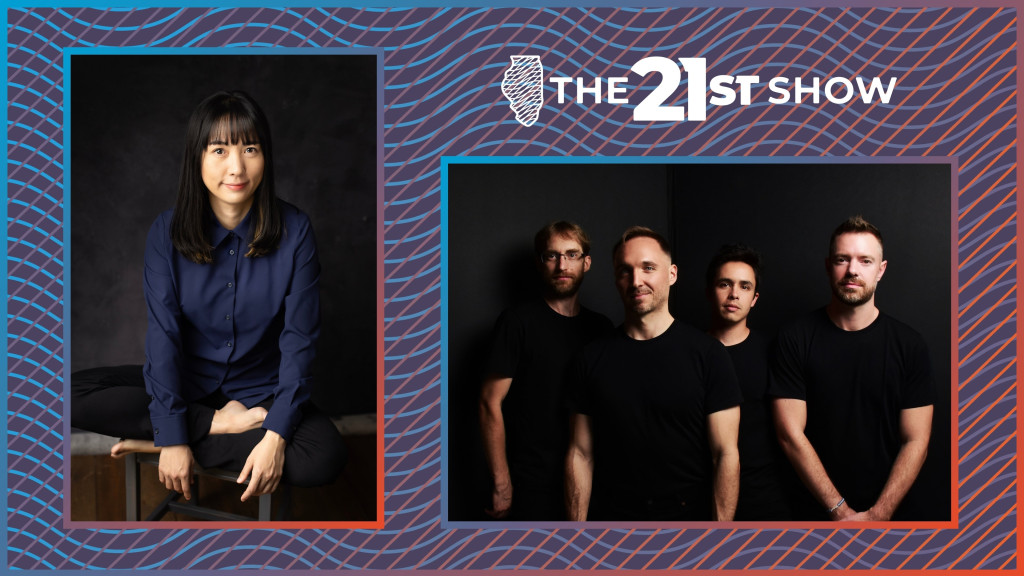
Transcript: From Korea to Illinois with composer Juri Seo
The 21st Show
From Korea to Illinois with composer Juri Seo
Read the full story at https://will.illinois.edu/tags/from-korea-to-illinois-with-composer-juri-seo.
Transcript
// This is a machine generated transcript. Please report any transcription errors to will-help@illinois.edu.

[00:00:00]
Brian Mackey: It's the 21st show. I'm Brian Mackey. And for the rest of the program today, our subject is music. [Juri Su] was born and raised in Korea and began studying piano with her mother as a young child. She attended performing arts schools in her native country, but ended up at the University of Illinois for her graduate studies, earning master's and doctoral degrees. Today she is a professor at Princeton University in New Jersey, but she's returning to Illinois this week for two premieres of new works. One is through [Nove Lia Musica], the chamber music series that also calls itself a new music incubator. That piece is called Dahlia after the flower and will be performed by the Jack Quartet. That's gonna be at 6:30 Wednesday at [Guarnere] Hall in the heart of downtown Chicago. The other premiere will be Saturday at the Logan Center for the Arts, which is part of the University of Chicago. I recently had the chance to speak with [Su] about her life and work. Because our interview was pre-recorded, we're not taking calls, but you can always email us. Our address is [talk@2firstshow.org]. [Jry Su], welcome to the [2first] show. Thank you for being with us.

[00:01:22]
[Juri Su]: Yeah, thanks for having me.

[00:01:23]
Brian Mackey: I want to begin by asking, what is your earliest memory of music?

[00:01:28]
[Juri Su]: I, um, yeah, I guess the earliest memory is just being in my mom's piano studio, so my mom, uh, was a piano teacher. Um, and she was an amateur pianist herself, but she taught like these neighborhood kids piano, um, and I was just there — there was no childcare or anything so I was just there the whole time. Um, so I think the earliest memory is like maybe when I was 3, like sitting there, um, just listening to some kid playing piano.

[00:02:00]
Brian Mackey: Were you drawn to playing piano yourself?

[00:02:02]
[Juri Su]: Yeah, like almost immediately. So I actually started when I was about 3. Yeah.

[00:02:08]
Brian Mackey: What was the — what was the popular music when you were growing up? Were the kids in the studio, were they playing classical or were they playing pop songs?

[00:02:17]
[Juri Su]: They were mostly playing classical, but you know, not actual repertoire, but like some practice pieces written for kids to prepare them for um classical repertoire.

[00:02:29]
Brian Mackey: What was the um popular music when you were when you were young?

[00:02:34]
[Juri Su]: Yeah, popular music was kind of like K-pop, you know, there, there was K-pop in existence even back in the 80s. Yeah, so there was like some, some popular music there which sounded very similar to like American popular music of the same period. But I, I actually wasn't super into that.

[00:02:53]
Brian Mackey: Interesting. I wonder what it's — maybe, maybe you don't have a perspective on this, but what it's been like as a, you know, Korean-born American seeing the massive global popularity of K-pop in recent years.

[00:03:04]
[Juri Su]: It makes me happy. Because Korea is like — it has always been like somewhat invisible, you know, people talk about like China, Japan a lot, and Korea is just in the middle and nobody knew much about Korea. So I, yeah, I love that the Korean culture is spreading globally now.

[00:03:26]
Brian Mackey: So you, I presume you start taking piano lessons. Do you study with your, with your mother?

[00:03:31]
[Juri Su]: Yeah, I studied with my mom, um, for a while. And again, my mom was an amateur, so after a few years I had to find, um, you know, a professional teacher. Um, yeah, but initially I learned from my mom, uh, and I would just get kicked off every time she had a student. Yeah, and, and I was always like cranky and I couldn't play. Yeah.

[00:04:00]
Brian Mackey: A lot of children, including my own, sometimes they have to be forced to practice. It, it doesn't sound like that was you.

[00:04:06]
[Juri Su]: No, I loved playing piano.

[00:04:08]
Brian Mackey: When did you know you wanted to make music your life's work?

[00:04:12]
[Juri Su]: Um, I think when I was about 11. So, um, yeah, it's a little early, but in Korea there are programs for younger musicians. I guess we have something like that here like Juilliard Prep, you know, there's like high school programs. Um, so there's like some specialized high schools that you can audition and get in, um, to major in music. Yeah, so that's what I did. So I decided around when I was 11, so we, I started taking lessons in harmony counterpoint, piano. Yeah, and then I went to music high school.

[00:04:48]
Brian Mackey: A music high school. So yeah, it's —

[00:04:50]
[Juri Su]: It's called like arts high school, but they have music, art, and dance.

[00:04:54]
Brian Mackey: Oh yeah, there are those in, you know, New York City and Chicago and some of the other big cities in America as well. Did you imagine that you would be a composer or were you thinking of being a piano player?

[00:05:06]
[Juri Su]: No, no, always composer. So I, I actually never liked performing. Yeah, it's always made me so nervous and I always like to make things up. So yeah, my major was actually composition, even in high school.

[00:05:21]
Brian Mackey: Even in high school. When did you — do you remember what your first piece of music that was like a, a, you know, a proper composition?

[00:05:30]
[Juri Su]: Like a proper composition. I had like this violin piece, so like in high school you have to do like term projects. Um, and you write the piece then you present it as part of a recital so the first piece I think was um piano violin duet. Which I — I don't know where it went. It kind of sounded like [a bro chuckling] or something.

[00:05:56]
Brian Mackey: So it doesn't exist anymore, uh, not in, not in the repertoire. Opus one, is that what we could call that. What was it like hearing other people playing something you had written?

[00:06:09]
[Juri Su]: You mean like the first time when I was a kid?

[00:06:12]
Brian Mackey: Yeah, absolutely. And —

[00:06:15]
[Juri Su]: Yeah, I mean it changes, right? Um, so when I was a kid, I mean, it was just amazing, right? And it was also like pre-notation software. So that would actually be the first time you hear the piece. Yeah, so there's something very magical about it. Um, but now like you have, you make some kind of mockups, right? So you more or less know what it might sound like and sometimes like the real performers do things differently and you're surprised, um, sometimes in a good way, sometimes in a bad way, right? So it's kind of different the way you hear people play your own music. Yeah.

[00:06:55]
Brian Mackey: So where did you continue after high school?

[00:06:58]
[Juri Su]: So I went to a university in Seoul, um, and and majored in composition there as well. And, and then I guess shortly after graduating, I went to University of Illinois.

[00:07:10]
Brian Mackey: Why the University of Illinois? It's, it's almost literally on the other side of the world from Seoul.

[00:07:17]
[Juri Su]: Right, I mean, I, I knew that I wanted to come to the states to study, um. And people don't know this, but from Korea, like you don't have a good perspective of like which schools are good schools. You don't really understand much of the system here. Um, and in Korea, there was like this list of music schools, like they were ranked. Um, so I — and the ranking is kind of random. I, I can't remember — like one of them was definitely Juilliard. There was Curtis on there, but UT Austin was on it too. Yeah, so University of Illinois was just the 6th ranked school on this list that was going around in Korea. Isn't that so random, so I just like. Yeah, so I got that list and I applied the top 10. And I got into UI, which was very surprising to me.

[00:08:15]
Brian Mackey: Yeah, of course, now you're at Princeton. Do you still think UI is the 6th ranked music school in the United States?

[00:08:22]
[Juri Su]: No, I think it should be like one of the top 3. I don't know. Yeah, yeah. See, it was amazing and Princeton was actually not even on that list. So I didn't even know about, yeah. I didn't even know about this program. So.

[00:08:35]
Brian Mackey: Well, what, what was it like, uh, culture shock — I've heard from other people who come from other parts of the world to central Illinois.

[00:08:43]
[Juri Su]: Yeah, um, in some ways it's very refreshing, right, because you feel like you're just restarting your life. Yeah, so for me it was like the first time I was living away from my parents too, um, and I was in my kind of early to mid-twenties. Yeah, so it was like just really good times, but the culture, um, like adjusting to it took some time but it was all kind of fun. Yeah, it was fun to adjust to the new culture. I think the language was maybe the most challenging part.

[00:09:16]
Brian Mackey: I can imagine. So I, I, I was actually an undergraduate at the University of Illinois, but it was 30 years ago. And in the 1990s, you know, there's this reputation for the School of Music and the composition program on the fifth floor, right? Deep in the avant-garde, John Cage, 12-tone. Uh, you know, about as far from Bach and Beethoven as you can get. I wonder what was it like when you were there.

[00:09:42]
[Juri Su]: Yeah, it was actually still a little bit like that, right? Because like some of the faculty members were still like kind of from that period. Um, so it was, yeah, artistically it was very challenging because, you know, up to that point. Um, even though I was like majoring in music for a long time, I wasn't doing like new music. So I was always writing like in the style of Chopin, in the style of Bach, right, until I came to Illinois and I quickly learned that like you can't really go on like that, um, because you're not recreating the past. Um, so it was kind of shocking, but I, I like to tell people that it's kind of that — that kind of tension between this traditional training and experimental spirit, that's what made me. Yeah, so I feel like I found my music kind of, yeah, within that tension.

[00:10:37]
Brian Mackey: Did you have to be convinced?

[00:10:39]
[Juri Su]: Yeah, a little bit, a little bit.

[00:10:42]
Brian Mackey: What was that? What was that like?

[00:10:44]
[Juri Su]: Well, I mean, but yeah, there's no simple answer to that because some of it is cultural, right? Because I was educated in Korea. Um, in Korea, Korean educational system is a little more hierarchical, and if some teacher teaches you something you usually don't question. Which is kind of good and bad. Um, so I, when I'm exposed to something new that a teacher is presenting, my duty is not to evaluate that. So the first — my first response will be learn it first and then I will see if I can make that part of my voice.

[00:11:25]
Brian Mackey: Interesting. But of course, I would imagine a PhD program like the one you were in is also meant to get you to grow and, you know, develop your voice. So do you come to challenge over time some of those, uh —

[00:11:40]
[Juri Su]: Yeah, of course. Yeah. So I think part of being like someone who's like part Korean and part American um is is actually about that balance. So I, I love that I learned, you know, to respect tradition, respect your teachers. You know, and, and really fully absorb like preexisting systems but also like not blindly trusting that, right? So eventually like you wanna find your own voice and I think that's more of kind of this free American philosophy.

[00:12:14]
Brian Mackey: What does it take? What do you — what is the day-to-day work of earning a doctoral degree in music composition?

[00:12:21]
[Juri Su]: Oh, yeah, just trying to remember. Uh, it's just such a messy time, right? So you are, um, I think the coursework takes up a lot of your time cause there's a lot of requirements. Yeah, so you go to all these classes, do a lot of assignments, and you, you, uh, I, I'm remembering I used to do a lot of teaching there too, because you have to teach a lot to, to get tuition waiver and some stipend as a grad student. So teaching, especially because, because of the language and it took a lot of effort. Um, and then you know whatever time you have remaining like you try to put into um dissertation.

[00:13:08]
Brian Mackey: And do you, can you talk about what the subject of your dissertation was?

[00:13:12]
[Juri Su]: Uh, it was Jonathan Harvey's string quartets.

[00:13:18]
Brian Mackey: For people who are maybe not familiar with him, can you say more about that?

[00:13:22]
[Juri Su]: Oh, it's actually very difficult to talk about him because Jonathan Harvey is like such a complex figure. Um, but he, I, I, I think it's fair to say that he was a modernist. He, he was very much into complex music. He was touched by spectralism. Um, and noise and serialism, a lot of different things, um, but he was this British composer, um, who passed away about 10 years ago. Um, oh, actually more like 15 years ago, um, but he has this like 4 string quartets that are evenly spread across his career, um, so by studying that I could kind of follow his artistic trajectory a little bit, um, and I, I love that music because it had something about, uh, this very unlikely combination of warmth and complexity. So the music was very challenging to listen to. It was very complex, but it also had these melodies and really beautiful harmonies in it, and that kind of combination like I just, I didn't find anywhere else.

[00:14:31]
Brian Mackey: So one of the reasons I'm curious about your PhD is that I saw you are now the subject of someone else's dissertation. Uh, it was at Indiana University actually. It's called "Harmonizing Ordinary Elements into Unconventional," exploring the musical style of [Korea living composer Jerisa]. So I, I wonder if, yeah, I wonder what, what is that like being now somebody whose work is analyzed after having gone through that process yourself.

[00:15:04]
[Juri Su]: No, I mean, I mean, it's, it's an honor, but like I don't really think much about that. It's just like, it's just music. So somebody, you know, I'm, I'm mainly happy that somebody found it compelling enough to put in, you know, their time to write about it. Yeah, but I'm, I'm not really thinking about like my status as somebody who like people write dissertations on, right? Yeah, I'm just happy that I'm connecting with people in some ways.

[00:15:34]
Brian Mackey: Well, that's interesting because music, you know, there's a, there's a famous quote that writing about music is like dancing about architecture. And, uh, and yet, uh, people who organize, you know, music ensembles want to have something to put in the program. So I wonder how you think, and you know, you have to have a title for the piece. How do you think about that and applying words to something that is, you know, by definition, so not, not able to be expressed in words?

[00:16:06]
[Juri Su]: Yeah, I mean, that's so true. Um, so I, I try not to overthink the connection. Yeah, so like it could be just like a quick inspiration, um, but ultimately we just have to understand, um, our descriptions of the music is never the music itself. Yeah, but in the case of like Dahlia, for example, a piece that's coming up that you will ask me questions about later, you know that piece um is about Dahlia, but Dahlia, the flower is just kind of a material that that gave me this initial idea, but it's, you know, the piece is just sound and Dahlia um inherently are not musical.

[00:16:52]
Brian Mackey: I remember once reading about Aaron Copland and and Appalachian Spring, and how he would get all these letters and people could say they could just picture the spring in Appalachia. And he said, well, he actually wrote the piece before it had a title. He was writing for Martha Graham.

[00:17:09]
[Juri Su]: Yeah, but I mean all kinds of illusions. I mean, that's all part of listening to music, I think. And it's kind of interesting that people have different pictures.

[00:17:17]
Brian Mackey: OK, we're going to take a break. We'll have more from Korean-born, Illinois-educated American composer [Je Ria]. This is the 21st show. Stay with us.

[00:17:27]
Brian Mackey: It's the 21st show. I'm Brian Mackey, and this is [re Imaginary chanson] by the Korean-born American composer [Jeria]. She was educated at the University of Illinois, earning master's and doctoral degrees in composition here. She's now at Princeton University. She is returning to the 21st state this week for premieres of two new works. I spoke with [Jurisa] last week, so our conversation is on tape, but you can let us know what you thought by emailing [talk@2firstshow.org].

I'd like to ask you about your work process. So you mentioned earlier writing on paper and now there's notation software. People may not be familiar with this, but computer programs where, you know, like, like we have Word for writing documents. There are programs now that write, you can write music and you can actually get a sense of what it's like. So, what is it? What is your process like? Are you sitting down at a, uh, at an analog piano? Are you sitting down at a computer? How do you, how do you begin working on a piece of music?

[00:18:45]
[Juri Su]: Yeah, great question. So every piece is different and my process is very, very messy, um. I see a lot of composers who like kind of have a process and they can explain like the steps. For me like, yeah, every piece is different, so for some pieces I might start with improvisation at the piano. And then write down some by hand. Um, for some pieces I um, yeah, I just like work theoretically initially. Um, and just write down some systems and things like that on paper and then I might, uh, realize some of it on the piano.

Um, and notation software is actually quite dangerous in that like you just forget about the bodies of the performers or the way like music needs to be counted. Right? And it does all of those things automatically and there's um like the speed, you know, there's kind of this bodyless speed that you, you can really never get to with real real humans. I mean, I guess I have enough experience now to be able to predict all kinds of problems when I'm even when I'm composing with notation software but it can be quite dangerous for beginner composers to write directly.

Um, yeah, but for me like it's just like, there's no right way or wrong way to do things, um, because composing is very very difficult so you're just gonna have to use everything that you have, um, so for me it's a combination of piano, um, hand, um, and sometimes even a digital audio workstation like Ableton. Um, and all of these kind of combined together, in, in a very, very messy way.

[00:20:43]
Brian Mackey: Yeah, well, one of the things I was curious about is, and I think the answer is probably an obvious no, but does a composer have to be able to play what —

[00:20:51]
[Juri Su]: I don't think so.

[00:20:55]
Brian Mackey: So, I mean, but I think of the, you know, I was listening to a lot of your music in preparation for this and the quite technical piano passages and piano sonata number 1, maybe you can do that. But there's an intricate triangle part in the second movement of [birds, bees, electric fish], right? So, how do you, how do you conceive of music for other people to play when it is not your instrument and make sure it is technically feasible?

[00:21:23]
[Juri Su]: Right, I mean, um, I think you do need to think about the actual body of the performer, right, how they need to move, so I try to do it like slowly so I'm imagining myself playing that instrument slowly, so if it's physically possible for me to do it slowly, um, usually the professionals can do it fast. Yeah, so there's just kind of the common sense um approach there, but some instruments I know better — like string instruments I know intimately. Um, so I just like know from like observing and working with a lot of different professional players what they are capable of.

[00:22:05]
Brian Mackey: So that's the, the sort of how of a composition is made. I also wanted to ask you about the ideas. And I think some of us might have this romantic notion of, you know, you go to a park and stare at the trees or go to a museum and look at paintings and look for inspiration. I mean, how, how close to reality is that for you, or, you know, are you more of a — what would you say — perspiration type person, do the work and the inspiration comes.

[00:22:31]
[Juri Su]: Yeah, I think I'm the latter, um, but it does happen sometimes. I, I, I know a lot of composers who cite a specific, um, inspirations from like an art piece or something like that, but for me like ideas, best ideas happen when I'm like sitting down at my desk thinking about the new piece. Yeah, so it's like, yeah, it's just the result of hard work I think, even inspiration.

[00:23:02]
Brian Mackey: Well, maybe that's a good segue to talking about Dahlia. Uh, where did the idea, where did the inspiration for that piece come from?

[00:23:10]
[Juri Su]: So the inspiration came from this bouquet of flowers. So I, I was at this fancy dinner, um, and there was this like centerpiece with a lot of flowers, and I'm actually not a very, um, I'm not a flower person, and there were a lot of beautiful flowers, but I didn't really know any of the names. I mean, besides like roses. Um, and I saw Dahlia, and they were just, just very striking, so I asked like people around me what, what is that flower, and they told me it was Dahlia, and I was like — and I was thinking about [a] Jack Quartet piece at that time and I was like, OK, this piece is gonna be called Dahlia. And at that point I didn't have any musical ideas and I was just like, OK, flower piece, Dahlia, and then I started like reading about the flower and studying, you know, the geometry of it.

[00:24:00]
Brian Mackey: How does that find its way into your music?

[00:24:02]
[Juri Su]: You mean how Dahlia turned into music?

[00:24:04]
Brian Mackey: Yeah, well, I wonder, is the geometry of the Dahlia reflected in the actual sort of formal composition.

[00:24:12]
[Juri Su]: Yes, absolutely, um, there's no way to talk about this without getting a little nerdy.

[00:24:19]
Brian Mackey: I welcome that. I welcome that.

[00:24:22]
[Juri Su]: Yeah, so dahlias, um, the way the, the flower petals form, uh, follow this golden angle. So this is, uh, called [phylotexis], so it's a, it's a way, um, leaves or, uh, florets arrange themselves, um, to create a flower.

[00:24:45]
Brian Mackey: Yeah, people will know this is the golden ratio, right, from like broccoli and stuff like that.

[00:24:46]
[Juri Su]: Yeah, so it, it comes from that, um, except that this golden angle is mapped to a specific musical interval. So, so this piece is written in this tuning practice called extended just intonation. So it's not fixed to 12 notes per octave tuning. So it's all tuned relative to each other, so um there will be like frequency ratios that create certain intervals so I'm just following those ratios, so the string quartet members are tuning to each other by ear, so there's not a lot of like fixed reference for tuning. And basically like the tuning system is based on this golden angle from Dahlia. So I'm using this um special kind of major third and that's [97] frequency ratio which is uh quite a bit wider than the major third that we are accustomed to, and that sets up kind of this opening sonority, like harmonic progression. Um, and I, I love that because that interval, that particular interval is something that I wasn't super used to, so I don't think I would have come up with that intuitively. Um, I only got there through, through the [flower]. So I think that's where like the inspiration, which is, um, you know, extra musical, um, giving rise to something that's very concretely musical.

[00:26:45]
Brian Mackey: When, when you say it's not standard tuning — or is the, will the violin literally not be G D A E, or does the musician adapt to what you are wanting them to do in the context of the classical tuning?

[00:27:00]
[Juri Su]: Right, so, uh, the, the string instruments are tuned by perfect fifth interval, so the, the note names are the same, um, but in the modern tuning system which is 12-tone equal temperament, um, they tend to flatten those fifths slightly so that they will be in tune with piano, for example. So in this case they will be tuned to acoustically perfect perfect fifths, and all the other notes, um, they are playing by tuning to each other. So, so like think of it this way — like F on the piano, there's one note. In, in classical repertoire for violin, F, there's one F, but in this piece there's like 4 or 5 different versions of that F depending on where it's tuned to.

[00:27:51]
Brian Mackey: Do you get a chance to rehearse with [the] Jack Quartet before a premiere like this?

[00:27:57]
[Juri Su]: Yeah, we just did it yesterday. Yeah, and they're amazing and and they've been doing it for um for over a decade now, like playing this kind of music, microtonal just intonation music, um, so they um they can read the notation — so notation is also quite, that's totally different um area, um, so notation tends to get very complex, um, but it's not just about like understanding the, the notation because you would have to execute with your body and make those sounds and you can only do that by practicing. Yeah, so they have been doing it for a long time and, and they actually said it wasn't so bad. Yeah, to [play] last. What is that —

[00:28:44]
Brian Mackey: What is that like hearing, hearing a work, you know, you said sometimes musicians will interpret things differently than you had imagined they might.

[00:28:53]
[Juri Su]: Yeah, yeah, I mean it's quite interesting. I mean, [the] Jack Quartet, I feel, I feel like [the] Jack Quartet and I are kind of always in agreement in terms of like artistic expressions and and the way to phrase things, and they are also extremely good. So all kinds of complex rhythms I wrote, they would play them almost, you know, exactly. Um, yeah, so it, it's just amazing — like [the] Jack Quartet is a, uh, is a special case though. Yeah, everything they do, I'm just blown away.

[00:29:24]
Brian Mackey: The other thing I wanted to ask you about is this is a part of the [Nova Linnea Musica], and it's, it's a commission, and I wonder what expectations come when a piece is commissioned, or, or do I just — maybe I don't know how it is — almost all pieces are commissioned nowadays. How does that work?

[00:29:44]
[Juri Su]: Yeah, it, it, that's true. Almost all pieces are commissioned, but um in terms of expectations that varies. So sometimes um people have something specific in mind, um, like you know, there's like a theme or something, um, or they want to honor somebody in your commissioning to honor this person, for example, um, so there's like some loose guidelines sometimes. Um, this particular piece um didn't come with anything so it just, it just said 5 minutes, uh, minimum for Jack Quartet.

[00:30:20]
Brian Mackey: And, and that's actually only, I understand, one of two premieres you have in the coming weeks in Chicago. The other is the Grossman Ensemble at the University of Chicago. Tell me a little bit about the Book of Birds.

[00:30:32]
[Juri Su]: Yeah, so it is a quartet um with kind of an unusual ensemble. So it's for violin, clarinet, horn, and percussion. So Grossman Ensemble is kind of like a chamber orchestra, um, but I think this might be one of the first times that they're doing a chamber concert, so they want to highlight like each member of the group, so they commissioned um 6 composers I think, um, to create like subsets, um, like pieces for the subsets of that ensemble, yeah, so I just chose um this as one of the options, yeah. And um I actually haven't heard them play yet so I'm gonna be, yeah, I'm gonna be in Chicago next week and we'll rehearse and see how —

[00:31:20]
Brian Mackey: I noticed — I, I did notice you do have a fair number of compositions that involve percussion. I don't know how common that is or not. How, how did that come about in your, in your career?

[00:31:31]
[Juri Su]: It came from University of Illinois. Because UI has a big percussion program there, um, and, um, I, um, back in around 2008, I started dating one of the percussionists there who is now my husband. Yeah, so I met him there and then because I was dating him, like all his friends who are also percussionists, right, so I was like writing pieces for them. So that's how I started. But then after I left Illinois, um, percussionists all over like started finding those little pieces that I did there and, and asking for more. Yeah, so I ended up like writing a lot of these percussion pieces over the years.

[00:32:17]
Brian Mackey: Well, [Juria], thank you so much for sharing a little bit of your life and work with us today here on the 21st show.

[00:32:24]
[Juri Su]: Yeah, thank you for having me.

[00:32:27]
Brian Mackey: [Jerea] has two pieces premiering this week in Chicago. The first is Dahlia, performed by the Jack Quartet through the [Nova Linea Musica] series. That's gonna be 6:30 Wednesday at [Coronary] Hall, downtown Chicago. The other piece is the Book of Birds by the University of Chicago's Grossman Ensemble at the Logan Center for the Arts. That's Saturday night. We'll have information about both on our website. That's it for us today. The 21st show is a production of Illinois Public Media. Thanks for listening.
Transcript Assistance
Illinois Public Media may use AI assistance for transcript generation and/or formatting. Transcripts that have not yet been reviewed for accuracy will be labeled.
To report a transcription error, or to request transcription of archival material, please contact will-help@illinois.edu.