








Transcript: How one Illinois prison is handling cases of serious mental illness
Transcript: How one Illinois prison is handling cases of serious mental illness
The 21st Show
How one Illinois prison is handling cases of serious mental illness
Read the full story at https://will.illinois.edu/tags/joliet-treatment-center-fires.
Transcript
// This is a machine generated transcript. Please report any transcription errors to will-help@illinois.edu.

[00:00:00]
Brian Mackey: It's The 21st Show. I'm Brian Mackey. When the Joliet Treatment Center opened in 2017, the hope was that it would be a different kind of prison. The Illinois Department of Corrections, DOC, had settled a lawsuit over inadequate mental health care for people in state prisons. And as part of that settlement, DOC committed to building new treatment units, including the one in Joliet. For the first few years, things went well there, but around the start of the COVID-19 pandemic, conditions started to deteriorate. That made the men there desperate to be heard. And one way to do that was to set things on fire. In the past 3 years, there have been more than 70 fires at the Joliet Treatment Center.

Shannon Heffernan has been investigating why. Public radio listeners here in Illinois might recognize her from her time as a reporter at WBEZ in Chicago. She's currently a staff writer at The Marshall Project, the news service focused on the criminal justice system. She recently reported on the Joliet Treatment Center in collaboration with WBEZ and the Chicago Sun-Times. We'll have a link to that story on our website, [21stshow.org]. She joins us now to talk about it. Shannon, welcome back to The 21st Show.

[00:01:25]
Shannon Heffernan: Thank you so much. I always love talking to you all.

[00:01:28]
Brian Mackey: And I should say, this is gonna be a heavy conversation, with discussions of mental health conditions and self-harm. You've been warned. With that said, if you wanna join us today, the number is 800-222-9455. That's 800-222-9455. All right, Shannon, before we get into specifically what happened on the night of July 27th, 2024, tell us a little bit about who was Jason Stephens.

[00:01:54]
Shannon Heffernan: So, Jason Stephens was a man who had a history of mental illness in his life, and he lived in Chicago. He also had a history of sickle cell anemia. For people who aren't familiar with that, this is a genetic disorder. It causes your blood cells to become misshapen. It can be incredibly painful for people, especially if they're not getting treatment. So when he went into the Department of Corrections, he was sort of facing those two battles. And we reviewed his medical records, and you can see him struggling to get treatment for both. There are some psychiatry appointments. There is some therapy, but especially considering that he ended up at the treatment center, there wasn't very much individual therapy or one-on-one contact with him. And he repeatedly complained that he was not getting what he needed for his sickle cell. He continually said, look, I need this blood transfusion that's happened to me in the past. And even when doctors at the facility said, yeah, he'd be better off getting it, he still didn't get it. So bringing us up to that night in July 2 years ago, he had been struggling for a while.

[00:03:06]
Brian Mackey: And just — I think it's worth mentioning, he was in for a long time, right? He had been convicted of murder.

[00:03:12]
Shannon Heffernan: That's correct. He had been convicted of a murder during a drug dispute. He had maintained his innocence, and at the trial, there have been issues brought up about his mental well-being, but they found him fit to stand trial, and he was sent to IDOC for a long sentence.

[00:03:30]
Brian Mackey: OK, so I mentioned the night of July 27th, 2024. And let's actually start with an extended excerpt from the radio story you did on this.

[00:03:39]
Shannon Heffernan: Around 10:00 p.m. on a summer night in 2024, smoke wafts down a hallway lined with prison cells. Minutes later, red flames licked the window inside cell A9. Jason Stephens is locked inside. We pieced together what happened using security video footage, 911 dispatch calls, and documents from the prison and fire department. As seen on video, about 10 minutes after the smoke first started, a group of guards walks down the hall. But when they arrive at the door, they do not let Stephens out. Instead, the guards open a food slot and spray a fire extinguisher and pepper spray inside. Then smoke so thick you can barely see what's happening on camera, they walk away.

[00:04:20]
Speaker 2: 08 911, where's your emergency? We need the fire department here.

[00:04:23]
Shannon Heffernan: A prison employee calls 911 about 20 minutes after smoke first appeared on the security video.

[00:04:29]
Speaker 3: We were able to extinguish it from what I can see.

[00:04:32]
Speaker 2: Is there still smoke though?

[00:04:34]
Speaker 3: Yes.

[00:04:35]
Speaker 2: OK. All right. And are you guys like evacuating the inmates immediately around there away from it?

[00:04:40]
Speaker 3: We're still dealing with the situation. I — I can't answer that.

[00:04:44]
Shannon Heffernan: The fire department arrives within 5 minutes, but precious time has already been wasted and more is about to be lost. According to a firefighter's report, guards did not immediately tell firefighters Stephens was still in the cell, even though plenty of prison employees would have known. In the video, people meander up and down the hallway before firefighters say they were finally alerted. They opened the cell to find [Stephens'] limp body, his breaths shallow.

[00:05:15]
Brian Mackey: All right, Shannon, take us through what happens after that.

[00:05:19]
Shannon Heffernan: Well, after that, they put him in an ambulance and they take him to the gate of the prison. And there at the gate, prison employees won't open the gate for the ambulance. According to their own documentation, they were waiting on some paperwork and also on some correctional officers to be available to follow the ambulance in a van. And as they're waiting, a guard walks up to the ambulance and actually opens the door to the ambulance, and you see an argument ensue. And some people from each side — from the ambulance side, from the fire department side, from the prison — run up, and they appear to be arguing. And [according to] reports, one guard said that a firefighter said, "This man can die while y'all pussyfooting around." So there was a lot of concern. All this time, Stephens is in the back of the ambulance with a machine forcing air into his lungs, doing what they call advanced life-saving care. So a very serious situation. And throughout all this, somebody with the fire department is calling back to dispatch again and again saying we're still stuck, we're still stuck, we're still stuck, we're still stuck. That goes on for about 28 minutes that they're there stuck at the gate before the ambulance is finally allowed to go to the hospital and take this man in serious condition.

[00:06:43]
Brian Mackey: And to be clear, Stephens — this is not like a movie. Stephens is not gonna, you know, rip the mask off and jump out of the ambulance and run into the woods or something like that.

[00:06:51]
Shannon Heffernan: Well, and he was handcuffed. He was handcuffed in the ambulance, right? And I think that there are, you know, questions that may be like, did people need to be going with him for security? Well, then the question is, well, why couldn't that happen faster?

[00:07:06]
Brian Mackey: So let's take a step back from his individual case. What was the Joliet Treatment Center like at first? I remember there was a long delay in getting this thing up and running, and it came, you know, amid a climate of a major lawsuit over the treatment of people with mental health problems in the state prison system.

[00:07:23]
Shannon Heffernan: Yeah, this happened after a very long battle in a settlement called [Rascho] to get better mental health treatment for people in the state's prisons. There have been long-standing issues with people getting little to no therapy, little to no psychiatry, and just left stuck in their cells for long stretches. And as part of this lawsuit settlement, they said, we're going to open this special place and it's going to have wraparound services, intensive care. The people in the highest need are going to get sent here. It's going to be a godsend. And I talked to guys who were there in the early days who just said it was phenomenal. They were getting regular therapy. They were seeing their psychiatrists. They were able to go to programming all day, leaving their cells. I talked to lawyers and others who visited the facility and just said they saw men who had been deteriorating for long stretches, suddenly making real improvements, that it was this really phenomenal place.

But that didn't last long. There were a series of factors. COVID came, and people were locked in their cells. And we heard both from people on staff and from people incarcerated there that the facility kind of got used to that, and it never really rebounded. We heard a new warden came in, who was more punitive in their approach. And the facility just became much more like a traditional prison. And as that happened, with men locked in their cells, not getting treatment, people got desperate. And it started with other forms of self-harm, but those kept escalating. What one employee at the prison told us is, "We got used to that." I mean, you go in every day, you see these men hurt themselves, and in order to just function, you get used to it. And the men told me they noticed that, and they felt like they had to escalate to get attention. They had to escalate to actually be sent out to the hospital. And so they did that. And fire is in some ways the ultimate way they can do that, because you can't ignore a fire, right? It's going to affect other people. And so it's brought us to this moment now where we've had in 3 years 70 fires, including a dozen cases of self-immolation, and deaths and serious injuries. You have, you know, people getting skin grafts and losing their legs. One man who lost his leg. So it's really gotten to an acute situation.

[00:09:50]
Brian Mackey: Something I appreciate about your coverage — and your former WBEZ colleagues — you always have worked to actually correspond with people in the system. And you mentioned this: you corresponded with more than 6 dozen men who set their cells, even themselves, on fire. Why are they doing that? What did they tell you about their experiences?

[00:10:08]
Shannon Heffernan: Yeah, well, it was just real desperation, that they didn't know what else to do. And the specific needs they had varied. Some men said, you know, I was in a crisis cell. A crisis cell is like a very — somebody who's in a very serious condition who's made a self-harm attempt or is expected to. And they were saying, I'm not getting any therapy. They were just keeping me there. And so they were escalating in that situation. Other cases, men had physical health needs. In Jason Stephens' case — the man you were just playing tape from — he had actually already swallowed glass and told staff, "Hey, I'm going to keep doing stuff till you get me sent to the hospital. I need this blood transfusion." And it was just, I think, this ultimate act of like, I don't know what else to do. And you know, like again, we talked both to men inside, but also an employee who sort of echoed that that was the pattern.

[00:11:05]
Brian Mackey: I'm baffled, you know, reading your story, talking to you now about fire preparedness and safety. You mentioned this is like a mental health cell. I mean, these things are supposed to be essentially blank rooms. So talk about the problems that the Joliet Treatment Center had with fire preparedness and safety.

[00:11:24]
Shannon Heffernan: Yeah, so there are a couple of different issues. There's the fact that men are able to start the fires, which if you're in some areas of the prison, you're under close watch for suicide risk. So you would think that it would be very difficult to get the means to set a fire, but that is still happening, or it has still happened again and again.

[00:11:49]
Brian Mackey: Do we know the source of combustion? Like, I mean, are they sneaking matches? Are they, you know, shoving fabric?

[00:11:55]
Shannon Heffernan: It involves the outlets. I won't go into great detail here, just so we're not providing details about how they do it. But yes, it involves outlets and some materials that they are able to get from various things in commissary or staff or fellow prisoners. I guess I don't know for sure where they're getting them.

But the other thing that's troubling is it's not just how they set the fires, it's what happens after that. There have been fire marshal reports again and again saying the facility had fire alarms that were turned off or inoperable, that the facility could not provide an evacuation plan. And this was prior to the two deaths that happened at the facility, and those reports continued after those deaths. So this is something that people have been saying needs attention now, and it's not been being fixed. We're talking about the kind of basic fire safety that most of us have in our apartments or houses.

[00:12:56]
Brian Mackey: Have things gotten any better since the time when these sorts of things peaked?

[00:13:01]
Shannon Heffernan: Yeah, so anytime you're dealing with prisons, there's a little bit of an information lag of what gets to us. So it's hard for me to speak to the most recent months. That's something we're going to be watching closely. But I will say since Stephens' death, there were more than 60 fires, including cases of self-immolation, and there was a death after that. So I have no evidence it's improved, and I do have evidence that it continued even after serious injury and death, even with these simple things like functional fire alarms.

[00:13:36]
Brian Mackey: So you mentioned — we talked a little bit ago about how things started out, you know, kind of how it started, how it's going. You talked to a man, Patrice Daniels, who was one of the first to go to Joliet. He watched the conditions decline. How did that affect him?

[00:13:50]
Shannon Heffernan: Well, I think Patrice — just to give some background on him — he was very involved in the lawsuit that forced the Department of Corrections to open Joliet, so he was very invested in it. And both civil rights lawyers and people employed in the prison gave him a lot of praise for being someone who was sort of a mentor at the facility for some men. And he really loved Joliet, and he really wanted it to be this place of hope, but as he watched it deteriorate, he actually ended up asking for a transfer out, which I think was a very difficult decision for him, because it just became a place he felt was as hopeless as any other facility.

[00:14:35]
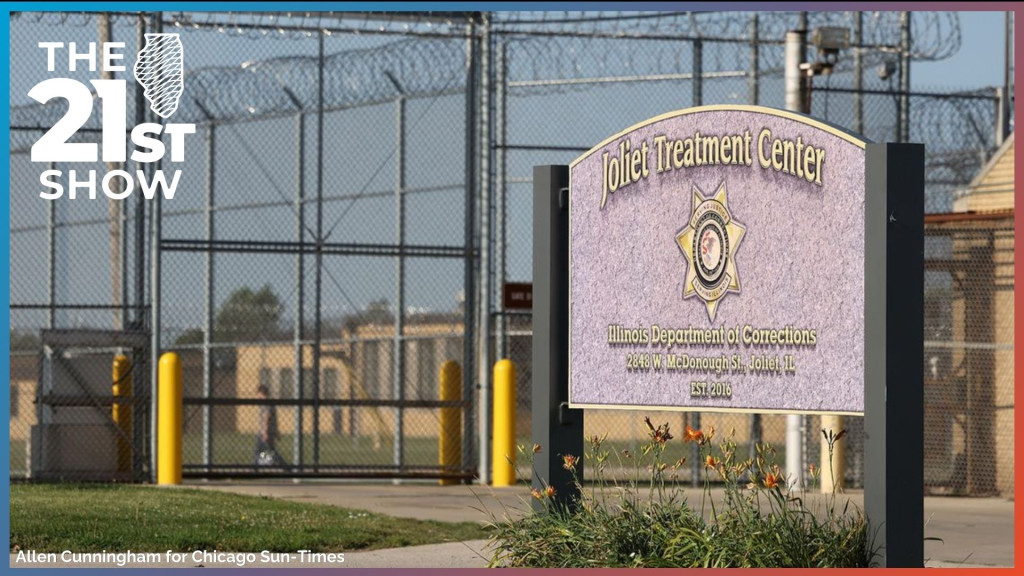
Brian Mackey: You have a line in the story about — as he was leaving the facility, his legs and hands shackled — I'm reading here: he saw a sign for the center and thought, "That's a sham. Treatment doesn't happen there."

[00:14:49]
Shannon Heffernan: Yes, yes. I think he just sort of concluded that it wasn't living up to the promise it had made at all.

[00:14:58]
Brian Mackey: So just a couple of minutes left in our time together. You mentioned the [Rascho] lawsuit. That is no longer a thing, right? That was dismissed. Is that part of the story here, this larger context of how the Illinois prison system handles people with serious mental illness?

[00:15:14]
Shannon Heffernan: Yeah, I think that's a very important piece of it. I should say that there are still some legal maneuvers that civil rights lawyers are making to try to get [Rosscho] going again. For people who aren't familiar, that lawsuit basically provided an oversight mechanism, a way that these independent monitors would go inside prisons in Illinois and say, OK, here's what's happening with mental health. Here's how the state needs to live up to its promises. Here's what needs to be done.

[00:15:40]
Brian Mackey: And ultimately, if you're a warden or the director of the department, you could get hauled before a judge and theoretically held in contempt if you're not doing these things.

[00:15:49]
Shannon Heffernan: Yes, and we had more eyes inside. People like me, journalists, could read these reports and see what was happening. How long are men being kept locked in their cells? How often are they getting mental health groups? That ended. And as a journalist, I feel like problems happen in places we can't see. Problems happen in places that the public doesn't have insight into. And so ending oversight made prisons, which are designed to be invisible, even more invisible. So I do think that lack of oversight is a very important key in watching what's happening at the Joliet Treatment Center and prisons across the state, honestly.

[00:16:27]
Brian Mackey: Well, I for one am glad that you are keeping an eye on this stuff and sharing your reporting with us. Shannon Heffernan is a staff writer at The Marshall Project. Her story about the Joliet Treatment Center is called "A Prison on Fire." Again, we'll have a link to it on our website, 21stshow.org. Shannon, thanks for sharing your reporting with us again here on The 21st Show.

[00:16:47]
Shannon Heffernan: Thank you so much.

[00:17:03]
Brian Mackey: All right, we need to take another break. I want to mention you can always let us know what you thought about our program, even if you don't want to call in in real time. The best way to do that is to email us, talk@21stshow.org. You can find that address plus our voicemail line and our social media — every other way to contact us — at our website, 21stshow.org. More to come after a break. This is The 21st Show.

---

**Flagged for Human Review:**

- **[00:03:39] / [00:05:15]** — The audio refers to the subject as "Stefan's" at [00:05:15], while the rest of the transcript consistently uses "Stephens." This appears to be a transcription error; "Stephens" has been used in the refined transcript, but this should be verified against the audio.
- **[00:07:23] / [00:14:58] / [00:15:14] / [00:15:49]** — The lawsuit name is spelled inconsistently in the original transcript as both "Rosho" and "Rosscho." The correct spelling could not be confirmed and has been preserved with bracketing ([Rascho] / [Rosscho]) at each instance. A human editor should verify the correct spelling against source documents.
- **[00:09:50]** — The original transcript reads "your former BEZ colleagues." This has been rendered as "your former WBEZ colleagues" based on context, but should be verified against the audio.
- **[00:17:03]** — The original transcript renders the website URL inconsistently as "2firstShow.org" in two instances and "21stshow.org" in one. All instances in the refined transcript have been standardized to "21stshow.org" based on context, but this should be verified.
Transcript Assistance
Illinois Public Media may use AI assistance for transcript generation and/or formatting. Transcripts that have not yet been reviewed for accuracy will be labeled.
To report a transcription error, or to request transcription of archival material, please contact will-help@illinois.edu.