








Transcript: When calling 9-1-1 brings more harm than help
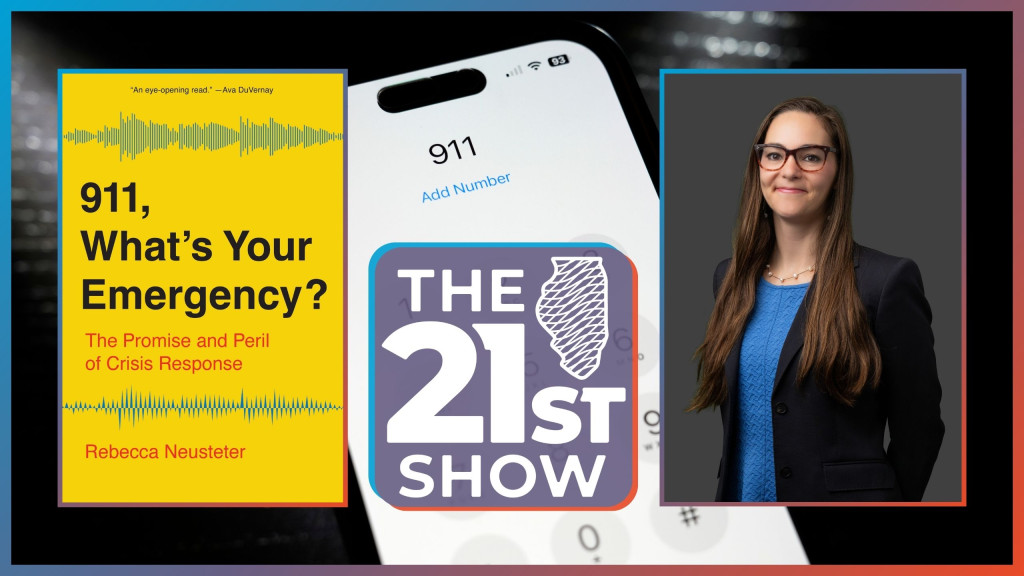
Transcript: When calling 9-1-1 brings more harm than help
The 21st Show
When calling 9-1-1 brings more harm than help
Read the full story at https://will.illinois.edu/tags/when-calling-9-1-1-brings-more-harm-than-help.
Transcript
// This is a machine generated transcript. Please report any transcription errors to will-help@illinois.edu.

[00:00:00]
Brian Mackey: Today on the 21st show, Americans have spent years arguing about how police, paramedics, and other emergency personnel respond when they're dispatched to help people in crisis. But an Illinois researcher says that conversation overlooks an important part of our public safety system.

[00:00:20]
Speaker 1: 911, where's your emergency? [Agar] County 911. What's the address of your emergency? Chicago Emergency [Bratton].

[00:00:26]
Brian Mackey: Rebecca [Nesteter] says too often emergency call centers default to sending police when a different type of response would be more appropriate. Her book on this is called "911: What's Your Emergency?" I'm Brian Mackey with Rebecca [Nesteter] today on the 21st show, which is a production of Illinois Public Media. But first, news.

From Illinois Public Media, this is the 21st show. I'm Brian Mackey. Many of us from a young age have been taught that when we need help, we can always pick up the phone and call 911. Whether it's to report a fire or a medical emergency or a crime in progress, you place a phone call and help should be on the way. But for many Americans, the reality of our 911 system is more complex. Some people end up waiting longer than others, especially in lower income neighborhoods and cities. Then there's the possibility that a call for help could lead to a violent encounter with police, as happened with Sonia Massey a couple of years ago just outside Springfield. These complexities and potential solutions are the subject of a new book by my guest today.

Rebecca Neusteter is executive director of the Health Lab, one of the University of Chicago's urban labs. She spent years working for a variety of nonprofits dedicated to improving the quality and fairness of our justice system and also did that work from the inside as director of research, policy and planning for the New York City Police Department. More to the point for our conversation, she's the author of the new book "911: What's Your Emergency? The Promise and Peril of Crisis Response." Rebecca joins me in studio for the hour. Welcome to the show. Thanks for being here.

[00:02:23]
Rebecca Neusteter: Thanks, Brian. Happy to be here.

[00:02:24]
Brian Mackey: Listeners, if you have a question about this, maybe you have called 911 — what was your experience? Or maybe you're one of the people that Rebecca writes about who are reluctant about calling 911 because of the potential risks that could bring to you or your community. Let us know about it at 800-222-9455. That's 800-222-9455.

All right, um, you coined the phrase, I understand, "mismatched dispatch." What does that mean?

[00:02:58]
Rebecca Neusteter: Mismatch dispatch is actually exactly the tragic way in which Sonia Massey was killed. He brought her case up at the beginning of the call today. And essentially what happens there is that people call 911, they express a need for some kind of assistance, and usually those calls, those 911 calls are rushed. The average 911 call only takes about 2 minutes, and the most frequent thing that happens is that law enforcement are deployed to the scene, even though law enforcement in many instances aren't what the callers [be requesting for] or aren't in a good position to resolve the call. So mismatch dispatch is essentially when we are overapplying the law enforcement response to situations where that isn't going to resolve the situation. It also is the result of the responders, whether that be law enforcement or other first responders, not having the right information in order to provide the right response.

[00:04:01]
Brian Mackey: I was thinking about this — I used to have a landline phone, and it had, I don't know, this must predate 911. It had a little speed dial thing, but there were three lines, right? With a blue shield, a red little flame, and then a green cross, and it was so you could program in your police, fire, and emergency. That's essentially what the traditional model is — a 911 professional would have at their desk. They have three buttons they can press, and that's where you get these options.

[00:04:27]
Rebecca Neusteter: Yeah, traditionally, 911 professionals can only deploy police, fire, or paramedic services. In many communities, paramedics fall directly under fire. Increasingly in communities across the country there are demands and introductions of other types of response options in order to expand what first response looks like beyond those traditional sort of three responder options.

Interestingly enough though, 911 really did begin in the 1960s as a way to deploy police to all kinds of matters that we can, you know, discuss further. And as I describe in my book, many of which are not public safety concerns, but we have made these choices throughout the duration of 911's existence to rely almost solely on the police for the vast majority of responses that don't involve matters that they can effectively resolve.

[00:05:28]
Brian Mackey: Yeah, and we can come to that history a little later in the conversation. So to start, as you do in the book, we mentioned Sonia Massey — you go through a list of people, um, Tamir Rice, George Floyd, other names less well known than those, um, who have these sort of, you know, their fatal encounters with the police were precipitated by 911 calls. So maybe we can go through one of the examples, one of the names that I think would be familiar to people in Chicago — maybe it's, you know, sort of fallen out of memory for those outside the city — is Quintonio [Leer]. Talk, talk, talk about that. Who is Quintonio — Quintonio [Leer]?

[00:06:04]
Rebecca Neusteter: [Quintonio Leer] is the first case and opening in the book. Quintonio was a college student in Illinois who was experiencing onset mental health challenges. When he was home for the holiday break over the winter, he had a mental health crisis. He himself called 911 several times, making comments that he felt like people were after him, that people were trying to hurt him. And the call takers didn't take that seriously unfortunately, and at least in two instances they disconnected the call without deploying any response. And at this point in time Chicago did have crisis intervention teams, a mental health co-response team that could have provided support to Quintonio and his family. Unfortunately that wasn't deployed and the situation escalated.

Quintonio's father, Quintonio Sr., then called 911 after he reported that his son had a baseball bat and he was scared that his son was going to hurt him. And he specifically was asking for help with his son's mental health crisis. Two police officers arrived on the scene very, very quickly, and then within less than a minute of being at the home that was shared by [Quintonio LeGrier] and another family, the neighbor opened the door when the police arrived in the middle of the night. Betty Jones was the name of the neighbor who opened the door, and the police immediately shot, firing, killing both [Quintonio LeGrier] and Betty Jones, the neighbor.

This is really sort of a classic case of mismatched dispatch where multiple calls came in requesting mental health response at a time before the situation had escalated, and those calls went unanswered. The situation escalated between the son and father, and then was escalated even further when the police arrived on the scene. And there were all kinds of challenges in terms of the responding officers not providing accurate information and concealing what ultimately ended up happening, and was proved by a board. Most importantly though, I will note that it was concluded that the officers should have had more time and more distance in responding and that perhaps other responders should have been the ones to come to the family's aid at that time, which didn't happen, and unfortunately the young man and his neighbor died as a result.

[00:08:52]
Brian Mackey: Yeah, you get a couple of the problems there. One is that obviously police, you know, sometimes when it gets to the point where a police officer is responding to one of these situations and someone is waving a weapon around — their training and their inclination, maybe, you know, may almost — you know, I think you can almost — some people would be sympathetic to like, what are they going to do once they're in that position. On the other hand, it gets at this idea in the community. You said that there were multiple calls, uh, that were ignored or hung up on, and, you know, this is the idea — I think one of the titles of your chapter is that Public Enemy song, "911 Is a Joke," right? So there's this other deep-seated suspicion in the community about 911's not really here for us. Maybe you can talk about that.

[00:09:34]
Rebecca Neusteter: Yeah, and just to go back one moment around mismatch dispatch — it is clear that the vast majority of incidents in which fatal force is applied by the police, that those incidents began with a 911 call. And while mental health calls and fatal uses of force are rare, these fatal uses of force are most often applied in incidents in which, you know, folks are not demonstrating serious threats to themselves or others. So I think it really does merit all of our attention.

Um, similarly, and you know, the Public Enemy song that is the name of the next chapter after Mismatch Dispatch — "911 Is a Joke in Your Town" — really comes to this perception, and the reality that has been proven in many communities, including in Chicago, where the police may be slower to respond to communities that have higher percentages of poor and people of color populations, as well as people of color perceiving that the police will not help them when they themselves are victims or at risk themselves. And so we have to sort of interrogate both sides of this and recognize that for some people they will not call 911 because it's not a trusted resource and they are fearful of the potential for escalation that could result in death or harm. And then on the other side there are people who overly use 911 and call and introduce threats and harm when they themselves may not be in danger or there may not be an emergent public safety issue.

[00:11:24]
Brian Mackey: You're getting into the Beckys, the Karens, and the Kens, which you also write about. Before we come to them though, talk a little bit more about the evidence that people in Black and brown communities — or maybe it's low income communities, I don't know what — you know, how you would define — police do define that. You know, on the one hand, part of me thinks, OK, Chicago police, West Garfield Park, they're going to have a lot more going on than the police in like Winnetka, Illinois, right, which I assume would mean longer response times unless somebody's waving a gun around, you know, sort of thing — in Chicago, you know, certain Chicago neighborhoods and police districts than in some of the, you know, wealthy suburbs where not much is happening, demanding, you know, urgent law enforcement response. So how do you control for that? Talk to me about this kind of data and research.

[00:12:10]
Rebecca Neusteter: Yeah, thank you for that question, Brian. I'm relying here on a lot of research that other people have conducted, and there's a very interesting and important study that I describe in the book that actually looked at people from all across North America, um, and also including Central and South America. And what they looked at was whether or not people of color — and even looked at it depending on how dark people's skin was — felt less likely that the police were going to help them or to take their needs seriously. Those same studies have been replicated, reproduced in many other communities. Um, and we have found that there are also political motivations — middle class, high-voting areas tend to receive a lot more in terms of resources and benefit from quicker police responses, and there's a calculation that's often being made in these deployments that isn't necessarily based on the risk and safety factors, but more so on the political influence that some people have over deployment decisions.

[00:13:28]
Brian Mackey: So we've got about 3 minutes until we need to take a break, but maybe we can just quickly cover the sort of Beckys, Karens, and Kens chapter. And I don't know if you're willing to share it here — you have a personal story about being, I guess, a Karen when you were in your 20s?

[00:13:43]
Rebecca Neusteter: I guess. Yeah, that's right. You know, I think that it's important in this book to share my own personal experiences because there isn't any national data collection on 911. So I have pieced together as much as I can about what exists from local and other kinds of research and reporting, but I've also augmented my experiences, and I have been both benefited and harmed by the 911 system as my family has — in life-saving emergencies 911 has been a resource that has been deployed. But I've also unfortunately been in situations where 911 has been called upon me, um, and people that I have been around.

When I was in my early 20s in graduate school, it was on Martin Luther King Jr.'s birthday. A friend of mine and I were doing a fellowship in Albany, New York. Uh, my boyfriend at the time was a very dark-skinned Black Haitian American. Uh, he was a U.S. citizen. He drove me to my friend's house in Long Island in a neighborhood that's often described as "white Hempstead" — it's actually called West Hempstead. We were about 15 minutes early to her house and we're in his car. It was a rental car. He had recently been in an auto accident. The insurance had given him a loaner, and within just a few minutes, uh, we were surrounded by many police cars and forced to leave the vehicle and to speak separately to police officers. It was a really scary and jarring experience for both of us, I think, especially from what I could witness and observe from him across the street. We were, you know, scared, and it was also not lost on us that this was, you know, Martin Luther King Jr.'s birthday. But nevertheless, when we were cleared to go — we had no reason to have had police involvement at all — I insisted that we be told what had precipitated approximately seven police cars showing up and interrogating us. And they told us that a neighbor had called and said that there were people who looked like they didn't belong there.

[00:15:54]
Brian Mackey: People who looked like that. I wonder what that could have meant in West Hempstead. Yeah.

OK, uh, we're going to take a break. We will continue our conversation with Rebecca Neusteter, who is, uh, again, executive director of the Health Lab, one of the urban labs at the University of Chicago. She's had a long career in nonprofits and sort of justice improvement-oriented organizations. Also worked for the New York City Police Department, and her most recent book is "911: What's Your Emergency? The Promise and Peril of Crisis Response." We'd love to hear from you and your own experiences with 911. Maybe they have been positive — like she said some of hers were, right? A family member has some medical emergency or you've been in a traffic crash and you needed help. Um, but maybe you've also seen some of the negative consequences out there in the world. Would you call 911 as a default or would you think twice? Let us know, 800-222-9455. That's 800-222-9455. We'll continue this conversation after a short break. This is the 21st show. Stay with us.

It's the 21st show. I'm Brian Mackey. We are talking today with Rebecca Neusteter, who's the author of the book "911: What's Your Emergency? The Promise and Peril of Crisis Response." She is uh executive director of the Health Lab, one of the University of Chicago's urban labs, one of those operations that tries to apply academic understanding to real world problems. If you want to join us today, 800-222-9455 is the number. 800-222-9455.

All right, I learned a lot from your book about the history of 911, right? I guess I had it in my head this idea that, like, it's a — you know, you'd have — people wouldn't know the number to call for police or fire, and so here was a great national system we could have that, you know, makes it easy to remember. Turns out there's a lot more to it. It involves Bull Connor of the, you know, uh, racist Alabama police chief. He's actually present at the first calling of 911 in America. We can talk a little about that, but there's also a strong connection to the Kerner Commission, uh, which was led by a former — or then — Illinois governor Otto Kerner, and this was the big, uh, Lyndon Johnson administration response to all the urban protests, riots, however you want to phrase it, in the late 1960s. So talk a little bit about the origins of 911 and how it really came to be.

[00:19:06]
Rebecca Neusteter: Yeah, 911 is ubiquitous. Most of us don't really even think about that it was founded at some point. It just feels like it's always been in place — and has not been. Uh, it has a relatively short lifespan actually. The very first call to 911 was made in February of 1968. Um, Brian, as you mentioned, in Alabama, in Haleyville, Alabama. And early on in my career — they still have the phone. There's actually a magazine article that a colleague and I published in a Chicago-based magazine called In These Times that shows these pictures and talks about this story, as well as — I go into greater detail of it in my book — and you know I think it's a really interesting story and was also sort of interesting for me how I came to understand it. I've been doing work in the 911 space for many, many years. Um, I had always been curious about, you know, what the very first 911 call looked like. I had seen photos from a city museum in Haleyville, Alabama of a red rotary telephone. Some listeners may not know what a rotary telephone is, but you can maybe describe it, Brian. So —

[00:20:21]
Brian Mackey: It was like you had to — you had to crank —

[00:20:25]
Rebecca Neusteter: — the dial. Yes, I —

[00:20:26]
Brian Mackey: I used one of those at my grandmother's house when I was a kid. Yes,

[00:20:29]
Rebecca Neusteter: me too. Um, and you know, so that — and there were, you know, red rotary telephones in the, the — this sort of imagery of what the history of 911 looked like. And I knew that this town, Haleyville, Alabama, that the first 911 call was sort of their claim to fame. If you go on to their city's website, it's in their city seal. They every year have a number of events and celebratory occasions — not in February, in the summer, I believe — including car races and marathons and all these things. So there's a lot of fanfare. Um, but I started to wonder what else maybe was to this story, thinking that there was a lot going on in Alabama in the 1960s and 1968, 1967 especially.

Um, so my colleague, a very talented researcher named Katrina Feldkamp, and I really started to dig into the archival data as best as we could, and what we learned was that while there had been a number of different proposals to introduce a universal hotline to access emergency services — and some of those dating back even to the 1950s to what would essentially now be the International Association of Firefighters, and the National Academy of Sciences also had made such a recommendation — much of it was based around fires and protecting property and lives when fires broke out. But there seemed to be, you know, sort of more to that story.

And so as we started to dig in, what we learned was that there were two commissions that were happening at the same time. There was the Kerner Commission and then there was also the [Cottonbotch] Commission. And that the [Cottonbat] mission was designed in order to sort of help understand the administration of justice. How do we make trials go faster? How do we speed up arrests? And these commissions were happening at almost the exact same time.

The Kerner Commission was impaneled after the summer of 1967 when there were almost 180 or so protests that had started as, you know, mostly peaceful racial justice protests that escalated and then ended up being described by the federal government as riots. There were about 80 people or so who were killed, thousands of people who were injured, millions of dollars at the time of property damage — I would, you know, estimate with inflation it's probably billions of dollars of property damage. Um, and Lyndon B. Johnson, you know, felt like he needed to do something. Um, the cities were burning as he was describing it. So he put together this commission. Um, Kerner was the chair. There were 12 members of the commission. All of them were white men except two were Black men — one the NAACP chair at the time — and one white woman. There were multiple governors, and I would say that it wasn't an altogether liberal or progressive group of folks. They were pretty moderate, some of them actually quite conservative, and they set out to do the task of understanding what had caused these racial justice protests that escalated into riots.

They put together a pretty phenomenal report. It was like 1,000 pages long. They did a ton of research all across the country. It became a bestselling book. Imagine that. The New York Times, the day that the report came out, said that the Kerner Commission had made logical conclusions that the cause of the protests were because of racism. It was a tough election year. I think we can find lots of, you know, foreshadowing and contemporary parallels to the moment that we're living in now and certainly in the summer of 2020. But essentially LBJ decided that this was not good for his campaign. He tried to bury the report. All of the 100-plus staffers who had done this work were fired. The report itself made a series of very thoughtful recommendations about how to implement changes in education, employment, policing to make the country a safer and a fairer place regardless of race. And those proposals were essentially abandoned.

There was one supplement to the report that was called the Supplement on Control of Disorder that took an entirely different tone. One of the other commissioners, who was a lot more conservative, had sat down with the CIA and former operatives in order to understand how can we prevent protests in the future through other mechanisms. And through that supplement that he ended up producing, it created the blueprint that enables local police departments to access funding from the federal government for militarized equipment. Um, as one measure, it also recommended a universal hotline in order to allow police to be deployed to suppress protests, using a model that the CIA had implemented in Caracas, Venezuela to suppress protests there and found it to be very effective.

[00:26:04]
Brian Mackey: Yeah, I mean, it's stunning when you think about it. I mean, the bottom line is all these proposals — fire safety, you know, property protection — those don't really get anywhere. But once the riots happen, or the protests that turn violent, however you want to say it, happened in the late 1960s, suddenly there's this push, and we look to a system that we had used as counterinsurgency in Venezuela. It's pretty stunning.

Let's go to the phones at 800-222-9455. We have Greg calling from southern Illinois. Greg, thanks for calling in.

[00:26:39]
Speaker 3: Well, thank you for taking the call.

[00:26:41]
Brian Mackey: I understand you have had some, uh, negative experiences with uh calling 911 for help.

[00:26:48]
Speaker 3: It was fairly negative. Uh, my wife has Alzheimer's dementia. And uh it's when I contracted cancer, I got too weak to, you know, control her myself. She gets violent. And I called the police — [two] to three, like 33 times. And uh two of the times I went to jail. I couldn't make them understand that she, you know, she was getting violent. I was just trying to restrain her. And uh the worst one was uh I'd undergone first uh lung surgery and was recovering at home. And it happened again and when the police came, you know, I got to spend uh my recovery time in the county [lock office], so, uh. But you know that's bad for me, but worse, it left her by herself in the house. You know, there was nobody else to come in and take care of her. There was no family member or anyone that was available, and there was no resource from the community to watch over. They just left her there by herself. Uh, which added even more worry while I was sitting in jail because I knew no one was with her.

Uh, and I can't put all the blame on the police. I represented the police for a while and I know the kind of stresses and strains that they're under. They don't — if they don't receive the proper training or, like, well, this mismatch of dispatch — if they're responding to a domestic situation, it's one thing. I learned from the police they hate responding to domestic situations. They'd rather go to a bar fight than to respond to a domestic situation. Uh, but I guess the shortfall is training, for these smaller police departments don't have, you know — they won't, you won't have a psychologist on duty waiting at the police station. So probably training for at least the smaller units would be helpful. I can get back.

[00:29:20]
Brian Mackey: Yeah, Greg, well, I just — thank you so much for calling in. I really appreciate you sharing your story. I'm sorry you've gone through all that. It sounds like some awful experiences, but let's ask Rebecca to respond to some of what you said because these touch on a lot of the themes in the book.

[00:29:35]
Rebecca Neusteter: Yeah, Greg, thank you so much for calling, and my heart just breaks for you and your family. What I've described as this phenomena of mismatch dispatch — I mean, you have experienced that in the most brutal of ways, you and your wife, and I'm so sorry. But I also just really want to thank you for taking the time to bring this up so other people can learn from your experiences. And the reason why I felt like it was very important to list in sometimes painstaking detail the experiences that other people had had that I qualified as mismatch dispatch is because I think that people really need to understand that this is not a thing that just happens randomly and or with rare occurrence. Unfortunately, this is happening quite frequently. I agree with you. I don't blame oftentimes individual officers, although I do think — excuse me — time and distance are critical. But this is a function of a system that isn't working. And I agree that we need to have better training, but ultimately, Greg, what I think we need is a different set of responders. We cannot be relying on the police to respond to incidents involving, you know, folks who are experiencing the kinds of things that you and your family are. And there's just too much potential for harm and it's very costly in financial and human terms. So I'm so sorry that that happened to you. I encourage you to reach out to me if there are ways in which we can help to share your story so that within your local community and within the state we can improve things. I would very much like to be able to support you so that nothing like this happens to you or anyone else in the future.

[00:31:25]
Brian Mackey: So we need to take another break in a few minutes here, and I do want to reserve some time to talk about some of your proposed solutions to this — so it's not just leaving people with an idea that there's a problem with no solution, because that is a big part of the book. But why is it, you know, that when someone like Greg calls 911 — or so many people call 911 — the most likely button that police communicator is going to press is going to be that blue police button as opposed to ambulance or fire, or expand our imaginations and have something, you know. Why is police the default response?

[00:32:01]
Rebecca Neusteter: It's a great question, and I think it actually predates 911. When we talk about the police being used to suppress protests, that was happening, you know, well before 911 was ever in place, and when communities had call boxes on the corner or other mechanisms in which they were encouraged to call for police services. Police were encouraged to be the deployed responders back in the 1800s for people experiencing mental health challenges, for protests, for, you know, many of the same things that today we question whether or not that makes sense. Um, and so we think absolutely all of our communities need to have different sets of responders.

I also believe that a lot of things could be handled better over the phone and with less ambulatory kinds of responses. There are rideshare apps that are taking people in certain cities to urgent care instead of sending an ambulance to the emergency department. But the book really does want to sort of focus on some of the challenges like Greg and others have experienced. But at the core, it's about proposing reasonable solutions that could be implemented in any community across the country. We need to focus on the promise, not just the challenges.

[00:33:20]
Brian Mackey: And, you know, just in about a minute or so — police don't like this either, right? You quote a high-ranking New York City person as saying they were slaves to the radio. And I mean, you talk about the sort of racial overtones of that, but police would rather be doing good police work than just going from call to call to call. Absolutely.

[00:33:40]
Rebecca Neusteter: And in New York City, like many other places, 911 was initially introduced just for police services and not for fire or EMS. And so we have this system that really has been designed to default to the police all of the time. Fire and EMS codes when people call 911 are quite narrow. There's a small number of codes and they're deployed for those reasons. We have decided that the police should be the catch-all for everything else that doesn't apply to fire or paramedics —

[00:34:10]
Brian Mackey: — or medical. Yeah. OK. If you want to join us again, the number is 800-222-9[455]. We're talking with Rebecca Neusteter, a researcher at the University of Chicago, head of the Health Lab there, and the author of "911: What's Your Emergency? The Promise and Peril of Crisis Response." Again, 800-222-9455. We'll continue after a short break. This is the 21st show. Stay with us.

It's the 21st show. I'm Brian Mackey, and we are talking today with Rebecca Neusteter, who is the author of "911: What's Your Emergency? The Promise and Peril of Crisis Response." Uh, she is executive director of the Health Lab at the University of Chicago. And the book is about this idea that there is often mismatch dispatch, right? People call for help and the default response is to send the police, and sometimes that ends very badly, especially if somebody is suffering from mental health problems when the police show up. And that's one of the ideas in the book. It also gets into the history of our 911 system and how that was really spurred into creation after many years of proposals by the urban unrest of the late 1960s. But the book is not just sort of the doom and the trouble. There are also [proposals] in the [third] and final part of the book. And one of the big ones is the idea of expanding — and this is something that, you know, has been happening in some cities for a long time.

I noticed the city of Springfield, Illinois, where — it's a little weird, technically Sonia Massey was just outside the city limits, which is why the county sheriff ended up — but the city, for people in, you know, the more than 100,000 people in Springfield, just last month they announced a new ambulance. This is a city where ambulance service is typically private, but this one is actually run by the fire department. Um, and it's going to be able to respond to people with mental health problems and addiction problems, and the fire chief said, you know, normally we get 30 minutes on a fire call — this is going to let us spend potentially hours connecting people with the right kind of services if that's what they need. He anticipated they could get 3,000 calls a year running on this ambulance. So that's one solution. What are some of the other potential solutions that you identify in terms of expanding response options?

[00:37:07]
Rebecca Neusteter: Yeah, well, as we've been talking about, this phenomena of mismatch dispatch is mostly attributable to the fact that we default reflexively to the police to respond to everything. But as I argue in the book, I think we also reflexively default to an in-person response. And so principally, I think that we need to slow things down. We need more 911 professionals who are treated professionally. In most places, 911 professionals are not actually categorized or classified as first responders. They're seen as secretaries or administrative assistants, which creates all kinds of challenges and problems for them in the workforce. So virtually every 911 center is understaffed, um, and they don't have the opportunities to have really fact-finding, triage-based conversations where they can understand what the underlying challenges really are. And I think that's at the core of why so many of these calls result in a mismatched dispatch — because they are just dispatching quickly, reflexively and not thoughtfully. Not because they don't want to, but because they don't have the capacity and the training to do so.

[00:38:15]
Brian Mackey: And I should say the book is — just so people have the right idea — very sympathetic to the difficult situation that some of these people find themselves in. And I've listened to a number of 911 calls in high-profile cases, some of the ones we talked about, and it can be really difficult to understand what somebody is asking for. There are people yelling in the background and the phone's being handed from one person to another. This is not an easy job.

[00:38:39]
Rebecca Neusteter: It is not an easy job, and you know just to sidestep quickly away from the question to sort of put some meat onto those bones — 911 professionals have higher rates of anxiety, post-traumatic stress disorder, depression, and suicidal ideation than any of their first responder counterparts by two and three times and up to 10 times that of the general population. It's not infrequent that they feel like they are responsible for people dying. And they take on a very, very heavy burden in doing their work, and we don't treat them well. And in most places, as I mentioned, they're not classified as first responders. They're not paid well, they don't have good benefits. By and large, they're females and caretakers, and because this job is so demanding and there's such a high level of burnout, the professionals are constantly being required to work mandatory overtime and shifts between daytime and nighttime, which is impossible to be a caretaker under those kinds of conditions. So it shouldn't surprise us that there are these really high levels of vacancy in 911 centers — up to 50% in some places — which then also means if you and I in the worst moments of our lives are having to call 911, we'll likely be put on hold. And there's lots of reporting where people call and the phones aren't being answered, and you know, people die or can be harmed as a result of that as well.

So a lot of the sort of fixes and remedies are directly within the 911 center itself — making sure that the staff have the support that they need, that they're staffed to the levels that they should be, and that we're not having an expectation that a two-minute call is going to allow us to really [understand] what's going on and how we can resolve the issue. In some instances, sure, but a lot of times those calls should be happening at the 911 center, not when the fire department or the police department is deployed to the scene and they don't even know really what it is that they're encountering. Um, so there are lots of sorts of remedies and solutions and things that have been tried and tested and proved already just within the last number of years across the country that I think offer great promise. And in Britain —

[00:40:53]
Brian Mackey: Right, you talk about the video response they have there. That was — I had not even — I wasn't even aware that that was a thing. So maybe you can talk about some of the technological possibilities, and I mean you alluded to this earlier — it doesn't always have to be an in-person response. We don't always have to send someone.

[00:41:08]
Rebecca Neusteter: Or it doesn't have to be an in-person response immediately. Um, you know, Washington, D.C., piloted this program where they had nurses in the 911 center that made appointments for people to go to urgent care and then used Medicaid waivers to pay for transportation, sending a rideshare app to pick the person up. So they saw someone quickly, um, received whatever services they needed. But it didn't require an ambulance and a first responder. It was, you know, happening within the course of a few hours instead of a few minutes. But the reality is that very few 911 calls are actually responded to in a few minutes. Many of them are holding for, you know, hours, if not even a day or more, depending on the kinds of situations that people are in. So we need to get thoughtful and creative about how we can use existing resources. And what's important about that Washington, D.C., study is it was found not only to be cheaper — surprise, right? — it was also found to be far more effective and that people had greater continuity of care and they were more satisfied with the care that they received.

So there are models like this that are of course positioned around a medical kind of crisis. But there are other examples in which we can look at this with public safety concerns. So there's a study out of the U.K. where they've implemented what's called rapid video response in response to domestic violence incidents that occurred previously — so not something that was in progress, but, you know, I'm calling about something that happened, you know, hours or maybe even days ago. And these folks had the opportunity to either receive an in-person response or a response immediately by video. And they very often chose to have the video response, and they found those responses to be quicker — not a surprise there — but also to be far more satisfying. Um, people were more likely actually to cooperate with the police in pursuing domestic violence charges against the perpetrator. They felt more satisfied and more [engaged] through the process, and you know, they also didn't have a stigmatizing effect of police patrol cars in front of their home in an investigation. It allowed them to have some privacy and confidentiality.

I think that those types of situations also lend themselves really well to be experimented with in rural areas. You know, as our prior caller described, some of these communities don't have a lot of resources. Well, you don't need to have someone there. It also allows you to think about first responders differently. I could, you know, be speaking to a first responder as a video responder who's in a wheelchair, perhaps, where that wouldn't necessarily be possible for someone who is going on the scene. It also opens up possibilities for language access, different sets of skill sets — all kinds of things.

Although we do know that sometimes people need an in-person response, and so we need to have a much more diverse and expanded set of response options. Um, you know, mental health is a chief concern and that's where a lot of these innovations have been developed across the country, as you mentioned, the example in Springfield. You know, there are probably 100 or so teams that just within the past five years have been developed across the country to provide mental health in-person response that's alternative to or a co-response with police. But that's just the tip of the iceberg. There are many other kinds of crisis calls, whether it's conflicts between neighbors, between family members, blocked driveways — you know, there's so many reasons why people call 911, and there are a lot of different kinds of professionals that we could start to bring to solve these problems in fundamental ways that police don't have the time or the resources or the training and experience to resolve effectively.

[00:45:05]
Brian Mackey: All right, let's go back to the phones at 800-222-9455. Just uh a few minutes left in the program, so I'm gonna ask you to be brief. But we have Paul calling from Urbana. Paul, thanks for calling in. Yeah,

[00:45:16]
Speaker 4: as hard as it is for me to be brief, um — there's been a lot of effort here in uh in the community of uh Urbana particularly to look into alternative response methods, and consultants have been brought in and given presentations. One of the things they say is that alternative response systems should probably be in the public health department and not in the police department and not go through the regular dispatching. I think there should also be on the front end, you know, just optional — an optional number, perhaps a non-urgent emergency.

[00:45:53]
Brian Mackey: Oh yeah, like you've seen 311 or 988 in different jurisdictions. Yeah, yeah,

[00:45:57]
Speaker 4: that — maybe that's been discussed already. I was in and out, but basically there's been a lot of effort to work on alternative response, and there's a group called [LA Law Enforcement Officials Against Prohibition] — it started out, I think they've changed the acronym now since it was mainly focused on the drug war, but now it's broadened. So I'll, uh, thanks for the time and I'll hang up and listen.

[00:46:22]
Brian Mackey: All right, thanks. Yeah, how have — I mean, 311, 211 — I don't remember what 211 is for, but 988 we've talked about on this program multiple times. How are those? Yeah,

[00:46:33]
Rebecca Neusteter: and I think the organization Paul is referencing — their new acronym is Law Enforcement Action Partnership — and they are colleagues doing this work in this space, and I'm happy to share anything offline as well. But you know, essentially we need to be looking at other options. There are opportunities to bring people under, uh, public health departments, etc. There are also things that we need to keep in mind though. For example, 911 systems or computer-aided dispatch systems tend to need law enforcement involvement in some sort of way. Otherwise those responders aren't going to be able to be deployed properly to the scene and receive the right information or to self-deploy themselves to the scene.

The recommendation that I make in the book that I think is the best model is having 911 be a freestanding independent agency that's a sort of co-branch of public health and public safety, has a chief that's at the same level as the public health commissioner and the police commissioner, and that they all work hand in hand and that they have one mission. And I'll just say, you know, there's a director named Scott [Brillman] who's the director of the Fairfax County 911 Center. It's an independent 911 center. And what he says is that when a 911 center is housed within a police or fire department, it will rarely be the organization's highest priority. That's not a criticism of those agencies. It's simply the nature of their mission. Their first responsibility will always be law enforcement, fire suppression, or emergency medical services. And 911 deserves dedicated leadership, dedicated funding, and a dedicated voice. And so I would not argue that any of these programs fall under existing agencies, but that they be independent and coequal branches of government.

[00:48:24]
Brian Mackey: Yeah, what's the saying — when your only tool is a hammer, every problem looks like a nail. So expanding the toolbox, and maybe giving them their own toolbox, is the way to go here.

Uh, well, we are pretty much out of time for our show today. I want to thank my guest Rebecca Neusteter, uh, who is again the executive director of the Health Lab, one of the University of Chicago's urban labs. Uh, the book is called "911: What's Your Emergency? The Promise and Peril of Crisis Response." It is out now from the [new re]. Rebecca, thanks so much for being with us today in studio.

Thank you. That is it for us today. Coming up on tomorrow's show, Democratic Congresswoman Lauren Underwood from northern Illinois joins us ahead of next week's midterm elections. We'll talk about the economy, foreign policy, and whatever is on your mind. One way to share your thoughts with us is to join our texting group. You can do that by sending the word "talk" to 217-803-0730. Again, just text the word talk — T-A-L-K — to 217-803-0730. We appreciate hearing from you about our programs and our suggestion — your suggestions, I should say — for future guests or stories. Uh, you can email us, leave a voicemail, all those ways to contact us — they're all at our website, twentyfirstshow.org. We've also got our past programs there and you can find links to subscribe to our podcast, or just look us up on Apple, Spotify, YouTube, or wherever you listen.

The 21st show is produced by Christine Hatfield and Jose [Zaeda]. Our digital producer is Colson Kahn. Technical direction and engineering comes from Jason Croft and Steve [Mork]. Reginald Hardwick is our news director. The 21st show is a production of Illinois Public Media. I'm Brian Mackey. Thanks for listening. We'll talk again tomorrow.
Transcript Assistance
Illinois Public Media may use AI assistance for transcript generation and/or formatting. Transcripts that have not yet been reviewed for accuracy will be labeled.
To report a transcription error, or to request transcription of archival material, please contact will-help@illinois.edu.