








What’s next in a federal case involving dangerous working conditions at a Southern Illinois coal mine?
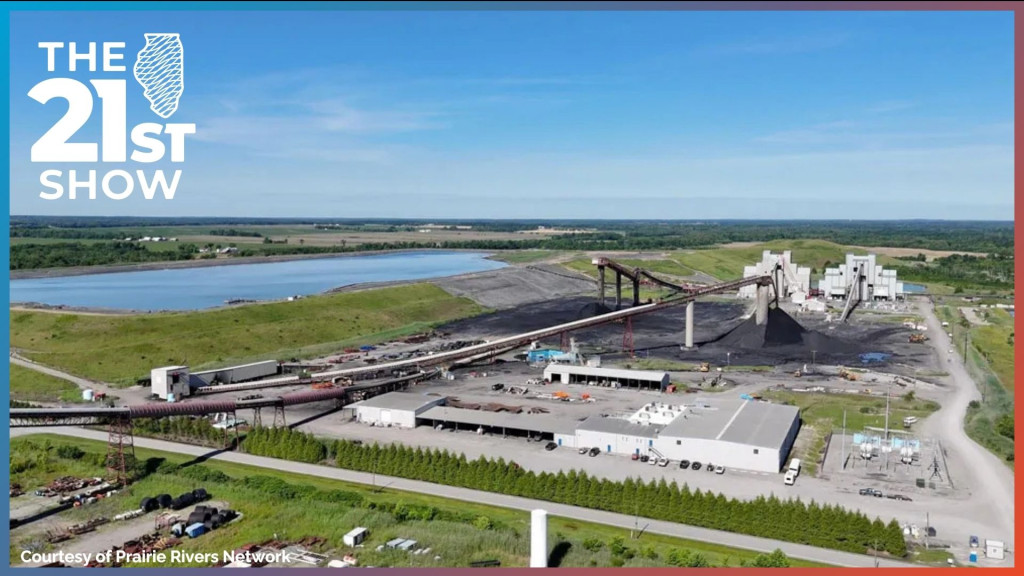
An aerial view of Sugar Camp mine in Franklin County Courtesy of Prairie Rivers Network
Brian Mackey: From Illinois Public Media, this is The 21st Show. I'm Brian Mackey. On Aug. 13, 2021, a fire started in a coal mine in Franklin County in southern Illinois. After 10 minutes, as the fire was still going, federal regulations say managers should have evacuated their people. Instead, government prosecutors say managers kept people working underground for parts of three shifts. Five years later, that has led to criminal federal charges for four men for both the failure to evacuate and for failing to notify the federal safety agency in charge of mines. Joining us now to talk more about this case is Molly Parker, who grew up in southern Illinois and has been reporting on the area for more than a decade. She's currently with Capitol News Illinois, also an assistant professor of journalism at Southern Illinois University in Carbondale. Molly, welcome back to the show.

[00:00:57]
Molly Parker: Thanks for having me.

[00:00:59]
Brian Mackey: And I should say we taped this conversation ahead of time, so no calls today, but please let me know what you think. Our address is talk@21stshow.org. All right, Molly, tell me a little bit more about the mine, or I guess it's more properly called a mining complex.

[00:01:16]
Molly Parker: It is. It's actually a huge site, and I think at one time, at least not that long ago, was one of the — maybe the sixth largest coal mining complexes in the nation. And it's owned through subsidiaries of [Foresight] Mining, which is a big coal mining company headquartered in St. Louis, and it's in rural Franklin County, which is about an hour from Carbondale where SIU is located for those who are familiar with that area outside of southern Illinois, and big coal mining region, even as a lot of coal companies have shuttered their mines. This is still an area where there is active mining and a lot of people are employed in that industry there.

They had a fire there like you said in 2021, and they did not immediately notify workers, and then even after [MSHA], the mine safety organization, was notified by a caller — sort of a tipster, not even by the company officials — there were efforts to impede their monitoring of that fire. And you know, that's what's resulted in these indictments recently, even though it's five years later. It took some time to get here, but they've indicted five people in total: four recently, and there was one other who was already indicted and found guilty in this case. So these four additional ones are pending. They're set to be in court again on Thursday.

[00:02:46]
Brian Mackey: So take me through the sort of tick-tock of what you understand, based on government documents here, to have happened. I understand they're underground, they're using cutting torches to sort of take apart these steel girders that had collapsed, and then a fire starts. What happens next?

[00:03:05]
Molly Parker: Yeah, I mean, from reading the indictment, what should have happened — it sounds like that the minute they knew there was a fire, within a really brief time period, within 10 minutes, that they should have notified federal regulators and evacuated the mine. But instead they kind of — they didn't. They downplayed it. They tried to put the fire out. Even when workers were finally evacuated, they didn't tell them why. They used a different reasoning. And you know, I have not personally talked to these managers and supervisors who were indicted, but it certainly — the narrative from the federal government's indictment, at least their side of this — makes it sound like instead of being forthright with workers and with federal regulators, they tried to conceal what was going on, maybe tried to get the fire under control so that they didn't have to interrupt coal mining.

And I'm sure — there's no question that removing people from the mine and having to shut down operations when you've already called that many people into work costs money. So I don't personally know what their motivations are, but there's no question that shutting down a coal mine temporarily, once you've already got that many workers there — I was told over the course of those three partial shifts that they kept men underground — men and women underground — that it's probably over 100 workers whose lives they put at risk.

Nobody died in this incident. Thankfully there were no tragedies. But I think that reading the indictment, what's really scary about it is there could have been, and that is what the U.S. attorney for the Southern District states: these were actions that directly put real lives at risk. There were also a number of environmental problems from this — how they put out the fire with the firefighting foam containing [PFAS], which are these forever chemicals that you hear people talk about. There were alleged deaths of farm animals and water contamination and all these things. But this indictment — this federal government hasn't gone after a lot of environmental damages from companies, particularly coal companies — and that's why I think this is actually kind of an extraordinary indictment. They're saying, even from the Trump administration, that what this coal company did and its managers and supervisors did was so egregious, and then in the aftermath of it, trying to manipulate the devices that were underground to monitor the [fire —]

[00:05:33]
Brian Mackey: Yeah, let's pause there because I think the politics of this is interesting, and you do write about that in your story. But maybe we can just talk a few more examples of when we say — it's not that they just didn't sort of pick up the phone or send a text or whatever you do to notify the Mine Safety and Health Administration of a fire — but they're actually signing required reports that say, oh, nothing hazardous to report at the start of our shift today, and then the next shift does that as well, allegedly according to these documents. And one of the miners was even directed to get rid of this sort of gas safety detector that they have to wear.

[00:06:09]
Molly Parker: Yeah, again, that's my understanding — that they're really trying to downplay and take different actions to not record what was actually going on and not be transparent about it, both again with workers and the federal government. I think even then, supervisors returned underground. It talks about — and all of this is in the story — but they were supposed to wear certain devices that, when you go underground, track where you are, and they were not utilizing those. Like, they were purposefully trying to conceal their actions, at least according to the allegations in the indictment — not just acting out of ignorance. Again, this is the government's indictment and their side of things. They weren't just, you know, "Oh, I didn't know I had to make this notification in 10 minutes. We didn't know what we were supposed to do. We didn't understand." It sounds like the narrative they've painted is that they actively and purposely concealed and manipulated devices and regulators and others who were trying to monitor the situation.

You know, again, it doesn't describe their motivation, but one thing that leads you to think is that pulling miners out is expensive. But it could have been a serious tragedy underground.

[00:07:25]
Brian Mackey: And as you say, it's not just the lack of notification — it's also sort of misdirecting, allegedly, some of the people that were still there. Apparently some of the people that were evacuated were told, oh, it's just a broken conveyor belt — not a fire.

[00:07:39]
Molly Parker: Yeah, and I think workers really, later, would express not knowing what was going on right away. Like, imagine you're coming up and they do finally end your shift and you're told to go home and you're not really given the full picture. I mean, that is a really frightening thought — to think, hey, I work for a company that could have potentially, allegedly, been keeping me underground in a really dangerous situation, and even when I'm brought to the surface isn't being forthright with me. That's a chilling thing to think about for a coal miner, because they really do put their lives at risk going underground, and you rely on the companies you work for to at least adhere to basic laws and safety standards that are literally set out in the law.

Like, they had guidelines in place for what to do when there's a fire, right? You call within 10 minutes, you evacuate the mine. I'm sure it's far more complicated than that, but these are things that these supervisors are required to know. So I think that reading the narrative in the indictment, it's really chilling to think that — well, it's a potential that profits were put over the value of people's lives and safety.

[00:08:49]
Brian Mackey: Well, as you say in the story, all four men are presumed innocent unless proven guilty. If convicted, they could face imprisonment. Let me remind listeners this is The 21st Show. We're speaking with Molly Parker, who is a reporter with Capitol News Illinois and also happens to be an assistant professor of journalism at Southern Illinois University in Carbondale, who has been covering the case of four men — most recently who have been indicted — in a long series of cases that have stemmed from a fire that happened at the Franklin County mining complex back in 2021. We taped this conversation ahead of time, so no calls, but you can let us know what you thought at talk@21stshow.org.

So you've mentioned it's not just this one criminal case. There was one previous one a year ago. There have also been civil cases having to do with the environmental issues here. Can you talk a little bit, just briefly, about what the Illinois attorney general — why he chose to get involved in this back in 2022?

[00:09:47]
Molly Parker: Yeah, the Illinois attorney general as well as some private landowners in the area have filed lawsuits in Franklin County in state court and are arguing more about the environmental aspects of what went on. The big thing that happened was the firefighting foam they used — it just required an enormous amount of this to put this fire out. It really ended up being a very large and prolonged underground fire, and that foam contains PFAS, which has been reported on nationally — some great investigative reporting around that topic — and those forever chemicals were pumped into the area and got into waterways that traveled pretty far away.

I know there was one farmer who filed a lawsuit, and there are pretty grueling details that he alleged: that several of his farm animals were deceased. There have been people who have taken photographs of wildlife — fish, deer and other animals — that have really large tumors on their bodies that people are alleging are probably a result of this contamination. And I do want to say these cases are pending, just like with the federal indictments. There is obviously some time before we'll know how this all shakes out, but a lot of people felt like not only were lives put at risk — again, that's what the main subject of the federal indictments are about — but also just widespread environmental problems that probably people will be living with for a very long time.

I believe the attorney general's office did reach some early agreements with the company to monitor and to do some things for containment, and I think it will be important to see whether they're doing those things and where it stands.

[00:11:35]
Brian Mackey: You know, you mentioned the politics of coal mining earlier. Obviously, President Trump has made this a repeated point of his campaigns over the past decade or so — bringing, you know, making coal great again — I guess, making coal mining great again. So can you speak to that? In your story, you note that there was some uncertainty about the future of the Mine Safety and Health Administration as part of the big DOGE cost-cutting efforts that happened earlier this year.

[00:12:03]
Molly Parker: I think that some of that has now [settled] down — that they had talked about potentially eliminating some of those offices and then backed off of that. But I think things like this really show how important MSHA is and these oversight bodies are, because this is a very conservative area. This is an area that is very much pro-Trump, that voted for Trump. Franklin County has voted for Trump in both elections. There are a lot of people who believe in coal and fossil fuels and want to see — because of how the economy has been harmed here — there's no question that there are people who very much want to see and support Trump's energy policies.

But that said, they don't want to be going underground for corporations that can thumb their nose at safety laws. So there is a line that people don't want to see crossed. And I even think it was interesting, in talking to the U.S. attorney for the Southern District who's quoted in the article — we even discussed this about his decision to bring these charges — and he really said it comes down to human lives. And you will see they didn't really take on the environmental impacts — the state is, and some of the private landowners are dealing with that separately — but this, in their mind, really crossed such a line, the allegations, that they felt like they needed to pursue this criminally.

And I did ask — and I think it'll be interesting to see if anything changes — of course I didn't get any information about this, but why wasn't the company itself indicted? Because I've asked, you know, were these people taking their directions from anyone? You have to wonder why — these are people who probably know these workers by name, right? And some of them maybe are higher up the food chain, but some are working side by side with these men. And so it's really hard to understand why they would want to put anybody's lives at risk. And so I have asked and wondered: is the company itself part of this? Where has that investigation been? Is more coming? And I was just told that the investigation is active, that they couldn't discuss anything along the lines of what else might be happening or not happening — as is a typical [DOJ] answer. But I do think those are important questions as well, like how far up the chain did this go and why were those directives being made.

[00:14:19]
Brian Mackey: That is an interesting question. Looking at the individuals who have been charged, they range in age from 37 to 69 and apparently reside in Tennessee, Arizona, Kentucky, and one in Illinois. What's next for them in this case?

[00:14:37]
Molly Parker: So they're going to be — at least some of these individuals are — in federal court in Benton. That's where the Southern District has courthouses: Benton and East St. Louis. The most southern courthouses in the district are in Benton, and they are scheduled to appear on Thursday for just some preliminary hearings.

And as you know, sometimes these cases can go on a long time. Sometimes they move quickly if they accept plea deals, and things can wrap up within a year, but sometimes cases, if someone chooses to have a jury trial, can drag on much, much longer. So we'll see as it goes what the defendants put forward as their defense. I think it will be interesting to see if they do move toward a trial, what else would come out about this case — again about who these individuals are, were they taking directions from someone, was there someone at the top even higher that was calling the shots on this — because it does seem like there was this coordinated effort, and when you have that many people coordinating something, it just raises some questions about who else might be responsible for what went on here.

[00:15:40]
Brian Mackey: Molly Parker is a reporter with Capitol News Illinois. She also teaches young journalists as an assistant professor at Southern Illinois University. Molly, thank you so much for sharing your reporting with us today on The 21st Show.

[00:15:53]
Molly Parker: Thank you.

[00:15:55]
Brian Mackey: More to come after a short break. This is The 21st Show. Stay with us.
On August 13, 2021, a fire started in a coal mine in Franklin County, in southern Illinois. After 10 minutes, as the fire was still going, federal regulations say managers should have evacuated their people. Instead, federal prosecutors say they kept people working underground — for parts of three shifts.
Five years later, that has led to criminal federal charges for four men — for both the failure to evacuate and for failing to notify the federal safety agency in charge of mines.
A journalist from Southern Illinois who has been covering the case joins the program.
GUEST
Molly Parker
Reporter, Capitol News Illinois