








Joshua Johnson: Embrace conflict, not contempt
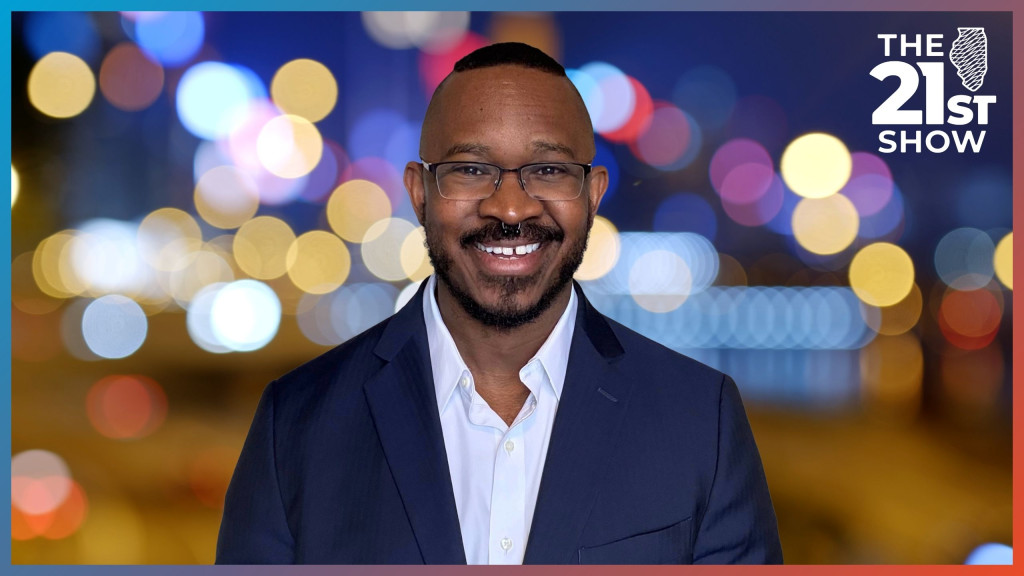
Courtesy Joshua Johnson
// This is a machine generated transcript. Please report any transcription errors to will-help@illinois.edu.

[00:00:00]
Brian Mackey: Today on the 21st show, Joshua Johnson once hosted NPR's flagship talk program 1A. He also had a show on MSNBC. Today, he's delivering satirical news for The Onion.

[00:00:14]
Joshua Johnson: Major changes to America's food assistance programs begin today as the USDA is replacing food stamps with one giant rutabaga. The rutabaga, which is approximately the size of a single-family home, has been made available for all eligible Americans to gnaw on.

[00:00:29]
Brian Mackey: Beyond that work, Johnson is also thinking through the ways Americans can better connect across some of our deepest divides. That was the subject of a TED Talk he gave earlier this year. Idiots.

[00:00:44]
Joshua Johnson: are everywhere.

[00:00:45]
Brian Mackey: I'm Brian Mackey with Joshua Johnson for the hour today on the 21st show, which is a production of Illinois Public Media. But first, news. From Illinois Public Media, this is the 21st show. I'm Brian Mackey. And today we're talking with a man whose name will be familiar to many consumers of radio and television news.

[00:01:20]
Joshua Johnson: This is 1A. I'm Joshua Johnson in Washington. Do the laws of the United States clearly state that men and women are equal? Well, hey there, I'm Joshua Johnson. It's great to be with you on this Thursday, November 17th, and tonight we're talking about what's next for Democrats.

[00:01:38]
Brian Mackey: Joshua Johnson in two of his former roles as host of the flagship 1A talk show from NPR and WAMU. And then hosting his own program on MSNBC and NBC News Now. Today Johnson is still a news anchor, or rather he portrays a news anchor, Dwight Richmond of the satirical Onion News Network.

[00:02:02]
Joshua Johnson: Struggling Americans are breathing a sigh of relief today as Congress has finally passed a $430,000 an hour minimum wage for billionaires. And in tech news, OpenAI launched construction of a new data center in Greenville, Tennessee on top of a sick child today. The artificial intelligence company announced the data center will be positioned in the heart of the small race car-themed bedroom where 8-year-old Billy [Treaker] fights a rare kidney disease on a daily. [Bas] a total chump in Indiana is set to receive no compensation after saving four children from a house fire. This one's a head scratcher, folks. The 5-alarm blaze started around 5 p.m. local time. That's when Aaron [Devlin], the [MOOC] in question, reportedly rushed into the burning building despite having no assurances he would be rewarded for his efforts.

[00:02:48]
Brian Mackey: I heard the kids screaming from inside and if those are not commentaries on modern life, I don't know what is. Beyond all that, Johnson has dedicated a lot of time and work lately to helping people connect across divides. That's taken the form of the Resolution Game, which aims to help people host do-it-yourself debates. And this year, he gave a TED Talk around that theme. It was published with the title, "Idiots Are Everywhere. Here's How to Cope." Johnson is also launching a podcast. It's called Joshua Johnson Listening. These days, he's based in Chicago, Illinois, from whence he joins us now. Joshua, welcome to the 21st show. Thanks for being with us.

[00:03:26]
Joshua Johnson: Is this the 21st show or "This Is Your Life?" Cause that was a very interesting retrospect. It was like, I think it's what you hear on your way into heaven if you get there, but that was a lovely, uh, summation of what I think I have achieved over the last few years.

[00:03:43]
Brian Mackey: Yeah, well, and one more little note of introduction, I kind of wondered, do we need to disambiguate as the, uh, Wikipedia pages say, right? Cause I have, I have this friend, he gets so much email for people who share his first and last names that he has a little template in his, uh, in his Gmail to write back. So I, I mentioned that to say there is another Josh Johnson also associated with TV and funny online videos. Uh, he's, you know, stand-up comic with The Daily Show, different guy, different guy.

[00:04:08]
Joshua Johnson: Yes, well, he's Josh Johnson. I'm Joshua Johnson, so hopefully there's room for two smart, funny black men in pop culture, but if not, then he's just gotta go. He's just gotta go. I was here first.

[00:04:20]
Brian Mackey: Uh, you were indeed, and listeners, if you want to join us today throughout the hour, 800-222-9455 is the number. 800-222-9455. All right, let's, let's start as you do in your TED Talk right out of the gate, idiots. Long pauses are everywhere. What do you mean by that?

[00:04:42]
Joshua Johnson: Well, I got invited to give the TED Talk because I won a competition. Uh, TED did an event called the TED Idea Search in 9 cities around the world. The only one in the United States was in Chicago,

[00:04:56]
Brian Mackey: and they had it kind of

[00:04:56]
Joshua Johnson: thing. Basically something like that. And I won the one in Chicago, so that got me an all-expense-paid trip to TED back in this April to give my talk, an updated vastly improved version of my talk, and I found myself trying to figure out kind of a TED Talky way to express what I was thinking. There are two opening constructions for TED Talks that I think need to be banned. One is "imagine," imagine a world in which blah blah bla blah, like that's just a cliché, and as a journalist and radio person I hate clichés. The other one is, "what if I told you?" And so I didn't want to do either of those two things, but I needed some way to get at the ways in which we really look at one another, right? 1A was so successful and is successful, because we took an unflinching look at the country. We didn't want to sugarcoat it, we didn't want to euphemize it, we just wanted to talk about ourselves the way we actually are. And so I had to figure out if I was going to express what we're really dealing with with one another and the way people actually feel, what is the most concise radio-esque way to say it. So my broadcast training kicked in and I thought, well, what's the bluntest way to say it? Start there and then work backward. You can always add words if you need them. And it just tumbled out like, idiots are everywhere. That's how people actually feel. So once that clicked for me, all I had to do was get over my sense that I needed to sort of TED-ify what I was thinking rather than just say the thing. And so I just said the thing.

[00:06:30]
Brian Mackey: It's really genius too, and, and your, your next line or a couple of lines later, you say, "whatever kind of difficult people you just thought of," and it does work, right? Cause if you're a hardcore, you know, conservative and, and you can't believe that, you know, that we just have open borders in this country or we're spending so much in tax money, or you're, you know, a gay person, say, and you can't believe that these idiots are trying to take away your, your rights just to have a, you know, a marriage and the same rights that everyone else has. It really does work wherever you're coming from.

[00:07:00]
Joshua Johnson: I can zoom it out even further. If you're a person who has to deal with other people, sooner or later, people gonna people and something's gonna tick you off. I think, you know, politics are one way in which we have oversimplified the divisions between us, not that they don't matter, but I found and 1A really affirmed this for me, that your politics are probably the least interesting thing about you. I could probably get through a great conversation with you and never ask you how you vote and learn more than if you told me how you vote or what party affiliation you have. Politics are a drab, dry, binary, boring way to define who you are as a person compared to the things that are important to you, the people who make meaning in your life, the experiences that have scarred you, the aspirations that keep you up at night, the hobbies that you wish you had more people to explore them with, the idiosyncrasies that you don't dare share with anyone — those things give you a three dimensionality. And I think saying "idiots are everywhere" was just a way to kind of dig into the bluntness of the way that we deal with one another. That bluntness is real. It's also step one in terms of the complexity we can have with one another, and I would much rather get deeper with people, which is why in that TED Talk, the first bit of advice I give people when I sum it up in those three tips is get their story. A person's story is really the best way I have found to connect with them and get to know them, whether you end up liking them or not. It's the fastest way to know who you're really dealing with, not their politics.

[00:08:47]
Brian Mackey: Yeah, well, and you know, Terry Gross famously once said, uh, she, you know, is kind of an introverted person, I think in, in social settings. And so she just sort of goes up to people and says, "tell me about yourself," uh, and lets them, you know, sort of winds them up. So how, how do you do that? How does someone do that, right? Get through, you know, maybe you're, you're standing next to someone wearing that red hat, uh, that, that you think signals something terrible about what they must, you know, their, their deepest, uh, thoughts about, about their fellow Americans. How do you approach a situation like that?

[00:09:19]
Joshua Johnson: Yeah, well, when you see that red hat or that progressive pride flag, or that Star of David Israel flag, or that Palestine flag, or that donkey or that elephant or whatever it is you see, I think the first thing to do in any situation where conflict is possible, if not likely, is to check in with yourself. You need to be mindful of the person you walk into the conversation with. One of the things that being an NPR host heightened my awareness of is me, because we walked into that show and we launched that show a few weeks before Donald Trump's first term back in 2017, and we knew we were gonna be talking to a nation that was ready to just explode either with Donald Trump as president or with America's first female head of state. So whatever happened in the election, we knew that it was gonna be heated and I wasn't sure how I was gonna navigate it. I was like, I, I, I know what I think about the world, no one's entitled to my politics and I'm not gonna discuss it, but how do I deal with this? And so the first person I had to check in with was me. What are my values? How do I want to present myself to the world and who do I want other people to connect with?

I think before you walk up to someone and ask them who they are, you need to find out who you are and who you bring into that conversation. I, I developed what I think of as the 1234 rule of conversations. And the 1234 rule says that one conversation between two people is actually three dialogues with four voices. The four voices are you, me, your thoughts, and my thoughts. And the three dialogues are your internal conversation with yourself, my conversation with myself, and our external conversation with what we're willing to share. That does two things for me. One, it reminds me, I will never have your undivided attention, no matter what I say, cause the voice in your head, your own presence to yourself, will always be louder, and that's fine. But what it also does is it reminds me that my voice to myself will always be louder than you. I will never be able to drown myself out enough to hear you over my own internal presence. So I need to be aware of what that presence says to me about you before we start talking. If my thoughts are so dehumanizing and negative and vicious and vitriolic, but I wanna put on a happy face when I talk to you, I gotta deal with me first because if I don't, then that thought process is going to commandeer the conversation and it'll slip out when I least expect it. But if I can own who I actually am, I don't need to tell you, I need to tell me, and I need to be real about what I think about this guest who's booked on the show for Thursday who believes this thing that I can't stand. I gotta reckon with that first, put a pin in it, put it off to the side, knowing that those views will jump right back on me when the show is over. But be honest with me, so that I don't have to play some weird facsimile of a neutral, unmoved observer when I talk to you, which would be, say it with me, a total lie. I don't wanna start a conversation with a big fat lie about what I think of you. I have to be real with you by starting with being real with myself.

[00:12:56]
Brian Mackey: Well, this gets at the heart of one of the things you talk about, and one of the things that we in journalism have been having a big debate over for a decade or more now, which is this idea of objectivity or neutrality, as you say it. And, and I'm intrigued by your sort of differentiation between these terms. So maybe we should talk about that. You, you, you talk about coming up in public radio, being taught to practice neutrality. You differentiate that from objectivity. Let's define those terms. What do you mean by neutrality?

[00:13:26]
Joshua Johnson: Sure, first let me just say I am not in the camp of people who believe that neutrality is dead or that objectivity is dead. I understand why that conversation came up in the last decade or so, particularly with the attacks by the Trump administration on the press. I get that conversation. I don't think that they are dead at all. Objectivity as I come to think of it is that you park your opinions and learn without judgment. I don't have to like it. I'm just here to learn from it. Neutrality negates your opinions as if you have no judgments.

Now there's room for being neutral, right? If you drop me in the middle of a curling match at the Olympics, and I'm supposed to cover the match, I have no emotions around curling. I'm not rooting for either team, especially if the United States isn't playing. I land in there as basically a neutral observer. So neutrality can exist. It's just a matter of being willing to own what you actually think, even while you do the job. A cancer researcher is not neutral about cancer. They want a cure. But they can't sit in the lab, cussing at a petri dish going, "damn it, glioblastoma multiforme, I hate you so much," they're gonna look crazy. And they're never gonna get any useful information. It will bias the work of curing the disease they're trying to fight if they can't let their feelings about it sit to the side. That's why I said park your emotions. When you park your car, you don't abandon it in the garage, you are coming back for it. So you can choose when to focus outward on what you can learn or inward on what you already think.

The risk I think that makes some people not want to do that is that sometimes when you park your car, it's not always where you left it. Uh, I grew up in South Florida, so I, I know from this, but people also fear that their opinions might shift too. And that's why I think objectivity feels so very vulnerable, but that's also why it works because that vulnerability shows that you're open to talking and a conversation that's not open is absolutely pointless. So in a way it allows you to have the freedom from the weight of your convictions of having to defend your perspective at all times. And letting that go signals to the other person that it really is a good time to have a conversation and they really can be heard. They may not be able to persuade you, but at least they can reach you, and that might be enough.

[00:16:00]
Brian Mackey: Well, we need to take a break in a minute, in a minute, I should say, and I know you know what that means, but maybe we can, you know, take this metaphor a little further, right? You park your car. Some people's identity is their car, right? This is, this is who they are. It's also a shell. They feel protected in their car. They don't want to park. They want to sit in the car. Why do I have to park my car and leave it to the side?

[00:16:20]
Joshua Johnson: Maybe you don't. And, and I take that quite seriously. I mean, if you cannot bear to be wrestled away from your identity, then maybe conversations that require that are not for you, at least not right now. I don't like the idea of dragging someone into a discussion that they're not ready for. I don't like to go where I'm not invited, and I think people need to have the agency to say, you know what, today may not be the day for this. Like I might not be ready to discuss this with you. I might be ready to discuss this later, or I might be ready to discuss this with someone else or under different circumstances, but these circumstances for the person I am right now might not be a fit. And that may not be ideal, but it's OK.

[00:17:04]
Brian Mackey: It's OK. All right, if you are up for a little conversation with us, maybe we can even have a little conflict, let us know: 800-222-9455. We're speaking with Joshua Johnson, who is the creator of the Resolution Game. You know him as an anchor on The Onion News Network, former host of 1A from NPR. We'll be back after a short break. This is the 21st show.

It's the 21st show. I'm Brian Mackey. We are talking today with Joshua Johnson, who is the creator of something called the Resolution Game. It aims to help people host do-it-yourself debates. He gave a TED Talk this year on these ideas. It's called "Idiots Are Everywhere. Here's How to Cope." We'll have a link to that, uh, uh, with this conversation on our website shortly after air today. And he is also, you may know him from his time on MSNBC or hosting NPR's 1A or maybe present day. He is the satirical news anchor, or I should say he portrays the satirical news anchor, Dwight Richmond on The Onion News Network. If you want to join us, 800-222-9455 is the number today. 800-222-9455.

Maybe we can go back to your sort of news origin stories. Like how, how does one come to these sorts of ideas that, that you're exploring today? What is the first major news event you remember in life?

[00:18:38]
Joshua Johnson: I love the superhero framing of this, my news origin story. I think the first major news event I remember in my life was probably the Challenger disaster.

[00:18:53]
Brian Mackey: Oh, that's mine. Wow, we must be closer in age than I realized, OK.

[00:18:56]
Joshua Johnson: Yeah, and I grew up in South Florida. I'm from Palm Beach County, Florida, which is where, yeah, so [Kristen McAuliffe], who was the school teacher on the Challenger, taught in Florida, and there is a middle school now named after her, [Kristen McAuliffe] Middle School, and I remember being 6 years old. I don't remember every bit and piece of what happened in terms of how it was done, but I remember the adults being very serious. I remember being in an elementary school classroom, the lights were off, we were watching something on TV and the teachers were very serious and the kids were kind of aware of the somberness of it but certainly didn't have all of the context. I didn't really understand what the Challenger disaster meant until I was at least 9 or 10, but I think having adults around me who validated the importance of knowing what was going on was a big deal.

I also remember just being little and being very enamored with broadcasting from a very young age. Radio and TV captivated me probably from the age of 5. My mother loves to tell the story of how I would walk around after Sunday dinner with a stick interviewing the adults as if it was a microphone. Uh, on, on one occasion I am told, uh, she has not produced recordings of this, so this may be apocryphal, but I am told that I walked around asking people if they would vote for me for president. Another time that I do kind of remember, I walked up to someone and said, "excuse me, hi, my name is Johnson Johnson, and I just want to know, do you know how a carburetor works?" And if they didn't know, I was delighted to tell them because I had just learned it myself. And their response was some version of, "oh, OK. Uh, thank you." Now, to this day, I do not remember how a carburetor works, but I remember how I felt when I told them. And I remember the validation that I felt from not only knowing something, but sharing it.

And this is growing up in the early '80s where hip hop had just hit the scene and "The Cosby Show" was the No. 1 show on television and BET had just gone on the air and the Arsenio Hall Show was on the cusp of being a late-night hit. So attention on black people and black culture and especially young black boys was very acute. HIV had hit the scene, crack cocaine was on the streets, gang violence was in the news, and so to be a smart, young, articulate black boy who was not in the streets running around causing trouble made me a very intense focus of all the adults' energy and they poured intensity into me to ensure that I was successful. So, news and information and communication were a talent of mine, they were one of my gifts, but they dovetailed culturally with this moment that kind of raised the stakes for me and let me know just how very important this skill set was.

[00:22:04]
Brian Mackey: I think I hear you channeling a little in your own sort of self-imitation of your youthful, uh, news personality, a little, uh, Eddie Murphy on SNL in there.

[00:22:13]
Joshua Johnson: A little bit, just a little bit. Oh, just a little bit, just a little, just a little tad, just a tad, yeah.

[00:22:18]
Brian Mackey: Yeah. So when do you start to think this is my career, this is what I want to do in life, or are you one of those people, high school paper or radio station or something like that all the way through?

[00:22:28]
Joshua Johnson: I was 10. I knew. Like I knew, I, I was sure, I was really sure. I knew I didn't enjoy anything as much as that. I would look at the TV and be like, I don't know how to get in there, but I'm gonna get in there. And so whenever there was like a local TV station that was doing a tour for students, I wanted to go. There was a local PSA competition that was sponsored by like the local McDonald's and I made sure to sign up and we drove up to one of the local independent stations in Fort Pierce, Florida. And "hi, I'm Joshua with a kids break message. The zoo can be a fun place to learn about animals. Visit the zoo soon. Learning can be fun." That was my PSA and we just hung around and one of the other kids didn't show up, and I just kind of inched closer to the director and inched closer to the director and gave him that look like, hey, I'm right here, my rates are cheap, and they gave me a second one to read. And it just was — it was like, oh my God, I got, "hi, I'm Joshua with a kids break message. Water and electricity do not mix. Never use water around appliances. It's smart to be safe." And so getting picked to do two of them and to see the station, you couldn't tell me nothing after that. I knew who I was, I knew I was a star, you just needed to catch up.

So I always looked for these opportunities to do the thing. I never knew what it was gonna look like. I still don't know what it's gonna look like. I just knew that that's the thing where I hit my stride. I'm in flow when I'm doing that thing. And then over time, it got clearer like, oh, maybe I don't need to go to medical school. Maybe I really do need to pursue broadcasting. Oh, maybe I don't wanna be an actor, even though I love acting. Maybe I wanna do something in broadcasting. Oh, maybe I don't wanna be like a BET host. My civic responsibility is important to me and now I have a sense of black history, so my cultural connection is important to me. Maybe I wanna do journalism because it speaks to my creativity and my civic responsibility. OK, I think this is the path. And then as I discovered the things that I wanted and my mother, who was an educator and my biggest fan, just kind of made things available, that's when the contours got clear. But I always just kind of ran toward the things that I knew I was good at and I was good at this.

[00:24:54]
Brian Mackey: I, I love that you feel like you had this healthy understanding of who you were even then. You know, I, I'm curious what leads you then to public media because public media, public radio, NPR, the member stations, it's one of those institutions like I think the New York Times and some of the other big newspapers where the institution is bigger than its stars, which I don't think is true on cable news. I mean, quite literally, you had your name on the shows when you were with NBC. Um, which is not always the case. And, and I don't know, I don't recall whether it was 1A with Joshua Johnson at the time or it was just 1A. But, you know, the institution is bigger than the individual. And I wonder what drew you to public media in particular.

[00:25:35]
Joshua Johnson: I think I was drawn initially to community media rather than public media. When I was growing up there were local gospel stations in West Palm Beach and in South Florida that we listened to all the time. 1600 WPOM in West Palm Beach. And there were local news talk stations, you know, Newstalk 1040 WJNO, that had a local talk show host, Jack Cole, God rest him, and every Friday he had teenagers on and he did a teen talk panel for two hours of his three-hour show. And so I got to go and do that.

So public radio kind of met me at a moment in my life where I knew I had something to say. I knew I had a skill for this. I really wanted to know everything I could about everything in broadcasting. And there were local institutions that opened their doors. Through the course of consolidation and deregulation, none of those doors exists anymore, except public radio. This is the last place standing. So by the time my mother got clued into NPR when I was about 13, the die was kind of cast. We spent a few summers in Philadelphia at a program for students of color who were interested in medical careers because like I said, I was on a path to be a doctor before I came to my senses and settled into steady like journalism. And while we were there, she discovered WRTI which was a news and jazz station. There aren't many of them left, but statistically NPR news and jazz stations have a significantly higher black listenership. And so in addition to WHYY where Terry Gross was based, there was WRTI. They still play jazz, they just don't play news. And so she kind of introduced me to NPR and I heard Robert Siegel on All Things Considered and this storytelling style just sort of leaped out and so the kid in me that loved theater and the kid in me that liked education and learning both kind of perked up at the same time and I was like, oh my God, I didn't know that this could exist. So it sort of was right for me, but I think the fact that it was also a community institution, and I grew up with these kinds of institutions, made it feel like something that was built for me. I never thought I was gonna end up on NPR. I, I didn't know if I belonged on NPR. I never heard anyone on NPR with my vibe until I got there, but it was always sort of there on purpose, and it met me at the right moment.

[00:28:12]
Brian Mackey: Talk about your path through local stations up to 1A, right? How does that happen?

[00:28:17]
Joshua Johnson: I worked in, well, I, I spent time at WJNO. I was there on Fridays. I, I eventually talked my way into a job screening calls for the Jack Cole show, which was great. When I was in college, I worked for WTVJ which is the NBC station in Miami. I went from there to working for WPBT in Miami, which produced a show called Nightly Business Report, which was on PBS stations for a long time before it was sold to CNBC. Which ran it for a while and then promptly canceled it. I worked for the CBS station in my hometown as an assignment editor, one of the people who works in the newsroom and listens to the police scanners and keeps stories organized. And then I kind of talked my way into a job with WLRN in Miami, which was beginning their local newsroom, and I got hired as a reporter, eventually became the afternoon anchor and kind of bounced back and forth between anchor reporter, did that for about 6 years, left and went to KQED Public Radio in San Francisco and was their morning newscaster for a number of years, for 5-plus years.

We started up a project to deal with issues of race because it was around the time when the Ferguson, Missouri unrest had happened and police-involved shootings were getting more attention and I had the idea, look, why don't we talk about race proactively rather than reactively in this way and have people tell us their stories about issues of race and then we unpack what happened and how they might have gone better. Holly Kernan, who was the, uh, head of news at the time wanted ideas from the staff, and to her credit, she opened it up to everybody. She is now the head of Nashville Public Radio and she's just a gem. And so I pitched a show that got made, PRI picked that show up and had us do a limited run of 4 episodes. [Rupert Alman], who was an executive producer of The Takeaway from PRI, heard my work and threw my name in the hat to succeed Diane Rehm on the [Diane]. I auditioned and got that job and then ended up as the host of 1A. So that's the short version.

[00:30:19]
Brian Mackey: I guess they did have to change the name from the Diane Rehm show.

[00:30:22]
Joshua Johnson: They did indeed, and I, I knew I didn't want to do just the Joshua Johnson show and I wanted something that had a different vibe and so did they. 1A is a name that I came up with. They weren't quite sure what they wanted to call it or how they wanted to structure it and they also, to their credit, were open to ideas and so 1A was an idea that had been kind of like hiding in my heart for a very long time, since my Miami days, and I threw it out there and it worked.

[00:30:50]
Brian Mackey: It's like First Amendment, yeah.

[00:30:52]
Joshua Johnson: First Amendment, and also the Miami newsroom was a partnership at the time with the Miami Herald and the Herald calls its front page page 1A. So the idea was to make a mix of stories that were the big news stories that everybody needed to know, but also those stories below the fold that are different, that are a curiosity, that are a slice of life and kind of reflect this back to one another. So it's that mix — it shouldn't all be serious and some of it should just be a way to reflect us back to ourselves and decide whether we like what we see.

[00:31:27]
Brian Mackey: Yeah, I like the layers there. You know, and one of the key hallmarks of 1A then and even to this day, although it might be in a slightly different form now, is listener participation. And that is something that is increasingly rare. You alluded to this talking about, uh, was it Mr. Cole, your hometown radio host who, who would have, you know, panels and and call-ins. Um, talk about, you know, the, the interactivity that I, I presume was a core part of, of the idea you had for that program.

[00:31:56]
Joshua Johnson: It was a core part of the program. I would say though, before I get to 1A, I, I don't think it's rare today. I think it has shifted. There are plenty of podcasts who take calls. I mean, Adam Carolla's podcast takes calls for crying out loud. There has been a rise in YouTubers, Instagrammers, and podcasters whose interaction is really just kind of, you know, debate bro culture, where they'll put themselves out there and be like, if you're a Trump supporter, call me and we'll argue. That is not my vibe. So it's out there, but I think we've sort of lost a lot of those spaces like 1A where everyone knows they can call in or write in and be heard respectfully and that I will keep order for everybody.

I actually just before you and I went on the air, I was searching for something else, one of my old pieces, and saw a video of a live event that 1A did at KMUW in Wichita, Kansas. And the beginning of it begins with my intro to the audience and what the ground rules are. And I remember telling audiences, "if we allow this to get negative, America will turn this off, and no one in the country will hear what you have to say, and there will be nothing I can do to bring them back. And it won't be my fault. This is your responsibility." And not one of those shows went sideways. All of them worked, all of them, because we put the responsibility on the audience.

I think what's missing now is not a sense of engagement or interaction. I think it's a sense of accountability. It's the mutuality where people view this interaction as something we co-own and co-author and whose consequences matter to us both. We were very good at 1A and I think a lot of programs were good at letting the audience see one another, independent of the host and the show, so they can continue to engage. And that happened on 1A. There are people who still follow me from when I was on 1A, who I connected with because they were like, "I don't know if I like your views, Joshua, but you're a good guy, you take care of people." That meant the whole world to me. I think if anything's missing, it's that sense that we're not here to hurt you. I don't think I'm any better of a person than you, and more importantly, I'm here to take care of you. I want to talk to you like — that rule is golden for a reason. I wanna talk to you the way I want to be spoken to, and, and that value needs more defenders, I think.

[00:34:39]
Brian Mackey: And you're listening, as the name of your podcast has it, Joshua Johnson Listening. We'll have more with Joshua Johnson after another break. You can join us: 800-222-9455. We'll get to the phones in 90 seconds. This is the 21st show. Stay with us.

It's the 21st show. I'm Brian Mackey, and we're talking for the hour today with Joshua Johnson, who you may know as uh playing the anchor Dwight Richmond on The Onion News Network. He was previously with NBC and 1A from NPR. He's also recently given a TED Talk, I should say it was earlier this year. It was called "Idiots Are Everywhere. Here's How to Cope." He's been spending a lot of time thinking about how to get people to communicate better, to deal with their conflict in a way that doesn't include contempt, which I hope we can talk about a little later. Uh, and to that end, he's created something called the Resolution Game. We'll have links to all these things we're talking about at our website after the show today, twentyfirstshow.org. Um, if you wanna join us, 800-222-9455 is the number. And let's go now to the phones. We have Paul calling from Urbana. Paul, thanks for calling in.

[00:36:01]
Speaker 2: Yeah, uh, there's so much here now. Um, I was, I was gonna get totally serious and I probably will. Um, what does snarky humor do? I don't think it's conducive to getting people to debate. It satisfies me in some way, but I am suspicious of it, and I guess I'll bring out the Weimar Republic and say that there were people lampooning the Nazis and Hitler at the time, but it didn't make any difference, so I think that's terrible to bring up, but as long as there was so much biography, maybe I'll throw in a little of my own. I went to visit the NPR headquarters just before Nixon resigned, so that would have been '72. Nobody was there, had any time to talk to anybody, so they gave me a 5-by-8 glossy of Susan Stamberg, black and white, which I have somewhere I suppose anyway.

I've been following it for a long time and it's frustrating. A lot of what I see as a problem with the media today is self-censorship. And since you brought up the Challenger incident, I was a little older then and I watched the famous physicist Feynman, you know, put the rubber O-ring in the ice water and tell the senators that they shouldn't have launched the Challenger that day, but the backstory on that was there were pressure by Reagan's handlers to go ahead with the launch because his State of the Union address included looking up to space and talking about the teacher in space, etc. I mean, it's a, it's a tragic story, but that's part that doesn't get remembered. Reagan is remembered as consoling the nation after this terrible tragedy when politics actually, um, started it. And, uh, well, I do have some things to say about Wait Wait Don't Tell Me, but I know there's not time for it and I,

[00:38:05]
Joshua Johnson: I don't work for that show, Paul, you're gonna have to talk to Peter. I'm sorry. Although I do, if I could just — I, I, Paul, I appreciate you bringing all these pieces together. I think the thread that I hear through what you're saying from mocking Hitler and the Weimar Republic to Ronald Reagan has to do with the emotions that people elicit by the words that they say. There's a reason they called Ronald Reagan the great communicator, right? He was good at getting people to feel things, whether you liked his policies or not. I mean, this idea of like, are you better off now than you were 4 years ago — those hit people in the feels, as the kids say. And that comedy aspect, satire hits people in their feels, and that's one of the things that I think I want more people to understand as they try to connect with one another.

I don't think satire is necessarily congruent with news information, civic dialogue. I think there are lanes for both. My life has intersected in a really weird way where all of these things are part of my resume. But I think the thread through all of it, through NPR, NBC, The Onion, everything I've done, is you gotta make people feel something with whatever it is that you say. We don't like to talk about that in public media, it is our biggest liability. It is a huge blind spot. People like to think that journalists are purely in the information business. We love to say that to ourselves, we love to delude ourselves as if we're just in the information business. We're not. Google is in the information business. Journalism is the trust business and trust is a feeling. Confidence is a feeling. You need to feel trusting of us before you will accept the information.

The Onion has enormous trust with its audience. When we revived The Onion News Network back in 2024 and I was invited to do that, people came out of their skin. They were so excited because this high-quality, highly unflinching look at the world was back. But it wasn't because we made them laugh, it's because we make them feel like they're not alone. Like we see what you see, we see how the world is. That emotional link is really powerful, and I think successful communicators, successful broadcasters will connect intentionally, purposefully with the emotions of the people who matter to them and who sustain them. Regardless of what the message is, you gotta get in somebody's heart before they give you permission to get in their head.

[00:40:54]
Brian Mackey: You know, this, this puts me in mind of something that I, and I don't know how much time we have to get into this, but you know, there was that big dust-up a couple of years ago when Uri Berliner, who had been an editor at NPR, maybe still was at the time, published this, uh — I believe it was an essay with The Free Press sort of critiquing the network for its bias. At that time, um, we talked about it on this show and one of the guests I talked with was Mike Pesca, who I, I think you know, um, he has had an independent, uh, podcast, um, through, uh, you know, it was originally through Slate. He went on his own. Now he's off with CBS News. Um, but at the time, one of his critiques of NPR was that it had lost some of its sparkle, right? That was the term that he said they used to use. Um, and so maybe there is a place for some more of that as a way to, you know, bring more people into the fold, right? It used to be Prairie Home Companion and Car Talk and whatever you thought of those shows, it was a way for people to sort of interact and build trust with public media without necessarily having to have it filtered through whatever their, you know, political news ideas were.

[00:41:59]
Joshua Johnson: Yeah, I, I get that and Mike Pesca and I talked about this on his podcast. Uh, I remember the Uri Berliner dust-up and how bad his journalistic logic was on that. Among other things, he argued in his piece in The Free Press that the voter registration data for NPR staff who lived in Washington, D.C., where the network's based, leaned heavily Democratic. Never mind that the bulk of people who work in Washington live in Maryland and Virginia. He didn't bother to get all of the voter registration data. He just reported the data that suited him. And for him to have been a business editor for NPR News for as long as he was, and to do that shoddy a job of making his argument, discredited the whole thing for me. And I would love one day to tell him to his face.

In terms of the sparkle at NPR, I get that argument, and I think what sparkled a great deal — it's partly why the theme was what it was. I helped the composer Will Eastman remix the theme cause I wanted us to have the 1A theme on NPR with a bassline. It would reflect me, it would sound a little more like me. That's why I thought like, I don't know if I belong on NPR. I'm a little too, you know, I need a bassline. Ain't no basslines on NPR, so damn it, we [don't] have one.

But I think as the network looks forward, I think there's an even better way for NPR to regain its sparkle. And I've been giving this a lot of thought and it's why I'm doing what I'm doing now. Having worked at MSNBC after NPR taught me something extremely valuable, which is that MSNBC has a smaller audience than Fox News. That's true. But the MSNBC audience watches way longer than the Fox News audience does. People who watch [MSN], which is the current incarnation, watch on average 9 hours a week. That's like, I don't use my smartphone for 9 hours a week. People watch [MSN] for long periods of time, and they end up sort of replicating and emulating what they hear on [MSN] now in their conversation. Same thing with the Fox News audience. I don't know that NPR listeners end up sounding more like NPR hosts. But maybe they should. We are excellent conversationalists, we're great moderators, we know how to deal with conflict. In a nation that is riven by conflict, why don't they come to us for that guidance? We need to scale what we do. NPR listeners should be the best conversationalists in the country, and it was my mistake as the host of 1A not to explain to the country how I do what I do. If you listen to an NPR host hosting, you should know what made that interview pop or why a conversation went sideways, so that when you have to deal with a tough conversation in your own life, you can refer back to me, my example, Brian's example, Terry's example, and know the tips that we use. We're not magical, we're skilled. And I think if we want these programs and these stations to have a future, we gotta scale what we do. We gotta replicate our skill set in other people, because we're not enough people to meet the need. But you listening to this right now, you could be part of that solution. We just owe you a playbook of how it's done.

[00:45:22]
Brian Mackey: Enter, I suspect, the Resolution Game. So tell me about this and how people are supposed to make use of this.

[00:45:28]
Joshua Johnson: The Resolution Game was my first attempt to try to replicate the circumstances under which I hosted 1A. It's a roleplaying party game where you come up with an idea for something people should do — something they should do, not just something they should think — and people can assign roles to one another and they can play it out. So you can either be one of the advocates arguing yes or no, you can be one of the judges who votes for which side wins, or you can be the audience who has to live with the decision that the judges make. So suppose you're debating, "we resolve that the city of Townsburg should approve new zoning for a data center." Maybe the yes side is the tech executive who wants to build it, the no side is a local activist, the judges are the town council, and the audience are the townspeople, and everyone has a role. You help to score the debate, there's a moderator who will keep order and watch the clock, and it gives you a structure to figure out why things work.

Now you don't have to debate something serious. It could be something very lighthearted, like "we resolve that airlines should ban passengers from reclining their seats," or whatever it is. It could be, "we resolve that movie theaters should stop selling popcorn." It could be anything, but just as a way to look at what it actually takes to make an argument for what we should do — that's the crux of where things fall apart. It's not whether I believe what you believe, but we gotta live with each other. How are we gonna merge elegantly in traffic with each other if we don't have a way to talk it out and have a finite outcome at the end? Not just a debate where we get online, yell at each other, and then leave. We need a winner and a loser and rules and a score. And the Resolution [Game] is an effort to try to make that make sense.

[00:47:08]
Brian Mackey: In just a couple of minutes, maybe 3 minutes at most left in our show today. But one of the keys to this that you've talked about is the difference in figuring out and embracing the difference between conflict, which is good, and contempt, which is bad. And to, you know, you said, how are we gonna merge together, right? If, if uh somebody doesn't see me and doesn't let me in, OK, there's some conflict, I might be irritated, so be it. If someone sees me and gives me the finger and, you know, revs up their, their F-350 truck and, you know, puts all the black smoke in my face, there's gonna be some contempt there. How do we overcome that?

[00:47:46]
Joshua Johnson: Which I'm sure that happens on the highways of Illinois.

[00:47:49]
Brian Mackey: So easy to fall into, right?

[00:47:51]
Joshua Johnson: Sometimes. Let me give you my one strongest tip for staying out of contempt and dealing with conflict. The first thing to do when that flares up, slow down. Slow everything down. Conflicts tend to boil over really, really fast, so don't feed the speed. Take a breath, be silent, think, and then ask a question — don't start with a statement.

Think about it like a fire, but not a lightning fire, but a fire someone set on purpose. So you don't want to rush into it like a firefighter. This was an act of arson. You wanna treat it like an investigator. Back up so you don't get burned, don't try to douse it cause they'll just crank up the heat. Don't fight fire with fire cause you double your chances of getting burned. Just take it as information. Fine, so you flipped me off and zipped ahead of me. Maybe she's having the baby. He could be late getting to the hospital. I don't know what the hell is going on. Give your brain a chance to engage. Don't react, respond, but decide what your response is. Step one is to give yourself emotionally, spiritually, permission to slow down, look, listen, and then decide. Contempt cannot survive in an environment where people think before they speak.

[00:49:18]
Brian Mackey: Joshua Johnson is creator of the Resolution Game. He is, uh, anchor Dwight Richmond on The Onion News Network. He was previously with MSNBC, NBC, and 1A. Joshua, thank you so much. Uh, good luck with the new projects and, oh, I should mention your podcast as well, Joshua Johnson Listening. Thanks for sharing your work with us today here on the 21st show.

[00:49:39]
Joshua Johnson: Anytime, Brian. Thank you.

[00:49:52]
Brian Mackey: That is it for us today. Coming up tomorrow, the work products of artificial intelligence are everywhere, from internet searches to advertising to customer service phone calls. But what effect is it having on us and the way we interact with the world? We'll explore those questions tomorrow here on the 21st show, which is a production of Illinois Public Media. I'm Brian Mackey. Thanks for listening. We'll talk with you again tomorrow.
Joshua Johnson was host of the flagship 1A talk show from NPR and WAMU, and then hosted programs on MSNBC and NBC News Now. Today, he's still a news anchor, of a sort, portraying Dwight Richmond on the satirical Onion News Network.
Beyond that, Johnson has dedicated a lot of time and work to helping people connect across divides. That’s taken the form of "The Resolution Game," which aims to help people host do-it-yourself debates. And this year he gave a TED Talk that was published with the title, “Idiots Are Everywhere. Here’s How to Cope.”
He’s also launching a podcast, called “Joshua Johnson, Listening.”
Johnson joined us from Chicago, where he's based.
Discussed
- TED talk: Idiots Are Everywhere. Here’s How to Cope
- Johnson responding to comments on his TED talk
- The Resolution Game (and a related Substack)
- The Onion News Network, where Johnson portrays anchor Dwight Richmond
- Johnson on PBS Newshour: What political satire can reveal about the strength of a democracy
- His new podcast, Joshua Johnson, Listening on Spotify
Guest
Joshua Johnson
Creator, The Resolution Game
Plays anchor Dwight Richmond on The Onion News Network
Former host, "1A” (NPR/WAMU) “The Week with Joshua Johnson” (MSNBC), “NOW Tonight with Joshua Johnson” (NBC News NOW)