








Singer Pokey LaFarge on new album, upcoming tour
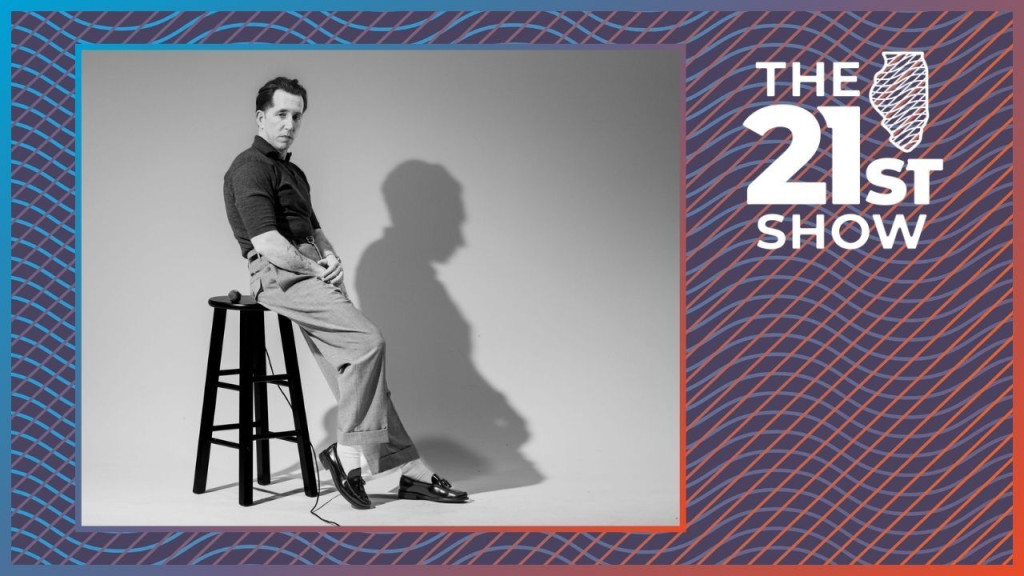
Courtesy of Pokey LaFarge
// This is a machine generated transcript. Please report any transcription errors to will-help@illinois.edu.

[00:00:00]
Brian Mackey: It's the 21st Show. I'm Brian Mackey, and this song is called "The Thing." Track one, side one off the new album by the artist known as Pokey LaFarge. Pokey LaFarge is the stage name of Andrew Heisler, born in 1983 at Saint Joe's Hospital in Bloomington, Illinois. While LaFarge's high school classmates at University High were jamming out to the likes of Creed and Lifehouse, he was developing a taste for artists who were making pop music that might have been enjoyed by his great grandparents.

LaFarge's new album "Rent Money" is being released a week from Friday, September 11th, on his own Boxer Boy Records. That same night, Pokey is performing at the Castle Theater in Bloomington. He's also got a show at Delmar Hall in Saint Louis on Saturday, and then it's off on a national tour. Pokey is traveling today, but I was able to talk with him earlier this morning. Because of that, no calls for this part of the show, but we still love hearing from you. Our email address is talk@[21stshow.org]. Pokey LaFarge, welcome to the 21st Show. Thanks for being here.

[00:02:14]
Pokey LaFarge: Hello, Brian and hello listeners. Good to be here.

[00:02:16]
Brian Mackey: So I want to take you back to the class of 2001, University High, U High in Normal. The big hits of that era were made by artists like Outkast and Lee Ann Womack. JLo and Uncle Cracker.

[00:02:35]
Pokey LaFarge: Everything is all —

[00:02:38]
Brian Mackey: What sort of MP3s is young Pokey LaFarge downloading?

[00:02:42]
Pokey LaFarge: Well, when I was in high school, we didn't have MP3s so much. I think Pandora was just maybe getting started, so I graduated high school in '01.

[00:02:50]
Brian Mackey: I know the iPod was announced that fall, so —

[00:02:53]
Pokey LaFarge: Yeah, I was hitchhiking around the country with a Walkman with a cassette tape of Bill Monroe's greatest hits, Del McCurry Band's album "The Family," and Flatt and Scruggs' greatest hits. So not exactly tuned in or really caring about what was being played on the radio in those days.

[00:03:14]
Brian Mackey: Who turns you on to that music of another generation?

[00:03:18]
Pokey LaFarge: I think generally when there's a large crowd of people going in one direction, I tend to go the other. It doesn't matter what it is. Just always been that way as far as I can remember. It's mostly a good thing. And so I always had an ear for — you know, ear and eyes out for just different stuff. And so I think when I kind of started getting into the classic rock radio, which of course you would have heard on the radio a lot in high school and you still do, you know, listening to like CCR and Allman Brothers Band, Grateful Dead — those kind of groups certainly turned me on to the stuff that was in the generation just before them. Especially Grateful Dead, who covered a lot of the older stuff. So through listening to the Grateful Dead, I was exposed to guys like Jimmy Reed, you know, the Meters, Marty Robbins, Merle Haggard and Bo Diddley. And so I would go to the library — the Normal public library — and rent 10 CDs. You could check out 10 CDs at a time. Mostly old dead guys, and I'd go home and I'd burn those 10 CDs and I'd bring them back and do that over and over again. So I did that for, like, yeah, the entirety of high school. So that was kind of my own education, if you will.

[00:04:44]
Brian Mackey: I remember that era and that practice. You know, there's a difference between wanting to live in the past and adopting some of the past style and maybe even some of its constraints for the sake of art. How do you think about that?

[00:05:01]
Pokey LaFarge: Constraints — when you say that — just started from the latter, constraints can be a good thing with regards to imitation and style. A perfect example of that is, it's not what you play, it's what you don't play, right? Old classic statement. And just because you have all kinds of — you hear all kinds of ideas in your playing and you can play all the notes, right? Doesn't mean you should. That's the opposite of making a song. The song is beating the notes and the melody into submission for the song. That's why jazz died, right? Because bop came along in the '50s and '60s. I'm sure that's gonna rub with some feathers, but once you stop playing the song and you just start showing off all your notes all the time, you kind of lose — it becomes academic and you lose the crowd. So for me, constraints actually is a great thing, 'cause that's what leads to your style. [Cue] Chuck Berry or Howlin' Wolf or Bo Diddley — I mean, I could go on forever, baby, you know, it's — all my heroes are guys that probably didn't know how to read and write music, same as me.

For me, I will use another example. I really love classical music, going back to all the old French and German guys, you know, especially Bach. This is music that people are playing hundreds of years later. And nobody calls a classical musician retro. So for me, American inventions such as jazz, country, rock and roll, blues, western swing, whatever — and they go on forever with that too — these are things that are now kind of exported, been exported around the world for 100 years, and even after America's come and gone, I assume that the lexicon of American music and style will still be passed on. So for me, my idea is stepping into the American music tradition and passing that along. I'm not a cover artist, however — I mostly compose my own stuff.

[00:07:26]
Brian Mackey: Let's talk about "Rent Money." This is the name of your new album. It's on point for an era in which we often hear the rent is too darn high. How did this come about?

[00:07:36]
Pokey LaFarge: Yeah, just like you said, just the conversation with friends and family from around the world, and the fear and the anxiety that comes in with inflation — just felt, uh, where they were coming from and it was time to put it in a song.

[00:08:02]
Brian Mackey: You have this lovely turn of phrase — "The good Lord giveth, the landlord taketh away." It's just, it's great. It's been living in my head for days now. To the extent —

[00:08:12]
Pokey LaFarge: [It's] living in your head rent[-free].

[00:08:15]
Brian Mackey: I didn't say it. Uh, to the extent you remember, talk me through the process of coming up with a line like that, you know, from concept to actually having it in a finished song.

[00:08:25]
Pokey LaFarge: It just happens. I mean, sometimes songs are easy — actually, a lot of the best ones are. Just written super, super simply. When I write tunes, it's almost always the melody or chord progression, maybe even just like a groove, a drum groove. But it's always music first and then the music — you know, you sort of have this theme once you have the tune, and then it's time to start fitting the lyrical theme to the musical theme.

[00:09:14]
Brian Mackey: I understand a few years back you relocated to Maine. And that's after being born and raised in Illinois, living for many years in Saint Louis. This is a state where maple syrup is a bigger agricultural product than corn. So I wonder — how has the change of scenery affected your life and your work?

[00:09:33]
Pokey LaFarge: Yeah, I mean, I've lived a lot of places since I left Illinois in '01 and I've lived a lot of places between then and Saint Louis. I lived a lot of places between Saint Louis and Maine — namely California for a little while, where I met my wife. And she wanted a change of pace from Southern California. So we moved to Midcoast, Maine — yeah, five years ago. Bought a house and we welcomed a baby girl into the world four months ago, and yeah, just slow-paced, super rural. It's a lot like — if anybody's ever been to, like, Traverse City, like Northern Michigan or even the U.P., Northern Wisconsin — it's kind of the same with that, and for me, I've spent a good amount of time in Wisconsin and Michigan. I love it up there, so kind of scratches an itch for me, if you will. You know, if you can't move back to the Midwest, I guess move to someplace that kind of looks like parts of it.

[00:11:27]
Brian Mackey: Elements of your new album "Rent Money" sound like they were recorded — I don't know — 1965. I get like the Nancy Sinatra vibes with some of the sound, you know. I'm thinking the way like the tom-tom drums are tuned and, you know, whatever effect was used for the backup singers on "My Baby Loves Me." I don't know if that was a green bullet microphone or processing or what, but I know you've used vintage instruments and recording gear in the past. How did you approach recording for this album?

[00:11:54]
Pokey LaFarge: Well, I mean, it's the same way that you're not going to go and play, like, a violin sonata on a brand new violin, you know. There's a reason why a lot of those classical musicians are playing wood instruments from 200, 300 years ago. Just like in a house, wood ages and it speaks a little bit differently — it's warmer, it's got more tones, more full body — so there's a lot more dynamics to it, whereas new instruments, it's gonna sound new. It's like they need to be broken in. So there's certain instruments that match your sound. They don't always have to be old, they don't always have to be new, but generally the older stuff was made better, whether it's [electronics] or instruments.

[00:12:48]
Brian Mackey: In preparing for this conversation, I was watching, you know, a bunch of YouTube videos of you over the years. And one of the comments I see popping up again and again — people quote Steve Earle, and I think this goes back to 2011. He said, "We used to make records for girls, now we make them for nerds." I wonder — who are you making records for?

[00:13:08]
Pokey LaFarge: Now we make them for nerds. Uh, both. All I can say is — when I like to go back to the original thing I said — when there's a large group of people going one way, I'm naturally gonna gravitate towards the other way.

[00:13:30]
Speaker 2: Too small, too white, too black, too tall. Can't be — breaking — they say you should never. But when you worship — you know they told —

[00:14:09]
Pokey LaFarge: You know. No.

[00:14:14]
Brian Mackey: Pokey LaFarge, congratulations on the new album. Best of luck. Safe travels on the tour. Thanks for talking with us.

[00:14:21]
Pokey LaFarge: Thank you, Mr. Brian. Thanks everybody for listening, and see you down the road.

[00:14:26]
Brian Mackey: Pokey LaFarge's new album is called "Rent Money." It's out September 11th, and that is the same night he's performing at the Castle Theater in Bloomington. You can catch him in Saint Louis on the next evening, Saturday, September 12th, then he's off on tour. Later dates on the tour include Indianapolis in late September and Chicago in December. We'll have more information and a link to his website on our website, twentyfirstshow.org. That's it for us today. The 21st Show is a production of Illinois Public Media. I'm Brian Mackey. Thanks for listening. We'll talk with you again tomorrow.
Pokey LaFarge is the stage name of Andrew Heissler, born in 1983 at St. Joe’s Hospital in Bloomington, Illinois. While LaFarge’s high school classmates at U High were jamming out to the likes of Creed and Lifehouse, he was developing a taste for artists who were making pop music that might have been enjoyed by his great-grandparents.
LaFarge’s new album, “Rent Money,” will be released on September 11 — on his own Boxer Boy Records. That same night, Pokey is performing at the Castle Theater in Bloomington. He’s also got a show at DelMar Hall in St. Louis this month, and then he's off on a national tour.
GUEST
Pokey LaFarge
Recording artist