







Heartland Festival Orchestra Features Oboist Evan Tammen in All-Baroque Program
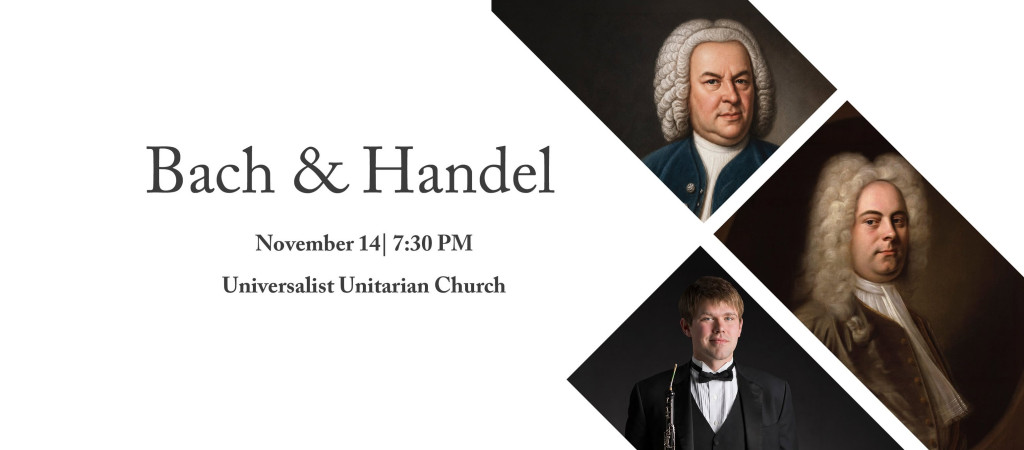
On Saturday, November 14, the Heartland Festival Orchestra will feature Evan Tammen in two concertos. Tammen, HFO’s principal oboist, will perform Tomaso Albinoni’s Oboe Concerto No. 2 in D minor and J. S. Bach’s Concerto for Oboe d’amore in A Major in a program of all Baroque music. The concert at Universalist Unitarian Church in Peoria will also include Bach’s Suite for Orchestra No. 3 in D Major and Handel’s Water Music. We spoke to Tammen to learn more about the two concertos and his approach to performing Baroque music.
Evan Tammen is in high demand across central Illinois as an orchestral musician, soloist, and teacher. He has been an adjunct instructor at Millikin University since 2019 and just began teaching at Eastern Illinois University this semester. As a performer, he plays English horn with the Champaign-Urbana Symphony Orchestra and principal oboe with the Heartland Festival Orchestra and Millikin-Decatur Symphony Orchestra.
As if he weren’t busy enough, Tammen works full time as a director of development for the College of Liberal Arts and Sciences at the University of Illinois Urbana-Champaign. He also co-owns Artesia Brewing, a local brewery based on his family’s farm in Thawville, Illinois. He does about half of the brewing and has even developed a few music-themed beers and meads in support of local music organizations. Past brews have included a hazy IPA called “Ian Hops-In” in honor of Sinfonia da Camera’s music director, Ian Hobson, as well as a “Sympho-Mead” for the C-U Symphony and a “J. S. Bock.”
Tammen was last featured as a soloist in a pair of Baroque oboe concertos with the HFO in 2021, when he performed Alessandro Marcello’s Oboe Concerto in C Minor and Bach’s Concerto for Oboe and Violin. When HFO’s artistic director and conductor David Commanday approached him about another Baroque program, Tammen suggested Bach’s Concerto for Oboe d’amore and Albinoni’s Oboe Concerto No. 2. They are two of his favorites, but he had not yet had the chance to perform them in public in their entirety.
Aside from playing the central movement of the Albinoni concerto with the Peoria Bach Festival, the only other time he has performed these two works was during the pandemic. Starved for collective music-making and human interaction, Tammen assembled a group of friends to play a socially distanced concert in his backyard. Two violinist friends drove all the way from New York City to participate, and a small harpsichord was even brought onto the patio.
“We had little flags placed in the yard, so people would put picnic blankets down and socially distance,” he said. “It was a really fun experience. I even moved my kegerator outside for it.”
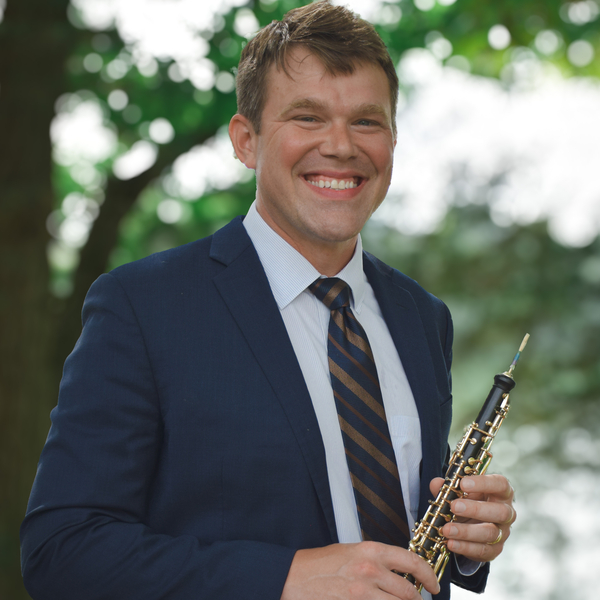
This fall, audiences will have two opportunities to hear Tammen perform Bach’s Concerto d’amore, first with the Eastern Illinois University Symphony Orchestra this Friday, October 23, at the Doudna Fine Arts Center, then with the HFO on Saturday, November 14 at Universalist Unitarian Church in Peoria.
Tammen is among a small cadre of oboists who also play the oboe’s lower cousins, the oboe d’amore and the English horn. While the English horn is used frequently in modern symphonic repertoire, the oboe d’amore, whose alto register lies between those of the oboe and the English horn, is heard much more rarely.
“It’s a fun instrument,” Tammen said. “Compared to the oboe, it’s much more free-blowing. I feel like it has the best things of the oboe and the English horn. It’s a comfortable instrument to play. It has a human voice to it.”
The instrument’s popularity peaked during the Baroque era. Bach was particularly fond of the oboe d’amore, using it as an obbligato instrument in the soprano aria “Quia respexit” from the Magnificat and in the alto aria “Qui sedes ad dexteram Patris” in the Mass in B Minor.
Bach’s Concerto for Oboe d’amore is actually a reconstruction of a harpsichord concerto and may not have been written for the instrument at all. “Apparently, J. S. Bach was in the habit of taking existing concertos and recomposing them for harpsichord,” Tammen explained. “So, the original oboe d’amore concerto doesn’t exist. It was lost to history. But musicologists were looking at the existing harpsichord concerto that does still exist in Bach’s hand, and they made a conjecture that it was likely written for the oboe d’amore around 1721.”
Aside from the novelty of the solo instrument, the concerto itself is musically rich. “I think the piece is just delicious,” Tammen expressed. “The strings at the beginning make me think of champagne bubbles.” The middle movement, in the style of a Siciliano, is very expressive, while the finale is a “rollicking good time,” he said.
Tomaso Albinoni was one of the first Italian composers to write for the oboe as a solo instrument, so the piece holds a special place in music history. The central Adagio movement is especially famous.
“It’s just really gorgeous, lyrical stuff,” Tammen said. “And it’s fun too because what’s written on the page is pretty bare bones. Every recording sounds wildly different because oboists do long strings of ornaments. It’s basically unrecognizable oboist to oboist. So it’s kind of a fun, create-your-own-adventure sort of thing.”
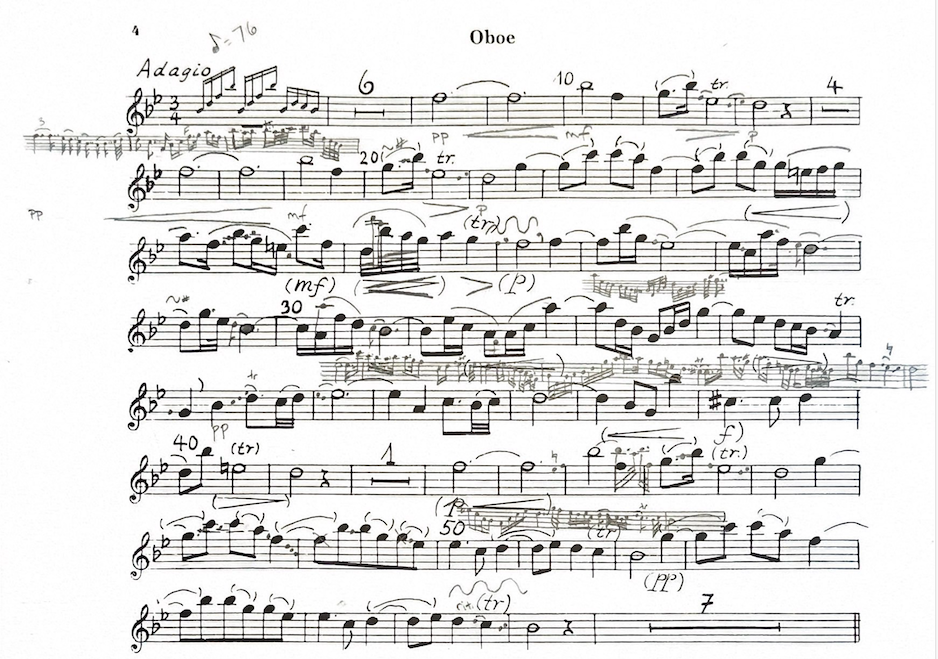
Tammen enjoys writing his own ornaments, often combining favorite ornaments from performers he admires, such as Swiss oboist Heinz Holliger and Dutch oboist Pauline Oostenrijk. He shared examples of ornaments he’s written in the margins of his scores to give an idea of all that goes into bringing this music to life.
“It may not be the first thing people think of when they think about Baroque music, but I associate Baroque music with freedom,” Tammen said. Despite the logical architecture and predictable musical sequences that characterize Baroque music, he says performers have ample opportunity to make the music their own compared to Romantic music, where composers are much more prescriptive.
Aside from ornamentation, other interpretive considerations unique to Baroque repertoire include the length and starting note of trills, terraced dynamics, and the use of vibrato. Although Tammen does not play the Baroque oboe, which requires different fingerings and reeds, he aims to capture the affect of the instruments for which these concertos were originally written through historically informed stylistic choices.
While modern instruments confer numerous benefits, they can make playing Baroque repertoire a feat of endurance. “The modern oboe is made from a different denser wood, and it’s got a thicker bore—it's designed to cut through a big symphony orchestra," Tammen explained. Baroque oboes, on the other hand, are “much more lightweight, and the response is easier, so it is less taxing. It’s hard sometimes to play Baroque music on a modern oboe because it’s so busy. There’s not a lot of time to breathe, and your chops get really tired.”
You can compare the sound of a Baroque oboe with that of a modern instrument in these two performances below:
Don’t miss Evan Tammen perform concertos by Bach and Albinoni with the Heartland Symphony Orchestra on Saturday, November 14, at Universalist Unitarian Church in Peoria. Tickets can be purchased here.