Champaign, Danville and Urbana to mark Juneteenth by celebrating Black freedom and families
// This is a machine generated transcript. Please report any transcription errors to will-help@illinois.edu.

[00:00:00]
Reginald Hardwick: Thanks, Kimberly. [Champaign's] Douglass Park will hold a concert on Friday, June 19th from 6 to 8 p.m. Performances will include hip hop, jazz, funk, and more. Also, the Champaign County African American Heritage Trail will host a guided Juneteenth walk, visiting markers, gathering places and homes that document the African American story in Champaign County. In Danville, the first Miss Juneteenth pageant will be held at the Laura Lee Fellowship House Friday, June 19th between 6 and 9 p.m. The fun continues at Lincoln Park on Saturday and Sunday. There will be a barbecue cook-off starting at noon. And Urbana starts its Juneteenth celebrations on June 13th. Carla Boyd, human rights and equity officer, and Tom Unzicker, human rights specialist with the city of Urbana, join me in studio. Welcome to Illinois Soul and Dialogue. First of all, what is, take me through some of the events, um, starting with the 13th.

Tom Unzicker: Well, we know about the 13th because that's a regular happening in the area. The [Champaign] Douglass Library and Champaign Park District have their annual Juneteenth Emancipation Day celebration, uh, Saturday the 13th, starting at noon and going until 3 p.m. at Douglas Park. Lots of events over there, uh, along with food trucks and activities. Uh, plenty of information for people to gather and really have a wonderful time that day. Um, when I saw that event the first time I was, uh, new to the area, um, I thought this is more that we'd like to be doing in, in the entire community. Right?

Reginald Hardwick: And then what's happening on the 16th, Tuesday?

Tom Unzicker: The 16th is the event that is happening at the City of Urbana City Hall in the council chambers, and we call it Reflection and Reverence. This will be the 3rd year in a row we've done it to this extent that, uh, nearly an hour that we're starting at 11 a.m. on the 16th, that Tuesday. It's a program to talk about the meaning of Juneteenth. We have a keynote speaker, Doctor. Uh, Dr. Bobby Smith, who is from the University of Illinois, he's going to be talking about, uh, the food story that is involved with Juneteenth and, and how the, uh, slaves had gotten through the, the difficulties to some extent at least with, um, working with each other about food behind the scenes. He's a, he's a wonderful speaker. We've heard him from other venues that he's been involved in. That'll be on the 16th starting at 11 o'clock. And in addition to that, we will have a flag raising that is going to be occurring right after his speech that'll happen right out in the front, which is to raise the Juneteenth flag, which is going to be flying at the Urbana City from the that date on the 16th until the end of the month.

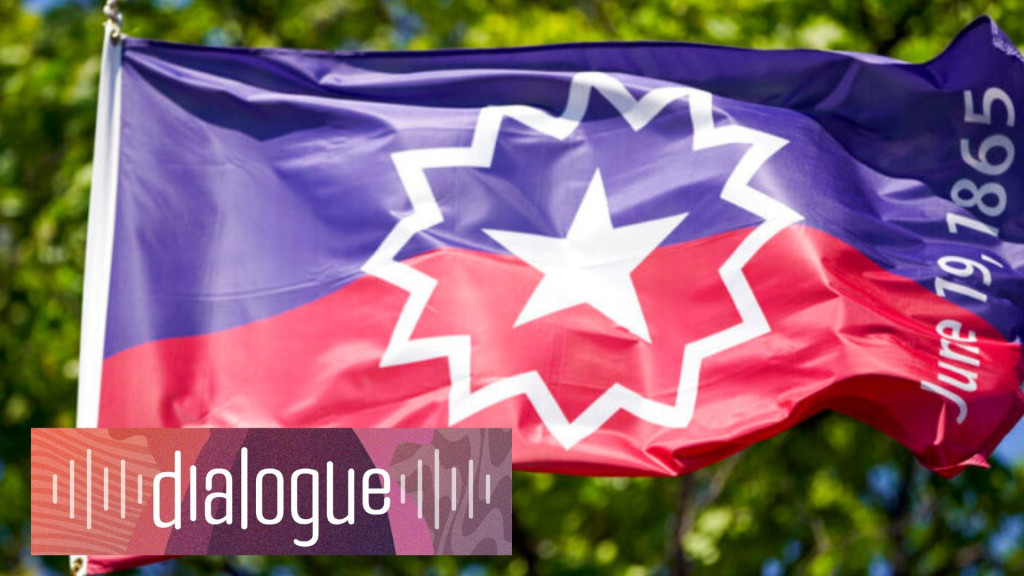
Reginald Hardwick: And the Juneteenth flag is the very multicolored one that has different points of it for people who are listening and may have seen it. Um, we have a picture of it at our website [illinoisoul.org]. What's happening on Wednesday, June 17th?

Tom Unzicker: The 17th is an event that's going to be happening, uh, organized by the Urbana Park District and uh, the, the, uh, Urbana Free Library. They have an annual event that is going on in Prairie Park and that runs from 5:30 until 8:00 p.m. um, and that's another place where the proclamation is going to be read between, uh, those three entities including the city of Urbana, the, uh, park district, and the, the library to say this is their Juneteenth, uh, celebration, the commemoration.

Reginald Hardwick: And then what about on the actual day, Juneteenth, June 19th?

Tom Unzicker: Well, um, that is going to be the annual Juneteenth parade. It's organized by The Well Experience. I was able to attend that parade last year. a great turnout even on a very hot day that year, and, um, it's really bringing the community together to celebrate right there on the street. It runs along, uh, several streets, but, um, Philo is one of the main streets that it's on, and that happens at 11 o'clock on Friday, Juneteenth.

Reginald Hardwick: Carla, let me ask you, what does it mean to have all of these different uh activities go on throughout uh Urbana throughout the whole week?

Carla Boyd: I think it's important because each event, each venue is providing a different aspect of what Juneteenth means to, uh, people, the community, and just us personally, and so I think it's important for us and when Tom came on. Uh, early on, uh, with being the chair of this committee, he wanted to ensure that we were getting the word out on all the different activities because as he said when he was when he first got here in town, he went to a lot of the different activities and he said we need to be [ensuring] that people know about these things and so having all of these going on I think it's important because um we are two communities but you know so we want to make sure that what's going on that people in Champaign know what's going on in Urbana and what and people in Urbana know what's going on in Champaign. Um, like Tom, I had the opportunity to attend the, uh, Champaign Douglas library event and I was amazed at all of the events that, you know, all the different activities that were going on and just, you know, seeing the vibe there and it's like we need to ensure that, you know, people are supporting those events and so we want to do our part by, um, ensuring that everybody knows at least what we know.

Reginald Hardwick: What does Juneteenth mean to you?

Carla Boyd: That's a hard one for me because um Learning about Juneteenth late in the game, um, it hurt, um, but now it it for me and even more so today it's we need to understand what our history is it means it to me it represents our liberation and that that liberation has to be fought for every day, um, because Juneteenth, even though you know the emancipation happened. Juneteenth is celebrated because for two years those people didn't know and so we have to be able to, you know, inform we need to to me it it reminds me of being informed um and and fighting for rights and make ensuring that you have you're equipped with the tools to be able to, you know, move forward in life and so it's a reminder for me and. A painful a reminder, but yet also one of hope is that even though you know things are put in place to try to deny that we can still overcome them, that there's always a way.

Reginald Hardwick: And you said late you learned late in the game. What does that mean?

Carla Boyd: When Juneteenth was, um, first, uh, I think it was, um, President Biden in 2021, I didn't know that Juneteenth was a thing. I didn't understand what it was when we did it at the city. I was like, OK, yeah, I'm going to go to this, you know, event, and I'm, I'm like, what is this? And I'm like, wow. And it hurt because it's like, you know, I was today old when I found out and that it hurt.

Reginald Hardwick: Tom, what does Juneteenth mean to you?

Tom Unzicker: It was long after I had graduated from college where a coworker came to me who I was working with a schedule at the front desk of of the building I was working in, and she said, I'm trying to take off Juneteenth for next week, and I had to ask her what's Juneteenth, even though I'd seen it on a calendar before, I didn't know much about it, um. It was clear that this was something that had been overlooked in my education both personally and academically. And so as I found out more about it, and when I first got to Urbana and saw that we were having a small commemoration, I thought we could help make this a little more clear to people what it's about, help define the celebration since it's a new holiday and um So just the idea that people needed to have that freedom through much of the history of this country, uh, Carla mentioned that uh it was overlooked that sometimes it's been, um. And ignored or even buried and I just think it's really important as as somebody who grew up in this country to be able to talk about everything and anything so that we can move forward continuously and um As she mentioned, Carla mentioned also it's, it's painful to think about not only the history leading up to the Emancipation Proclamation, but even that interim before all the slaves were finally freed. and we know there was so much history that's happened since then that we're still having to make so much progress. We're still not as far as this country really dreams to be.

Reginald Hardwick: That was Tom Unzicker, human rights specialist, and Carla Boyd, human rights and equity officer with the city of Urbana, talking about the upcoming Juneteenth celebrations in the city. Thank you both for joining us in studio.

Reginald Hardwick: Juneteenth marks the arrival of US Army troops in Galveston, Texas on June 19, 1865. The troops told some of the last enslaved Americans that they were free. They were enforcing the Emancipation Proclamation in which President Abraham Lincoln decreed some enslaved people to be free on January 1, 1863. We're about to hear that document in its entirety. But first, we want to hear from Nathan Connolly, an associate professor of history at Johns Hopkins University.

[00:10:32]
Nathan Connolly: The initial Emancipation Proclamation came as a consequence of almost 2 years of people fleeing plantations. So by the time the proclamation was formally issued in January of '63, it was there to effectively punish states that were in rebellion and encourage those who believed in the military power and potential of African descended people to basically know that there was going to be freedom at the end of this military struggle, or at least as a critical part of it. So going as far back as Frederick Douglass's very famous speech in 1852, what to the slave is the 4th of July. It was very clear that the nation's Independence Day was not the same thing as a black Independence Day. Juneteenth is a kind of acknowledgement that July 4th was incomplete, but also that it required very active efforts on the parts of everyday black people, the military and the federal government, that there is a kind of frailty to freedom.

[00:11:36]
Reginald Hardwick: That was historian Nathan Connolly from Johns Hopkins University. And now NPR colleagues read the Emancipation Proclamation. By the President of the United States of America, a proclamation. Whereas on the 22nd day of September in the year of our Lord 1862, a proclamation was issued by the President of the United States containing, among other things, the following to wit, that on the first day of January in the year of our Lord 1863, all persons held as slaves within any state or designated part of a state. The people whereof shall then be in rebellion against the United States shall be then thenceforward and forever free.

[00:12:25]
Speaker 3: And the executive government of the United States, including the military and naval authority thereof, will recognize and maintain the freedom of such persons and will do no act or acts to repress such persons or any of them in any efforts they may make for their actual freedom. That the executive will on the first day of January aforesaid by proclamation designate the states and parts of states, if any. In which the people thereof respectively shall then be in rebellion against the United States.

[00:13:04]
Speaker 4: And the fact that any state or the people thereof shall on that day be in good faith represented in the Congress of the United States by members chosen thereto at elections wherein a majority of the qualified voters of such states shall have participated. Shall in the absence of strong countervailing testimony be deemed conclusive evidence that such state and the people thereof are not then in rebellion against the United States.

[00:13:29]
Speaker 5: Now, therefore, I, Abraham Lincoln, President of the United States, by virtue of the power in me vested as Commander in Chief of the Army and Navy of the United States in time of actual armed rebellion against the authority and government of the United States. And as a fit and necessary war measure for suppressing said rebellion due on this first day of January in the year of our Lord 1863 and in accordance with my purpose so to do publicly proclaim for the full period of 100 days from the day first above mentioned, order and designate as the states and parts of states wherein the people thereof respectively are this day in rebellion against the United States, the following to wit.

[00:14:12]
Speaker 3: Arkansas, Texas, Louisiana, except the parishes of St. Bernard, Plaquemines, Jefferson, Saint John, Saint Charles, St. James Ascension, Assumption, Terrebon, [Laouche], St. Mary, St. Martin. And Orleans, including the city of New Orleans, Mississippi, Alabama, Florida, Georgia, South Carolina, North Carolina, and Virginia, except the 48 counties designated as West Virginia, and also the counties of Berkeley, Accomack, Northampton, Elizabeth City, York, Princess Anne, and Norfolk, including the cities of Norfolk and Portsmouth. In which accepted parts are for the present left precisely as if this proclamation were not issued.

[00:15:05]
Speaker 6: And by virtue of the power and for the purpose aforesaid, I do order and declare that all persons held as slaves within said designation. states and parts of states are and henceforward shall be

[00:15:19]
Speaker 7: free. and that the executive government of the United States, including the military and naval authorities thereof, will recognize and maintain the freedom of said persons.

[00:15:31]
Speaker 8: And I hereby enjoin upon the people so declared to be free to abstain from all violence unless in necessary self-defense. And I recommend to them that in all cases when allowed they labor faithfully for reasonable wages, and I further declare and make known that such persons of suitable condition will be received into the armed service of the United States to garrison forts, positions, stations. And other places and to man vessels of all sorts in said service.

[00:16:00]
Speaker 9: And upon this act, sincerely believed to be an act of justice warranted by the Constitution upon military necessity, I invoke the considerate judgment of mankind. And the gracious favor of Almighty God in witness whereof I have hereunto set my hand and caused the seal of the United States to be affixed done at the city of Washington this first day of January in the year of our Lord 1863 and of the independence of the United States of America the 87th by the President Abraham Lincoln. A reading of the Emancipation Proclamation for Juneteenth, also known as Emancipation Day or Black Independence Day.

For decades after the Emancipation Proclamation, our country has debated whether the descendants of enslaved black Americans should receive reparations. Now the state wants to hear your opinions. Learn where you can fill out a survey that could impact future housing, health, and economic policies. Plus Audra McDonald and Renee Elise Goldsberry are coming to [Cranert]. We're talking about the new season when Dialogue, an exchange about culture straight from the soul continues.
Juneteenth marks the arrival of U.S. Army troops in Galveston, Texas, on June 19, 1865. The troops told some of the last enslaved Americans that they were free. They were enforcing the Emancipation Proclamation, in which President Abraham Lincoln decreed some enslaved people to be free on January 1, 1863. (NPR)
We talked with Carla Boyd, Human Rights and Equity Officer in Urbana and Tom Unzicker, Human Rights Specialist in Urbana about the events there.
Many central Illinois communities will commemorate Juneteenth. Below is a partial list:
| DATE | LOCATION | ACTIVITY |
| Saturday, June 13, Noon-3pm | Douglass Park, Champaign | Juneteenth Celebration |
| Sunday, June 14, 10am | Needful Things Warehouse Gallery, Champaign | Juneteenth Freedom Day Kickoff |
| Tuesday, June 16 11am-2pm | Urbana City Hall | “Reflections and Reverence” and Juneteenth flag raising |
| Wednesday, June 17 5:30 pm | Prairie Park, Urbana | Juneteenth Celebration |
| Thursday, June 18 5:30 pm | Krannert Center for the Performing Arts, Urbana | Illinois Soul free Juneteenth concert featuring Raphael and Whitney |
| Friday, June 19 1pm | 1805 S. Cottage Grove Avenue, Urbana | Juneteenth Parade and Liberation Celebration |
| Friday, June 19 6-8pm | Douglass Park, Champaign | Juneteenth Concert |
| Friday, June 19 6-9pm | Laura Lee Fellowship House, Danville | Miss Juneteenth Pageant |
| Saturday, June 20 11am-8pm | Lincoln Park, Danville | Community Gathering |
| Saturday, June 20 11am-6pm | Lincoln Park, Danville | Community Gathering and BBQ Cookoff |