








DeShawn Williams marks a year as mayor; Inside the Lincoln School for Black children; and Mýa releases album with 70’s/80’s vibes
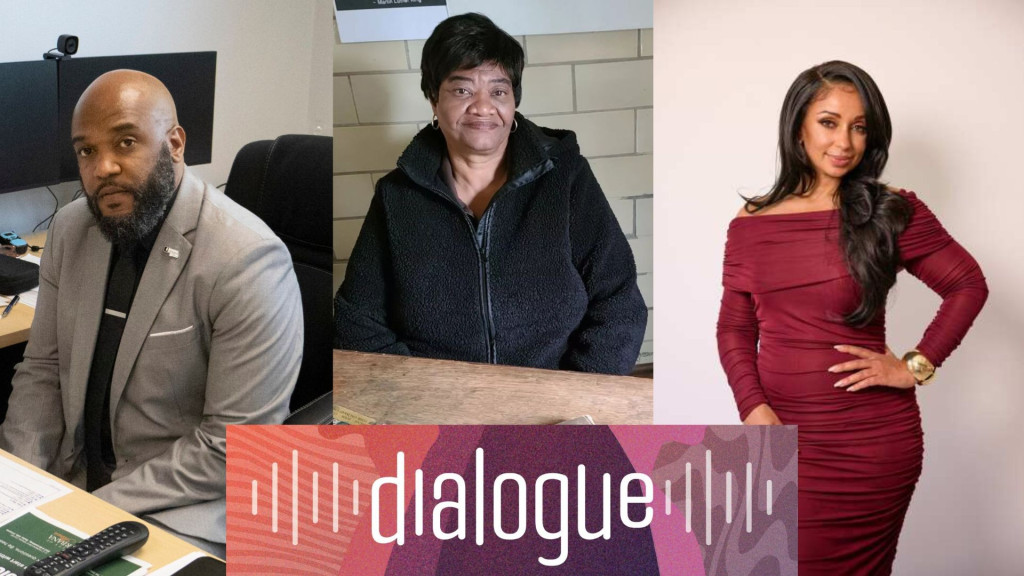
L-R: Urbana mayor DeShawn Williams, Phyllis Dean at the teacher’s desk in Lincoln School, Mya poses for a portrait in New York on Monday, May 4, 2026. Knox Mynatt/IPM News, Rich Egger/TSPR, Matt Licari/Invision/AP
// This is a machine generated transcript. Please report any transcription errors to will-help@illinois.edu.

[00:00:00]
Reginald Hardwick: From Illinois Soul, this is Dialogue. I'm Reginald Hardwick, news and public affairs director at Illinois Public Media. Dialogue is an exchange about culture straight from the soul. It's been one year since DeShawn Williams took office as mayor of Urbana. IPM student newsroom's Knox Mynatt visited Mayor Williams to look back on the past year and find out what's ahead.

[00:00:39]
Knox Mynatt: In terms of public safety, I know there's been a lot of debates in city council about use of force in Urbana Police Department, like staffing infrastructure. When you first took office last year, you said you wanted to work on building consensus among residents on what the focus would be for policing and how it's done here in Urbana. How do you think that's been going in your first year in office and how do you think it will improve in the next few years?

[00:01:05]
Mayor Williams: That's a great question. You know, one of the things that I said right out the gate, after the election and everything, was that I wanted to ensure that I kept my word for our police department in particular. I said that we would ensure that they were fully staffed and that they had all of the resources they need to effectively do their jobs, right? That was twofold. You know, one, it was because it was the right thing to do, but also it was for us to be able to do some of the things that I wanted to see take place, like the community engagement outreach and the alternative response task force. All of these things that we, a year in, we see have not only taken place — not only have they launched — but the community, there's community buy-in, right? There is community input on some of these things.

I think that we are at a good space. I think that we've done a solid, solid job in bridging the gap between our police department and our community. That, you know, that takes time, right, to build that trust. I think that one of the benefits that I have on my side is that the community knows that I am actively engaged, right? So I'm out here with our at-risk youth, right? I'm in all of the places and neighborhoods and things that we're wanting to help protect and help serve. I'm actively in these areas, and I was there before becoming mayor, so there's that trust aspect. I think that we have the buy-in from the community and they understand that, again, my heart's always gonna be in the right place as far as the decisions that we're putting forth. So I think we're in a good space. I'm excited to see as we continue to move forward — excited to see things continue to grow and move in the right direction.

[00:02:59]
Knox Mynatt: I know last year there was the beginning of a lot of construction projects on Florida Avenue, Lincoln Avenue, aimed at improving safety on the roads. What's next for infrastructure improvements under [your banner], and can you talk a little bit about the progress of those projects?

[00:03:13]
Mayor Williams: Yeah, so folks are seeing some changes even on Lincoln Ave., for instance, right? And that was essentially around a safety study, so we're doing some test trials and things of that nature, which caused some confusion and some frustrations with traffic changes and whatnot, but those are all — again, we're being very intentional in our infrastructure and our redevel[opment], and ensuring that we provide a safe space for not only our drivers but our pedestrians, our bicyclists and things of that nature. So we're testing out different ways in which we move forward in that space.

We are actively out and about, as folks may have seen me with our public works team, filling potholes and things of that nature. I'm literally putting my money where my mouth is in a sense, right? But just ensuring that we, again, we're listening to our community, we're hearing the concerns and the thoughts of folks and what they're wanting to see — from the streets to the sidewalks, to the pavement crossings and things of that nature. We're actively listening and putting forth that effort to ensure that we address those issues.

[00:04:23]
Knox Mynatt: On my way here, I drove through the Philo Road business district. How are things progressing on the [Philo Road] initiative, and are there things people should know about where things are progressing?

[00:04:34]
Mayor Williams: Thanks for asking. So, yes, first off, there are definitely things in the works. We've been limited to what we can share publicly due to the fact that a lot of the space is privately owned, but I will say over the next maybe one month, maybe two months, you will see some announcements being made.

I think one of the things that we had to understand very early on is that we had to reimagine what that [Philo] Road — what that corridor looks like, right? So it's no longer the business district that it was once [thought] to be. We are looking to reestablish that area, but maybe now it's a health and wellness space, right? We have some exciting news around some of the apartment complexes and whatnot. We finally got a good grasp on how we can move forward from a legal standpoint in the redevelopment of some of those spaces.

Our community engagement center will be housed off of Philo Road, right in the Sunnycrest Mall area, which we're kind of in the final stages of. There's going to be, as long as everything continues to move forward, a health and wellness space that will be in that corridor as well. So there's a lot of exciting things. I am yearning for the day that I'll be able to announce the things that are taking place, but like I said, there's a few other layers that I have to be mindful of before we communicate that. But I can tell you that this is absolutely still a priority and I think the community is going to appreciate the approach that we take.

[00:06:13]
Reginald Hardwick: That was Urbana Mayor DeShawn Williams speaking with IPM student newsroom's Knox Mynatt.

A small, single-story building sits in a corner of a city park in Canton, Missouri. It might not look like much, but for three-quarters of a century this building served as a school — but only for certain children, those who were blocked from attending other schools because of the color of their skin. Rich Egger has the story.

[00:06:40]
Rich Egger: The red brick building is called Lincoln School.

[00:06:43]
Phyllis Dean: This school was built in 1880 and it was the one-room school that was used for all African Americans in this Lewis County area.

[00:06:52]
Rich Egger: Phyllis Dean is project director of Lincoln School. It's now a museum that shows what conditions at the school were like through the years. Lincoln School was built in the part of Canton where many of the town's Black residents lived and went to church. This was before the community along the Mississippi River built a levee, so it's a part of town that flooded, swamping buildings, including the school.

[00:07:19]
Phyllis Dean: As you can see right now, it has a wooden floor in it, but when they first did it and they had the wooden floor, it flooded so many times that they put a cement floor down.

[00:07:30]
Rich Egger: Phyllis, her husband, their sons, and other family members restored the building in 2019. When they started the project, the ceiling was gone, the walls had deteriorated, and the building was about ready for the wrecking ball. Now as a museum, it reflects various eras in the school's history. For example, there are pillows on the floor because they did not have desks when the school opened. But there are also desks in the room to demonstrate a later period, and long benches reflect times when they did not have enough desks for all the children. There are books in one section of the room, though Phyllis says the students did not have books for much of the school's history, and the books they did sometimes have were worn and tattered. Phyllis believes it's important to preserve history, and she says this chapter of Canton's past is not well known.

[00:08:27]
Phyllis Dean: It's kind of been pushed aside because it's a painful subject for so many people. But when you don't tell the truth and the history of something, it has a tendency to come back and repeat itself. So I want people to know the truth.

[00:08:43]
Rich Egger: Phyllis says Lincoln School taught children through 8th grade. High school students were bused down to Hannibal, which is about 50 miles from Canton, to attend Douglas School, which was for Black students. The Rev. Carolyn Blair has not visited the Lincoln School Museum, but she heard about such schoolhouses from her parents.

[00:09:05]
Rev. Carolyn Blair: That's the kind of school they went to.

[00:09:07]
Rich Egger: It was a challenging learning environment according to her parents, but they recognized the value of an education. So when they raised a family in New York City, they stressed the importance of education with their nine children, and Carolyn says all nine of them have high school diplomas and college degrees, including master's and doctoral degrees. Carolyn is now pastor of Zion United Church of Christ in Burlington, Iowa. She says people continue to be blocked from being all they can be. They're oppressed based on their skin color, where they're from, their gender, or their sexual orientation.

[00:09:49]
Rev. Carolyn Blair: It never stopped happening. That blockage of preventing people from moving forward has — even with Brown v. Board of Education all the way through — it has never, ever stopped.

[00:10:01]
Rich Egger: Brown v. Board of Education was the 1954 U.S. Supreme Court ruling that was supposed to [end] segregation in schools, but some communities dragged their feet, and not just in the Deep South. For example, in Indianapolis, the schools remained segregated until 1971 when a federal court ordered them to integrate. And in Rockford in far northern Illinois, a federal magistrate ordered the school district to desegregate in 1993, nearly 40 years after the Supreme Court ruling. The magistrate said the Rockford district had raised discrimination to an art form.

Lincoln School is open for visits by appointment. Phyllis De[an] hopes visitors come away with an idea of what it was once like for Black children trying to get an education. She says it was especially challenging in rural areas. She praises the resilience of the Black people of those times.

[00:11:07]
Phyllis Dean: It was the work that each generation did to get us to the places where we are, and it was because of people like them that I am able to come out here and do the things that I do and continue to share the information.

[00:11:21]
Rich Egger: Lincoln School was named a landmark school by the Country School Association of America, and a plaque on the front of the building says Lincoln Colored School was named to the National Register of Historic Places in 1983. The marker says the school is a testament to rural education. Rich Ecker reporting.

[00:11:44]
Ayesha Roscoe: For many of us, childhood was defined by the celebrities we loved. There's one singer who I was absolutely obsessed with in my middle school days, Mýa. She could sing and dance and she was cool and popular — all the things I was not. But her music made me feel like I was that girl. That's her 1998 hit "Ghetto Superstar." Since Mýa released her self-titled debut album that same year, she's won a Grammy and many other awards, received critical acclaim for her music videos, and has sold millions of albums globally. Her newest and latest album is called Retrospect. Let's do it.

[00:12:47]
Mýa: [singing]

[00:12:53]
Ayesha Roscoe: Mýa joins me in the studio now. Welcome to the program.

[00:12:58]
Mýa: How are you today?

[00:13:00]
Ayesha Roscoe: I am very well — and very well because we are in the studio together.

[00:13:04]
Mýa: Oh my goodness. Thank you so much for having me.

[00:13:06]
Ayesha Roscoe: I am so glad you came in. Your new album has this strong '70s, '80s vibe, which is like my type of vibe. What made you want to look back on that period for inspiration?

[00:13:22]
Mýa: The music that I grew up on — it's the music I fell in love with, and to be able to create freely from that place is pure magic, you know. My dad, he's a musician. He's a singer. I watched musicians in my living room rehearse R&B, soul and funk music my entire childhood into my teen years. My dad still performs to this day, so he was my very first inspiration and I would just have a good old party.

[00:13:56]
Ayesha Roscoe: Yeah, because that's what I said. I literally in my notes, when I was listening to it, I said, this is someone who is partying and —

[00:14:04]
Mýa: — bringing some personality and joy and fun. You know, I miss those real moments in my childhood where you're getting together with your entire family, whether it's outside or indoors, and the laughter — the children's laughter, the adults' laughter. I really value those experiences. It's priceless.

[00:14:25]
Ayesha Roscoe: You're a D.C. girl, D.C. native. What was it like for you growing up? You're a young biracial girl. Like, what was that like?

[00:14:37]
Mýa: Little Mýa was just very free — wild hair, don't care — until others started telling me something was wrong with me. And so then I began to become confused. And I think because my dad was a history major and he kind of described to us very early on the ignorance of the world, the division of the world and where that came from, it allowed me to have an understanding and a perspective that nothing was actually wrong with me. So now I walk in confidence, embracing all of who I am and understanding that I want to, in my mission, always bring people together and lead with love. Be very, very aware of what the right side of history is and what the truth is. You know, we've come too far to throw it all away. Just talk to me.

[00:15:35]
Ayesha Roscoe: You have this song that I am really loving right now — "ASAP" with 21 Savage — because it starts so kind of like plaintively. I love when somebody talks, it's like we gotta make it work. I love that. I love it, that old school. I love it. Yes, I love it. Why do you think, like, that mix of hip-hop and R&B works so well for you?

[00:15:58]
Mýa: I don't even know if it works. It's not rocket science to me. It's just a feeling and a vibe that I'm making music from.

[00:16:03]
Ayesha Roscoe: It's art, so it's like you know it when you feel it. Is that —

[00:16:15]
Mýa: The only problem is commun[ication — if] we don't do this, then we might not. This record featuring 21 Savage gives feminine, it gives masculine, but it also gives old school and current. And I actually heard him on it with a new approach on what his current generation would say based on their perspective of a relationship and what they might be going through and how they deal with it. That's really interesting to me.

[00:16:54]
21 Savage: [singing] Get into it. You bring up the past like I don't buy you presents. I put my blood, sweat, tears, and feelings inside of a mess. I wanna play 2K. You start to complain. You sound neglecting. You want all my time and attention, baby, but you don't respect me. Gotta —

[00:17:07]
Ayesha Roscoe: Talking about love and all these things — now I have to say, like, you have been around a long time, but we don't know a lot of your business, right? We don't know, like — how do you do that? Because I learned early.

[00:17:19]
Mýa: How did you learn that? I learned early by the birth of a lot of gossip sites in the midst of me becoming a young woman, and I quickly realized also the sexism in society. Anytime that you're seen with a man or even doing a collaboration with someone —

[00:17:36]
Ayesha Roscoe: — that you're dating —

[00:17:37]
Mýa: — the assumption is more than dating.

[00:17:40]
Ayesha Roscoe: Oh, well, more than that. Well, yes, more than dating. As —

[00:17:42]
Mýa: — a female, you're criticized. And so with millions watching, of course, and judgment and hearing and seeing so many different comments, and also people actually believing the narrative — that can affect how you protect you, your mentality, your safety. I'm very aware of how cruel the world can be.

[00:18:04]
Ayesha Roscoe: You know, like, you have an age, right? People that you have not — and I'm sitting here beside you, you're just gorgeous, body, yada yada. How do you do it? Like, how — because we need tips.

[00:18:16]
Mýa: What is the right now, because I see myself every day — that's one thing. Yes, I am aging, ladies, and I'm loving it, so let's switch that narrative. Age is not a bad thing. I'm embracing every womanly curve, every gravity drop, because it's real. But I'm here and I'm blessed to be alive. Amen. And I'm looking forward to getting all the graces. I think it's a beautiful age.

[00:18:46]
Ayesha Roscoe: That was Mýa. Her new album is Retrospect. We're so glad to have you.

[00:18:54]
Mýa: It was a pleasure. Make sure you take a break [when] you can. Make sure you take a break.

[00:19:10]
Reginald Hardwick: That's all for this edition of Dialogue. Lamont Holden composed our theme. Dialogue and Illinois Soul are part of Illinois Public Media, a service of the University of Illinois Urbana-Champaign. I'm Reginald Hardwick. Thanks for listening.
On this episode of Dialogue, we shared some of the biggest stories regarding Black communities in public radio.
After one year in office, Urbana Mayor DeShawn Williams reflects on progress and future goals - reported by Knox Mynatt, Illinois Student Newsroom
Lincoln School in northeast Missouri: ‘I want people to know the truth’ - reported by Rich Egger, Tri-States Public Radio
Grammy-winning musician Mya discusses her new album 'Retrospect' - reported by Ayesha Roscoe, NPR