








Behind The Mic: Education reporter Emily Hays loves connecting people through her stories
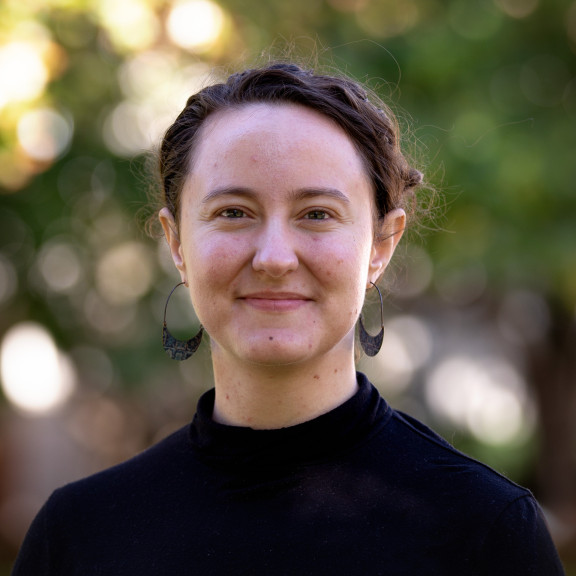
Illinois Public Media Education Reporter Emily Hays Kurt Bielema/IPM News
Yale graduate Emily Hays joined the IPM staff in 2021 as the education reporter. She previously reported education stories for the New Haven Independent. After beginning her career on the East Coast, Emily moved to Champaign-Urbana with her partner, who is currently seeking a PhD at the University of Illinois Urbana-Champaign. From covering school districts, politics, campus news, and more, Emily is a versatile journalist who loves keeping it local.
How did you discover your love for journalism?
“I did an oral history project that got me into journalism, then I switched into journalism from history at the end of my undergraduate career.”
What draws you to journalism?
“I love telling stories. I really like meeting people and drawing out the humanity in people's stories, even if they're in a stigmatized situation. For example, [interviewing] someone who's in prison who's anxious about how they might be represented and making sure to represent them just like anybody else.
I met someone who developed a love of anime while in prison and realized he's a huge nerd, where it's those humanizing details that connect us all. Stories have a lot of power to help us understand each other and treat each other with respect, knowing that we all have complicated backgrounds."
Why is journalism important?
“Local journalism specifically is so important because there's so much going on at the local level that anyone can get involved and make a difference. There are other news outlets in the main urban centers, but there are a whole lot of small newspapers that have closed. By region, there are so many areas that aren't being covered. We try to keep an eye on the weather in those areas and let people know what's going on.”
Why does public media matter?
“We really have this focus on trying to find voices who are often not in the news. We can be more thoughtful. And people often tell me that they find my stories have a lot of perspectives.
One of the co-owners of Dubai Grill listens to NPR and knew my name. I think of him when I'm recording … on the other side of the studio listening to me so that I will sound a little bit more natural and like I'm talking to someone, the way we're supposed to. It's such a good opportunity to get feedback on whether I'm covering the things that our listeners are interested in.”
Favorite story that you've reported on?
“I did this series called Inside Prison Education for like around a year. And I went to Danville Correctional Center and talked to 12 men, all of whom had been convicted of pretty harsh crimes but whose lives had been completely transformed by education and by being peer educators. They were able to embrace a softer side of themselves, be leaders within the prison, and advocate for things like restarting parole in Illinois.”
Is there a story that changed the trajectory of your career?"
“I do think that the prison education stories did that. Once I started interviewing people who were in prison, it was shockingly easy to talk to people. You can reach out to people pretty easily. And people were so nice, so thoughtful, and extremely educated.
I went in hoping that the stereotypes about people in prison would be wrong. And I found that was the case once I started talking to people. It really gave me that sense that I like in all my stories that there's good in everybody and humanity.”
What does a day in the life look like?
“On an ideal day, I love it when I can do in-person interviews. This week, I went and talked to a teacher and coach who had coached one of the [University of Illinois] men's basketball stars. Just going to their house and asking them about their memories. Have my recorder rolling, taking photos, and then coming back and writing it up as quickly as I can. Not because of pressure, but it's always freshest.
Then I send my audio version to one editor, my digital version to the other editor, and try to get all the versions out as soon as possible. I like figuring out the best way to tell a story. Even though that interview is really short, there were still so many good potential stories out of it."
When you're not at the station, where can listeners find you?
“I spend a lot of time at Dubai Grill getting it like their chai tea or Mama’s Kitchen just opened, and their chai and snacks are so good. Also, The Lit and the Champagne Public Library."
I feel like every single book they [The Lit] have there would be interesting to me, and that all of their little stickers and earrings are so cute."
Desert island album?
“RM from BTS has a solo album called ‘Indigo.’ He has great features for each of his songs, and it just has this beautiful arc of different styles within an album.”
What's your favorite hobby or hobbies?
"I really like learning new crafts. Right now, I'm learning to crochet purses and sweaters. I made a holder for my water bottle, and I didn't use a pattern.”
And is there a public radio show that you've been listening to lately?
“The 21st Show is always so good. Also, whatever Sam Sanders does, he's so funny."
What is the who is your greatest inspiration?
“‘The Case for Reparations’: an article that was in The Atlantic by Ta-Nehisi Coates. It ties together how, since slavery ended, every generation of African Americans has dealt with a new form of racism that has made it not only hard to build wealth, but also taking people's wealth.
My goal for my journalism is to take these huge topics that can be so disconnected from us, but once you hear one person's story, it suddenly makes all the sense."