








Small gestures to make a big difference in preserving our planet
Table of Contents

Full episode
State of Change 2026 is about how Illinoisans are making a difference with the environment. We visit a zero-waste general store, a garden bringing a community together in a Chicago food desert and advice to increase sustainability in your home.
State of Change airs Thursday, April 23, 2026 at 7:30 p.m. on WILL-TV. It is also on the Illinois Public Media YouTube Channel and the PBS App. Production funding for this program is provided by the Backlund Charitable Trust.
Small Illinois store leads the charge on green retail and helps customers rethink waste one refill at a time
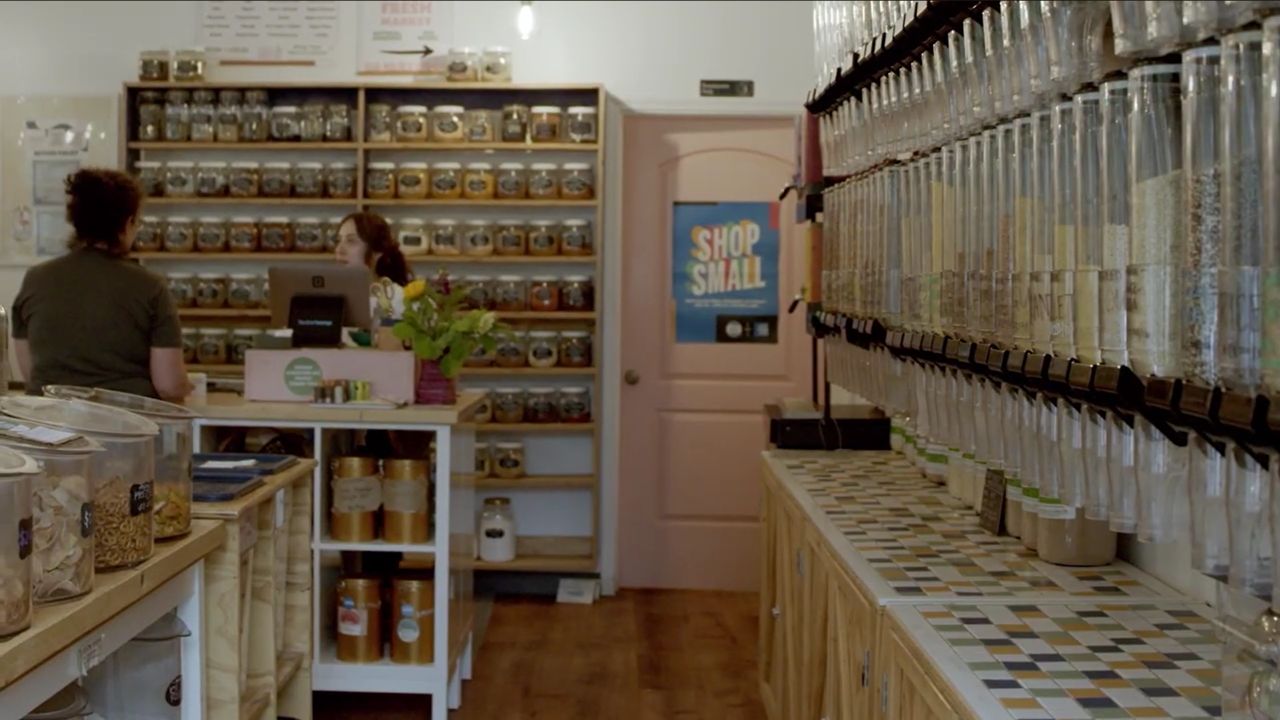
In Chicago, a small shop is quietly reshaping how people think about everyday consumption. It’s not just about getting the item you need or want, but also about how you get the item.
Founded in 2019 by Bethany Barbuti, The Eco Flamingo was created out of a simple idea: create a place where sustainability wasn’t overwhelming, and where reducing plastic didn’t feel like an all-or-nothing commitment.
Barbuti, who has a background in sustainability, said the idea grew from both her education and her experiences abroad, where bulk buying and zero-waste shops were already part of everyday life.
“I spent a lot of time in the Middle East where they do a lot of bulk food buying,” she said. “I spent some time in Europe and saw the zero-waste store movement happening. And when I was coming home to Chicago, I realized we don’t have one here.”
That realization became Eco Flamingo: a space designed to make low-waste living more accessible in an urban setting. The store doubled in size within months of opening and has since become a neighborhood staple with some clients driving in from different parts of the state to stock up on home and pantry items.
At its core, Eco Flamingo is built on the idea of practicality over perfection.
“A big part of sustainability is reusing what you have,” Barbuti adds.
Chicago is just like any other major city in that convenience often drives consumption. The Eco Flamingo offers something different: a slower, more intentional way to shop, rooted in community and small, steady choices that add up and help us all over time.
A South Side farm grows food and community
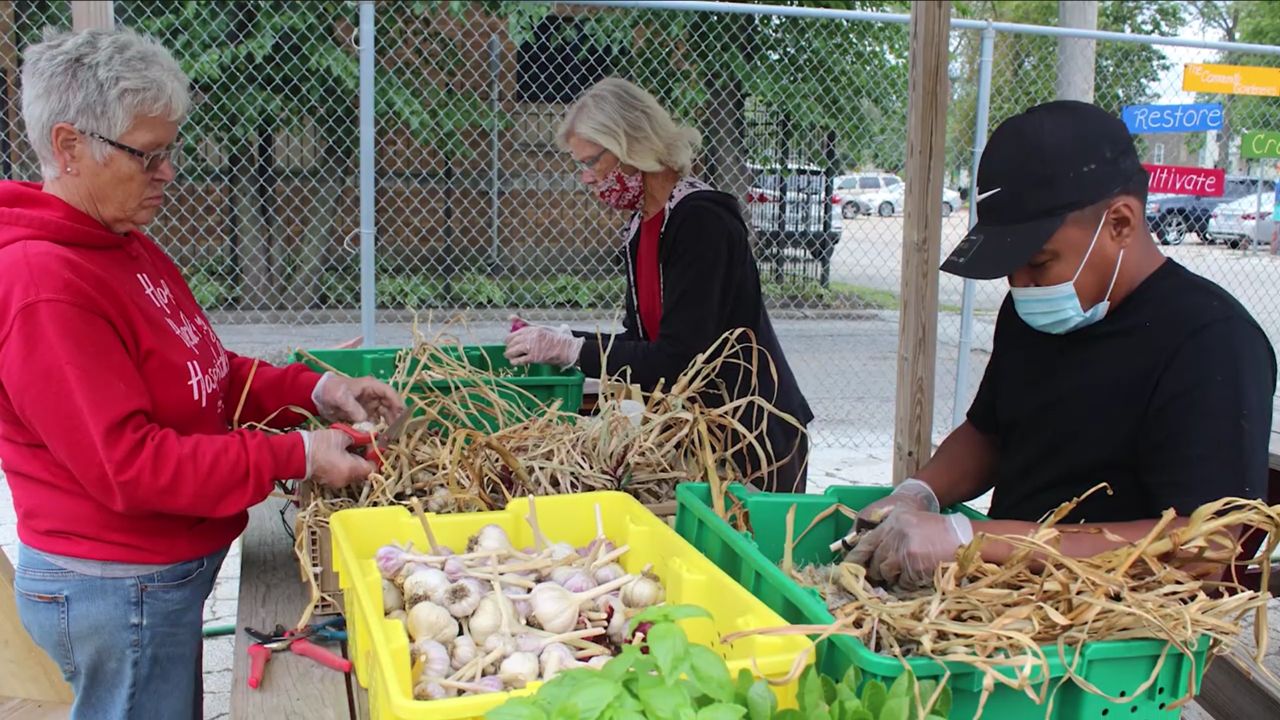
It may be an interesting concept to imagine, but in the middle of Chicago’s busy South Side, there’s a farm. At Precious Blood Ministries Farm, the goal is to cultivate relationships through engagement, education, and access to fresh, whole foods.
Father David Kelly, the executive director of Precious Blood Ministries, has lived on the South Side for more than 20 years. His work originally focused on helping families cope with violence and loss in their community, but over time, that mission expanded. What started as a small garden project has grown into something way bigger.
A member of the Precious Blood parish community, Sister Carolyn, created a small plot of raised beds in what was once a parking lot. Despite the limited space, she was able to grow a significant amount of produce. Over the years, with the help of master gardener Mary Harkinrider, the space developed into a place where people not only come for fresh food, but also for a sense of safety and community.
Mary has been managing the farm for more than a decade. She began gardening in 2008, often working on projects connected to the justice system, including volunteering at Cook County Jail and helping build a rooftop garden at a juvenile detention center. When she found this garden, she says she connected with its mission and stayed.
In a neighborhood where access to fresh produce is limited, the farm plays an important role. There are few grocery stores nearby, and options for fresh fruits and vegetables can be hard to find. The farm helps fill that gap by providing locally grown food while also creating a space where people can gather and form a sense of community and build stronger relationships.
Not only does urban farming help the people it serves, it’s also good for the environment! Growing your own food or having close access to fresh food reduces the distance between where it’s grown and where it’s consumed. That lowers costs, reduces emissions, and puts fresh food in the hands of communities who often have to travel the farthest for fresh produce.
The farm also serves as a place for learning and opportunity. Through partnerships with organizations like the Chicago Botanic Garden and programs such as One Summer Chicago, young people gain hands-on experience in agriculture. Alfredo Chavez is one of them. He first came to the farm by chance and has been involved ever since. Over time, he’s developed a strong interest in the work and now continues building his skills through a farming apprenticeship.
Others, like Guadalupe Sanchez, are drawn to the farm for its connection to nature and the opportunity to work outdoors. For many, it becomes a place not just to work, but to belong.
Like many farms, this one has also been affected by changing weather patterns. In recent years, more frequent storms, periods of drought, and sudden temperature shifts have made growing conditions less predictable. These challenges can damage crops and make it harder to maintain consistent production.
But the work continues and so does the need to increase production. Last year the farm donated three tons of produce, and they are hoping to meet or exceed that in 2026.
The root of Precious Blood farm goes deeper than any vegetables they grow here. It’s a ministry that is centered on nourishment, connection and faith that if you plant good, good will grow.
Why saving the bees saves us all

On a warm afternoon in May 2025, Prairie Gardens nursery in Champaign is packed with people searching for the perfect plants. Meanwhile, a class gets underway in one of the greenhouses.
“My dad gardened a lot and always enstilled that connection with the Earth to me," said 20-year master gardener Heather Miller to a class of around 20 people.
Today, she showed this class how to plant pollinator pockets… communities that house and feed the insects that spread pollen.
“There’s approximately 500 bee species in the state of Illinois," said Miller. "And so we want to be sure people understand the importance of different pollinators and how we can support those. There’s one honeybee. Those were brought over by the Europeans about 400 years ago. As what we would call sort of the 'workhouse' bees that would help us with the agricultural production.”
According to the United States Department of Agriculture, more than 100 American crops rely on pollinators to grow. The added value from these tiny, winged insects is $18-billion. But their populations are in trouble.
“They are in decline, we don't understand fully why," said Miller. "There's lots of different factors from obviously environmental loss with urbanization, there's different pests like mites and other things that are causing colony collapses.”
Another factor… much of Illinois’ original prairie has disappeared.
“So those tall grass prairies are really important to overwintering of pollinators, as well as obviously a food source. And [it's] their apartment. Its where they go to live. They need some place to go."
On this day, amateur gardeners got their hands dirty and learned how to attract pollinating insects with colorful Marigolds and other plants.
A few weeks later on a sunny Saturday in June, Miller demonstrated how all the work pays off by opening up her backyard to strangers. She said bees and other pollinating insects appeared with days of planting Echinacea, Tubular and Hydrangea plants. Just like people who work in the sun, bees need a place to hydrate after hours of hard work.
“We have our bee water over here, so you can look here," said Miller as she pointed to a dish filled with bright colorful marbles that bees land on as they drink fresh water. "Bee water is very important for our pollinators and they often times don’t have a place to go for water where they won’t drown. So it’s really important to have something they can light on, which is the marbles, and then you feed it and they can get to the water without drowning.”
Each place you look in Miller's yard is a plant that can feed or house a pollinating insect. She put years of work into her yard and teaching others. Her motivation is simple.
“We don’t think about how valuable they are to us as little things just running around," said Miller. "Pollinators provided pollination to over 1400 crops around the world. We don’t eat if we don’t have pollinators.”
Click here to learn more about how to plant pollinator pockets from the University of Illinois Extension.
You can save our planet one small gesture at a time
 The following is a transcription of a conversation featured on State of Change.
Tinisha: A green thumb is one way to help your neighbors and your planet, but there's even more you can do. Joining us in the studio is Jennifer M Fraterrigo, associate director for campus sustainability and a professor in the Department of Natural Resources and Environmental Science at the University of Illinois Urbana Champaign. Welcome to State of Change.
Jennifer: Thank you for having me.
Tinisha: So, as we're talking about sustainability, you know, that feels like a big task for people. So, when you're introducing this concept to people, what are some small things that we can do that are just us doing our part?
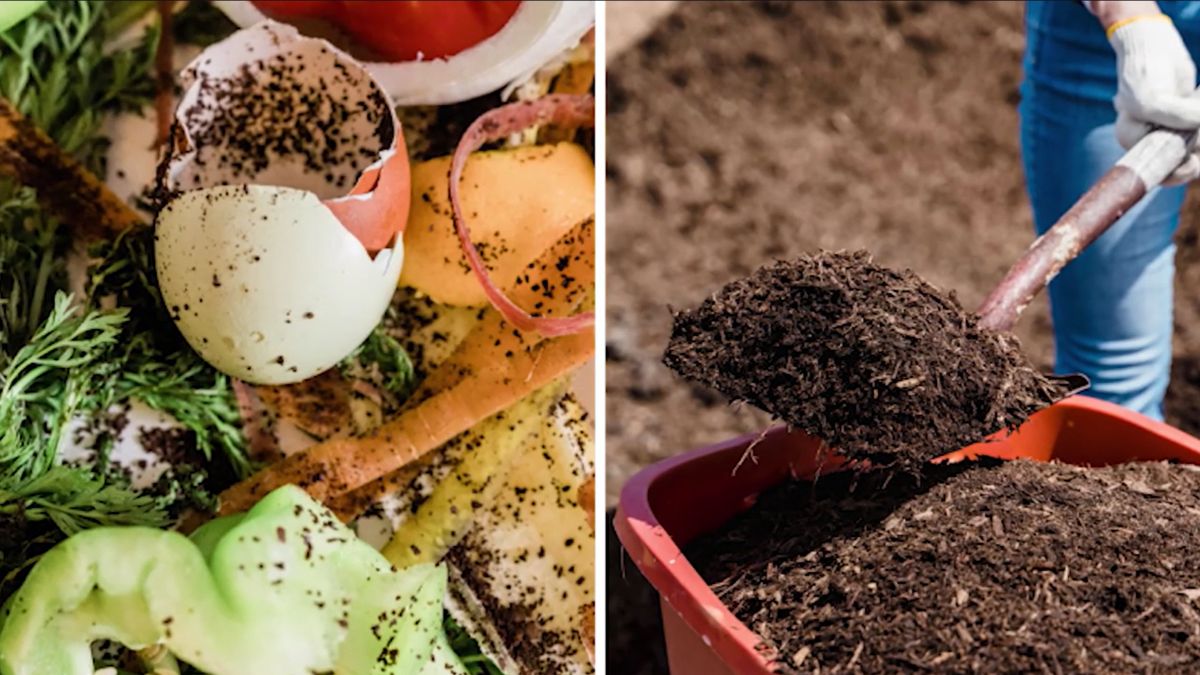
Jennifer: Yeah, that's a great question and I think a really important topic for us to discuss because there are a lot of different just small modifications people can make in their daily lives that could actually have a big impact. So, one of the changes that I have made in my family, my household, that I think has been really important is to compost our food scraps.
Tinisha: Oh, that's a good one.
Jennifer: Um so, uh there's a fairly large proportion of the waste that we dispose of that could actually be composted. And because that um food waste in particular contributes to methane emissions, which is one of our most potent greenhouse gases, if we keep that out of our landfills, we can actually lower greenhouse gas emissions.
Tinisha: Wow. So, composting is a pretty easy thing for most people to do?
Jennifer: It's just a matter of sorting your waste. So, putting your food scraps into a separate container, having a compost tumbler or a small pile in your yard um so that those scraps can decompose and then potentially add them to your garden or they can stay there for a long time, but they're a really good amendment for if you're a vegetable gardener, for example. So, that’s what you can put in your soil. So, lots of options there.
Tinisha: Another thing I think about is water bottles. They're everywhere. I do see, like even at my kids’ schools the water fountains that are designed for the bottles. So, I feel like we're moving in that direction. But let's talk about the impact of just those plastic water bottles.
Jennifer: Yeah, absolutely. That's another change that we can all make, that I think as you mentioned it is probably pretty easy for us to do because of the availability of good quality drinking water. So, we can use reusable bottles instead of choosing to buy bottled water in plastic. So that reduces our reliance on plastic waste. Obviously, those plastic bottles come from petroleum sources. So again, it's another way that we can just reduce our greenhouse gas emissions, and I think do things that are good for the planet.
Tinisha: Excellent. What are a couple other things that you would just throw out for folks who maybe just want to say, "Okay, I'll give it a shot. I'll get, you know, I don't I'm not going to change the world, but I can make some changes in the corner of my world." So, what are some first steps?
Jennifer: Yeah. Yes, certainly I think there are a lot of things that are easy to do. Making sure that we're shutting off lights, making sure that we're removing chargers when our devices are charged. So, those are fairly low hanging fruit. Setting back our thermostats, for example, to make sure that, for example, when we leave the house, we're not heating or cooling our home, you know, for reasons that aren't really necessary um because we're not there. Other things that might take a little bit more effort would be reducing, for example, meat consumption. So, if we eat more of a plant-based diet, it's healthier for us and it's also healthier for the environment. And that's again because the energy inputs for producing um meat is quite large relative to plant-based protein. And then things like certainly, riding bikes rather than always or walking rather than always getting into our car using public transportation. Again, sometimes that's harder depending on where you live, but those are some other things that we can do to reduce greenhouse gases. Those tiny steps. Those tiny steps.
Tinisha: Absolutely. And we’ve got about a minute or so left. Do you have any projects that you're working on at the university that we can maybe see implementation soon?
Jennifer: Yes. Well, we've been working for a while on trying to reduce plastic waste. So, along the lines of what we already discussed, using reusable bottles, but also things like um carrying your own tote bag so that instead of accepting a plastic bag when you shop, you can just fill your own personal bag that's reusable, things like that. And also, I guess another one that we've been really trying to focus on that's harder for us at a campus scale, but we're trying to introduce a composting option for people on campus. So again, we can keep those food scraps out of the landfill. Once people catch on to how compost, how wonderful it is. I think that'll be easy because that stuff is like gold in the garden.
Tinisha: All right. Thank you so much. We've been speaking with Jennifer M Fraterrigo, associate director for campus sustainability and a professor in the Department of Natural Resources and Environmental Science at the University of Illinois Urbana Champaign. Thanks so much for coming in.