Transcript: One-on-one with award-winning Hamilton actor Jonathan Butler-Duplessis
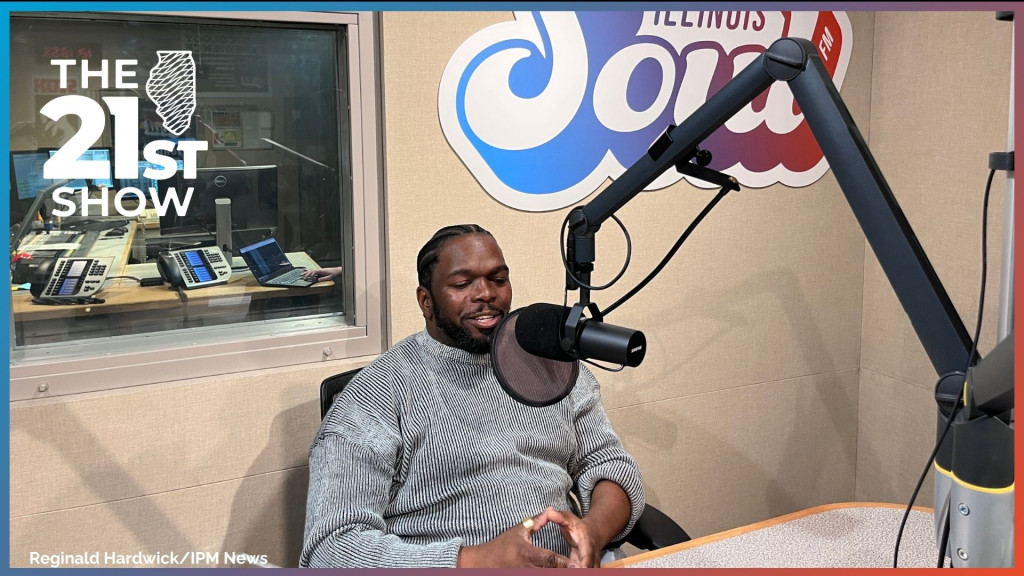
Transcript: One-on-one with award-winning Hamilton actor Jonathan Butler-Duplessis
The 21st Show
One-on-one with award-winning Hamilton actor Jonathan Butler-Duplessis
Read the full story at https://will.illinois.edu/21stShow/award-winning-hamilton-actor-jonathan-butler-duplessis.
Transcript
// This is a machine generated transcript. Please report any transcription errors to will-help@illinois.edu.

[00:00:00]
Brian Mackey: Today on The 21st Show, actor Jonathan Butler-Duplessis spent most of his childhood in Champaign, culminating in an acting degree from the University of Illinois. After more than a decade in Chicago and regional theater, he made his Broadway debut in Hamilton. Jonathan Butler-Duplessis joins me live in studio. We'll talk about his life and work. I'm Brian Mackey, and that's today on The 21st Show, which is a production of Illinois Public Media, airing on WILL in Urbana, WUIS in Springfield, WNIJ in Rockford-DeKalb, WVIK in the Quad Cities, and WSIU in Carbondale. But first, news.

From Illinois Public Media, this is The 21st Show. I'm Brian Mackey. The actor Jonathan Butler-Duplessis was born and raised in Champaign, Illinois. He graduated from high school here and in 2010 earned a bachelor's degree in acting from the University of Illinois. He then spent years working in theater in Chicagoland [and] across the Midwest with notable roles in Parade, The Little Mermaid, Shakespeare, and more. He's also been on TV in Empire, Chicago Med, Chicago Fire. Throughout those years, Butler Duplessis has tried several times to get in the cast of Hamilton. For a while, it seemed that was just not meant to be until it was. And in 2023, he made his Broadway debut as Aaron Burr, one of the greatest roles in the most acclaimed musical of our time. I want to play a clip of him in performance. I gotta say, unfortunately, the quality here isn't great. The only video I found online seems to be someone in the audience holding up their smartphone, but it is still worth hearing. This is a song called Wait For It, Burr is singing about his love, Theodosia, who happens to be married to a British officer.

[00:02:13]
Jonathan Butler-Duplessis: [singing Wait For It from Hamilton - audio quality unclear, lyrics fragmentary]

[00:03:37]
Brian Mackey: All right, hope I didn't cause any trouble for you there. What is it like in his shoes? That's what I'm hoping to find out today about Jonathan Butler-Duplessis, who joins me now in studio in Urbana. Welcome.

[00:03:46]
Jonathan Butler-Duplessis: Good to be here, my brother. Thanks for having me.

[00:03:49]
Brian Mackey: All right, you make your Broadway debut in the role of Aaron Burr. If people don't know, that is a, that is a big deal. What was that like?

[00:03:56]
Jonathan Butler-Duplessis: Uh, in my opinion, Aaron Burr is the hardest role, at least for a man in Broadway history. Uh, I think women's roles are harder because they have to do everything we do without the benefit of pockets, but as far as the and in heels, like come on now, um, but as far as being a guy, uh, that is one of the hardest roles. There's, there's more words in his first two songs than entire musicals. So I was, I was kind of shocked that this was happening. I'd never considered Burr something I was gonna do. I saw myself as a Hercules Mulligan. I thought maybe I could, uh, use my Shakespeare training and do a Washington, but Burr, that's the lead. I've never played [the] lead in a meaningful way in my entire career. Why would my Broadway debut be with Aaron Burr? [But] guess what? Yeah.

[00:04:45]
Brian Mackey: Yeah. So I mean, OK, let's start with the fact you're, you're, you're brought into the show as an understudy, right? I, I'm imagining, and I could be off here, so correct me, that you find out the regular Burr has food poisoning at 7, curtain's at 8, break a leg, Jonathan. I mean, is that what it's like most of the time?

[00:05:01]
Jonathan Butler-Duplessis: Well, it is. Now, for that first one, they probably want[ed to] get you a date ahead of time for your debut. [Going on] last minute is no way to debut somebody in such a hard role, but uh I think what happened with me is I was brought in in the ensemble and I was working on that track and a date came up in the future that they needed an Aaron Burr for and they said this would be a perfect opportunity to get him off, you know, get the ball rolling with them, so they switched what I was working on [to] Aaron Burr. Uh, there's a, a story, an apocryphal story about, uh, me and Lin that, uh, I guess I could tell. So, uh, I, it's probably not true, but it's my story and I can tell it how I want. I was, uh, practicing Aaron Burr stuff kind of simultaneously with my regular track and it's my first [or] one of my first times doing it in the actual Richard Rodgers Theater and in comes Lin to take a break and he's going to see Some Like It Hot, so he's grabbing a piece of pizza, uh, and it's—

[00:05:56]
Brian Mackey: —like Captain Kirk stopping by the Enterprise—

[00:05:58]
Jonathan Butler-Duplessis: [—]who who doesn't want Lin to swing by every now and again. So he's in the audience chilling and I'm on stage working the scene before Wait for it and they stop rehearsal to say hi to him and they say, hey, do you wanna keep doing the scene and you know, do you wanna meet Lin? I come over, we [rap] about the superiority of Chicago pizza because I don't care how long I live in New York. We're gonna come back to that. Yeah, we'll come back to that. But uh, so we [rapped] for a little bit and they said, do you want to start the Aaron Burr [work on the] scene? And I go, start Wait For It right now, right now. I get one chance to sing Wait For It in front of Lin. Do it now. Skip the scene, go right to Wait for it. So we do Wait for it and the only thing I can't do after it is run over and go like, Hey, Mr. Lin, did you like me? Did you, did you enjoy my song? You wrote it and it's, I think it's really good. I had to like walk off the stage, you know, like I really knew what I'm doing. Act like you've been there, like I've been there. I will say after that [is] when the switch happened to working on Aaron Burr. So I'm not saying Lin—

[00:06:52]
Brian Mackey: [—]You're gonna be in the ensemble. You're gonna be one of the background players and—

[00:06:55]
Jonathan Butler-Duplessis: [—]now we're gonna debut as Burr and not that saying Lin had anything to do with it because he probably didn't, but I'm gonna say he did.

[00:07:02]
Brian Mackey: It's the stories we tell ourselves that make a life. So yeah, so, OK, as Aaron Burr, you're taking on this role that [was] originated by Leslie Odom Jr. He won a Tony. He beat Lin-Manuel for the Tony that year. He wins a Grammy for that performance. How do you reckon with that as you are going to take on this role?

[00:07:18]
Jonathan Butler-Duplessis: I mean, Burr is a monolith and and Leslie's performance in it is is something that will [echo] throughout time. But every actor who's ever seen a role they've ever enjoyed has gone right to their bathroom and said, let me try it on. So anything good about me was practiced in my bathroom until like my family starts knocking on the door. So you just I I've been dying to give it a try. If you don't see a performance like that and say, oh yeah, wait till they get a load of me, then then that's, you know, that's just the makeup I think of a lot of actors. So I'm not saying that one could do it better, but like I want to run at it. Let me see what I got up there. And like I have my own training. I was happy to be part of the U of I and I have my own tools that I want to try to climb this mountain in my own way and see what I can bring to it. So as much as it is a scary thing, it's a great opportunity.

[00:08:09]
Brian Mackey: How how much is the show open to like, yeah, Jonathan, make your mark versus Hey man, we've been doing this for 8 years now. Like, dial it back a little bit.

[00:08:18]
Jonathan Butler-Duplessis: I will say it is a constant balancing act because um one of the great things about working on Broadway is the technical element and uh the the the stagecraft that goes into it. These people are better at their jobs than I am at mine. They've been doing it for a lot of years and they kind of have this thing down to a science. I worked very hard to bring all of my, uh, emotional depth and pathos about my life and future insecurities about being a father one day to the Dear Theodosia [song], and they said, could you do it on [mark] 5? You're on 6, put it on 5. And you know what? They're right. I needed to be on 5 if anyone was going to see everything I was doing. So there [are] always a lot of things that are set and gospel and there's certain considerations you have to work within[.] Your your fellow actors who are used to doing it with a different partner each night, so you don't want to throw them off. But if you're an inquisitive actor, there's always these little mini moments in between those beats that you can experiment with and try your own thing, and there are moments when you're on stage like, Wait for It. I get to interpret Wait for It however I want because it's just me on stage, you know, not touching anybody else. So within the confines of [direction, like] don't do a cartwheel because that'd be weird, but like I can interpret like how [does] the[—]what is it like in his shoes hit me, you know, what do I[—]when do I hear the ensemble singing with me? Do I hear the ensemble with me? There's all these little decisions you get to make. So it never gets too stale as long as you stay inquisitive.

[00:09:46]
Brian Mackey: What is it like coming into a company that has been, you know, in some cases some of these people have been working together hours and hours a day for years.

[00:09:54]
Jonathan Butler-Duplessis: I was so ready for them to never talk to me. Like a lot of the people that come into Broadway, especially uh on the Hamilton side, have come from tours. They've been part of this company for years and years and years. And even if they haven't, when they come over to Broadway, they come highly recommended. Like, oh, I worked with him on the tour, he's great, he does this, or you're gonna love him, he's funny. No one knew who I was. They found me in an unreasonably deep [pizzeria] in Chicago and said, Guess what, you're going to Broadway. So there's this moment where they kind of gather around a new cast member and like hype them up before the show and they read off how long they've been getting ready to do this. I cannot remember what they said about me. And I always wonder, you guys had no idea who I was. I was meeting people on stage. I'll never forget meeting Washington during the Right-Hand Man scene and almost forgetting my line cause I'd never met him because he wasn't at my put in rehearsal because he has things to do. He's actually Washington. [They] bring in his understudy and then he'll do the show. So I come out there and I go, Your Excellency sir, he goes, who are you? And I go, Aaron Burr[—]I almost said Jonathan because we just laid eyes on each other. [That] scene has never been realer than that moment. Everything I've done has been a pale imitation of that moment. So nerve-wracking, exciting, wild, but they are such good people. They just [wrap] their arms around me and they're some of my closest friends to this day. They are such a great cast of people that I I[—]that's the thing that makes this the most fun. The show is the show each night, but the way those people love and support and take care of each other and anyone that comes in there [who's] new is really to be admired.

[00:11:32]
Brian Mackey: So, uh, you know, those of us on the outside, we look at a role like that, [like] Aaron Burr, right? And it looks like such a monumental task, the performance, the memorization, the marks, all the stuff you have to do. The playbill database lists your Hamilton role, you know, ensemble, Aaron Burr, Hercules Mulligan, James Madison, [then] George Washington and King George. So I[—]maybe that's out of date. Uh, you tell me, but like, [do you] do King George?

[00:11:59]
Jonathan Butler-Duplessis: [I do] not[, no].

[00:11:59]
Brian Mackey: All right, all right, yeah, like that would be a departure. I was, I was curious about[—]we are fact checking Playbill in real time. All right. All right, so, uh, but how does that evolve? Is it all at the same time? Is it like, oh, tonight you're doing this, tomorrow night you're doing that?

[00:12:13]
Jonathan Butler-Duplessis: To be honest, it is that [way]. I have 4 versions of the Hamilton show sitting in my head at any given moment, um, you know, and the closest I've gotten to the show [was] thinking I'm doing one show and changing to another, I was on the bus to do my regular ensemble track, and then like I'm [coming] up to the theater, it's 20 minutes before my call and [they] say, hey, we need a Washington. So like sometimes it happens that quick because people get caught in traffic, you know, babies are born, wives go into labor, anything can happen to any one person[,] so sometimes it's very last minute. And sometimes they put it on the schedule ahead of time and sometimes you get [notice] a little earlier in the day, but you really just kind of live with all of those possibilities. It's kind of an existential thing. I got to work with Dolly Parton over a summer and uh it was[—]I took a little break from Hamilton, went out to Nashville, and it was just me playing one track that I was originating. Uh, and by track I mean different characters [within one version] of the show, and when I only had one track in my head again, I felt myself exhale in a way that I didn't realize I hadn't since I joined Hamilton. So I was like this is stressful. This is very stressful. I mean it's fun, it's rewarding, but having all those different shows in your head and never really knowing which one you're gonna do on a given night, it, it's, it's a lot.

[00:13:36]
Brian Mackey: And I think if you're in the role regularly you have months, you know, weeks, days, weeks, months to sort of perfect your vision of it. How many times, you know, would you say you've gotten to do some of these roles, right?

[00:13:48]
Jonathan Butler-Duplessis: I've done, I've done Hamilton 1000 times now. Uh, it's actually the, the thing I've done most in my life that is non-hygienic is listen to someone [go da] da da da da dun[,] like there's a Sisyphean element to doing a Broadway show that does not get talked about enough. Um, but, uh, I would say like[—]I'm sorry, I [went off on this Sisyphean element]. [Could] you rephrase that?

[00:14:14]
Brian Mackey: No, no, yeah, no, no, no, that's good. Uh, like how many times do you get[—]is it, is it a challenge because you're not doing the same thing every night? You don't get to iterate and develop and practice and [say] uh, I could have done that better.

[00:14:24]
Jonathan Butler-Duplessis: Yeah, I've never done more than 7 [performances of one role] in a row, and that was, that was nice. I've probably done each role in the neighborhood of 100 times other than my ensemble track, which is the rest of them. So you get 100 times at it, you, you make your improvements, but the best [times] are when you can get like 2 or 3 in a row to make your mistake, fix your mistake, [maybe] make it again, and then you can get it right the last time. But that is not often the opportunity that uh understudies and covers get. So it's [very] hard and challenging. So to all my future understudies out there, like, bless you. It's it's it's God's work, it's honest work, but it is a challenge.

[00:15:02]
Brian Mackey: You know, you mentioned just a couple of minutes[—]we need to take a break here. What is what is your daily life like when you are in this, you know, in the midst of doing 1000 Hamiltons?

[00:15:12]
Jonathan Butler-Duplessis: Uh, you know, it's, it's more regular than you think. Like when you're doing the show and if you're playing one of your principal roles, you are incredibly famous and, and important and people want to touch you and have you talk to their kids and take pictures with their grandpa and sign playbills [and spell] their name[s] and then you turn that [corner on] Forty-Sixth and 8th and you're just a regular person again, you gotta get to your subway, you got to get to Jersey. You know, the bus is gonna pass you by. It doesn't care if you've won an acting award or not. I rode a subway with Michael[—]you know, no, no, no, no, no, no[—][but] like that's the fun part about being uh, uh, in like such a[—]having such an aggressively passionate fan base. Uh, they come and they love you and then you get to go back into being a regular person. So it looks much like anybody else in New York. You get a bacon, egg and cheese from your local bodega, you get mad because the bus just passed 3 times and now the next one's not coming for another 20 minutes, you know, you, you know, it's just like any other experience because New York makes peasants of us all, as I say.

[00:16:13]
Brian Mackey: Alright, we are talking with Jonathan Butler-Duplessis. He was born and raised in Champaign, Illinois, spent many years working in theater in Chicago and the Midwest. And now he is in the New York theater scene, having debuted on Broadway in Hamilton a few years ago. Uh, if you want to join us today, if you have questions for Jonathan about the life of an actor, 800-222-9455 is the number. That's 800-222-9455. We're going to continue with Jonathan after a short break. You're listening to The 21st Show.

It's The 21st Show. I'm Brian Mackey. We are talking today with the theater actor, also TV[,] Jonathan Butler-Duplessis. Uh, he is born and raised in Champaign, Illinois, went to high school here, University of Illinois, uh, bachelor's degree in fine arts [in] acting in 2010. Worked in Chicago and the Midwest for many years. Had his Broadway debut in Hamilton back in 2023. He's back in town to, I think, receive some recognition from your high school, uh, this week, and he is joining us live in studio today. If you wanna join us, 800-222-9455 is the number. 800-222-9455. So, tell me about your childhood in Champaign. What was it like?

[00:18:20]
Jonathan Butler-Duplessis: I, I grew up, uh, off of Prospect and around the Bradley[-]McKinley area. Uh, I was in this little wonderful community of people, uh, and, uh, I grew up going to a little church on the corner. I was part of, uh, you know, Dr. Howard and Franklin and just like I was just one of those regular kids just running around trying to be a basketball player. Uh, I found out I was short and, but I wasn't just short, I was slow and I got tired very easily. So just like any other kid you might see.

[00:18:53]
Brian Mackey: What did you learn as a Christian recording artist?

[00:18:58]
Jonathan Butler-Duplessis: I occasionally forget about that entire period of my life. I went to a little church and we started going to this church camp and they had a worship team and [it] was called Lift Student Ministries. Uh, it was a bit like [Higher] Fire, like down south, uh, just a little less predatory. But uh they uh they would take all the young people on tours and we[']d put on these camps and we'd have a CD of worship songs that we'd perform and I did like 3 different CDs. Oh my goodness, I haven't talked about this in so long. I uh you know, it was[—]that was my first time like of being quote unquote a professional anything and that's what was so lucky about what I got to do. [They] say it takes 10,000 hours of training to be really good at anything, and I was able to pick up hundreds of hours here and there [in] these little opportunities. We had a great choir [director on] that project who would make sure we learned our harmonies and we learned to sing in different styles and I got to work with professional artists and just see how they do what they do[,] what kind of wattage it takes to be a part of that and they let me sing a solo[,] Oh Happy Day[,] on my 3rd and final CD which is lost to time. I regret not looking [for it—]oh my goodness, I couldn't find it. [O]ccasionally when I do remember this is a part of my life, I look on eBay and see if I can find it. Like that is a relic of history that I don't think anyone will ever be able to dig up again. But uh yeah, it was, it was a really cool experience and just I got to be a young professional really early in my life and that's part of those like opportunities that I got really lucky to have that I wish more people could have like lucked their way into. There weren't quite enough for everybody, but I got to do cool stuff like that.

[00:20:49]
Brian Mackey: So you get into into singing and musicals. I read you played the role of Judas in Jesus Christ Superstar as a freshman in high school.

[00:20:57]
Jonathan Butler-Duplessis: Uh, that is inaccurate. I auditioned for the role of Judas. I didn't get it.

[00:21:03]
Brian Mackey: I am sorry to bring up that old wound. Um, so, but, so then talk about how did you get into, you know, how did you think of this? How did you learn this was something you could do?

[00:21:13]
Jonathan Butler-Duplessis: Uh, I had, I'd always done like little church plays and they were called cantatas at my church, and then I was a part of the choirs [at] Dr. Howard. So it was always a thing that had been around, um, but I hadn't given it any meaningful thought of it being a future. It was a thing I did to have friends, to have a social club[—]is the reason anybody joins a basketball team. Not everyone's gonna try to get to the league, you just wanna play with your friends. So [that's] why I was doing it. And then I had this wonderful teacher at, uh, Champaign Central, um, Mrs. uh Rebecca Marionetti. Uh, she is, she's an inspiration and she would take us around and show us different, you know, uh, plays and we had such a well-funded program at Champaign Central that the musicals were a choir enterprise and the theater and the drama club, they did plays so [you] could have an entirely theatrical experience and never touch between the two because both of them were being supported so well. So she got to do things like take entire classes of students away to New York and and Canada and uh and and Chicago and show them things and uh [we were] seeing the Lion King in Canada. Um, and she goes, you can do that for a living. And she's like, I don't say that to many people, but like—

[00:22:34]
Brian Mackey: —not you, all the students I'm with you, Jonathan—

[00:22:37]
Jonathan Butler-Duplessis: [—you] could do that for a living if you wanted to. And I foolheartedly believed this woman. So, so that's why I'm here and that's why I think teachers are the most important thing that we can have. Like, I, for I know for a while like, um, some of, some of the things around there just got shuffled around and the teacher became a part-time position who wouldn't be able to do things like that, wouldn't have time to give of themselves in that way because they need a second job to pay their own bills. So you can't take a bunch of kids to wherever in the world if you have to work a second job. So like because we had dedicated, well-supported teachers who felt safe enough to give more of themselves than [they] were asked, uh, she was able to just find one person and inspire them. So, I am trying to pass her legacy on to so many other people and everything that I do is because of great teachers like her, Miss Schneider at Franklin, uh Miss [Aurelia Moore], uh, after she moved on to Chicago, Miss um uh, [Annika Agnoletti], I think she goes by Franklin. She works at Urbana. Like I had great teachers who poured into me and showed me things that I didn't know I could be, and now I am them. So blessed teachers.

[00:23:47]
Brian Mackey: Well, as a 10-year band student who married a choir kid myself, uh, I hope, uh, some school administrators and, and, uh, school board members are listening to this.

Jonathan Butler-Duplessis: I pray so.

Brian Mackey: Um, how close are you to being an ordained minister?

[00:23:59]
Jonathan Butler-Duplessis: I am 3 classes away and I will be for the rest of my life. [I'm not] going back. No, no, no, I believe that is a calling from on high and it's kind of one of those things you got to feel in your spirit. I learned I could make a lot of money doing it because I'm good at it, and that's probably not the right way to go into it. I feel like there's a couple of people that are doing it just because they're good at it, not because they have been touched and called to do it, and I was like, I think that's me. I think my calling lies elsewhere and I think the blessings that I have in my life are because I am not doing something that I'm not meant to be doing for a living.

[00:24:36]
Brian Mackey: I was listening to one of the songs from Hamilton and there [is this line—]there are things that the homilies and hymns don't teach you, teach you, teach you. I wonder how that experience is still in your life today though. Uh, all that divinity training.

[00:24:48]
Jonathan Butler-Duplessis: My wife says when I [do] Washington, when I [sing some] Bible verses in One Last Time and she's like, [n]o [one] delivers those quite like you because [of] the fig tree, yes, she's like that's you, you, you feel those words. [T]hey aren't just words to you and you've also delivered those words in other contexts so that feels right and like just anything like everything you go through, good and bad, as long as it doesn't [destroy] you[,] can [be] used for this experience[—]like being an outsider, being a person of color in a land where there aren't that many, uh having a belief that maybe not everyone holds or like fitting in with the crowd, any kind of dynamic can be flipped and turned on [its] head. So I'm thankful for my time in ministry even though it wasn't like my calling to do that long term, but like it shaped me into the kind of person I am. And even though I'm not a minister, I still believe in a lot of the tenets of that, um, at least on their fundamental core level. So like [those] elements of faith and family and, and, and honor that that plays into Washington. You can also flip those on [their] head and be uh be everything that you aren't if you need to as Aaron Burr when he finally abandon[s] his morals. So being able to play both sides of this, you know, it helps.

[00:26:08]
Brian Mackey: How do you get from a Bible school in rural Missouri to the U of I drama program?

[00:26:15]
Jonathan Butler-Duplessis: Friends. I had good friends, and this is why when I go and talk to students, I say I spent a lot of time trying to make people who were never going to be my friend like me. And that was such a waste. Like you spend your time doing the things that you want to do with people who also want to [do that], and you will make meaningful friendships that will last you a lifetime. I'm off in Bible college having a time and I have a friend who's at the U of I who I used to do theater with. Um, he says, I think you should audition. Uh, there's not many people of color. Basically there's not many black people in the [class below you]. I know you're not having a good time at Bible college, maybe you should give it a try and I'm thankful for that friend. Uh, he was, you know, a local Champaign kid just like me. We'd been acting since high school and middle school together and [we'd gotten] involved [in] that [Midtown] Chicago art scene that used to exist or maybe it still does, but it was really helpful for us. And I came into town from Bible College. I could only stay in town for literally the audition. I had to get back to Missouri and I came in and I gave two of the worst auditions that you'll ever see. I did a monologue and the teacher looked at me, the former acting head, uh, Henson Keys and I think retired teacher Tom Mitchell said, Is that from a monologue book? It was. Uh, and then I proceeded to go into Othello. Now we just met each other. I am nobody's warlord that fought [their] way up from the depths destroying armies. I am a cinnamon roll. I am absolutely adorable. So I just happen[ed] to share the same shade of skin as Othello. I should not be playing Othello, and I gave [them] a very bad Othello performance. And then I—

[00:28:02]
Brian Mackey: [—]Shakespeare's greatest reinvention. Could have—

[00:28:05]
Jonathan Butler-Duplessis: [—]been the guy who can't fight winning all the fights. But then to bring it back to Judas, I sang Jesus Christ Superstar at them until they let me into a classical acting program with the desperation of someone saying, please do not make me go back to Missouri. I can't go back to Missouri. And then they said, OK, fine, fine, we'll let you in, just please stop.

[00:28:30]
Brian Mackey: So you're learning Shakespeare, Chekhov, you know, is that stuff still relevant to the work you do today?

[00:28:38]
Jonathan Butler-Duplessis: Yes, uh, I believe so. Like it's, it's [some of] the highest forms of writing that we ever had. Shakespeare is one of the more human humans that ever walked. He understood lots of the inner workings of a person, was very adept at putting that on page and stealing stories from people who had already written them, but still, he made them very well written and human himself. And that teaches you just, and that's just working on the highest level of writing. So [there's] no written word in theater that I don't feel like I can attack. I don't feel like this is just too much. I can't make my way through it. No, that's what I studied. So, you know, if it's, you know, couplets of prose or [dems or those—like] Shakespeare, [Neil] Simon, [Arthur] Miller or [David] Mamet, I, I can, I can work my way through that because I got great training from the University of Illinois and like it's just all about character analysis, diving into the script, um, dynamics that you learn there, like, look, I know that Burr is essentially functioning in the same capacity as Iago. This is Hamilton the musical being told by Burr. It's his story about this guy, similar format to Othello. So these things repeat themselves throughout history. Artists are inspired by other artists and lots of things are remixes and riffs on an idea that they've already seen. [It's like] let me try that thing that I saw done. Well, I always wanted the character to act like this, so I wrote that, and now these things find their way back into the profession, into the art form. So the more you know your history, the more you are prepared to do things in the future and present.

[00:30:14]
Brian Mackey: You're at a classical acting school. What did you learn from doing a hip hop show at a classical acting school?

[00:30:20]
Jonathan Butler-Duplessis: Um, how to just[—]You know, one, I learned what it's like to build your own piece. Like a lot of that was devised. Uh, the students there, they went on to form Definition Theater in Chicago, a very successful theater, and I'm so proud of them. Shout outs to Mr. Tyrone Phillips, he's a wonderful artist. Um, [they] basically set us free on a classical acting stage and let us test the limits of our creativity. [Like] let's see what you guys come up with because we don't know how to teach a hip hop show at a classical acting program. We've kind of stepped in it. So good luck. Dig your way out of this one. And we did. And you know I learned doing things with joy is almost as effective as doing them well. So like and it's funny that that show is almost a straight line to what I do now, like putting hip hop in a theatrical way, [making] sure that it's, uh, bridging that gap between clear communication, style and substance because, you know, you can't [just] have a monologue over beats and [say] no, this is hip hop because I'm kind of bouncing. No, there's, there's more to it than that, and that's a whole thing that must be explored and you have to make yourself comfortable with it and I'm very thankful and surprised that it all led to Hamilton. Like Hamilton wasn't even [on my radar]. I never thought hip hop would be on Broadway when we did the hip hop project, but like I'm so lucky for that wild experience. So you never know [what] you can learn from something. So I'm glad we did it.

[00:31:57]
Brian Mackey: What do you think of that? There is a critique out there of Hamilton that it is kind of like the, you know, throwback to Grandmaster Flash, kind of, you know, era of hip hop, you know, some people kind of roll their eyes, you know, to be clear, I, I love it. I've listened to the album many times, but, you know, what do you, how do you, how do you reckon with that?

[00:32:14]
Jonathan Butler-Duplessis: Well, I mean, look, [to do a] musical, you are already 3/4 of the way up cringe mountain. Like, like musicals are, are a, a completely open and selfless, uh[,] expression of any emotion and hip hop is, while very expressive, is more guarded. These two personality types don't mesh as well as one would think. So like the hip hop purists are only going to point at like the things that are musical and say that ain't hip hop. Well, you're right, it is a musical, um, and you know like this is all being interpreted for the stage and for people who aren't as familiar with this art form and this culture as one would [want] them to be after hip hop's been the dominant music style for 50 years. But, however, that's a little unfair to say that it's like Grandmaster [Flash]. It's really not like[—]flows are taken from Nas, um, uh, there's [Lil] Wayne lyrics in there. There's beats done by Pharrell, not from but like inspired by the work he's done. So it is actually a lot more nuanced and current than you would think, and that's what made Hamilton so popular[.] For a long time, Broadway sounded like Broadway. This is the first time when Hamilton came out that Broadway sounded like the radio. The [Schuyler] Sisters formations and harmonies are pulled almost directly from the work of Destiny's Child[—]long time after [Grandmaster Flash], um, [and] Busta Rhymes is, is referenced in the opening song like, [when are] these people gonna rise up, you know, that's [make those people wanna][—]It used to be [but in a public] until they couldn't get a sample cleared. So like these, these things like I, I would say that's a reductive way to say it's old school, but like even though it covers an entire span of [genres] and musical styles because hip hop's been around a while, so they got a lot of things to pull from. So [it has] depth, yeah.

[00:34:15]
Brian Mackey: All right, we're talking with Jonathan Butler-Duplessis, uh, actor, uh, Broadway Hamilton, uh, many years in Chicago [and] the Midwest, born and raised here in Champaign, Illinois. If you want to join us 800-222-9455, we're gonna continue after another break. This is The 21st Show.

It's The 21st Show. I'm Brian Mackey. We are talking today with the actor Jonathan Butler-Duplessis. He was born and raised in Champaign, went to high school here, bachelor's degree in acting from the University of Illinois. Uh, he's been on Broadway in Hamilton, uh, performing roles such as Aaron Burr, George Washington, uh, as well as being a part of the ensemble there. Uh, he also spent many years working in theater in Chicago and around the Midwest. Some of his notable roles there were in Parade and The Little Mermaid. If you want to join us today, 800-222-9455. So for the sake of time, we're gonna fast forward over you earning, you know, $50 a week in Milwaukee to the point when you get The Little Mermaid [which was], uh, I think people maybe who aren't familiar with how theater works and the sort of the basics of it[—]this is known as a problem musical. Tell me about that.

[00:35:59]
Jonathan Butler-Duplessis: Um, well, Little Mermaid is just by its construction one of the most difficult musicals to [put on]. You have two entirely different worlds that [share] no movement vocabulary, so—

[00:36:13]
Brian Mackey: —you [have the] sea and above on the ground.

[00:36:16]
Jonathan Butler-Duplessis: So you can't come up with a singular dance step that both[—]both people can do. You also have a lead character who can't dance in the first act because she's in [fins] and can't sing in the second act because narratively she's lost her voice. You just have things to figure out to do this show. You don't just get to do it and say, Yeah, especially on the professional level, right. So we had this wonderful director named Amber Mak who just fixed the show. She trusted the actors to give us the under the sea movement quality. It was just a slight undulation. And then allowing the, the uh the audience to just suspend their disbelief. We're not gonna overplay it. You bought your ticket, you [came] to be here. We're gonna give you underwater, but we're not gonna try to trick you. Um, and then we had this wonderful choreography for the [land] world and then we devised the animals to be puppets. Uh, I was, I was Sebastian. I had a little crab that I worked my arm through and there were some other artists who [played] the seagull and flounder[—]we had a kid play that[—]and to get that part, I lied. I looked dead into that wonderful woman's face and I lied. They said, have you ever worked with puppets? I wanted a job. And I said, Oh yeah, I mean, not since college. I did not work with puppets in college.

[00:37:33]
Brian Mackey: I mean, you probably watched Sesame Street [at] some point.

[00:37:36]
Jonathan Butler-Duplessis: We'll come back to that. Uh, uh, but yes, I had no formal training or understanding of how a puppet works, so I went home. I cut a milk carton just to kind of make a makeshift version of the mechanics and I just brute forced it for as long as I could once I'd gotten the part because she's like, yeah, I think you'd be a great Sebastian. Here you go, you're Sebastian now. I was like, I got it. Oh my goodness, I got it. Now I have to do it. What am I going to do? So we just brute force [did] it and then you get to the show. And truthfully, I think it was my lack of technique that saved me because there was a right way to do it, but I didn't know it, so any way of doing it was open to me. I was working with my right hand and I had all this articulation and they said, OK, my arm's getting tired. I'm going to switch to my left because I'm not better at puppeting with my left hand. I'm terrible at all of it. So[,] so this is just the same thing and I would switch and I had it down to like a choreographed science. These lines happen with this hand. I switch and these lines happen with this hand and all this comes from not actually having the proper technique to know what I'm doing and what rules I'm not allowed to break. So it all just kind of[—]

Brian Mackey: [D]id you ever get caught out?

Jonathan Butler-Duplessis: Uh, you know. No, I didn't. The puppeting community was was very kind to me because like I think [you] gotta you gotta respect the sheer human effort that was going on in that moment. Like, I'm just trying to survive, brother. If I knew a better way, I would do it that way. Uh, but yeah, that was quite the experience.

[00:39:11]
Brian Mackey: And so this is a show for which you [were] nominated[—]you are nominated for a Jeff Award that year. Who did you lose out to?

[00:39:19]
Jonathan Butler-Duplessis: Uh, I lost out to this hack actor who doesn't deserve any attention. He needs to go home, and I have beef with him forever, and next time I see him we're fighting[. It] was me. I beat myself for an award. It's the best kind of winning an award. You can say you won and you were robbed.

[00:39:36]
Brian Mackey: Tell me about Parade.

[00:39:37]
Jonathan Butler-Duplessis: Uh, Parade was a show we did at the Writers Theater. I worked with Gary Griffin. He's the original director of the Broadway show of, uh, Color Purple, a phenomenal director. Uh, this is a dark show.

Brian Mackey: Yes, it's a very dark show, much different than Little Mermaid.

Jonathan Butler-Duplessis: Uh, the best part about winning for this was that I got to walk [out] to like really awesome drums like [don't dot dot]. I'm like Darth Vader. That would have been a different feel to getting the award. But yeah, this is this is a heavy show about like there's murder, there's there's issues of race, there's there's uh you know, anti-Semitism, there's there's a hanging in the middle of it and it's it's this very hot button show because it comes from a true story where [in] the actual murder, people disagree on what happened even to this day. And those disagreements are often drawn along racial lines[—]what you think happened in this actual story and who deserved what[,] got what happened to whom. Um, so we even got a couple of protests from the surrounding area saying we shouldn't be doing the show because of some of the messaging of it. Like nothing that really came and [attacked] us, but like the, the noise was out there, uh, and then I played this role, uh, uh, Jim Conley, who, you know[,] in this story could be the murderer. They never really say. They just kind of hint heavily that this might be the guy who did it. Uh, so I got to attack that, uh, in a way. And what was interesting about that is I was so broke when I did it, I couldn't see the audience because I couldn't afford contacts. Uh, so I did the first [2-]3 weeks of the run, uh, ostensibly the part where I would have won the award, that's where the people who judge it would have come, couldn't see anybody. So I'm just kind of singing my song absolutely blind. Couple weeks later, I get my contacts and I [had been] seeing just [blobs] kind of sitting there [and moving] and then when I get my contacts and I can see, I can see their faces now and I'm like Oh, they hate me. Oh, they hate me. Oh my goodness, I did not know I was having this effect on these people and then it all just kind of went from there. There were so many great actors. It was such a [well-told] story and uh I think my performance just kind of resonated in a way that kind of [took] off in Chicago for a bit.

[00:42:01]
Brian Mackey: What, what is your relationship with the audience most of the time? Does that affect your performance then now that you can see their hatred for your character?

[00:42:08]
Jonathan Butler-Duplessis: I mean, I, I like it, and some actors, you know, [some] actors don't like to have that [three-way] connection with the audience. [I]t just kind of depends on what you like to do on stage and how you're motivated.

[00:42:19]
Brian Mackey: I heard David Sedaris, right, who does like books and he does a lot of spoken word stuff, he takes his glasses off, I've heard, so he can't—

[00:42:26]
Jonathan Butler-Duplessis: [—]he can't see them. I personally just like that interaction. You know, [I'm] a big wrestling fan, like it's the inspiration for most of my art and that that connection between the two performers and the crowd, how that is massaged, I think is very valuable. Do I hold this beat [until] here? They don't have it yet. Now, like those things that I think you kind of gotta just keep your antenna open. You don't want to like stare them down and figure out what they're thinking at all times, but I feel like they are a valuable feedback source if that's something you want to access. Like it's something that I do with Burr too. I like to remind myself that I'm talking to these people and they can see me and how that might affect me in a moment. Like, am I[—]did I just embarrass myself? Are they scaring me? Am I admitting something to them? And since I'm doing it, why not just do it and admit it to them right here? It's a lot easier than pretending to. So yeah, I like to keep that open in communication with the audience.

[00:43:24]
Brian Mackey: So we're, uh, we've got about 5-6 minutes left in our time. If your itinerary is accurate, I saw you were talking with students on campus at [Krannert] Center, uh, yesterday. What, what is your impression of what's different about students today from when you were in this program 16[,] 17, 18 years ago?

[00:43:42]
Jonathan Butler-Duplessis: I would say the students today have much bigger dreams because they've seen so much more of what is possible for artists like themselves. When I came up and even when I entered the Chicago scene, um, these things [would] happen. You're [auditioning] at a theater, and they come out and say the servant roles have been filled and all the black people get up because they're not hiring [any] more black people. These things were[—]I, I came in on the tail end of some of those things, but that means they've been going [on] for a very long time. These kids have grown up seeing a lot of possibilities. They've seen people of all different shapes and sizes and colors be seen in all these different kind of roles. There was kind of just[—]there's more prescribed ways of being [a] successful actor, [like] you're this kind of person, your body looks like this, well, this is how you act, and if you don't master this kind of acting, then you should probably go take up being a singer at a bowling alley because no one's ever gonna hire you to do this or this. So these kids get to bring more of themselves to what they do, and I think that makes for [a] more dynamic [group of] actors out there. [T]hey're coming from such a radically personal place, and I think that helps, uh, make better artists, better humans, better students. So yeah, I think that's a really great improvement I'm seeing in these kids. I'm happy for them.

[00:45:06]
Brian Mackey: Yeah. All right, uh, let's go to the phones in the time we have left, we have Ernest calling from Champaign. Ernest, thanks for calling in.

[00:45:13]
Ernest: Hey, thank you for having me. Hey Jonathan, I don't know if you remember me or not. We went to middle school together.

[00:45:18]
Jonathan Butler-Duplessis: Oh my goodness, Ernest, what [up] my brother? My goodness, Biggie, what's good?

[00:45:25]
Ernest: Not much, man. Man, I just wanna say congratulations. I'm not really surprised [at] your success, man. I mean, you always, as long as I've known you[,] you've always been working hard even [in] your days at Parkland, I remember you always [tried] to get me to to come out to the plays and stuff like that. So, but hey man, I just wanna say congratulations and uh keep on, keep on, keep on going, man. I mean, um, I'm glad everything's going well for you right now[.]

[00:45:49]
Jonathan Butler-Duplessis: I appreciate you, my brother. I'm gonna keep doing my thing.

[00:45:52]
Brian Mackey: All right, thanks for the call, Ernest. Appreciate it. Um, a couple of minutes, you, you've done TV as well, right? The, the sort of Dick Wolf industrial complex, Chicago Med, Chicago Fire[,] Empire. Um, how does that work [come] your way? How's that different from what you do in, uh, you know, the theater?

[00:46:10]
Jonathan Butler-Duplessis: Uh, I would say just the act of [acting] for the camera is just a different kind of acting athleticism. I would say it's more akin to playing football as opposed to basketball. Like theater is constant movement, you're staying in the moment, you can't stop for a second or the ball's going to go by you. [You're] making reads, and on some level, you occasionally get the ball and they say, cook. This, this moment is for you to cook. Like we got you, you call your ISO, everyone gets out of your way, do your thing. Acting for film and TV is more like football in [the] sense that every moment is kind of a miracle. Like this is—

[00:46:50]
Brian Mackey: [—]4 minutes, 4 hours of waiting around for 12 minutes of action.

[00:46:54]
Jonathan Butler-Duplessis: Well, yes, yes, and it's the most intense high stakes 12 minutes you'll ever have because there's 12 people hanging upside down holding a boom mic and they [built] a contraption that if you don't get it right, they're gonna have to reset and that's gonna take another, you know, 35 minutes. So it's like [boom boom boom boom boom boom], and then you stop, much like [the] offensive[/]defensive line crashing into each other. They could not do that for like 20 minutes straight. 11 seconds of of of war and then you stop. Take a breath. 11 more seconds of war, and then you stop. So yeah, [it's] just a different kind of feel. And any moment that is good in TV and film is actually the result of so many people's work at any given moment. Not that there's not a great team in theater, but there is an element where they can just let you cook. [So] that's, that's just a, it's just a different kind of [athleticism] and uh musculature.

[00:47:46]
Brian Mackey: So much out of your hands too, I would imagine. All right, last question. What will you do next?

[00:47:51]
Jonathan Butler-Duplessis: Uh, oh well, you know[—]I always, I always talk about what [an] acting career looks like and people who are outside the business describe it as a ladder. Like, yeah, you're just climbing the ladder step by step, heading up to the top. It's actually not really like that. It's more like being a pirate [on] the high seas. You have great years where [all] your, your, your heists and your adventures come back with bunches of gold. And sometimes you don't have great years and you just kind of barely survive. And then there's some mid-years in the middle, and sometimes those years are few and far in between and there's no real telling which one you're going to get. And then after 25 years of roaming the high seas, [you say] You know what, I want to be someone's father. I want to, you know, teach or something. I don't have the stomach for this anymore. You can look back on your career and say, Man, that was great. What great memories and wow, what a time we had. So I think my plan is to like keep this ball in the air as long as I can because it's not something you can do forever. Like eventually time, age, it's a young man's game, [new] people come [in]. So you want to stay in it as long as you can because [there's] in a lot of ways no going back once you've stepped away from that. But you know, when your time comes, you want to have had a good time, made a lot of good friends, made wonderful memories, and made some art that you are proud of. So that's what I'm hoping to do.

[00:49:10]
Brian Mackey: Nice. Jonathan Butler-Duplessis, uh, is an actor. He's an award-winning actor. Uh, you might have seen him in Hamilton on Broadway. He's been on TV, Empire, Chicago Med, Chicago Fire. He's been in many shows in Chicago and across the Midwest[—]Parade, The Little Mermaid, Shakespeare[,] and more. Jonathan, thanks so much for sharing some of your life and work with us today on the show[.]

[00:49:30]
Jonathan Butler-Duplessis: [Thank you] brother.

[00:49:32]
Brian Mackey: That is it for us today. Coming up tomorrow on the program, we're going to be taking a more serious conversation. After enduring her parents' attempts to cure her of being transgender, Sheryl Weikal found her own way in life becoming a lawyer and advocate[,] based right here in Illinois. She chronicles that journey in her memoir, 'I Was an Abomination.' It's coming up tomorrow here on The 21st Show. You can visit our website, 21stshow.org. From there, you can send us an email, leave a voicemail, and find links to subscribe to our podcasts or just look us up on Apple, Spotify, YouTube, or wherever you listen. The 21st Show is produced by Christine Hatfield and Jose Zepeda. Our digital producer is Kulsoom Kahn. Technical direction and engineering from Steve Morck and Jason Croft. Reginald Hardwick is our news director. The 21st Show is a production of Illinois Public Media. I'm Brian Mackey. Thanks for listening. We'll talk with you again tomorrow.
Transcript Assistance
Illinois Public Media may use AI assistance for transcript generation and/or formatting. Transcripts that have not yet been reviewed for accuracy will be labeled.
To report a transcription error, or to request transcription of archival material, please contact will-help@illinois.edu.