Transcript: The penny’s dead. Your credit card might cost more. What now?
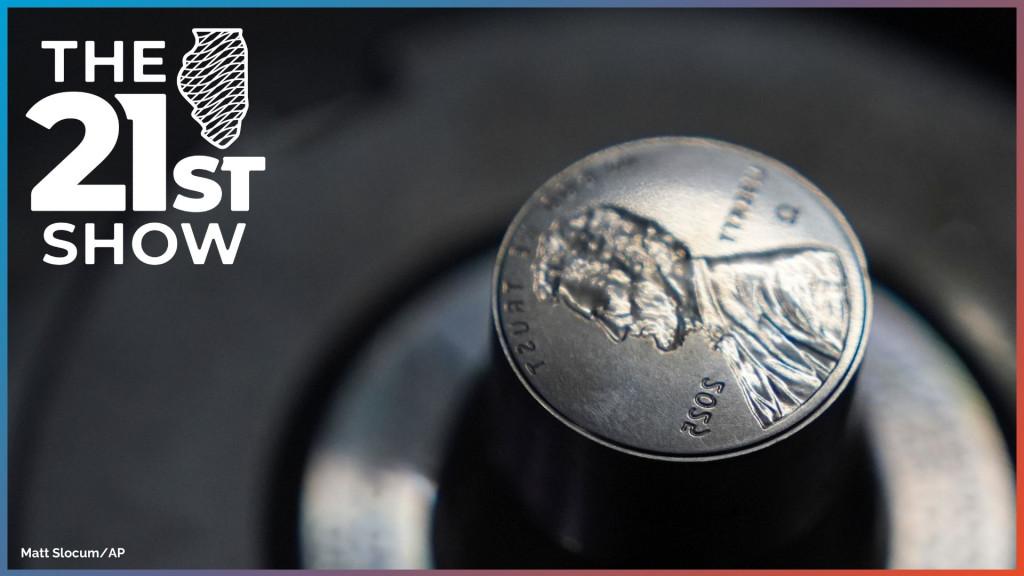
Transcript: The penny’s dead. Your credit card might cost more. What now?
The 21st Show
The penny’s dead. Your credit card might cost more. What now?
Read the full story at https://will.illinois.edu/21stShow/the-pennys-dead-your-credit-card-might-cost-more-what-now.
Transcript
// AI-assisted formatting failed. Using simple formatter.


// This is a machine generated transcript. Please report any transcription errors to will-help@illinois.edu.

[00:00:00] spk_0:  Today on the 21st show, the penny is history, and retailers across the country are trying to figure out how to adapt. Meanwhile, a settlement between credit card companies and merchants could mean new fees or even declined cards at the checkout. We'll talk about what it all means for the way we pay. And we want to know what you think about all this. Are you sorry to say goodbye to the Lincoln Penny? Are you irritated by those so-called convenience fees on your restaurant bills? Join the conversation throughout the hour. 800-222-9455 is the number. That's 800-222-9455. I'm Brian Mackey, and that's coming up today on the twentyfirst show, which is a production of Illinois Public Media. But first, news. From Illinois Public Media, it's the 21st show. I'm Brian Mackey, and every time it rains it rains from heaven. Don't you know cloud contains pants from heaven. You'll find your fortune falling all over town. no more pennies from heaven, because when was the last time you used a penny to pay for anything? Over the past few decades, the penny has turned into what many consider an economic relic. It isn't worth enough to buy much of anything on its own nowadays, and in recent years, it's cost the US Mint almost 4 cents to make each 1 cent coin. Nevertheless, it's been a source of pride for Illinois, because, of course, of the presence of President Abraham Lincoln. Take for example, this moment from the West Wing. What can I do for you today? How can I help you out? You can give me a good reason why the White House can't support the elimination of the penny. This is the legal tender Huckleberry bill, modernization bill, yeah. You can't support it cause it'll never get to the floor. Why not? Where's the Speaker of the House from? He's from Illinois, which, by the way, is the only state where you can put pennies in a toll machine. Why is that, do you suppose? It's because, it's because Lincoln's from Illinois and so is the Speaker. Yes, well, that's a good reason. Well, it's a dumb reason, but it's good enough, right? Sure. Ah, the days before I pass when you could just drop a handful of coins in one of those baskets. Alright, the penny has been a focus of other media as well. Uh, let's listen to another clip. this one's from Last Week Tonight with John Oliver on HBO.
[00:02:41] spk_1: Lincoln doesn't need the penny for notoriety, he's everywhere. We've put him on novelty bandages, cup and ball games, and creepy chia pets. And you know where else we put him? The $5 bill. You know, the thing that's worth 500 times more than the penny.
[00:03:00] spk_0: Uh, anyway, last month, the United States finally stopped making new pennies. It's estimated that hundreds of billions of pennies are still in circulation, but despite that, businesses are increasingly coping with shortages. Some of them are rounding cash purchases up or down to the nearest 5 cents. Others are offering incentives for people to bring in their pennies, from gift cards to free drinks. While all this is going on, there are also signs of change. In one of the other big methods of payment, credit cards. Visa and Mastercard have announced a settlement with merchants over the fees businesses are charged to accept those cards. That settlement could allow for extra fees on some credit card transactions, or even allow businesses to accept, for example, certain Visa cards, but not others. Today we're gonna talk about what this all means for the way we pay. We start with some context on the penny. With me for this is Jay Zagorsky, an economist at Boston University's Questrum School of Business. His latest book is called The Power of Cash Why Using Paper Money Is Good for You and Society. Professor Zagorsky, welcome to the 21st show.
[00:04:07] spk_2: It's great to be on your show. Thanks for having
[00:04:09] spk_0: me. And listeners, you can share your thoughts throughout the hour today at 800-222-9455. We wanna know how you pay for what you buy. And if you use credit cards, what extra fees make you change your habits? And what do you think the demise of the penny? Again, the number is 800-222-9455. 800-222-9455. All right, Jay, some people have wanted to get rid of the penny for decades. That West Wing clip is at least 20 years old. What has kept it around all this time?
[00:04:40] spk_2: Uh, part of it has been the state of Illinois lobbying heavily, but also zinc manufacturers and people who mine zinc have been pushing very hard for the penny. And, uh, while we've been having efforts for the last, I'd say 30 or 40 years to eliminate the penny, it was finally a social media Trump, uh, social media tweet done by Donald Trump in the middle of the Super Bowl that said, I'm just getting rid of the penny. Uh, and while some people are going to be pro and some people are going to be con when your listeners call in, uh, the problem I have with getting rid of it, rid of it by a social media tweet is that we have to deal with rounding issues. We can't just say the penny is not there and then leave it to businesses to make decisions whether they're going to round the prices up, round prices down, or as you said, start begging customers, can you please bring in pennies to help us out? And why? For a very simple reason. Cash is still an important part of society. The average American, according to the Federal Reserve last year, did7 cash transactions in a month. Now maybe your listeners are like, oh, I never use cash, but there are some people, especially among the poor, who use cash heavily. And that's 7 payments per month, if you multiply that by 12 months a year by the number of adults in the society, we get about 22 billion cash transactions. 22 billion, that's a lot of times you have to make change.
[00:06:04] spk_0: So, uh, yeah, including the guy in front of me in line at Maynard's the other night, which I have to admit when somebody pulls out the wallet and starts counting out bills, sometimes I will take a deep breath, but we can talk about that later in the conversation. So
[00:06:17] spk_2: I mentioned that but as somebody who uses cash quite frequently, what really gets me. Just as upset as when someone pulls out that piece of plastic, hands it over, and it's denied, and they start yelling and screaming, demanding the manager, how dare you deny my credit card and things like that. So, just as often that you get stuck behind somebody who's counting out single bills, you get stuck behind somebody who has credit card problems.
[00:06:41] spk_0: Fair enough, fair enough. All right, there, there are hundreds of billions of pennies out there. Why so many?
[00:06:49] spk_2: Well, we actually have quite a few people in this country. For this year we produced 1.3 billion pennies. So Donald Trump during the Super Bowl said no more pennies, and we still manufactured up until November 12th, 1.3 billion of them. that sounds like a lot of, but when you divide by the population, it's only about 4 or 5 pennies per person, depending whether you're looking at the total population or just the adult population. And a lot of people, when they get pennies, they drop it in the trash, they leave it in the seat cushions of their couch and things like that. So a lot of them just don't get recirculated. We'd have plenty of pennies in society if people would just keep using them. The problem is people don't like them.
[00:07:29] spk_0: Yeah, I've got a peanut butter jar I use to, to store them in, but I, I'll be honest, I don't, I don't carry them around. You're, you're a cash man. Do you carry pennies with you as you, as you go about your daily life, or you stick to larger denominations until you get change?
[00:07:42] spk_2: I'll be honest, I carry quarters and I carry paper money, but if somebody hands me a few pennies up until the last couple of weeks when I started collecting a few pennies as souvenirs, I would just say keep the pennies. I don't really need them.
[00:07:56] spk_0: Yeah. Um, all right, if we have so many pennies, why are businesses, well, I guess we talked about that with the, with the shortages people throw them in the trash. you know, let me, let me, uh, let me read a text message from a listener. This is from, uh, Sam in urbana says pennies cost more than 1 cent to manufacture, so I've always wanted to do away with them. However, any changes like that need to be brought on gradually and with preparation, not a surprise. Otherwise, businesses may not be prepared to switch. Gradual and non-surprising. It's not really this administration's MO. Uh, fair enough. I gotta say this is probably one of the more innocuous things that's changed by tweet this year. But, um, you know, Jay, for all this conversation about getting rid of the penny, you know, what, what is the plan? What does happen next?
[00:08:40] spk_2: There doesn't seem to be a plan. This summer, the Federal Reserve started sending out notices to banks saying, well, you have to start thinking about, you know, we're going to gradually get rid of the penny. And then starting in September, many of the parts of the Federal Reserve system just ran out of pennies. And they basically sent out emergency emails going, sorry, if you're putting a penny order in, we just don't have any to fulfill. Uh, and this was a big surprise both to the Federal Reserve and to the banking system, given 1.3 billion pennies were actually manufactured this year. But the bigger question, and why are the pennies important? Because a lot of states have consumer protection laws, and those consumer protection laws basically say if a store is going to charge you some amount of money. You only have to pay that amount. You don't have to pay more than what's the advertised price or the advertised price plus taxes. And if somebody's shorting you 3 or 4 cents in change, then they're actually breaking consumer protection laws in many, but not all states. So what we really need in my mind is some guidance from the federal government about how to round because otherwise stores could be at risk of giant lawsuits for short charging people just a few pennies.
[00:09:49] spk_0: That's interesting. So, I guess from your perspective, the safer thing, and you know, we're not lawyers or I, I don't think we're lawyers, um, you know, uh, that, that, you know, rounding down is, is perhaps more not, you know, less likely to run afoul of these, these consumer protection laws.
[00:10:05] spk_2: It is, but rounding down when you're talking about billions of cash transactions a year can cost businesses a lot of money. So they'd like some real clear guidance and they'd like rounding to be done. But more importantly, the penny is only sort of the beginning of this fight over getting rid of coins. The nickel, it actually costs the United States government 14 cents to make. Well, you know, they're only getting 5 cents for a nickel, it costs 14 cents. That means they're losing 9 cents. so for everybody who's getting upset, oh my God, we're losing 3 cents on every penny, they should be getting really incensed about the nickel, which suggests both the penny and the nickel's life, uh, coming to a close relatively soon. And if we get rid of the nickel, well, we need to deal with Roing again. So this idea of sort of Governing by tweet, governing by social media post, I just don't think it really works.
[00:10:56] spk_0: Yeah. All right. Uh, Jay Zagorski at Boston University, stay with us. We'll, we'll bring you back in a little bit. But let me remind listeners, this is the 21st show. We're talking about the way we pay for the things we buy in America and what some changes in our money mean for businesses and consumers. We heard from you and our texting group about this. Let me mention you can join. Uh, for future conversations by texting the word talk to 217-803-0730. Again, the word is talk,217-803-0730. Christopher in Brimfield said, I try not to use credit cards all the time. Cash is the best way to keep me on budget. When I don't have cash in my pocket, I don't buy anything. And Sue in champane said, I've been bringing pennies along to where I pay cash, local businesses, so they don't have to give the credit card folks the 3% or whatever. Thanks to lots of luck and good judgment, I can live within my means and not carry a balance on credit cards. I pay them off every month. Decisions are constantly made that funnel money from the poor to the rich. Many folks have to use credit cards. I think it's disgusting. I don't care about the demise of the penny. All right, thanks for those messages, Sue and Christopher. We're gonna shift gears now and talk about credit cards, the other major prong in our conversation today, where a settlement between Visa, Mastercard, and merchants has the potential to create some significant changes. Amani Moyes has reported on this as personal econo as personal economics reporter for the Wall Street Journal. Amani, welcome. Thanks for having me. And I should say you have a story that just went live in the last few minutes here about uh debit cards and and how they're changing too, and maybe we can talk about that a little bit later. But, you know, the lawsuit at the center of the change I just mentioned about credit cards and retailers, it goes back 20 years. What is the story there?
[00:12:46] spk_3: The story is that credit card companies have created this system in which the fees of cards are invisible to the consumers that really use them. So every single time you swipe your card, a merchant actually has to pay a fee to accept that card. And before this was regulated in kind of like the mid 2 2000s to 2010s, um, there, it was a free market. So these two companies can charge merchants basically whatever they wanted for the pleasure of of accepting their cards. And of course, if they didn't accept these cards, they had the threat of losing business because if you're a consumer, you believe that it's easier to pay with debit or credit and you come across a cash-only. Let's say, grocery store, what are you going to do? You're probably just going to go to the next grocery store that accepts your card. So merchants felt like this wasn't fair and that there should be more regulation or potential fee caps, um, and that launched this lawsuit 20 years ago that is still ongoing today because although we had that settlement that was reported a few weeks ago, it still needs to be approved by a judge.
[00:13:51] spk_0: What, uh, why are we seeing, you know, I'm sure a lot of people are familiar with, especially restaurant bills, you get that 3% convenience fee or however they term it now. Why are we seeing more merchants charging fees to customers to use cards?
[00:14:05] spk_3: That's a great question. Um, and it's a thorny question because it it's regulated differently in different states, but those convenience fees are really just a not so sneaky way of passing on those swipe fees to the consumer. Um, one thing that I should point out is that it's actually illegal to pass on those fees to Customers who are using debit cards, but if you're paying a credit card with a sorry, if you're paying with a credit card, the merchant does have a right to charge you a surcharge.
[00:14:34] spk_0: Did that change recently? Cause I, I don't remember this being a thing for years and years with the exception of like, you know, Ticketmaster or other companies that sell tickets to events would always have those so-called convenience fees. And now restaurants are doing it are, you know, maybe we'll start seeing it at retailers. Did something happen in the last few years about that?
[00:14:53] spk_3: So the laws haven't really changed. I think what has changed is the technology. So there's been the proliferation of all of these FinTech point of sale devices, um, that you're probably familiar with. The last time you went to a restaurant, someone probably came to your table with this hand. Held device to put your card in, um, but there's also software attached to those devices and those those software programs make it very, very easy to add fees on certain products or to certain transactions in a way that was harder using more monologue point of sale devices.
[00:15:27] spk_0: Interesting. So, one of the, uh, uh, you know, other changes under this settlement is uh that merchants can now pick and choose categories of cards to accept or to tack extra fees onto. How is that gonna work? And I should say we have to take a break in in about a minute here, but we can come back and continue that.
[00:15:45] spk_3: How is that gonna work? It is too soon to say. So, in theory, merchants could, um, they now have the right to refuse certain kinds of credit cards. So like if you have a cashback card versus a really expensive, um, airlines card, they can choose to not accept that airline card. but another kind of card. But I think what's gonna be more likely is that they're going to charge different surcharges. So if you have a basic credit card, maybe you pay 2% more, but if you're paying with those fancy premium cards, you could expect to pay maybe 4% more.
[00:16:18] spk_0: All right, we're gonna take a break. Let me remind listeners this is the 21st show. We're talking today about the way we pay through the lens of both some changes coming to uh credit card payments. We've already been seeing them. I'm sure you've experienced at a restaurant where there's that convenience fee or maybe they frame it. A little smarter, I think, to say, oh, we'll give you a discount for paying in cash, and also the demise of the penny and what that's gonna mean for how we pay. We've been talking about this with Emani Moyes, who reports on personal economics for the Wall Street Journal. And we've also been talking with Jay Zagorski, an economist at the Questrum School of Business at Boston University. We'll bring some other voices into the conversation when we return, and we'd love to hear from you too. 800-222-9455. This is the twentyfirst show. That's about all we can play of that song. It's the 21st show. I'm Brian Mackey, and today we're talking about how we pay for the things we want and need from groceries to car parts to restaurant meals. We're talking about this after the end of the production of the penny in America, which is leading to shortages of pennies for businesses. And we're also talking about a settlement, potential settlement, I should say, between Visa, Mastercard, and merchants that could change how businesses accept credit cards. More from our texting group, Frannie and Hinckley told us, if the business offers a discount to pay cash, I usually do that. Some venues are card-only, no choice there. I prefer to pay with a card, it's just easier, and I'm hanging on to my lucky penny. Our guests for the first part of the show have been Amani Moyes, personal finance reporter for The Wall Street Journal, and Jay Zagorsky, economist at Boston University, as well as the author of a book called The Power of Cash. Uh, you can still join us today,800-222-9455. That's 800-222-9455. So, Amani, I just want to tie up 11 more point on this, uh, this settlement. It still has to be approved by a court. What are some of the reactions you've seen to this?
[00:18:56] spk_3: the merchants aren't happy. They feel like this settlement does not address some of the core concerns that they have about the super high fees that they're being charged to accept credit cards, and I mentioned that they're able to charge. Different surcharges for different kinds of products, but those products are very, very broad. So again, something really expensive and premium like maybe the Amex Platinum is going to fall in the same category as the Chase Freedom card, which with when you're considering a category that's that broad, it's hard for the merchants to really be selective.
[00:19:37] spk_0: Interesting. All right, uh, let's go to the phones. Again, 800-222-9455. Ross is calling from Woodbridge. Ross, thanks for calling in.
[00:19:47] spk_4: Yeah, thanks Brian. I appreciate it. Um, I wanted to talk about the use of pennies or cash in particular with Jay and and two points that I'd like to make. One is that you know, I as a baby boomer, I was reluctant to use credit cards for a long time, but you know it as so many cards have cash back. Capabilities. I have an American Airlines card that I can actually take a trip overseas every few years because of that card and the cash and the the credits that I get from using that credit card. Uh, I also am a contractor and I have a Maynard's card and besides the 11% back that I get, I get an additional 2% back by using my card. That's a big incentive when you spend tens of thousands. dollars a year, uh, you know, at a store, so that's one point. Um, the second point is, uh, credit. Um, your credit is, you know, if you don't use cards, you're not building a credit history and if you're a young person and you want to buy a house, how does cash help you, you know, uh, build a credit history and get a good credit report so you can buy large purchases. That's, those are my two points. Thanks.
[00:21:06] spk_0: All right, Ross, those are great points. Thanks for calling in. Jay, how about it? And and let's start with all those rewards, right? Hotels, uh, airlines, cashback.
[00:21:15] spk_2: Let me, let me actually reverse it. Uh, how do you build credit? My book argues. Continue to use electronic payments. Just use cash at least once a week. If you use cash at least once a week, we continue to have this additional method of payments that is very, very important in society, such as during natural disasters, such as when somebody hacks into your accounts and these kind of things. So I'm not saying don't build up credit by having at least a credit card or two credit cards, but this idea of many of my MBA students, oh, I never use cash, is just really not one to go along with. And let me tell you, uh, to answer your first question about rewards. Rewards are very seductive. About 10 years ago I was a reward maven. I charged everything, even a candy bar, and, uh, for one of my sabbaticals, my wife and I, we made it three quarters of the way around the world, business class just on reward points. So I really get Ross, what you're saying. But when I actually started looking at the data, what I uncovered is that these credit card programs are reverse Robin Hoods. Reverse Robin Hoods, Robin Hood was somebody who stole from the rich and gave to the poor, and what credit card reward programs do is the opposite of that. They take from the poor people and the financially unsophisticated, and they give to people like you, Ross, because when you fly to Europe, as you said, Where does that money come from? It's not from the benevolence of credit card companies. It's not because the airline loves you. Somebody had to pay for that, and it wasn't necessarily you.
[00:22:47] spk_0: Well, how does that work? Say more about that. How is my, you know, when, when after the pandemic, we had so many hotel points built up, we did, you know, a few nights in Disney World with the hotel cost being zero for us. How, who, who is, who is footing the bill as, as you're trying to explain it here?
[00:23:03] spk_2: So part of this fight between merchants and credit card companies is that every time you swipe, you pay 2 to 3% in interchange fees. Who gets that 2 or 3%? So there's some cashback. You might get 1, 1.5%, maybe even 2%, but there has to be some money left over, and that money left over is going back to the companies. It's going back to, say, the airline companies to pay for it. So it's a pretty simple way is that you're charged an extra 3%. You think you're getting free airplane tickets, but in exchange what you're doing is instead of paying $100 for something, you're actually paying $103 for something, and that extra $3 every time you make a charge goes to paying for those rewards.
[00:23:50] spk_0: Interesting. All right. Let me, uh, let's bring in a couple more voices to the conversation now. Taylor Nelms is vice president of research and insights at the Financial Health Network, which is a national nonprofit focused on how well equipped Americans are in terms of their money and how well the financial system serves people. Taylor, thanks for being with us. Thank you so much for having me. And to bring this uh to a more local perspective, especially when it comes to business, we're joined by William Lowe, executive director of the Carbondale Chamber of Commerce in Southern Illinois. William, thanks for making the time to be here. Good afternoon. Thanks for having me. And again, listeners, you can still join us at 800-222-9455. We wanna know what you think of the demise of the penny and increasing number of stores that charge more for using a credit card, and, and whether that encourages you to pay with cash or swallow the cost. 8002229455. All right, Taylor, broadly speaking, what's the breakdown on how people pay for things in America these days?
[00:24:54] spk_5: Right. Well, Professor Sigorsky referred to this earlier in our conversation. The best data that we have actually comes from an a yearly Federal Reserve study that looks at consumer payment choices across the United States via surveys and and diaries. And the latest data that we have comes from 2024. and in that, uh, In that work we see that about 83% of consumers use cash. That's the highest percentage among all payment methods. Credit cards, about 72% of consumers use those that payment instrument, about 67% use debit cards and so on. So Cash is still very widely used. You do see that the percentage of cash users, you know, drops a bit for younger people, but not as much as you would think. About 75% of consumers ages 18 to 24 are cash users. Now there are some additional caveats there, you know, cash is mostly used for small value transactions. Um, more than 28% of transactions, $10 or less tend to be made in cash. Um, but again, as Professor Zagorsy noted, cash is used on average by consumers seven times a month. So, um, this is not, uh, uh, you know, cash is is still widely used. Cash is still king when it comes to how often people use different payment instruments.
[00:26:17] spk_0: William Lowe, your family has been in the restaurant business for a while. From that point of view, how have you seen changes in the way people pay over the years?
[00:26:28] spk_6: Um, it's been, it's been pretty drastic. Um, I, I, I know that, um, you know, Maybe even pre-COVID, it would be, it would be, it wouldn't be a surprise for us to go to deposit money, you know, every other day. We would have, you know, several $1000 deposit, um, you know, every night. But now, um, we're, we're lucky to have maybe $500 in cash and that's not, that's not even an exaggeration. Um, you know, I talk with local bars, uh, local restaurants, and, uh, I'm very active, um, online with different restaurant, uh, groups, and it, that's, that is a recurring thing. People aren't paying with, um, with cash. and the more people pay with cards, the more fees that we pay. and it's a, it's a, it's a vicious cycle.
[00:27:18] spk_0: Yeah, well, I, I'm curious cause, OK, the fees, that suggests it's a negative. Um, I, I would imagine there's, you know, the, the risk of theft or, or robbery or something like that goes up more when you have more cash around. What are like the sort of costs and benefits from your perspective of this change? William, are you still with us? Yeah,
[00:27:42] spk_6: uh, it kind of cut out. I lost audio if you had a question. Oh, sorry,
[00:27:45] spk_0: yeah, sorry. Uh, yeah, I wondered, so I mean, you mentioned that, you know, you used to have to do big drops, uh, at the bank every couple of days, and, and, you know, now, uh, you know, on the other hand, you're not, you're not doing that as much anymore, but you're paying fees. What are the sort of the pros and cons of, of more credit versus more cash?
[00:28:03] spk_6: I mean, you know, More credit, you know, it's, it's safer. And you know, if you go to if you go to larger cities, you notice more places going cash card only because you know, less risk of, you know, internal theft, external theft, and, um, and things like that. And it's just easier for bookkeeping. Uh, but on the flip side, um, as a business, um, seeing that, that that That uh automatic deduction through credit card fees, it's, it's a lot. Um, most people don't know if you, you know, if you pay with Discover or American Express, you know, the business pays more to enjoy those flight miles. Those don't, you know, airlines aren't given those points for free. Theta restaurants and small businesses get charged extra. For those categories. There's 3 different tiers of rewards. Each tier, the more points you receive as a consumer, the more that retailer has to pay. Um, and it's something that, uh, I think as small businesses, we need to be more vocal about. If you look overseas in Europe and Asia, the credit card fees are very, very small. They're, I think they're, there's, there's a, a, a, you know, a federally mandated cap. And it's only just a few percent, no no interchange fee. It's, it's very, it's very straightforward, very transparent. and I think We as small businesses need to really advocate for that so we can, we can be, you know, successful business owners because we're getting dinged left and right with different fees, different taxes, and it's, uh, you know, it's really tough and uh I don't think we need any more hurdles thrown our way.
[00:29:44] spk_0: We got a text message on this very point from Sarah in Rockford, Illinois, who says, I'm an entrepreneur who does a lot of craft and festival shows. About 70% of my sales are paid with card. While I build the fees and taxes into my prices to the nearest quarter, a rise on my end, and thus a higher sticker price, is making it harder to sell products. Customers want early 000s prices and we'll haggle haggle over a dollar all while my margin shrinks, and I understand why the small mom and pop shops are closing down. It's a lose-lose situation all around. Thanks for that message, Sarah. Let's go back to the phones. Uh, Steven is calling from Rockford. Steven, thanks for calling in.
[00:30:26] spk_7: Hi. Um, yeah, my point was about the, the penny and the, the argument that's being made to discontinue it because it costs 4 or 5 cents to make one, is just kind of a specious argument in my opinion. Uh, none of our coinage or currency right now is based on any sort of, you know, gold standard or anything like that. So. when they make a, uh, when they make a dime and that only costs 4 or 5 cents, where did that extra 4 or 5 cents come from? it's all essentially a form of credit that our government is providing to us. This is a system that they're providing so that we can go through our economic activities and you know, it just doesn't seem like it makes much sense. Uh, to say that, oh, well, we're not gonna pay for this part of that system anymore. Uh, the concern would be you start to lose these lower denomination things because we're not making enough money, um, on, on producing these coins. Um, that was never the idea anyway, but you get rid of these low denomination things, and, uh, that just means that Maybe prices need to then be uh rounded up, prices get higher for consumers, uh, to whatever the lowest denomination is. So that could actually make inflation and things like that worse.
[00:31:40] spk_0: Interesting point. Uh, Jay, what do you think about that? Is this a sort of a stealth price increase happening here?
[00:31:46] spk_2: Yes, I would agree, but there's actually a much deeper question the caller just brought up, and the deeper question is, should government be a profitmaking enterprise? When people look at the mint, they're like, of course, the mint should be making profit. If it's not making profit on pennies, kill them off. If they're not making profit on nickels, get rid of them. But if you take that approach to most government functions, we basically destroy government. The post office loses millions every single day. Should we get rid of the post office and have no more mail service because it doesn't turn a profit? Uh, it's just this TSA earn a profit? Maybe we should get rid of airport screening. So the idea that government is supposed to be a profit earning enterprise is kind of silly, even though the Mint last year did earn $100 million which went back to the Treasury.
[00:32:31] spk_0: Mm, fascinating. Alright, uh, let me take a moment to reintroduce our conversation. if you're just joining us, this is the 21st show. We are talking about the demise of the penny, and also changes to credit card fees, and altogether this adds up to changes in how we are paying. Uh, for things. and we're talking about that with Jay Zagorsky, an economist at Boston University, Taylor Nelms, uh, at the Financial Health Network, William Lowe with the Carbondale Chamber of Commerce, and Emani Moyes, a reporter at the Wall Street Journal. We're gonna continue. This conversation after a break. Uh, you can join us at 800-222-9455. Once again, the number is 800-222-9455. This is the twentyfirst show. Stay with us. Still there never seems to be
[00:34:28] spk_8: Support for the twentyfirst show comes from the Des Moines Arts Center presenting Manuel Alvarez Bravo, a pioneer of Mexican photography featuring collaborators like Frida Kahlo, Diego Rivera, and more on view through January 18th. More information at Des Moinesartenter.org.
[00:34:48] spk_0: like that is hard to find, but I can get him off my mind. And if he happens to be free Me too. It's the 21st show. we're talking about how we pay for the things we want and need in life and how that's changing with advancing technology, lawsuits, and the demise of the penny. We're talking about this with Taylor Nelms at the Financial Health Network, William Lowe with the Carbondale Chamber of Commerce, Jay Zagorski at Boston University, and Eboi Moyes with the Wall Street Journal. You can still join us 800-222-9455. 800-222-9455. All right.mani, I wanna come back to you and and read a text from Adrianne in Carbondale. says, I'm thinking about ending my use of credit cards as it is. The credit card companies are horrible leeches. It's so hard not to rely on them though, because they allow for more flexibility in my budget, and it's often the only way to pay online. So, uh, thanks for that message, Adrian.mani, we talked about how many payments go through credit cards. How are people using them? How many people are paying them off right away as opposed to running a balance?
[00:36:20] spk_3: I don't have those numbers at the top of my head, but there are a significant number of people who revolve, which is the term that the credit card industry uses for carrying a balance for month to month as opposed to transact, which means paying off your balance every single month so that you're, you're kind of, you're keeping your balance at zero once your statement is due. So I think off the top of my head, I think it's roughly 1/3. I will check that and come back and come back with you all, but I will say that debit is often accepted in most places where credit is accepted. If you want to be more mindful or maybe you're credit averse, you could use those online. and I did have a recent story about how debit cards are now more new debit card launches are coming with some of the same rewards that people have come to s come to expect from Credit cards. So there is the Discover 1% cashback if you want to keep it simple. Um, Klarna just launched a new card that gives you 2% cashback on most purchases, and it also has that buy now, pay later function built into it so that if, if managing your cash flow, if flexibility in your cash flow is something that you're looking for, maybe turn to a product like that.
[00:37:34] spk_0: Interesting. All right. Um, let me, Taylor, let me, uh come back to you. You know, when, when you sort of look broadly at all these changes we've been talking about, what does all this mean for, you know, The rest of us, you know, all of us as we go about our daily lives and buying things here and there.
[00:37:52] spk_5: Yeah, it's a great question. I think the the biggest broadest point I would make is that the way we pay directly shapes our financial lives, whether it's, you know, rewards, credit cards, or the end of the penny. You know, payment systems are not just plumbing, they can have very real impacts on the ways that people spend, save, and and manage their their budget. So, uh, payment system changes often have, you know, distributional consequences is the way that economists often talk about, and, and the burden of those changes will often fall on the people who have the the fewest alternatives. So, you know, if we're really focused on improving financial health across the board in the United States, then we have to make sure that the payment systems that we design, whether that's cash or whether that's cards, um, that our payment systems are designed so that everyone benefits, not just the people who are already doing well. Here at the Financial Health Network, we do a lot of research on the cost of accessing Using different financial products and services, and we've run a big study on how much people pay for different financial products and services since 2011 and our most recent estimates from 2024 suggest that the fees and interest on non-mortgage financial services, um, so that includes credit card fees and interest, that that continues to grow and it's increased by nearly $100 billion from 2022. Reaching an estimated $455 billion in 2024 and and credit products and services drove a lot of that growth, right, rising, uh, we estimate 11% year over year to about $412 billion following from previous year, a nearly 20% jump. So that's fueled by increased interest and fees from revolving credit card balances, um, as, as you were discussing. Um, and I'll just finally note that the, uh, there are real inequities in, in the share of income spent on these interest and fees, um, with financially vulnerable households, um, Black and Latinx households, households with some private credit, all spending a Disproportionate share of their income on on interest and fees. So, just for example, households that we classify as financially vulnerable spend about 17% of their income on interest and fees, um, compared to about 1% among those households that we classify as financially healthy.
[00:40:16] spk_0: Wow, that's a, that's a stark difference there. Um, Jay, I wanna come back to you. What, what do you think about, we were talking about that credit card settlement earlier. Do you think this is something that will, you know, how do you assess whether it will really level the playing field between merchants, banks, and, and the credit card companies?
[00:40:34] spk_2: I think the credit card settlement is mainly smoke and mirrors and will have very little real impact on the ground. It'll slightly reduce Visa and Mastercard's profits for the length of the settlement, which is roughly 5 years, but other than that it's a lot of smoke and mirrors, but we'll generate over $200 million of lawyer fees. But I want to go back to what Taylor was saying. Taylor had some wonderful figures there. Thank you very much, Taylor. But let me put it in very simple words. In order to get a credit card or even some debit cards, you need to be approved. Somebody at a bank has to say, yes, we'll give you credit, we'll give you access to these types of products. and if you're not approved, then you only can use cash. Well, let's say you can only use cash and you're walking down the street and you see increasingly common signs in a window that says, No cash accepted, only credit or debit cards. What does that sign really say in simple words? Poor people, stay out. We don't want your business. You're not allowed in here. You're not allowed to buy, shop, or eat in this place.
[00:41:41] spk_5: Could I follow up on that? I think that Professor Sigorsky is making a great point here. The conversation about ending the penny and the conversations that we have about the use of cards, those are really conversations about the future of cash in this country and, and the future of our payment systems in this country. And, and cash has real benefits that we shouldn't overlook, right? Cash is fee-free. It's universally. Accepted or it should be universally accepted and it, you know, doesn't rely on other infrastructures. So Professor Sikorsky made this point earlier, but in emergencies, you know, when the power goes out, cash still works. There are other things too that I think are just really important to emphasize, right? We use money and cash in particular for lots of reasons other than paying for things. Um, and we need to recognize the value of those too. Cash is really helpful, just to give you an example, uh, in charitable contexts, right? So, um, you know, what happens to All of the nonprofits who rely on rounding up, right, for their donations. Um, what happens, and, and, you know, cash is also really helpful for teaching kids how money works, um, how to count, save, and, and kind of feel the weight of, of the value of money, and this is especially true for, for the penny. And as I think one of your listeners or or maybe somebody was texting in earlier noted, cash is also really helpful for budgeting, for money management, um, and lots and lots of people use cash to uh control their spending. The bigger point here is that cash is really still essential for millions of Americans and especially for low income Americans, for rural Americans, older Americans, and and our research here at the Financial Health Network shows that cash is really a meaningful payment instrument but also used for many other purposes, especially for these households with tighter budgets.
[00:43:31] spk_0: William with the uh chamber of Commerce in Carbondale, you know, for, as a business owner, what, um, if you could, you know, write the rules, wave a magic wand, what would you change about how we spend our money?
[00:43:43] spk_6: Uh, you know, uh. We, as small business owners, you know, it doesn't matter if you're selling books to comics to hot dogs, we're we're we're we're in it for the hospitality part of it, you know, get to interact with our customers. So anything that really gets us to, you know, lower that barrier of making it difficult to do business. Um, you know, I, I, I noticed earlier the story was shared where, you know, some cards, you know, the merchants can pick what cards they choose. Then think about your interaction at the at the register. Oh, like I'm going to hand you a card and then the poor person working at the counter is not, you know, going to have to look through a list. or do we take that? Do we don't take that. And then you're gonna have to be like, oh, I'm really sorry, we don't take that particular card. you know, I, I just think we need to make small businesses easier to operate. and these things are, you know, it's, it's hard. It's hard dealing with food costs, production costs, labor, credit card fees. And whether we lose money by rounding up or rounding down, those are things that we really shouldn't have to, have to, to deal with, to have to struggle with, uh, you know, let, let us take credit cards, let's pay a fair amount, you know, um. You know, and you know, like pennies, you know, it's kind of touch a bit on that, um, we, we've there's no guidance, you know, we've got a local bank here in Carverel that is not offering any pennies, nor they're taking pennies as well. You can't go into the bank lobby and dump your coins in. They'll tell you, I'm sorry, we're not taking these pennies. Those are just things that, you know, Living in 2025 is a struggle. These things should not be added to it. There's no guidance. Uh, I know a local, uh, fast food chain, they're rounding down and they're estimated to lose, I think, 13,000 in their, in their regional chain. Um, those shouldn't be, there shouldn't be have to, it shouldn't be that difficult. Running a business is hard enough. You know, people that are legislating, people that are making decisions, please keep small business in mind, just help us. We just wanna, we just wanna make money. We wanna make money, we want to offer our products to the people. Let, let's get rid of a lot of these red tape that's unnecessary and harmful to the economy. And as Taylor and, you know, Jay earlier said, you know, if, if you go to a restaurant, you know, tons of servers, they, they get cash tips. if there's no cash, less cash. You know, then they're gonna get subjected to those fees. So a lot of restaurants, you guys may not know, they can charge the servers credit card fees out of their tips, and they're losing money and they don't make enough as it is.
[00:46:30] spk_0: Huh, I did not know that, but I did always, I had a friend in the service industry who said it's always better to leave cash for the tip part of the bill if you can, yeah. Um, we're coming to the end of our time.mani, we had a listener, John in Rockford, who mentioned some bills in Congress that would go further than the, you know, the credit card settlement we've been talking about and effectively abolish rewards programs for credit card purchases. One of Illinois' uh, senators, Dick Durbin, has been pushing for that for a while. Can you, can you talk about that briefly and how that would change the industry?
[00:47:04] spk_3: I'm, I'm not sure how it would change the industry because I see just, I see a bill like that getting enormous pushback just because rewards have become such a cornerstone of payment culture. I think over the past, like, let's say fifteen-ish years, it's become an entire subculture of these enthusiasts who have turned it into a hobby optimizing these rewards. Um, what we're seeing more and more of actually are these merchant funded rewards, which again, to William's point, I can see how that disadvantages, um, small businesses, but you're seeing really big brands like McDonald's, Target go to financial services companies directly and say, hey, uh, we want to put our marketing dollars somewhere where we know that. We know that we're getting transaction for it. And how do you do that? Instead of putting up an ad, you go to Bank of America and say, we will give you 3% back of any transaction that your customers give us, and what is, what does that, that gets translated to the consumer as a cashback offer. So, that is not. by interchange, which is the same kind of mechanism that those bills you're discussing will be regulating. So if that, if the regulatory system, interchange system goes away, I predict that we'll see rewards go to a more merchant funded model.
[00:48:24] spk_0: I wondered how that worked. I get that on my Chase account where you have to go in and you can like tick. You know, this coffee shop or that that business or streaming service or whatever and you'll get, you know, so and so much off your, off your bill, uh, next time around. Interesting. I never knew how that worked.
[00:48:39] spk_3: If I may, I just wanted to correct the record. So it's actually about 5 and 5 revolvers and transaors, um, favoring usually transactors. So a little bit more than half of credit card users will pay their bill off in, in full every month and about 48%, um, typically revolve.
[00:48:57] spk_0: Wow. All right. Well, that's gonna have to be it. What a fascinating conversation. A lot more we can, uh, could have gotten to and I'm sure we will another time. Amani Moyes with the Wall Street Journal, William Lowe with the Carbondale Chamber of Commerce, Taylor Nelms with the Financial Health Network, and Jay Zagorsky with Boston University's Queestrum School of Business. His book is The Power of Cash Why Using Paper Money Is Good for You and Society. Thank you all so much for joining us today on the 21st show. We appreciate it. And I'm gonna say that is it for us today. Coming up on Monday, it's been said our nation is facing an epidemic of loneliness. We'll talk about why so many of us are feeling it, what we can do about it. We'll also talk about how having a robust social network can make a difference for adults trying to stay healthy later in life. Thanks to everyone who wrote in, called, texted, uh, sent emails about our conversation today. Get in touch with us. You can do that through our website twentyfirstshow.org. The 2first Show is a production of Illinois Public Media. I'm Brian Mackey. Thanks for listening.
Transcript Assistance
Illinois Public Media may use AI assistance for transcript generation and/or formatting. Transcripts that have not yet been reviewed for accuracy will be labeled.
To report a transcription error, or to request transcription of archival material, please contact will-help@illinois.edu.