








Transcript: The human cost of Illinois’ gambling boom
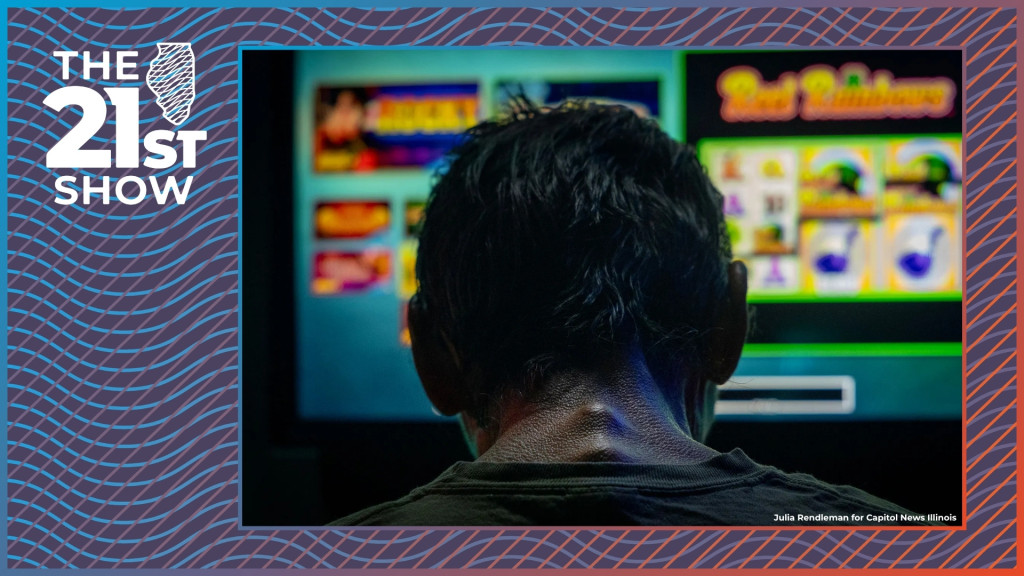
Transcript: The human cost of Illinois’ gambling boom
The 21st Show
The human cost of Illinois’ gambling boom
Read the full story at https://will.illinois.edu/21stshow/illinoisans-lost-7.7-billion-gambling-last-year-the-state-spends-little-to-help-the-addicted.
Transcript
// This is a machine generated transcript. Please report any transcription errors to will-help@illinois.edu.

[00:00:00]
Brian Mackey: From Illinois Public Media, this is the 21st show. I'm Brian Mackey. Gambling in Illinois used to mean making a trip to a riverboat, a racetrack, or just the lottery counter at your local convenience store. But nowadays, in many parts of the 21st state, you cannot escape gambling. It's in restaurants, gas stations, and of course, it's on the phone in your pocket.

Illinois has leaned in like few other states, and it is collecting real money. The people placing those bets lost billions of dollars last year. Some of them lost almost everything. So, for the first part of the show today, we're talking about what widespread legal gambling has done to Illinoisans, and what the state is and is not doing in response.

All this was the subject of a recent series called Addicted to Gambling in Illinois. It was a joint reporting project of Casey Toner with the Illinois Answers Project and Maggie Dougherty of Capitol News Illinois. Maggie, welcome to the show. Casey, welcome back. Thanks for being here. Thanks for having us.

And we're also joined today by a man who has lived this story from the inside. Jimmy M. has been in recovery from compulsive gambling for well more than a decade. In an effort to reach others who struggle with this, he's created and hosts a podcast called Gambling Recovery, Take Back Your Life. Because of the stigma around compulsive gambling, Jimmy goes by his first name, last initial. We are honoring that. Jimmy, thanks so much for being here today.

[00:01:37]
Jimmy M.: Thank you for having me. I really appreciate it.

[00:01:39]
Brian Mackey: Listeners, you can join us today throughout the first part of the show, 800-222-9455. 800-222-9455. What do you think of this proliferation of gambling in Illinois? From slot machines and gas stations to sports betting on all of our phones. 800-222-9455.

All right, Casey, I'm gonna start with you. What did you set out to find when you began work on this series?

[00:02:08]
Casey Toner: Well, my interest is the impact of gambling on Illinois because I'm 43 years old right now and I think when I was maybe 9, the first casino pushed off the shores in Illinois and now there are 17 casinos, 50,000 slot machines, the lottery, and, you know, sports gambling, which is ubiquitous. And so my question is, you know, a lot of money is coming in from this, but what is the social impact on the people of Illinois? And that is a question that I feel like the state is going to be answering for decades to come.

[00:02:48]
Brian Mackey: And let's talk a little bit more. So you mentioned the casinos pushing off. Give us the timeline history for people who are not steeped in this stuff — casinos, video gambling, sports betting.

[00:02:59]
Casey Toner: Well, yes, the, as I mentioned, the first casino wasn't a land-based casino as we know them now. It was a riverboat casino and it pushed off the shores in 1991 after Governor Jim Thompson legalized [the] riverboats. You know, over time they evolved from the riverboat casino, which left shores and then came back and you could only gamble during that time, to the land-based casinos which operate, you know, at all hours, and those expanded. And then in 2012, Governor [Pat] Quinn signed legislation that allowed for slot machines outside of casinos. So he basically brought the casinos out, he brought the slot machines outside of the casinos and put them in bars, restaurants, laundromats, gas stations throughout Illinois. And right now there are about 50,000 slot machines in Illinois and several thousand more are likely coming to the city of Chicago very soon.

And then in 2020, you know, the next evolution of gambling in Illinois happened, and that is when Illinois Gov. JB Pritzker signed legislation, bipartisan legislation that expanded the number of casinos to 17 and opened up the doors for sports betting. And, you know, so in that time, gambling, you know, went from, you know, went from relative like pocket change to where it is now, which is, you know, people lost $7.7 billion last year. Nearly $1.5 billion on sports betting, you know, $3.1 billion on slot machines and nearly $2 billion at casinos. So now we are one of the largest gambling markets in the United States.

[00:04:53]
Brian Mackey: And, and Maggie, let me bring you in now because when Casey says that number, just to be clear, that's losses. That's not what people spent on gambling, that's just the net. So, talk about who — what do we know about who is losing most of that money?

[00:05:09]
Maggie Dougherty: Yeah, it's a good question. The thing is, gambling doesn't really discriminate. We see it across, you know, all areas of the state, all aspects, you know, socioeconomic, race. You know, the sports wagering, the stuff that happens on people's phones, maybe tends to be a little bit more, you know, wealthier folks, whiter people, men, you know, if we're stereotyping. But it's accessible to everyone. So we really see it very broadly.

You know, the slot machines, I think, are a really big portion of those losses. Of that nearly $7.8 billion last year, over $3 billion just came from the slot machines that are in, you know, gas stations and hair salons and every corner of the state really, outside of casinos. And so some of those are in, you know, lower income areas. There's a gas station down by Metropolis by the Kentucky border that has just six slot machines, and those machines since they opened about a dozen years ago, people have played more than $223 million just on those six machines. And if you think about how much that is just, you know, at this one location of many — that's people sitting there for hours putting $1, $2 into the machine. It's not just the money itself, it's also extensive amounts of time and energy of people's lives that are being, you know, really dramatically put into these machines.

But, you know, we hear about gambling happening with people who are poor and don't have money to lose, and we hear about it happening with people who, you know, have high-paying jobs in well-educated fields like people who work in surgery or people who are lawyers, people who are, you know, clergy members. It's really broad. It's not something — because of the accessibility and the many forms it can take, it can really reach anyone at this point.

[00:07:11]
Brian Mackey: You know, one of the things that jumped out at me in your story was this Connecticut study you cited. I guess we don't have a figure like this comparable that has been examined for Illinois, but in that state, at least in 2024, 71% of the revenue came from just 7% of the gamblers. So, a really small number of people were doing most of the spending in this area.

[00:07:36]
Maggie Dougherty: Yeah, that's right. I mean, it makes sense that gambling revenues are driven by people who have a gambling addiction. The people who can't step away from the table. Especially in that study, I believe it found that over half of sports bets were made by less than 2% of Connecticut residents who were identified as compulsive gamblers. So over half of sports bets made by less than 2% of the population. You can see how those losses, which are pretty major, are being felt by a very small portion of people. And that impact is really dramatic on their lives. I mean, we spoke to people who lost a million dollars in a year. The numbers — it doesn't matter, you know, exactly how much you lost. What matters is the impact on each individual's life, but in some cases they were really high amounts that people have lost.

And so, yeah, the amounts are definitely driven by people who are unable to step away from the table rather than, you know, your maybe average baseline person who could come in, bet a couple dollars at a casino, win a little bit and step away. That's not the case for people who have an addiction.

[00:08:50]
Brian Mackey: All right, let me remind listeners, this is the 21st show. We are talking today about a new set of stories from the Illinois Answers Project and Capitol News Illinois. Maggie Dougherty is with Capitol News, Casey Toner with the Illinois Answers Project. It's called Addicted to Gambling in Illinois. We're also joined today by Jimmy M., who's been in recovery for more than a decade. He hosts the podcast Gambling Recovery, Take Back Your Life, [and] is based in Chicago.

Jimmy, you have lived what these reporters are describing. When we say billions of dollars were lost last year, what do you hear that maybe the rest of us don't appreciate?

[00:09:29]
Jimmy M.: Yeah, thanks again for having me. I really appreciate it. These conversations are really important, not only for the problem gambler, but for the families and loved ones who are also affected by the problem gambler, too. I think that doesn't get talked about enough. I think a lot of people really think it's a disease that just controls the money, but it really — it drains bank accounts of course — but I think this is an emotional disease. It gradually changes the way a person thinks, feels, experiences life. There's anxiety, depression, shame, guilt. So I think that doesn't get talked about enough. People just think it's a financial disease, but really it destroys lives, it destroys families' lives, it affects everybody around us. And I think that needs to be talked about more, too.

[00:10:25]
Brian Mackey: You've described yourself as one of the elders in some of the Chicago Gamblers Anonymous rooms. To the extent you're willing to talk about it, how did gambling start in your life?

[00:10:38]
Jimmy M.: Yeah, for me it started in my early teens. Grew up in a small Chicago neighborhood, Little Italy, and, you know, started out as something fun, something to kill time. Kind of moved on into high school with being introduced to illegal bookies. And from that point on, things just escalated and got worse and worse. Breaking down, crying to my parents, asking them for bailouts — and that happened throughout my twenties, all of my twenties.

Then finally, in my early 20s, my mother recommended that I go to a Gamblers Anonymous meeting. So I went to my first meeting around 23 years old. Really liked it. I felt connected. I didn't feel judged. I definitely was in the right place, but I didn't really connect to it, so it took me, you know, the next seven or eight years of in and out of those rooms to really finally get it. But in those seven or eight years, my life just got gradually worse. [Everything] got worse. My character got worse, my relationships got worse with everybody around me. It was destroying my family life. You know, with gambling, with problem — [go]

[00:12:09]
Brian Mackey: No, sorry, I didn't mean to interrupt you. Go ahead.

[00:12:12]
Jimmy M.: Yeah, with problem gambling, you know, it never stays the same and it never gets better, it only gets worse.

[00:12:20]
Brian Mackey: What would you say got you to the point where you were able to, you know, you went to your latest GA meeting and then kept going and didn't go back to the other stuff?

[00:12:31]
Jimmy M.: I think ego played a big part in that — thinking I can do this on my own. You know, I think a lot of people think that willpower can overcome [addiction]. But I think that was a lot of it — ego and thinking I can control this, and that it wasn't more powerful than me.

[00:12:53]
Brian Mackey: Maggie, among the people you interviewed — cause you cite a number of other people who have been through this compulsive gambling journey, as you might call it — what do their stories have in common?

[00:13:09]
Maggie Dougherty: That is a great question. Yeah, we interviewed about [13] people from the Chicago GA community, and the first thing that I was really struck by was how thoughtful everyone was. Everyone took a lot of accountability for their actions and had thought a lot about that. So just as a journalist, it was, like, very nice to see people who could speak so openly about their addiction.

But, you know, there are these trends that we kept hearing about with gambling. Like Jimmy mentioned the ego — this kind of belief that you have the right answers. You know, I've studied this sport in and out. I know the odds are going to be in my favor. I know that I have some better insight than other people, or even just sort of an intuition. We spoke to people — one of the experts who we spoke to talked about a woman who sat at a [machine] and had all of these bruises and, you know, bad injuries on her hand from hitting the slot machine, cause she thought that if she just hit it really hard, then that would make her more likely to have a big payout. So it's this kind of — I don't want to say delusion exactly, but, you know, you're able to convince yourself that, oh, if I keep doing this, then I'll keep winning.

And I think the other aspect is how much boredom played a factor in so many people's stories. You know, we talked to people who had begun gambling during COVID because they were at home with nothing else to do, even playing like solitaire on their phones, making that a gambling thing, which normally solitaire is, you know, a very individual activity that doesn't involve any kind of cash, but the companies have found a way so you can gamble by playing as fast as possible against other people. And we see that in other aspects too, like one of the people who we spoke to works in surgeries, which is, you know, very high adrenaline, high-impact job. For him, being bored when he got transferred to a hospital that did fewer surgeries was kind of the breaking point — the thing that got him really stuck on gambling because he was looking to fill the time.

And so I think that is a really concerning trend — just the level of how much boredom can play a part in that, and if, like, this entertainment economy — if we don't have something in front of us all the time, we're gonna pick up, or, you know, the companies are gonna put in front of us these other options to fill our time.

[00:15:59]
Brian Mackey: You can get that right in the in the doctor's lounge on your phone. All right, we need to take a break. We're gonna continue this conversation. We're talking with Maggie Dougherty of Capitol News Illinois, Casey Toner with the Illinois Answers Project, and Jimmy M., who hosts the podcast Gambling Recovery, Take Back Your Life. If you need help, 1-800-GAMBLER is the number — 1-800-GAMBLER. We'll continue this conversation after a short break. Stay with us.

It's the 21st show. I'm Brian Mackey. We are talking about gambling in Illinois and specifically addiction to gambling. There was a recent story called Addicted to Gambling in Illinois. It was a joint reporting project of the Illinois Answers Project, where Casey Toner is a reporter, and Capitol News Illinois, where Maggie Dougherty is a reporter. We're also speaking today with Jimmy M., who's been in recovery for more than a decade and, in order to reach other people who struggle with this, created and hosts a podcast called Gambling Recovery, Take Back Your Life. If you want to join us, 800-222-9455.

I want to share a few text messages we got from listeners this morning. Ben in Champaign says, I adopted a laissez-faire posture toward the widespread slot machine gambling when it launched, but now I think it's absolutely a public health crisis that causes more harm than the tax revenue is worth. I think the phone sports gambling is even more corrosive. Also, while sites like Kalshi and Polymarket brand themselves as prediction markets, they're just gambling sites that allow wagers on manipulable public events. All of it's terrible and needs to go, Ben says.

Also heard from Jay in Elburn who says, I'm reminded of a quote from the television series The Wire. We used to make things in this country, build things. Now all we do is put our hands in the next guy's pocket.

Again, if you want to join us, 800-222-9455.

Jimmy, I wonder about that. What is it like for you, somebody who — I mean, you describe yourself, you say, I'm a compulsive gambler. I've been in recovery for what, I think it's 14 years now. What is it like being in this world where there is now so much more access to this kind of stuff than there was when you entered recovery?

[00:18:23]
Jimmy M.: I kind of categorize it as being sad. I think it's an all-out attack on society. You know, like we said earlier, the casinos are in our pockets now. We don't have to drive anywhere to go to a casino. We don't have to plan a big trip to Las Vegas for this big gambling trip. You know, we could wake up at, you know, 3 in the morning and place a bet on, you know, Russian ping pong or Australian horse racing. It's just in our faces so much, and it's very scary to see the advertisements and manipulation — but not only just the advertisements. You know, now you're talking about AI, and these gambling sites have over 90 different data points on the single bettor to try to reel them back in. So it's very manipulative, and I feel like they're attacking society.

[00:19:25]
Brian Mackey: Jimmy, when you finally went looking for help, what was there and what was lacking?

[00:19:32]
Jimmy M.: What was there was compassion, love. No matter how many times I relapsed, the door was always open for me. No judgment. Community.

And what was lacking — I would say, when I came into the program over 20 years ago, there really wasn't a lot of younger people in the program. If you walked into a room and there were 30 people in there, you'd be surprised if there were two younger people. What I mean by younger, I mean people in their, like, early to mid-20s or even 30s.

The difference now — you're seeing, because of the advertising, a lot more younger people than ever before. And you know, the problem before was the younger people would come into these rooms and they would see people that were in their 50s and 60s, and they would think they had nothing in common with them, which — realistically they have everything in common with them, but because of the age gap they didn't think so. So now you're seeing more younger people in the program and these newer members that are coming in, they're seeing the younger members, so it's helping them stick around a little bit more and feel more connected to the GA community.

[00:20:53]
Brian Mackey: Casey Toner, I was struck by your reporting that there was a $4 million marketing campaign — this is meant to get people to call that 1-800-GAMBLER number. It resulted in 3,200 treatment referrals. Now, 3,200 — that sounds like a lot on one hand, but on the other hand, that's less than 1% of a conservative estimate of how many people struggle with compulsive gambling in Illinois. So, what do you make of that?

[00:21:19]
Casey Toner: I think this is a thing that people aren't really quite recognizing yet — that gambling addiction is a problem and it's a harm. It's something that people haven't internalized. I spoke to the man who runs — he's the executive director of the Illinois Council on Problem Gambling — and I spoke to him at this gambling addiction conference that he helped set up, and one of the things he said to me, which has kind of stuck in my mind, is that someone who worked in marketing and is working with him now basically said they want to create a slogan that is similar to "designated driver" — something that is immediate, that everyone understands, that can put it into people's consciousness. Because right now I don't think that it is. Even though, you know, any one of us — you'll go to a bar and if there's a big game on, you will see mostly little groups of young men who are looking at their phones who are scowling, right? And so the problem is there, but I don't think people quite understand what it means and what it looks like yet.

[00:22:31]
Brian Mackey: Jimmy, what do you think about — I mean, you've now been through this yourself, you've interviewed other people for family members out there. Is there something you'd recommend as, like, a better way to reach people? Or is this something people just have to come to on their own? How do you think about that?

[00:22:49]
Jimmy M.: Yeah, I think with gambling addiction, a lot of isolation, shame and guilt comes with that, so a lot of people don't want to reach out for help. I do think that the family members being a part of it, or stepping up and trying to reach out for help, play a huge part in the person's gambling problem. Because a lot of times, you know, we don't like to talk about it when we're going through the deep, dark addiction of it, and there's just so much isolation with it. So I think the family members definitely need to step up a little bit more and be more involved. I've heard a few times that family members would say, oh, well, this is, you know, this is their problem, they kind of have to figure it out on their own. I think more people involved the better it is, you know, whether you reach out to social media accounts and asking for help, or, you know, you have to get to the point where you're desperate for some type of help.

[00:23:55]
Brian Mackey: And the state does have this exclusion list for casinos. But, Casey, I wonder if you can talk about — cause this was part of your story as well — how that has maybe fallen down or not been up to the task of the slot machines that are everywhere that we've been talking about, and certainly the app-based sports betting that's out there now.

[00:24:15]
Casey Toner: Yes, there is a self-exclusion list where people can voluntarily put themselves on a list that says if I show up to a casino I could be ticketed by police for showing up and I will be kicked off the property. And there are some problems with this list. One of the big problems, as we discussed in the story, is that in order to get on the list, for a lot of people the closest place to go is a casino, right? So people who have a severe problem, you know, have to go to the place where they exacerbate the problem in order to get away from the problem. And Illinois is a very, very large state, and for many people the nearest place, which is a casino, can be two hours away from where they live.

Indiana has taken the tack where people can sign up paperwork and submit it online in order to get put on the list, and they also offer more flexibility for problem gamblers. Going on this list in Illinois can feel really hard because, I believe, it's a five-year self-ban from the casinos, and five years is a long time in anyone's life, really, but specifically for a person who has an addiction, it can feel insurmountable. Indiana has a one-year list, which makes it a little bit easier, and we've seen in the past handful of years, even as Illinois has dramatically expanded gambling, more people have signed up to be on Indiana's self-exclusion list.

And one of the bigger issues with it is that the self-exclusion list, while it applies to the casinos, does not apply to the nearly 50,000 slot machines that exist outside casinos. And this is something that the state of Illinois says they're trying to work on now to roll out in the next couple of years, so that that self-exclusion list, which applies to casinos, also applies to the casino games which are all over the place.

[00:26:29]
Brian Mackey: Yeah. And like you say, it doesn't really help you at the gas station that you all profiled down in Metropolis.

Maggie, the state does fund treatment and prevention. Can you say how much that is and how it compares to the scope of the problem?

[00:26:45]
Maggie Dougherty: Yeah, it doesn't compare to the scope of the problem — that's what I'll start by saying. You know, the state brings in about $2.6 billion in tax revenue from gambling revenues. There's this public outreach and awareness campaign, including that $4 million billboards and bus ads campaign that we talked a little bit about, and then the state spends about $1.5 million on actual treatment for gambling addiction. And so that's less than 0.1%. To put it in scale, for every $100 that the state brings in from taxes, only 6 cents goes back to treating gambling addiction.

And part of that's based on the structure that the state has right now. Gambling addiction is not recognized as addiction under the Substance Use Disorder Act, so it makes it really hard for people to get reimbursed for gambling treatment unless they have a coexisting addiction with alcohol or another substance that's recognized under that act. There's a bill on Gov. Pritzker's desk right now which would change that. But, you know, it's still at this point just the amount of money that's being devoted to that pot is very, very small relative to the amount both that the state is bringing in and that people are losing every year.

[00:28:05]
Brian Mackey: Jimmy, I wonder how you think about this idea of so many governments now relying on this money — and Chicago is expanding, or at least trying to expand, its gambling, right? There's a big casino going in downtown, video slot machines may be coming to the city there. Do you get the sense that, you know, the government, we the people, are balancing our budgets off the pain of you and other people in your community?

[00:28:31]
Jimmy M.: 100%. I think any opportunity, especially in Illinois, to put a tax on something or make extra money — I think it's just no question about it, they're just gonna do it. And they're not really gonna think of the consequences. And again, you know, gambling addiction — a lot of people think it's just a financial disease, but what most people don't know is that gambling addiction has the most suicides out of any addiction. And also, one out of every five problem gamblers attempts suicide. So it's way more serious than the financials, and I think at this point the government just sees an opening to make extra money and they're gonna go all out and take whatever they can get.

[00:29:19]
Brian Mackey: Let's say a state lawmaker were to listen to your show and sort of see the light, and they call you up and say, what can we do? What would you want to see Illinois government doing, Jimmy?

[00:29:31]
Jimmy M.: I think definitely put more restrictions on the type of advertisement that's being put out there on social media and during games — live betting during games. I think the free bets that they're offering people — I think that'll help. There has to be some type of restrictions put in place, and right now we're not seeing any. And then also, you know, it's the — only $1.5 million for treatment for problem gambling as opposed to the $2.6 billion in revenue they've made. I think we need to ramp that [up] a lot more, because it's getting really serious.

[00:30:15]
Brian Mackey: Casey, you were on the program earlier this year talking about these so-called prediction markets, and then Maggie, you just had a piece last week about one of them suing the state over these new fees and licensing requirements. Where is this going? And what does all that fight say about the future of possibly regulating gambling further in Illinois? Maggie, I'll start with you.

[00:30:46]
Maggie Dougherty: Yeah, so Kalshi did just sue the state of Illinois over the budget that passed recently because in the new budget they've reclassified the sports wagering act to include prediction markets. The prediction markets and the federal regulators both think that this should be solely the domain of federal regulators because they consider prediction markets to be more like grain futures. The state of Illinois looks at prediction markets and says, well, you can make the same bets there that you can on DraftKings or FanDuel, so you know, we should really regulate you like a sports book. And so I think it's a big legal challenge that we're gonna have to see where it goes. If you are basing the case solely on the supremacy clause the way that the federal regulators and prediction markets want to, then you might have a case there, but it's gonna really determine whether the states can regulate that.

And I think when you look at it — we don't even know how much the prediction markets are bringing in. I mean, that $7.7 billion in losses that we talked about and the $2.6 billion in state tax revenues, those don't even include the prediction markets because they don't report anything to the states since they're not regulated. And they also don't have any of the regulations or restrictions, such as age restrictions, that the sports books do. So it'll be a big question regarding what the future of that betting looks like and if sports betting just moves on to those platforms. I'll hand it over to Casey.

[00:32:22]
Brian Mackey: Yeah. Well, in my mind — real brief, Casey, go ahead.

[00:32:27]
Casey Toner: Yeah, in my mind, you know, the prediction markets — they don't have to put things on their websites that say if you have a gambling problem, call 1-800-GAMBLER. They just don't. There's no rules or regulations requiring them to do that like they do for gambling. So for me, it's a question of, you know, what does this mean for the social contract that we have with each other, right? And like, what do we owe each other at the end of the day? And that's a question I think we're going to be sorting out for a very, very, very long time.

[00:32:56]
Brian Mackey: Jimmy, last word to you — just maybe 30 seconds or so left. What would you want to say to someone who maybe hears themselves in your story? What do you want them to know?

[00:33:05]
Jimmy M.: I just want them to know that — don't just listen to your own voice. You're definitely not alone. I think it's so important to just tell somebody what's going on — anybody — and just try to reach out for help. I think it's just really important to know that, yeah, like you're not alone, and we can do this together.

[00:33:30]
Brian Mackey: Jimmy M. is the host of the podcast "Gambling Recovery: Take Back Your Life." Maggie Dougherty with Capitol News Illinois, and Casey Toner with the Illinois Answers Project. Their story is "Addicted to Gambling in Illinois." We'll have links to all of that at our website, 21stshow.org. Thank you all so much for being with us — Jimmy, especially for sharing your personal story with us today here on "The 21st Show." We'll be back after a short break. Stay with us.
Transcript Assistance
Illinois Public Media may use AI assistance for transcript generation and/or formatting. Transcripts that have not yet been reviewed for accuracy will be labeled.
To report a transcription error, or to request transcription of archival material, please contact will-help@illinois.edu.