Transcript: It’s win-or-go-home time for the U.S. men’s team
Transcript: It’s win-or-go-home time for the U.S. men’s team
The 21st Show
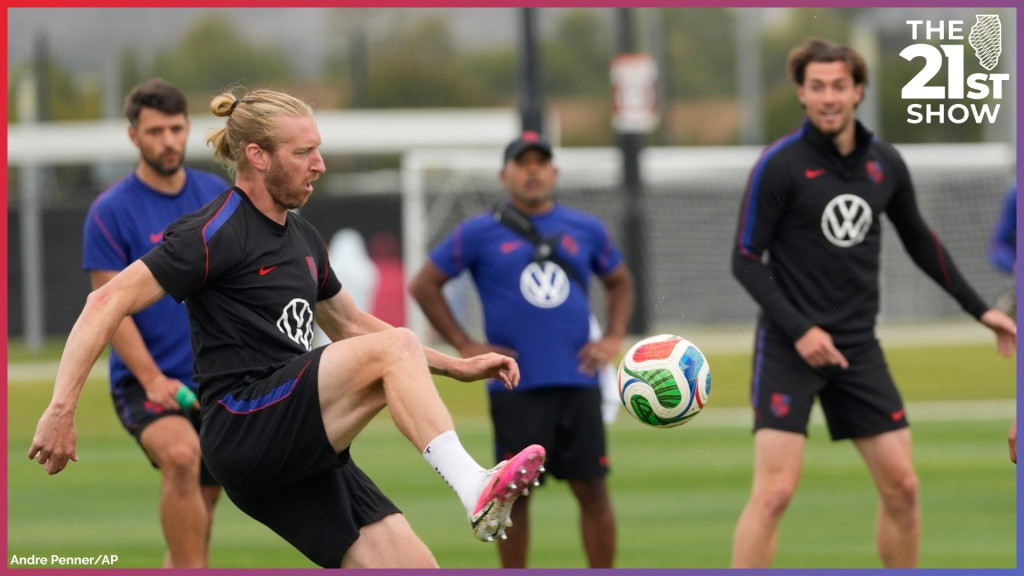
It’s win-or-go-home time for the U.S. men’s team
Read the full story at https://will.illinois.edu/21stshow/its-win-or-go-home-time-for-the-u.s-mens-team.
Transcript
// This is a machine generated transcript. Please report any transcription errors to will-help@illinois.edu.

[00:00:00]
Brian Mackey: It's the 21st show. I'm Brian Mackey, and today is do or die for the United States in the World Cup. The men's national team will play Bosnia and Herzegovina tonight. Here's Fox Sports sideline commentator Jenny Taft, talking about that yesterday with U.S. head coach Mauricio Pochettino.

[00:00:27]
Jenny Taft: Mauricio, tomorrow it gets very real. How have you prepared your team for the knockouts?

[00:00:33]
Mauricio Pochettino: Yeah, I think it's, uh, we are very excited and I think we are well prepared. Um, we know very well that it's going to be a very tough game. It's a final, uh, all in, and I think we arrive in a very good condition. Um, yes, uh, um, we know that we need to perform and, and if we, if we want to be close to win we need to perform well again[st] a team that is going to be really tough.

[00:00:59]
Brian Mackey: Joining me to talk more about this is Alex Calabrese. He covers soccer for Men in Red 97 Media, a news site focused on the Chicago Fire, as well as for MLSoccer.com. Alex, welcome back to the show.

[00:01:13]
Alex Calabrese: Hey, happy to be here again.

[00:01:15]
Brian Mackey: And listeners, you can join us for the rest of the program today. Are you following the U.S. team? Are you following other teams? Are you staying up late? Are you learning about things like the offsides rule and VAR and all the other uh, fascinating aspects of global soccer? Let us know. 800-222-9455 is the number. 800-222-9455.

All right, Alex, big picture, what have you thought about the U.S. men's team performance so far?

[00:01:44]
Alex Calabrese: I mean, I would like to say that this is probably the best version of the U.S. men's national team I've ever seen in my lifetime. I think, coming out from the opening game, playing as well as they did against Paraguay, and you know, really being up 3-0 at halftime was something truly extraordinary, and I think the way this team has brought so many people across the country together has been something really beautiful to see and something we really have not seen in a very, very long time with the U.S. men's team.

[00:02:11]
Brian Mackey: What do you think are some of the biggest, you know, sort of the human storylines that, that you've, you've seen coming out of this U.S. men's team, right? I mean, we've got Tim Ream, who is the, uh, the St. Louis native, uh, the sort of elder statesman made the team captain. Um, you know, we've got the, our, our number 10. And whether he's gonna be healthy enough to play. I don't know what, what are you following, you know, sort of story-wise?

[00:02:33]
Alex Calabrese: Yeah, I think some of the dual nationals who are who made the choice to represent the U.S. over somebody else have been some of the best players. I think [Folarin] Balogun is someone who was born in the U.S. really by chance because his mother —

[00:02:46]
Brian Mackey: — was [seeking] citizenship. Exactly, yes, yes, say more. Go ahead.

[00:02:51]
Alex Calabrese: So I think, I mean he was really born in the U.S. by chance because his mother was too pregnant to get on a plane back to Nigeria and he was born in the U.S. by chance and is now the top striker for the U.S. has really been a star at this World Cup, and I think another one has been Malik Tillman, who was born in Germany, lived his whole life in Germany, never lived in the U.S. but had an American father who was in the military and left, left his family when he was a child, but the opportunity came to play for the U.S. It was something he picked up the phone. Made the choice to do it, and even though he did not grow up American, he just had the passport and that was it. He's really left it all out on the field and I think been one of the absolute top players for the U.S. in this World Cup and has brought so much quality to the midfield that we haven't really seen from that kind of player in the U.S. team before.

[00:03:40]
Brian Mackey: As someone who's like a pretty casual soccer fan, I was fascinated to learn about this. I saw a really cool, like one of those people who does drawings on YouTube where they explain the, uh, you know, something in an infographic as they're talking over it. And it shows that they're like, there's some teams where it's all native born citizens on the team. There's other teams where as you go down the list, it's increasingly people who were not born in that country. I think Curaçao is the one where it's like almost, if not entirely, it's a 150,000-person country that's part of the Netherlands, I think, but it's almost entirely people born elsewhere. That is a fascinating dynamic in the World Cup, yes?

[00:04:18]
Alex Calabrese: Yeah, definitely. I think even some of the best teams in the world, Morocco, fielded a starting elev[en] in this World Cup where all 11 players were born outside Morocco, um, but then you have teams like Germany, like England, where basically every player was born in the country, so it's it's just a reflection of how the world is now, it's very, very multicultural. I think a lot of people. More people than ever before have multiple countries in their lives, and when it comes to soccer, you have to pick one and that can be a really, really tough thing if you're a player that you have to take two aspects of your identity and pick one to go with. But I think it's really cool that we get to see that and it's a reflection of how diverse the world is and how many different combos and mixes and patterns of immigration there are, so —

[00:05:04]
Brian Mackey: — yeah. Well, it goes to, it speaks, I think as well to like just how mobile people in the elite levels of soccer are in terms of going around the world to play. And I, you know, just so people understand, I, my understanding is it's either you're born there, uh, you, you've, you know, gone through the process of becoming a citizen of that country, or I think some, it's like your parents or grandparents could have born there, uh, could have been born there.

So, let's talk about some of the American, uh, players, the Illinois players, I should say, who have, these are the people we talked about last time and how their teams have done. We've got, uh, Chicago Fire goalkeeper Chris Brady, uh, who's a backup for the U.S. team, Joel Waterman, who's a defender with the Fire, uh, playing for Canada, or I should say, you know, on the bench for Canada mostly. Uh, [Mbokazi] with South Africa, a rising star there. We talked a lot about him last time. He has had, he had significant minutes for South Africa. Uh, and then Fire alum Brian Gutierrez playing for El [Tri], uh, the Mexican national team. They all made it to the round of 16. They're not all moving on.

Let's start with South Africa. What did you think of, uh, [Mbokazi's] performance and, uh, is it gonna be enough where people are gonna be trying to poach him from, from the Fire?

[00:06:15]
Alex Calabrese: It wouldn't surprise me. I think [Mbokazi's] performances, especially in the last game against Canada, got a lot of people talking on both sides of the ocean. I mean, he had options in Europe when the Fire [re]signed him. They were not nearly as lucrative for neither him nor his previous club that it didn't make any sense for him to go to Europe at that time, but I think his transfer value has definitely increased substantially, so it is possible there will be some calls from Europe. He was exceptional for South Africa across their games, for a team that I don't think looked very good at all in their first three games, but managed to squeak through to the knockout rounds and put up a very good fight against Canada, which is always going to be a tough game with Canada being on North American soil at the minimum. Um, but yeah, we'll, we'll see what happens next with him. I think a lot of teams in Europe love to sign players right after the World Cup, and that's a risky business, but because he has the resume from MLS that he's shown in this first half of the season that he does have that quality, and this is not an outlier, these performances.

[00:07:23]
Brian Mackey: Another player that I like to watch, uh, as a fellow Brian is Brian Gutierrez, uh, raised, born and raised in the Chicago suburbs, played for the Fire, came up through their system, uh, went to the Mexican, uh, [Liga Ames] [Liga MX], uh, this season, and he's been playing for the national team, and he's gotten some minutes. How, how has he been doing?

[00:07:43]
Alex Calabrese: I mean he started the first game, I believe the second game as well. He did OK, but I mean just starting in a World Cup game is a tremendous accomplishment, especially for a team with as much of a history and pedigree as Mexico. They're a team that are already through to the round of 16. I think there's a very good chance they'll be through to the quarterfinals if England continue losing to Congo right now, um, that the winner of this game will play Mexico in the next round at Azteca.

But yeah, with Guti, I think it's a fascinating case because Mexico is not his first choice. He was holding out for years for the U.S. and when he realized that was not gonna happen and it was pretty clear he didn't have a shot at making the U.S. team, he picked up the phone from Mexico, answered a call that he was not answering for many years. And now he's playing there in the World Cup and succeeding. So cool to see him from a personal level, succeeding. Unfortunate from a U.S. standpoint that we won't ever get to see him in a U.S. shirt because I think that would have been his first choice too, but I mean, I think he's happy he's playing in a home World Cup with El [Tri], the country of his ancestry. So very cool for him.

[00:08:47]
Brian Mackey: Yeah, I can't mention it. I can't remember if I mentioned this last time, but I can't tell you how many times my family and I have watched that [golazo] he had against Miami. I think it was late last year, uh, in Miami. Um, just, it's, it's a, it's a joy to watch him play. So, and I look forward to seeing his career develop because I think he's still only what, like 21, 22, something like —

[00:09:05]
Alex Calabrese: — 23, OK —

[00:09:08]
Brian Mackey: — yeah, all right. Um, so there have, let me remind listeners, we're speaking with Alex Calabrese, uh, who's editor in chief of Men in Red 97 Media and covers, uh, the world of soccer, uh, especially the Chicago Fire. Uh, but, but more broadly as well, there have been a fair number of upsets in this World Cup, right? At least based on the history of teams. Germany and the Netherlands, who, although they've never won it all, going home earlier than, than they would have liked, that some people expected. I wonder if you see any through lines in the stories of the upsets in this World Cup.

[00:09:42]
Alex Calabrese: I think in the case of Germany, there's a lot of things that led up to that defeat, uh, but generally speaking, when the World Cup has been in the Americas, some of the European teams have struggled, and I think the weather and the conditions are a part of that. Paraguay much more accustomed to playing in summer heat, it was horribly hot here where I am right now on the East Coast for the World Cup these last couple of days, and I think some of the European teams have been struggling with that, so we'll see if that trend continues. I mean England are losing right now to Congo, like I mentioned before, which is completely unprecedented. Uh, but, I mean, generally speaking, the world has the, the floor of this World Cup has gotten higher over the decades. The teams from Africa have been incredibly competitive. I mean, 9 African teams in the round of 32 is something exceptional. Under the previous format, which was only 32 teams, only 5 African teams were allowed to qualify, and now 9 are in the last 32. So, really, really cool and shows the high level that some of the other continents that maybe haven't been the traditional powerhouses have been able to raise their level.

[00:10:47]
Brian Mackey: What do you think, uh, yeah, I don't know if you do predictions or have thoughts on, on the teams that are likeliest to get through to the final rounds. I mean, obviously, people talk about Brazil for historic reasons as well as how they're playing this year, but France, of course, as well, has, has been pretty good in the World Cup. What, what do you think?

[00:11:06]
Alex Calabrese: Yeah, I think France and Argentina, it almost feels like an inevitability right now, because those are the only two teams that have looked completely dominant. But then again, it feels like there's an inevitability going into the knockout rounds of every World Cup, and it's usually not what happens. So we'll see if one of these teams, maybe their momentum slows down, but I will say Spain have looked pretty poor in the final third in this World Cup. Brazil have been pretty disappointing, Germany are of course out. So France and Argentina are really the only two teams without any sort of hiccup or stumble or inconsistency. Those are the two dominant teams, but again, it's an 8-game tournament, that's that's a law, it's a it's a marathon, not a sprint, so we'll see if they can keep it up.

[00:11:51]
Brian Mackey: So you have given your, you know, your work life so far to this sport that is not the dominant sport in America. It's the global sport, but it is not the No. 1. It's rising. I think I saw that it was ahead of, it's No. 3 now, right? Behind uh football and and basketball apparently. I don't remember the source of that, so don't quote me, but I wonder what the atmosphere has been like. You've been to some of these games, seeing the attention that it's getting on TV and in, in, you know, in the culture more broadly, a lot more sports guys, uh, you know, talk radio who never talk about soccer are suddenly talking about the World Cup. I'm seeing more and more clips of that on YouTube. What has it been like from your perspective as someone who's been steeped in this for a long time to see everybody else taking notice?

[00:12:33]
Alex Calabrese: I think it's something really cool. I mean, I think there's a temptation when these kinds of things happen for a lot of people to want to gatekeep, but I don't understand that at all. I mean, I think I came to the U.S. when I was 10 from England, where soccer is not only the main sport, it really feels like the only sport most of the time, and this World Cup has felt like that here in the U.S. and that's been really, really cool. I think it's the biggest sport in pretty much every country in the world, barring a select few in the United States is one of those select few, so I know that it probably will not be maintained at this level following the World Cup, but I think a lot of people are getting eyes on it, and I think the World Cup is a really easy way to get into it because even if you don't know the teams, you don't know what city is Chelsea in, why is it called Paris Saint Germain, whatever, all this, easy to follow the countries and get into it, and, you know, you know, you have a connection to one country, you have, you can support the U.S., that kind of thing, and I think the atmosphere has been amazing because from a global standpoint, I think a lot of misconceptions that have been peddled about the United States have been shot down. Uh, that maybe people overseas have, just because everybody's had such a great time and enjoyed it and realized that a lot of the things you see on TV that are negative about America are not necessarily true. So, I think, uh, from both the U.S. looking outward and looking at the sport, and from an outward looking at the United States standpoint, it's been a very, very successful World Cup in all those aspects.

[00:14:01]
Brian Mackey: All right, let's see if we can get a caller in 800-222-9455. We've got Paul on the line from Urbana. Paul, thanks for calling in. I understand you want to name check some other international players.

[00:14:11]
Paul: Yeah, well, uh, [Pulisic] could actually play for Croatia, but I don't think he's gonna. But [Tim Weah] notably is his father is the president of Liberia. And he's always getting a shot in the audience too, but I wanted to check you on a theory I had, uh, going back to the [CONCACAF] Gold Cup when, uh, Panama beat the U.S. and it was mainly because of red card in the 17th minute by [Weah]. I think they were provoking him about his his nationality and and kept, he did a just an absolutely stupid. You know, you know, well, a hit of a Panamanian player and was thrown out and the U.S. lost the lost the match. There were a couple of other players. I've been following the U.S. players abroad like in Juventus and uh, Dortmund and all that. So I, uh, it was, it's great to see these, these great players on the, on the pitch, but I don't know if you have a theory on, on that, uh. Historical thing when the [Gold] Cup in [CONCACAF] was was lost by the U.S.

[00:15:20]
Brian Mackey: All right, thanks for the question, Paul. Appreciate it.

[00:15:24]
Alex Calabrese: Yeah, I mean, I can't speak to what was said in that moment by the Panamanian player. I think you'd have to ask him or Tim Weah, um, so I don't want to speculate on that, but of course, I think from for Weah to be able to bounce back from that moment where it was his, his action, his, his error that directly resulted in the U.S. getting knocked out of the group stage of the Copa America two years ago, that was that exit in the group stage was a big embarrassment for the U.S. It resulted in Greg Berhalter being fired and Mauricio Pochettino coming in. So, uh, so to see him playing in this World Cup back with the team, hopefully can play a bigger role in the knockout rounds. He's a player with a lot of quality. And uh yeah, hopefully he can bounce back and score again in the World Cup like he did four years ago in Qatar.

[00:16:08]
Brian Mackey: Yeah, Greg Berh[a]lter, of course, uh, as you say, former national team coach, now the coach of the Fire. We have less than one minute left, maybe 30 seconds, so I'm gonna ask you to be brief. Um, he's also director of football and he has been trying to bring in a big name and they have now signed Robert Lewandowski. For people who don't follow this, how, talk about why this is a big deal potentially for the Chicago Fire.

[00:16:31]
Alex Calabrese: Yeah, I mean, after Lionel Messi, he's in the next tier right below him in terms of the biggest names in world soccer. So it's like Neymar, Thomas Mu[ller], those kinds of players, Robert Lewandowski is right in there. So bringing him to Chicago, bring him to MLS, it's gonna be huge. He's Polish, so can get the Polish community in Chicago really excited and uh yeah, something that you'll definitely want to be tuning in for his debut in two weeks against Vancouver.

[00:16:56]
Brian Mackey: Yeah, and uh my, my, uh my older son who's a big Hugo Kuipers fan is hoping this doesn't mean spell the beginning of the end for, for Hugo in Chicago, but he's, he's leading the Golden Boot race. So we will hope that maybe we'll have two aces. Alex Calabrese is editor in chief of Men in Red 97 Media. We'll have links to some of his stories at our website [21stshow.org]. Alex, thanks again for coming back. Appreciate your time. Thank you. We're gonna take a hydration break. We'll be back with more World Cup. This is the 21st show. Stay right here.
Transcript Assistance
Illinois Public Media may use AI assistance for transcript generation and/or formatting. Transcripts that have not yet been reviewed for accuracy will be labeled.
To report a transcription error, or to request transcription of archival material, please contact will-help@illinois.edu.