Transcript: What are prediction markets and do they need to be regulated?
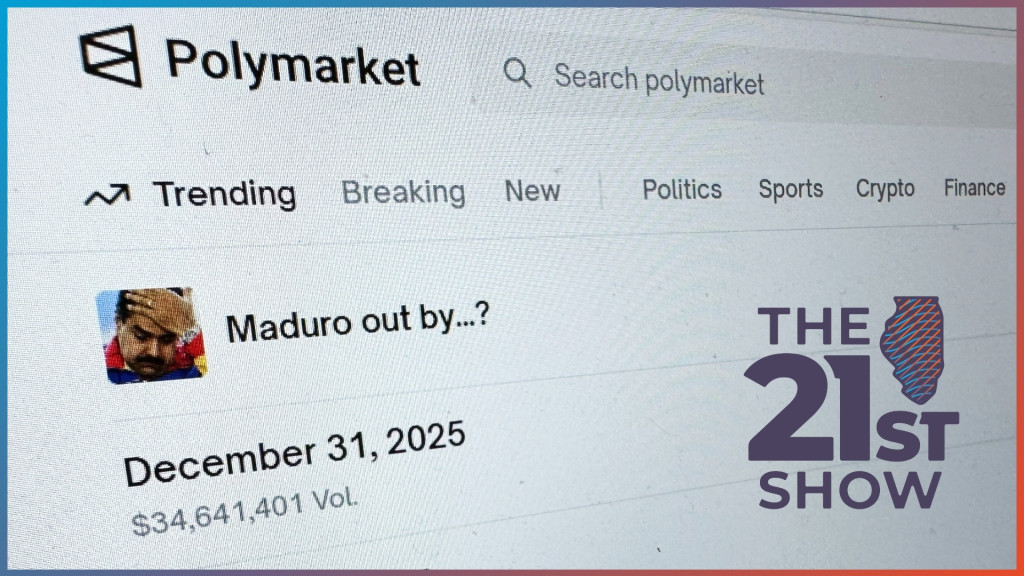
Transcript: What are prediction markets and do they need to be regulated?
The 21st Show
What are prediction markets and do they need to be regulated?
Read the full story at https://will.illinois.edu/21stshow/predication-markets.
Transcript
// This is a machine generated transcript. Please report any transcription errors to will-help@illinois.edu.

[00:00:00]
Brian Mackey: Today on the 21st show, prediction markets such as Kalshi and Polymarket allow people to bet on pretty much anything from war and politics to more offbeat topics like whether the government would ever confirm aliens exist. We'll talk about the rising significance of prediction markets and the fight to regulate them in Illinois and beyond. I'm Brian Mackey, and that's coming up today on the 21st show, which is a production of Illinois Public Media, airing on WILL in Urbana, WUIS in Springfield, WNIJ in Rockford-DeKalb, WVIK in the Quad Cities, and WSIU in Carbondale.

[00:00:42]
Speaker 1: But first, news.

[00:01:07]
Brian Mackey: From Illinois Public Media, this is the 21st show. I'm Brian Mackey. And today we're going to be talking about prediction markets. You might know them under brand names such as Kalshi and Polymarket, maybe Weibull, but there are others. We'll get into their specifics in a moment, but essentially they allow users to place money on a prediction of the outcome of an event or if something is yet to happen, will in fact happen. And you really can bet on anything. Here's an ad for Kalshi.

[00:01:37]
Speaker 2: Hey Dan, have you heard of Kalshi?

[00:01:40]
Speaker 3: Yeah, the prediction market that lets you trade anything from sports to alien sightings.

[00:01:45]
Speaker 2: Alien sightings. When does that happen?

[00:01:53]
Speaker 3: I knew it. We were probably right about the moon landing too.

[00:01:57]
Speaker 4: Hey, that's not true. We did that. You wasn't there, bro. You wasn't there.

[00:02:03]
Brian Mackey: All right, millions of Americans, including plenty of our fellow Illinoisans, have found this compelling enough to risk their money on such markets. But what's really happening here? Should these be treated like commodity futures, or is it really gambling? And should we be regulating the industry? Some Illinois lawmakers think so, but the federal government is telling states that this is their jurisdiction, and that Illinois and other states should back off. Joining us now to talk more about this is Casey Toner, a reporter with the Illinois Answers Project, who's been doing work on prediction markets lately. Casey, welcome back to the 21st show.

[00:02:44]
Casey Toner: Thanks for having me on.

[00:02:46]
Brian Mackey: Also with us, Carl Lockhart, assistant professor at the DePaul University College of Law. Carl, welcome to the 21st show to you as well.

[00:02:49]
Carl Lockhart: Thanks for having me.

[00:02:51]
Brian Mackey: And finally, Warren Hatch is with us. He's the CEO of Good Judgment, which is a super forecasting service. We last spoke with Warren for a segment on super forecasters way back in 2020. Warren, welcome back to the show.

[00:03:04]
Warren Hatch: Thanks for having me back.

[00:03:06]
Brian Mackey: And I want to invite you to join us today. 800-222-9455 is the number. What do you think of these services, Polymarket, Kalshi, and so on? Is there room to learn from the data they're collecting? Should there be some areas maybe politics or war that are off limits? 800-222-9455. That's 800-222-9455. All right, Casey, I'm going to start with you. Just give us a little more detail than I did in the introduction there about what exactly a prediction market is.

[00:03:44]
Casey Toner: Well, prediction markets allow users to wager through buying and selling contracts on the outcome of future events. And this means that users can make classic sports gambles and pick, for example, the future NBA champion, or they can bet on the number of people Donald Trump will deport before the end of the year. Or they can bet on whether Jesus Christ will return in 2027. So there's a whole realm of things that people can bet on. And it's kind of a novel concept, and among young people especially, it's a very trendy thing to do.

[00:04:21]
Brian Mackey: How does this work exactly? You mentioned a con, you know, people are buying contracts on future. How do, how do the mechanics of this work?

[00:04:29]
Casey Toner: Well, basically you can pick. For example, there'll be a bet that'll say like, will Donald Trump deport more than 200,000 people before the end of the year? And you can say yes or no, right? And depending on how many people say yes or no, you can, you can say yes and you can basically buy low or sell high. And then on the inverse, you can also buy high and sell low if, you know, more than, you know, as the, as the bet turns south. So there's a little bit of dynamism that makes it just a little bit different than the standard picks you can make through normal gambling.

[00:05:10]
Brian Mackey: Warren Hatch with, with Good Judgment, you've been doing sort of, you know, promotion of probabilistic thinking since long before Kalshi and Polymarket were household words. What do you think of these prediction markets as, as they've sort of evolved?

[00:05:25]
Warren Hatch: In principle, I think they're great. Anything that brings probabilistic thinking into public discourse, I think is a good thing. And we're already familiar with probabilities and weather and sports, and now we're getting more comfortable with it in other areas like election outcomes and deportations by the Trump administration.

[00:05:47]
Brian Mackey: Can you give us for, you know, for those of us who it's been many, many decades since we had a college statistics course, a reminder, a refresher on what exactly we mean by probabilistic thinking?

[00:05:58]
Warren Hatch: So, that's just saying, it's just, and we're using probabilistic thinking almost all the time. We just may not recognize it as such. So, you know, which lane are you going to get in on the highway as you're hurtling to downtown Chicago, you're going to be making a probabilistic judgment that the lane you're going to go into will move just a little bit faster. Now, all we're doing with what we do is converting that hunch into a number. So that's instead of saying, I think it's likely I'm going to go faster in the left lane, I'm going to say I think there's a 70% chance that I'll go faster in the left lane. And then when I get downtown, I'll find out.

[00:06:41]
Brian Mackey: Yeah, or maybe, you know, this blue car next to me will arrive downtown 10 minutes, you know, or, or be on time for their meeting at 9 a.m. or something, I guess. And we can get into the question phrasing and how that's happened on some of these markets in a bit, but Carl Lockhart from DePaul, let me bring you into the conversation now, sort of a baseline. What, what do you think of prediction markets generally?

[00:07:01]
Carl Lockhart: Yeah, I think that they're an interesting new innovation. I mean, I think I have some serious concerns of sort of how they're being rolled out and I think, you know, something to point out is that making predictions about the future is not something that's exclusive to prediction markets, right? This is everything that businesses are doing and this is what the stock market is about. Everything is about trying to predict the future and this is just a new sort of iteration of that that's more sort of explicit in your face.

[00:07:29]
Brian Mackey: What is the kind of steel man? Because let me actually — this is a good time to share some of the — we asked members of our texting group what they thought about some of these prediction markets, and there was some concern out there. So Brandy in Urbana sent us a message said, I'm concerned about the capability for those with insider information to profit off of services like this. While betting on war and deaths may be illegal, those bets are happening and the people making military decisions or adjacent to military decision makers are further enriching themselves. We also heard from Jesse in Mattoon, Illinois, who said, just look at what sports gambling did to the integrity of sports. I can't imagine what kind of shenanigans people in power would pull to get big payouts. I think it should be banned. So, Carl, what, what is like, before we get into that, what is the steelman argument for, what would you say, the social utility of these markets?

[00:08:21]
Carl Lockhart: Yeah, I think so. If you think about where these prediction markets come from, they're originally they're a type of derivatives market, and that is a whole class of financial instrument that's separate from stocks and bonds. So usually we think about stocks and bonds as sort of the two main types of financial instruments, but there's this whole other category called derivatives, and derivatives include all sorts of things including, you know, they started out actually in Chicago as farmers and those who are purchasing commodities tried to hedge risks related to farming and so if you could buy or sell a you know corn or grain in the future at a certain price, then you could smooth out your production cycles and you could have sort of a more stable, stable market economy. And so that's sort of the source of these prediction markets is that the idea would be that businesses that have risks that they're worried about would be able to use them to hedge. Now I think that there are some of these prediction markets that businesses could conceivably use to hedge their risks, but that's not what the majority of these markets are being used for and some of these markets, it doesn't seem like there's any sort of hedging going on. It's all just people speculating. No one has any sort of actual business interest in whether, you know, one thing happens or it doesn't.

[00:09:41]
Brian Mackey: It's not about the price of orange juice in 6 months, necessarily. All right. Yeah. Let me, let me reintroduce our conversation. If you're just joining us, this is the 21st show. We're talking today about prediction markets. You probably know them by names like Polymarket and Kalshi, Weibull, there are others. There's a push to regulate them in Illinois. Some in the federal government are resisting that. There have been allegations of, of potential insider trading on some of these platforms. So we're talking about all those issues and this concept today with Carl Lockhart, who's a professor at DePaul College of Law, Casey Toner, reporter with the Illinois Answers Project, and Warren Hatch, CEO of Good Judgment, a super forecasting service. Warren, let me ask you about that. So as I mentioned, you know, super forecasting, these are, these are people who have this sort of really good ability to apply probabilistic thinking to future events, right? And they demonstrate it through competitions. Talk about what a super forecaster does and how that relates or maybe is different from what's happening on prediction markets.

[00:10:49]
Warren Hatch: Well, and we came out of a research project sponsored by the U.S. government some time ago where the task was to use the wisdom of the crowd to get a better probability number. And there were university-based teams who did their best to improve on the wisdom of the crowd. We know it works. Can it be made to work better? And they tried different approaches. The team that won, Good Judgment, they tried prediction markets, which did pretty well. But they also tried teams, which turned out to do much better on a lot of different categories of questions. So, we built our business based on teams rather than prediction markets, but they're both ways to get a wisdom of the crowd. And what the researchers found is that some people are just consistently better than the rest of the crowd at formulating probability estimates that occur with that frequency. They're well calibrated. So let's say there's an 80% chance of something occurring across 10 questions, 8 times that event should occur and 2 times it should not. And that's how we can track a superior track record and super forecasters just to qualify for consideration, have a track record of at least 100 questions of sustained accuracy.

[00:12:06]
Brian Mackey: Is there — how do I put this? Is there a profit motive to super forecasting as, as it's practiced, you know, among the individual people who are enthusiasts for this kind of activity?

[00:12:17]
Warren Hatch: Well, during the research phase, they gave us a $250 Amazon gift card for our efforts and that translates to like, uh, 2/10 of a penny per day or whatever. But a big motivation is still being part of something new and challenging and getting the opportunity to learn new things when new questions are submitted by clients, but there's also a financial aspect to it too. We're a business and we charge for our services and we share a portion of the revenue with the super forecasters.

[00:12:50]
Brian Mackey: I guess what I'm getting at though is no one's going to make, you know, $100,000 if President Trump, you know, uses the word tampon in a given year, which was an actual, you know, thing somebody could wager or, or, you know, place a, place a bet or or however you want to phrase it on Polymarket a couple of years ago.

[00:13:07]
Warren Hatch: Yeah, we're, we're not in it to make millions and we're not going to make millions. We do OK. And we would never have that kind of a question. That'd be deeply problematic to the head of our question team.

[00:13:19]
Brian Mackey: Yeah. All right. So, let me remind listeners again, you can join us at 800-222-9455. So, Casey Toner with the Illinois Answers Project, you've been reporting on this. Tell, tell me about Oliver Wilson and how he got into prediction markets.

[00:13:36]
Casey Toner: Yes, Oliver Wilson is a freshman at the University of Chicago, and he got into the prediction markets when many people did, and this was during the 2024 election of Donald Trump. He became kind of fascinated about, you know, what he was seeing, and, you know, started making his own bets at that time. He picked Donald Trump to win, but he ended up losing a little bit because he thought that Kamala would win the popular vote. But regardless, he really got into it, and, you know, that summer, he spent a week interning at Polymarket's headquarters in New York City. And then, once the school year began, he reached out to Shane Coplin, the CEO of Polymarket, through Instagram, who he got to know during his one-week internship in New York City. And he asked for seed money to fund a prediction market club on campus. And to his surprise, Shane Coplin agreed to give the campus club $20,000 for operations. And so right now, he is basically leading this prediction market club on the campus of the University of Chicago. And there's a number of people there, and they're essentially doing trades, kind of around the clock, you know, using software, and, you know, potentially doing research on their findings. And this is important because, you know, Oliver and his classmates are part of this younger demographic that prediction markets are seeking to court. And so while it's happening here in Chicago, you know, there's been news articles that showed that they're doing kind of similar things in terms of, you know, trying to get younger people into using prediction markets.

[00:15:21]
Brian Mackey: Hm, interesting. Carl, we need to take a break in a minute and a half here. But what are the, what are the legal dimensions of this? Is this betting? What, what's going on here?

[00:15:33]
Carl Lockhart: Yeah, so Polymarket and Kalshi in particular — Kalshi — have been registered with the Commodity Futures Trading Commission, which is a federal government agency that regulates derivatives marketplaces, and so Kalshi in particular has been sued many times in court across the country. Those cases are sort of evolving. But what the arguments basically are is, is this something that the states have jurisdiction over? Is this gambling? And if so, you know, then state gambling laws apply. These businesses have to pay taxes, or is this some sort of derivatives financial product, in which case federal law applies and the states cannot and are prohibited from taxing it. So that's, that's sort of the main dispute that's going on right now and it will eventually wind its way up to the Supreme Court and we'll have to see what happens with that.

[00:16:26]
Brian Mackey: All right. Well, we're going to take a break on the program. Once again, I'm going to invite you to join us today. If you have questions or comments about prediction markets, 800-222-9455 is the number. We've also been getting text messages in. Adrian in Carbondale says, I think those sites are definitely gambling. I find it really disturbing. I think there should be some type of oversight, Adrian said. Thanks for the message. Again, you can join us at 800-222-9455. We're talking about the new prediction markets, places like Kalshi and Polymarket, and the efforts to regulate them in Illinois and the resistance to that we've been seeing from the federal government. We'll continue this conversation after a short break. It's the 21st show. I'm Brian Mackey.

It's the 21st show. I'm Brian Mackey. We are talking about prediction markets. You know them under names like Polymarket, Kalshi, Weibull, though there are others. These services let you bet on anything happening in the world from who might win the next Super Bowl to whether and when Nicolas Maduro would be ousted as the leader of Venezuela. There's a push to regulate them here in Illinois, though the federal government says that's its job. There's also debate as to whether these should be treated like other forms of gambling, or if it's something entirely different. Terry in Batavia says they sure sound like gambling to me. Regulation makes sense, as does restrictions on betting on war, politics, and things like how many wildfires there are going to be, etc. Join us at 800-222-9455. That's 800-222-9455. We're talking about this with Casey Toner, a reporter with the Illinois Answers Project who's been doing work on prediction markets, Carl Lockhart, assistant professor of law at the DePaul University College of Law, and Warren Hatch, CEO of Good Judgment, a super forecasting service. So, Warren, let me come back to you and, and let's talk about the prediction market's actual ability to predict, right? How, how accurate are places like Kalshi and Polymarket?

[00:18:55]
Warren Hatch: They do a pretty good job. The thing to avoid doing though is over extrapolating a few data points. So, in one election cycle, they might do really well. Other election cycles, they might not. So it really matters what the track record is over time. And it's not bad. The word that you used earlier, they're pretty well calibrated. So that when they say there's a 50% chance of some event occurring, it occurs about half the time. And they are a good way to get a different perspective on important events of the day in addition to polling. And in some ways they do better than polling and others, they don't. When we're able to put our questions against their questions, we still do a bit better. But they're, but they're pretty good, depending again on the topics. And if it's, if it's pretty random, I wouldn't rely on them much. If it's more about something that has a fair amount of uncertainty, like who's going to win an election, I would pay much more attention to them. And that also tells us whether it's gambling or forecasting. If the question is who's going to win a particular election at the end of the year, I think that's forecasting. If it's, will I roll snake eyes on my next roll, that's gambling. And the sooner that the prediction markets discriminate between the two, the better in my view.

[00:20:23]
Brian Mackey: What about the question wording? I know that's a, that gets a lot of attention in the world of super forecasting. Have there been any issues with that in terms of how these prediction markets, some of these contracts are operating?

[00:20:35]
Warren Hatch: I think there are 3 big issues that they need to navigate. One is the gambling versus forecasting. Another one is the insider trading that you've already touched on. You know, in real markets that gets you an orange jumpsuit for 5 to 10. They need to address that. And the third area which is astonishing to me is question quality, where they continue to undervalue the need to have clear, crisp questions so that everybody understands them in the same way. There are way too many questions that are still poorly worded so that people might interpret it one way and then other people will interpret it another and then come the day the resolution goes in a direction that surprises far too many people and I would imagine will be the subject of many lawsuits if they don't get their act together.

[00:21:27]
Brian Mackey: And we've even seen death threats, right? There was a, I think, [Israeli] journalist. I read about this in the Guardian, somebody who was getting threatened because of the way they reported a certain missile strike involving the war in Iran. And I guess people didn't like that report was being used to justify a certain outcome on one of these betting markets, I gather. Fascinating. Let me read another message we got from Roberto in Rockford says, I believe we've seen credible evidence that our elected officials and a lot of appointed officials are actively betting and winning large sums of money on what amounts to people's lives. If these prediction markets exist, then we need extremely harsh laws that criminalize insider trading more effectively when it comes to these prediction markets. Our elected officials need to be completely barred from having anyone related or within close proximity to them from having access to these prediction markets. Carl Lockhart at DePaul University College of Law, what do you think of that? Talk, talk about the insider trading dimension here.

[00:22:32]
Carl Lockhart: Yeah, I mean, I think the insider trading dimension is a major concern and again it's not something that just exists in these prediction markets, you know, for years there's been pushes to try to get bans on members of Congress from being able to trade individual stocks and yet they continue to and continue to post very good returns. Just because they have inside governmental information that they're able to use as they trade stocks. So I think this is a huge problem and the prediction markets have brought it even more into focus and of course the prediction markets also are — I would say even more problematic because it gives them an incentive to make decisions based on certain potential outcomes, right? So if you are in control of whether or not, you know, we bomb Iran on a certain day, you can bet on that and you can make money from that. And so, it is a huge concern in the in the prediction market space especially.

[00:23:33]
Brian Mackey: Have we seen clear and, you know, sort of clear and convincing evidence yet or just like really suspicious coincidences or or how, how would you characterize what we've, what we've, you know, what we've seen so far about this?

[00:23:47]
Carl Lockhart: Well, I think there's investigations still ongoing. I know that in Israel there were — there's been some criminal charges brought against members of their military for making wagers on prediction markets related to, you know, the ongoing war that's happening. And and then there was actually a White House memo that I think it was a memo or a message that leaked a few days ago basically in which the White House told its staff that they should not be placing wagers on these prediction markets which you know, kind of alludes to the fact that people might have been before that had happened. So, I think that you know we don't have any credible evidence at this point and as far as I know of who the people are who might be doing this, but there have been sort of suspiciously large trades on these markets that have been timed very closely to when major geopolitical events have occurred that it would seem would be hard for anyone else to have knowledge of except for someone who was intimately involved in the planning of these events.

[00:24:49]
Brian Mackey: So, Casey Toner with Illinois Answers, you talked to people who are, you know, trying to, to profit on, you know, to do work on these, on these markets. Are they worried about insider trading to the extent you've talked to them about that?

[00:25:04]
Casey Toner: I mean, I think there's a general concern, you know, with any sport, you know, is the sport rigged, you know, what kind of rules and regulations are set up to make sure that it runs well. And the prediction markets, there's no difference between that and, you know, people having questions about suspect refereeing in basketball. It's very much the same thing, and, you know, as far as I'm concerned, as long as there are games to be made money on, people will have questions about the rules.

[00:25:36]
Brian Mackey: Mm interesting. And, and Warren, I just come back to you because you only had a sort of chance to mention this in passing. What do you, what do you think of this insider trading allegations, right? Do you think there is actual fire where we've seen the smoke so far?

[00:25:52]
Warren Hatch: Oh, I don't think there's any doubt of that, and if they don't address it, it's going to become much more of a problem than it already is. And if they don't address it, then they open themselves up to getting regulated out of existence. If they don't do something about it, somebody else will.

[00:26:12]
Brian Mackey: Hm. Yeah, we're going to talk about that in a few minutes here. Let me remind listeners you can join us today at 800-222-9455. Let's go down to the phones. We have Alan calling from Stillman Valley, Illinois. Alan, thank you for calling in.

[00:26:27]
Alan: Hi there.

[00:26:30]
Brian Mackey: Hi, you're on. So I understand you, what, what do you want to, what's your question or comment today?

[00:26:36]
Alan: Well, my comment is regarding my view on prediction markets is this that will again prove Ben Franklin right when he says a fool and his money are soon parted.

[00:26:48]
Brian Mackey: So it sounds like you're not, you're not a fan of these things. Do you think the government should, should step in and, and regulate them like they do with the gambling markets or, or outlaw them outright?

[00:27:00]
Alan: Well, my view is the same of all gambling. It's not a good idea. It's not a good use of your money. There are far more better ways to invest your money than that. So I would think the government should regulate it in some way, but again, I don't think they should encourage it.

[00:27:23]
Brian Mackey: Hm, yeah. All right, Alan, thanks for the call. Appreciate it. Let me remind listeners we are talking about prediction markets with Warren Hatch of Good Judgment, the super forecasting service, Carl Lockhart, assistant professor of law at DePaul University, and Casey Toner with the Illinois Answers Project. So Casey, how has Oliver and his sort of classmates, how have they been doing in these prediction markets? Are they going to be having to be, you know, be able to skip the workforce and just be able to retire directly after college?

[00:27:57]
Casey Toner: I mean, it's a little bit too early to say, but I spoke with Oliver a couple weeks ago, and he said, I think that, you know, over the course of the month, they had like a, like a positive 6% return on the bets that that they had made. So things do seem to be going well in that direction, and who knows what's going to happen as it goes forward, you know, there is that, you know, quote, the house always wins, right? And I think that's always kind of wise, you know, to keep in mind about these. And for Oliver himself, he also said that he's interested in potentially getting an internship at the CFTC. So, you know, who knows, maybe Oliver Wilson will be, you know, running things in 20 years.

[00:28:39]
Brian Mackey: Yeah, interesting. You know, why do you, what do we know about why these companies are targeting young adults, maybe even young men in particular, like, like Oliver, because, I mean, they certainly don't have the most disposable income in our society. What's up with that?

[00:28:55]
Casey Toner: Well, it's a coveted demographic. Younger people are always a coveted demographic because you start people early on something and then they continue it throughout their lives. And college campuses are generally a good testing ground for products. You see a lot of, for example, like fast casual restaurants, they start in college campuses. The most famous one in Illinois is Jimmy John's. [They were] successful there, they moved on to other markets. And now, you know, it is a national giant of [a] sandwich company. And I think prediction markets are kind of similarly trying to do the same thing, you know, get these programs or get these products engaged with much younger people because they're the ones that will be making up the crucial advertising demographic for years and for decades to come.

[00:29:42]
Brian Mackey: So, Warren, let me come back to you. Who, who do you think these prediction markets are for, right? Who, who should be getting into this sort of thing?

[00:29:53]
Warren Hatch: Well, in principle, anybody. Depending on what their interest is and how they approach it, I would certainly be among those who would caution against treating it like a major source of income and instead treat it as, as a sideline, a hobby, something you do with, you know, if it's with, with a small amount of cash that you can afford to lose. And if you make a bit of money, then great. But for people who are looking to make tons and tons of money, most of them are going to be disappointed.

[00:30:36]
Brian Mackey: We got another text from a listener who says, once it says, hm let's read this. Betting on a variety of events has been going on in the United Kingdom for years. Do they regulate? This person wanted to know. How about that? I don't know if, Carl, can you, can you address how this works in the United Kingdom and how what we're doing here compares to that?

[00:30:57]
Carl Lockhart: Absolutely, yeah, so just from a global perspective it's sort of interesting to think about where the U.S. sits. So in the UK that's correct, there have been the ability to bet on all sorts of things has existed in the UK for a long time and it's all regulated as gambling. So there was a famous instance where you could bet on whether the prime minister or this head of cabbage would last longer. So they have been doing this for a long time. But if you look globally, gambling has been something that's been generally sort of disfavored in other places. So if you think about China, it bans its citizens from gambling, it's not allowed there. Many Muslim countries also ban gambling because that's prohibited by the religion. So it is sort of a fraught issue on a global scale and then the question of these prediction markets and where they fall within that is sort of still being sorted out globally, but it does seem that Polymarket in particular has users from all around the world that are on it and so because of the way that it's set up and the fact that it is done through cryptocurrency and largely [unregulated], you know not in the U.S. it allows a lot of other people to participate in it as well.

[00:32:18]
Brian Mackey: I mean, you mentioned some of these countries overseas. I'm old enough to remember when gambling was largely disfavored in places like America and Illinois, you know, with the exception of Nevada and New Jersey, and, you know, the backrooms of private clubs.

[00:32:32]
Carl Lockhart: Yeah, yeah, no, absolutely, and I mean we've seen, I think this is a watershed moment that no one was really talking about, but in 2018 there was a Supreme Court case that essentially led to the invalidation of a piece of legislation that had prevented states from allowing gambling and so once that law was removed, essentially it was up to states to decide whether or not they wanted to allow gambling and now you know it is legal in 30-plus states. But a big, a big reason that these prediction markets have gained so much traction so quickly is that because they are federally regulated they don't have to comply with state gambling laws and so even in places like my home state of Texas you can use Kalshi to bet on sporting events and so that's a big reason why these markets have exploded so much is because even in states where there's not legalized sports gambling, states like California and states like Texas, you can now use Kalshi to gamble and in addition to that — going back to Casey's point as well — you can be only 18 years old and bet in these markets. So a lot of times states restrict gambling to people who are 21 and older, but again because these are federally regulated derivatives markets, you can be 18 and sports gamble. So your high school senior could be on their phone, you know, betting on, you know, your local college team with these markets which they wouldn't have ever been able to do in any state or in most states under state sports gambling laws.

[00:34:01]
Brian Mackey: Yeah. Another comment from listener John in Rockford. I'm old enough to remember when it was a violation of the law to purchase our own Irish sweepstakes tickets in the U.S. 1930 to 1987. The sale of these tickets was considered an illegal black market activity. Indeed, lotteries of all kinds were illegal. Nevertheless, millions of tickets were smuggled into the U.S. every year. What a difference a generation or two makes. Gambling of all kinds has become a growth industry. Get rich quick without working. What does it say about the values of a society where this kind of behavior is not just acceptable but popular? In an increasingly crowded and inequitable world, how can this delusion be anything but terminally unsustainable? John says. Thanks for the comment. If you want to join us, 800-222-9455. We're going to continue after a short break. This is the 21st show.

It's the 21st show. I'm Brian Mackey. Throughout the hour today, we've been talking about prediction markets, which are outlets where you can bet on events, take guesses on things yet to come. They run under names like Polymarket and Kalshi. We're getting an overview of how they work and some of the implications to consider, and we turn now to how Illinois lawmakers are trying to regulate these markets and how the federal government is telling states it can't do that. There have also been lawsuits filed here. One in Illinois alleges Kalshi violated the Loss Recovery Act, which is an Illinois law passed in 1819, year one of our beloved 21st state. Continuing with us is Carl Lockhart, assistant professor of law at the DePaul University College of Law, Casey Toner, a reporter with the Illinois Answers Project, and Warren Hatch, CEO of Good Judgment, the super forecasting service. If you want to join us, 800-222-9455. 800-222-9455. All right, Casey, how are Illinois lawmakers trying to regulate prediction markets?

[00:36:16]
Casey Toner: Well right now, the Illinois Gaming Board has taken the position that prediction markets are illegal gambling. And it's important to state that, you know, one of the reasons they say so, and I think the stakes of this whole thing is that people can get addicted to gambling. It's a very addictive thing. I mean, that's why it works. It takes money from people. So, there's a real concern from the state of Illinois that this is, you know, illegal gambling, and they're not able to do anything about it to kind of counteract, you know, those, those social problems that can come from gambling. So, over the course of the past year, the Illinois Gaming Board has issued cease and desist letters to different prediction market companies saying basically that what they're doing is illegal gambling. Because these companies are not following the rules and regulations [that] exist in Illinois. They're not paying the tax, the taxes on individual bets. You know, they're not paying the multi-million dollar application fees to register Illinois. They're not paying into the money that goes to treat people with gambling addictions. But what has happened recently is that the Trump administration has taken the side of the prediction market saying we will fight these states that are trying to stop these prediction markets from happening. And so they're basically saying that the CFTC is in charge of regulating these prediction markets and the CFTC has basically allowed prediction markets to do mostly whatever they want to. And so, anyways, the Trump administration recently filed a lawsuit against the state of Illinois, seeking to stop it from applying its gambling laws to prediction markets such as Kalshi and Polymarket.

[00:37:58]
Brian Mackey: Carl, can you walk us through — Carl Lockhart, law professor — how to think about or how the parties here are thinking about whether to treat this as gambling or as, you know, something else, commodities, futures or, or however you want to think of it.

[00:38:13]
Carl Lockhart: Sure, I'll talk about it a little bit. So I think one of the things to do is to kind of look at this historically. So again, you know, Chicago was sort of the birthplace of the futures marketplaces and even from when they were just getting started, there were concerns about these markets. People thought that the people trading at the Chicago Board of Trade or the Chicago Mercantile Exchange were essentially betting on the future price of grain or of wheat and there were legislators and farmers and other sorts of people who found that problematic and so there were many attempts to try to close these markets through legislation or to tax them into into nonexistence that happened mostly in the late 1890s early 1910s. So this dispute has been sort of ongoing about what derivatives marketplaces are. Are they a place that is gambling or is it something that is investing? And this is just a new iteration of that with this new financial product the event contract, which is what's being traded on these prediction markets and essentially the federal government is saying look they've complied with all the federal rules that are required to become a designated contract marketplace. And so you know they can list whatever contracts they want on there and we are the ones that oversee them because we're the CFTC and that's what the federal government does and the states are saying this is functionally equivalent to gambling. You know 90% of the volume on Kalshi is for sports related event contracts. So basically you can think of that as 90% of the contracts that are being traded and the amount of money that's being traded on Kalshi every week approximately is about sports and so it's just another form of sports gambling and so those are sort of the arguments that are being placed side by side and there has not been, there have been a couple of court decisions on this. There's actually arguments going on today in one of the federal courts of appeals as we speak about this and eventually this is something that the Supreme Court is going to have to decide.

[00:40:18]
Brian Mackey: Warren Hatch with Good Judgment, how are you thinking through these issues, right? Do you, you know, in your view, how do you evaluate whether this is closer to gambling or closer to futures trading?

[00:40:30]
Warren Hatch: Well, it is, I'm glad I'm not the person who needs to decide where the line is, but I think there is one. Like I said earlier on, if you're, if you're forecasting an election outcome, or indeed a stock price, there's subjective judgment going on in a way that there's not if you're making a bet on a roll of the dice or even the cards in your hand. Those seem to me fundamentally different things. And if the prediction markets aren't able to find that line themselves, then I would guess what's going to happen is that everything will be classified as gambling and they will be regulated as such, which would be unfortunate in many ways, because, you know, many people would say buying a stock is a form of gambling too. I don't think it is. Just like I don't think it's gambling to forecast an election outcome, but their inability to find that line themselves is going to be deeply problematic for them.

[00:41:44]
Brian Mackey: Casey Toner with the Illinois Answers Project, I mentioned this Loss Recovery Act. Abraham Lincoln was 10 years old when the Illinois General Assembly enacted this. What is that? And tell me about the lawsuit that's, that's happening with regards to that.

[00:42:01]
Casey Toner: Well, the Loss Recovery Act allows people who lose money gambling to people that are unregulated who are operating gambling operations, it allows them to sue these illegal operators. And for the most part, people, you know, don't really take the law up because illegal gambling operators, you know, tend to be criminal operations and, you know, they have their own ways of settling scores and you don't want to kind of drag them into the legal realm.

[00:42:31]
Brian Mackey: But what's — didn't want to sue your bookie who was mobbed up in the 1950s is to put a fine point on that, yeah, OK.

[00:42:39]
Casey Toner: And so, you know, but when these companies are now big companies, and, you know, they're trying to follow some kinds of laws, you know, this opens up an opportunity. So, in Illinois, basically, it's like if you lose $50 to one of these, you know, illegal gambling operations, and the state of Illinois says that they are illegal gambling operations. You can sue for your own losses, and then after, you know, a few months, anyone can sue for 3 times the amount of losses. And so there are law firms right now that are lining up, you know, throughout the state and throughout the country, that are seeking to take advantage of these laws. And it seems like what they would need, essentially, is for the Supreme Court to weigh in and make a determination. Because if the Supreme Court says that it's illegal gambling, then, you know, by the law of the Loss Recovery Act, you know, they would be in line for potentially making many, many, many, many, many, many, many millions of dollars, because these prediction market companies are very well funded, they're very lucrative, and, you know, they have a lot of money to make and a lot of money to lose potentially.

[00:43:47]
Brian Mackey: Hm. Carl Lockhart with the DePaul University College of Law. I know that Illinois Supreme Court has previously, was it 6 years ago now, said that, you know, DraftKings was not subject to this law because it's a game of skill, not a game of chance, betting on sports there. How, how are you thinking about the arguments at play around the Loss Recovery Act?

[00:44:11]
Carl Lockhart: Yeah, you know, I haven't looked at it too closely. I will say that a lot of it is going to hinge on sort of what happens with these contracts in the other legal cases that are going on. So I think there's really, there's not too much to say about it until we have a decision about, you know, which sort of contracts are going to be considered gambling and which ones are going to be considered investment products and where the line is going to be. And I think that that line should have to do with you know the number of businesses that are using these contracts to hedge, right? This is the goal of derivatives marketplaces is to have the ability for businesses to hedge risks and if there's not businesses hedging risks in these prediction markets, which seems pretty unlikely and I think you know the prediction markets would be saying that if there were, then I don't see why we shouldn't consider them gambling and then you know the consequences of that would be what they would.

[00:45:08]
Brian Mackey: What about, and Casey Toner, let me ask you as well about the — there's another lawsuit involving Kalshi and Robinhood, alleging they're illegal gambling. Can you say just briefly a little more about that?

[00:45:20]
Casey Toner: Yes, well, basically, there is a cryptocurrency firm out of San Francisco, I think one of the largest in, in America, if not the largest, called Coinbase. And, you know, before the federal government filed their lawsuit against Illinois, Coinbase filed its own lawsuit, you know, saying that the state's gambling rules are preventing them, you know, from opening up their own prediction market in Illinois. And so, as, you know, this keeps on playing out, it seems like these legal motions are just piling up until, you know, someone hopefully, you know, the Supreme Court makes a decision and, you know, everyone can, I guess, get on with their lives.

[00:46:02]
Brian Mackey: All right. I think we can get one more caller in here. 800-222-9455. Although I shouldn't have said the number cause probably you're the last one. Ricky in Champaign County, thanks for calling in.

[00:46:14]
Ricky: How are you doing?

[00:46:15]
Brian Mackey: I'm doing well. What's your comment or question today?

[00:46:19]
Ricky: So, it seems like there's a lot of rhetoric and semantics. The whole idea that I see is driven really by the human psyche. So if you have unfettered capitalism that have lawyers that want to go in and chase down some sort of legalese that says we get to do this, that's because they have a huge amount of profit potential. That's capitalism, profit potential. You also have the gamblers who have the same hit as a greedy person, dopamine, and they're like, oh, I lost the last 3, but I just won 1. I'm coming back. And that plays to the human psyche and everyone's talking about laws. They're talking about what's favorable for this type of gambling, what's favorable for that, and not about the human condition. And I think it's kind of where we've been at for too many years is unfettered capitalism taking advantage of people because they don't have the self-control. How come no one's talking about that?

[00:47:17]
Brian Mackey: It's a good question, Ricky. Thanks for calling in. I appreciate it. I don't know if anyone on our panel today wants to, wants to take that up.

[00:47:26]
Carl Lockhart: I can jump in if you want.

[00:47:29]
Brian Mackey: Yeah.

[00:47:29]
Carl Lockhart: No, I mean I think that that's a really interesting take on this and I think you know the public health issues related to gambling and the expansion of gambling or gambling-like behavior through these prediction markets is something that isn't being discussed enough. So I agree with what was just said. I think that especially, you know, as I mentioned now that 18-year-olds can use this, you know, that's even earlier in someone's brain development and if someone does have sort of addictive tendencies, this is something that could happen at an earlier [age]. So we do need to be thinking about the public health implications of this, and I think, you know, if you think about this in terms of cost-benefit, what's the benefit of having expanded sports gambling to 18-year-olds versus what are the costs? And I think for me it's pretty clear that the costs are a lot higher.

[00:48:19]
Brian Mackey: We're going to have to leave it there. Carl Lockhart is an assistant professor of law at DePaul University's College of Law. Casey Toner is a reporter with the Illinois Answers Project. You can find his stories about this at their website. One of them is headlined Prediction Markets Up Against Illinois's [Century]-Old Gambling Law in a series of lawsuits. We'll also put a link to that at our website. And finally, Warren Hatch, CEO of Good Judgment, the super forecasting service. Carl, Casey, Warren, thanks so much for sharing your time with us today on the 21st show.

[00:48:52]
Carl Lockhart: Thanks for having me.

[00:48:56]
Warren Hatch: Thank you.

[00:48:57]
Casey Toner: Thank you.

[00:48:57]
Brian Mackey: That is it for us today. Coming up tomorrow, can you tell me how to get to Sesame Street? We're going to be talking with an Illinoisan born and educated who is a multi-Emmy Award-winning composer for Sesame Street and also a puppeteer behind the character Abby Cadabby, the character on Sesame Street on the Spectrum. They're going to be visiting us in studio to talk about their work and lives together. They're actually a married couple. So that's coming up tomorrow on the 21st show. You can find our programs, our contacts, our social media. It's all on our website, twentyfirstshow.org. You can also subscribe to our podcasts wherever you listen, Apple, Spotify, YouTube. Just search for Illinois Public Media on YouTube, by the way. The 21st show is produced by Christine Hatfield and Jose Zavala. Our digital producer is [Kason] Khan. Technical direction and engineering comes from Jason Croft and Steve [Mork], and Reginald Hardwick is our news director. The 21st show is a production of Illinois Public Media. I'm Brian Mackey. Thanks for listening. We'll talk with you again tomorrow.
Transcript Assistance
Illinois Public Media may use AI assistance for transcript generation and/or formatting. Transcripts that have not yet been reviewed for accuracy will be labeled.
To report a transcription error, or to request transcription of archival material, please contact will-help@illinois.edu.