








Transcript: Red Lobster CEO Damola Adamolekun on cultural significance of the chain and revamping strategies after facing bankruptcy
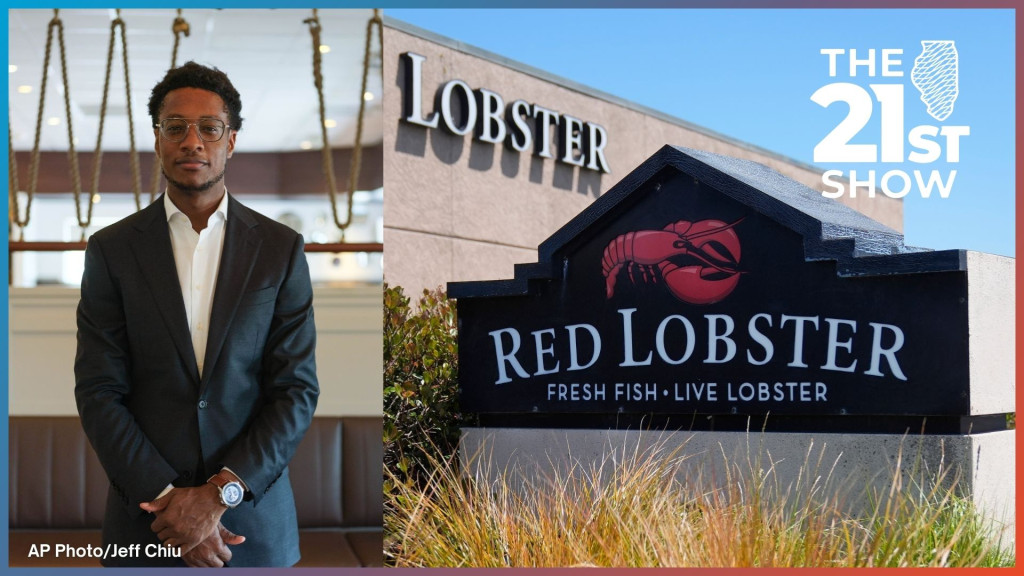
Transcript: Red Lobster CEO Damola Adamolekun on cultural significance of the chain and revamping strategies after facing bankruptcy
The 21st Show
Red Lobster CEO Damola Adamolekun on cultural significance of the chain and revamping strategies after facing bankruptcy
Read the full story at https://will.illinois.edu/21stshow/red-lobster-ceo-on-cultural-significance-of-the-chain-and-revamping-strategies-amid-closings.
Transcript
// This is a machine generated transcript. Please report any transcription errors to will-help@illinois.edu.

[00:00:00]
Brian Mackey: Today on the 21st show, the restaurant chain Red Lobster emerged from bankruptcy last year with new ownership and a new CEO, Damola Adamolekun, a 36-year-old immigrant from Nigeria who spent part of his childhood in central Illinois. We'll talk with him about the changing restaurant landscape, his plans for the company, and childhood memories of eating at the Red Lobster in Springfield. I'm Brian Mackey, and that's all coming up today on the 21st show, which is a production of Illinois Public Media, airing on WILL in Urbana, WUIS in Springfield, WGLT in Bloomington-Normal, WNIJ in Rockford-DeKalb, WVIK in the Quad Cities, and WSIU in Carbondale. But first, the news from NPR. From Illinois Public Media, this is the 21st show. I'm Brian Mackey. And today we're going to be talking about one of America's most iconic restaurant brands.

[00:01:18]
Speaker 1: Red Lobster is where seafood

[00:01:23]
Speaker 2: we just don't have at home. Come to Red Lobster. The 11 complete dinners [99 cents? $9.99?] for less.

[00:01:34]
Speaker 3: It's endless shrimp. Indulge in endless choices of your favorite shrimp dishes while the shrimp are endless. This offer isn't. We got

[00:01:42]
Speaker 4: tail, shrimp, [os], potatoes, sausage, [bosses], cheddar[bay] stuffing, no bluffing.

[00:01:53]
Brian Mackey: Founded in 1968, Red Lobster once had more than 600 locations across the U.S., Canada, and overseas franchises. But last year, the $2 billion revenue company went into bankruptcy, reorganized, and came out with new ownership and new leadership. The company has sought to revamp operations, make changes to its menu, and close a few locations. According to USA Today, five Illinois Red Lobsters have closed, including in [Bourbonnais], Danville, and Peoria. But that means 22 are still open, including in downstate communities such as Rockford, Peru, Bloomington, Champaign, Decatur, Springfield, Marion, Alton, and Fairview Heights.

All these changes are being led by the company's 36-year-old CEO, Damola Adamolekun. Born in Nigeria, Adamolekun immigrated to the U.S. when he was 9 years old. His father was a neurosurgeon who moved his family to Springfield, Illinois, in the late 1990s. And that's where Damola says he had his first experience of Red Lobster. Adamolekun would go on to earn degrees from Brown University and the Harvard Business School, and was previously the CEO at the Asian fusion restaurant chain PF Chang's. Damola Adamolekun joins us now. Welcome to the 21st show. Thanks for being here.

[00:03:14]
Damola Adamolekun: It's a pleasure to be here. Thanks for having me.

[00:03:16]
Brian Mackey: If you have a business question or a Red Lobster experience you want to share, the number is 800-222-9455. That's 800-222-9455. All right, I want to talk a little bit about your background and your Illinois connections. Take us back to that moment when you first come to the U.S. Again, you were born in Nigeria. I understand you grew up in Zimbabwe and the Netherlands. What is it like coming to Springfield, Illinois?

[00:03:47]
Damola Adamolekun: You know, it's very exciting for me and for my family. My parents worked very hard to bring us to the state, and it took a long time to bring that to fruition. We landed in Chicago at O'Hare Airport, and I was very excited to be in America. And we took a train down to Springfield, settled in, started school, and we're off to the races. So it was a very exciting time, and enjoyed my formative experiences in Springfield, Illinois.

[00:04:16]
Brian Mackey: So talk a little bit more about what brought your family there. I mentioned your father was a surgeon. Was this part of his training, or was he coming here to work?

[00:04:26]
Damola Adamolekun: Yeah, my father was a neurologist. He practiced in Nigeria at the time, and he won an award. He helped to cure a disease in West Africa that was — they were calling it the shaking sickness. They didn't know what was causing it, but it was a neurological disorder that was being caused by what folks were eating, and he wrote a paper to help solve that issue and saved a lot of lives in the process. And he was published in the American Neurological Society. And that was his first time ever coming to the state — is when they brought him out to present his research and to receive an award. So he came to New York; that would have been the early '90s, and fell in love with it, decided he wanted to move his family here and started the process to do that. Now, it's a long process, it takes several years, so we didn't move here until — we got to the state in 1997. So it took a few years. But that's the impetus — it was just a decision. He wanted to come to America, he fell in love with it, he wanted to raise his family here, and he took the steps to make that happen.

[00:05:30]
Brian Mackey: So I want to ask you about — because I've heard you say in other interviews that your first Red Lobster experience was in Springfield. You would have been, I don't know, 9, 10 years old. I took my own 9-year-old son to Red Lobster the other day, and I'm trying to imagine what he's going to remember about that visit when he's in his 30s. So with that big grain of salt, I wonder what you do remember about Red Lobster in Springfield.

[00:05:56]
Damola Adamolekun: Yeah, I mean, a lot of people tell me they had their first experience cracking crab legs or pulling lobster tails out of the shells at a Red Lobster, right? So it's not something that — even though you have a lot of meals, it's a unique one, especially at that age, right? If you're taking photos with a lobster, if there's a lobster show that our staff will do — so it's a unique experience. And for a lot of people, they remember the first time they had these experiences with the food that we serve — crab and lobster specifically. So it ends up being a very memorable time. So, you know, I remember it very well. I remember the crab legs and the lobster tank and, you know, I hear from a lot of people that they do as well — remember their first experience at Red Lobster.

[00:06:43]
Brian Mackey: Yeah, interesting. That lobster tank is a fixture still. So, all right, talk about how has your family reacted to you getting this position at Red Lobster. Obviously, you were at PF Chang's before that, so this is not your first time leading a national company. But I wonder how they felt about this.

[00:07:09]
Damola Adamolekun: Yeah, they're very excited. They still love Chang's, but now they're Team Red Lobster, fully. So I get a lot of photos from the family visiting various Red Lobsters. And, you know, that's my immediate family but also extended family — uncles, aunts, even family in Nigeria. They're all following very closely. So, a lot of pride, a lot of excitement, and Team Red Lobster all the way.

[00:07:33]
Brian Mackey: All right, take me back. So you're growing up — when do you decide that business is where you want to spend your career? You have a medical history in your family. Was that something you ever thought about, or were pressured to go into medicine, for example?

[00:07:50]
Damola Adamolekun: No, my dad was very good about letting us all choose what we wanted, what we were interested in. His philosophy basically was, whatever you choose, aim to be the best at it. So he was more concerned that we were doing our best and performing at a high level than he was trying to dictate what exactly we studied or spent time on. So I think that was a good philosophy. My brothers and my sisters and I, you know, gravitated towards different things, but the goal was, whatever you do, kind of give it your all and aim to be the best you can be.

And so for me, that was business. I got interested early on — I did kind of the lemonade stand, lawn mowing thing with my brothers. But it wasn't until high school, I won some money for giving a speech in a contest. At this point, I was living in Maryland, and it was a four-way Rotary speech contest. I won $10,000 for giving a speech, and I decided I wanted to invest it. So I started reading up about investing. I started learning about — first I tried to do real estate investing and realized the money I thought was all the money in the world is actually nothing if you're trying to do real estate, so I couldn't actually do anything there. But I learned I could buy stocks, so I opened a stock portfolio with the money and started reading about Buffett and all these great investors, and talked to people in my neighborhood that knew what they were talking about, learned as much as I could, and went down that path. And then by the time I got to Brown, I knew I wanted to study business and economics. I joined the Brown Investment Club, and, you know, the rest was history.

[00:09:22]
Brian Mackey: You know, I was a teenager once. I knew a lot of teenagers when I was a teenager. I'm getting to know a few now as my friends' kids are getting older. I can't think of a single one who thought, let me open a stock portfolio. What is it about you that you think drove you to do something so adult when you were still relatively young?

[00:09:44]
Damola Adamolekun: Yeah, I just found business and finance exciting. I used to watch CNBC before school, so I'd come on —

[00:09:51]
Brian Mackey: Is that real? Interesting.

[00:09:52]
Damola Adamolekun: Yeah, that's real. That's real. I played football, so I was up early for training camps and all this stuff. My friends would sleep over and I'd have CNBC on in the morning. I thought it was interesting — I genuinely did. So it wasn't, nobody forced me to. I just thought it was interesting. And the idea of making a lot of money was interesting too, right? You see some of these people and the things they were doing, so — I just gravitated towards business. And once I learned how to think — you know, I read a lot. There's a website called The Motley Fool that I used to read, and I'd watch CNBC and listen to what they were talking about. And then I talked to adults in my community — my coaches and such — that knew what they were talking about as well. And once I kind of learned the basics, I started just doing. I think you learn best by doing. And maybe, you know, don't put $10,000 into it if you're 16, but at the very least, like a phantom portfolio or something like that can be very enlightening. But I did it with real money, and as a result, I really got into it. And then, you know, this was [2005-]2006, everything — the stock market was booming at the time, so I felt like I was making a ton of money and doing really well. And, you know, positive reinforcement of success will help you fall in love with something even more. So, yeah, for me, by the time I kind of left high school, I was pretty hooked on business and finance. And it helps that when I got to [college], I knew what I wanted to do, so I was able to take steps really quickly towards that. And, you know, I got my Goldman internship as a sophomore, and, you know, like I said, the rest is history.

[00:11:26]
Brian Mackey: Yeah, it's interesting that you had such a positive experience with the world of finance, because I think a lot of people of your generation would say the Great Recession is what they think of, and they have sort of an angrier orientation to that. So I guess maybe it was fortuitous you got into it a little earlier.

[00:11:45]
Damola Adamolekun: To be clear, I got crushed in the recession like everybody else. My beautiful portfolio took many, many hits. But for me, by the time the recession came around, I was working at Goldman as an intern. I actually spent my first summer in New York on Wall Street during the recession. So at that point, I was less concerned about my little portfolio and more concerned about my career. And it wasn't clear that summer — a lot of internships got canceled, a lot of jobs got cut, people got laid off — and it was pretty scary on Wall Street. But they didn't cancel my internship, so I got a front-row seat to all of that at Goldman that summer. So I saw it more — for me, it was more sort of a learning lesson that shaped my career. Looking back, it just made me a better investor because I kind of saw how bad things can get, right? It sets the framework for your risk tolerance, for how you process upside versus downside, what could go wrong, how bad things could get. And also, I think it builds — you know, once you go through that, every small blip in the market doesn't bother you as much as it would otherwise, right? Once you've seen kind of a 40% reduction in stocks, when something small happens, you stay pretty calm. So I think it helped me actually with my temperament and with my understanding of what the range of outcomes really are. And I look back at it — I know it wasn't a fond experience for anybody, but looking back, I think it did help me to kind of be there at that point.

[00:13:19]
Brian Mackey: Yeah, that's so interesting. I'm trying to remember Goldman's — you know, where it sort of fell in the scheme of the Great Recession, because I know companies — people had built careers at Bear Stearns and they were walking out with their possessions in a cardboard box one afternoon when they had, you know, maybe come to work the previous day none the wiser. Did you feel that palpably being there at that time?

[00:13:42]
Damola Adamolekun: Goldman fared better than — you know, Bear Stearns went out of business and so did others, but Goldman on a relative basis did well compared to those firms. So it wasn't as catastrophic as that. But I mean, it was high stress and nobody knew how bad it was going to get. You know, now, in retrospect, we know exactly how deep and how long it lasted. But at the time, nobody knew, right? So there was just this mass uncertainty of how deep — you know, we call it a recession, but at the time people thought it might be — you know, might be the Great Depression come again, right? So it wasn't clear that it was going to rebound the way that it did.

So, you know, that was palpable. I'd say what I remember the most was just that there wasn't much time for babysitting the interns, right? So even as an intern, you had to kind of just jump in and help. And, you know, you got real experience because everybody was so busy and it was so chaotic and there was so much going on that you had the opportunity just to dive in and be part of the team, right? And help where you could. And I did that, right? So, um, it was — again, it wasn't a pleasant experience for anybody, but it was an important experience for me, and I think it did help me become much better in a lot of different ways, just being part of that firm at that time.

[00:15:02]
Brian Mackey: Yeah. Let me remind listeners, this is the 21st show. We're talking with Damola Adamolekun, who is the CEO of Red Lobster. We first got on to his story — as many people did — he's 36 years old, the youngest CEO ever when he was appointed of Red Lobster last year, but also because he spent part of his childhood in Springfield, Illinois and had his first [Red] Lobster experience there. If you want to join us today, the number is 800-222-9455. That's 800-222-9455.

I want to share a couple of messages we got from listeners by text as well. Christina from Hoopeston, Illinois says: I was a hostess at Red Lobster in Dundee, Illinois during my junior and senior years of high school, which was 1990 to 1991. I then went to University of Illinois Urbana-Champaign for college. During my junior year of college, I needed a job and the company gladly welcomed me to the Champaign location. I originally applied for a job in high school because I love the food so much, and I still do. I never get tired of it, she said.

We also heard from Lloyd in Danville, who said his Red Lobster story is about how much his brother-in-law and sister love to eat there. Lloyd says his brother-in-law took his sister there every week. [Lloyd says] I just treated my grandchildren after a college graduation in [the Carolinas]. Lloyd also says: Bring Red Lobster back to Danville, Illinois. We would sure appreciate it.

We are going to continue with Red Lobster CEO and former Illinois resident Damola Adamolekun after a short break. Again, if you want to join us, 800-222-9455. This is the 21st show.

[00:16:57]
Speaker 6: Support for the 21st show comes from listeners like you and the Des Moines Arts Center, located in Iowa's capital city, featuring works by regional, national, and international artists of the 20th and 21st centuries. Details are at [DesMoinesArtCenter.org].

[00:17:36]
Brian Mackey: It's the 21st show. I'm Brian Mackey. We are talking today with the CEO of Red Lobster, Damola Adamolekun. He spent part of his childhood in Springfield, Illinois. He's been in this position since last year, when Red Lobster was in bankruptcy for a time. If you want to join us today, 800-222-9455 is the number. That's 800-222-9455.

All right, so last year, the news comes out — Red Lobster's filing for bankruptcy. I think a lot of people who are maybe not as familiar with how bankruptcy law works, they hear that and they think, well, goodbye Red Lobster. You know, there's even a moment on the "Today" show last spring, I think, where the hosts are basically saying that. But, you know, the company's still here. Tell us about the situation you walked into when you took on this role.

[00:18:25]
Damola Adamolekun: Yeah, it wasn't a good one. So, you know, to your point, there was a lot of uncertainty externally around the future of the company, and frankly, yes, a lot of people thought the company had totally shut down, which wasn't the case. But that's a misperception around bankruptcy. And then internally, there was a lot of concern as well about the future of the brand and the future of people's jobs. So I'd say morale was low, the guest perception was low, and we had a lot of work to do to turn all of that around. But we've managed to do that, right? So the conversation today — you know, we're talking about it now, but I got asked about it a lot when I started. I get asked about it very little now, right? It's about what we're doing now — the seafood bowls we just launched, a lot of the new products, the new menu. So we've brought it back to life in a very short amount of time, and, you know, that's been an exciting thing.

[00:19:18]
Brian Mackey: Talk about the overall position of the restaurant industry. I can remember 10, 20 years ago — whether it was Red Lobster in the town where I live, Olive Garden, all these sort of big national restaurant brands — there would be people waiting outside to get a table. And that isn't always the case now. I actually, in preparation for this conversation, my family and I went to Red Lobster last night. It was more crowded than it's been in recent years. I will say that. There was a good number of people in there, but there were still a lot of empty tables, which I think even on a Tuesday night would have been pretty surprising, maybe a decade ago. So just talk about what has happened with the overall restaurant market in the country.

[00:20:01]
Damola Adamolekun: Yeah, look, I think there's a lot more competition than there used to be. Red Lobster is the first nationwide sit-down restaurant chain — you know, 60 years ago, we first launched, and we were the largest restaurant company in the country for a long time. And there's quite a few now. But even if you look at just the options people have to eat — the sit-down restaurants, there's a number of those, the chain restaurants, independents, right? The mom and pops that are in your town. You've got fast casual companies, which didn't exist back then, but now there's a lot of them and they provide pretty good food without the sit-down experience. But, you know, depending on what people are looking for, it provides a different option. And you've got a lot of people who eat at home still, right? So you've just got a lot of options.

And so what ends up happening is you get a bifurcation of performance just based on the quality of the chain, right? So the good chains are still doing really well. Like, if you look at an Olive Garden or a Texas Roadhouse or a few of these that have performed well over the years, you know, they still grow. And then you have a number that haven't quite made it. So, you know, our success of the last 12 months is shifting Red Lobster performance-wise into that top tier, which is where we sit right now, right? You went yesterday and said it was pretty busy — but our numbers right now are about as good as some of the top performers, and that's where we need to stay, right? So as long as we perform and deliver a great guest experience and our customer scores are top of the industry, then we'll do well, even though it's going to be a challenging time just because of the amount of options that people have.

[00:21:38]
Brian Mackey: I'm curious what your day consists of, right? You are leading this massive company, thousands and thousands of people, trying to get them to make these changes. What does your day actually consist of in terms of leading a major company like this?

[00:21:55]
Damola Adamolekun: A lot of meetings, right? So, you know, businesses are like any organization — things happen when people talk and sit down and agree and debate and make decisions. So it's a lot of conversation. I spend a lot of time in the restaurants. Depending on the week, I might be spending the whole week on the road. But I like to be in the restaurants, I like to spend time with the teams, I like to spend time with the guests. I do some press, like I'm doing now — so conversations, interviews. So it's a mix. It depends on the day. But overall, kind of directing the business, working with each of the teams, each of my department heads, spending time in the restaurants — so it's busy. But, you know, that's how we like it. So it's always a great day, my friend.

[00:22:42]
Brian Mackey: What is it like going to a restaurant when you are the CEO? Are you going as CEO, or do you ever go sort of incognito, just to try and see what it's like for everyday people?

[00:22:53]
Damola Adamolekun: I try to do both, but it's harder to be incognito these days. So most of the time, incognito fails, so I just end up planning it. But I try to do some of both. Most of my organized trips will have a purpose — either there's an event, or there's a market that I'm visiting, or I'm with my COO and we're doing a kind of ops visit. So it depends. But most of the time they'll know I'm coming, and I'll meet with the teams. And then it's more about motivating and inspiring the team than it is about assessing how they perform when I'm not there. There are other tools for me to figure out how restaurants run when I'm not there. So my presence now — a lot of it is motivational, a lot of it is aligning the team to strategy, a lot of it is just meeting people and having them meet me. So, you know, the purpose will dictate whether it's announced or not. But more often than not, it's announced, and it's for the purpose of spending time with the people.

[00:23:52]
Brian Mackey: Yeah, I was talking to our server last night. At the end of the meal, after we were all done and the bill had been paid, I did mention that I would be talking to you, and I was curious if she had any idea that you had had this connection with Springfield, which is the location we ate at. And she did not, and she kind of jokingly said, "Hope I did OK," as she walked away — and she did. But I wonder, do you actually see the presence of motivation, like when you go talk to a restaurant — do you see that in the numbers for that location? Or are you not thinking of it in such a fine-grained way?

[00:24:25]
Damola Adamolekun: You're saying if I visit, does it perform better after I've visited?

[00:24:28]
Brian Mackey: Yeah, exactly, right? Do you rally the troops — Henry V style, right? We band of brothers.

[00:24:34]
Damola Adamolekun: Yeah, I think so. We measure — and it's less about like the sales pop, but it's more so like how did the team feel, right? And it can be tricky to measure, but you talk to the teams and you measure kind of team satisfaction. And when leadership spends time in a restaurant, the team does galvanize — whether it's me or my COO makes a visit or any other member of the senior leadership team. It does kind of place a spotlight on the restaurant. They do feel supported, they feel acknowledged for all their hard work, and it certainly makes a positive difference, right? So, you know, I believe — look, our headquarters are in Orlando and we do a lot of great work here. But, you know, we're a call center. The magic's happening in the restaurants, right? So I encourage everybody on our team here to spend time around the country in different markets, myself included. Because that's where the guest experience happens, and that's where the magic happens, as I like to say, in terms of taking care of our guests.

[00:25:35]
Brian Mackey: So I'm curious about how you become CEO of a company like this. I'm guessing it's not, you know, putting "Open to Work" on your LinkedIn page — despite the significant following you have, right? Fortress Investment Group comes to you, taps you for CEO. How does that actually work in practice, and why you?

[00:25:55]
Damola Adamolekun: Well, in life, you get opportunities based on what you've done — that's how it tends to work. So you excel at one thing, other opportunities will arise. And, you know, that's my life even before the CEO gigs, right? I went to Brown because I did a great job in high school. I got recruited to Goldman because I did a great job at Brown. I got recruited to TPG because I did a great job at Goldman. I went to Harvard because I did a great job at TPG. Like, that's life — it's one step at a time, and just, you know, like my dad said when I was young, be the best at the thing you do and other things will come, right?

So that's it. In terms of this particular role — I led the deal to buy PF Chang's in 2019 when I was working at a hedge fund in New York. And that business — it wasn't as dire as the bankruptcy, but it was going through a rough time when I took over. And we turned it around, right? We grew profits of that business by 50%. We grew sales to over a billion dollars. We got through COVID stronger than the competition. So the results there [led Fortress to take] portraits of the results there and ask me to do the same thing here, right? So again, it's just performance that creates opportunity, and you keep performing, you'll keep having new opportunities.

[00:27:08]
Brian Mackey: So let's talk about some of the changes you mentioned earlier that you're making at Red Lobster. Let's get into some more detail. One of the things I've heard you say is that if you were starting from scratch, you would make the restaurants smaller, right? And real estate is, I think, a big part of the restaurant industry that maybe everyday people don't think as much about. So talk about that. How are you thinking about the real estate side of Red Lobster as a starting point?

[00:27:36]
Damola Adamolekun: Yeah. So I mean, look, if you're building a restaurant from scratch, you wouldn't need as much space as you did back when these were built, because a lot of the business now happens online via delivery — which wasn't the case when these restaurants were first designed and built. So it is a different profile that you need now. Now, in terms of what you do, there's very little to do with an existing restaurant that isn't going to be very expensive in terms of trying to slice and dice the space and reduce it. So you kind of have the footprint you have, by and large. You know, we have 545 restaurants, and that is kind of what it is, right? Over time, as leases come up and as different things happen, you can try to adjust it on the margins. But it's not something you can change overnight, right? So you're kind of married to the footprint you have.

Now, what you can do is use the space more intelligently. You can design the space differently, you can add the core elements, you can change the lighting, the music to make it feel different. And those are the sort of things we'll do. I call those aesthetic remodels — paint, carpet, removing the carpet, replacing it with something different like a harder hardwood floor or a tile or an LVT, lighting, music, like I said. So there's a lot of things we can do with the footprint that don't involve anything structural that requires permitting — just to make the space look and feel better. And those are the sort of things we'll do.

[00:29:06]
Brian Mackey: Talk about how you think about — I'm fascinated by the design aspect of restaurants. There used to be — it's long since closed now — but there was like sort of this hip, Asian fusion, locally owned place in the town where I lived. And they clearly were trying to go for that vibe with the food and the decor and the lighting. And then they had classic rock as the soundtrack, and it just felt so incongruous. How do you think about that? Are you working with outside designers? Is this all coming from you and your team's head? What is that process?

[00:29:39]
Damola Adamolekun: Well, I think you need to have a vision as to — you need to first of all have an understanding of who your guest is and what will work with your guest. Because the right design for us might not be the right design for, you know, my old company, PF Chang's — it's a different guest and it's a different cuisine, it's a different vibe. So you need to understand what vibe you're going for, who your guest is, what resonates with them, why they come to you in the first place. And then with that, you work with professionals — you work with designers to represent that in an aesthetic, right? And that's again the color schemes, the design, the bar, down to the restaurant layouts, down to the tiling or the carpet, down to the ceiling — like, you'll go through every element of the design and work with them to get a look and feel that works for your guests and delivers the vibe and the experience that you want, right?

Now, you mentioned music — I think that's an important piece, right? Music sets the soundtrack to the dining experience, and I think it's important to get that right. And so we have companies we work with on the music side to kind of get the right experience. And by the way, it differs by region, right? What I play in New York City might not be the same thing as what I play in Monroe, Alabama. So there's some customization based on where you are, and we do that, right? So yeah, it's a lot. But it's important, and we spend a lot of time on it. We have people who think about it kind of all day, all night. And we want to nail that experience because food is important — it's important that the food is great — but beyond that, there needs to be an experience around the food to make sure that people are having a great time across the board.

[00:31:24]
Brian Mackey: You mentioned figuring out who your customer is. How do you describe the Red Lobster customer?

[00:31:31]
Damola Adamolekun: It's broad-based, you know. We serve 20-plus million people every year, so it's — we're a broadly attractive concept to a lot of different people. Depending on the region, it'll change a bit demographically. But I'd say historically, it's skewed a bit older. Until recently, I'd say we've done a really good job of bringing in young people. If you kind of go on TikTok or, you know, any social media page now, you'll see we're trending really well with the younger demographics, especially with the new menu that we rolled out. The seafood bowls have been really popular with the younger demos. So I'd say the demographic is changing in real time — we're adding a lot of young diners, we're adding a lot of people who are trying this for the first time. And so, it's an exciting thing. So we'll keep doing that and keep bringing in new folks, and try to be a tent that everybody can come to and have a great experience in.

[00:32:27]
Brian Mackey: I want to read another text message we got from a listener. Sarah in Bloomington said: For my 9th birthday, I asked to eat a whole lobster by myself and not share with my family. Mom and dad said I was a good girl and I could have one, but they're very expensive and I wouldn't be able to have any gifts, any cake, any party. And her 8-year-old self thought for a minute and said, "Yep, just the lobster." So for her 9th birthday — again, reading from her message — I came home from school, the whole family got dressed up in our best outfits, loaded up the car, and drove across the state line from tiny Paris, Illinois, to great big Terre Haute, Indiana, where I was able to eat a whole lobster by myself. For my 9th birthday — no cake, no gifts, no party, just lobster. It was glorious. And she concludes by saying to this day, maybe once a year or every other year, she meets her friends at Red Lobster. It never disappoints. Growing up in landlocked Illinois, getting to eat fancy coastal food is always a special treat.

So I guess, yeah, that's the key, right? Maintaining people for whom this is like a special, iconic place in their minds, while also not changing it up so much that it becomes something unrecognizable to them.

[00:33:36]
Damola Adamolekun: Well, I mean, that was a beautiful passage that you just read. And what I'd say is that, you know, that's a lot of what made Red Lobster special in the first place — is bringing something that was otherwise inaccessible to the masses, right? When Red Lobster started, it was virtually impossible to get crab legs in Illinois or Indiana, right? Or to get Maine lobster. And that's something that Red Lobster has done — is make this kind of elite seafood accessible to everybody, right? Even things like key lime pie, which at the time was a Florida specialty — you know, we were kind of the first to take that across the country. And so we're still doing that now. The seafood boils that I said were popular — a lot of why they're popular is because there are a lot of places where you can't get a seafood boil. Seafood boil places are pretty regional, and now we've kind of taken it across the country and people are really excited about that. So a lot of what was in that message is still true today, in that we're the place — the only place across the country you can come for crab legs, lobster, seafood boils. And so we hold that distinction, and it's an important part of what has made us successful and what we're going to keep doing going forward.

[00:34:48]
Brian Mackey: All right, we're going to continue with [Damola Adamolekun] when we return. This is the 21st show. Please stay with us.

It's the 21st show. I'm Brian Mackey. We're talking with Damola Adamolekun, the CEO of Red Lobster. Grew up partly in Springfield, Illinois, although he was originally from Nigeria. And he is revitalizing the company after it was in bankruptcy last year — I should say leading a revitalization with many other people who work there. If you want to join us today, 800-222-9455 is the number. That's 800-222-9455.

So I grew up — we heard that text message from one of our listeners before the break about her own youthful experience. I grew up with a lot of people for whom going to Red Lobster was a special occasion. But I know it also has a particular significance and customer share in the Black community in America, right? One of the Madea movies even had a scene set there. Beyoncé references it in her song "Formation," which we cannot quote from on the radio. But people can look that up if they're interested in what she had to say about Red Lobster. And apparently that led to a sales increase. So talk to me about how you think about that particular relationship with the Black community in America.

[00:36:18]
Damola Adamolekun: Yeah, it's an important one, and to your point, it's long-standing. So, you know, Red Lobster was first founded — and from the very beginning, and this has been the 1950s, [1964] — from the very beginning, [Bill Darden], who opened Red Lobster, was welcoming to Black diners when a lot of restaurants in that time and in that place were not, right? So Black diners were always welcome, Black staff was always welcome. So from the very beginning, there's been an understanding that it was a place that was going to have a good relationship with the Black community, and that has only strengthened over time — to where, you know, like you said, we show up a lot in Black pop culture, whether it's Beyoncé or people who worked here. You know, Nicki Minaj worked at a Red Lobster, Cardi B — you know, I had a chat with Charlemagne, he said he used to go there all the time with his friends. So there's a lot of cultural legacy with the Black community. It's something that we're proud of and we embrace. And, you know, it's certainly something that I'm happy to speak to and happy to be part of.

[00:37:28]
Brian Mackey: I wonder if you're willing to speak about how your own experience of being Black in America — although initially from Africa — has shaped your own life path and life journey.

[00:37:42]
Damola Adamolekun: Yeah, I mean, look, my experience is unique — it's an international one, especially my childhood. That said, coming to America at the age that I did, I went to schools that were very diverse. In Springfield, I went to Franklin Middle School, which would have fed to Springfield High or Southeast High — and these are just very diverse schools, as anybody from Springfield can attest to. So my experience was always great with the Black American community. I played basketball, I played football, so I spent a lot of time playing sports, got into kind of the cultural elements, the music, and some other things. And that was true when I lived in Maryland as well. So it's always been an extremely welcoming community to myself and my family. Even though we moved here later, it's always embraced us from the very beginning. So on a personal level, it's a community that we love and we're grateful for as well.

[00:38:40]
Brian Mackey: Because I mean, there is that — there can be that tension, right? Between people who are immigrants from African countries and African Americans whose ancestors experienced Jim Crow and enslavement and all that. There was a YouTube video I came across that tried to make a little bit of hay out of that. But is that something you have ever had to deal with? Or maybe you haven't had that experience.

[00:39:03]
Damola Adamolekun: Yeah, I find it — I've heard that, but I think that's overstated. I think there are obviously differences in experience, but it's not — I don't think it's conflict. I just think it's a difference in experience. And I actually think the communities have learned a lot from each other. You know, I learned a lot from my Black American friends, and I think they learned a lot, too. I had a friend, Zack Brown, that I played football with — he played in the NFL — but he'd come to my house and spend a lot of time with my family, and I think he learned a lot from our experience as well, right? So I think it's all about perspective. But in my view, it's a positive — it's just more experiences to learn from and to build together with. And, you know, look — Nigerians love Black Americans, and as far as I've seen, Black Americans love the Nigerian community as well. So I think the tension's a bit overstated.

[00:39:50]
Brian Mackey: All right, let's go to the phones at 800-222-9455. Deanna is calling from Rockford. Deanna, thanks for calling in.

[00:39:59]
Deanna: Yes, I wanted to tell you that the Red Lobster in Rockford is excellent — excellent food, excellent customer service — and they went out of their way to help my mother, who's 97, with her walker, and her best friend, to come to the parking lot and open the door. They had a wonderful experience, and they've been there many times. And these are women in their 90s, and they love the Red Lobster.

[00:40:32]
Damola Adamolekun: That's great.

[00:40:33]
Brian Mackey: Deanna, what's your — do you have a go-to menu item?

[00:40:38]
Damola Adamolekun: Well —

[00:40:40]
Deanna: They're the ones who go. I still work — I'm a consultant, so I don't go there as much as my mother and her friends. I'm in my 70s, but I've been there — not as much as my mother — but all of the food is really superb, yes.

[00:40:58]
Brian Mackey: All right, thank you so much for calling in. Well, I'll hand it back to you then.

[00:41:03]
Damola Adamolekun: Oh, that was wonderful. So I appreciate the comments, and look — we want our team members to take care of the guests, whatever that means. And hearing that story about them walking your mother out to the car and her friends — that's what I love to hear. We want to recognize and engage and delight. We say "red carpet hospitality," and that's a great example of it. And I'll make sure to get a shout out on our call here in a bit for the Rockford team. So great job, Rockford, and love to hear that.

[00:41:33]
Brian Mackey: So let's — you mentioned the idea of it being a little difficult for you to be anonymous now because you have been so front-facing with this role. And sure enough, you are on TikTok. You are like a part of the company's communication strategy here, right? Even this conversation, but social media. How is that for you? Because I think if you were to — I don't know who the CEO of Olive Garden is. I'm sure maybe you do, but most people could not name the CEOs of major restaurant companies. Is that something you've embraced? Did you have to be persuaded? Talk about what that experience has been like for you.

[00:42:10]
Damola Adamolekun: Yeah, look, my nature is more strategic. Like, if you're just asking what would I do if it was just me, I'd just run the show and focus on the business and focus on the ops and managing. But I'm good with the press, I'm good with public speaking. It's something that I've done for a long time — since I won that speech contest when I was in high school to get that initial investment money. So I've been speaking publicly for a long time and I'm comfortable with it. So, you know, the ask came by virtue of a couple of interviews that I did going viral, and my marketing team basically said, "We'd like for you to do more." And so I was open to it. For me, anything that helps the business, I'm happy to do, right? At the end of the day, my mission is to make Red Lobster the greatest restaurant company in the world once again. If I can do something to help that, I'll do it — it's not a problem and it's not a question. So I've done more. I actually started an Instagram — I didn't have one, but I started one as I got more involved on the communication side. And, you know, LinkedIn, you mentioned — I'm on there, I'll do some interviews, and I'm in some of the ads. So I'm doing more, but it's because it's something that I'm comfortable doing and it's something that helps the business. And, you know, Godspeed — we will make Red Lobster the greatest restaurant company in the world.

[00:43:30]
Brian Mackey: You know, there are not a lot of times where a private equity company comes and takes over a business and it gets like a positive boost in reputation. I think some people use the term "vulture capitalism." Can you make a case in your view as to why private equity is maybe a net good? Because I think there are a lot of people out there who see it as oftentimes the company that comes in to destroy and extract value, and maybe they say they're saving, but that costs a lot of jobs in the meantime.

[00:44:01]
Damola Adamolekun: Well, let me just start by saying those people aren't wrong in thinking that that does happen sometimes. It totally just depends on the private equity firm. Like, they're not all the same. I know it's easy to kind of group them together, but they take different approaches. And some do take a very financial engineering approach of just trying to cut costs and build profit that way. I think it's a huge mistake in this business, because ultimately, this is a business where the lifeblood is the guests — is guests coming into your restaurant. So if you cut costs and you don't consider what that does to the guest count, and the guest count decreases, you're going to lose more than you gain. And I think people learned that the hard way, including the people who owned this business before.

Now, the new owners — Fortress, especially — have come in with a totally different mindset. They're investing. They're saying, "We're going to learn from the mistakes of the past and we're going to actually invest to make a better business, create a better guest experience, remodel the restaurants, get some new dishes, invest in hospitality and our team members." So they're taking that approach, and it's going to have a wonderful payoff for them, because that's how you build a great restaurant business — by investing in the guest experience and in the team member experience. So depending on the private equity firm, if they approach it the right way, they can be a great positive, because they can inject a lot of capital, right? They're giving me the money I need to remodel restaurants, to hire people, to improve the technology, to do the aesthetic redesigns I mentioned. So, in this case, it's certainly a net positive.

[00:45:26]
Brian Mackey: Another thing a lot of business leaders have to deal with today that I'm sure they would rather not is politics — political considerations. Red Lobster appeals to that broad range of customers. I saw somebody wearing a bright red Trump hat and some other people that if I had to guess, I would guess were probably not Trump voters when I was at the location the other day. How do you think about that? Do you sort of live in fear that, oh my goodness, I hope we don't become the next story on X, [Y], Z news network in America's culture wars?

[00:46:00]
Damola Adamolekun: I consider ourselves a place where people can leave the politics and other sort of stressful issues at the door and come and have a good time. That's what makes us special. That's what people come to us for — is to enjoy, right? We're in a very unique business. We serve joy for a living. I know we serve food, but that's only part of it. What we do is we serve joy, right? So for us, we don't spend much time thinking about it because it's not what we do. What we do is we entertain people, we provide a great meal, we provide community. People can come in, talk, enjoy, have fun, have a drink, have some food. And that's why you'll see a diverse group of people in our restaurants — because it's not about anything but just having a great time.

[00:46:43]
Brian Mackey: How do you also think about — so, you know, sometimes companies are dragged into these stories whether they want to or not, right? They're not serving that, but they become a part of it. You know, 10 years ago, there was an AP investigation about Thai Union, which previously held a stake in Red Lobster — doesn't anymore — but was connected to like slave labor in its fishing practices. Is that something — how do you think about that? How do you remain conscious of those sorts of potential dangers, both in terms of reputational aspects, but also in just terms of the morality of leading a company like this?

[00:47:22]
Damola Adamolekun: Well, I think if you consider morality based on reputational damage, then you're not considering it the right way. I think you should be moral because you should be moral. So we try to just do the right thing, right? And so long as you're doing the right thing and you have a good moral background and your values are correct, then you tend to not have these problems. So, you know, the way I think about it is the way I think about everything — do the right thing, train people to do the right thing, take care of your people, take care of your guests, and you generally won't have these issues.

[00:47:54]
Brian Mackey: We're coming to the end of our time together. You talked about Red Lobster being the greatest restaurant company in the world. How will you know if and when you've succeeded?

[00:48:04]
Damola Adamolekun: Our guests will tell us. It'll be easy. Our guests will tell us. So we've made progress — it's been nine months. I think we're a lot better than we were nine months ago, and the guest scores show that. We still have progress to go, and there are a few things especially that I'd like to do, including remodel the restaurants, which we haven't done yet. But the guests will tell us — they'll give us feedback, we listen. You know, we check the comments, as they say. And once we get to that point where people prefer us to any other option, we'll know, right? We'll see it in the comments, we'll see it in the scores, and then we'll keep pushing to take it to an even higher level. So that's our approach, and that's what we're going to try to do.

[00:48:40]
Brian Mackey: Last question — any more closures or openings on the horizon?

[00:48:45]
Damola Adamolekun: Yeah, I mean, look, there's always going to be, right? Leases come up. Sometimes it's not your choice, sometimes it's the landlord's choice — they want to build a multi-family residential where your restaurant was, and, you know, that's told to you. So that's always the case for any restaurant chain. But nothing outside of the normal — no, no large-scale closures or openings, just normal course of business.

[00:49:08]
Brian Mackey: All right, Damola Adamolekun is the CEO of Red Lobster. He spent part of his youth in Springfield, Illinois. Thank you so much. Fascinating conversation. I really appreciate you taking the time to speak with us today on the 21st show.

[00:49:20]
Damola Adamolekun: Very good. Thank you very much. [Inaudible.]

[00:49:33]
Brian Mackey: That is all the time we have for our program today. Coming up tomorrow, we'll be talking with central Illinois Congresswoman Nikki Budzinski about the "one big beautiful bill," potential end of funding for public radio — or I should say a clawback of funding that's already been approved for public radio that's being considered in the Senate, and potentially might have to go back to the House depending on how that shakes out. That is all coming up tomorrow here on the 21st show, which is a production of Illinois Public Media. I'm Brian Mackey. Thanks for listening. We'll talk to you again tomorrow.

[00:50:20]
Damola Adamolekun: [Inaudible — appears to be off-air conversation.]
Transcript Assistance
Illinois Public Media may use AI assistance for transcript generation and/or formatting. Transcripts that have not yet been reviewed for accuracy will be labeled.
To report a transcription error, or to request transcription of archival material, please contact will-help@illinois.edu.