Transcript: Could new SNAP requirements lead to a hunger crisis in Illinois?
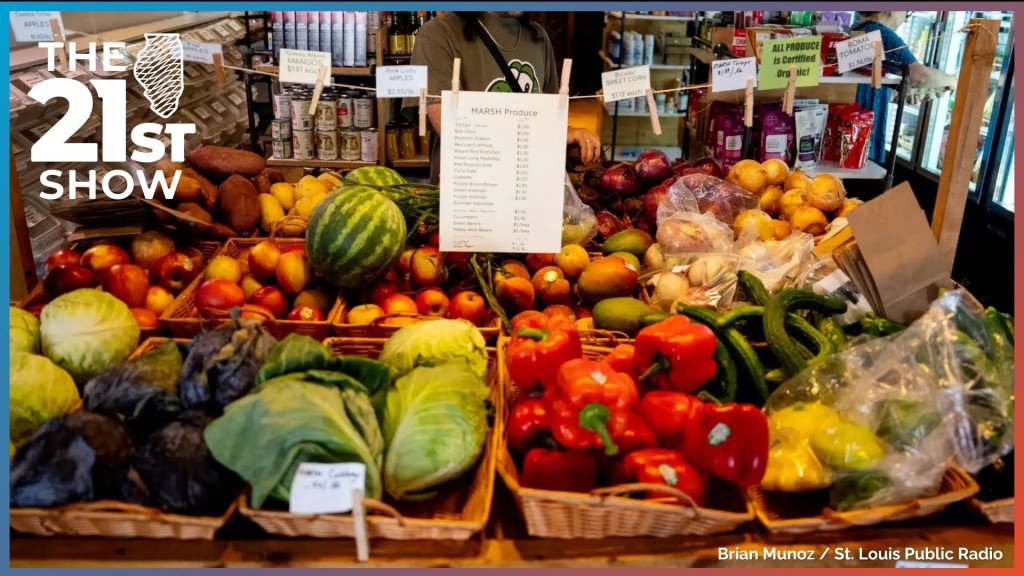
Transcript: Could new SNAP requirements lead to a hunger crisis in Illinois?
The 21st Show
Could new SNAP requirements lead to a hunger crisis in Illinois?
Read the full story at https://will.illinois.edu/21stshow/snap-changes.
Transcript
// This is a machine generated transcript. Please report any transcription errors to will-help@illinois.edu.

[00:00:00]
Brian Mackey: From Illinois Public Media, this is the 21st Show. I'm Brian Mackey. For years, the 1.9 million people who get federal food assistance in Illinois were able to receive it without having to prove they were working or looking for work. But the One Big Beautiful Bill Act that Congress passed last summer made changes to the Supplemental Nutrition Assistance Program, or SNAP for short. Now, to be eligible for the benefits that were once known as food stamps, many people are required to work or volunteer for a minimum of 80 hours a month. It's estimated tens of thousands, if not hundreds of thousands, of Illinoisans have either lost or could lose their benefits because of these changes. On top of that, there are more changes coming to how the states get money from the federal government for SNAP, and that's going to add millions of dollars in costs for Illinois state government. That said, this year's budget includes $70 million for one-time payments to people who lose at least part of their SNAP benefits. Joining us now to talk about all of this is Zach Hieronymous, executive director and CEO of one of the organizations that is seeing the effects of these changes, the Tri-State Food Bank. The three states in the name there are Illinois, Indiana, and Kentucky. Zach, welcome to the 21st Show.

[00:01:28]
Zach Hieronymous: Brian, thanks for having me. Also with us is Craig Norenburns. He's a fourth-generation grocer. He owns four independent stores in southern Illinois. Craig, welcome to you as well.

[00:01:38]
Craig Norenburns: Thanks, Brian. Pleasure to be with you guys.

[00:01:39]
Brian Mackey: And listeners, I should say in order to make our schedules meet, we taped today's program earlier this week. Because of that, no calls today, but you can let us know what you think. Our email address is talk@21stshow.org. That's talk at 21stshow.org. All right, Zach Hieronymous with the Tri-State Food Bank. I mentioned around 1.9 million Illinoisans get SNAP benefits. Where do you see the greatest need? And sort of what groups of people do you see the greatest need?

[00:02:09]
Zach Hieronymous: Well, I tell you, it's wide ranging. When you think about hunger and who it affects, it's really indiscriminate. So whether it's children, families, seniors, veterans, our unhoused and unsheltered neighbors, really and truly, hunger touches all folks, especially in the 16 counties that we serve in southern Illinois.

[00:02:34]
Brian Mackey: Craig, how does spending from SNAP help grocery stores like the ones you own?

[00:02:40]
Craig Norenburns: Yes, so I have four independent markets in southern Illinois, and for us, you know, it represents a certain percentage of folks that come in and the dollars that are spent from SNAP card benefits. And we will see an impact on how that plays out here in our markets. And I think for specifically lower-income areas where SNAP benefits are more heavily used in grocery stores, we're going to see even bigger impacts. I do some consulting for some stores that are trying to tackle the food desert pandemic of our time, and this plays a huge, huge piece in that, and it could be detrimental to adding to the issue that we're seeing when it comes to food deserts.

[00:03:30]
Brian Mackey: It's often said that grocery stores run on really slim profit margins. Can you talk about what that means for the work that you do, especially as it relates to food assistance?

[00:03:40]
Craig Norenburns: Yeah, so as a grocer, we survive on the penny, right? So we're in what we like to call the penny business, meaning that for every dollar that we earn that goes through the checkout line, we're lucky if we get to keep a penny of that. And so the bottom line is tight. Margins are extremely tight, and any influx in spending habits — how those dollars are generated — have great impact, whether it be on sustainability for markets, for job creation. You know, we're in the business of trying to create jobs and be in communities where we're not in communities that have three or four stores. We're the only shop in town. And so what happens is when communities like ours lose their grocery store, it's got a greater impact than just our business. It trickles down into other businesses and really the overall health of communities at large.

[00:04:40]
Brian Mackey: Zach Hieronymous, what do these work requirements mean in practice?

[00:04:46]
Zach Hieronymous: Well, in the short term, what it has really meant is in May, on May 1st, we lost 120,000 Illinoisan neighbors — they lost access to the lifeline benefit. What I mean by that, the changes in HR 1 with the work requirement really elevated the age at when you needed to physically work or volunteer, meaning it went from age 50 to 64, which is a pretty significant amount of folks and a demographic in the 16 counties that we serve in southern Illinois. When we look at those food-insecure individuals that are 50 and above in Illinois, it's about 12.9%. For us at Tri-State Food Bank looking at the 16 counties in southern Illinois where economic mobility and opportunity are, I'd say a lot more disadvantaged than other parts of the state, we have real concern about those seniors, 50 to 64, that are going to have to either work 80 hours to make up that benefit or qualify for that benefit — when we know that those that are unemployed in the 16 counties is approximately about 5% across the board. We have some counties that are 6.9% down to 3.9%, Pulaski County, Alexander County being a couple of those that are at that higher end of it.

So most importantly, just what we've seen — the 120,000 Illinoisans that have lost — is going to be a significant gap to make up. And what I'll say is the emergency food system, Tri-State Food Bank and our many partners in the [16] counties that we serve, aren't really positioned very well to make up that gap. And what do I mean by that? SNAP plays such a vital role in the lives of our neighbors that are enrolled in it. It ensures that children have nutrition. Families don't have to rob Peter to pay Paul on bills. Seniors don't have to make tough choices between medicine or food or transportation and food. And what we see with folks that are losing it — that big gap that the emergency food system needs to make up — for every meal that Tri-State Food Bank and our partners in hunger relief can provide, SNAP provides nine, so it's a monumental hill to climb. Thinking about, especially right now, the 120,000 Illinoisans that have lost due to the HR 1 work requirement.

[00:07:27]
Brian Mackey: Indiana and Kentucky have had work requirements for some time, I understand it. What do you know, as you know, running a tri-state organization — what do you know about what effect those have had there versus the way it had been in Illinois?

[00:07:41]
Zach Hieronymous: Well, I tell you, we're seeing about the same thing in Indiana and Kentucky. Work requirements have been there in Indiana. They've also tightened the restrictions on what you can actually purchase with SNAP benefits, meaning no sugary sodas, no, you know, a lot less processed foods. We're having a debate — we had a debate about rotisserie chickens. Could that be something that could qualify as well? There's a multitude of differences between Indiana, Illinois, and Kentucky. But what I will tell you about what's been going on in Illinois — and that Tri-State Food Bank is very proud to be a part of — is the Save Our SNAP coalition. Tri-State Food Bank, alongside 90 other organizations, have been working diligently since HR 1 came in to build a coalition, align and advocate for our neighbors that are truly facing hunger. And what I mean by that is, you know, when we look at our region, [at] 16% [food insecurity], we fare a lot better than the state does overall. Nearly 1 in 4 individuals in Illinois are facing hunger — they're food insecure.

The coalition really worked with DHS to identify those folks that were going to be most quickly impacted by the work requirement, whereas from the onset we were looking at about 450,000. And working alongside DHS, we were able to do outreach and education about the changes that were coming, to make sure that folks were properly re-enrolling in the program and making sure that they were checking off all of the boxes or getting themselves in position to continue to receive the benefits that are making such an impact in their lives. And we were able to dwindle that down to 120,000 folks — still a monumental number of individuals and neighbors that are going to have to go without and make tough decisions. But again, we're going to continue the advocacy moving forward in the state of Illinois.

[00:10:01]
Brian Mackey: All right, let me remind listeners this is the 21st Show. I'm Brian Mackey. We're talking about changes to food assistance — federal food assistance. Many people are now required to work or volunteer so many hours a month in order to keep access to those benefits. We're talking about that with Zach Hieronymous of the Tri-State Food Bank, which serves parts of Illinois, Indiana, and Kentucky, and also fourth-generation southern Illinois grocer Craig Norenburns. We taped this conversation on Tuesday this week, so no calls, but you can let us know what you think. Our email address is talk@21stshow.org. Craig, there was a stretch of time last year where these SNAP benefits did not go out. What did that change for grocery stores like yours?

[00:10:44]
Craig Norenburns: Yeah, for my perspective, it's from multiple angles. It's very interesting the seat that I'm in when it comes to this topic because I'm an employer, right? And so I also interview people. We've got people that will come looking for a job, and now that SNAP has work requirements that are coming in, we're seeing people apply again, which on one hand is great. We've got openings — we're looking for great opportunities to employ people. But what we're finding is it's a double-edged sword.

And I don't want to say that there's not fraud or that there isn't fraud — there definitely is some going on. I think maybe that's what the federal government is trying to say: hey, we need to put some rules and policy and procedure in here to put parameters on. And so I'm going to give you an example of a time that we just recently had where somebody came into the supermarket applying for a job. We gave them an interview and they were on their cell phone the whole time, not paying attention, like deliberately trying to blow the interview, and come to find out it's because they have to be applying and trying to get work for SNAP benefits. And so we get to see both sides of it. We know that there's a real need and we want to be able to help and step into those needs, but there's also this work requirement that's trying to maybe weed out the people that really shouldn't be on SNAP, right?

And so, what is SNAP? SNAP is a bridge. It's not necessarily meant to be the only dollars that you spend feeding your family, OK. Unfortunately, there's a lot of people where that number that they get on SNAP is the only benefit or only income that they have in their budget for food, and that's why we're seeing such an increase in even our local food pantries' need and the overextension of what they're trying — the need that they're trying to meet. And so as the local grocer in town, we try and partner with them with different fundraisers. We do a roundup campaign at the register during the holidays to try and boost their resources to be able to serve people as well.

We're even seeing this kind of overflow into our school system. In the school districts, there's a huge unpaid debt there for free and reduced lunches that is still unpaid, and so we'll do a fundraiser to help pay that off at the end of the school year. And so as a grocer who has a heart for the community, we see both sides of it. We see where, yes, there are times where people are taking advantage of the system, but we see where there's actually also a real, true need here that needs to be met. And so it's a balance for us — how do we meet the need and be a balance of knowing when assistance should be given and when it shouldn't be?

I think one of my biggest concerns with the new system of how and who gets potential benefits — and maybe Zach would have some more information or clarification here — but there's some sort of new rule in place that says, hey, if you fall off of SNAP, you are disqualified for any reason, you miss a cutoff, there's like a three-year waiting period that you can't even apply for that again.

[00:14:29]
Brian Mackey: All right, we need to take a break on the program. When we come back, I'm going to ask Zach to respond to what Craig had to say about some of the things he's seen in his grocery stores. We're talking about changes to federal food assistance programs and what those mean here in Illinois. My guests are Zach Hieronymous of the Tri-State Food Bank, which serves parts of Illinois, Indiana, and Kentucky. Also, fourth-generation southern Illinois grocer Craig Norenburns. We taped this conversation ahead of time — because of that, no calls today, but you can let us know what you thought by leaving a voicemail. The number for that is [217-300-2121 — [🔍 REVIEW: Host stated "217-32121"; verify correct number]]. That's 217-300-2121. And you can find that number along with every other way to contact us at our website, twentyfirstshow.org. You can also listen to past segments there, including our recent conversations on video. You can find those as well on YouTube — just search for the 21st Show. All right, more on SNAP benefits after a short break. This is the 21st Show. Stay with us.

It's the 21st Show. I'm Brian Mackey. We are talking about changes to SNAP benefits, formerly known as food stamps, that require many people who get them to work or volunteer so many hours every month in order to keep those benefits. And we are talking about that with Zach Hieronymous with the Tri-State Food Bank, which serves parts of Illinois, Indiana, and Kentucky, and Craig Norenburns, who runs grocery stores in southern Illinois — fourth-generation grocer down there. We taped this conversation ahead of time, so no calls today, but let us know what you thought. Talk at 21stshow.org. All right, Zach, before the break, we heard Craig talking about the sort of employer perspective and how he has seen people — at least one person — coming in and sort of tanking a job interview, checking that box so they can meet the federal requirements. I did want to ask your perspective on this because there is an argument out there that these work requirements are intended to help people get out of poverty, right? This is supplemental nutrition assistance — supplemental. It's not supposed to be the whole food budget for people, and that not having a work requirement in place creates a cycle of dependency. What is your perspective on that?

[00:17:41]
Zach Hieronymous: You know, I think it's interesting to hear Craig's perspective from an employer and grocer's standpoint. You know, I understand that there's a lot of perceptions of what SNAP is and who qualifies and who doesn't qualify and who may be abusing it and who may not. You know, some of the changes that have come through — effectively, if you're not qualifying for any of the exemptions, the penalty is essentially you can apply and receive benefits for 90 days once in a three-year period.

What I'll say is, looking at Tri-State Food Bank's 16-county region, there's an identified more than 28,000 individuals that are food insecure. Of those folks, 64% of them are at the SNAP threshold or below. And let's keep in mind that statewide, 37% of SNAP households have older adults, 45% of SNAP households have children, and 44% of SNAP households have a person with a disability. So many of those are getting the exemption, but when it comes down to the work requirements, looking at those families that now used to be able to qualify with an exemption — with kids that are 18 and younger — now that requirement is households that can get the exemption have to have kids that are 14 and younger. Meaning, what does that mean? Does that mean that the 15-, 16-, 17-year-old needs to go out and find a job to help the family overcome the benefit loss there? When we're thinking about those seniors that are 50 to 64 that had an exemption and now have to go out and work 80 hours in a month to make up that particular benefit loss, depending on what their household income was — it's an absolute challenge.

You know, one of the challenges that we've got long term with SNAP in Illinois is the cost share that's coming along, and I think a lot of folks get a misunderstanding about maybe what's going on and the way that it's been communicated on the federal level with respect to the error rate. A lot of people think that error rate means that there's a lot of people that are getting benefits that shouldn't be getting benefits, or maybe they're fraudulently going after them, and that's not necessarily the case. And I can tell you this as a food bank that serves three states — the way that Illinois interprets the USDA rules on SNAP, the way that Indiana and Kentucky do, they all do it differently. They all do it differently with all of the USDA programs all across the board, and it's an administrative thing that oftentimes means many folks are getting less benefits than what they could potentially qualify for. So a lot of changes in HR 1 that are making some significant impacts. And again, I'll just reiterate — the emergency food system, we're here to be a supplement. SNAP, you know, again, provides nine meals for every one meal that Tri-State Food Bank and our partners can provide neighbors truly facing hunger.

[00:21:12]
Brian Mackey: Craig, how do you see these changes affecting communities more broadly?

[00:21:17]
Craig Norenburns: Yeah, more broadly, you know, it's interesting — there's a whole economics behind it, right? So if you look at Illinois as a whole, there's over 9,300 grocers. And that equals almost 20,000 jobs. And so we look at where those dollars come from, and some of that obviously represents benefits from SNAP. But what's interesting is if you take a dollar of SNAP benefit, it actually almost instantly creates a brought-back [$1.50 for that $1 that was spent — [🔍 REVIEW: Speaker's phrasing "a a a brought back $1 of $1.50 for that $1 that was spent" is unclear; verify intended meaning]], and that's going back into the local community, and those dollars are spent almost immediately. You don't see people getting their SNAP benefit and holding on to those for weeks, months at a time. The money is there, they've gotta eat, and so you spend it.

And so, like I said, grocery stores are a necessity — we're talking about food, right? There's only so many things that at the end of the day you have to have. It's your food, shelter, medicine, and so food is a big factor when you look at the economics of any community. And so what you see is in some of these even rural communities where they lose their grocer, there's not enough money to pay the high utility bill, the increase in benefits and wage, all the other things — just food costs and transportation and all the things — it's a — when you see a community lose their grocery store, what you see is then the community potentially lose their pharmacy, the potential of them seeing a struggling school district because people aren't moving into town.

And so if you just look at the numbers game and you look at SNAP and what that's doing, it's actually helping stimulate the economy as well. It's not just — which I'm not saying is good, better, or different — it's not just a government handout to try and help somebody get ahead. It's doing a lot more than just that. And again, I will say if it is just that, there are people that that is what they need it for, and that is 100% a rightful reason to do it, right? And so we're here to be neighbors. We're here to help people who, for whatever reason, can't work. We see a lot of single moms that are trying to make ends meet, and without SNAP benefit, without some assistance when it comes to housing, we're going to see the negative impacts of what that has — whether it be in food theft, whether that's in increased homelessness — I mean, the list kind of goes on and on when it comes to the negative side effects of what happens when people's benefits are reduced or totally removed.

[00:24:17]
Brian Mackey: We're almost out of time here. I do want to note that the new state budget that just passed the General Assembly this week sets aside $70 million for a program they're calling Families Receiving Emergency Support for Hunger. That spells out FRESH [🔍 REVIEW: Host stated the acronym spells "FRES"; verify correct acronym spelling]. Legislators love their acronyms. But Zach, the idea is people who lose all or part of their SNAP benefits would be eligible for a one-time $400 payment. On a practical note, beyond that, what can people do to get help if they've lost or are probably going to lose their SNAP benefits?

[00:24:52]
Zach Hieronymous: Well, Brian, I want to thank you for bringing up the FRESH [🔍 REVIEW: Host stated "fresh program"; verify correct acronym/program name] program. It's something that I know the coalition that advocated for this is really proud to see come about, especially with the changes to HR 1. At the end of the day, Tri-State Food Bank and our partners are there to provide hunger relief, and as much of a challenge as it's going to be, I do want to talk about real briefly what we've seen from March until April — we've seen an increase of 15.2% of neighbors frequenting our largest program, which is our pantry program. It's a [TFAP] USDA-administered program, and we have many partners in southern Illinois to help families and individuals.

We're very grateful to the state of Illinois, the governor, and the General Assembly for infusing hundreds of thousands of dollars last year as part of the SNAP disruption that we're continuing to leverage throughout the end of this month to help make up that gap. But what I would say is we need champions and advocates coming alongside us with our Save Our SNAP initiative. The coalition is working — worked diligently for this General Assembly, going to continue to work until we can see hopefully some positive reversal of HR 1, and ensure that our neighbors that are truly facing hunger are being taken care of through SNAP, because it is a vital program meeting the nutritional needs of children, families, and seniors. But then again, in the interim, we're glad to see this longer runway for those that are losing benefits, but we also know that there's a greater fight ahead. But always, if you're in southern Illinois in the [16] counties or anywhere throughout the state, you know that you can look up any food bank — Feeding America food bank in Illinois — and find the resources that you need to meet the needs of you and your family.

[00:27:08]
Brian Mackey: Zach Hieronymous with the Tri-State Food Bank, and Craig Norenburns, fourth-generation southern Illinois grocer — thanks so much for being with us today on the 21st Show.

[00:27:17]
Zach Hieronymous: Thanks, Brian.

[00:27:19]
Craig Norenburns: Thanks, Brian. My pleasure.
Transcript Assistance
Illinois Public Media may use AI assistance for transcript generation and/or formatting. Transcripts that have not yet been reviewed for accuracy will be labeled.
To report a transcription error, or to request transcription of archival material, please contact will-help@illinois.edu.