








Transcript: Three Illinois teens arrested by ICE
Transcript: Three Illinois teens arrested by ICE
The 21st Show
Three Illinois teens arrested by ICE
Read the full story at https://will.illinois.edu/21stshow/three-illinois-teens-arrested-by-ice.
Transcript
// This is a machine generated transcript. Please report any transcription errors to will-help@illinois.edu.

[00:00:00]
Brian Mackey: From Illinois Public Media, this is the 21st Show. I'm Brian Mackey. Last week, three teenagers from Collinsville, Illinois, were on their way to a job. That's when they were stopped by local police in Christian County. Before long, all three of them were in the custody of federal immigration agents. The family says local police circumvented the Trust Act, the Illinois law meant to stop that from happening. Covering this story has been Brian Munoz of St. Louis Public Radio. Brian, welcome back to the 21st Show.

[00:00:37]
Brian Munoz: Hey Brian, thanks for having me again.

[00:00:40]
Brian Mackey: Listeners, you can join us. We're gonna be talking about this for the next 15 minutes or so — 800-222-9455. What questions do you have about how immigration enforcement is playing out here in Illinois, especially in the Metro East or southern Illinois? And if you've seen it touch your community, we'd love to hear from you at 800-222-9455. All right, Brian, walk us through what happened on June 9th.

[00:01:04]
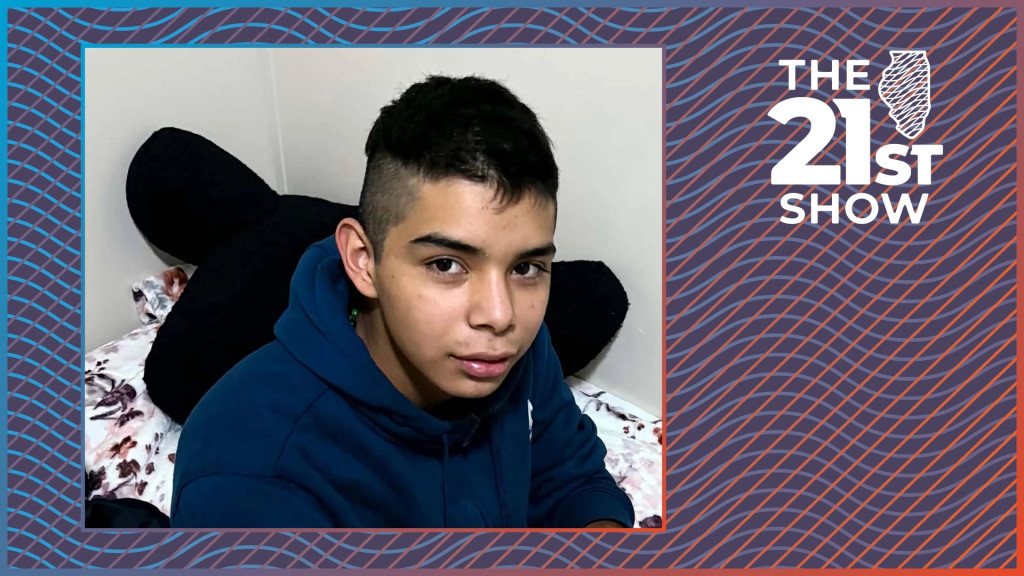
Brian Munoz: Absolutely. So Jesus Alexis Cruz is a 16-year-old from Collinsville. He was on the way to a job laying internet cables with two other Collinsville teens when police pulled the three of them over in Christian County near or in Morrisonville, which is a small town roughly 40 miles southeast of Springfield. The Christian County Sheriff's Office confirms that Morrisonville Police Chief Robert Atton initiated the stop, and he determined that they didn't have the appropriate licensure to be operating the vehicle, so they had it towed. So the three teens were then on the side of the road without a car. The sheriff's office tells me that they had them transported to a nearby gas station. And when they got there, there just so happened to be U.S. federal immigration agents driving by, and they picked the three up and put them in ICE custody.

[00:01:59]
Brian Mackey: Remarkable coincidence. We'll come back to that in a minute. What else do we know about these three young men?

[00:02:06]
Brian Munoz: Yeah, so we don't know much. The family spokesperson tells me that they were in the country without legal status, but other than that, that they were good kids. The other two were 19-year-olds Hector Cruz Sanchez and Jonathan Godoy. As I mentioned, they were transported into ICE custody — the 19-year-olds were transported to Ste. Genevieve in Missouri, which is, I don't know, about an hour and some change southeast of St. Louis, to the jail there, where they have a contract with ICE to hold their detainees. And then Jesus was sent to a juvenile detention facility in Texas, but it's unclear who took him in, who transported him, how he got there, where he even is. The family spokeswoman, whose name is Anna Marie Bell, tells me that they were able to get in touch with him — they got a call saying, hey, you know, I'm here, I'm alive, etc. — but he had no idea where he was. And there had been some political intervention as well from elected officials, but there's still a lot of questions, and Morrisonville police aren't talking. ICE isn't talking either.

[00:03:19]
Brian Mackey: So you mentioned the family's spokeswoman Anna Marie Bell. She alleges that police took the vehicle and called ICE. What is her story of how that unfolded?

[00:03:28]
Brian Munoz: Yeah, so her story is the allegation that these three teens were profiled, pulled over, and that they were taken in after being left on the side of the road, so they quote unquote looked unhoused, essentially. And that, you know, they were weaponizing the situation — local police were weaponizing the situation — in ensuring that they were getting into immigration custody. But as you mentioned in the intro, you know, if local law enforcement in Illinois are working directly with federal immigration agents, that would be a violation of the Illinois Trust Act, the Illinois [SAFE-T Act, the Illinois] Forward Act. And there's questions of whether that happened or not. And this has been a set of laws in place now for over a decade that do just that.

[00:04:20]
Brian Mackey: Yeah, maybe you can remind us — this was originally, the original version of this was actually signed by a Republican governor, Bruce Rauner. What is the Trust Act, and the related laws — what do they actually say about how local police and immigration agents are supposed to interact?

[00:04:35]
Brian Munoz: Right, so those pieces of legislation prohibit local law enforcement agencies from assisting federal immigration agents with civil immigration enforcement. And essentially that means — like in Missouri, for example — we're seeing a proliferation of these things called 287(g) agreements, where local law enforcement agencies are incentivized through money, additional training and resources to help immigration agents carry out federal immigration duties. And that can look like a range of things. Most commonly, you know, someone gets pulled over for a traffic stop — these agreements give local police authority to ask, hey, what's your immigration status? You know, are you in the U.S. legally? etc. And if there's questions around that, they can detain them, they can question them, they can furthermore put them in immigration custody. And you just don't — you know, these laws in Illinois don't allow for that.

[00:05:31]
Brian Mackey: And this is, as you said, for civil enforcement. So if somebody is — if there's criminality involved, different set of rules for that. So, you know, the family is using the word "kidnapped." What are they describing? And this is particularly in regards to the 16-year-old, I think, or maybe it's all three — clarify that for me.

[00:05:49]
Brian Munoz: Yeah, for sure. And specifically the 16-year-old is, I think, who they've been most outspoken about. And they're saying, you know, they had family members — so Jesus's aunt and uncle showed up to the federal immigration office in downtown St. Louis allegedly, asking for more information, saying, hey, you know, we're family members, we can take him, etc. And they wouldn't release him to them — and I think understandably, if they're not the parent or guardian of record. But they said that they could not get any information out of them, and officials wouldn't tell the family, wouldn't tell advocates who was taking Jesus, how they were taking him, where they were taking him — not even in a sense of being able to connect him with legal representation. And they're saying that all that together amounts to the same as a kidnapping by the federal government.

[00:06:43]
Brian Mackey: So how do we know he's in Texas, if that's what you've reported?

[00:06:47]
Brian Munoz: Yeah, so Anna Marie Bell tells me that they got a phone call from Jesus saying as much — saying, I'm at a detention center in Texas, I don't know where I am. And they haven't been able to locate him yet. As of this morning, I asked her if there were any updates and she didn't have anything else to share.

[00:07:05]
Brian Mackey: Yeah. And can you just remind me — I know you said you reached out to ICE and the local police department. What have you heard from them?

[00:07:12]
Brian Munoz: Yeah, so I reached out to the Department of Homeland Security and ICE last week, trying to get some of these questions answered — you know, who took them, were you contacted by any other agency, under what pretense, etc. — and did not get a response. I called Morrisonville Police Department in attempts to get in touch with Chief Robert Atton, and he didn't respond. Neither did Morrisonville Mayor Larry Tolliver. So I filed a series of public records requests and we're just waiting to get those back to see what we can find out.

[00:07:48]
Brian Mackey: All right, let me remind listeners this is the 21st Show. We're talking with Brian Munoz of St. Louis Public Radio about three teenagers from Collinsville, Illinois, who were taken into ICE custody after a traffic stop elsewhere in central Illinois. And in a moment we're also gonna talk about his reporting on immigration enforcement across the region. You can join us today though at 800-222-9455. That's 800-222-9455. Maybe you've had a brush with immigration enforcement where you live. What do you want to understand about maybe your rights or your neighbor's rights? 800-222-9455.

So, OK — one teenager is in Texas. You mentioned the other two are in the Ste. Genevieve jail in southeast Missouri. I know this facility has been in the news off and on. I know you and some of your colleagues have written about it. What can you tell us about that jail?

[00:08:44]
Brian Munoz: Yeah, so Representative Nikki Budzinski — as I mentioned earlier — she and Missouri's 1st Congressional District Representative Wesley Bell, both Democrats on the oversight committee, paid a visit to the Ste. Genevieve jail after advocates were complaining about conditions there. And essentially what they came out and said after that visit was, you know, we don't think that there's adequate space for the amount of people that they're taking in. There are several people raising the alarm about not receiving proper and adequate medical care or food and water, things of that nature. And the representative said just as much — to the effect of, as we continue to learn more, we're going to do everything we can to hold facilities like this accountable and demand transparency, seek answers, things of that nature.

It's unclear what their contract is with the federal government and ICE specifically. For example, the Phelps County Jail in [Rolla] — about two-ish hours southwest of St. Louis — at one point they had reported they were receiving maybe $86 a day for each [detainee] they were holding for the federal government. They had backtracked over there, saying, you know, it really wasn't advantageous to be holding folks for ICE. And then the big beautiful bill passed and there was this influx of funding. Presumably there was a renegotiation and they started holding folks again. And that's one of — what Ste. Gen[evieve], you know, two of maybe four or five facilities in Missouri that are holding ICE detainees. So a lot of folks that are getting pulled over in central Illinois, southern Illinois are getting transferred over to Ste. Genevieve, Greene County down in Springfield, Missouri, or [Rolla] — those are really the main ones.

[00:10:41]
Brian Mackey: It's such a contrast to the situation here in Illinois. You've also reported on a death in custody at the Ste. Genevieve jail. I don't know if you can talk a little bit about Leo Cruz Silva.

[00:10:55]
Brian Munoz: Yeah, so Leo Cruz Silva was a man — I think last year — who was found in his cell unresponsive. The federal government came out later and alleged that it was a suicide, and that was the second death of individuals in ICE custody in Missouri last year. The first one was a case where a young man named Brian Garzon Rayo [flagged for review: original transcript reads "Garson Rayo"] was also found unresponsive in his cell, presumably having taken his own life. And there was a recent AP story that came out — they published video, redacted in some parts, of the incident — and there's a lot of pressure on these jails on why does this keep happening.

So those are issues that we're looking into. And it had been a whole ordeal with both families just trying to get more information about what was going on. Leo Cruz Silva's family wasn't as forthcoming, I think, as Brian Garzon Rayo's in the Phelps County situation. But I think, you know, this last year was the deadliest year for deaths in ICE custody. And I think immigration watchdogs are looking at that and asking tough questions on why does this keep happening, how do we hold the federal government to account, and how do we ensure that people aren't just numbers on a spreadsheet.

[00:12:16]
Brian Mackey: Yeah, well, on that note — these are not the only troubling cases involving immigration authorities that you've reported on. Can you tell us about the janitor from Maplewood? We've got about four minutes left.

[00:12:30]
Brian Munoz: Yeah, so this was reporting done by myself and also my colleague Hiba Ahmed, and then the jail visit was also reporting done by my colleague Lucretia Wembley. But this case around Maplewood, which is a suburb of St. Louis just a couple of minutes outside of the city, involves two janitors for the school district — and that's Alba Del Socorro Matamoros Hernandez [flagged for review: original transcript reads "Matamoro"] and her husband Bonnerges Flores Bravo. Essentially they had fled political persecution from Central America and they had active asylum cases here in the United States. So as part of that, they were checking in regularly at the ICE office in downtown St. Louis. And one day when they went in, they basically said, you know, either you self-deport or we're gonna put you in ICE custody. And Congressman Wesley Bell's office contends that the family was coerced into signing documentation to self-deport.

So the husband was immediately taken into ICE custody, got shipped down to Louisiana actually, and was told — allegedly, according to the congressman — that, hey, if you don't sign this paperwork, we're going to deport you and separate you from your family. And he said, I don't want that — he was in the U.S. with his wife and his 8-year-old daughter — and so he did that and he got deported. And there was a rally for the family just a couple of days before, with Alba and her daughter going in to do ICE paperwork essentially verifying and confirming their self-deportation. And she's — the two are getting ready to pack everything up and leave to join their patriarch. And the community here is devastated, of course, because they were doing it quote unquote the right way. This is how the asylum process works, is what advocates and lawyers tell me. But yet the goalpost arguably seemed to change on folks doing it quote unquote the right way, and the federal government's plan to meet a certain mark of deportations under this current administration.

[00:14:49]
Brian Mackey: So just about a minute left — you know, I think this story has obviously gotten a lot of attention — on Chicago last fall, Minnesota over the winter — but it's important to note that these things are happening all over the country. How are you keeping track of all this? How are you following it?

[00:15:05]
Brian Munoz: Yeah, there's so much, Brian, honestly, and it is a new challenge every day. But we really are relying on the community to reach out and to share these stories. And as you mentioned, these things are going on outside of Chicago, outside of the Broadway facility — you know, deep downstate, all the way to some of the southernmost counties of Illinois. And there are loopholes — you know, ICE can transfer someone's case to the Department of Justice, and technically they can be held in Illinois under the U.S. Marshals. And that's a loophole for those detainees to be held in Illinois. I think the nuances and intricacies are ones that we continue to try to cover to the best of our ability, along with our partners across the NPR network. But, you know, a lot of great resilience — and we have many group chats and social channels we're trying to keep track of.

[00:15:58]
Brian Mackey: Brian Munoz is a reporter and the visuals editor at St. Louis Public Radio. Brian, thanks for sharing your reporting and that of your colleagues with us today on the 21st Show.

[00:16:06]
Brian Munoz: Thanks for having me.

[00:16:08]
Brian Mackey: More to come after a short break. This is the 21st Show. We'll be right back.
Transcript Assistance
Illinois Public Media may use AI assistance for transcript generation and/or formatting. Transcripts that have not yet been reviewed for accuracy will be labeled.
To report a transcription error, or to request transcription of archival material, please contact will-help@illinois.edu.