








Transcript: Night fishing, a shotgun, and a call to 911. What led to hate crime charges in Paris, Illinois?
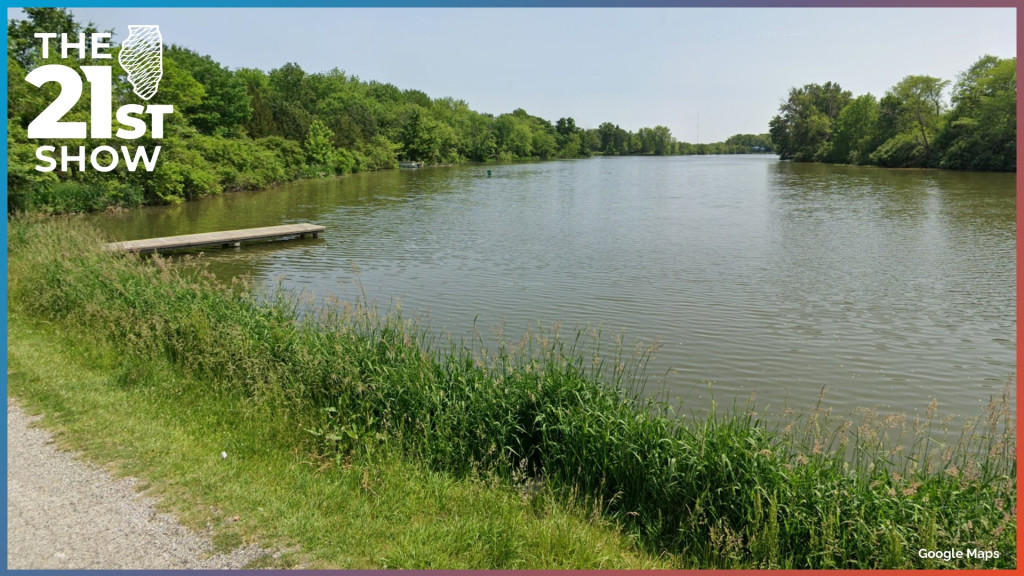
Transcript: Night fishing, a shotgun, and a call to 911. What led to hate crime charges in Paris, Illinois?
The 21st Show
Night fishing, a shotgun, and a call to 911. What led to hate crime charges in Paris, Illinois?
Read the full story at https://will.illinois.edu/am/an-alleged-hate-crime-in-edgar-county-reactions-concerns-and-the-aftermath.
Transcript
// This is a machine generated transcript. Please report any transcription errors to will-help@illinois.edu.

[00:00:00]
Brian Mackey: From Illinois Public Media, this is The 21st Show. I'm Brian Mackey.

On April 3rd, Jaleel Jones and two of his cousins, Tajon King and Duane Williams, decided to go fishing. Jones is from Danville. He's actually on the city council there, the Ward 1 alderman. This day, they decided to travel south to tiny Paris, Illinois, to fish at a place called White Oaks Park.

It's important to the story to know that Jones and his cousins are Black, because while they were there, three white men approached them. They shouted racial slurs, and eventually the white men retrieved a shotgun from their truck. There were multiple calls to 911 from Jones and one of his cousins, and how dispatchers responded is a matter of concern we'll get into a little later.

Ultimately, the three white men were later arrested, and they now face a variety of criminal charges. Jesse L. Kollman has been charged with attempted first degree murder. Jordan J. Kollman has been charged with attempted first degree murder, aggravated discharge of a firearm, unlawful use of a weapon by a felon. And a third man, Jayden Reynolds, has been charged with unlawful delivery of a firearm to a felon. But beyond all those charges, all three men have also been charged with a hate crime. On Friday, all three pleaded not guilty.

A little later we'll talk with two reporters who've been covering this case, but first we're going to hear from one of the victims, Jaleel Jones himself. Alderman Jones, thank you for taking time out of your day to join us.

[00:01:32]
Jaleel Jones: Thank you for having me.

[00:01:34]
Brian Mackey: Let's start with fishing. When did you get into fishing?

[00:01:37]
Jaleel Jones: I've been fishing since I think around 10 or 11.

[00:01:44]
Brian Mackey: Tell me about night fishing. So you're out there at night. This is not something I — I fished a little when I was a kid. I'm not that familiar with it though. What's the benefit of night fishing?

[00:01:54]
Jaleel Jones: Night fishing is when — well, me and all my friends, we believe that's when the big fish come out. Catfish.

[00:02:02]
Brian Mackey: Catfish. Is White Oaks Park — is that Twin Lakes that's down there? Is that known as a catfish spot?

[00:02:08]
Jaleel Jones: Yeah, yeah, for sure.

[00:02:10]
Brian Mackey: Yeah. So, and just to be clear, this is like — this is one of those parks, it's open late, right? It expects people to be out there fishing at night?

[00:02:18]
Jaleel Jones: Yeah, yeah, I believe so. We usually fish on the actual road that goes through Paris on the main street, but this time we wanted to go to the back 'cause my cousin said him and his father and a couple of their friends, they were catching some big fish back there.

[00:02:39]
Brian Mackey: Nice. So do you have a lot of gear with you when you're out there fishing on a night like this? Do you have spotlights or anything, or are you just taking what light you can get?

[00:02:46]
Jaleel Jones: We had some headlights, had a couple of headlights, and we use the car lights sometimes. Turn it off and on, make sure the battery don't die.

[00:02:55]
Brian Mackey: Yeah, yeah, yeah. All right. All right. So when do things start to get, you know, concerning? When do you start to sense that this is not gonna be an ordinary night of fishing?

[00:03:05]
Jaleel Jones: Well, really, I felt uncomfortable when the three men hopped out the car and basically told us that they were gonna throw seven poles in the water, kind of like they're gonna throw over our poles. Not really like very concerning, just like, OK. OK, really? OK.

[00:03:30]
Brian Mackey: They just come up to you and — no, you didn't say anything. I mean, they just decided this is what they're gonna do on a Friday night, it seemed to you.

[00:03:37]
Jaleel Jones: Yeah, I guess. I mean, it didn't — it wasn't like a real concern because people do night fish, so we didn't really take it as a concern until they started saying things that were concerning.

[00:03:50]
Brian Mackey: Well, yeah. When did you get the feeling that, like, you know, things were kind of heading south?

[00:03:57]
Jaleel Jones: The first — when I first started feeling uncomfortable was when they said the N-word from the start. They said something, grouped up together, and then you hear the N-word. And then after that, they walk up to me and kind of surround me, all three of the men.

[00:04:17]
Brian Mackey: Can I ask you — I know this is a difficult subject, and I appreciate again you talking through it with us. Is that something you hear a lot in 2025?

[00:04:25]
Jaleel Jones: You kind of hear the word get thrown out there a lot, but I don't know how to —

[00:04:31]
Brian Mackey: In anger, I guess. I mean, is that, you know, from white men?

[00:04:37]
Jaleel Jones: Yeah, but no, you kind of — it's like I said, it is 2025 and people basically just throw the word out there all the time now. It's like a normal thing, but the way that they were using it and the aggression they used with it kind of made it uncomfortable.

[00:05:00]
Brian Mackey: So what were they asking? You to leave, or what did you get — what did you get the sense that they wanted to pick a fight? What did you think was happening?

[00:05:06]
Jaleel Jones: It kind of felt like they were trying to antagonize us to start something with them, to, you know, make it a problem. That they were trying to make a problem. They wanted us to start the problem, basically.

[00:05:19]
Brian Mackey: Yeah. How did you all react?

[00:05:22]
Jaleel Jones: I'm cool and collected. We didn't really feed into it. We didn't give them — well, in my thoughts from the start, I thought they had guns on them from the start because how they surrounded us. All just like three good dudes walking up. It's 11 something at night, dark, pitch dark, and they just walk up and all three of them surround you and basically sizing me up.

[00:05:52]
Brian Mackey: Were you fearful at this point?

[00:05:55]
Jaleel Jones: Not really fearful, just concerned, and I was alert, basically.

[00:06:00]
Brian Mackey: Yeah. So at one point I understand they — well, tell me when did they retrieve a weapon? When do you know — when do you go from suspecting they have a gun to knowing they have one?

[00:06:11]
Jaleel Jones: When one of the brothers goes to the car and pulls out a shotgun and shoots it in the air.

[00:06:22]
Brian Mackey: What's going through your mind at that moment?

[00:06:27]
Jaleel Jones: What's gonna go on? Like, are they gonna kill us? Is this real? Is this really happening, basically.

[00:06:36]
Brian Mackey: Have you ever experienced anything like this before?

[00:06:38]
Jaleel Jones: No, never. No.

[00:06:41]
Brian Mackey: So at some point you try to call 911. Tell me about that.

[00:06:49]
Jaleel Jones: Yeah. When they got the shotgun and they put it to my cousin's head, all three of the dudes were down there talking to him. He's trying to negotiate, tell them that we can leave, you know, trying to calm the situation down. And like I said, he had the shotgun to my cousin's head, so I just went to the car first to see if his gun was in the car 'cause I was going to get the gun out of the car because we both are concealed carry holders. But I didn't bring my gun with me, but I know he had his. So they saw me at the car and basically said, get away from the car — excuse my language — and that's when I pulled out my phone and called 911.

[00:07:37]
Brian Mackey: And what did — how did you feel that call went, right? Because there's been some — a lot of talk after the fact about what job the dispatchers did.

[00:07:46]
Jaleel Jones: It's really crazy 'cause I haven't listened to the call. After — I still haven't listened to the call. I just heard a little part on when the show started. That's kind of surprising. I could hear the fear in my voice, but I think the call — I wasn't really focused as much on the call as much as I was the dudes. So I couldn't really tell you how I felt the call went because I wasn't really — yeah, I was — the adrenaline, yeah. I'm trying to talk and I'm trying to make sure that I'm not getting shot, but I'm also trying to, you know, let the police know what's going on, the dispatch know what's going on. So it was kind of like the first phone call was kind of like insane, yeah.

[00:08:39]
Brian Mackey: So eventually, was it — it was your cousin, you said you and your cousin are both concealed carry permit holders, and he eventually did retrieve his weapon, yeah? Tell me what happened.

[00:08:52]
Jaleel Jones: Yeah. So he apparently had his weapon in his tackle bag and he grabbed the weapon when the dudes came down there to me after they saw me first go to the car, try to get in the car, and then they thought I was trying to get something out of the trunk. And then they came down there and he saw that I had called the police. And he said, so you called the police? And I'm playing like, no, I didn't. I didn't call the police. And that's when he told his brother to bring that shotgun down there and blow my head off.

[00:09:32]
Brian Mackey: And so ultimately your cousin opens fire on these guys. I mean, he strikes one of them.

[00:09:39]
Jaleel Jones: So after he does that, after the dude tells his brother to come down there and blow our heads off, the dude with the shotgun comes down there and puts it towards me and my other cousin that were still on the other side of the car. And it was like we just started like — I guess it was instinct to start walking the opposite way of them. And the brother had said, like, he was saying, like, oh, you don't think I got it on me? You don't think I got it on me? You don't think I got it on me? So me and my other cousin, we just ran because [we thought] we're gonna get shot. And that's when my cousin had returned fire towards them.

[00:10:31]
Brian Mackey: How do you ultimately get away?

[00:10:36]
Jaleel Jones: We just run.

[00:10:38]
Brian Mackey: I mean, did you drive off? Did they drive off? Did you have to leave your gear behind? What was the ultimate, you know —

[00:10:44]
Jaleel Jones: You mean after everything happened?

[00:10:47]
Brian Mackey: Well, yeah. So how does this episode come to an end, right? Because I understand the police took — and I know you may have had a lot of adrenaline going on — took a long time to figure out where you were and get there.

[00:10:57]
Jaleel Jones: Yeah, yeah. And so when we ran, when we ran, that's when the gunshots went off. And then me and my one cousin, we ran behind the houses. We ran past some trees and some behind some houses. And well, I had fell. I thought I got shot 'cause my leg had gave out, so I thought I got shot. And then I fell again when I got back up, so I really thought I got shot. So we're running behind the house, it's just like basically hiding, kind of. And then you hear the truck rev up, just [rev up], and then you hear shotgun shots going off while they're driving towards us. So we're still hiding, we're hiding. And that's when I end up calling the police again. And we go back towards my cousin 'cause we had to see if he was dead or alive or whatever. And the car lights had came on, his car lights had came on. And me and my cousin, I pulled my cousin back like, no, let's go back 'cause I don't know if it's them or who's in the car. So let's wait and see when the car pulls up. And the car pulls up — well, it doesn't pull up. He's — my cousin screams, yo, it's me, it's me. Come, come on, it's me, it's me. So we run to the car and we get in the car. And as we're gonna pull off, we got some expensive stuff. We got Hellcats and stuff like that and a lot of expensive gear. He's like, man, y'all wanna get our stuff? And I'm like, yeah, let's get our stuff. We get our stuff, just throw it all in the car, and then we take off.

[00:12:48]
Brian Mackey: So you got your fishing gear, you took off. Where did you go?

[00:12:52]
Jaleel Jones: We went back to Danville.

[00:12:54]
Brian Mackey: Yeah. Didn't want to hang out in Paris.

[00:12:56]
Jaleel Jones: No, no, no, no.

[00:12:59]
Brian Mackey: I understand that. City of Lights, it is not at that time, at least. So what did you hear next? I mean, did you — were you still trying to get in touch with people down there after that in the day? I guess we, you know, we could move a couple of days and weeks.

[00:13:14]
Jaleel Jones: So I went — um, after we got back to Danville, I ended up going home and seeing my girlfriend, and then I left and I went to my mom's. And I called the police off my mom's phone and wanted to see if anybody ever got down there to where we were at. And they were trying to transfer me over, but I was exhausted. I didn't wanna talk. And so I just went home and looked at my phone at — 'cause I was up and down, up, falling asleep, waking back up. And I looked at my phone at around — I can't remember the time, but I had a phone call, a missed phone call from the [Paris] PD.

[00:14:04]
Brian Mackey: How did you process what happened? I mean, this is a really traumatic thing to go through.

[00:14:10]
Jaleel Jones: I'm still processing it now. It's still something that, you know, it's a weird thing. It's a weird thing to process. I've never — I've never been in a situation like that, and I never even thought I'd ever be in a situation like that. It's a weird thing to process, really. Just an unbelievable thing that happened.

[00:14:37]
Brian Mackey: You know, it's interesting. Can I ask what you think about, you know, concealed carry as a matter of — I mean, you say yourself as a concealed carry holder, you said you never really thought you'd be in that situation. Surely, I mean, is it — you know, it's — 'cause it's a politically charged topic, right? People don't like it, some people don't like it, some people think it's very, uh, you know —

[00:15:00]
Jaleel Jones: I believe it's something that is needed nowadays for various different situations. You know, people get robbed, people kidnap people. It's just something that I think if you are mentally and you can mentally deal with something like that, being able to carry a gun and protect people, I think it's something that we need because crazy things like this go on, and that's the only thing that saved us that night was a concealed carry.

[00:15:39]
Brian Mackey: All right. We need to take a break on the program. We're gonna continue talking with Jaleel Jones when we return. He's an alderman in Danville, but we're talking about an experience he and his cousins had where three men attacked them while they were night fishing at a lake in Paris, Illinois. Those three men have been accused, charged with hate crimes, two of them with attempted murder. We're gonna continue this conversation with Alderman Jones after a short break. Then we're gonna hear from a couple of reporters who've been covering the prosecution of those men, as well as some of the issues related to how 911 dispatchers responded in this case. We'll continue after a short break. This is The 21st Show. Stay with us.

[00:16:24]
Brian Mackey: It's The 21st Show. I'm Brian Mackey. We are talking about an episode that happened April 3rd in Paris, Illinois, at a place called White Oaks Park. Three white men allegedly — they've been charged in state court with this — used racial epithets and fired a shotgun, and two of them have been accused of attempted murder. All three of them have been accused of a hate crime. And we are speaking today with one of the people they were seemingly targeting, Jaleel Jones. He happens to be an alderman in Danville. He was out fishing that Friday night with his cousins, Tajon King and Duane Williams.

Before the break, we talked about your experience there. And, you know, it does seem like some of the reporting afterwards that police dispatch or the county dispatch was a little confused about where you were and what sort of response was needed. It was initially coded as a domestic. Let me ask you, though, as you jump forward a couple of weeks, you said you got that phone call, you saw that missed call from the police department in Paris. How do you rate, you know, what the authorities there have done in the time since?

[00:17:48]
Jaleel Jones: They have did everything possible to get the criminals off the streets, and I'm very grateful for that. At first, I was a little worried because we didn't get any response when we called the police three times. But talking to the detectives, they were very respectful, very kind, and seem to be very aggressively getting this — getting the people that did this to us. Very aggressive manner, making sure that justice was served.

[00:18:34]
Brian Mackey: You've been to court, I know at least once. I don't know if you also went last Friday, but what was that like for you?

[00:18:41]
Jaleel Jones: It was a little — it was — it was a little awkward going in there and just seeing them there. And I see the Jayden dude. But it was a little awkward being there, but it was something that I felt like I had to do. I had to be there to show them that who I was and, you know, that it was — it was a crazy experience that we went through and that I was gonna be here and that I'm still here to show that, you know, we're gonna fight this and this gotta stop.

[00:19:22]
Brian Mackey: What do you — you know, this is like, maybe this is a cliche question, but what does this make you feel about life in America and Illinois and east central Illinois in 2025, right, that this kind of thing happens?

[00:19:36]
Jaleel Jones: It's just a real surprising thing that this still happens, like — my whole life I've been around different people, different cultures, you know. I've did pretty much everything that anybody does, not just what Black people do or white people do or Mexican people. I've did pretty much everything and I've got all types of friends. And it's just — it was just a weird experience that people that they could treat us like that. It was very, very, very unpleasant. It was a very unpleasant thing to go through. And the whole time it was — it was just like, I'm a real good listener and I'm a real good, like, talker to get understanding of people. And at that moment when that was happening, it was no like common ground. We couldn't get any common ground between us. Like, we were trying to leave. We didn't want problems. We didn't want anything to happen. We were just gonna leave. And it just felt like we were trapped, was no way out. And yeah, it's just — that going on in 2025 was a very, very unpleasant thing. And I just think we need to come together as people in general, like, all lives matter, just not one certain type of life, not just Black lives, white lives. I think all lives matter and everybody should be treated equally.

[00:21:19]
Brian Mackey: Jaleel Jones is an alderman in Danville. I'm sorry for what you went through. I do appreciate you taking time out of your day to share your story with us.

[00:21:26]
Jaleel Jones: Thank you. Thank you, thank you, thank you, thank you.

[00:21:30]
Brian Mackey: All right. We're gonna continue this conversation. Joining us now to talk more about this is Kaighla White, who is the founder, executive director and editor-in-chief for the Vermilion Times, which is an independent nonprofit news outlet that covers Vermilion County, where Danville is located. Kaighla, welcome to The 21st Show.

[00:21:48]
Kaighla White: Thank you so much for having me.

[00:21:50]
Brian Mackey: Also with us, Kirk Allen, founder and reporter with Edgar County Watchdogs, which is an investigative reporting news outlet that focuses on local government accountability in Edgar County and really across Illinois. Kirk, thank you for being here as well. And listeners, you can join us today at 800-222-9455. That's 800-222-9455.

All right, Kaighla, I'm gonna start with you. What can you tell us about the three people who were arrested? Maybe we can start with the Kollman brothers.

[00:22:26]
Kaighla White: Yeah, absolutely. So both Jordan and Jesse Kollman have a long criminal record in both Edgar County and in their home county of Effingham. We're talking aggravated battery. I can't recall if that's Jordan or Jesse. One of them as well ran from the police when they were being — when they were, you know, supposed to be arrested for something. They both are felons. And so it's not surprising, you know, looking at what happened that they would have been involved in something like that.

[00:23:00]
Brian Mackey: What about Jayden Reynolds, who is not a brother, but has also been — I guess he was charged with delivering a weapon to a felon and also a hate crime as all of them were.

[00:23:12]
Kaighla White: Yeah. So Jayden Reynolds, actually, I haven't been able to find much of a criminal record for him at all aside from traffic tickets. That doesn't mean it doesn't exist. I just haven't found it. And what's interesting is that he didn't just deliver the weapon. He actually traded the weapon. It was a 12-gauge pump action shotgun. He traded that for a PlayStation 5, according to the assistant state's attorney Lauren McQueen when she read it out at the arraignment hearing. And he also purchased the ammunition that was used that night from the local [Rural King].

[00:23:45]
Brian Mackey: Mm. All right. And I guess this is a good time to say, as I did at the top of the show, all three men pleaded not guilty to these charges in court on Friday. And I reached out to all the attorneys involved for all the men. I didn't hear back from two of them. But Mr. Reynolds' lawyer, Richard Cash, did write back to say, uh, no comment basically at this time. Also heard from the prosecutor, I should say, who, you know, had, you know, didn't have much to say but did say, quote, "These allegations are not something we stand for in Edgar County, and these defendants do not represent Edgar County. My office will be prosecuting this matter in accordance with law and in the same manner in which we prosecute all of our cases, which is fairly vigorously and in the interest of justice."

Kirk Allen with Edgar County Watchdogs, I want to bring you in now. Let's talk about the 911 calls. Maybe we should just start with sort of a baseline. How are they handled in Edgar County? And, you know, what does that tell us about what we're about to hear when we listen to some of these clips?

[00:24:50]
Kirk Allen: Well, thanks again for having me. Basically, our 911 system is what's called an E-911, enhanced 911 system. And when that call comes in, if the dispatcher is actually looking at the screen, they're gonna see what's called a CAD system that displays the map of where that, you know, the caller is triangulated from. And they're gonna have a really close proximity as to where they're at, you know, within 10, 15 feet typically.

We've had quite a history with our dispatch center. I'm a local fire chief, volunteer chief here in Kansas, and we actually started the Edgar County Watchdogs because of a 911 call [16] years ago. And we had uncovered that our dispatchers had not been certified for six years to dispatch medical calls. But when I asked the board about that, they outright lied to me, and I thought, gosh, if they're going to lie about that, what else are they lying about? And there began the beginnings of the Edgar County Watchdogs.

And we fast forward [16] years, and within about 12 hours of these calls, I was contacted by some whistleblowers. And they said when I listen to these dispatch calls, they're going to understand why they're as upset as they know I'm going to be. And anybody that's listened to him and understands 911 calls knows that this was a failure across the board. And I think — I don't think it's intentional from the dispatcher standpoint, but it points to the lack of training, proper training. I mean, there's just a lot of questions that need to get answered on this.

[00:26:29]
Brian Mackey: Yeah. All right. Well, let's listen to a snippet. This is, I think, from the first call, came from Jones, Jaleel Jones himself. And I'll mention, you can hear a racial epithet apparently shouted on the recording here. We did bleep it out.

[00:26:46]
Dispatcher: Edgar County 911, what's your emergency?

Jaleel Jones: [There's] people out here. They trying to kill us.

Dispatcher: At?

Jaleel Jones: At Paris, Illinois. We at the fishing bank. Fishing lake. We don't got nothing, bro. Yeah, we don't got nothing, bro. We don't got nothing. Yeah, look, we don't got nothing, bro. Here, look, you can feel me. Look, I don't wanna see it, gang. I don't wanna see you because that's not what we want. Yeah, we wouldn't know nothing. So your homie was just — did that. What? So your big homie — no, no. Look, look, no. The only — only reason — the reason it got like that is because we — no, no, we don't, bro. I understand what you're saying.

[00:27:45]
Brian Mackey: OK. Kaighla, can you help us make sense of what we're hearing there?

[00:27:50]
Kaighla White: Yeah. You know, I listened to those 911 calls. We filed a FOIA, actually, for the 911 calls, and we had to do a little hunting because unlike other places in Illinois, Edgar County does not have a centralized system. So when someone calls 911, it goes straight to 911, Edgar County 911, and then they have to actually relay in order to dispatch any, you know, local police from different cities in the county. So we had to kind of hunt. And listening to those 911 calls was very disturbing for me to listen to, especially in conjunction with the interview that we did with Jaleel a couple of days after the events. He actually called us, I think, two nights after it happened to tell us what happened before we actually interviewed him a couple of days later.

And what we're hearing is you can kind of hear in the background there's some arguing going on, and you hear Jaleel trying to basically explain where he is and what's going on. "They're trying to kill us," you know. He says where they are. The 911 dispatcher clearly asks — it sounds like she didn't understand what he was saying about where they were. But we know, like Kirk said, from the CAD logs that we also sent in a FOIA request for, that they knew precisely, almost down to the meter, where Jaleel and his cousins were. And yet they still spent three solid minutes on three different phone calls asking them not only where are you, how do we get there, arguing with them about how somebody would get there. And at one point in another 911 call — I'm not sure if you're going to clip that one as well — but she openly says, I need you to stay where you are, you're running around everywhere out there, indicating that they knew precisely where Jones and his cousins were during this entire thing.

So at the end of the call, you hear Jones saying, we're not on anything, we don't have anything, you know, trying to sort of handle the situation calmly, peacefully. And you hear Jesse Kollman — so not the one with the gun, but the brother, as far as I understand — basically saying, OK, so things are getting like this because we called you the N-word. And you hear Jones say, no, no, no, it's not like that. And then the call cuts off.

[00:30:08]
Brian Mackey: Mm. Well, for the sake of time, I'm not gonna play another clip in our conversation today. But Kirk, let me come back to you. Can you just put this episode in the broader context? I mean, you talked about what happened, what was it, 16 years ago. What do you — what do you make when you start looking through all this information? What do you make of it?

[00:30:27]
Kirk Allen: Well, I think it basically comes down to what we highlighted 16 years ago. Our Edgar County 911 system operates under the purview of the sheriff's office. It's not an independent emergency telephone system board running it like most counties. And the sheriff is responsible for the dispatchers under their union contract. And this has been an ongoing problem in emergency services in this county, like I said, for 16 years, probably longer than when I even first identified it. And it's a training issue.

You know, I spent a career in the service. I've spent over 20 years volunteering here locally. And it's an ongoing battle when it comes to dispatch. And when you listen to these calls, the first thing that comes across to me as a fire chief is the attitude. There was a distinctive attitude, and it wasn't to serve. It was an attitude of, you know, I was — I'm busy. I'm sorry, but look at your screen. You'll be able to tell where the person is. And when you say calm down, you're walking all over the place — well, that's because you can see where they're at on the CAD screen. We didn't need to have, you know, this back and forth dialogue. We needed to have emergency services dispatched to the scene.

And I have not read the actual dispatch report yet from the city, but I understand it was relayed that it was a domestic. Well, there's a big difference between a domestic and a potential shooting, or, you know, you can hear gunfire on one of the calls. And you didn't see the urgency. And it does — it comes back to training. And we have a sheriff that's a lame duck sheriff. He's vacant most of the days. He's never around. And it's been that way for years. And fortunately, he's going to be leaving and we'll have some new leadership in here. And hopefully this will get fixed. I know the 911 board is working in that direction. I went to their last meeting. And these two dispatchers, my understanding, there was supposed to be a hearing with their union — I'm going to assume for the attempt to terminate them. But, you know how union contracts are. Sometimes that's pretty tough to do. But they do know they've got to do some better training and oversight on this. But right now, this falls in the lap of the sheriff. He's not doing his job.

[00:32:44]
Brian Mackey: Just — we're almost out of time. Kaighla, just briefly, maybe a couple of sentences. Can you talk about how the Paris community has reacted to this attack, this episode?

[00:32:54]
Kaighla White: Yeah, absolutely. So at that first hearing, the one that Jaleel was at, there were a number of residents in attendance there to offer their support, to let him know that not everyone in Paris is like this. Yes, there's racism. There's racism everywhere. But most of the people that we have interacted with and we've seen comments on our Facebook pages and posts are very supportive of Jaleel. And many people also comment on how the Kollman brothers apparently have a reputation for being problematic in the area.

And I also wanted to point out here in the last couple of seconds that we applied for — yeah, we applied for an extended media request so that we can record these hearings. And the Edgar County Circuit Clerk's office has completely — we didn't receive any notice of objection. It's been very mishandled, but we are trying with all our might to get the opportunity to make sure that the people are able to have full coverage.

[00:33:48]
Brian Mackey: We have to leave it there. Kaighla White with the Vermilion Times, Kirk Allen with the Edgar County Watchdogs, thank you for sharing your reporting with us here on The 21st Show. We'll be right back.
Transcript Assistance
Illinois Public Media may use AI assistance for transcript generation and/or formatting. Transcripts that have not yet been reviewed for accuracy will be labeled.
To report a transcription error, or to request transcription of archival material, please contact will-help@illinois.edu.