








Transcript: Illinois Public Media and Illinois Soul says farewell to Kimberly Schofield
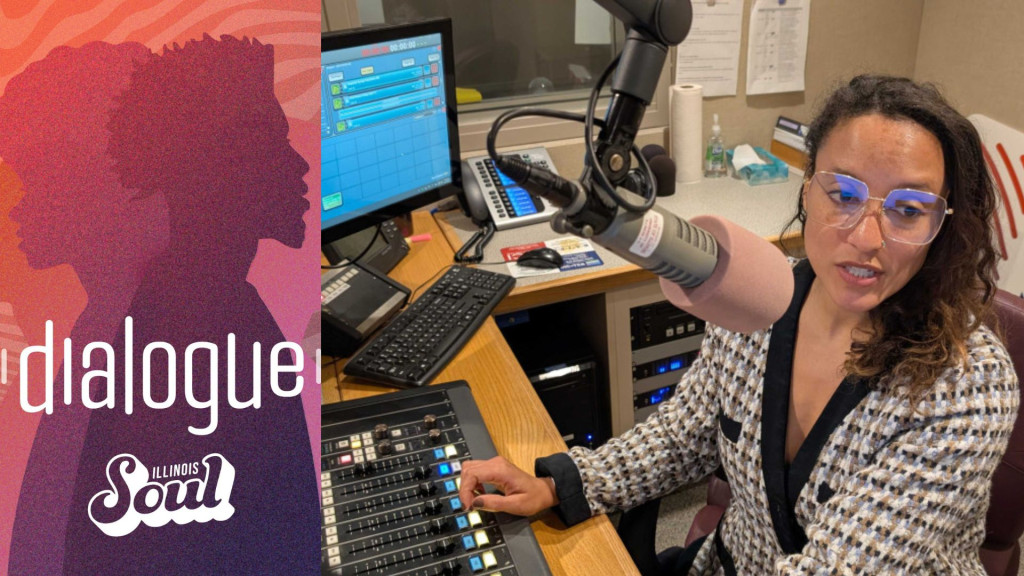
Transcript: Illinois Public Media and Illinois Soul says farewell to Kimberly Schofield
Dialogue
Illinois Public Media and Illinois Soul says farewell to Kimberly Schofield
Read the full story at https://will.illinois.edu/dialogue/illinois-public-media-and-illinois-soul-says-farewell-to-kimberly-schofield.
Transcript
// This is a machine generated transcript. Please report any transcription errors to will-help@illinois.edu.

[00:00:00]
Reginald Hardwick: From Illinois Soul, this is Dialogue. I'm Reginald Hardwick. Dialogue is an exchange about culture straight from the soul. For the last three years, a warm and informative voice has helped us get our day started.

[00:00:23]
Kimberly Schofield: From Illinois Public Media News, I'm Kimberly Schofield. This is Morning Edition. Good morning. Today

[00:00:28]
Reginald Hardwick: is Wednesday. But we have some bittersweet news to report. We're sad to announce that Kimberly Schofield will be leaving Morning Edition and Illinois Public Media. The great news is she'll still be here in central Illinois. So stay tuned for that. Kimberly is in the studio with me now. What's going on?

[00:00:45]
Kimberly Schofield: Yes, Reginald, I will still be in the area. I'm going to go over to the Champaign County Humane Society. I have worked there in the past and they have a new position that is going to be foster care coordinating. So I will be the foster care coordinator over there.

[00:01:02]
Reginald Hardwick: We, of course, will miss you. You started as an All Things Considered host before we promoted you to the Morning Edition position. And you've been here through heat waves and snowstorms and reporting election results the day after and school closings, and you helped raise our arts and entertainment coverage by creating the Will Call series on Wednesday mornings and interviews with everyone from Morris Day to Michael Feinstein to the Five Cities Baroque Festival to [Branford] Marsalis. Why are the arts so important to you?

[00:01:32]
Kimberly Schofield: I think the arts are really important to me. Other than me being a part of them, I think that they're a really good way for people to do a number of things, whether that is express themselves or take in a piece of media that helps them kind of escape from whatever else is going on in their world or for people to truly just enjoy something and appreciate the talent and the skills that people have, whether it is visual or it is a song or it is a museum where people are going through and just looking at different sculptures. All of the art comes from the creativity of a human being and whatever level that is. And I think that that is something that keeps people thinking and keeps people engaged and entertained.

[00:02:17]
Reginald Hardwick: Are there any interviews or stories that stick out to you over the last three years?

[00:02:23]
Kimberly Schofield: Yeah, I can think of two, especially, well, I guess I — I had three. The very first one that I did was while I was the All Things Considered host and you, Reginald, encouraged me to actually interview the composer of [Our Planet] and I was very intimidated, but it was delightful. It was a delightful conversation and I very quickly learned — I had prepped out some questions in advance and you can hear a shift in the interview where I say something that is a little bit more personal and relatable to the composer and you can almost hear a shift in his voice where he feels more comfortable talking to me and from then on, the conversation just sounds very, very personal and still casual but still really informative and professional.

[00:03:05]
Steven Price: The thing that's really struck me is — is what a wonderful experience it is to share with — with other people, you know, the — the whole point of the show is really that we're all in it together, we all share this place, it's our home. And to — to — to watch this show with an audience and to kind of really feel the links between all the different places, it's — it's really easy I think for us to sit in our own places and think, oh, the Arctic's nothing to do with me, you know, and the problems over there are nothing to do with me, but actually everything is connected and it's been really lovely to — to share that through our films with the — the — the audience.

[00:03:36]
Kimberly Schofield: And that then led me to all of the other [two] — or interviews that I had done. As we know on Morning Edition, we usually play them about four or five minutes, sometimes eight. The conversation with [Branford] Marsalis was over 40 minutes long and he had his video up and he was just had his headphones in and he was drinking a Coke and was laying back on the couch and walking through his house. And it was just so fun and he is very intense and very passionate and it was amazing getting to know somebody when, you know, you think, hey, you're coming to [the Krannert Center for the Performing Arts] or wherever in central Illinois. Tell us about your show and in reality, you get so much more of an in-depth perspective about a person and about their life.

[00:04:23]
Branford Marsalis: I always knew I wanted to play music, but I never thought that I'd become a professional musician. That was mostly Wynton who fervently believed he was going to go to New York and shock the world, and he pretty much did. I'm a year older than him, so when I graduated from high school, I went to a historically Black college in Louisiana, Southern University, and I marched in the band and I was studying to become a history teacher, and I was just gonna teach history and play with a like a wedding band.

[00:04:51]
Kimberly Schofield: The other one is Zakir Hussain, who has passed recently, but that is somebody who I had heard his name, but I didn't actually know any of his music and I didn't know much of his history or his story. And there have been moments where I'm excited going into an interview. I'm never not looking forward to one, but if I'm more familiar with one, I get excited than if I don't know anything about this person. So I went into the [Zakir] Hussain interview, doing some research and knowing that he was coming on this tour and he was going to be at [Krannert] Art Center, but I had no idea where the conversation was going to go or if it was even going to be interesting to me and he ended up being just the sweetest, kindest person, so incredibly knowledgeable and so talented. And that led me to hear a lot of music that I had never heard before or never explored before. So it just opened up a lot of new doors for me. When did you yourself recognize that music was something that you wanted to pursue?

[00:05:50]
Zakir Hussain: I guess it was through my need to want to be connected to my father that I realized that the only way to do that is to make sure that our paths are musically aligned, and I knew that that was the way to inspire him to want to give me a second look because for him music was everything. I mean, I saw him all day long sitting with so many students and just teaching them and — and then in the evening just getting ready and going to go play a concert.

[00:06:22]
Kimberly Schofield: And that interview, I think now looking back might have been the last interview that he did because he performed — he had the performance set for [Krannert] and then unfortunately, he passed away shortly after and the tour had to be canceled right before that. And I'm glad that I got to speak to him beforehand and was able to share his story and his music and then explore an entirely new genre for myself.

[00:06:47]
Reginald Hardwick: Kimberly has incredible energy. She's a marathon runner and you may have seen her in local productions of Gypsy [Rose] or Rent, the musical where she's a regular actor and singer. Can people still see you in local productions? Yes,

[00:07:01]
Kimberly Schofield: people sure can. I am going to be in Ragtime next, which is going to be with CUTC at the Virginia Theater. That's at the end of July and beginning of August. And then in August, there is a play that I was in at the beginning of January, and it got accepted to Indie Fringe Festival and Saint Louis Fringe Festival. So we will be taking it on the road, so to speak. But I plan to stay in the central Illinois area and will continue auditioning for shows and popping up at places and of course hopefully seeing all of our listeners and my coworkers.

[00:07:35]
Reginald Hardwick: Why is that important to you? Why — why are you so involved in the local productions?

[00:07:40]
Kimberly Schofield: I didn't do any community theater growing up. We didn't have community theater in Lake Zurich, at least not that I was aware of at all. And there wasn't anybody in my family except for my grandmother who was really musical. There were people interested in the arts. We went and we saw plays and productions. I think Joseph and Phantom were probably the first two shows that I saw as a child. But for whatever reason, they just kept calling to me and having not received any formal training in school, whether it was acting or singing or dance. I was hesitant to even pursue any of it. And I did a couple of plays in high school and I did choir for a year and a half or so. But then in college, I joined a jazz a cappella group and I spent the majority of my time in the music building on the University of Illinois Urbana-Champaign campus in the music building. People thought I was a music major because of it. And I dedicated so much time and energy to that group, No Strings Attached, and really found a lot of people who were very diverse and had very different skill sets and very different voices in that community, but we all got along and we all appreciated the music and the art and the work that goes into it.

After graduating, I was bartending because I've done a million jobs in the area. And one of the comedians who would come to open mic night asked if I was interested in auditioning for a play at the Station Theater, and it was She Kills Monsters, and I said yes, and I got in it and I have never stopped. And when I am on stage or performing, it just feels like home to me. It reminds me of my grandmother who was the closest thing to a performer that I think I had in such an intimate relationship. And I love telling a story and the live theater. There's almost an expiration to it because I love movies and I love songs, but in live performance, you have to give it your all right then and then it's going to be over because it's in real time. And there's something I think really special about that media.

[00:09:51]
Reginald Hardwick: Not only are you the first voice people hear in the morning, you were the first voice when we launched Illinois Soul FM 101.1 back in 2024. You helped initiate our format change and introduced the mayors of Champaign and Urbana. What do you think Illinois Soul has brought to this community?

[00:10:07]
Kimberly Schofield: Oh, I think Illinois Soul has brought so much to the community. There are people who will message me even today thanking you and Jill and everybody who has helped put Illinois Soul together because there really was an absence of a space for Black voices to be heard and Black culture to be celebrated or information just to be spread. And there are so many events, whether it's at Uncorked or it is events that are sponsored by Illinois Soul that continue to celebrate the arts and continue to celebrate the community and bring in, I think a lot of listeners and a lot of people who might not have been as focused on either the news or felt like their voices were heard without Illinois Soul.

I mean, I think about even talking to the Urbana mayor and I see him now out in the wild and of course we say hi to each other, but there are a lot of connections that I personally have made because of Illinois Soul. And I grew up again, Lake Zurich was a very white community. I think I had a great childhood growing up, but the diversity was not there compared to here. And even though we're in a college town and where you have a ton of different areas, urban areas, farm areas, there still can be a lapse of space for voices. And being here at Illinois Public Media, I am talking to so many different people and it was nice to have Illinois Soul be focused on a specific group of people, a specific demographic, even though everybody is different. Getting to know their stories and getting to see how they move in the world and how they feel like they're being represented, I think is — is really important. It's — it's a great platform to give people a voice where they may not have felt comfortable doing it.

[00:11:54]
Reginald Hardwick: And thank you for emceeing all the events. You have so much great energy. I could never get out there and do it like you do, and you do a fantastic job getting everyone motivated.

[00:12:05]
Kimberly Schofield: It's very fun. I enjoy it a lot.

[00:12:08]
Reginald Hardwick: So anything people would be surprised to know about getting up and coming in here at 5 in the morning to prepare for the newscast five days a week?

[00:12:19]
Kimberly Schofield: I think that one thing that might surprise people is that I am the only person in here in the mornings. We have other shows like The 21st — that show has producers and so we have the host Brian Mackey, of course, and then we have producers who are helping send questions and monitor phone calls and there are other people operating the board. And as a Morning Edition host, as you also know, Reginald, because you have covered it as well, you are doing everything on your own and there are some people who think that I'm in here playing music only or doing something like a radio DJ is and some people who think that the entire thing is pre-recorded and it's not. It's — it's all live. It is a huge team effort of our reporters and our engineers and the people who work in the operations department coming together to prepare for just a chunk of time in the morning so that we can get the voices.

I also have to warm up my voice in the morning — I choose to warm up my voice in the morning, I should say — because naturally the speaking voice is usually over the course of a day, just having casual conversation. But for me, I haven't spoken to anybody until I get here. So there's some gentle vocal warm-ups that I will do sometimes on the way in here and rehearsing whatever you're reading, and I still mess up sometimes because it's live radio, but rehearsing names especially, I think it's really important and there's just a lot of behind-the-scenes work that goes into just getting a minute or two or three minutes out to our listeners on whatever commute they're doing.

[00:13:55]
Reginald Hardwick: We also know you love animals, so tell us about your new role at the Champaign County Humane Society.

[00:14:02]
Kimberly Schofield: Yes, I will. I love animals and I know you have an animal from the Champaign County Humane Society, Sam. Sam,

[00:14:07]
Reginald Hardwick: you watched when I first got him.

[00:14:09]
Kimberly Schofield: I did, I did and I love him. He's a great dog and he's gorgeous. The Humane Society has expanded. It moved from Urbana, from far east Urbana to now far west Champaign. So there are more buildings than there were before, but with that, the staff has increased and that means that there are more rooms for growth. So the executive director who is there started kind of playing with the idea of having a foster care coordinator. In the past, foster animals would primarily be if they were too young to go up for adoption or if they had a medical issue and they needed to just get better before they came back to the shelter. This program is still being developed — this new program that I will be ahead of — but it will be more geared toward working with taking a dog out for Dog's Day Out, for example, during the day and getting animals possibly to go into a home to see if it's a foster-to-adopt option. There are other shelters that have done this before — this though is going to be a program that is going to be kind of built as we go. You — volunteers — you have to get training and everything too, so we're not just kind of sending animals out into the world or anything without checking in on people or the animals, but we're hoping that it'll be a nice opportunity for animals to — to be adopted and to get some more enrichment than just being in the Humane Society because as much as the Humane Society does, the shelter is still a strange environment for any animal because it's not home. So any opportunity for them to get that enrichment or get any more — more knowledge about the world or to learn new things, we love to do.

[00:15:55]
Reginald Hardwick: Putting you on the spot here, but what are some of the biggest challenges of having animals come and go in the Humane Society or has that changed over the years?

[00:16:05]
Kimberly Schofield: I think with animals coming and going, retention is a big thing, having animals go into a home and stay — and stay in the home. They require at the Champaign County Humane Society, for example, most puppies — which will be considered animals under a year in this case — to go through training classes. And there are a lot of people who say, well, I've already trained my dog and I know how to do it and we understand that completely. Also, it helps with the retention rate to get the owner to work with their pet, to learn their tricks because these animals either came from not having a home ever and living on the streets or we don't know their backstory at all. A lot of people, it is their last resort to bring an animal to the shelter. So while the animal has lived in a home before and understands family life, they're still going in with a new person. So the connection that can really come from training classes or for multiple visits or spending just a significant amount of time with an animal will help keep that animal in the animal's new home.

And there have been definitely frustrating times in my past having worked there where animals will come back and we just can't figure out why because we're not — we're not there 100% of the time. And a lot of people feel guilty and they shouldn't have to. Sometimes things don't work out and people's lifestyles don't match with an animal. That's what the Humane Society is there for, to be a resource for animals and help their welfare. But this foster program hopefully will help get us more information from the people who spend time with the animals, even if it doesn't work out for adoption, it's a more direct and intimate way for people to — to gain experience and have that animal gain experience too.

Attachments, of course, are always tricky. I think anybody who has met an animal and likes an animal will remember that animal. So when we see pets, most of the staff there, their main goal is just to keep this animal happy and to — and to get them adopted and to give them the best life that they can. And when we see animals there for long periods of time, it can be wearing, it can be draining. People experience burnout, of course, in any profession. But especially when there's one that has, you know, it kind of tears your heart out sometimes, but most people I think are good and want to have pets and sometimes it just doesn't work out. So the difficulties, I think, don't outweigh the good that comes with working in animal welfare.

[00:18:28]
Reginald Hardwick: Well, good luck there. Are you — do you have any last messages for listeners here?

[00:18:33]
Kimberly Schofield: I'm so sad leaving the listeners. I already am in my brain like, OK, like how can I still be involved with Illinois Public Media and all of our listeners. But our listeners, you know, we say it during pledge all the time and I really thought of it when I started here and you, Reginald, helped get Will Call really up and running. I remember you saying from the start that there's an absence of arts coverage and there's not really a place where people can just hear or listen or hear or read events that are happening. And when we created Will Call, I don't think — I at least did not know how much of an impact it would have on people. It's under the category of the term that I've heard — news you can use. And while it's not hard news about politics, it's information that people rely on and at Friendsgiving here at IPM where our listeners and our supporters come and can get a little tour of the station or even in the wild when people recognize my voice or they know that I work there. Will Call is often something that people bring up as a really significant thing in their life — or my mother texted me yesterday and said, I missed Will Call and I said, well, it's — it's online. You can — you can go online and listen to it. And there's even more events just on the website.

But I think that that is a reminder, a direct reminder for me of how important we here at IPM are to our listeners, even if it is something that's arts and isn't — and isn't hard news. We are a resource for the community and being reminded that they are listening and that they do care and that they can put a voice or a face to a name, I think is really great and has really kept me going. I mean, the support here, of course, is always amazing, but I don't always think about the impact of the public on me. I think about our impact on the public because we're providing them a service. But really without the listeners, we wouldn't be able to do this, I don't think. Every time people say, I hear you every morning in my kitchen, I'm like, oh boy, I'm going to think of you now every morning about how you are one of the people I am talking to. So I just really appreciate all of the listener support and everybody has their opinions, which I do love hearing. And again, reminds me that you are listening and truly, we say it all the time, but we couldn't do this without the listeners. So I'm just glad that they have taken the time to share their appreciation and share their ears and also their voices for us.

[00:21:07]
Reginald Hardwick: That was our Morning Edition host, Kimberly Schofield. You can listen to her until June 5th on Morning Edition, which is available on WILL AM 580 weekdays from 5 to 9 a.m. and on Illinois Classical from 6 to 9 a.m. and Illinois Soul FM 101.1 from 6 to 8 a.m. Kimberly, don't be a stranger.

[00:21:27]
Kimberly Schofield: I will not be a stranger. You'll hear my voice, I'm sure somewhere. Thanks so

[00:21:32]
Reginald Hardwick: much. Thank you. That's all for this edition of Dialogue. Lamont Holden composed our theme. Dialogue and Illinois Soul are part of Illinois Public Media, a service of the University of Illinois Urbana-Champaign. I'm Reginald Hardwick. Thanks for listening.
Transcript Assistance
Illinois Public Media may use AI assistance for transcript generation and/or formatting. Transcripts that have not yet been reviewed for accuracy will be labeled.
To report a transcription error, or to request transcription of archival material, please contact will-help@illinois.edu.