








Transcript: The Hidden Spectrum: Uncovering Autism in Communities of Color
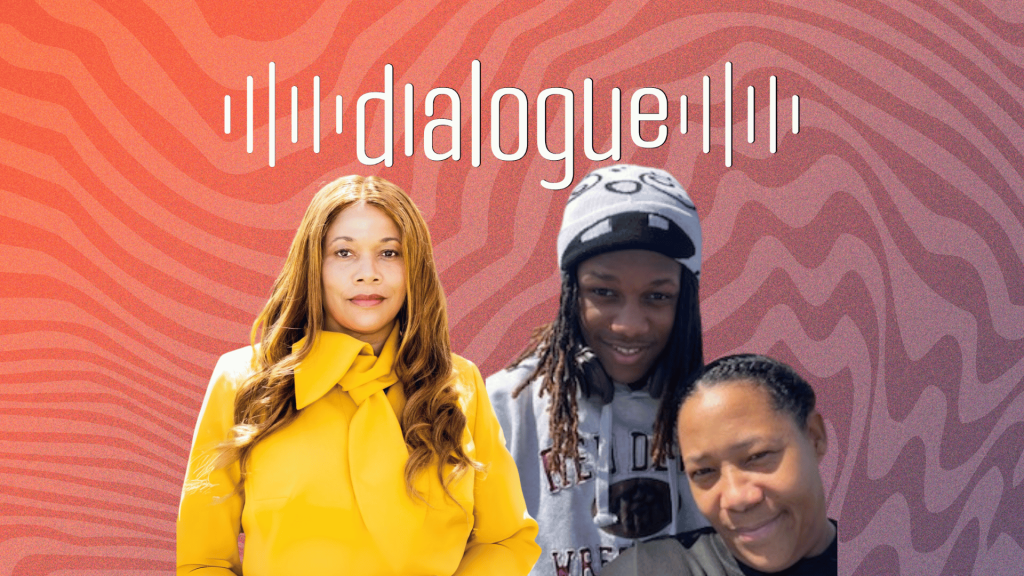
Transcript: The Hidden Spectrum: Uncovering Autism in Communities of Color
Dialogue
The Hidden Spectrum: Uncovering Autism in Communities of Color
Read the full story at https://will.illinois.edu/dialogue/the-hidden-spectrum-uncovering-autism-in-communities-of-color.
Transcript
Reginald Hardwick  00:08
From Illinois soul, this is Dialogue. I'm Reginald Hardwick, news and public affairs director at Illinois public media. Dialogue is an exchange about culture straight from the soul. April is autism month, a time set aside to promote understanding, acceptance and support for individuals on the autism spectrum. In 2025 our former host and producer Kennedy Vincent, explored how black individuals on this spectrum and their families must maneuver through a lack of understanding. Let's listen.

Kennedy Vincent  00:51
In from the popular 1988 movie Rain Man to more modern shows like Love on the Spectrum and The Big Bang Theory, autism spectrum disorder has been getting a lot more attention in American society.

(Sounds from different movies and tv shows)  01:05

Kennedy Vincent   02:04
Yet a majority of what popular media is missing is BiPOC representation.

Speaker 5  02:10
It's not a white disorder, it's a disorder that anyone can have autism doesn't discriminate, because it doesn't it doesn't just pick one group of people. Other people are autistic,

Kennedy Vincent    02:19
According to the Center for Disease Control and Prevention, or the CDC, about one in 36 children have been diagnosed with Autism Spectrum Disorder or ASD, although a study released in 2025 by the CDC shows an increase in ASD diagnosis of BiPOC children communities of color still have less access to resources than their white counterparts today. On dialog, we learn more about the signs and realities behind autism through conversations with two families, a Michigan mom who saw a need and filled the gap in BiPOC care, and a local family who wrote a children's book to teach others. You so what is Autism Spectrum Disorder, or ASD? According to the National Institute of Mental Health, it's a neurological and developmental disorder that affects how people interact with others, communicate, learn and behave. Although autism can be diagnosed at any age, it is described as a developmental disorder because symptoms generally appear in the first two years of life. And what does it mean to be neurodivergent? Well, neurodiversity is a framework for understanding human brain function, it considers the diversity within sensory processing, motor abilities and social comfort. For example, this includes autism as well as diagnosis like ADHD or Attention Deficit Hyperactivity Disorder, which is a chronic condition that includes attention difficulty, hyperactivity and impulsiveness and dyslexia, which the Cleveland Clinic describes, is a learning disability that disrupts how your brain processes written language and more under this umbrella, the counter to this would be neurotypical, which is a person with no cognitive disability.

Kennedy Vincent   04:22
Autism is a spectrum, meaning that not every child or adult with autism will look or behave the same. Camille Proctor learned this along the way of raising her son and to help every family get resources, she founded the color of Autism Foundation. Her organization is deeply committed to fostering inclusivity and support for African American families navigating the world of autism. Camille is based in Detroit, but her services are available over the internet nationwide. Camille creates. The organization after she felt a lack of representation in popular autistic community spaces as she raised questions about the truth of the reality that black and brown autistic children face, she felt alienated and ostracized in these groups, whether it's police brutality, systematic racism and overall stigmas of having a disability. She knew families of color needed a voice.

Camille Proctor 05:29
I had my son at 2006 and I started to notice when he was about one, that he wasn't I didn't feel like he was developmentally at where he should be, and so I was tracking it based on the milestones that they say you should have, and all of these other things. And I said, You know what? Something's not right. But what kept happening is I kept being told that boys are delayed and I really wasn't getting anywhere. And then he also didn't have what they called at the time, what they said the signs were of autism, which is like he made eye contact, but he only made eye contact with women, and so no one noticed that.

Kennedy Vincent    06:06
A developmental pediatrician confirmed that her son was autistic. Her next challenge finding support systems that understood the challenge of raising a black child on the spectrum.

Camille Proctor 06:19
I thought that would make me feel better, but it didn't because I didn't have a community. So, I started going out to, you know, find like places and groups where I could get advice for this autism. I landed in spaces where people didn't look like me, and so when I would ask questions, like, what's gonna happen when he's like, 12? You know, black children are always perceived to be older than they really are. You know what's gonna happen? And they were effectively like, No, nothing's gonna happen. And I'm like, Yeah, but like, if he is still nonverbal and he's approached by the police, he could get hurt. And they're like, no, because officers know that there's autistic people and they won't hurt him. And I was just like, I gotta go. But prior to me deciding to leave, they just kicked me out because I was a Debbie Downer, because I was always asking these questions that were specific to the black population, and they just didn't get it. So I decided to start my own organization, and that didn't go about things too because, you know, in my own community, we had people who literally wanted me to, you know, if my child was acting a certain way, if he was having a struggle, whatever day it was, people would say, Oh, he needs a spanking, and he needs this, and he needs that. And so, I had to take it upon myself to really educate the community about what autism is and isn't. You know, it's not a white disorder, it's a disorder that anyone can have, which is why, you know, on our website, it says autism doesn't discriminate, because it doesn't it doesn't just pick one group of people. Other people are autistic. So that's where the journey kind of started.

Camille Proctor 08:03
What we do with the color of Autism Foundation, we think that the most powerful tool families can have is information. So, we focus on parent training, community trainings, and really helping them understand how to be responsive to the needs of their loved ones, understanding that their inaction can cause a bad reaction in their loved one's futures. So, for example, you have a loved one who, what I like to call escalated behavior, could be something that is just bothering them, but we teach parents how to find out what these triggers are, so they can be responsive and kind of deescalate what's going on. Like, if you have a little kid that doesn't like to wear clothes and she's always taking off her clothes, you need to say, well, what is she wearing? And why is she taking it off? And if you realize that she's always taking off her clothes when she has on jeans, then she doesn't like to wear jeans, so we need to put on joggers or some soft clothes. If you have someone that doesn't like loud noises, perhaps we can try some ear defenders to kind of defend out the background noises and sound redirecting behaviors. If someone likes to bite their hand when they get anxious, give them something that they can actually bite, that they won't harm themselves.

Kennedy Vincent   09:21
or others. Color of autism helps families know their rights in schools, and adults on the spectrum know their rights in the workplace, and she has a special focus on law enforcement.

Camille Proctor 09:33
You have to take these families and these law enforcement officers and have them work on projects together, because you have to humanize both parties. You know, police are people and these families are people. And if you don't have a point of reference when you're out there as a cop to think back to, you're not going to be inclined to think about that two-hour lunch and learn with the donuts. But what you will remember as a kid. Kid named Jeremy you met, and you'll remember that Jeremy likes to do something called stemming, and when he stems, he flaps his hands. And so, you'll know that when someone who's out on the street flapping their hands is doing that, that they're stimming, and they're not someone that you should shoot for flapping their hands, you know. So, there's a lot of things that we do. But the biggest thing is we want to inform the community, because we want to build the community that we want to see. We think that community should be inclusive by design, not an after fact. So, for us, autism friendly stuff doesn't really resonate, because it should just be embedded in every community, like communities should know who autistic people are. Places and spaces should already be accommodating, and they're designed for autistic people. We don't think that things should be separate. Like, you know, they have autistic friendly movies. It's not autism friendly if you got to get up at six o'clock to go to a 7am movie. But if you make accommodations like ear defenders and soft lights and soft sounds, everyone can enjoy it. There's not then one accommodation made for a person with a disability that's harmed one without, so these are the types of things that we advocate for.

Kennedy Vincent   11:15
And I know that you're physically located in Detroit, Michigan, but you do virtual trainings across the country for free. You've reached over 12,000 people and families. What has that journey been like?

Camille Proctor 11:28
Yeah, it's been interesting. And so, we've come in contact with probably over 12,000 people, but we've only trained about 12 111 families throughout the course of what I like to call covid, because we started our parent training in covid. But I'm happy for a number of things that I was able to do. I'm happy that I was able to pivot with the help of self-advocates. Because I think if I want to give anyone their flowers, I would think it would be self-advocates, because, you know, parents, for years were so afraid of the self-advocate, and self advocacy has really changed over the years, because now those people are parents, and now some of them have children who are on the spectrum, and it's helped me have a better view of how to lead an organization, and that's really why we focus so much on education and responsiveness to individuals, because we found that behaviors don't start overnight. You can work on them when they're young, so that when they're older, it's not escalated to the point where you're dialing 911 and possibly signing your child's death certificate because you weren't able to control something in your own home, which I know sounds bad, but that's just the reality. Police aren't crisis interventionists. I just need to

Kennedy Vincent    12:48
throw that in a note for the audience. When we talk about the difference in treatment for BiPOC individuals with autism versus their white counterparts, it's not just about a lack of representation or resources. It's also about safety. According to a report by the Ruderman Family Foundation, almost half of the people who are killed by police have some kind of disability. Officers are often called into emergencies where urgent care may be more appropriate than lethal force.

Camille Proctor 13:19
I think that it's important that parents and caregivers be very adamant about who they are as people and what your culture is. And you know it's important to have that candor and that communication with people that provide services to you, so that they can better understand that, for example, you have a grandmother, she's never heard of autism. We got to get granny in the loop. Ways to Get granny in the loop. We're Muslim. We can only use our left hand for certain things. You shouldn't be embarrassed to say that. If whatever religion you are, if you say well before we eat, we like to say our prayers, or we like to say prayer. We would like for our child to learn how to say a prayer, or if they're nonspeaking, we just want them to learn how to just close their eyes and put their hands together while we're saying our prayer. There's simplistic things that you can add, I mean, and those are little things, but then there's also things that are real serious, like my child is black, and we have to learn how to help him cope when he goes out in public. You know, if he's in a busy area where he might get overstimulated, how do we teach him how to deescalate and regulate his self? You know, not us regulate him. Him thinking to himself, okay, these are the tools they provided me. Hmm, let me think maybe I could do some deep breathing. Maybe I can do whatever my son has to do. It all the time. You know, he'll feel himself getting overwhelmed, and I'll hear him chanting, already breathe. Already breathe. And we always have a running joke because, you know, often autistic people speak of themselves in third person, and my son absolutely does that. And. And so there's a lot of things, but I just think that it's important for you to understand the culture of the people that you're working with. And I say this to practitioners. You know, if you have a family that's an immigrant family, and they're new to this country, and you're working with them, with their child, and you only speak English, and you're speaking English to the child. The child is going back home to a non-English speaking parent that's breaking the communication between them, and so you have to figure out how to make things work for these families to be more responsive to what their needs are in each household. And it doesn't matter what color they are; it just means that you need to make sure that you are culturally understanding what is a necessity in that household.


Kennedy Vincent    16:50
Autism awareness has come a long way over the generations to where now more conversations are happening in online spaces, school settings and at home around it, but as Camille's story shows, there's still a long way to go in treatment and awareness being intersectional.

The Robertson family in Champaign created their own solution to this problem of representation, a children's book titled Jero’s Journey. Autism is a spectrum, and not everyone with autism behaves the same. Their goal with the book is to provide alternative ways to communicate with children diagnosed on the spectrum. They actually did a read along of the book with Illinois public media. Here is the father and son, Dr Prince Robertson and Jeremiah Robertson reading a part of the book.

Prince Robertson 17:38
Jero’s Journey finding hope in autism, written by Jeremiah Robertson, Mallory Robertson and myself, Prince Robertson, illustrated by Nicole Stowers.

Jeremiah Robertson
To my granny Barb, who showed me that even though I have a disability, I'm still able for those who struggle to be understood, for those who struggle to understand. Hi, my name is Jeremiah, but my family calls me Gerald. I'm in seventh grade, and wow, do I have some stories to tell? Well, first of all, I have autism. That means I'm a little different. I have a hard time communicating, and I get really emotional when I'm misunderstood.

Prince Robertson 18:31
Autism Spectrum Disorders is like an umbrella. There are so many people who have autism, but everyone under the umbrella is different. One thing that people on the spectrum have in common is that we have some struggles with the following: communication, social interactions, cognition or understanding repetitive behaviors. But having struggles doesn't limit what a person with autism is able to do.

Jeremiah Robertson 19:03
One thing about my Autism is that I have a good memory. I think back to when my granny bark bought me my first keyboard.

Prince Robertson  19:11
She knew I liked music because I would hum. Jesus loves me whenever I was sad, anxious,

Jeremiah Robertson 19:19
Having a keyboard really helped me calm down, because I will always run around flapping my hands.

Prince Robertson  19:26
My mama and daddy knew I was different. I was only a year old, and I didn't point, wave and communicate effectively, but I would say the alphabet over and over.


Jeremiah Robertson
When I was younger, it was a bit different. Making friends. Sometimes it still is, but my parents and teachers helped me to communicate better. The friends that I have now are great. Some of them I've known since third grade.

Prince Robertson  19:57
My parents helped me a lot to under. Stand the things that I'm going through. My mom would always say to me, ‘you're a little different, and that's okay. You were born to stand out. You will struggle with things that your friends might find easy, but you will overcome.’

Jeremiah Robertson 20:15
I don't have a hard time with everything. I enjoy learning how to code, play video games and anything with technology. I recently started wrestling, and I'm really into it.

Prince Robertson  20:24
I like repetition, so doing things over and over makes it easy for me. Like music. I love music so much that I can play the piano, the cello, and I am now learning how to play the drums.

Jeremiah Robertson 20:41
Here are some tips that might help you to help someone like me who is on the spectrum.

Prince Robertson  20:48
If possible, show me how to do something rather than tell me. Try to be aware of your tone of voice and facial expressions. It might get interpreted in a way that isn't meant. Please understand that I struggle with sarcasm. It's difficult to understand because I might take things the wrong way. Use of schedules and being consistent helps. Be patient and understanding. Please don't ask me a why question. It's hard for me to explain why I do the things I do. Try rephrasing it without using the word why.

Jeremiah Robertson  21:27
I think deep down inside, everyone wants to be accepted, understood and encouraged. Being on the autism spectrum isn't such a bad thing. What do you like to do that helps you calm down. Here are some encouraging words that my mom and dad often tell me, maybe it will be helpful to you too. You are an overcomer. You were born to stand out. Mallory, Nicole Robertson, my dad will always tell me, you weren't born to be ordinary. You were born to be extraordinary.

(nats of song)

Kennedy Vincent   22:30
To learn more about their story off the page, I sat down with Mallory Robertson and her son, Jeremiah Robertson, in the studio.

Mallory Robertson 22:38
I wasn't a parent already, so he was my first child, so I didn't know what to expect anyways, and so he would do things like sing and hum a lot, and so I didn't think anything was wrong with it. He was very intrigued about alphabets and things that lined up. And I just thought he was going to be amazingly smart, and when he didn't point and he didn't wave, I went to the doctor, and I said, you know, he's not pointing and waving like other kids. And I said, ‘Oh, he's just a boy. He'll be okay.’ Well, then I seen friends and their children were doing things, and I'm like, something isn't right. So, I went to the doctor again, and he wasn't really talking. He would say, ‘eat,’ and he would grab my hand to go to the refrigerator, so he knew how to communicate, how to eat. So, when the doctor asked me, he said, ‘well, don't worry if he's he can communicate that he can eat, then he's fine.’

Kennedy Vincent    23:45
After Mallory saw a literal sign at the health department for getting your child tested for developmental milestones, she found a team of specialists that finally took her concerns seriously. At around one years old, Jeremiah was diagnosed with autism. Do you remember the first time you heard about autism, Jeremiah?

Jeremiah Robertson  24:06
Well, first time I heard about autism was probably when I was in, like preschool, or preschool, kindergarten, first grade. It's pretty much what I heard about autism.

Mallory Robertson 24:20
Yeah, and I don't, I don't even think he knew what it was at that time. It was funny, because I was YouTube had just came out back in 2005 so maybe before then, but it was popular, and so I would look on YouTube and find videos explaining about autism. And do you remember it was a video? I always showed it to you. It was like a Claymation video.

Jeremiah Robertson
Yeah, I think so.

Mallory Robertson
I mean, I couldn't explain to him that you have autism. You know, at five years old. I did my best, and what I tried to do was just let him know that he was different, and sometimes he might do quirky things, and I didn't want him to be embarrassed or singled out, because he always wanted to be social, but he was kind of socially awkward, you know, like, he'll see a group of kids playing, and then he'll just go stand next to him, and it's like, go ask for the ball, you know, or something like that. And so I would tell him, like, Okay, well, you know, you have autism, and so I did my best to educate people around us and tell them, This is what this is, that is called stemming, you know, and things like that, to try to educate people so it wasn't so weird or that they didn't look at him any kind of way.

Kennedy Vincent   25:54
Jeremiah, you're in college now. What was school like for you?

Jeremiah Robertson  26:01
It was different. It's a different way, different than high school.


Mallory Robertson  26:05
Well, what about high school?

Jeremiah Robertson  26:07
The fact that I get to meet new people, especially outside of school.

Mallory Robertson
You wrestled.

Jeremiah Robertson
I wrestled. I played in the band.

Kennedy Vincent
What instrument?

Jeremiah Robertson
Bass drum. Well, my freshman, sophomore year, I was front ensemble. I made drum line when I was a junior,

Kennedy Vincent   26:31
How was it like and still today, just talking to people or like, communicating and trying to make friends or build a community? What has that experience been like for you?

Jeremiah Robertson  26:41
I feel like it's been getting better, especially when I'm in college, meet and meet more new people every now and then.

Mallory Robertson   26:49
What do you have that shows people that you have autism? Because I just noticed your Instagram, yeah.

Jeremiah Robertson  26:58
My Instagram lets people know that I have autism.

Kennedy Vincent    27:00
And how important do you think that is to tell people around you?

Jeremiah Robertson  27:06
I feel like that is very important to tell people, let people know I have autism.

Kennedy Vincent   27:13
Do you think a lot of people in the world might not understand or even know that autism exists?


Jeremiah Robertson
Yeah.

Kennedy Vincent
And what do you think about that?

Jeremiah Robertson  27:25
I think that more people should know that autism is a thing.

Mallory Robertson     27:29
One thing you said to me, he would say that people would ask, do you really have autism? Or you don't look like you have autism?

Jeremiah Robertson    27:39
Yeah, some people look at me as normal, if my autism, I'm real high functioning. So, I really know normal is possible. I'm not all that offended that people tell me that I'm normal. I'm not. It won't bother me,

Mallory Robertson       27:54
See, but it will bother me. And when he tell me that I was upset, but I'm like, You're not bothering me, he's like, ‘No.’ And I'm like, Well, you know, what does normal look like? And so, I guess my idea is, do they think that he's supposed to have a physical disability because he's wrestling? Like, does he supposed to have some type of limitation? So, it's difficult for me as a parent to hear, are you sure you got autism? Do you don't look like you have autism?’ And I'm always floored. I'm like, What does that even mean?

Kennedy Vincent    28:35
What do you wish people knew about other people who are on the spectrum?

Jeremiah Robertson    28:40
I wish people knew that everyone's autism is different. I've met other people with autism too, and they act different.

Kennedy Vincent
Everybody's different.

Jeremiah Robertson
Yeah.

Kennedy Vincent   28:58
As we wrap up today's conversation, we learn that every person's journey with autism is unique, and within BiPOC communities, these journeys carry both extraordinary strengths and distinct challenges. The importance of culturally responsive support, the power of community advocacy and the resilience that emerges when families and communities come together is beyond powerful to our listeners who are navigating autism within their own families, whether as parents caregivers or individuals on the spectrum themselves, know that your experiences matter, your voices deserve to be heard, and your needs deserve to be met.

If you want to learn more about Camille Proctor and the resources provided by the color of Autism Foundation, you can find them at the color of autism.org.

And if you'd like to support the Robertson family and their book, you can find it on Amazon. Jero’s Journey. For Dialogue, I'm Kennedy Vincent.

Reginald Hardwick  29:59
Thanks to former Dialogue host Kennedy Vincent and producer Arielle Raveney for putting together that segment. Why is Ebertfest coming to an end? Film Festival co-founder Chaz Ebert talks with us next on Dialogue, an exchange about culture straight from the soul.
Transcript Assistance
Illinois Public Media may use AI assistance for transcript generation and/or formatting. Transcripts that have not yet been reviewed for accuracy will be labeled.
To report a transcription error, or to request transcription of archival material, please contact will-help@illinois.edu.