Transcript: ‘We’re not speaking up loud enough’: Three teens share candid thoughts about youth gun violence in central Illinois
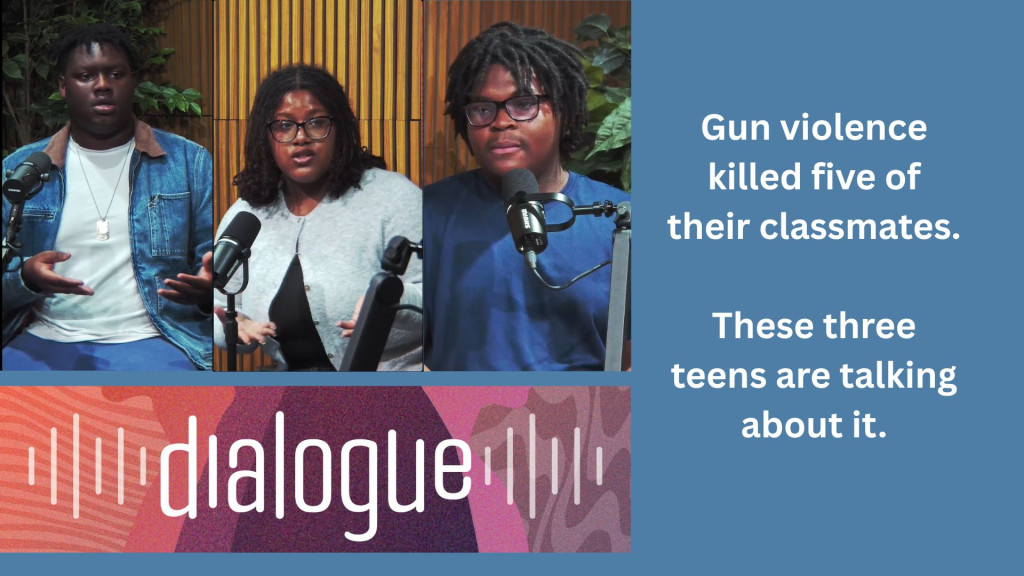
Transcript: ‘We’re not speaking up loud enough’: Three teens share candid thoughts about youth gun violence in central Illinois
Dialogue
‘We’re not speaking up loud enough’: Three teens share candid thoughts about youth gun violence in central Illinois
Read the full story at https://will.illinois.edu/dialogue/were-not-speaking-up-loud-enough-three-teens-share-candid-thoughts-about-youth-gun-violence-in-central-illinois.
Transcript
// This is a machine generated transcript. Please report any transcription errors to will-help@illinois.edu.

[00:00:00]
Curtis Beasley: From Illinois Soul, this is Dialogue. I'm University of Illinois journalism student and Danville native Curtis Beasley. Dialogue is an exchange about culture straight from the soul. In the first half of this year, gun violence has killed or injured several teens in Champaign and Danville. Reginald Hardwick gives us an update.

[00:00:25]
Reginald Hardwick: In June, 16-year-old Trai'Vvone A. Wesley and another 16-year-old whose name has not been released were shot and killed in Champaign. In March, 16-year-old Jaylen Bailey was shot and killed outside of the Marketplace shopping center. And in February, 17-year-old Tariq Porter was found in a car in Champaign. He was brought to the hospital but later died from fatal gunshot wounds. Champaign police say the teens are not only the victims, but the arrestees in these cases.

In Danville, five teens were shot during a weekend in early May that came as the city grieves for 18-year-old Aniyah Davis, who was shot and killed in a Danville park in June of last year. No one has been arrested for that killing. I'm Reginald Hardwick.

[00:01:19]
Curtis Beasley: While adults are scrambling for solutions, we thought it would be important to allow a few Central Illinois teens to highlight their voices. In late June, we had an emotional conversation with Jye and Nathan from Champaign and Malia from Danville. All three are high school students who've known classmates killed by gun violence. To start off, I asked them how does gun violence truly make them feel?

[00:01:46]
Malia: Yeah, I think that gun violence is horrid. I think that, um, to lose somebody that way, you know, so unjust, so like unjustifiable. Gun violence is never justifiable for whatever reason. Um, and I think that especially, um, living in a community that is so impacted by gun violence. I know that Champaign can relate to [Danville], but we do have, um, especially youth, uh, gun violence and, um, like, uh, I know like a lot of my friends and family are directly impacted by it and myself included. And so I just think that, um, yeah, it's a terrible thing. It's a terrible thing.

[00:02:23]
Curtis Beasley: Malia has been active in anti-violence programs since the killing of classmate Aniyah Davis on June 21st of [2025]. The 18-year-old was one of three people shot at Danville's Winter Park that day, and there have since been no arrests made in her case.

[00:02:35]
Malia: I think that people don't understand just how, um, much gun violence really affects us, not only like — how should I put this? I feel like gun violence — people really think of like the incident, like it's more than just a shooting incident. I think that it creates a ripple effect. It affects communities, it affects family and friends. Like it's more than just a shooting. It's the aftermath of the shooting. It's, um, um, you know, people might feel unsafe going out following the shooting or, um, yeah, I just think that people like to think of it as just like an incident that occurred, but it's more than — it's more than just that. It affects everyone. It affects entire communities.

[00:03:15]
Curtis Beasley: Following Malia, Jye from Champaign then jumped in.

[00:03:18]
Jye: People being scared of hearing fireworks, thinking it's gunshots or someone dying. I believe that in a world that could be perfect, someone doesn't have to worry about leaving their house and being scared of somebody coming up and hurting them with a gun. The thing that pushes bias between gun violence is that most of the gun violence is happening between teens and others alike, which also affects other teens. It could affect families, friends, people who don't even know the person, but know that they — like they themselves could have done something great in the world.

[00:04:00]
Curtis Beasley: Once the panelists had a chance to reflect on the way that gun violence truly makes them feel, I went on to ask if the perspective of people who may perpetuate offenses of gun violence should be considered. We hear from Nathan and then Jye.

[00:04:12]
Nathan: I think it's something that should be thought about. Um, it's kind of a tricky topic, but, um, all perspectives should be seen — both of the victim, the victim's family, and the person that is pulling the trigger. Um, I'm not saying make excuses for the person. There should be consequences for your actions, and that is something that should be upheld, um. But why did the person feel the need to pull the trigger? Um, we need to look at why they're doing the things that they're doing so we don't have another incident like that happening. And I know there's a lot of trial and error with that, there's looking at different situations and there's looking at all situations to see what are the possible things that can happen and how can we work to prevent it.

I think that we shouldn't leave decisions that affect the aggressor to people who are heavily influenced by the situation per se. I think emotions are something that all humans have and those emotions, no matter what level, can skew how justice or consequences are given to a person. And I think you should also consider that the right punishment for something that someone does should be given, um, impartially. And emotions shouldn't influence how severe or not severe something is being influenced by.

[00:05:54]
Jye: I think that we — instead of focusing on how that person feel, we should focus on the preventative measures for that situation. Like what caused them to do that, like how Nathan said, or what led them to feel these emotions towards a person that caused them to take their life or caused them to take their family member's life. I think the focus should be on how people react to certain reactions. I mean, to certain actions. It also should be — I feel like that not everyone deserves a second chance, but everyone deserves the chance to be heard. If someone is going through like gun violence and doesn't want help, I feel like there should be someone there — even not to fix their problem but to at least be there to egg them on to help themselves, like help you help yourself.

[00:06:55]
Curtis Beasley: Following that, I asked the teens what they think is lacking or what should be done better when it comes to gun violence prevention, and Malia offered her thoughts.

[00:07:03]
Malia: So I believe that it's really just the emphasis on prevention. I think that when, um, when we discuss gun violence, you hear it often done in response to a tragedy that has occurred, um. And I can, uh, speak from like, um — I'm trying to say speak from experience because, um, I really got heavily involved following a tragedy, um, but I think that, um, as opposed to that, we need to start looking for preventative measures so that we can stop these things from happening before they do happen so it doesn't turn into like a — you know, somebody has to die for us to find a solution. Like we should be talking about this so that these things don't happen.

[00:07:58]
Curtis Beasley: Let's bring another voice into the discussion, Dr. Denisha Grissom. She is a licensed clinical psychologist who works with families and teens who have dealt with gun violence. Again, the focus is on teens, so they ask the questions and Dr. Grissom asked some too.

[00:08:11]
Nathan: My name is Nathan. Um, when it comes to processing of violence in general or gun violence specifically, is there a certain time period that you shouldn't be dwelling on the emotions of someone's passing?

[00:08:34]
Dr. Denisha Grissom: That's a good question, Nathan. So I'm hearing that you're asking about kind of grief and what is too much? When should it kind of slow down or decrease, or just — you start to feel better? Um, grief is one of those things that, um, based on how much you cared about someone, it's going to show up after they're gone. And so I like to tell people, um, one of the things that we know for sure is that there's an expiration date for all of us. We don't know when that expiration date is, but we have an expiration date. Um, there are people who love us and care about us, and so when we experience loss, um, the loss is not just of the physical person. We're focused on the past, we're focused on the loss of the present. And we're also focusing on the loss of the future relationship. Ideas, things that we had thought about doing with them, um, fantasies about what our future were gonna be like. All of those things are now what we're grieving. And so when we think about how long is that process — when you lose something, that is a lifetime. It's a lifetime of experiencing and remembering and, um, feeling some sadness.

Now, should it be as intense as the very beginning? Likely not. I like to talk about grief happening kind of in waves almost. Um, in the very beginning, yeah, it's heavy, it's deep. Um, it's hurting because that is a present emotion with you. As time moves on, hopefully you're doing things to help you, um, grieve, um, to help you, um, learn how to honor that person who was in your life and learning how to move on and live with either their memory with you or finding some ways to incorporate things, their legacy, into your life. So it gets better over time, but there are times it flares up.

So I think about myself as a teenager. Um, it was not gun violence related, but a best friend of mine died, um, Demetria Kimball. It happened when I was in college and, um, it was very difficult. Initially it was hard. Um, I think I spent a lot of time just crying and just missing her and longing for her. Um, as time moved on, actually as I got closer to graduation, um, the grief kind of lessened because I had in some ways kind of eased into — she is present in my life in another way. Um, as I got closer to graduation, it flared up. Because the person who was supposed to stand next to me at graduation is not there. And so there are gonna be times in your life where you have, um, kind of these moments where — oh, I wish they were here, or they should have been here. Um, and as time passes, you experience those and the grief increases. Um, and then the wave passes. It's still there. You still have moments where you're sad, and the hope is that you've been able to think about, um, what are the ways that they brought joy into my life? What are some of the wonderful times that we spent together, and being able to reflect on those and think about those. But grief is a lifelong experience. Once we lose, it shifts the way that you interact with the world.

So I guess for me, I understand, um, as an adult, the experience of grief. Um, and I shared with you, when I was in my twenties — I was probably 21, 22 when Demetria passed, um, but she passed from sickle cell anemia. It wasn't gun violence, it wasn't, you know, anything aggressive or violent in any way. I guess as an adult, I know how we process grief and loss. I would like to know — what is that experience like for you all, because I'm sure it's different.

[00:12:51]
Malia: This is Malia. Um, so in my case, when it comes to handling grief, and especially, um, especially as it pertains to gun violence, I think that, um, I mean, it's tricky. I think that grief generally — like, I mean, it sucks to lose somebody, um, especially to lose somebody prematurely, um, with both gun violence and, you know, sickle cell anemia, to lose somebody that young, you know, early twenties, um.

And I'll say this much — so in, um, June of [2024] last year, um, we lost a former classmate to gun violence. Um, she was shot and killed at a park. And at first it's like — it's really like it's almost like inconceivable. Like it doesn't make any sense, um, to lose somebody like — because I wasn't the closest with her, but like I knew her. It was the first time that, you know, I dealt with a death — she was so young, and like she was not like in the street. She was a show choir kid, you know. And I think, um, you know, there's many stages of grief and, um, it's just like confusion, how this happened. I actually — my sister was the one who told me that she passed away. I just couldn't believe it. Like, what do you mean Aniyah died? Like it doesn't make — and so it's, it's, yeah, it's very tricky. And I think that especially — I think that younger people maybe have a harder time, um, when it comes to, um, handling big emotions like sadness and anger and, you know, grief. And, um, so maybe it could be harder on us, yeah, but that was tricky for me to navigate.

[00:14:34]
Jye: What do you think is one of the main things that help people when they're going through the process of grief?

[00:14:42]
Dr. Denisha Grissom: One of the main things that helps people when they're going through the process of grief. Um, you know what, I'm gonna actually draw on some research. I did my dissertation on grief and specifically I did it on grief and the emerging adult. Um, and some of the things that they said in that research — because it was qualitative, um — some of the things that they said was helpful was one, having a community, having a community of people who have also experienced the loss and will gather and support each other. Um, that was very important.

I also remember, um, having some sort of way to incorporate that person into your life. So almost a legacy of some sort. So really intensely thinking about, um — so in the case of the young woman, um, who passed. What is her name in Danville?

[00:15:39]
Malia: Her name is Aniyah Davis.

[00:15:40]
Dr. Denisha Grissom: Aniya Davis, we will always say her name. Aniya Davis. Um, she was in show choir. Was she also a cheerleader? Is that what I heard?

[00:15:48]
Malia: Yeah, she was in [MTS], yeah.

[00:15:50]
Dr. Denisha Grissom: OK, so very active, very engaged. I could almost imagine that she had a vibrant spirit. Um, thinking about what would have Aniyah's legacy been. What are the things that she would have contributed? Um, when I was talking to the emerging adults — so those are people who are like 18 to 35, um — one of the things that they said was really important is being able to think about that person and honor their legacy by doing some of those things or just holding on to those things and maybe making contributions to those in the future. So let's say she wanted to be an engineer. Um, you know, making a scholarship in her honor for other Black young ladies who might want to go into a STEM program. So doing things like that to honor the legacy.

But I think that those two — really having a community around you and also being able to have ways to hold on to and honor their legacy — I think those two are important. Do you feel like those resonate with you as a teenager at all?

[00:17:01]
Jye: I believe that keeping the legacy resonates with me. Even when I perish, I believe that my ideals should stay. Or even if someone else I know perished, I feel like their ideals should stay because even though they didn't do it, someone else can do it and someone else could make the world go around and someone else could push — sorry — someone else can also push their ideals and have a place where — have a place where even though they didn't make it, they made it in soul.

[00:17:36]
Malia: Um, and I want to add on to that as well because you did mention, um, when it comes to like foundations. So there is actually — her father started a foundation for her, [the] Davis Foundation, and they've done, um, like daddy-daughter dances in her honor. And so like it — it really does, like, because even though she is gone, like, I feel like in some ways she is still like with us, you know, in that way. Um, you know, we try to keep her name alive and, um, you know, it's been a year and, you know, the case hasn't really moved forward at all. And so I think that having, um, that foundation for her and everything that we do in her memory and everything that we do in her honor, I think, um, that it is like a positive to all the negative surrounding her death. Like she's so much more than her death.

[00:18:25]
Dr. Denisha Grissom: So Malia, you just mentioned some information about emotions and teenagers. One of the things that also came up in some of the research I did was around — not even emotions, but the sense of justice. That's what it was, a sense of justice. Um, what does justice look like for teenagers? When after you've experienced a loss through gun violence, what does justice look like?

[00:18:53]
Malia: Yeah, so I believe that, um, justice as it relates to gun violence and generally speaking, um, when somebody is taken away from us early by somebody else, I think the justice is, uh, finding that person and holding them accountable. Um, I think that, um, the fact that — because her killer is still up in the air and we don't know who did it — there'll always be that sort of empty space. Like it's — you know, she's gone and it was so wrong, that just to put it to rest. And to give her family sound mind and to give her friends sound mind, like just to know who did that to her and to know that they're being held accountable — because now, you know, they're still living their life, even though they just took an innocent girl's. Like it just doesn't sit right.

And so I know it's not like, you know, great to, you know, feel super angry about it or, you know, to seek vengeance in that way, but I do think that it is important, um, that her killer be held accountable. And when people do take up arms — especially like, it's one thing to defend yourself, but it's another — in her case, she was caught in the crossfire. Like she was at, um, a park and they were shooting blindly. They hit many people and they killed her. And, um, so I think that that would be justice for Aniyah — would be to find who killed her and, um, to have them charged for her murder.

[00:20:23]
Dr. Denisha Grissom: Is that similar to what you all are seeing from your peers? Is that they also feel like justice is — we want the killer found and we want them brought to the courthouse and seek justice in that way?

[00:20:38]
Jye: I personally feel like that sometimes justice is a little corrupted for certain teens. They see justice as them getting the final laughter or them taking the other person's life. Sometimes that's what causes more gun violence to spiral out — from them feeling like they took something from them, so they're going to take something from them, or they're going to take them away, which causes more violence in total.

[00:21:05]
Malia: Yeah. Yeah, I actually — I like that you said that. That's why I mentioned not wanting it to be like a vengeance or that sort of ordeal. I think that it is important that when somebody kills somebody, they are held accountable for their actions. But, um, I think that especially youth gun violence and gang culture is a lot of get-back. Like, you kill somebody that's important to me, I'm gonna kill somebody that's important to you. I don't, you know, agree with that at all. So I do appreciate that you said that because, yeah, absolutely that is wrong. But justice, you know, as in finding — you know, when a person has done something wrong, they need to, you know, face the music. And so that much I will say, legally, you know, speaking, yeah.

[00:21:48]
Dr. Denisha Grissom: I'm almost getting the sense in some ways that, um, when you said justice is corrupt, it's — adults are aware of this. We are not blind to that. Justice has been corrupt, and particularly in African American communities, it's not been fair. It's not been equitable and it has been unjust. That's what we sit with as adults. I don't think that we consider what you're sitting with, because we have power just because we're over the age of 18, right? We secured a certain amount of power, a certain amount of just an ability to be independent.

[00:22:22]
Jye: I feel like that leaves us to be lost. It keeps us away from our goals. It keeps us away from what we want to do. It has us focused on something that's horrible, focused on something that's — it's just disgusting to even think about. Losing people isn't something that should happen all because of a grudge or all because of something so minuscule — I don't know — being disrespectful. I feel like losing someone's life should be something natural, as in old age or it was just their time to come. I feel like that life shouldn't be in control of another human.

[00:23:04]
Nathan: And I think, um, that goes for even getting justice for someone taking a life. Um, the person who might have pulled the trigger or done something to hurt another person — they should not have their life taken away, in my personal opinion. I don't think any person should have the power to take the life of another person. And it really is a cycle because if you kill the person who killed this person, now you're a killer, and now this person who might have killed this person has people around them that care for them, so now they're going to feel a certain type of way. And now it's a whole cycle of this person killed this person because of that person, and then it's really just a lot of grief and anger.

And I feel like — and I appreciate in some places, um, they don't choose to do like a death penalty, or people have enough self-restraint to not kill someone over something like that. They have enough, um, self-restraint to give a punishment. So whether that is a whole bunch of years in prison, or they're excluded from the community that they hurt, or they are forced to move somewhere else because of the influence of their actions — I appreciate that. Yeah.

[00:24:35]
Malia: And I think that the cycle that you mentioned — like, yeah, I think that, um, it's a very difficult cycle to break. And I think that that's what keeps a lot of people trapped in it and like, heavily, um, involved in that life — is because for whatever reason that you have to, um, put up a gun, it's very difficult to put it down. Especially if, you know, you have the blood of somebody else on your hands. Like it's not easy to just, you know, say, oh, I'm out, you know, I'm going to bow out of this. And, um, so that's another conversation that needs to be had — like, what can we do for our youth so that it's easier to step away from that life as well, outside of having to just be locked into a cycle of retaliation and death and murder and grief over and over again.

[00:25:26]
Dr. Denisha Grissom: What are the other options? Because once — like you said — once they pick up the gun, whether it's for safety or whatever reason, it's hard to put it down at that point because now everyone in your environment is aware that that is how you fight. And so if we know that you're bringing that to the fight, then we're bringing it too. Yeah.

So the way that the grief and the fear, um, that you all are sitting on as teenagers — where are you processing it? What are you doing with it? Who is talking to y'all about it? Where are you putting it? I want to recognize that this is like serious stuff. Like we're not talking about something that may have happened in the past or may happen in the future. These are things that have happened to us in our community. And as the adults, I kind of — we started off talking earlier about, um, adults kind of scrambling around figuring out what to do. The kids are in the balance. You — youth — are in the balance because you're in fear for your life. Um, just like we are scared to step out of the house — what would that be like for a teenager to fear stepping out of the house? As a teenager, that's all I wanted to do in the summer was get the heck out of the house. But now I can't because something may happen ominous.

So you have a strong family and support system. That is beautiful. That is beautiful. I know others don't. Um, are there some other ways, other things that you all have as well that help support you through this time? Support, you know, community. What are some other things that might be helpful for you all?

[00:27:11]
Malia: I know that, um — well, I'll talk about community. Um, so well, I have the honor to be, um, you know, involved in our youth, uh, council. And that started following Aniya Davis's death. That's when we, um — me and Curtis and a few, um, others — that's when we organized. And I think that to have that safe space, um, of young people who have been through what we've been through — some have been through, you know, have seen even worse than I have — and so I think that to have that outlet of people who can understand and relate in the community, and to also, um, the fact that they're also willing to work and create safe spaces for other people, um, I think that just building that community, um, within our city is a beautiful thing.

I think that in the, um, in the face of tragedy, um, I think that it's useful to have — outside of just like my mom and my sisters, like they're great, I have an amazing support system as well — but I think that being able to look to my community, um, and see people that are so willing to, you know, hear me and listen and, um, I'll give that same energy right back. I think that — it's beautiful and it's nice to have.

[00:28:25]
Nathan: I've only lost like two people in my life in terms of from death. It was my grandmother and my little cousin. Um, he died at a young age because of heart problems and my grandmother from diabetes, um. I didn't really have a support system back then. I'd say I only have it now. When I got over the feelings of grief, I would say, um — at the time I was in school and parents told me that my grandmother had died. She was having heart problems for a while and she was in the hospital. When I got that information, I went to my room and I just sat there for like 10 minutes and then I did what I had to do because I had other stuff to do. And I think that is how I dealt with the grief — I kept myself occupied, did what I had to and did what I needed to do and did what I wanted to do.

And I also have this thing where like, if I'm not thinking about something, I'll forget that it's there for a while. So it really didn't — wasn't there for me to remember — to come back to at some point. It might pop up every now and then because I'll be like, oh, I can't go over my granny's house anymore. Um, I don't have the TV to watch over there anymore. I can't just go over there whenever I want to. So it's like something that is there, and I had to accept that she wasn't there. But I have memories of her and I loved her very much, so I guess I just held on to that a lot. And I think I would have appreciated a support system back then to let the emotions out so I could do that much faster, because I think that happened over a few months' time.

[00:30:15]
Curtis Beasley: From Illinois Soul, this is Dialogue. I'm University of Illinois journalism student and Danville native Curtis Beasley. Dialogue is an exchange about culture straight from the soul. In the first half of this year, gun violence has taken the lives of four teens in Champaign. Several more have also been injured, and many of the suspects involved in these cases are also teenagers. We're having a candid conversation with Central Illinois teens about recent gun violence in their communities. We're joined by psychologist Dr. Denisha Grissom, who has counseled families who've dealt with these tragedies. We've had an intense conversation, so we switched to what brings them joy. We received answers from Nathan from Champaign, Malia from Danville, and Jye, who is also from Champaign.

[00:31:03]
Nathan: Um, my name is Nathan. Um, I have always been interested in art in a lot of different aspects, um. Usually I just did drawing or I did crafts or anything like that, um, when I was younger, but now recently I've delved into a lot of different things. Um, I've delved into clay sculptures, ceramics, digital art most recently, which is what I'm doing more now. Um, I did DJing the other day for the first time. I've done, um, podcasting before on a small scale. So I've just been doing art in general, a way to express myself in ways I may not be able to say words or feel comfortable to say to someone. I can express it through things that I like or things that I find interesting, or make people see parts of myself that I can't say.

[00:32:00]
Malia: Yeah, I love music. I, um, I'm just really into the performing arts. Um, I love to sing and dance. Um, I did theater for seven years. I've done show choir for about, you know, seven or eight now. And I just love to perform. I love to sing and I love to dance.

And, um, I know previously we were talking about, um — the last segment was about, um, like support systems, yeah, support. And we were talking about like physical support systems like, um, community, like family and like friends. But it's also useful to have other supports and outlets outside of physical things — like hobbies, like music, like, you know, art. And, um, I think that it can also bring you closer to maybe even the memory of some people you lost. Like I said, Aniyah was in show choir and, um, like I said, I was not that close to her, but I know that, um, I have a friend named Bryce and, like, um, they were super close. And so he did show choir, uh, for her. Um, he, um, sang many, many tribute songs. And so I know that, um, like for certain events — and so I know that, um, music for him maybe brought him closer to her, even though she wasn't here. Um, maybe still having that hobby that they shared together, um, was beneficial to him in his, uh, grief journey.

And so, yeah, for me especially, I've always just — I love, I've always loved music. I love to sing. I think I'm a pretty good singer. I love to dance, and, um, it makes me very happy. So yeah.

[00:33:33]
Jye: Well, the hobby that's brought me through this is playing sports and art. I've always been like around art, with my dad being, uh, like a really good artist. He's like taught me a lot of things about art and how to draw, even though I can never best him in art. I'll always still try — yeah, not yet. But another thing that's, uh, like just [rushed] me through it is sports. Even though like I'm not on a team or I'm not playing professionally, sports has always given me something to do, even though I have like — even with anger, sports has always been there, because sports, you can't play with anger. You have to play with control, accuracy. You also have to play with a clear mind. So I feel like sports is kind of like yoga. It's something that you physically do that also calms you. So I feel like that's also helped me a lot. Yes.

[00:34:32]
Curtis Beasley: Yes. Dr. Grissom, um, uh, we'd love if you could, uh, talk to us about why it's important to have these interests.

[00:34:39]
Dr. Denisha Grissom: Oh yeah, yeah. So usually when we talk about — so of course I'm a psychologist, I'm a therapist, I meet with people individually, talk to them, all that great stuff. Um, but one of the things that we know for sure is that first of all, the gun violence — I mean, it's trauma. It causes, um, just your body, your brain to just shift in so many different ways. And so what we know is that there's multiple ways that we can express or, um, kind of comfort ourselves, soothe ourselves when we're on edge, when we've experienced trauma, when we're experiencing grief. Um, one of them of course is talk. You know, sharing your thoughts, sharing your feelings, um, feeling the feelings, all those wonderful things. Thinking through processes. Um, typically when you think of therapy, that's what we do. We talk, we feel, we think. Um, but we don't do a lot of movement. We're starting as a, um, as a profession to really realize that when someone says something is stuck in their throat and they — the cry is stuck right here — it's like, OK, I can talk about it all day, it's stuck here, but how do I get it out? And the getting it out is the things that you all are talking about. It's the hobbies, it's the art, it's the drawing, it's the singing, it's the movement, it's the sports that literally releases it.

If we think of ourselves as energy — which is literally all we are, we're some energy and some bones and flesh and dust and whatever you wanna call us — um, but if you think about it, literally, if we're energy and there's energy trapped in the body, in order to free ourselves, we gotta get that energy out. And so the things that you all are doing, I think it's beautiful. Drawing, getting physically active, singing, dancing, you know, performing, engaging in art, creating things — all of those force us to be active physically and there's a release, an energy release that happens.

Now, one of the things that I've always — and Malia, you said you love to sing. I think it's a beautiful thing. Um, we have — our bodies were created miraculously. I promise you they were. And I promise you that you have more power and access over your body than what you think. We have what's called a vagus nerve. So if you think about just Las Vegas — wild, right? But it's wild but it's somewhat tamed. You know, you got a strip and the Vegas Strip and everything's there and it's all compact. We have a vagus nerve and that vagus nerve basically starts from the tip and it goes all the way down to your feet. That vagus nerve will literally, if you activate it, will activate your parasympathetic nervous system.

So what is that? When you think about how you work — you breathe, you do some things and it just happens automatically, right? We have an autonomic nervous system that takes care of everything. There's two parts of it: parasympathetic and sympathetic. Sympathetic nervous system is that fight-or-flight. So when you feel like there's some fear happening, it's the thing that picks you up. Parasympathetic — if you think about a parachute — it slows everything down. When you do things like sing, or when you do things like hum, when you activate that vagus nervous system, it literally forces everything to just calm down.

So have you ever been — are you all driving yet? No, not yet. OK, so you're not driving, but everybody else in the room's driving, right? Are you in the car ever and you feel anxious or or just lit up, and then all of a sudden a song comes on and you mm mm mm and you start singing it — and how do you feel afterwards?

[00:38:32]
Malia: Relaxed.

[00:38:33]
Dr. Denisha Grissom: Exactly. Exactly — that it's really not magical. It's your vagus nervous system tapping on the parasympathetic nervous system saying slow down, rest and digest. You don't need to be on edge. Slow down.

So what I would encourage all of you to do is one, make sure that the hobbies, the sports, the activity, the physical things that you're doing — keep those going. And don't be shy about it. Literally, don't be shy about it. I tell people live out loud every day. As Black people, we need to live out loud because all of us need to see ourselves living in joy, living in happiness and living out loud. So live out loud, move, create, draw, sing out loud, write out loud. And what I'm trying to do is help the adults understand that in order for you all to feel free to do that, we gotta do it too. So we need to be models. We need to be models. You're telling us what you need and what you want, we need to listen. So thank you.

[00:39:36]
Nathan: Thank you.

[00:39:39]
Curtis Beasley: And before we go, um, we'd like to get a few takeaways from our panel. So, um, this goes for everyone. We'll start with Nathan and we can work our way to Dr. Grissom. What was one thing that will stick with you or something that you'll tell your friends that you learned today?

[00:39:55]
Nathan: Um, probably what we just talked about — the parasympathetic nerve, my bad — um, how that really helps you to slow down and calm down. And I think that really helps with me because I think I use it a lot in my daily life, um, but I have a lot of anxiety and I think about a lot of things very quickly. And it really does stick with me, but I think when I listen to music — which I do most of the time of the day — it helps me calm down and stick to what I'm going to be doing and move forward. So I'll probably just tell my friends about that.

[00:40:36]
Malia: Well, I firstly want to say that I am very honored to be on this panel with all of you guys. Um, I think that my — what will stick with me is, um, just hearing all the different, um, viewpoints. I think that, um, gun violence prevention is very nuanced and the discussion on how to resolve it is very complicated. There are a lot of conflicting ideas. And so I think to hear all of your different perspectives — even if like, you know, maybe we don't see completely eye to eye — to, you know, share thoughts and agree on some points, and but yeah, you know, I actually understand what you're saying. I think that it's awesome. And yeah, I'd love to see it.

[00:41:14]
Jye: Something that's going to stick with me today is that being here today has helped me learn that even though that we don't feel heard, what's making us not feel heard is that we're not speaking up loud enough. The only way that we can be heard is if we speak against it and speak loud enough for everyone to hear.

[00:41:31]
Dr. Denisha Grissom: Yeah. And Jye, you know what, I'm going to take away — and it's going to kind of come off of what you just said, piggyback off of what you just said. Um, adults are too loud. We need to shut up, sit down and listen, and we need to give you all the microphone. That's what we need to do. Because you all do have a voice and if it's not being amplified, that's not your fault. That's us. We need to get it together and give the mic to the people who need it.

[00:42:07]
Curtis Beasley: In the words of Dr. Grissom, handing that microphone to the young people to empower them to use their voices was the point of today's Dialogue from Illinois Soul. We thank the teens who shared their thoughts on gun violence. Once again, that's Nathan and Jye from Champaign and Malia from Danville. We also thank local psychologist Dr. Denisha Grissom.

You can see videos from this conversation on the Illinois Soul and Illinois Public Media Instagram and Facebook pages. This is the first of many discussions with young people that Illinois Soul wants to hold in our community this summer about gun violence affecting our youth. If you have a teen who would like to share their thoughts, please leave us a voicemail on how to contact your family at 217-244-1989. Again, that's 217-244-1989.

Thanks to Matthew Clayton of the Don Moyer Boys and Girls Club in Champaign. Jill Clements is Illinois Soul station manager. Stephanie Orellana recorded this conversation. Francesco And[r]ade composed today's theme and Reginald Hardwick is our news and public affairs director. Dialogue and Illinois Soul are part of Illinois Public Media, a service of the University of Illinois Urbana-Champaign. I'm Curtis Beasley, a student of journalism at the University of Illinois, and thank you for joining us.
Transcript Assistance
Illinois Public Media may use AI assistance for transcript generation and/or formatting. Transcripts that have not yet been reviewed for accuracy will be labeled.
To report a transcription error, or to request transcription of archival material, please contact will-help@illinois.edu.