Transcript: How a 3D-printed housing project failed Cairo, Illinois — and who’s investigating
Transcript: How a 3D-printed housing project failed Cairo, Illinois — and who’s investigating
The 21st Show
How a 3D-printed housing project failed Cairo, Illinois — and who’s investigating
Read the full story at https://will.illinois.edu/news/how-a-3d-printed-housing-project-failed-cairo-illinois-and-whos-investigating.
Transcript
// This is a machine generated transcript. Please report any transcription errors to will-help@illinois.edu.

[00:00:00]
Brian Mackey: From Illinois Public Media, this is The 21st Show. I'm Brian Mackey. The city of Cairo at the southern tip of Illinois has been dealing with a housing crisis that goes back decades. Its public housing projects have long been neglected, and that's been especially hard on Cairo's Black families, many of whom have been displaced from the city. Then a year and a half ago, developers came to Cairo with a plan to help. There was a lot of fanfare, some innovative technology, as reported by WSIL-TV.

[00:00:37]
Archived Audio: Officials from throughout southern Illinois along with hundreds of others were on hand Saturday morning in Cairo for a special groundbreaking ceremony of a new home being built.

[00:00:49]
Archived Audio: I'm super excited to showcase the technology because we're gonna have housing a lot more faster.

[00:00:53]
Archived Audio: But this house being built on an empty lot on the corner of [M.L.] King Jr. Avenue and 17th Street is unlike any that's [been] seen in the state of Illinois.

[00:01:04]
Archived Audio: We wanted to go to somewhere and we want to print and showcase this technology close.

[00:01:08]
Archived Audio: That technology is a 3D printer that's building a duplex for families displaced by the ongoing housing crisis in Cairo.

[00:01:19]
Archived Audio: So many families, I believe it's like 230 families that were displaced. They know that they're going to have an opportunity to come back home. It's special to them and hopefully this is the start of many more.

[00:01:28]
Brian Mackey: OK, that gives you a sense of what the mood was when this came to town. But the project ended before it ever really started. The first house was never finished, construction was never begun on the other houses that were planned for the same area, and the 3D printer at the center of the project ended up abandoned outside a repair shop in southeastern Illinois. So, what happened? That's a question reporter Molly Parker tried to answer. She's with Capitol News Illinois and her piece in cooperation with ProPublica's Local Reporting Network is "3D Printed Homes, an Abandoned $590,000 Deposit, the FBI. What Really Happened in This Small Town?" Molly, welcome back to The 21st Show.

[00:02:10]
Molly Parker: Thank you. It's always a pleasure to be here, Brian.

[00:02:13]
Brian Mackey: Also with us is somebody with whom we've spoken frequently about Cairo these past few years, Steven Tarver. He's a longtime resident, past member of Cairo's Housing Task Force. Steven, thank you for joining us again.

[00:02:26]
Steven Tarver: Thank you, pleasure being here.

[00:02:28]
Brian Mackey: And we also have with us Kaneesha Mallory. She grew up in Cairo, came back after her daughter was born. She hoped to move into the duplex we're talking about today. Kenisha, welcome to the show to you.

[00:02:39]
Kaneesha Mallory: Thank you for having me. I really appreciate this opportunity.

[00:02:43]
Brian Mackey: And listeners, if you have a question about what we're talking about, this is the first half of our program today. You can join the conversation. 800-222-9455 is the number. 800-222-9455. Molly, let's start with some of the history here. Tell me a little more than I did in the intro there about Cairo's troubles with housing.

[00:03:06]
Molly Parker: Yeah, well, Cairo's history is obviously what part of, part of what makes the story so painful, you know. This is a town that once seemed destined for greatness. Most people in Illinois know about Cairo at the confluence of the Ohio and Mississippi rivers. It's a critical Union hub during the American Civil War, a stop on the Underground Railroad, and just a little slice of the delta in Illinois that if folks haven't visited, they should. But over generations, this town has, you know, obviously faced a lot of difficulties. And a decade ago or so, I covered a housing crisis. We started looking into the housing conditions there and I met Steve, of course, and, you know, ultimately HUD came in and took over the housing authority due to misspending and then demolished that housing. And that housing was in really bad shape, but the problem was that they, of course, never rebuilt anything. There were always promises made about what might come later. But at the end of the day, the federal government tore down about 300 apartment homes between 2019 and 2023, and nothing has ever come in its place until this 3D printer arrived.

[00:04:09]
Brian Mackey: Steven, there's that phrase "promises made." I guess in this case, promises not kept. How have you seen this playing out on the ground over the past decade and a half?

[00:04:19]
Steven Tarver: Well, what started as a blessing turned into a curse. We were really looking forward to this opportunity. It was brought to us as a godsend, so therefore, we felt that this is possibly something that could take place, especially when the machine arrived here. When the machine arrived and actually was able to put eyes on it, we thought maybe this would be something that truly could be done.

[00:04:46]
Brian Mackey: Kenisha, before we get to the machine and this project, what was your, what is your housing situation, right? What did all the troubles of Cairo's housing situation mean for you in the life you were trying to lead there?

[00:05:00]
Kaneesha Mallory: I grew up in the first housing complex when I was younger, but eventually I moved away but I came back. And one of the apartment complexes that was tore down, another one I was living at and I wanted to see a change, but it was never a change, you know, changes didn't happen, broken promises being broken and all, so.

[00:05:33]
Brian Mackey: So, Molly, let's talk about the developers behind this 3D printed housing. What brought them to Cairo?

[00:05:41]
Molly Parker: They purchased a 3D printer and they sent the first funding for this printer in October of 2023, and this was a time when the governor had recently been there. They were talking about expanding the port at Cairo. He'd earmarked $40 million in Rebuild Illinois and some other funding to help get this port that Cairo has always wanted to build there at the confluence because of all the barge traffic. And, you know, I think it was part about that and a part about hoping to replace some of the housing that had been demolished. They started to try to purchase this printer and they took out a bank loan from a really small bank in Karnak. It's about half an hour north for a $1.2 million printer. Unfortunately, that printer never arrived. The initial printer they ordered, it was being made in Denmark, but some snags came up or they got tired of waiting for it and they tried to switch vendors. That also took a long time even though they thought they would get it much quicker. It was, it seemed like delay after delay, and they finally got this going in August of 2024. You know, they were backed by a state senator who shares their office. He helped them organize this big party that you were just talking about at the top of the show. You know, they had meetings in the interim with the governor's office. With the governor himself came down and met with one of the owners. They're in Harrisburg, which is about an hour southeast of Cairo. So another local company. And again, Dale Fowler, the state senator who was also really a big part of the planning of all of this, is from Harrisburg and he also just became a huge proponent of Cairo. I actually took him to Cairo when he was elected a decade ago. He called me and he said, you know, I've been reading your story about the housing crisis. I want to go down and see it. And ever since then, he's really, you know, had a bug in the governor's ear about trying to get that money for the port and other things going, so I think it was partly him driving this and this company that he knew wanting to start into this venture. Why 3D printer? I don't really know. You know, it's a, it's sort of a new and unproven technology that is, I was—

[00:07:48]
Brian Mackey: gonna ask what is the benefit of that as opposed to like 2x4s and drywall or, you know, what we've been doing for generations now.

[00:07:56]
Molly Parker: Well, you know, I think there's a hope that it'll be more, yeah, you go ahead, Steve.

[00:08:00]
Steven Tarver: If I can intercede on that, the reason the 3D printer was so prosperous for us was because of the lack of housing for such a number of years with the lack of coming through on those promises. So here we was having a person come in and say, "Hey, we could build 40 houses in such and such time." Wow, we thought this was just amazing. So that's why the 3D printer became so popular in our town.

[00:08:28]
Brian Mackey: I guess the idea is it's just a lot faster.

[00:08:30]
Steven Tarver: Yeah, yeah, we feel we can have some instant housing, people could come back home because we still have people from 2017 that desire to come back home.

[00:08:41]
Brian Mackey: Yeah, and Kenisha, let me come back to you. So when this project is announced, right, there's this groundbreaking ceremony. What was that like? How did you feel about that?

[00:08:49]
Kaneesha Mallory: I was actually excited because it's another opportunity for more housing in Cairo. I'm like, "Oh look, I can have a better opportunity here. I can get into a bigger space for me and my daughter," you know. At the time my daughter was 4 years old and I'm like "This'll be good, this'll be exciting for us and for our community too." Everybody was looking forward to it also, you know.

[00:09:16]
Brian Mackey: Yeah. Steven Tarver, this is not the first time someone from outside Cairo has come in and said, you know, "We can solve your problems." There's been skepticism about that. Can you talk about that history there?

[00:09:29]
Steven Tarver: Yes, unfortunately, you're right. Cairo has a demographic that allows and will allow a lot of growth if the right people were to take and use it. So over the years we've had several that's come in. They've got grants. They've got opportunity. They've got buildings that's been sitting over the years that they say they're going to refurbish and bring to life and add some things into our community. So it has been, it has been heartbreaking that this last effort that it took place under the premise of "God sent them." That was really what threw us off. But I really feel that Cairo will grow when Cairo starts helping itself and stop looking for someone to come in and save it.

[00:10:16]
Brian Mackey: All right, let me remind listeners this is The 21st Show. We're talking today about attempts to build houses in Cairo using this 3D printing technology. There was a big groundbreaking ceremony for the first home, but it was never finished. None of the other planned homes ever materialized. We're talking about this with Molly Parker who investigated all this for Capitol News Illinois and ProPublica, Steven Tarver, a longtime Cairo resident and community advocate, and Kaneesha Mallory, a Cairo resident who was hoping to move into that home. You can join us today, 800-222-9455. 800-222-9455. So, Molly, in the couple of months after this groundbreaking ceremony, you start to get cracks forming, literally, right? Talk about that.

[00:11:06]
Molly Parker: Yeah, and I didn't know this until we started looking into this almost a year later. We wanted to know why this house never opened because I, like WSIL, covered the event and, you know, I was disappointed to see that Kenisha and others weren't able to move in. And so we started asking the owners what happened and they did say that, yeah, a few months later when they were working on the interior, the walls did go up, but then when they were working on the interior, they started noticing these cracks, like hairline fractures, but some of them were in the corners and so they said, "Well, we better pause." This was what I was told that they had to pause and make sure they weren't structural. And from there, I don't quite understand what happened, you know, because a year had passed and it just really had sat there without a lot of new work going on. Some had cut the power off. And I think they had said they were waiting on their printer supplier, Black Buffalo, to provide a response. By the time we started calling Black Buffalo, like their number had been disconnected and that company seemed to be in a financial freefall. So it was sort of one of those, a lot of things had gone wrong and it was honestly a little bit difficult to get to the bottom of why.

[00:12:09]
Brian Mackey: Yeah, Steven Tarver, if we were to visit the area where this unfinished house is located, what would we see?

[00:12:17]
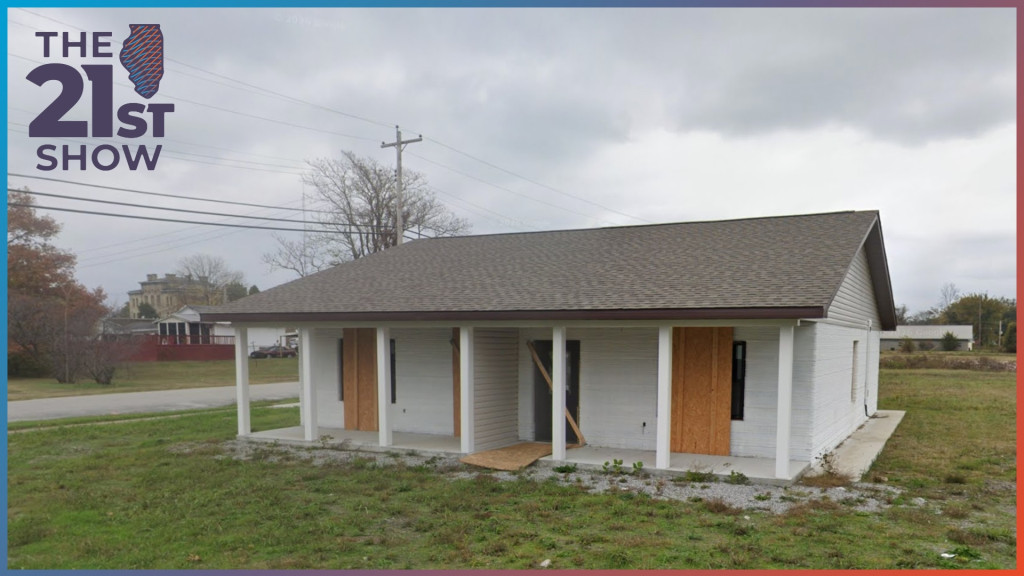
Steven Tarver: You will see an unfinished house. You will see a reminder of a failed promise from those that they can say cracks in the walls, but it was a crack in a way to find funding that I believe stopped the process. They came in promising the first house, hoping to get more funding. And when the funding didn't go through or people didn't go get the funding, that's when the process pretty much stopped and they stopped finding interest in Cairo. Then I believe they started looking to [farther], they use it, I believe that fundraiser, I call it was a promotion for the machine to be taken out of Cairo anyway. So the cracks was in funding. When they didn't get the funding to continue to process and every day we ride and every day we see that house, it reminds us of a broken promise.

[00:13:14]
Brian Mackey: So, Molly Parker, you meet with Jamie Hayes, who's one of the people behind Prestige, for the first time, I guess it was in September of last year. What happens next?

[00:13:27]
Molly Parker: I just popped by his car dealership in Harrisburg. It's been there a long time. His dad started it. He was a standout football player at SIU in the '60s, I believe, and, you know, we just talked. I just, I wanted to know sort of what his company was about, what was Prestige, and they also started several other sister companies. You know, they've done some work in area school districts and I just, I kind of wanted to know, you know, what happened down here. And as it says in the story, you know, the first thing I asked him, I had actually seen the printer and knew that it had not been used since the Cairo build. So whatever hope they had for this, and I also never was able to really kind of nail down what the financing plan was for the additional homes in Cairo or anywhere else, but it had just been sort of parked and then again they said they were waiting on some new concrete solution. There was a lot of confusing things that happened, as you can read in the story. He thought it was parked on his lot, and we went out there and it wasn't.

[00:14:22]
Brian Mackey: I mean, take us through that moment because that's so extraordinary, right? I'm gonna read here. I was taken aback when Hayes told me the printer, this is a quote, "The size of a small garage when assembled was stored on his lot." I asked if he'd show it to me, a request that seemed to take him by surprise. Pick it up from there. What happened next?

[00:14:40]
Molly Parker: So, yeah, we just walked outside, we walked through his car lot, traditional car lot in a rural area and looked over at the across the fence where I think he maybe thought it was or thought it had been. I'm not sure about that, but and he just said, you know, "I don't see it, do you?" And I said, I laughed. I said, "Are we looking for a pair of keys or a million dollar, you know, printer the size of a garage?" And he just kind of chuckled and we went back inside. That was our first meeting, and then, of course, I met with him many, many more times and we had lots of interesting and fun conversations, but there was a lot of confusion and trying to kind of nail down what happened, like with the deposit that they lost [on the] initial printer and sort of why this project stalled out because eventually I would learn that, like Steve said, there were cracks, but they would later declare they were not structural. So I don't know, you know, the passage of a year, what happened, and they, they did tell me in October they were gonna come fix it and open it back up and of course it's April. I was just down there two days ago and it's still, still not finished, still boarded up. So I'm not sure what's going on there.

[00:15:40]
Brian Mackey: Wow. All right, we need to take a break on the program. We're gonna continue this conversation after that. We're talking with Molly Parker, reporter with Capitol News Illinois, who reported a piece on this attempt to build low-cost [use] housing in Cairo, Illinois using a 3D printer. We're also talking with Kaneesha Mallory, a Cairo resident who hoped to move [into the] first house that was being built, and Steven Tarver, a longtime Cairo resident and community advocate. If you want to join us, 800-222-9455. We'll continue after a short break. This is The 21st Show.

It's The 21st Show. I'm Brian Mackey. We are talking today about Cairo, Illinois, where there was an attempt to solve a long, decades-long housing crisis there by using a 3D printer to 3D print homes. There was a big groundbreaking ceremony for the first one. But it was never finished and none of the other planned homes ever materialized. All this was the subject of a recent investigative report by Molly Parker with Capitol News Illinois in cooperation with ProPublica. We'll have a link to that at our website a little later today. By the way, we're also speaking with Steven Tarver, a longtime Cairo resident and community advocate, and Kaneesha Mallory, a resident of Cairo who hoped to move into that home. So, Molly, there were a number of Illinois political leaders involved in this, or at least attempts to get them involved about this. Talk about that.

[00:17:30]
Molly Parker: Yeah, before the printer even arrived, you know, there were numerous meetings about the printer and its potential. And again, like Steven said, I think these 3D printers were, and many of these companies are new doing this in the last five or six years, although this 3D printing technology has been around for a while. But there was this idea, this thought, this push from the industry that they could build these faster and better, although I think some of that's been overhyped even though the technology is really cool. It seems to be a little bit ahead of where it is in reality. But when they were ordering this printer right away, you know, Senator Fowler again, who is our state senator down here in the Harrisburg area, covers Cairo as well, was organizing meetings, you know, touting the company before the [Illinois] Housing Development Authority. You know, the governor when he was doing a swing through town on something else to meet with one of the company owners. They had Senator Tammy Duckworth's aide involved in trying to connect them to, you know, what other federal resources might be available. So there did seem to be, at least early on, a push to see what financing might be available, but I wasn't able to find that they actually went forward with applying for any housing money. I think they looked at a USDA type program. But otherwise, like through tax credits and things like that, no one seemed to have pursued any money to build affordable housing, so it's again, wasn't quite clear what the plan was, but there were a lot of public officials that were involved. And even Comptroller Mendoza, she always does turkeys at Thanksgiving [in] Cairo and you know, they ask her to come by and take pictures and she thought it was cool and bragged about it on her, you know, Facebook page. So they were, yeah, they got a lot of high-level officials involved and then just let it fizzle.

[00:19:13]
Brian Mackey: I thought Senator Fowler's response to some of the criticism he'd been getting for being associated with everything that happened was interesting. Can you talk about that?

[00:19:24]
Molly Parker: Yeah, of course. I mean, he was obviously an early and big supporter of this company. Again, they share his same high rise, and he has worked closely with them in different ways. He did say, you know, he doesn't have any financial stake in the company. He doesn't really keep up with their day-to-day operations, sort of said once the house didn't open, he didn't really follow why other than just what he would hear in the, you know, getting on the elevator if he ran into one of the owners. But he did seem to distance himself from it, of course, you know, by the point we were looking into this, we also found out that we weren't the only ones asking questions. The FBI had also opened an investigation into Prestige, you know, grand jury subpoenas went out to Prestige. The company owners confirmed that for us in November of 2024, so just a few months after the house party. And then also we were able through public records to obtain subpoenas that had gone out to some area school districts that they had done business with, not with a 3D printer, but just other construction business. So again, I don't know why he had kind of begun to distance himself from the project, but it certainly did seem like he was backing away from it.

[00:20:28]
Brian Mackey: Yeah, and compared himself to, I guess Daniel of the Old Testament, right?

[00:20:34]
Molly Parker: He, yeah, he did tell me that story that he took a lot of comfort in that when he takes criticism for that and other things that he did tell me the story about how he saw himself as a modern day Daniel [in] the Old Testament story about Daniel in the lion's den, where the angels closed the lion's mouth but saved Daniel.

[00:20:53]
Brian Mackey: All right. We have a caller on the line. Sam is calling from Pope County. Let me say, if you want to join us, 800-222-9455. Only about five or six minutes left in our time together. But Sam from Pope County, thanks for calling in. Go ahead.

[00:21:11]
Sam: Well, in my lifetime, I've been through Cairo many times and to me the land at the confluence of two of our greatest rivers, the Ohio and the Mississippi, adjacent to Fort Defiance State Park, should be some of the most valuable real estate in the state of Illinois. And I've witnessed this litany of broken promises about economic development for Cairo and so including the recent bulldozing of public housing there and moving out of, of moving local residents to Cape Girardeau and Carbondale. So I'm wondering if Mr. Tarver or other residents in Cairo think that this is part of a broader effort to move the local residents out and thus gentrify the area to make for people who can afford to pick up that land and develop it later.

[00:22:13]
Brian Mackey: Sam, interesting question. Thanks for that, Steven Tarver. I'll go to you.

[00:22:19]
Steven Tarver: Good morning, Sam. This, that is a great question and over the years that I've been here, I've left twice, but to total it's been about 12 years. That seems to be the underlying plan. It was stated in a meeting about three or four years ago that public housing wasn't desirable in Cairo anymore. I believe if they would find a buyer for the housing units, which is quite a bit of space here in Cairo, that they would sell tomorrow. And then that owner has the right to say that "I don't want to deal with housing" and then there's another group of residents that would have to relocate out of Cairo. So I truly believe that there is a, Alexander County has actually said they're not involved anymore. We've been transferred over to Pulaski County, still under receivership. We're still under receivership of HUD and the housing issue[s] are still prevalent now. So I believe housing is really on its decline in Cairo.

[00:23:28]
Brian Mackey: Molly, I don't know if you have any perspective on this. You've been watching what's happening in Cairo for a long time.

[00:23:35]
Molly Parker: I think it's hard to say what some of the motivation is and why some of these promises fall apart. I just know it's disappointing and frustrating because so many times, and Steve's been there too, and Kenisha, you know, we've been at these awesome events, you know, opening a grocery store, opening the house, the 3D house, you know, the governor down for the port, and a lot of these things, you know, they don't end up coming through and it's not because of, like you said, your caller here, you know, Cairo is a valuable place in real estate, but there are a lot of economic challenges and there are a lot of structural challenges for why some of these things don't work. But then sometimes you just really scratch your head like with the 3D house when you can't really even see, you know, what was the plan. Was someone thinking if we build this and advertise this that someone will throw money at this, you know, did anyone think this through? You know, again, this wasn't just a promise made in a vacuum. This is a promise made to a town that has seen so many broken promises. So it feels a little like people should be a little more aware of what they're coming in and offering, given what Cairo has lived through this story many, many times.

[00:24:47]
Brian Mackey: Yeah. Kenisha, what does this mean for your future in Cairo? Are you going to be able to stay there? What is your situation now? Kenisha, I think you might be muted there.

[00:25:06]
Kaneesha Mallory: [Worst], oh, can you hear me now? OK, I'm fine. Thank you. Thank you.

[00:25:08]
Brian Mackey: Uh—

[00:25:10]
Kaneesha Mallory: Worst case scenario, I might have to move. But, however, I'm still believing in hope. There's hope for my family. And I'm really trying to pray and ask God. "Lord, let me stay here in Cairo" because there's no place like Cairo. Cairo is full of community, love and all, and you know, I just want, I want the best for my child. I have a 6-year-old daughter. I want the best for her. And all I know is Cairo, you know, and I just want that for her and I just want like people to stop making broken promises to us but like Steven said, we need to all come together as a community as one and resolve our own issues and do it ourselves.

[00:26:07]
Brian Mackey: Kaneesha Mallory is a Cairo resident. Steven Tarver is as well. And Molly Parker is a reporter with Capitol News Illinois and ProPublica, longtime resident of southern Illinois. Thank you so much for being with us and sharing your story with us today on The 21st Show.

[00:26:24]
Steven Tarver: Thank you so much.

Kaneesha Mallory: Thanks, Brian.
Transcript Assistance
Illinois Public Media may use AI assistance for transcript generation and/or formatting. Transcripts that have not yet been reviewed for accuracy will be labeled.
To report a transcription error, or to request transcription of archival material, please contact will-help@illinois.edu.