








Transcript: Jennifer Roscoe on 34 years in local TV news
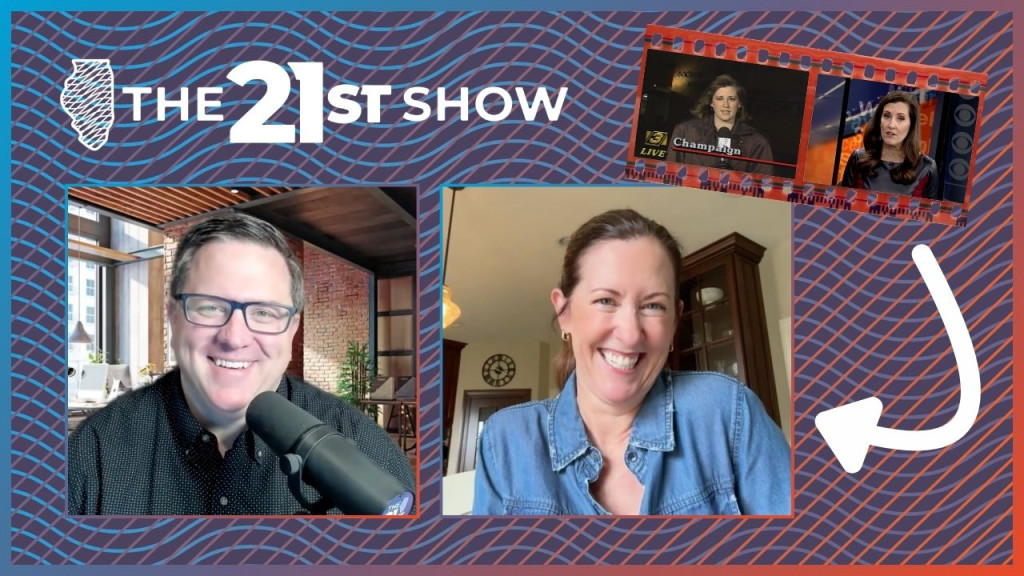
Transcript: Jennifer Roscoe on 34 years in local TV news
The 21st Show
Jennifer Roscoe on 34 years in local TV news
Read the full story at https://will.illinois.edu/tags/jennifer-roscoe-on-34-years-in-local-tv-news.
Transcript
// This is a machine generated transcript. Please report any transcription errors to will-help@illinois.edu.

[00:00:00]
Brian Mackey: Today on the 21st Show, delivering the news on television. We'll talk with Jennifer Roscoe, who was a fixture on central Illinois TVs for more than 34 years until signing off last month.

[00:00:14]
Jennifer Roscoe: The newsroom is a pressure cooker and it's a different kind of stress. I think at other jobs where maybe their stress is divided among 8 hours, our stress really is compressed in that maybe last hour before airtime.

[00:00:28]
Brian Mackey: We'll talk with Roscoe about her career, what's changed in news over the last 3 decades, and the future of local TV. I'm Brian Mackey with Jennifer Roscoe for the hour today on the 21st Show, which is a production of Illinois Public Media, airing on WILL in Urbana, WUIS in Springfield, WNIJ in Rockford DeKalb, WVIK in the Quad Cities, and WSIU in Carbondale. But first, news.

From Illinois Public Media, this is the 21st Show. I'm Brian Mackey. For those who like to get their news through television, it used to be a routine. Get home from work, late afternoon, make some dinner, and catch the evening news. Or maybe you'd tune in later, just before bedtime. Because this was a routine, we became familiar with the men and women who reported the events of the day, Cronkite, Rather, Chung, Muir, Holt. And locally in central Illinois, there was one name that until recently was synonymous with WCIA TV. Roscoe.

[00:01:38]
Jennifer Roscoe: Exchange videos and photos with your family and friends. Share it at [illinoishomepage.net]. That was me. Finally tonight, the duties of a police officer have no limitations. Listen, that's how you sound. I know. I said, is that because we can't see it in [her way]? One Ohio officer proves just that.

[00:01:58]
Speaker 2: Look around now and this is what most drive-ins look like — rundown, overgrown pieces of our popular culture left to deteriorate. But wedged between cornfields near Gibson City is the exception to the rule.

[00:02:13]
Speaker 3: She's talking about coronavirus, which is now considered a public health emergency. The CDC has confirmed the first case of human-to-human transfer in the U.S. in Chicago. This is the second diagnosed case in Illinois. Good evening. I'm [Paulchini]

[00:02:26]
Jennifer Roscoe: And I'm Jennifer

[00:02:27]
Speaker 2: Roscoe. The woman who had the first case had traveled to Wuhan, China, to take care of her sick father. She came back to Chicago and passed it on to her husband.

[00:02:36]
Jennifer Roscoe: Now the [U of I] is suspending their programs in China for this semester out of caution. OK, 25 years here. I'm 26 now, right? I like to tell people I started when I was 12, right? I have to keep lowering that number as I'm here longer and longer.

[00:02:52]
Brian Mackey: Jennifer Roscoe joins us now to talk about her career, the story she told in the state of the TV news industry. Jennifer, welcome and congratulations on starting the next phase of your life.

[00:03:03]
Jennifer Roscoe: Thank you so much, Brian. Those clips are really bringing me back. I mean, between the — my voice, how it changed over the years and my hairstyle, and that very Star Trek-looking outfit that I was wearing. I think I was watching, as so many people do when they tune into news, especially when you're a woman, they just kind of take it, take it all in first. I'm going, what was I wearing? My

[00:03:24]
Speaker 4: gosh.

[00:03:26]
Brian Mackey: So maybe you're sympathetic to that. We can — well, let's come back to that. I want to talk about — you know, some of the feedback you get from listeners, I know it is different, especially for women in media. Absolutely, yeah, it's — it's been a little more than a week since you departed. How are you feeling about that?

[00:03:43]
Jennifer Roscoe: Well, honestly, I was out and about because it was the holiday weekend, and that's what people — how's retirement? How's retirement? I actually got on a plane the very next day after I left, to go on an already planned vacation out to Rhode Island. So today, Brian, you are actually getting me on my first day of retirement. And I have to say I woke up and it was a very strange feeling. Usually the minute I wake up, I go through the day. OK, my daily schedule, everything that I have to accomplish with my daughter Sophia, and then lunch and all the rest of it. And I thought, OK, wait — I don't know. I mean, I did make myself — I have a little to-do list here with stars and all of that just to be sure that I keep on track because I am still a very scheduled girl. But it — I will say it feels kind of great. Short answer, it's great.

[00:04:38]
Brian Mackey: Yeah, yeah, it's OK. There is life after a high-pressure career like that. It's good to know. So what — let's go back to your first couple of years. What were those like? How did you come to be at WCIA?

[00:04:50]
Jennifer Roscoe: Well, I went to the [U of I] and the summer after my junior year, I knew that I needed an internship. I had already been working at — well, WDBS was the dorm radio station in the Six Pack at the [U of I]. And I was working at WPGU as well, but I really — I knew that I wanted to get into television. And I actually — fun fact — when I was a freshman at the [U of I] and I asked my counselor, um, or advisor, and I said, OK, I know that I want to get into TV news. What should I do? He told me, go to WILL TV and see if you can do anything over there. So I would get on — I think it was 2 different buses that would get me to the studios, the WILL studios from where I lived in the dorms. And they had me stuffing envelopes for a donation drive. So honestly, WILL was kind of my first step into broadcast when I got to the [U of I] campus. So there's my WILL connection.

But after a while, I knew that I wanted to be using my voice more. So got into radio at WPGU and then I thought, OK, well, what am I going to do? I want to get into TV. And so I decided to try to get an interview. I got an interview with Dave Shaw, and I've told this story before, but I felt like I needed to look very professional, so I bought a suit and I bought a little briefcase, but the only thing that I knew to put in it was one resume. So a piece of paper and a pen, in case there was a quiz of some type. I didn't know, I was trying to be prepared. And Dave had an interview with Dave Shaw, and thankfully he hired me for an internship, and that was in 1992. So it kind of just took off from there.

[00:06:43]
Brian Mackey: Yeah, if you could get in a time machine and go back and tell, you know, fresh out of college Jennifer Roscoe — you're going to be retiring from the same station someday — what would you have said?

[00:06:55]
Jennifer Roscoe: There would be no way that my [U of I] student self ever thought that I would stay in Champaign. I'm from the Chicago suburbs. Champaign was just a place to get an education and stay for a couple years at Channel 3. The goal was to get back home so my mom could see me and do the news on TV. So get back to Chicago. And I knew that I'd have to do a stop in between. This is right, my delusional self. Oh, it was just going to be Champaign a couple of years, mid-size market a couple of years, and then up to Chicago. And as the story goes, I like to say life just kind of got in the way. I would get a promotion, I would get married, I would get another promotion, I'd get pregnant. There was another pregnancy. And whenever my husband and I thought, OK, it's time to jump — just something — he would — he was doing well at his job. And then we finally realized why are we trying so hard to get out of this place that's treating us really, really well. We had a good support system, we had so many friends here, and both of our families were from the same Chicago suburb. We actually went to grade school together. [They're] just 2.5 hours away. So why would we leave? It's OK to be a big fish in a small pond. And I have — honestly, I was just telling someone as I was walking around campus just yesterday that it's a really great place to be. I have so many memories here and the history and longevity really paid off in the end.

[00:08:28]
Brian Mackey: How was the television industry just in terms of technology, right? Everything was more analog back then. What was it like day to day?

[00:08:36]
Jennifer Roscoe: Well, it's funny you ask that because just today on my Facebook memories, a picture popped up from Sally [Sholsy], who was a reporter with me back in the day, one of my bridesmaids, and it's in our old newsroom. And in the foreground of the picture is a typewriter. And that was John Paul's typewriter that he hung on to for a very, very long time. And honest to God, he kept saying, it's going to come in handy. It's going to — and one day all of our computers went down, and he had to bang out all of those scripts on his typewriter. So I worked in a newsroom that had typewriters. That's how old I am.

But I really have witnessed just — I mean, I was in a newsroom before cell phones, before computer — well, I guess computers were there. God, I'm not that old. But just in terms of having to tune in a live shot manually. Now we have satellite trucks and the [cap TVUs] where we can just be in a moment live someplace with just a pack and a camera. Before it used to be you'd have to take out this big old truck. Phone books. We had phone books. If you needed to find someone's number, you're going through the white pages or the yellow pages. I remember when we finally got cell phones in the car and it was a big bag phone, right? We had pagers. If you got paged 911, you had to go find a pay phone and call back to the station and see what's going on. So. Now I sound like that guy — we climbed up a snowy mountain with no shoes to get to

[00:10:21]
Brian Mackey: school both

[00:10:22]
Speaker 4: ways in snow.

[00:10:23]
Jennifer Roscoe: So — but then just the birth of the internet really just changed everything in terms of news gathering and how that worked and the video that we were able to get in from across the world. It was really incredible.

[00:10:36]
Brian Mackey: Yeah, and competition as well. So let's talk about some of the stories you worked on. I understand you — once we're gonna date ourselves — people who know the Venn diagram of people who know who Fabio is and know why it would be a big deal. Tell me about your coverage of Fabio in the '90s.

[00:10:57]
Jennifer Roscoe: You know, I have to say for my farewell show, they put a clip of him in there. That is the No. 1 thing that everybody wants to talk about. But it was — I mean, my brush with celebrity — and I talk about it just because I think it's pretty funny. But Fabio was making an appearance at [Marketplace Mall]. He was in his heyday of the — he would — if people

[00:11:17]
Brian Mackey: don't know, maybe for the kids, we should say who

[00:11:19]
Jennifer Roscoe: he was. Kids, for the young ones — he was on the cover of all of these Harlequin romance books. And I think he probably got into some bit movies and TV as well. Fabio, if you ever watch this, I'm so sorry that I don't know your history in media. But so he was making a mall appearance, and they're sending me, and I'm thinking, oh my gosh, this is so dumb. This — you know, the heartthrob, whatever. OK, I'll go cover it. And I thought I was just going to show up and get him on stage. Well, they ushered me into this little room — the green room at Marketplace Mall — and there were platters of food, it was a little reception area, and there's Fabio. And here I am, this jaded journalist, right? And I'm telling you, Brian, he looked at me with those blue eyes and said, "Would you like a shrimp?" And I melted. And I thought, OK, I get it. Yes, I'll have a shrimp with you. So that was my big claim to fame — that I shared shrimp with Fabio — and he was the kindest, very sweetest, down-to-earth person. With this very bold tan — I mean, he was almost orange — but those piercing blue eyes. So — and I have a thing for Italians. My husband's Italian, so I'm not surprised that I melted instantly.

[00:12:35]
Brian Mackey: It became like a romance novel right

[00:12:37]
Speaker 4: there,

[00:12:38]
Jennifer Roscoe: right there. I wish there was a photo, right — me in his arms.

[00:12:44]
Brian Mackey: So what are some of the happier memories you have of stories that you've covered in particular?

[00:12:50]
Jennifer Roscoe: I mean, gosh. I would say when I was shooting my Angels Among Us stories — they were happy in a sense of — I would sit in a room with someone who — just your average guy. I mean, I remember interviewing someone who dug ditches for a living, and he saw in a newscast someone who needed an organ transplant, and so he decided to donate his — it was either a liver or a kidney — just by watching that. And to sit there and interview this person who, for a total stranger, was going to take off of work, was going to — I mean, it's a dangerous surgery, right? He was just going to do this all for someone he didn't even know. And I think that is happiness, seeing that and being able to show that story on our air and then perhaps inspire more people to do the same thing.

And you think, why did I stay all of these years? Would I be doing those stories if I was in Chicago? I don't know, but I knew that in a market this size, where they still do in their newscast have time to tell those human — those human stories — I was really happy that I was able to get that chance.

[00:14:14]
Brian Mackey: Yeah, how do you find stories like that?

[00:14:17]
Speaker 4: Oh,

[00:14:19]
Jennifer Roscoe: I mean, we get — I mean, probably back in the day it was letters and then it was emails, and once you do one and you start this — what was called a franchise — that we're doing these stories of just your average person in the community. Who do you know in your school or church or synagogue or somebody at the gym who is changing someone else's life? And thankfully, word of mouth and people start coming to you. I'm sure also I put it on social media and on our website that we're looking for people. And again, that's the great thing about being in this community. People trusted me as a reporter and I'm very grateful for that, that they would want to share their stories with me and let me interview them. So, yeah, got so many great ideas just by word of mouth.

[00:15:15]
Brian Mackey: All right, we need to take a break on the program here. Still ahead, more with former central Illinois news anchor Jennifer Roscoe, as we look back on her 34-year career with WCIA TV. But before we get to that, I often ask for your thoughts on what we're talking about, and you can email us at talk@[21stshow.org]. I want to share now a couple of comments we've gotten from listeners on recent programs.

Last month, we presented an interview with Marvin Slaughter Jr., chairman of the Illinois African Descent Citizens Reparations Commission. It was about a survey to gauge where Illinoisans are on the issue of reparations. On this, we heard from John in Urbana, who writes, reparations would be a can of worms extraordinaire. How would it be distributed? Based on darkness of skin, genetic testing? Would it leave out Native Americans? John says the Democratic Party must abandon fringe ideas if it wants to regain control of our spiraling democracy. In 2 years, JD Vance would love to run against an opponent whose platform includes reparations.

Separately last month we had a conversation on fluoride in our drinking water and whether dentists in our state's dental infrastructure is prepared for what would happen if we remove it. This has become a cause among some Make America Healthy Again campaigners, and multiple Republican-led states have or are considering removing fluoride from the water. This prompted Terry from the Quad Cities to write, I would be surprised if those against fluoridation have any good studies that show harm is being caused by the recommended levels. I was reared on a farm in the dark ages. The well water received no chemical additives. I had many cavities, but in the last 70 years, maybe I've had 3 cavities now that I brush regularly and use treated water.

Thank you to John and Terry for sharing your thoughts. You can find both of those conversations and our email address at our website, [21stshow.org]. All right, more with Jennifer Roscoe after a short break. This is the 21st Show. Stay with us.

It's the 21st Show. I'm Brian Mackey. Let's get back to my interview with Jennifer Roscoe, former anchor at WCIA TV in central Illinois. She recently retired after 34 years and joined us to look back at her career. I should say we taped this yesterday, so no calls. Let us know what you thought. Talk at [21stshow.org].

So those are the sort of more uplifting stories. The flip side of that is, of course, a lot of news is sad, right? That's what makes it news. So what are some of the memories you have of some of the more sad stories you had to work on over the years?

[00:18:10]
Jennifer Roscoe: I would say it is always hard for me to be interviewing a man who cries. That is — I mean, that just really gets to me. And so I have had to — I remember covering a firefighter funeral. And you've got all of these big tough guys, and they're in their uniforms, and they're all crying over someone who they loved and worked with side by side. Those are really hard stories.

One of the first stories I ever had to cover — I mean, I'm probably 23 years old — and there was an accident where this high school boyfriend-girlfriend, they were killed in a train car accident, and then it was my job to go to the homecoming football game and try to find people who knew them to tell the story. And thankfully the boy who died — his best friend came up to me and said, I want to tell you about my friend and tell you who he was. And I remember getting into the car and just crying and then looking at my photographer who had been there for several years and I said, I'm sorry, I'm crying. And he said, don't ever lose that heart when you're telling these stories. I felt bad because I was showing emotion and he was telling me, don't become jaded. And so I've remembered that for my entire career.

And even if it's a 22-second story about a deadly car accident, every single time I'm reading one of those stories, I'm thinking about if the family of the victim might happen to be watching the news. I am keeping them in mind because I want to be telling that story. I know it's a quick 20 seconds, but I am feeling for that family and the victim. And so I always keep that in the back of my mind. It's not — we call short stories in our newscast PCEs. It wasn't a [PCE] in my mind. That was somebody's loved one.

[00:20:17]
Brian Mackey: That's something about coverage of death and tragedy. I think a lot of times you get feedback from some viewers and listeners, readers who think it's exploitative, and the news is just doing it to be sensationalist. And it's certainly one of the more difficult things that reporters have to learn how to do — how to approach those stories and approach people. It's just challenging. On the other hand, as you say, it's an opportunity to remember people who might otherwise not have ever really made the news.

[00:20:49]
Jennifer Roscoe: Yeah. And it's a very fine line and it's something that you learn how to do as a reporter and learn how to be very careful. Know when no is no, and you don't push. But like you said, this is some people's chance — for the world, if they want, to know about the person who they love so much, and we can give them that opportunity. Some people want it, some people don't. And I get why people probably are listening to this thinking, well, why was she at that football game? But if we don't cover those stories, you're going to have just as many people going, why didn't they cover the accident? It's tough. News is a tough business to know how far you can go, and I like to think that in my career we were walking the line the right way.

[00:21:39]
Brian Mackey: Well, maybe this is a good entree into getting into viewer feedback. What's maybe the best piece of advice or feedback you've ever gotten from a viewer over the years?

[00:21:48]
Jennifer Roscoe: Because viewer feedback is interesting.

[00:21:51]
Brian Mackey: We'll start easy and say the

[00:21:52]
Speaker 4: best. What

[00:21:55]
Jennifer Roscoe: would be the best piece of feedback? The best piece of feedback, Brian — I mean, the majority of people who I hear from are very, very kind. I honest to God — I'd like to say I grew up at Channel 3, right? And I grew up at a time when there was no internet. So in my early formative years of getting better — and let me tell you, I was terrible. I mean, when Dave [Shaw] hired me, he really took a chance on a girl who had not a great voice. I had some big shoulder pads. It was the early '90s. These bangs, this little bob, it was not — and he worked with me. So I imagine if there was the internet back then, I would have heard about all of those things every single day. And that makes this business difficult for the people who are just getting started now because you've got these keyboard warriors who can hide behind — sometimes it's amazing what people will tell others with their real names. The stuff that comes out is shocking.

And so when I'm thinking — you asked the question, viewer feedback — I didn't really have a lot of that in my early years. I remember a woman early on, I got a postcard. This is — this is how long ago — I got a postcard. It just had my name, work address, and all it said was, your eyebrows make you look like a witch. And I'll never forget that. And, OK, she was kind of right. I've got the '90s eyebrows. Women, Brian, you don't understand, but women watching and listening will understand this. And it was true. But the lengths that that person went — she found a postcard, a postcard stamp, my address. She was really determined to make sure I knew she didn't like my eyebrows. But now that's so easy for people to let personalities on TV know exactly how they feel.

[00:23:58]
Brian Mackey: I once had a conversation with another woman who had been a TV anchor in central Illinois. I won't say the station — it was not your station. I guess that narrows it down a little. She had said — and I guess she was talking more about management — that she had had more conversations initiated by management about her hair than her journalism. And I wonder what your experience of that has been. I mean, obviously women are under heightened scrutiny in the media.

[00:24:29]
Jennifer Roscoe: Absolutely. I did it to myself watching that. I'm looking at my clothes. I'm looking at my hair. That is just — that is the way of the world. It is a visual medium. And again, there's a fine line between being hypercritical and focusing on the wrong things and giving people some guidelines. And I've had to do this, right, over the years to the younger journalists — to let them know, OK, I want to put you in the best light. So when you start talking, they are listening to you instead of looking at your super heavy eyeliner or your hair that's not brushed. It is still a visual medium. As somebody who's on the radio — a newspaper reporter — you don't have to worry about those things. But people are watching us. So to a certain extent, yes, you have to make sure that you are presentable on air and not wearing some crazy pattern that for 15 seconds people are going, what is — what are the stripes and the dots and the hearts? What's happening there?

And but I will say — so yes, there's a lot of sexism in this entire conversation right now in this question, because women are scrutinized more, but I have been as helpful, shall we say, with the men in our newsroom as well. I mean, Brett [Barns] — he forever will tell the story. When he started, he was a sports anchor, sports director over at Channel 3 for several, several years. And when he first started, he had kind of this Roman haircut like George Clooney in the early days of "ER."

[00:26:07]
Brian Mackey: The Caesar, they called that.

[00:26:09]
Jennifer Roscoe: Yes, thank you. And finally, I took him back to the makeup mirror in the back. I go, OK. Let me just try something. And so I pushed his hair back and I said, I think this is what you need to be doing. And forever he changed his hair and he's got a great head of hair. So I will look at the men and the women the same and see if there's any helpful hints that I can give them because I want people to listen to them.

[00:26:37]
Brian Mackey: Yeah, you wish it wasn't the case. And you certainly acknowledge the sexism inherent in that, but it can be distracting, I guess, if — yeah, yeah. Talk more about what your average day would be like coming in to do the news at the station.

[00:26:54]
Jennifer Roscoe: Well, there's a difference because I will say 9 years ago, my average day got shorter, because I was able to negotiate a new contract, and I didn't have to do 10 o'clock anymore. So I'm going to put that out there that yes, I know that in the end, these last years, I did have easier hours. But when I was working the night shift, the day would be — go in at 2 o'clock, there's a meeting where we go over the 5 and 6 o'clock newscasts, and the order of the stories. What's in there? Do we need more sound? Do we — do we need more information in that way? And then we throw out story ideas for the 10 o'clock and decide what we're going to cover in the 10 o'clock news.

After that, then I would write a promo. And over the years, it would change what promos. Sometimes we'd be doing radio spots for a radio group that we were doing the news for. Then I would get ready to shoot that promo, and then it's going over scripts for the 5 o'clock news — we're reporting. Come in, sit next to me, we go line by line, and I read out loud and change things. OK, this should be here. I think you should structure it this way. What did you — OK, what about this piece of information? How much is that? We need those numbers. They might have to make another call. And then also going over the 6 o'clock. Go do the 5 o'clock, come back, fine-tune the 6 o'clock. And then when I was working the night shift, after the 6, go home, eat dinner, come back. And do the same thing, get ready for the 10 o'clock and do the 10 o'clock news. And then I would get home, I don't know, 11, 11:15.

[00:28:30]
Brian Mackey: Yeah, long days, long days.

[00:28:33]
Jennifer Roscoe: Long days, especially as a mom when I had a baby and a toddler — those were really long days because I would have them all morning and then drop them at the sitter and then go into work. So there was no break for a long time.

In fact, one time I fell asleep during weather. I was anchoring with Michael Marsh. Judy was doing the weather. I had my head down on the desk, and I mean, I fell asleep in 2 minutes and Michael's nudging me. Are you really — you're sleeping? I probably had drool on the anchor desk. But those were hard days to get through. But the good thing is now that it's so far in the past that I just think about it lovingly. At the time though, it was a struggle.

[00:29:20]
Brian Mackey: Talk about how you develop relationships, how that was over those years.

[00:29:25]
Jennifer Roscoe: I always say that there's something really special about Channel 3, that the relationships you form there — I still have so many friends from 30 years ago, 20 years ago, 10 years ago — that the newsroom is a pressure cooker, and it's a different kind of stress. I think at other jobs where maybe their stress is divided among 8 hours, our stress really is compressed in that maybe last hour before airtime. And you're with these people, you're discussing really hard, terrible things, and you're figuring out how to broadcast that. And having other people in the newsroom experiencing that in the same way, you form this really special bond. It's almost a language that you have with each other that other people don't.

And in the beginning, we were all a bunch of 20-somethings. Not married. We would go out, we'd go to [Katsina's]. It was just a fun period of time as other 20-somethings. And then you get a little older and then you're with people who have kids, and you're trying to get through that motherhood thing together and giving advice. And then watching those people go through that — I mean, I remember when Tanisha was pregnant, I just felt like I was going through it all over again. It was really fun for me experiencing that.

And then as you get older, I just love, love, love hearing the 20-somethings — OK, we're going out, we're doing this, we're doing that together. I love seeing those friendships form, because I feel like I'm watching myself as a young person all over again. And so, as much as I can kind of help — and I also know that if you form friendships and form relationships, maybe you stay longer. That's always my hope, right? That people stay at Channel 3 a little bit longer than just that first 2-year or 3-year contract. So when you can put roots down, maybe they will fall in love with this community as much as I did.

[00:31:37]
Brian Mackey: You mentioned the difficult stories you have to cover, and some of those were about your own colleagues, right? There were a few instances where you found out some of your colleagues had cancer they were dealing with — Robert Reese, Dave Benton. Maybe you can just tell us a little bit about what they were like in life.

[00:31:55]
Jennifer Roscoe: Oh, I — those two. They both were — I don't know if it sounds like a cliché, but I lived through it, so it wasn't a cliché for me. They were so strong in how they dealt with their disease. Both of them had that same attitude of it's not about us. They didn't really want to talk about it.

Dave and I worked really closely together for a long time. And I remember when he made the announcement on TV and it went viral and he had the Today Show, The New York Times, the Chicago Tribune, Good Morning America — all of these people were wanting to interview him because he was the anchorman who announced he had cancer. He said no to everyone, did not do one interview about it because he said, I'm not the first person to have cancer. I just happen to be on TV. And in his mind, it would somehow belittle all the other cancer victims or survivors. I mean, he just didn't think of it that way. He was just a guy who was sick.

And I learned so much from both of those men over the years, besides the fact they were just great people — funny in their own way. I mean, Robert had this incredibly dry sense of humor, and Dave was the straight man, right? With me, he was the straight guy. But you know, he had this love of Pamela Anderson that's just so funny to me. So it was just these two relationships that even though they were cut short, I am so, so very thankful that I had both of those people in my life.

And it was a hard thing when — I mean, Dave was my best friend at work, and then I have to go in and write his obituary for TV. And how do you sum up someone who you love so dearly in 2.5 minutes? And so those were really, really hard days. But Dave wore this zip-up sweatshirt — all that cause he was always cold — and he would always wear this sweatshirt at work. And Terry, his wife — I said, can I keep that sweatshirt? Of course. And so that's actually been in the back of my work chair, and it's still there. I haven't cleaned out my desk yet, so I'm gonna bring that home, but that was my daily reminder of

[00:34:39]
Speaker 4: Dave.

[00:34:41]
Brian Mackey: All right, we need to take another break. We'll have more with Jennifer Roscoe. This is the 21st Show. Stay with us.

This is the 21st Show. I'm Brian Mackey. Let's get back to my conversation with Jennifer Roscoe, recently retired anchor at WCIA TV Channel 3 in central Illinois — Champaign, Springfield, and Decatur. She leaves behind a 34-year legacy in television around here and reflects on how the TV news industry has changed over that time. We taped this conversation for video; you can find it on YouTube, but that means no calls today. Our voicemail line, however, is always open at 217-[300]-2121. That's 217-300-2121.

Over the years, you welcome so many new colleagues, you say goodbye to a lot of colleagues. Have you seen the TV news industry changing in terms of how long people are willing to stay at a station and who comes and who gets jobs at stations like WCIA?

[00:36:02]
Jennifer Roscoe: That's definitely been the talk around town because of my departure and several other on-air personalities who are leaving all at the same time. And it's this whole — oh my gosh, what's happening at Channel 3? And my last email to the newsroom, I told them this story that in 2000, 2 of our anchors were fired, and suddenly, even though I had been there for 8 years, I was — some people considered me the new girl. Because who is this person taking over? I've been there for 8 years, grant you. And I remember being in Champaign's July 4th parade — it's very timely to tell this story — and the entire time people are just yelling at me, where's Jerry? We want Jerry back. And here I am just with, hi, good to see you. Happy 4th of July. And I'm just getting yelled at during the entire parade route.

And so that was in 2000. So I told the newsroom that it'll go away, the noise dies down. Keep your head down and do the job that you are supposed to do, and that they are still doing on a daily basis. And that's the thing — there is always — it's cyclical. I think people don't remember that people are on 2- or 3-year contracts. If they don't have roots here, they're going to move on. That's kind of the point of Channel 3. It really is a stepping stone to a bigger market. It just kind of seems unusual because this girl stayed for a really long time, and so they expect all these other people to stay for a long time.

But since I have started, there have been just as many people in and out of that door. So I just want to remind people of that, that people leave for all sorts of personal reasons. A reminder: those hours are not that great. People don't want to get up at 2:30 in the morning to come into work for years and years and years, or work a night shift for years and years and years like I did for 22 years.

[00:38:00]
Brian Mackey: And the pay is not great starting out.

[00:38:02]
Jennifer Roscoe: Well, I'm glad you said it, but the pay is not great. It never was. When I was hired, I got paid $17,500 and still had to waitress at Alexander's on my days off. So the pay is not great. The hours are not great. It's a hard job. So I get why people want to move up and make more money.

So I just thank you for the opportunity to remind people of that. The other part of your question you asked — has the industry changed in terms of who gets hired? I would say yes, because there are not as many people going into journalism. When I first started, it used to be you had to work at another market before you came to Channel 3. And I was kind of unusual that I was an intern and came right from the [U of I]. I mean, I had to wait for a job opening for a couple of months, but then I was hired. And

[00:38:51]
Brian Mackey: maybe we should pause — just for people who are not as familiar — I don't know what the number it was. It was 87 at one point. I don't know what the ranking of the market is

[00:38:57]
Speaker 4: now, right? No, that's

[00:38:59]
Jennifer Roscoe: good. I'll tell people, so size — you've got 200-plus TV markets. New York is No. 1. I don't know, maybe somewhere in Montana is 200-something, and we are right there. We've been between 85 and 92. I think we're maybe in the low 90s at this point. And it fluctuates because of the population that you pull in and take out of your market. So our market size has gone down because they took out — I don't think we have Kankakee County anymore. Kankakee, they shifted into Chicago's market. And Bloomington Market is now considered part of the Peoria Market. So that's why our market — see, whoa, we're really getting in the weeds right now. This is interesting, everyone.

[00:39:41]
Brian Mackey: I think it might be to some people, sure.

[00:39:44]
Jennifer Roscoe: So anyway, so it used to be that Channel 3 — you had to work somewhere else. Now it's very definitely — we will take you right out of college. Because here's the thing, in Indy — and Indy is, I don't know if they're in the 30s — Indy will even hire someone out of college. Which, so you're really competing with much lower market sizes, you're competing for talent. So that's why we really have put a lot of effort into strengthening our internship program and showing — and getting some really golden interns and making sure, hey, OK, when you graduate, come work for us. You know us, we're good. You're really great. And then the fact that they've been an intern, they already know the computer system, they know how we work, how we write, and they can from day one get out the door and start reporting.

[00:40:37]
Brian Mackey: How do you make that case to a younger reporter today that it's worth putting in some time in the 92nd market or whatever it is, rather than — even if you have that opportunity — to go to an Indianapolis or a Kansas City or something?

[00:40:51]
Jennifer Roscoe: It's hard, but this is — and I just gave someone this speech a little while ago — that if you stay here and maybe work into a second contract, you can make your mistakes here, as opposed to it being mistakes on a much grander scale. Where we're going to be able to catch the mistakes cause we are honed in on what you're doing and checking things and whatnot. In a bigger market, they're gonna expect you to be able to do things that you're not maybe capable of, because you don't have the experience. I mean, you've got to get your feet wet. In a market our size — and that's what I hope they listen to me. Please be listening to me — come here, get this great experience and get some teaching, and then you can take those skills to a bigger place. Because once you've got millions of people watching you and you've got social media, it's so much easier to get fired and get canceled.

[00:41:54]
Brian Mackey: Yeah, if you make a mistake in Chicago — you know, you misidentify someone accused of a crime or something — bigger consequences for that than if you do so in Champaign.

[00:42:03]
Jennifer Roscoe: And I'm not saying that we have people who are making those kinds of mistakes. I'm just saying we really keep those people under our wing and really just hold their hand in those first couple of years to make sure that they're good to go.

[00:42:17]
Brian Mackey: People do look at — we talked a little bit, you talked a little bit earlier about the turnover at Channel 3, and how some of that's coincidental. People shouldn't read too much into it. What is it like though, working in this field where people do want to read the tea leaves, right? And you're not just your work product, but the sort of behind-the-scenes of your work are a fascination to people, and there are blogs set up where people can send in anonymous notes.

[00:42:46]
Jennifer Roscoe: And I've got some time on my hands. I've been reading it all. It's funny because I haven't necessarily been in the newsroom in the past week. But the same thing when we've had these people leave — you really, you're doing the job every single day, that was the same job you're doing a year ago. It doesn't change what you're doing when people are out here buzzing about, oh, this person and that person. You're still covering the stories, collecting the interviews, doing the news, writing the story, getting it on the air, and delivering it, because that's what you're getting paid to do. So it doesn't change your job. When you're out on a story, yes, do you have to answer more questions and you try to answer their questions as much as you can, but they're — they're doing the job. So yeah, I tell them, just ignore it, ignore it.

[00:43:49]
Brian Mackey: We're also in an era where some politicians have decided that the best way to make their sort of personal brand is to be oppositional to news media, and trust in the news is at a real low point. I wonder how you thought about that, how you think about that. I guess it's not necessarily your concern anymore day to day, but building that audience trust, trying to hold on to audience trust at a time when there are people working to undermine it — and maybe there are valid reasons, you know?

[00:44:23]
Jennifer Roscoe: I will say that is, I believe, one of the reasons fewer people are going into journalism, besides the low pay and the terrible hours. There was still, when I started, a certain — I don't know what the word is — kind of glory that came with it, right? And there definitely has been a swing in attitude. There wasn't, when I was first starting, the phrase "fake news" wasn't a thing. And I will say — I don't know how long it's been now, I don't know, 10 years or so — that is now something you hear all the time: that somehow we are just trying to tell one side or the other side, or our own personal feelings are in the news.

And what I've spoken to Rotary Club or Lions Club or different groups about is that I am telling you that there is not one instance in a meeting where we sat around as a collective and decided, OK, what side of the story are we going with because we want to push that agenda. I mean, we're talking about —

[00:45:36]
Brian Mackey: I don't know, we're not getting the liberal talking points emails.

[00:45:38]
Jennifer Roscoe: We're talking about sewer prices. I mean, you know, the cost of electricity — there's it — again, it's central Illinois. And I think people equate — OK, the media — and lump us into that. And what I try to tell groups, if you watch, yes, a CNN and MSNBC, a Fox, especially if you're watching at night — those are not news programs. That is infotainment, and they all have their agendas. That's not what we're doing. We are producing a newscast. It's the same newscast that has been produced at Channel 3 for — I don't know, is it 65 years? I don't even know how long we've been on the air — a really long time. And we're just trying to tell people's stories and get the information out there about accidents and storm damage and city council meetings. And so when people talk about, oh, the media — that's — you can't lump us all together.

[00:46:39]
Brian Mackey: We're coming to the end of our time together.

[00:46:40]
Jennifer Roscoe: Is that really true? Oh my gosh.

[00:46:44]
Brian Mackey: It's public radio. We have all the time in the world, but you know, we still have to fit it in and out. So — 10 years, 20 years back, I don't think we could have predicted where the media is today. Certainly before social media and YouTube and viral clips and all that became a thing. Where do you see the TV news industry in 10 years, 20 years? Is there still going to be, you know, 1, 2, 5, 6, 10 sort of thing going on?

[00:47:13]
Jennifer Roscoe: Here's the interesting answer to that. Just a week before I retired, there was a moment on our station that we have never been able to show before. It was a tornado live on the air, destroying a house. It was a moment where we all — I mean, it was jaw-dropping. And in that moment, I said, and that is why there will always be a need for local television and local news. Because the big guy — the networks — they're not boots on the ground in your backyard, and people are still going to want to know what's happening in their small town of 400 people. And the only people who are going to do that on a consistent basis is a station like WCIA or the other stations in central Illinois. So there will always be that need because people need to know what's going on, especially with the weather.

We were able to — I believe — save lives that night because we were able to see which way the tornado was going, tell people to take cover, and you're just not going to get that even with — oh my gosh, my mind just blanked. What's the national weather — Channel — the Weather Channel? Shows you how often I watch it. Kevin [Lighty] would be very happy that I didn't just have the Weather Channel off the top of my head. But that's what I'm saying. And for those reasons, we are still going to be here. There will still be newscasts at all times of the day, because people still are curious, and I thank God for them that they are, that they are still invested in their communities, and so is WCIA.

[00:49:02]
Brian Mackey: What will you do next?

[00:49:04]
Jennifer Roscoe: Well, I do have a daughter with special needs, Sophia. She's 25 years old and she needs me full time. And so that was a big push behind this decision. So I will do the mom thing all day. And besides that, we're just going to find fun adventures and maybe go on more walks, and I'm going to be out and about more in the community than I was before. It's just, I won't have makeup on and I probably will not have done my hair.

[00:49:41]
Brian Mackey: She'll still be keeping those to-do lists, no doubt.

[00:49:43]
Jennifer Roscoe: Yes, absolutely. I got to keep on track and make sure I don't just veg in my bed all day.

[00:49:49]
Brian Mackey: Well, Jennifer Roscoe, congratulations on a great career and this next chapter, and thanks so much for sharing some of your story with us today here on the show.

[00:49:58]
Jennifer Roscoe: Thank you for having me on. I appreciate it.

[00:50:01]
Brian Mackey: That is all the time we have for our program today. The 21st Show is produced by Christine Hatfield and Jose [Zaeda]. Our digital producer is Colson Kahn. Technical direction and engineering comes from Jason Croft and Steve Mork. Reginald Hardwick is our news director. The 21st Show is a production of Illinois Public Media. I'm Brian Mackey. Thanks for listening. We'll talk with you again tomorrow.
Transcript Assistance
Illinois Public Media may use AI assistance for transcript generation and/or formatting. Transcripts that have not yet been reviewed for accuracy will be labeled.
To report a transcription error, or to request transcription of archival material, please contact will-help@illinois.edu.