








Transcript: Journalist Lois Romano says Mary Lincoln was ‘An Inconvenient Widow’
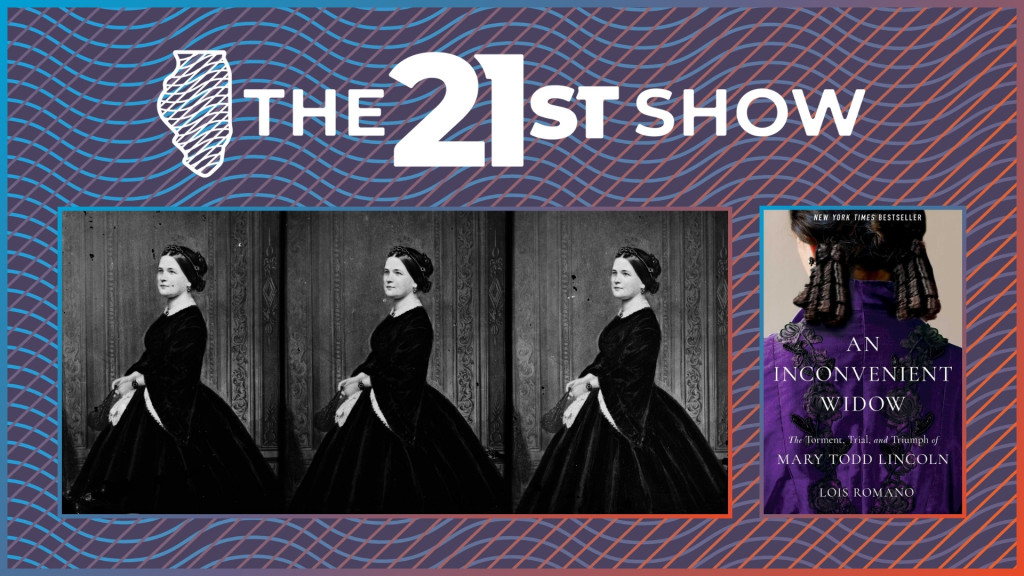
Transcript: Journalist Lois Romano says Mary Lincoln was ‘An Inconvenient Widow’
The 21st Show
Journalist Lois Romano says Mary Lincoln was ‘An Inconvenient Widow’
Read the full story at https://will.illinois.edu/tags/journalist-lois-romano-says-mary-lincoln-was-an-inconvenient-widow.
Transcript
// This is a machine generated transcript. Please report any transcription errors to will-help@illinois.edu.

[00:00:00]
Brian Mackey: Today on the 21st show, rewriting the life story of Mary Lincoln. Many of us were taught she was a spendthrift and a little crazy and a drag on her husband's greatness. We'll challenge all that with journalist Lois Romano, who's written a new biography of Mary.

[00:00:18]
Lois Romano: I think once a narrative is formed, it's really hard to shake it, and her narrative was written 150 years ago. And it was written by men that just couldn't stand her, and they projected onto her things that just weren't there.

[00:00:34]
Brian Mackey: The book is called "An Inconvenient Widow: The Torment, Trial, and Triumph of Mary Todd Lincoln." I'm Brian Mackey. That's all coming up today on the 21st show, which is a production of Illinois Public Media. But first, news.

From Illinois Public Media, this is the 21st show. I'm Brian Mackey. If I were to ask you to choose one word, just one word to describe the wife of Abraham Lincoln, what would it be? Don't think about it too long, just say what comes to mind. If you're like most people, I'm guessing that word would be crazy. That's what I would have said for a long time, frankly. But my guest today says there's some truth in that description, although today we have much more clinical language to describe what ailed Mrs. Lincoln — bipolar disorder, post-traumatic stress. But she also argues our understanding of Mary Lincoln has been shadowed by a group of men who at best failed to understand her, and in many cases actively sought to smear her reputation.

Lois Romano is a journalist. She spent years as a reporter, columnist and editor at The Washington Post and Politico. And now she's written a book. It's called "An Inconvenient Widow: The Torment, Trial and Triumph of Mary Todd Lincoln." The book's gotten positive reviews from the Wall Street Journal and The New York Times, where it also made the nonfiction bestseller list. Lois Romano joins me now for the hour. Welcome to the 21st

[00:02:13]
Lois Romano: show. Thank you, Brian. I'm delighted to be here.

[00:02:17]
Brian Mackey: So the book is called "An Inconvenient Widow: The Torment, Trial and Triumph of Mary Todd Lincoln." And I know that you know that's revisionist history. So let me just start with that. Why call her Mary Todd Lincoln in the title and in many places throughout the book?

[00:02:32]
Lois Romano: That's a very good question, and we went back and forth on it. I know that some purists prefer her to be called Mary Lincoln because she never referred to herself as Mary Todd Lincoln. But I think the ultimate decision was because that's how most people know her and we're putting out a commercial book and that's how it resonates. It also has a little bit of — it's a little more lyrical than just Mary Lincoln. It sort of has a little heft to it, and I suspect that came into the mind of the publishers. It certainly came into my mind.

[00:03:09]
Brian Mackey: The extra syllable adds a little lyricism. I can understand that. So I asked listeners to come up with one word, and as you know, crazy is the thing that a lot of people say. What would be your word?

[00:03:22]
Lois Romano: My word would be resilient. And she was an extremely resilient woman who had gone through an awful lot in her life — a lot of loss, a lot of stress. She went through a war, the loss of children, the loss of a mother at 6 years old, and a husband who was shot in front of her while they were holding hands, and yet she lived 17 years and just kept on chugging.

[00:03:48]
Brian Mackey: OK, so she may not have been Mary Todd Lincoln in life, in her own estimation, but she was Mary Todd for a long time, a couple of decades. So tell us about her early life. Who were the Todds of Lexington?

[00:04:01]
Lois Romano: The Todds of Lexington were an incredibly powerful and influential family who helped not only found Lexington but helped found Kentucky. And by the time Mary was born, she was born into a very influential, wealthy clan. One of her relatives by marriage was actually a signer of the Declaration of Independence. So they were a very well-known family in Lexington, in Kentucky, and probably in most of the union.

As you know, Lexington was a very sophisticated town, much more sophisticated than most cities in the so-called West at that time. It was likened to Philadelphia or New York. There were paved streets, there were tons of stores, there were private schools, there were churches, there were libraries. So she came from a very polished background.

[00:04:56]
Brian Mackey: And she got a better education than her future husband did by far.

[00:05:00]
Lois Romano: She did. She was the first First Lady to enter the White House with more education than the president. She was formally educated, although Lincoln was very, very well self-educated. But Mary's father believed in education for all the girls. Mary was the only one that took it that far. She took it beyond middle school — some of her sisters stopped at about 13 or 14. Mary just kept going. And if I'm recalling this right, she actually then became sort of a teacher's aide after she sort of aged out of high [school or] secondary school.

[00:05:31]
Brian Mackey: So Mary's life is marked by loss, right? And that starts at a very young age. So tell me about her birth mother.

[00:05:39]
Lois Romano: We don't know a whole lot about her birth mother, but she was from a good family. It was so early — I believe she died in 1825, and there were no photos of her. Just some background that she was from a good family and was apparently a very good mother and a very kind woman. But she developed an infection during childbirth, which was not understood at the time. Everybody at that time thought it had to do with something intrinsic in the mother's reproductive organs, but it was actually [sani]tary problems — doctors and nurses were not sanitizing, and they were going from delivery rooms to mortuaries right to birth. And so her mother somehow contracted this, and the baby was born and the mother died a few hours later.

So they end up with 5 children — one had died — so her father becomes a widower with 5 children under 11 or 12 to care for and not a clue. So he went out looking for another wife.

[00:06:52]
Brian Mackey: And he finds one within what, a year and a half or so. Mary does not get along with her. Yeah, go ahead.

[00:06:57]
Lois Romano: No, I was going to say, he finds one very quickly, much to the consternation of Mary's maternal relatives, and none of the kids got along with her really. They all wanted out. And what happens is that he marries her and then they continue to have 9 more children. So it becomes an incredibly difficult, chaotic, crowded household for everyone, and the older kids in particular feel a little bit shunted aside. Mary was very strong-willed and in particular did not get along with her stepmother.

[00:07:29]
Brian Mackey: So she goes to Springfield to be with one of her sisters. What draws her to Springfield? Because as you say, Lexington is the Philadelphia of the West. Springfield's no one's idea of a big city. There's livestock roaming the streets when she moves there.

[00:07:42]
Lois Romano: It was pretty primitive. Mary wanted — well, two reasons. Mary wanted to get out of her house, and she wanted to find a husband. And her oldest sister Elizabeth, who married very young, married someone she had met at Transylvania University whose father was the most powerful man in Illinois. He had been the governor and was really arguably the most powerful man in the state. So Elizabeth settles into Springfield very well, and then she starts bringing the sisters from the first marriage in to find husbands. And then somebody described it as a halfway house for unmarried women. Once somebody came and found a husband, they would move out and she would invite the next sister to come. So they all ended up in Springfield — the three sisters ended up in Springfield.

[00:08:30]
Brian Mackey: And so what is her life like in Springfield? I understand she's kind of the belle of the ball for a while, you might say, or at least the Edwards Place parlor.

[00:08:38]
Lois Romano: Exactly. She's delightful and she's smart and she is not afraid to talk and she's bilingual and she's also extremely political. This is a political family — the father had been the governor. Elizabeth's husband is in the state legislature with Lincoln at that point. And so they would have these salons and all the men would gather around Mary and she would have smart, quick conversations with them. She was fearless. She was funny at that point. She was a mimic and she would just charm these men. And Stephen Douglas apparently wanted to marry her.

[00:09:16]
Brian Mackey: Yeah, so what is it about Lincoln that makes her drawn to him? Because her family was not enamored of — well,

[00:09:23]
Lois Romano: Her sister — yeah, her father liked Lincoln, but her sister and her sister's husband did not. This is speculation, but she liked him from the moment she saw him, and I think she saw him as just a kind soul, and he was very solicitous of her. They were also very much aligned politically. Mary was — and you know these people, women or men — she was a political animal. She loved politics and she was steeped in the Whig Party at that time because of her family's connection to Henry Clay. And Lincoln was a Clay acolyte, and so I think they found a simpatico situation. They both had lost their mothers at an early age. She took care of him and he took care of her. There was a big age difference, as you know, close to 10 years, but something drew them together. And you're right, it was not what her sister had in mind when she brought her to Springfield.

[00:10:21]
Brian Mackey: Well, it draws them together, but then Abe breaks them apart for 2 years. It's the talk of the town. Tell me about their interrupted courtship.

[00:10:31]
Lois Romano: It's very interesting because scholars have been trying to figure out what happened, and it's all speculation. I think that it was a combination of factors. Later, when men decided they didn't like Mary, they said, oh, it was because she was disagreeable in her personality and demanding, and that's just not who she was at that point. She was very carefree, she was enjoyable. I think that Lincoln knew that the sister and brother-in-law did not like him, so that was one reason that probably put some pressure on him. He was also going through a metamorphosis in his career and not sure what he wanted to do. And he had a very, very close friend that he was dependent on — a guy named Joshua Speed — who all of a sudden decided he was selling the store that he ran and going back to Kentucky to run the family farm. This was going to be very disruptive to Lincoln because they were very dependent on each other. And Lincoln was also living in his apartment, so he was losing a lot.

What's interesting about this story is that it's devastating for Mary, but she kind of just picks up and — you know, she's hurt, but she just goes right back out on the social circuit. Lincoln has, for all intents and purposes, a nervous breakdown, and it's very well documented, so it's not speculation at all. There are letters on it. There are his letters saying, "I am the most miserable man alive." One of his friends said they had to remove razor blades from the rooming house. They were worried he was going to hurt himself, and it was so bad and so gossiped about that most people in Springfield were sure that Mary had dumped him, not the other way around. So it was very interesting.

[00:12:18]
Brian Mackey: You know, a lot we know of this era — a lot we know of this era, I should say — as you write in the book, is colored by William Herndon, who's Lincoln's law partner, an inveterate Mary hater. So let's talk about him. Why was he so down on Mary?

[00:12:33]
Lois Romano: He was down on Mary because Mary was down on him. They were the same age. They were both jealous of Lincoln's attention, and Lincoln had come out of two prestigious law partnerships and he decides he's going to go out on his own, but he doesn't want to be second fiddle anymore. This guy is in front of him — he's his office clerk — and he thinks he'll be reliable and loyal and that he can keep the office going while Lincoln's the star. But everybody Lincoln could have had at that point — he could have probably asked anybody to be his partner. He was rising on the legal circuit. He was a great orator.

And so Mary and the entire Illinois bar are kind of stunned because Herndon hadn't even passed the bar yet. So Mary doesn't like him, thinks he's beneath Lincoln. He also has a bad reputation for being indiscreet. He's what we would call today a big mouth. He is also very vocal on being an abolitionist. And at that point in time, although Lincoln is anti-slavery, he does not consider himself an abolitionist. For a political future, that's not the place to be standing at that time. You have to be a little bit more nuanced. And lastly, Herndon was a drunk, and Mary knew this. He once had to ask Lincoln to come bail him out of jail with some friends.

So Mary refused to invite Herndon to dinner. In decades passing, you can see this thread in Herndon's letters about how bitter he is. He doesn't quite say it like that, but he says, well, she only invited the, you know, aristocracy to dinner. But you can see the bitterness he has, and he decides that Lincoln's a depressive. Every time he sees Lincoln depressed or moody or staring out the window, it's because something bad Mary has done. Not that Lincoln was just depressed because that's who he was.

[00:14:32]
Brian Mackey: And he's inventing stories, right — like the idea of Ann Rutledge, the story of coming home with the wrong cut of meat. Maybe you can talk about some of those things.

[00:14:42]
Lois Romano: Well, he also writes that when Lincoln broke off the engagement, what he really did was stand her up at the altar, which was not true. He writes it in these flowery details in his book — the flowers were out and the meal was prepared — and none of that happened. There was no wedding. They had an agreement to be married, but he did break up with her on New Year's Day. Nothing like that happened.

When Lincoln dies, Herndon self-appoints himself to be sort of Lincoln's Boswell, and he's well-positioned to do it because he's the last law partner. So everybody's writing to him for autographs and for scraps of paper and for insights into Lincoln, and he just runs with it. This is in the age before TV, so he's just really out there. He said, I'm getting thousands of queries, and he decides to do an oral history of Lincoln up until the time he gets to the White House, because at that point Herndon's no longer in the picture.

And he hears a story that Lincoln had been enamored of a woman named Ann Rutledge, and —

[00:15:57]
Brian Mackey: It was in New Salem,

[00:15:59]
Lois Romano: In New Salem, OK. And so he decides to go investigate that and spends all this time on it. It seems to have a tiny germ of truth — I mean, they might have had a crush on each other — but he turns it into this incredible romance that destroyed Lincoln, which it did not. He claims Lincoln never loved another woman again, which is not true. He was engaged to somebody a year later, not Mary. And that he never signed any of his letters again affectionately, which is not true. There are tons of letters, but he didn't bother to check it out.

And so he does this very hurtful lecture and said that Lincoln was miserable for 23 years of his life and it was all because Mary was awful and because of Ann Rutledge. And the story was getting so much in the way of scholarship that a very famous Lincoln scholar named [Randall] decided to look into it. He had his wife do it, who is also a researcher, and she basically disproved it. I mean, she just said, look, there might have been a crush — Lincoln roomed at Ann Rutledge's family's saloon upstairs — but it was nothing as Herndon had described it.

[00:17:14]
Brian Mackey: All right, we need to take a break. We'll have more from my conversation with Lois Romano recorded last week. Her book is "An Inconvenient Widow: The Torment, Trial, and Triumph of Mary Todd Lincoln." This is the 21st show.

It's the 21st show. I'm Brian Mackey. My guest today is Lois Romano. She spent years as a reporter, columnist, and editor, mainly at The Washington Post, also for a time at Politico. Now she's written a book. It's called "An Inconvenient Widow: The Torment, Trial, and Triumph of Mary Todd Lincoln." We taped this conversation last week, so no calls for the program today. But you can let us know what you thought. Find our email address and voicemail number at our website, twentyfirstshow.org. That's 21stshow.org.

One of the things that historians have come to appreciate about Mary Lincoln over the years is her importance to Lincoln's political rise. So talk about — you mentioned earlier, maybe you can say more about what a political person she was. I'm imagining a modern retelling of her could have her like, you know, watching MSNBC every night and tweeting profoundly on Bluesky or something like that.

[00:18:35]
Lois Romano: You're onto something there. Her version of it was she was a social butterfly, so she would go out and have her ear close to the grindstone, and she would pick up all the gossip. She was also a voracious newspaper reader. She would move from social circle to social circle to find out what was going on, and she had incredibly good instincts. She always stayed in the background, although some men of the time, if you asked them, might say she was very outspoken. But for the era, I think she very much considered herself also a wife and a mother.

The legislature had moved to Springfield, and every time they gathered, they would have a mammoth party. Mary would do this at their small home where people were just pouring out the doors. She knew how to position Lincoln. Plus, Lincoln marries into two prominent families — the Todds and the Edwardses. So she positions him quite well.

Where Mary had some issues was that she was so loyal and so blinded by Lincoln that she could be vindictive. Lincoln would take the long view. When he ran for senator in [1]855 — it was decided by the legislature — he walked in with the votes. And he walked out without being a senator because, rather than have it go to a Democrat that was pro-slavery, he took himself out of it so it would go to a Republican that was anti-slavery. And Mary's best friend was this man's wife — in fact she was an attendant at their wedding — and she never spoke to her again. She blamed her for the husband getting the job, and Lincoln never did, because Lincoln knew that this man could be useful to him down the road.

[00:20:34]
Brian Mackey: She believes in him though in a way that he doesn't always believe in himself. She even says that at one point. There's a letter you quote where she writes to — I'm trying to remember if it was one of her other siblings back home — you know, this man could be president someday.

[00:20:49]
Lois Romano: She believed — well, she believed — first of all, she wanted to be first lady, and she told people that as a kid, you know, as an adolescent. I think in part it was because of Henry Clay, because he had run for president three or four times and she envisioned herself being the first lady in the [White] House. But

[00:21:06]
Brian Mackey: She told Henry Clay — being that, maybe we should remind listeners who he was. He's a hero, you know, of the early anti-slavery force. He's a neighbor of theirs in Kentucky.

[00:21:16]
Lois Romano: And a very prominent politician when Mary's growing up. He had been Secretary of State. He had been House Speaker, and there he was in her living room. Henry Clay was her first political crush, and Lincoln was a Clay acolyte. That's how they connected. But she had a very intuitive sense of politics, and she was determined she was going to get this man to the White House, and it was a long slog. He got elected to Congress once, but that's the only elected office he had until he gets the nomination for president. So he goes through a real political drought in the 1850s where his career takes a slump. But she just kept on believing in him.

[00:22:01]
Brian Mackey: We had a question from a listener. Sometimes we send messages to our texting group to invite people to send questions in when they know we're taping a conversation. I'll just say, if people want to join, they can text the word "talk" to 217-803-0730. We heard from Tony in Champaign, Illinois, who says, "I'd like to know what she thought about slavery, as it seems she was more a child of the status quo than Abe was."

[00:22:27]
Lois Romano: That's a very good question. We don't know exactly what Mary thought. However, her thinking was bifurcated — she was not pro-slavery, but she somehow managed to put her family's [enslaved people] in some special category. Like, I know slavery is very bad over there, but we treat these people very well and we know they don't want to go anywhere. She says that to a friend: "We don't think Mammy Sally will ever want to leave us." So she didn't have a clear view, as a child, on what it meant to be an enslaved person.

Lincoln is anti-slavery, but he's not an abolitionist for a while. He wants to stop the expansion of slavery, and Mary bought into that — she was whatever Lincoln thought. It was time to end slavery. In fact, when they get to the White House, she's blamed for Lincoln's caution on slavery, and she's not that cautious. She said, you know, we need to end slavery.

Both of them early on — when we talk about ending slavery — neither of them believed that the races could coexist. Lincoln is in the White House and he's about to end slavery and he has a group of African American leaders, and he suggests colonization, which means that all African Americans would go back to Africa, which was just an unrealistic proposition. They were not born there. So he was very conservative in that way. He wanted to end enslavement, but he wasn't quite sure what it meant, and she believed the same thing.

She hung around — we only know what she's thinking by way of her associations. So her seamstress is Black, and her seamstress tells her the freed enslaved people are really suffering. They have nowhere to go and we've started an organization. Mary starts to give money to that organization as well as sending a lot of food and clothing over there. One of her closest allies is a senator who was an abolitionist named Charles Sumner. She's very close to him, she knows what he believes, so we can only extrapolate that they were having conversations. And then once the Emancipation Proclamation is passed, she writes — a couple of years later — this beautiful letter saying this is an amazing legacy for my children.

So I would like to say that Mary was anti-slavery, and her views evolved with the time and with Lincoln's views. I hope that answers the question.

[00:25:16]
Brian Mackey: It does. I mean, so when we say she was politically influential on Lincoln, are we thinking — is it ideologically, or is it just sort of propelling his ambition? Because maybe he was a little lacking in ambition at times because of his melancholia. How do you think about that?

[00:25:36]
Lois Romano: I think about it in a couple of ways. I don't think she was policy-driven. I think she was politics-driven and she was all about the horse race. She just thought he was extremely talented. She believed in him with every fiber in her body and she believed that he would be a good leader, and of course she was right. She also had very, very good political instincts, and early on hers might have been a little better than his, although his were pretty good.

When he was appointing his cabinet — as Doris Kearns Goodwin so aptly wrote — he wanted all his rivals around him. And Mary distrusted them, and she was right. Whether she was right in urging him not to appoint them, we don't know, but she was right that some of them were going to be treacherous. The first one he appointed was William Seward to be Secretary of State. Mary despised him and she said, "He'll take credit for everything you do. He'll undermine you." But Lincoln thought he needed him because Seward had been the titular head of the party and probably should have had the nomination.

So they get to the White House and Mary proves right in about 5 minutes. They're in the White House for 2 weeks and Seward writes this memo to Lincoln and says, you know, you've been in office a month, you don't have a domestic policy, you don't have a foreign policy. Why don't you let me take those over and you can be the figurehead of the party? And he's leaking to the media. He's doing a lot of things behind Lincoln's back. So Mary completely was on the money in all that. But she underestimated her own husband, because it was stressful for Lincoln — at one point he says to one of his secretaries, "I can't let Seward take the first trick." So he knew what was going on, and he had to manage Seward. But he did, and eventually they became very good friends.

[00:27:29]
Brian Mackey: Well, so those are the ways in which maybe she could be an asset to Lincoln, right — in terms of advising him and seeing around corners that maybe he couldn't. She was also a liability, and you're candid about that. Be it the spending — spending that would have been obscene in a time of peace was all the more so in a time of war. So talk about reckoning with that aspect of her personality and behavior in the White House.

[00:27:53]
Lois Romano: She was impulsive, and she was needy. And Lincoln managed all that before they got to the White House. He knew how to defuse it and she always listened to Lincoln. If he said don't do this, don't do that. But he didn't have the time to watch it, and some of this stuff he didn't care about. He didn't care about the spending until it was brought to his attention that she had overspent the government appropriation for decorating the house. And I will say in her defense — there's no question she overspent it and she didn't have a sense of the optics of spending this kind of money in the middle of a war — but her allocation was lower than her predecessors and lower than her successors, so she didn't have a big allocation. And the house was a mess when she got there. So there were a lot of things she could have done a little bit more discreetly.

[00:28:40]
Brian Mackey: Well, and of course she had these — I don't know if fits is the right term — but you document, you explain, she'd be out with Lincoln in a carriage and some general's wife would ride up next to Lincoln in this procession.

[00:28:57]
Lois Romano: That's a very big story, yeah.

[00:28:58]
Brian Mackey: So tell that story.

[00:29:00]
Lois Romano: You know, that's towards the end. Look, Mary had mental illness, but so did Lincoln, and he gets a lot of grace for his and she gets no grace. I want to say this: if Mary had lived today, a lot of her ailments would have been treated. Her biggest ailment was anxiety, and she would have been on pharmaceuticals. I mean, we all know that — Prozac or Lexapro or whatever. She would have had a safety net. She would also have had protectors in the White House — a staff, aides. She had none of that.

So her son dies in the White House. The stress of the war is a lot for her. And they get invited — the war's almost over — they get invited to Virginia by Grant to view the soldiers and the troops. She is in a carriage following the procession to go to the troops with Julia Grant. There's no other way to describe it: she has a meltdown because she looks up and she sees a very attractive woman riding horseback next to Lincoln, between the general and Lincoln, and she just doesn't understand why she's there and how she got to be that close to Lincoln and who gave her permission. She's just berating everybody around her and they're trying to calm her down, telling her, well, you know, the president would have had to give permission. And then she gets all upset because she says, "My husband would have never given that permission."

It's sad in a way because, even though she would have these little blowups before, this is a moment where you can see she's lost the ability to control her emotions. Her stress level is so high, and it has ramifications. Julia Grant doesn't want to be around her a week later when they go to Ford's Theater. And then they get back to the base and Lincoln says to somebody in passing, "She's not well" — meaning she's just so high-strung and not doing well under the pressure.

[00:31:13]
Brian Mackey: And maybe it's worth detailing some of the parade of horrible experiences she had had to this point in life. We've talked about the death of her mother as a child, the death of one child in Springfield, and by this time, I think her father died around that time.

[00:31:32]
Lois Romano: Her father died shortly after — or the son died. She lost a nearly —

[00:31:37]
Brian Mackey: Within a year or so, yeah.

[00:31:38]
Lois Romano: It was very close. So she loses this child, but she's a young woman and she bereaves. I mean, it's awful, but they get pregnant right away and then she has two more children. So she comes out of it. She's never going to forget that child, but she comes out of it.

Then in the White House, the two younger boys get very sick from drinking the water. Washington was built on a swamp and it was just a pretty putrid town. The air was heavy and it was not a clean town at the time. They both get sick and one comes out of it — the younger one comes out of it — and the 12-year-old does not. And it was her favorite boy. He dies in the White House, and the contemporaneous reporting and letters indicate that that was a real turning point for Mary. You could see her inability to sort of control her mourning and her grieving. Even Lincoln — her sister writes a letter and says that she just won't come out of her room. She's crying all the time. Lincoln at one point walks her over to a window and shows her the image of a building — St. Elizabeths [psychiatric facility] — and he said, "Mother, if you — you've got to get a grip on yourself or you're going to have to go there. You can't just sit in — you're killing yourself by the crying." And Mary is blaming herself, saying, "Maybe I was too ambitious." It's a very horrible time.

It's so bad that Lincoln hires a nurse to take care of her — a very famous nurse, Rebecca Pomeroy — and the nurse comes. But the nurse's other job is to take care of soldiers, and so Mary at one point asks her to quit her job and to take care of Mary. And the woman said, "Well, I'm not going to do that because I have to take care of the soldiers, but why don't you come and take care of the soldiers too?" And that becomes another turning point in Mary's life. She found meaning in that, and she found some redemption because she was feeling so much guilt. She goes to the hospitals almost every day because Washington was the center of the Union hospitals — there were probably [20] to 30. And so that becomes another marker for her, and she kind of gets out of it.

And then the war is over, and the Lincolns are actually trying to find some joy that week. Lee surrenders. They're trying to move forward. They go for this romantic carriage ride and Lincoln says to her, "We've had a bad 4 years. We've lost our boy. In this war and all the men — let's go back to Springfield or Chicago and let's travel and have a life." And then they go to Ford's Theater. And so it's just ripped out from under them.

[00:34:23]
Brian Mackey: And that I think is a good place to take our final break on the program. My guest is Lois Romano. The book is "An Inconvenient Widow: The Torment, Trial, and Triumph of Mary Todd Lincoln." We're not taking calls because we taped this conversation last week, but let us know what you thought. Our voicemail line: [217-300-2121]. [📝 HUMAN REVIEW: Two different phone numbers were stated in the audio — "217-321-21" and "217-300-2121." Please verify the correct number.] This is the 21st show.

It's the 21st show. I'm Brian Mackey. My guest today for the hour is Lois Romano. She's the author of "An Inconvenient Widow: The Torment, Trial and Triumph of Mary Todd Lincoln." She wrote this book of history after a long career as a journalist, primarily at The Washington Post, where she was an editor, a reporter, and a columnist. I spoke with Romano last week — that was in part so we could put this conversation on video. As I've mentioned, we are putting a few of our segments on video, increasingly more of them over time. You can find them on YouTube. Just search for the 21st show.

Before the break, we were talking about the slow accumulation of painful experiences in Mary's life, up to and including the assassination of her husband while they were holding hands, enjoying a night at the theater after years of war. The writer and critic Thomas Mallon in a review for The New Yorker says Romano puts herself in the curious position of fighting a battle that has already been won on facts, but not yet in legend. In other words, a lot of what's in "An Inconvenient Widow" is well known, but in popular understanding, the argument has yet to be won. I asked her why she thinks that is.

[00:36:18]
Lois Romano: I think once a narrative is formed, it's really hard to shake it. And her narrative was written 150 years ago, and it was written by men that just couldn't stand her, and they projected onto her things that just weren't there. And when they talk about the marriage, they talk about it from a vantage point well beyond their courtship. They're looking back and they're looking at a Mary that maybe they didn't like in her 40s. And they're saying, well, all of this happened, but none of that happened. They just didn't like her later in life.

So I think Herndon had a lot to do with formulating that because, although he didn't write his book for 20 years, he kept giving his notes to people, and a lot of lazy biographers were using his notes. People weren't writing about first ladies. The only person that was fixated on first ladies was Herndon, and it was her. So that narrative was picked up and it was very hard to dislodge.

Ruth Painter Randall tried to do it in — I think it was 1953 — and then Jean Baker about 40 years ago. But there's a lot more scholarship available now. What I tried to do — let me back up — what I tried to do is round her out because some of the stories were true, some of them weren't. But I do know this: she contributed to the country and none of that was reported. I mean, it wasn't reported till much later — how much time she spent in the hospitals. She never identified herself sitting at soldiers' bedsides. She would send food, flowers, clothing over there. She would go to the encampments. She would go to the front lines with Lincoln. She would visit the camps with him. She was extremely supportive and involved in the war, and we'd never heard much about that.

She was incredibly involved and consequential, and in any other era her decorating of the White House would have been praised. But given the time we were in, it was a Civil War, she gets excoriated for this ball that they had, and it wasn't all her pushing it. In fact, she wanted to cancel it because her son was dying. And Lincoln didn't want to cancel it, and Lincoln could have killed the ball at any time. And so by the time the ball happens, every newspaper in the country — or at least most of them — were attacking her and making her seem like some dilettante, and, you know, that men were dying and she was just dancing. It's all very distorted.

[00:38:55]
Brian Mackey: And that of course continues after she leaves the White House. You mentioned Herndon's notes making their way around. Her own son tries to have her committed. This story is maybe vaguely familiar to people. Can you remind us what happened there, and what a mockery of an actual trial the actual experience

[00:39:14]
Lois Romano: was? Well, I blame two people for destroying her legacy — Herndon and Robert Todd Lincoln. Because Herndon just labeled her a shrew, and Robert Todd Lincoln labeled her insane, which she wasn't. As she got towards the end — well, it wasn't even towards the end of her life. It was 8 years before she died. She was eccentric, and she was suffering still from some mental illness, but she wasn't bothering anybody. She was traveling by herself, maybe sometimes with a nurse and a companion. She was taking care of herself. She didn't need any of that help.

[00:39:53]
Brian Mackey: You mentioned she had lost a third son by this time.

[00:39:55]
Lois Romano: That's correct. She had lost the third boy. She'd come back from Europe at one point. She had gone with Tad to Europe and he got sick. He was a frail kid and he got sick on the way home on the boat. And so he died in Chicago, and then she was kind of lost at that point and she started going to spiritualists. Well, she had been seeing spiritualists in the White House, but she stepped it up. She started traveling all around the East Coast to see famous spiritualists, which drove Robert crazy — for many reasons. He was embarrassed by it. He thought it was undignified, but he also had this misplaced idea that they were going to take all her money, and that was never going to happen. I mean, Mary — for all her spending — was pretty [frugal], and she was spending the interest on her bonds but never the principal.

So she returns to Chicago and she's acting a little bit weird, and Robert hires some Pinkerton guards to watch out for her, and he learns that all she's doing is shopping. And strange people are coming in and out of her hotel room, and he freaks out because he knows the strange people are probably mediums. He's always worried about her spending, and I don't think he wanted her money — I think he just didn't think she should spend it because he didn't want to get saddled with having to support her if she spent it, but she was never spending it.

And then he heard that one of the guards said she was talking about leaving Chicago, and something triggered in him, and he wanted her off the street. He didn't want her shopping. He didn't want her seeing mediums. And again, this is all harmless behavior. She was sort of like — you know that elderly person you might see in the street who bothers nobody but always looks good and takes care of themselves but seems a little bit off.

[00:41:41]
Brian Mackey: A little too interested in crystals or something like that.

[00:41:46]
Lois Romano: You see — that's the impression I came away with. And she was isolated. At that point in her life, she just wanted to be left alone. And Robert is embarrassed because his friends are saying to him, why haven't you taken over her life? You're the man of the house. Why aren't you running her finances? And Mary doesn't let anybody run her life — she's pretty tough.

So he goes to his father's friends and he goes to a bunch of doctors and he gets 7 doctors to declare her insane, only 1 of whom had treated her and 1 who examined her briefly. So they're all basing this on what Robert said. And when he's testifying, the testimony is just — it's almost like an "SNL" skit. "Well, you know, she's going into shops and she's buying perfume and she doesn't wear perfume, and she won't heed my advice." And the media is all in the courtroom.

She was completely blindsided, by the way. He constructed this whole trial and she walks into a courtroom with 300 people. It was very tragic. He's got tears in his eyes and all the reporters are reporting the tears in his eyes and they're not throwing any grace on her. She has a lawyer that Robert gave her, but the lawyer's not really calling her to the stand. So [after] 3 hours of bizarre testimony like this, it goes to the jury and she's convicted of insanity in 10 minutes and sent to an asylum.

So Robert is thinking he's got something accomplished. He's pretty — I'm not a Robert fan, I'm just going to say that upfront. He thinks he's got something accomplished. He goes to see her a couple of times. He's writing letters to people — which we have — saying, "I think she's accepted where she is and she's relaxed." She's not accepted anything. She's pretty mad.

So he then decides that everything is so cool that he goes on vacation. The second he leaves for vacation, Mary writes a letter to the two most prominent lawyers in Illinois at that moment. It's a couple — [the] guy's a judge, [and his wife is] an extremely talented, prominent lawyer who's not in the bar because the Illinois [bar] won't swear her in, [as] she's a woman. And she writes them this letter that says, can you please come to Batavia, where she was, tomorrow, and bring the editor of the Chicago [Sun-Times]? And they're getting this letter and they're like, OK, what's going on with Mary? They didn't bring the editor of the [Sun-Times] with them, but they go, and they come to agree with her that she doesn't belong there. They said she sounded totally rational.

And what Myra Bradwell — the wife — ends up saying to the guy who runs the place is: "Look, she's a little off, but I'm off too. We're all off. She doesn't belong in here." And then the three of them run basically a public relations campaign to get her out while Robert is vacationing in New Hampshire. I mean, she just totally outplayed Robert and got herself out in 3½ months.

[00:44:34]
Brian Mackey: Fun fact: Myra Bradwell would become the first woman member of the Illinois bar later on. At that time I had forgotten — if I ever knew — that she was involved in this case, so I appreciate your book reminding me of that.

So now we're coming to the time where we're still trying to figure out, still trying to reckon with who she is in culture. This play comes out on Broadway a couple of years ago — "Oh, Mary!" — I've got to be honest, I didn't know about this, I think, until I learned about it in your book. And I see now — yeah, somehow I guess this is my very Midwestern nature, right?

[00:45:11]
Lois Romano: It's the hottest play on Broadway.

[00:45:12]
Brian Mackey: Yeah, exactly. So who knew? I'm very much a homebody, I guess. But yeah, it's the hottest play on Broadway. It's very — I can't remember the phrase — loosely researched, or not researched — "aggressively unresearched."

[00:45:26]
Lois Romano: Yeah. I think it's hard to know with [Cole Escola]. He says he didn't research it at all, but I think he probably knew a little bit. But the point is that the narrative we inherited of Mary was so off-kilter that it allowed him to be able to do this. He had the agency to be able to do this.

[00:45:44]
Brian Mackey: And this is a — it sort of imagines Mary as this bawdy, would-be burlesque performer —

[00:45:51]
Lois Romano: A cabaret — an alcoholic cabaret singer. She neither drank nor was a cabaret singer.

[00:45:56]
Brian Mackey: You famously wrote — you were a political reporter for many years, and one of your big stories in that time was "Gatekeepers of Hillaryland," right, about Hillary Clinton's coterie of political advisors. I wonder if you heard echoes of the way people talked about Hillary Clinton, Kamala Harris, other women in politics today, in the way Mary Lincoln was treated by her contemporaries.

[00:46:20]
Lois Romano: I think that — yes. I don't know that the needle has moved that much. It's gotten a little bit better. What drew me to Mary initially was covering Hillary, and I remember thinking — Hillary had her own baggage, but I remember thinking she's being vilified because they've put themselves out as having a partnership. They campaigned saying you'd get two for one, and the public did not like that. And the Republicans —

[00:46:52]
Brian Mackey: She should be baking cookies, right? Wasn't that —

[00:46:54]
Lois Romano: Yeah, and she said, what do you want me to do, stay home and bake? They just had it all out there. And I just remember thinking — looking back and seeing what other first ladies had been treated that way. Of course, Eleanor Roosevelt was one. People couldn't stand that she was an activist. And there were others throughout history — even Abigail Adams took some heat.

But Mary — I want to say — was the first modern first lady, and the first media first lady. And I discovered that probably more than others because by the time I did this book, everything was digitized. So I could look at the volume of coverage that Mary got, some positive and some negative, that was extraordinarily and totally unprecedented up until that moment. Mary would do something and it would get 1,000 stories across the nation.

So I think Mary did set a precedent, but she was very much a product of what we still see now. There is some misogyny there. I don't think we're ready to have a woman president yet. Would I vote for one? Yes, but I don't know if the general public would. What do you think? I mean, there's just this underlying [belief] that men are stronger leaders or something. I don't

[00:48:27]
Brian Mackey: know. I don't know that they've been great test cases, the two test cases we've had so far in the general election. You're right — as you say, there are a lot of individual circumstances there.

What, big picture, are you hoping — we're in this era where the president and his administration are stripping away public history that's about women and people of color and other — we want to say marginalized — people. What do you hope people take away from this book, and what comes of Mary Lincoln's — Mary Todd Lincoln's — legacy?

[00:49:00]
Lois Romano: I think my hope is that she's remembered for who she was and not how she was portrayed 100 years ago — that they take away from this a much more well-rounded picture of her as a consequential, resilient woman who contributed a lot to this country and who was very loyal to this country.

And I'll tell you this: some of the early biographers missed an opportunity because they were so busy absorbing what Herndon had written. She was still alive and they could have interviewed her. I believe she was in the room for a lot of these decisions. He talked to her, I believe. I don't know how much influence she had, but I think she could have cast a light on some of the history of Lincoln, and we'll never know what she knew.

[00:49:53]
Brian Mackey: It's a great note on which to end. The book is called "An Inconvenient Widow: The Torment, Trial and Triumph of Mary Todd Lincoln" by Lois Romano. Thank you so much for taking the time to speak with us on the 21st show.

[00:50:04]
Lois Romano: Thank you, too. This was a great conversation. I really appreciate it.

[00:50:08]
Brian Mackey: Once again, we taped this program. You can find it later today on YouTube. Just search for the 21st show, which is a production of Illinois Public Media. I'm Brian Mackey. Thanks for listening. We'll talk with you again next week.
Transcript Assistance
Illinois Public Media may use AI assistance for transcript generation and/or formatting. Transcripts that have not yet been reviewed for accuracy will be labeled.
To report a transcription error, or to request transcription of archival material, please contact will-help@illinois.edu.