Transcript: Meet Republican candidate for Lieutenant Governor Aaron Del Mar
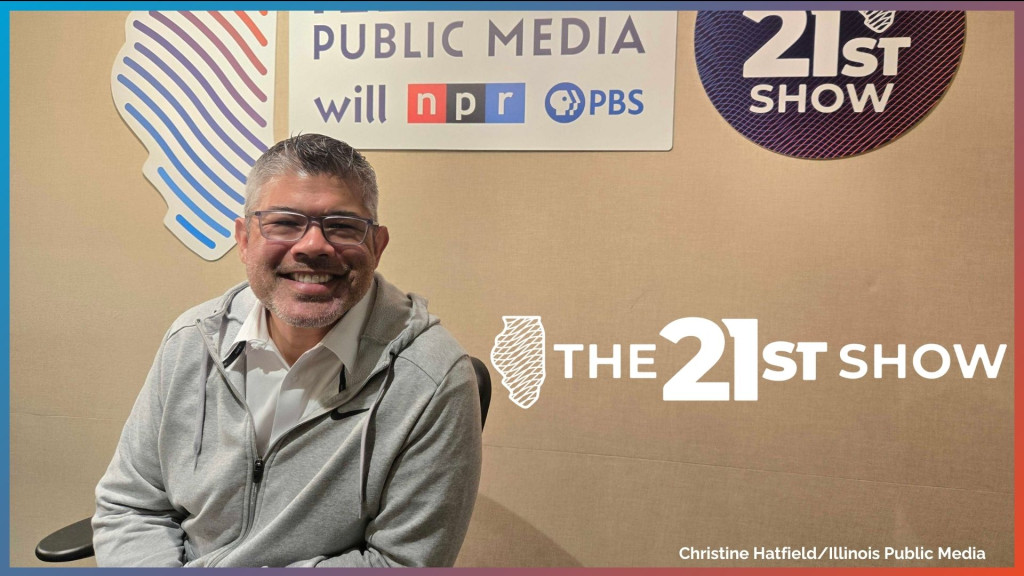
Transcript: Meet Republican candidate for Lieutenant Governor Aaron Del Mar
The 21st Show
Meet Republican candidate for Lieutenant Governor Aaron Del Mar
Read the full story at https://will.illinois.edu/tags/meet-republican-candidate-for-lieutenant-governor-aaron-del-mar.
Transcript
// This is a machine generated transcript. Please report any transcription errors to will-help@illinois.edu.

[00:00:00]
Brian Mackey: From Illinois Public Media, this is The 21st Show. I'm Brian Mackey, and we begin today with Illinois politics. As you know, Democratic Governor JB Pritzker is seeking a third term. He has a new running mate, former state representative and gubernatorial aide Christian Mitchell. We spoke with him a few weeks ago. You can hear that conversation at our website, 21stshow.org. On the Republican side, voters chose Darren Bailey for a rematch despite his loss to Pritzker four years ago. Bailey too has a new running mate, Aaron Del Mar, who joins me in studio today. Del Mar's a businessman with experience in sports management, from events for runners to pickleball. He also serves as chair of the Cook County Republican Party, his second time in the role, actually. He previously chaired the party from 2012 to 2016. Del Mar was born and raised in Palatine, Illinois. He has a bachelor's degree in public policy from Indiana University. He was a member of the Palatine City Council for four years, committeeman for the Palatine Township Republicans, was briefly co-chair of the state Republican Party, and is still a member of the state Central Committee. This is Del Mar's [second] run for lieutenant governor. In 2022, he ran in the primaries with businessman Gary Rabin, who did not win the nomination. Aaron Del Mar, welcome to The 21st Show. Thanks for being with us.

[00:01:26]
Aaron Del Mar: Hey, thanks for having me on.

[00:01:28]
spk_0: And listeners, we are live with Mr. Del Mar for the first half of our program today. If you have questions or comments, you can join us at 800-222-9455 if there's an issue you'd like us to tackle in the time we have. Again, 800-222-9455. What brought you into politics?

[00:01:43]
Aaron Del Mar: Well, you know, just like many people, I was frustrated with my elected official. We had a small zoning issue that was happening in my hometown. My parents had a bunch of their land that was encroached upon. I got aggravated and I went to my city councilman, and he probably didn't take me very seriously. I had long hair. I had a goatee and mustache. I, you know, I was just being a regular guy. And, you know, it was very disrespectful and didn't listen to the concerns that I had. And my parents didn't want to fight about it. And during that heated conversation, he's like, well, if you don't like it, you can run for council and you can give it a try. And so I did and got a haircut, did a little shaving, got a suit on, started knocking on doors, um, ended up winning that race, uh, by a pretty hefty margin, and it kind of kicked off my political career.

[00:02:32]
Brian Mackey: Yeah, so the main job of lieutenant governor is to be ready to step up to be governor of Illinois. What about your background would you say qualifies you should the need arise to be governor of Illinois potentially?

[00:02:44]
Aaron Del Mar: Well, I would say that there's three things. One is my political background, right, from the grassroots on up, you know, starting as a city councilman, being on the Illinois International Port Authority, serving as the Cook County chairman, serving as co-chair of the Illinois GOP. [Delegate] up and down the Republican resume, um, you know, I kind of touch on each spot, um, from an educational background. I got my degree, like you said, at Indiana University in public management, wanted to be a city manager or a public works director, um, so the municipal side over there helped out a lot, um, got my MBA certificate here in Champaign and my advanced degree in public administration from Indiana when I went back. So I have that educational background so it's kind of fun where all the things that my professors were talking about I can actually apply. And then the last part is probably my business sense. You know, I started my company back in 2002 after I left the Olympic Training Center and built a nationwide company, started with $2,500 credit card living in my parents' basement, right, that American dream of learning what it's like to struggle, learning what it's like to be signing the front of checks and not just the back and living through that, right, just the human experience of that. And being a father of six wonderful kids in the 47 years I've been on this planet, I feel like I've packed a lot in.

[00:03:58]
Brian Mackey: To be blunt about it, a lot of people think the job of lieutenant governor is one of the worst in Illinois politics. How are you thinking about that? Why do you want that job in particular?

[00:04:08]
Aaron Del Mar: Well, honestly, I thought I'd be running at the top of the ticket. Uh, most people, maybe not in Champaign, but everybody north of I-80 who's been kind of watching my political career knew that after I'd run four years ago that I'd be running for governor on my own, and I actually debated all the gubernatorial candidates down in Peoria before I joined the Bailey team. We had our fundraiser not only here in Chicago but then one in Naples and put some money together. I had a running mate and we were out getting petitions, doing the things that you do when you run until I got that [fateful] phone call to join the Bailey team. And I didn't want to do it. I'd already been a bridesmaid. It was my time to be a bride. Uh, and for the last three years, Darren Bailey and I would probably be a competitor to him at some point. And he said a lot of really unkind things about me, and in return, I said a lot of really unkind things about him.

And, uh, you know, the RNC chair, uh, Dean White here from Illinois said, hey, we want to get you guys in a room. And they sat us down and I said, sure, I'll meet you for 45 minutes. It turned out to be about 4.5 hours, and it was a heated conversation to begin with. But the more that we spoke together, the more we understood that the same challenges that he has in southeast Illinois as a farmer are some of the same challenges I have in downtown Chicago. And why we might be 4.5, five hours apart, we still live in Illinois and we live with a lot of the same challenges. And, uh, you know, we as adults understood and it was amplified by the people in the room that said, hey, Darren, you can win a Republican primary. Everybody knows you. [Stop it by 80], but the second you get in the general, you're going to get the same experience as you did four years ago without somebody from the city of Chicago that understands the unique challenges that Chicago and the suburban collar counties have. And they looked at me and said, Aaron, you know, you'd be great in the city, but you can't get through the Republican primary without somebody from south of I-80. Oh and by the way, if you guys don't run together, nobody's going to help donate and raise any money. So that kind of put us in a box a little bit. And Darren and I, um, you know, started our kind of a relationship.

And then as you know, about a month later, you know, there was a tragic accident where Darren lost his son, his daughter-in-law, [and three] grandchildren. And, uh, Darren asked me to kind of run the campaign because he needed time to be with his family. And so I did get that experience of running for governor, you know, kind of carrying the team, getting out there and submitting 14,400 signatures that people all across Illinois, you know, signed to get on our petitions, uh, and our relationship, um, just really grew. I mean, in that tragedy at a very high price we became very close. And then spending countless hours and weeks, um, in our tour bus, going to every single county in Illinois and meeting and greeting with 700 people or seven people, um, depending on where we're at [56] times a day and just engaging and saturating ourselves together. And learning and I learned a lot about Southern Illinois. I mean, I used to think Schaumburg was the south as I wanted to get. I got to Champaign and I'm like I'm in Southern Illinois and they're like, no, keep on going. Um, then I got to Metropolis and they said, all right, now you're finally here. But in the inverse, you know, Darren didn't really understand the ecosystem of Chicago. He didn't understand that the city and the suburban area is such a different beast than the rest of the state, and I think that's what makes us such a unique and diverse team because we're the first team that could actually govern all of Illinois and not just one regional area.

[00:07:29]
Brian Mackey: All right, let me remind listeners this is The 21st Show. We're speaking with Aaron Del Mar, the Republican nominee for lieutenant governor of Illinois in this November's elections. 800-222-9455 if you want to join us today. All right, let's get into some policy questions. Uh, one critique we often hear from Illinois Republicans is that the taxes are too darn high. What can a Republican governor do to change that?

[00:07:50]
Aaron Del Mar: Well, a Republican governor, you know, in general can do a ton. Illinois is one of the states that has a very strong executive branch, right? As you know, everyone got their constitution test. You have three equal branches, but Illinois specifically, we have line item veto. That's something that a lot of states don't have. So if you get bad legislation, you get legislation that's got 80% good and 20% pork, you can line item the 20% out and you know, and expect a challenge for a [veto] override, but you can do that initially.

The governor of Illinois has 327 positions and appointments to commissions and boards, another 2,200 jobs that are executive jobs. So if you have a problem with insurance, all right, well, guess who appoints the director of the Illinois Department of Insurance? You don't like something that's going on with the state police, who appoints the directors and the board of the Illinois State Police. Um, you have a problem with 2,200 kids in the last eight years under JB Pritzker that are lost or passed away in the Department of [Corrections], Department of Children and Family Services, and nobody's been fired. Well, that, you know, that's one area that Darren and I differ from the current establishment. We would remove that director because the job's not getting done, and those are the things that the governor can do on the executive branch. So strong and it also controls the purse strings. And that can be used for good like Darren and I want to do, and it can also be used for bad like um JB Pritzker has done for the last [seven] years in reallocating, um, dollars from one pocket to the other.

[00:09:12]
Brian Mackey: Governor Bruce Rauner was a Republican, came in with a lot of personal resources that he was going to use and did try to use to work his will on state government, and he crashed into a Democratic General Assembly, which now has, you know, thanks to gerrymandering and voter trends over the years, has even bigger majorities. How would you navigate that and why would it be different from what happened eight years ago?

[00:09:33]
Aaron Del Mar: Well, I think there's probably two reasons. Number one is Bruce Rauner came from the top down. He never served in local government. He never understood the policies that you enact, how they actually affect real people. Darren and I are the exact reverse. When you're a city councilman, using that as an example, and you make a decision about somebody's zoning or somebody's fence line, plan on seeing them at the grocery store. Plan on seeing [them at] parent teacher night. Like these people are in your community, right? That gives you true accountability. Um, the same thing happens here, like, you know, JB Pritzker and Bruce Rauner are billionaires. They live a lot different lifestyle than you and I do. Um, and they use those dollars to bully [people], and they did it and it didn't work for, uh, Bruce Rauner because he didn't understand the political system in Illinois. And JB Pritzker is having his own challenges.

But going back to your question, how can we work with the Democrats? The Democratic Party in Illinois is not a monolithic group. There are a lot of liberals, there are a lot of far left, but there's also a lot of conservative Democrats that believe in some of the same principles that we do, like Fred Crespo, who's in the suburban area of Cook. He challenged Chris Welch and JB Pritzker on their far liberal budget and was punished by that. There's a lot of Democrats in Illinois that don't care for having a gun held over their head by JB Pritzker that says if you don't vote the way I want you to do, I'm going to drop $2 million on one of your opponents and we're going to primary you from the left and take you out. And so there are a lot of people that we can work with and there's a lot of people that we can find common ground with, and I think that's exactly what we're going to do.

[00:10:56]
Brian Mackey: Big picture spending. In state government, you can't line item veto your way to the sort of cuts that people talk about. So what are some areas where you would look to make significant cuts?

[00:11:05]
Aaron Del Mar: Well, you can look at Department of Central Management [Services] and you can see the repetition that they have in there and the way that they run that department that every contract in Illinois goes through. There's a lot of reform that can be made in that department.

[00:11:16]
Brian Mackey: For listeners who aren't familiar, this is the agency that does like healthcare for all the state employees as well as university employees, those of us here, and...

[00:11:23]
Aaron Del Mar: And they do rental space and they, you know what I mean, they touch every contract. There are a ton of NGOs that are getting dollars that are being wasted that, you know, we can go through it, you know. If you go to BlueprintforIllinois.com, that's a website that we created, um, that kind of goes through all of our white paper, our policies, our actual plan. And on the bottom of it you can see our transparency tracker that, um, shows every dollar that's been allocated in the state budget and where it's going and it's not fancy stuff. People get bored with it. Um, but we're trying to show that we can govern now without being elected, um, showing that we can lead now without, you know, getting those votes because that's really what it's about.

While JB Pritzker is out auditioning in New Jersey and California and New York and all of these Democratic states for a 2028 Democratic presidential primary, Darren and I are concentrating on the things that we can do in Illinois to make our state better and to make positive true reform here. And spending is our number one issue.

[00:12:17]
Brian Mackey: You mentioned NGOs. That's non-governmental organizations. This is like charities that get state grants to do violence prevention...

[00:12:25]
Aaron Del Mar: There's a lot of different programs that are out there that somebody will come and say we want $10 million to do this project, and there's no accountability to that $10 million and there's no oversight [on] it, and the money just basically disappears. And not all of them, but there are...

[00:12:38]
Brian Mackey: That's the thing is that every one of those that you identify, like somebody, that's some lawmaker's pet project or precious, you know, precious...

[00:12:44]
Aaron Del Mar: And you know what, here's your point though. You can go online and you can see this. People that are on [can] fact check me on this. Every Democratic state rep gets a million dollars to allocate in their district to wherever they want. Every Democratic state [senator] gets $3 million to allocate to whatever they want, and every Republican state rep and every Republican state senator gets $0 and that is by design. And so you pay the same taxes if you live in a Republican district or you live in a Democratic district, but your state rep, your state senator can't allocate anything to your hometown. So what do you have to do? You have to start engaging with [Democrats] outside of your district because if you want to get any funding for your food bank, if you want to get any funding for your road repairs, you have to work with the other side. And it basically makes our government powerless on the other side of the aisle and that's not right and it's not fair and that's designed by JB Pritzker and that's designed by Christian Mitchell who's been his deputy governor for the last couple of years and they're doing that specifically to be punitive against these areas.

[00:13:43]
Brian Mackey: We got a text message from Amy in Wakanda who says, will you support programs that lift people out of poverty and get them back into a functioning life where they not only contribute to the economy but cost the government less money once they leave the support program?

[00:13:57]
Aaron Del Mar: 100%. I mean, that's really good public policy. It's the level of government where you need to be able to take care of those that are the most vulnerable. I mean that's a layup question. But I think if you look at some of those areas, like you look at the southwest side of Chicago right now with the new property taxes that just came out of that area, if you live in Winnetka, your property taxes went up by between 12 and 18%. If you live in the southwest side of Chicago, the most vulnerable area of the city, you went up anywhere between 80 to 183%. Right? How is that fair and equitable? How are we not doing property tax reform in the state of Illinois that makes it fair for everybody?

And the reason why is twofold. One, they were, you know, [underpressed] during COVID, of course. Number two is people on the southwest side of Chicago don't fight their property taxes like the people in Winnetka do in the million dollar homes. So it's not fair. I think that you're better off providing good government and providing fair taxes across the board and then, you know, using other tools like grants to these areas, you know, um, relief for utility bills. But you know what the best relief could be for everyone is if you lower utility bills across the state. You know, [seven] years ago, Illinois was an energy exporter. [Eight] years later under JB Pritzker and the Democratic regime, we are an energy importer. I mean, how does that make any sense?

[00:15:12]
Brian Mackey: Let me remind listeners, this is The 21st Show. We're speaking with Aaron Del Mar, the Republican nominee for lieutenant governor in this year's Illinois elections. If you want to join us 800-222-9455. That's 800-222-9455. We're gonna continue this conversation after a short break. Again, if you have questions, you can join us 800-222-9455.

Coming up later in the hour, we're gonna be talking about the debate over data centers in Illinois. Some communities are welcoming them. Other communities are saying, no thanks. We're gonna get into that later this hour. But first, more with Aaron Del Mar after a short break. This is The 21st Show. Stay with us.

[00:15:50]
Brian Mackey: It's The 21st Show. I'm Brian Mackey. We're speaking with Aaron Del Mar, who is the Republican Party's nominee to be the lieutenant governor of Illinois. He's running mate with Darren Bailey, who Republicans nominated again to challenge JB Pritzker in this fall's elections, 800-222-9455. How would you rate the job that the Trump administration has done with immigration enforcement? Governor Pritzker saw it as his job to sort of oppose what the administration was doing here. How would you assess it?

[00:16:18]
Aaron Del Mar: I think they didn't do a very good job. I would say that for sure.

[00:16:22]
Brian Mackey: Well, because...

[00:16:23]
Aaron Del Mar: I mean, I was there in Broadview. I was there. That's part of Cook County and I saw the challenges that were there. Now I think that there's responsibility on both sides, right? I think that when you come in with an incendiary program, you know, without engaging with local government and local authorities, I think that, you know, this is ripe for problems, and I think you saw that. But I also think that some of the blame also falls on the local governments when the federal government [is building] out a lot of the fence areas to protect not only the protesters but the federal officials and they immediately file a lawsuit to remove the fences. They're throwing gasoline on the fire. When you see, you know, all the rhetoric that's happening instead of cooperation, you know, both sides are trying to gin up trouble and support.

I think the fact of the matter is that Illinois and the United States in general needs comprehensive immigration reform. And the first thing people say is, well, Trump, you know, he killed that. Well, look, if you put enough pressure on your legislators in Washington and on your senators in Washington, you can get anything done, but public support hasn't been there, and that's why it failed. It's not on one human being. It's on us as the general public. You have such polarization on both sides, but the fact is is that we have to have a way that we understand who people are that are in our country, regardless of how they got here. We need to make sure to also take care of [them]. When you have 65,000 undocumented immigrants that come into Chicago over a six week period and, you know, [winter] gets in Chicago, you can't let them freeze. I mean, you just can't do that. You have to provide housing. You have to find health...

[00:17:52]
Brian Mackey: They come in when they were bussed in by the Republican governor of Texas, you mean right?

[00:17:55]
Aaron Del Mar: After Joe Biden let them in for free and had no border security. And then, you know, so what did Texas do? They decided, hey, why should we be the only state that deals with this challenge? Why don't we let all the other states in our nation feel some of that pinch? And now when that happens in Illinois after your mayor of Chicago and your governor's like, [oh, open the border, open the border], then now you get a taste of that now. It throws them for a loop. So yeah, you can put some of that on Abbott. They would have not gotten to Chicago if he didn't bus them, but they wouldn't get into the country if Joe Biden would have held the line on those borders. And it's, I don't think it's fair to say that Texas should burden the whole part of that challenge for the whole country, especially when you have, you know, sanctuary laws that don't allow [state] and local police forces to work with the federal government.

So if you have a bad actor that comes in here illegal, does something wrong, [steals, hits somebody], does something, uh, and once they're done serving their time, they don't allow ICE or the federal authorities to come and pick them up. That's in a controlled environment where you take one set of handcuffs off of them locally and you put federal ones on them, but they release them back into the community. So what happens, you have to take a SWAT type team in there. It puts the person you're looking to arrest in danger. It puts the federal officers in danger. And most of all, it puts everybody in that community in danger because you're going in there to extract them, right? And so, I mean, just working in a controlled environment would really solve a lot of that problem, but they just refuse to do it.

[00:19:17]
Brian Mackey: I know that the rhetoric is like targeting violent offenders, but there were a lot of like people selling tamales, guys in the Home Depot parking lot looking for work. What do you think about the sort of broad, you can't get to 3,000 people a day, which is the White House's goal with just doing [violent offenders]? Who are they?

[00:19:32]
Aaron Del Mar: Yeah, no, no, I mean who are they? Like, so the guy that's selling tamales, the guy that's in front of Home Depot, what's their background? You don't know, right? You don't know, right? So that person could be a bad actor. They could be a great person. We don't know. When my dad immigrated here...

[00:19:47]
Brian Mackey: Is it worth like doing the tear gas and everything else?

[00:19:49]
Aaron Del Mar: Well, the tear gas was happening at Broadview. That wasn't happening at Home Depot.

[00:19:52]
Brian Mackey: So let's, what happened like at a Halloween parade in Chicago where kids were out trick or treating. I mean...

[00:19:57]
Aaron Del Mar: Well, I disagree with that narrative because I'm from Chicago, but here's what I would say is my dad came here in 1972 and he sat in the Philippines for a year and a half until there was a job, until he had, uh, you know, housing, until he had [a sponsor]. And when he came to the United States, my uncle was a sponsor. If anything happened, health insurance, he got in an accident, you know, whatever the problem was, the sponsor is financially responsible for them. Well, guess what? All eight million residents of the state of Illinois are now sponsors if they want to be or not, and they didn't choose to do that. My uncle chose to do that. And so I think that there's a fiscal responsibility that we have to have, and I think there's also a humanistic approach we have to have to, you know, to create an equilibrium on that. But also we should be able to know who's in our country, what their background is, where they're going, what they're doing just like we do every other citizen.

[00:20:43]
Brian Mackey: Do you think that we should have broader immigration levels or more restrictive immigration levels?

[00:20:47]
Aaron Del Mar: I think that we need to find a plan for those at a certain date that have been in this country operating in a positive manner and adding value, and I think there should be a streamlined process to immediately create an opportunity for them, you know, to be legal here in the United States, right? You're not kicking out 15 million people. That's just not realistic. And the costs associated, the challenges that would put on our workforce all across the country is just, I mean, it's just not possible. Um, so if you have people that have been here for many years, OK, so let's go through a background check. Let's say, hey, you know what, we're going to give you a work visa. You do two or three years, you take the test like everybody else has to do to become an American citizen, and we can create a path to that. And Darren and I would be supportive of something like that.

But also, if we find that you're a bad actor, even if you've not done something in the last few years, you go back and you wait. And then I think maybe there should be some level of a referendum of the people of Illinois that says, hey, you know, is this a policy that we want to do? I mean, the legislature in Springfield puts referendums that are garbage on all time. How about we put something that actually hears the voice of the people and then create a program associated with it? It's not anything incendiary. It's good public policy. You have a lot of people that are good here. There's no question, but you also have bad actors, and we don't know who's who.

[00:21:59]
Brian Mackey: Uh, governor Pritzker has blamed the Trump administration for some of the pressure the state budget has been experiencing, right? Federal government's tried several times to cancel funds related to things like transportation and social services. What would a Bailey Del Mar administration do to sort of navigate those tensions again with a likely Democratic supermajority legislature still pursuing those policies?

[00:22:21]
Aaron Del Mar: Well, two parts. I mean, Governor Pritzker blames Donald Trump for every time it rains, for every time there's a windstorm or there's a tornado or anything that happens negatively in Illinois. It's Donald Trump's fault. It's Donald Trump's fault because he's running for president of the United States and he knows that Donald Trump has a 24% approval rating in the state of Illinois. Everybody [that] does any polling. And so that's his moniker. He hates Donald Trump more than he loves Illinois, and I think that's a big problem because the fact of the matter is JB Pritzker should be concentrating on the problems in Illinois, not running for president. And what he should be doing is working with the federal government when an opportunity arises.

So an example, you have the Invest in Kids Act that just got passed in Trump's financial bill that happened. Thirty states have already opted in, including two blue states, Colorado and North Carolina. Illinois hasn't opted in. And they say it's an attack on public schools. That's a bunch of malarkey. If you like your public school and you are 300% [above] the poverty line, you get, you know, an iPad, you get tutoring, you get all these different things that are not taxpayer dollars that are coming from the federal government, and all he needs to do is opt in. If you want money for homeschooling because that's a choice that you made for your family, or if you've decided that you want to send your child to Catholic school or Christian school and you can allocate dollars for it by, you know what I mean, why would you not want to do that? Because he doesn't want to give Donald Trump a win, and he does it at the expense of the people of Illinois and it's completely unacceptable. And we're not the only ones that think that. There's a whole bunch of Democrats when it passed here in Illinois, it was bipartisan. Five years later, JB Pritzker held a gun to all of his state representatives, state senators, you know, not physically, obviously politically, and they let it expire. And all these kids that have been in these ecosystems of, you know, going to the same school, playing the same sports, doing the same activities have been thrust out of their own schools. How is that humanistic?

[00:24:00]
Brian Mackey: You're talking about the scholarship tax break here in Illinois. Kids have been thrust out of their schools...

[00:24:06]
Aaron Del Mar: Because their parents can't afford it anymore. You had to make a choice between [what] are you gonna [do], put food on...

[00:24:09]
Brian Mackey: The tax break was for people donating to the school...

[00:24:12]
Aaron Del Mar: But the kids that were getting it, they no longer get it. The parents and the families no longer get those dollars because they allowed it to expire. So now you have a federal program that does the exact same thing, and JB Pritzker won't opt in.

[00:24:23]
Brian Mackey: What evidence do you have because I haven't seen these stories about kids getting kicked out of school. Is that...

[00:24:28]
Aaron Del Mar: Yeah, that's a real thing. 14,000 families, 14,000 families predominantly in the southwest side of Chicago that are African American, Hispanic, and Eastern European that had school choice and opportunities for additional tutoring and additional resources no longer have that. That's a real thing and nobody talks about it because [it's an attack] against JB Pritzker. And what does he do? He goes to his, you know, friends in the media and they suppress the story. I mean, I know it sounds like a conspiracy, but you can do the math [for] yourself. You can go online and look at it and it's not on weird stuff. I mean, that is a program. The Invest in Kids program expired. There's no question about it. Um, just recently, the, you know, the Chicago public schools, you know, held up $80 million to the archdiocese that were providing for, uh, special needs kids. Um, there was like a three week period where they fought against it. I fought against it. Now they just [released] it. These are things that are real public policy that are happening across Illinois that need substantial change.

[00:25:19]
Brian Mackey: What do you, uh, how do you overcome the Trump problem? You mentioned his low approval rating here. Darren Bailey has been, you know, very closely associated with President Trump, um, front row [at] some of his rallies and things like that. How do you overcome that? Because no Republican has won statewide, you know, has even gotten within 10 points statewide since President Trump has been a force in politics.

[00:25:40]
Aaron Del Mar: Of course. I mean, and certainly, you know, there's a challenge there, right? Of course, because every time you hear JB Pritzker talk about Darren, he always says something about Trump. But we also have our boogeyman. We have Brandon Johnson who polls at 9%. So we're happy to tie the mayor of Chicago to JB Pritzker and all of their failed policies time and time again. But the fact of the matter is Darren and I are doing two things. We're concentrating on the state of Illinois. If there's a policy that the Trump administration [enacts] that's advantageous to Illinois, we're going to support it. If they put something out that is disadvantageous to Illinois, we're not going to support it regardless of who the president is. But Darren and I are committed to working with whoever's in the White House. If they're an independent, if they're a Democrat, if they're Republican, we just care about Illinois. That's all we care about. We care about doing the right thing and the right programs for the people of Illinois, all people of Illinois, even the ones that don't vote for us. There's a whole subsection of people that are in the North Shore area, the liberals that will never vote for us, but I can tell you that when we govern, we're going to make sure that their thoughts and their issues are being heard and taken care of because it doesn't matter if you're Republican, Democrat, Independent, Green Party, whatever it is, when you're the governor of Illinois, you need to take care of all your people, and that's something Darren and I are committed to.

[00:26:48]
Brian Mackey: Why don't you think Republicans have had more success in the past 10 years?

[00:26:51]
Aaron Del Mar: I think that, you know, from a local level, the gerrymandering is the biggest issue. I mean...

[00:26:55]
Brian Mackey: Statewide.

[00:26:56]
Aaron Del Mar: Well, when you look at Illinois, we're a 55, 45 state, right? But if you look at our state reps, state senators and congressmen, that doesn't represent that, right? Because they take, you know, districts that go from Champaign all the way up to Rockford. I mean, it's insanity, um, the way that these are drawn. I mean, you know, look at Jimmy Kimmel when JB Pritzker was on there making, you know, making fun [of Illinois because it's] got the worst gerrymandered [districts] when he's trying to attack Texas when they were doing their gerrymandering. I think gerrymandering across the United States should go away. I think, and that's another thing. When he ran in 2018, he said, we're going to do fair maps. We're going to do fair maps. We're going to do fair maps. Where's the fair maps been in seven years?

[00:27:33]
Brian Mackey: No, no argument on the gerrymandering. What about statewide though? Why 10 points? Why is this persistent...

[00:27:38]
Aaron Del Mar: [A] couple of different reasons. Number one is going to the gerrymandering. Two is that when you [can't] win races, nobody wants to invest in you. So there's a scarcity of that, right? There's scarcity of resources because you're like, why are we going to donate to Republicans when they have big challenges to win. Now we win in some areas, right? We have three congressmen, we have 40 state reps, we have 18 state senators, but we're so gerrymandered that we can't get any more. But the good news is they can't take any more of our seats because they've locked us up into so many groups. The third reason is that there's scarcity within the Republican Party. We're kind of fighting over the table scraps. So people like me that started with nothing, when I want to win something or if I want to move up, I have to take somebody else out. I can't just wait for retirement. I'll be here forever, and that creates anxiety between our own party and those challenges. And I think that, um, you know, with the polarization of political parties nationwide, um, you know, you have your Reagan conservatives and you have your Trump conservatives, and those are two diametrically different groups.

[00:28:34]
Brian Mackey: What is the difference today between being Republican or among being Republican, being conservative, and being [for] Trump?

[00:28:41]
Aaron Del Mar: I think that there's a lot of loyalty [issues] on the Trump side. I mean, there's been times that we've not agreed with the Trump administration and Darren and I have come out against it, and then we get incoming friendly fire from our own base that we're being disloyal. Well, I'm sorry, we're going to be disloyal. We're here to run the government of Illinois. We're not here to do anything in DC. We're not here to get flashy soundbites or any of that nonsense. We're here to govern. Um, I think that true conservative believes in lower taxes, lower government, um, and has a level of morality that they believe in, um, to try to help people. And I think that a lot of times people look away from those traditional conservative values and are more incendiary and more [reactive]. We're challenged because of the political climate that we're in and because people are, you know, elected officials and candidates don't like getting attacked. It's not fun. We're still human beings at the end of the day. And when people are screaming and yelling at you and saying nasty stuff on social media or sending you death threats, I mean, I've gotten my share of, I call them love letters, you know. I have a bulletproof vest in my car. I mean, I have to wear [it] depending on where I'm going to be and I have to be aware of it, especially after the assassination [attempt on] Charlie Kirk [Charlie Kirk was not involved in an assassination attempt; this may refer to another incident or person]. And, and those challenges. Um, a lot of really good people don't want to run anymore, uh, that would normally be involved in public government that want to serve their communities because of the harsh rhetoric that [you can't get elected unless you say certain things], and Darren and I are taking the position that if we don't get elected we don't get elected, we're not gonna be people that we're not. I certainly are not.

[00:30:07]
Brian Mackey: I always ask this question. I don't think we've had a chance to talk before, and I know it's been six years now, but it's still very much affecting our politics today. Who won the election in 2020, the presidential election?

[00:30:17]
Aaron Del Mar: Joe Biden.

[00:30:18]
Brian Mackey: OK, no hesitation.

[00:30:19]
Aaron Del Mar: No, there's no [hesitation]. Here, let me quantify that though. Do I think that they changed the rules and make it more advantageous for them to win? [Yes]. The rules were changed. I think that's cheating because you change the rules that have been in [place for] decades. And because of COVID, again, COVID's a big deal. I'm not taking away from that, [but] we're going to allow a lot more mail-in ballot. We're going to wait up to a month for ballots to be returned in certain states that have never actually done mail-in ballot. You have certain states like, uh, you know, Oregon that's been doing it for decades. They know what they're doing, right? But Pennsylvania doesn't know what they're doing. They were overrun. Those people didn't know. They just have never faced it before, plus the challenges of COVID and plus the rhetoric of the political side. So yes, did he win, but they won by rules that shouldn't really be in there that were untraditional, that were uncharacteristic of, um, you know, the voting styles that these [states] are used to.

[00:31:07]
Brian Mackey: What do you think about, and we got this is a text from a listener, Jay in Elburn, the blanket pardons for everyone arrested and convicted with regard to January 6th insurrection?

[00:31:17]
Aaron Del Mar: I don't believe in blanket anything. I think that you have to look at each individual person and their actions. I think that if you have to break glass and break down [doors] to go somewhere, you probably shouldn't have been in there, right? But I also understand the anger and the angst of it, and I understand the mob [mentality]. But I think blanket anything is not good. I think that we need to be looking individually at each different [case]. I think we need to be looking at each individual and their actions and that's not something that I would have done. I mean, I know people that were there. I [don't know] anybody that went inside, but I know people that were there and I know what that looked like because I, you know, you see it on social media and I talked to them. And it was a very dark time in our, [in] our country, but I think that you can't just say blanket pardons, but you [also] can't say that these are all bad people because they're not. There were good people there that were just upset and wanted to protest that didn't go into the Capitol, but there were a bunch of bad actors.

[00:32:04]
Brian Mackey: We're talking about the ones who are actually convicted of crimes.

[00:32:06]
Aaron Del Mar: Sure, sure.

[00:32:07]
Brian Mackey: All right, well, I'm afraid we're gonna have to leave it there. Out of time. Aaron Del Mar is the Republican nominee for lieutenant governor of Illinois, uh, running on the ticket with Darren Bailey. Uh, the election is in November of this year, so plenty of time. Uh, hope we can speak again. Thank you for making the time to be with us.

[00:32:24]
Aaron Del Mar: [Thanks] for having me. Love to come back anytime you got time for me.

[00:32:27]
Brian Mackey: Uh, we will be back after a short break. We're going to be talking about efforts to [incentivize] and to block data centers in different parts of Illinois. This is The 21st Show. Stay with us.
Transcript Assistance
Illinois Public Media may use AI assistance for transcript generation and/or formatting. Transcripts that have not yet been reviewed for accuracy will be labeled.
To report a transcription error, or to request transcription of archival material, please contact will-help@illinois.edu.