Transcript: Primary results are in, Urbana welcomes new council member, and meet a Central Illinois early education pioneer
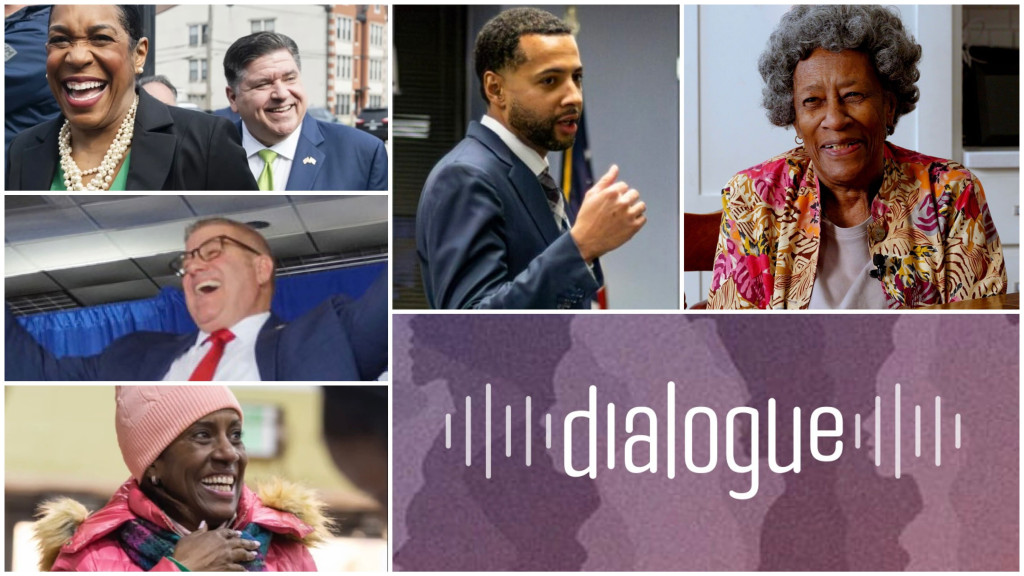
Transcript: Primary results are in, Urbana welcomes new council member, and meet a Central Illinois early education pioneer
Dialogue
Primary results are in, Urbana welcomes new council member, and meet a Central Illinois early education pioneer
Read the full story at https://will.illinois.edu/tags/primary-results-are-in-urbana-welcomes-new-council-member-and-meet-a-central-illinois-early-education-pioneer.
Transcript
Kimberly Schofield  00:00
Hi from Illinois Soul, this is Dialogue. I'm Kimberly Schofield. I host Morning Edition on WILL, AM, 580, Illinois Classical FM, 90.9 and Illinois Soul FM, 101.1

Reginald Hardwick  00:26
I'm Reginald Hardwick, news and public affairs director at Illinois. Public Media. Dialogue is an exchange about culture straight from the soul.

Reginald Hardwick  00:44
Well, Kimberly, the election matchups are set.

Kimberly Schofield  00:46
Yes, indeed. We're going to spend a few minutes looking at who is advancing to the November election after the Illinois primary. On March 17, Illinois could be on track to have its fourth Black US Senator.

Reginald Hardwick  00:59
Illinois Lieutenant Governor Juliana Stratton has eked out a stunning win as the Democratic nominee in the race for US Senate. Stratton spent much of the campaign in the back draft of Congressman Raja Krishnamoorthi, who spent more than $25 million in ads that began airing in July. But as Mariah Woelfel reports, Stratton closed the gap in the final weeks with the help of progressive heavyweights and won about 40% of the vote.

Mariah Woelfel  01:29
Supporters at Stratton's election night watch party at a film studio on the west side were jubilant as she walked onto the stage to claim her victory.

Julianna Stratton  01:38
I am humbled and honored to stand before you tonight as your Democratic nominee for the United States Senate.

Mariah Woelfel  01:51
Stratton thanked God her supporters, her late father, who died while she was on the campaign trail. And she even thanked her main opponents, Congressman Raja Krishnamoorthy and Congresswoman Robin Kelly, but she saved no grace for President Donald Trump. Some supporters wore stickers that disparage Trump using a four-letter word that starts with an F. Stratton built her campaign around fighting what she sees as Trump's authoritarian agenda, and she says around courage,

Juliana Stratton  02:22
courage inspired me to run. Courage powered this campaign, and courage will bring this fight straight to Donald Trump's door.


Mariah Woelfel  02:35
Stratton positioned herself as the progressive in the race, relative to the more moderate, Krishnamoorthi, and reminded supporters, some with tears in their eyes of her key campaign promises,

Juliana Stratton  02:45
We will fight for Medicare for all. We will fight to abolish ice. We'll fight for a real living wage, not just the bare minimum.

Mariah Woelfel  03:00
Stratton's victory night wouldn't have been complete without an appearance from Governor JB Pritzker, her most visible cheerleader. Pritzker had a lot riding on the race. He lent his political prestige and his seemingly bottomless bank account to Stratton, spending $5 million in the final weeks of the campaign to help deliver her win.

JB Pritzker  03:18
A lot of people, a lot of people have suggested that this was personal to me. They were right. It was.

Mariah Woelfel    03:29
At a river North watch party, a somber Krishnamurthy conceded a race pundits once thought he'd win as he congratulated Stratton.

Raja Krishnamoorthi  03:37
Obviously, this is not the result we sought, but unlike Donald Trump, I'm not going to question the outcome.

Mariah Woelfel    03:43
Krishnamoorthi spent $25 million on TV ads that first began airing nine months ago, so his second place finish calls into question the real value of flooding viewers with ads early and often, Kelly wound up as number three in the race, and her loss puts an end to her 13 year career in Congress since she stepped down from her seat to run at the South Shore Cultural Center, she appeared before supporters and struggled to explain her loss.

Robin Kelly  04:11
There's reasons good people don't win. Good people don't run, unfortunately and good people don't stay in because it is hard to be, especially in Illinois, unowned, unbossed.

Mariah Woelfel    04:28
Back at Stratton's watch party, the Democratic nominee was already gearing up for the next challenge, beating Republican Don Tracy in the general election.

Juliana Stratton  04:36
We will confront new challenges and new attacks from a candidate unfit to stand up to Donald Trump.


Mariah Woelfel   04:44
Tracy, the former chair of the Illinois Republican Party, says he's prepared for an uphill battle.

Don Tracy  04:50
You're likely to hear Julianna Stratton call us extremists, because Democrats don't have any other playbook, and they're going to make the election about President Trump

Mariah Woelfel    04:59
His playbook for the November general election is proving that Trump and the Republican brand are not political liabilities in a deep blue state like Illinois.

Reginald Hardwick  05:10
That was Mariah Woelfel reporting. If Stratton is successful in November, she would become Illinois' fourth black US senator. The first was Carol Moseley Braun, who was elected in 1993 and served until 1999.

Kimberly Schofield  05:24
The second was Barack Obama, who began serving as US senator in 2005 he resigned when he won the US presidency three years later. That paved the way for Roland Burris, an attorney who was appointed to serve the rest of Obama's term from 2009 to 2010.

Reginald Hardwick  05:41
the story that just aired referenced Robin Kelly, who represented the second congressional district, which runs from the south side of Chicago along the Indiana border to parts of Champaign and vermilion counties. Kelly stepped aside for her now unsuccessful run for Senate.

Kimberly Schofield  05:57
At least eight candidates competed for the Democratic nomination, including Jesse Jackson, Jr, who was first elected to the seat in 1995 he resigned in 2012 after pleading guilty to wire and mail fraud for misusing $750,000 in campaign funds. But that come back story was not to be. Jackson lost to Cook County Commissioner Donna Miller, here's what she told ABC 7 after being declared the winner,

Donna Miller  06:24
I had a record to stand on. He's not the only person who had a record. I have a record. I've been out in the community. Like I said. I have things that I can do that I've already put in place. I have five pieces of legislation ready to go once I get to Congress. People want to hear about someone who can do things, and we don't want to. We didn't want to visit the past, revisit the past, and I represent the future.

Kimberly Schofield  06:44
There was only one Republican candidate in the second congressional district, truck driver Mike Nowak will face Miller in the November election. In the 13th congressional district, Democratic incumbent Nikki Budzinski will face Republican challenger Jeff Wilson, who is a member of the Champaign County Board. And in the 15th congressional district, Republican incumbent Mary Miller is facing Democratic challenger Jennifer Todd from Effingham

Reginald Hardwick  07:07
Down state farmer Darren Bailey has won the four-way Republican nomination for Illinois Governor. The former legislator and conservative firebrand will go head-to-head with Governor JB Pritzker for a second time in November. Mawa Iqbal has more.

Mawa Iqbal  07:23
It's Deja vu for Illinois voters who remember the June 2022, primary elections back then, Darren Bailey trounced five opponents in that contest for the GOP nomination, and now he's won again, but he's learned a few lessons.

Darren Bailey  07:37
This time. I will listen to everyone, Republicans, Democrats and independents alike.

Mawa Iqbal  07:43
Bailey, who touted President Trump's endorsement and called Chicago a hell hole four years ago, had rebranded his campaign to focus more on, quote, kitchen table issues like affordability,

Darren Bailey  07:55
property taxes are driving seniors out of their homes that they built, families out of communities they love and people out of Illinois altogether.

Mawa Iqbal  08:03
In Tuesday's primary, Bailey beat DuPage County Sheriff James Mendrick, video gambling mogul Rick Heidner and Ted Dabrowski, former president of conservative think tank wire points, who finished the night in second place, the goal of defeating Pritzker and destroying the quality of life in Illinois has not changed. To do that, Bailey will have a tall order November, when he faces governor, JB Pritzker, who is running for a historic third term.

JB Pritzker 08:28
It appears the Republicans have again nominated Darren Bailey as their candidate for governor. Remember him. Bailey wants to be the Donald Trump of Illinois,

Mawa Iqbal  08:41
The billionaire Democrat, is trying to portray Bailey as quote too MAGA for Illinois,

JB Pritzker  08:46
he wants to take away a woman's right to choose. He wants to continue the Trump tariff taxes on groceries.

Mawa Iqbal  08:54
Pritzker ended last year with more than twenty-three million in his campaign fund, compared to a meager 35,000 in Bailey's account. Beyond that, Bailey lost Cook County by more than 700,000 votes in 2022 and four out of five collar counties. To avoid Deja vu in this general election, Bailey says he plans to spend the next five months campaigning in Chicago. I'm Mawa Iqbal.

Kimberly Schofield  09:28
Urbana City Council's newest member says he'll focus on affordability and opportunities for young people. IPM student newsroom's Knox Minot has this report from the Council meeting on March 9.

Knox Minot  09:39
The council appointed Champaign native Virdell Jones, the third to represent Ward four. Jones graduated from Central High School and attended Indiana University, where he played basketball. He's now a firefighter in Champaign and leads a nonprofit company that uses sports to mentor young people. Jones says he wants to work on issues like affordable housing education and hold leaders accountable.

Virdell Jones
I mean, I'm a true believer that, you know, you don't ask for change. Be the change. Now we're an opportunity to be the change. And you know you really can march all you want, but unless you have a seat at the table, it's real changes that happen.

Knox Minot
Jones was appointed by Urbana Mayor Deshaun Williams, who tells IPM he chose him for his heart, for service and personal relationship with the CU area. The seat filled but Jones has been vacant since February when Jaya Kolisetty resigned after moving out of Ward four. I'm Knox Minot. IPM news,

Reginald Hardwick  10:29
An Illinois commission focused on studying reparations for Black residents has released its first report exploring how the state has harmed African Americans. The nearly 300-page report outlines the policies and legal systems in the state that excluded descendants of enslaved people. Amanda Lewis directs the Institute for research on race and Public Policy at the University of Illinois Chicago, which helped put together the report. Lewis edited the education section and said Illinois has never reckoned with how much it has limited black access to high quality education.

Amanda Lewis 11:06
We have never provided equitable educational opportunities in the country or in the state. And so, it's one of those things where, where we just, at some point, decided to kind of have a historical amnesia about all that and just decide, well, things are different now.

Reginald Hardwick  11:23
Lewis says one example in the report is the long and incomplete effort to desegregate schools in Peoria. She says the state's K through twelve funding formula is a good start, but it does not take race into account or make up for the history of unequal funding. The reparations commission is now considering what it should recommend lawmakers do next.


Kimberly Schofield  11:56
We'll have some more stories in our next segment, including a local event giving children artistic expression and a new grant focused on preserving black churches.

Reginald Hardwick  12:05
But first, change makers exist all around us, and sometimes we don't even know it. Dr Jean Morris' story begins more than 90 years ago along the Sea Islands of South Carolina, where she watched her mother leave early each morning to go to the one room schoolhouse to start a fire to warm and feed the children she taught.

Kimberly Schofield  12:27
Later, she came to Central Illinois to dedicate her life to education and equality. Tinisha Spain introduces us.

Tinisha Spain  12:36
Dr Jeanne Morris is living black history. You may not know her by name, but she has been making big changes in central Illinois since the sixties. Here is our conversation. So, let's start at when you first arrived in Bloomington, normal area. Was that 1966 Yes. So tell us, tell me a little bit what that was like.

Dr Jeanne Morris 13:03
Well, of course, we came and had to find housing, and that was a difficult situation. We hadn't been married that long, but it seemed like a nice place to be, and neighborhoods look nice, and children adaptable. So we thought this would be fun.

Tinisha Spain  13:24
Education was your passion. You knew that when you were in school, what led you down that path, what made you want to get involved in education? My mother and tell us a little bit about her, because she's got an amazing story of her own.

Dr Jeanne Morris 13:36
Yes, well, she was a leader of education for Negroes in the south, and particularly for the young children coming through. She had gone to Avery Institute, which was the primary Quaker training school for teachers, African American teachers, and as my brother and I, who were born in Mount Pleasant, grew older, we were sent to that school because we wanted to get the same kind of training that my mother had

Tinisha Spain  14:13
had, so she knew that that was important and kind of was instilled in you. Yes, what did your mom teach you about education.

Dr Jeanne Morris
What was it? Get it right?


Tinisha Spain  14:25
What was it about that that that I don't know, seemed like the right ticket or the right move or right opportunity, but what was it about education that your mom instilled in you?

Dr Jeanne Morris 14:35
Well, it's what she's telling all the children, is that the more you learn, the better you are, because your whole being profits from what your education can bring you, you know. And so she said to us, when she said to her kids in school, learn this so you can read and you can. Read. You can read what you need to read.

Tinisha Spain  15:03
And that legacy continues on, because there's a community center that's in your mother's honor. The schoolroom where she taught is now a museum. So that legacy is still there. Yes, all right, so here we are. You've moved to Bloomington. Your husband, tell us a little bit about him. He was a mathematician or a professor of math.

Dr Jeanne Morris 15:24
Well, we both went, because the older schools we go to historically black institutions. I went to Spelman, which is the companion to Morehouse College, which is the male school. My brother went to Morehouse, and so I followed, and I went to Spelman. He went to Hampton.

Tinisha Spain  15:48
Now, how, how long were you guys a couple before you got married? Were you dating a long time? Did you date all the way through college?

Dr Jeanne Morris 15:56
No, we went, you know, we were, I live at Westminster, where we met at a place just like that, which was owned by the principal at a southern High School. And they owned this place in New Hampshire, and they would hire kids from the traditional legal college just to come up and work in the summer. And we met up there. And of course, I was a music major, and Charles had a beautiful voice. So we got together with music, you know, so we would go all to the town, singing and showing off. He had a beautiful voice. And so we I spent three summers up there, and I think he spent four. It was a great life. Some of it was difficult, but we were happy that we worked together to accomplish most things, and we had two lovely children, and we worked to bring them up in good environments and see that they got the best

Tinisha Spain  17:02
so let's, let's cut back to the sixties. I read that you were instrumental in helping black students find off campus housing at a time where it was not readily available to black students.

Dr Jeanne Morris 17:17
Well, it wasn't even available on ISU campus.


Tinisha Spain  17:20
Okay, so tell us a little bit about the history. Well, how you came to get involved?

Dr Jeanne Morris 17:23
Well, there were several people with whom we connected that had the same feelings that we have. And we bought houses with this group of friends from Bloomington, Illinois, white friends, and we rented two students, and I became kind of like the house mother, but you know, it was, it was a good feeling, because you had somebody that needed help, and you could give them help, and they were trying their best, because at the time that we did that black students couldn't stay on campus.

Tinisha Spain  17:58
Oh, they couldn't stay on campus. So if I'm a student in blooming, let's say I didn't live here. I mean,

Dr Jeanne Morris 18:05
you had to have housing somewhere interesting or and it was very limited, very limited. Wow.

Tinisha Spain  18:13
And so doing that sort of group economics, you guys were able to put together some money buy houses, and that is how black students began to find housing on campus,

Dr Jeanne Morris 18:25
and then housing. Then, of course, Charles, being at the university, he worked on it from that point, so it opened up to

Tinisha Spain  18:33
so when you first got here, the civil rights movement was still kind of in its infancy. Did you feel that? Could you feel, you know, aside from the housing, but just with your white co workers counterparts, did it feel like the civil rights movement was still hot, still brewing, still

Dr Jeanne Morris 18:53
still trying, still trying, still trying? Yes, because it was that way in the stores. You know you had to wait to get served, but I felt that change was coming and you can't sometimes some change has to be forced and some has to be tolerated until the time is right.

Tinisha Spain  19:16
You played a big role in developing early childhood education. Does that hearken back to your mom and your days in South Carolina, or where did your inspiration come to work with the littlest students?

Dr Jeanne Morris 19:30
The University of Illinois, where, where I went to, where we were in school over there, Lillian Katz and Bernard Spodek, and the main leaders of early childhood education in the country were there, and they talked all about the hope of the world and young children.

Tinisha Spain  19:52
It was something about having a hand in that influence that was going to shape future generations. Yes, yes, yes. I. What did that feel like? Because I'm sure at the time, it felt very different, like I think of Ruby Bridges. You know, that first day had to have been terrifying. But now, when she looks back at pictures of herself, there's got to be an immense pride, Wow, I did that. I was part of that. I was one of the first so do you have that same feeling where it was? Were you scared then and proud now? Or what were some of those feelings?

Dr Jeanne Morris 20:27
I don't know how else to say it. That's very good, but I don't know that I was I don't know that I was frightened, except that I hope that it worked and that I choose the right things to do to make it work.

Tinisha Spain  20:46
Did you ever come home in the evenings and have discussions with your husband, of you know, not feeling enough, or maybe the fight was too big one day, or even in the in the face of how finding housing or helping students find housing. Was there ever a time that the fight just seemed too big,

Dr Jeanne Morris 21:05
I'm sure, you know, I don't remember that we had any big explosions. But we decided, yeah, you know, this is going to be tough, but somebody's got to do it, and it has to be done. And we can do this, you know? And we decided what, what part I would play, and what part he would play. And some, some, sometimes mine worked better than it just depends on the situation. But, yeah, we struggled with that and but we, we found good ways to do it.

Tinisha Spain  21:45
Let's talk about Dr, dr Charles Morris. Tell me some of your fondest memories of him.

Dr Jeanne Morris 21:55
Well, he was very quiet, but very demanding in many ways. And he could, he could sell you on an idea that you may not have had, but it was very serious about life and about giving to the world some kind of, all kinds of gifts that will make the world a better place. And he did that. He did that a lot

Tinisha Spain  22:24
when you think about education, and I, I don't want to make it sound like it's just a black or a white children issue, but when you guys were getting into this, did you see a disparity in the education that white students versus students of color were getting here.

Dr Jeanne Morris 22:45
Or did it matter? Well, it mattered, and in fact, it mattered all along, because one of the things that my mother would said, they'd give, you know, the kids and my mother was a rural school teacher, but they give the used books from the white kids to the black kids, and she says she finally said to the book distributor, how am I supposed to teach them to take care of books when The books that they get already damaged so badly you can hardly use them. Where is the books to learn if I and she finally said, If I can't have new books for my students, I don't want any at all, because I can't teach them how to take care of books with the books that they get. And so that that led to change and, and that's true of any anybody. You don't give them dirty clothes to put on. You get them clean and put them once like, you know, don't get them too dirty. So that matters, that matters, that matters. And so she caused a big change in that, that they don't bring me these books, that I can't teach the kids how to take care of them because they're in such bad shape. Bring me new books, and I will preserve them the best I can. And she and all the teachers did,

Tinisha Spain  24:20
what does it make you feel like? Or, what do you think if I were to say, you are black history? What is that? Well, who is it?

Dr Jeanne Morris 24:31
Who is it? History is what you have done. It is not that you've done good. They're gonna, they're gonna remember. It's history, you know. So who isn't? All of us are part of history.

Tinisha Spain  24:54
Well, how do you feel if I say you have influenced history?

Dr Jeanne Morris 24:59
Who hasn't? Touche, who hasn't, if I've been a positive influence, I'm happy.

Adrien Brody 25:19
And the Oscar goes to Michael B Jordan.

Michael B. Jordan  25:31
You mama. What's up? Y'all know how I feel about my mother and my father's here. Your pops, where you at? My dad? My dad came in from Ghana for Ghana to be here. My brother, my sister's here. My family.

Reginald Hardwick  25:47
That was Michael B Jordan winning Best Actor at the 98th Academy Awards. He played twins smoke and stack in the movie sinners. The film also won Best Original Screenplay, Best Cinematography and Best Original Score. It was up for sixteen awards, making it the most nominated film in Oscars history. One of the most talked about performances in this movie is from blues music icon, Buddy Guy who spoke with NPR Scott Simon back in January.

SCOTT SIMON, HOST:
The blues has stirred and soothed the souls of people for generations and in Ryan Coogler's musical horror film "Sinners," also the souls of vampires. "Sinners" is set in the 1930's Clarksdale, Mississippi, where segregation is the law, and blues is the language of grief and hope.

(SOUNDBITE OF SONG, "CAN'T WIN FOR LOSIN'")

CEDRIC BURNSIDE: (Singing) Oh, Lord, if you condemn me to freedom. I'm chained by the blues. I can't win for losin'.

SIMON: After vampires appear one day, people of color in the town must band together to survive. "Sinners" is on the short list for the Oscars. It has also received a number of Grammy nominations. And one of the stars of the film is the blues legend Buddy Guy.

BUDDY GUY: You know, it was a surprise to me that this came to me, and I'm still trying to keep the blues alive. So I said whatever will help the blues a lot, not just Buddy Guy, these young people. See, I was influenced by blues by listening to the greats that are no longer with us, Muddy Waters. When you had your AM/FM stations, they played everybody's music - gospel, jazz and blues. Now, unless you got satellite, you don't hear nothing about blues. They don't play that highly on the radio no more. So my grandkids, other people's grandkids, they didn't know. And when the movie came out - I've been going to this grocery store for 40 years, and this lady been waiting on me. And I walked in, and she starts screaming. I said, what's wrong with you? You in a movie. And that's when she recognized I was a blues player, 'cause I don't go in and say, hey, here's Buddy Guy.

SIMON: Yeah.

GUY: I just sit back, you know, and just try to be a normal person.

SIMON: Mr. Guy, I mean, you're, like, the most famous blues musician in the world right now.

GUY: Well, I don't know about that. The famous ones' no longer with us. And thank God I had a chance to meet them before they got ill and passed away. And we used to have conversations about who'll live the longest. Please try to keep the blues alive. Because most of them didn't make a decent living playing the blues. You played the blues when you was somehow (ph) - Fred McDowell, Arthur Crudup and people like that, even before them. They just played the music, having fun in Louisiana - called Saturday night fish fries - and a jug of wine. And you played - if you play good enough, you got you a good-looking girlfriend and a hangover the next day.

SIMON: Well, that's well said.

GUY: (Laughter).

(SOUNDBITE OF SONG, "TROUBLED WATERS/HOMESICK")

OG DAYV: (Singing) Hmm, that sacred ground. I was lost, but then I found in the shadows, an abandoned home. But the soil was drenched in blood.

SIMON: "Sinners," as I don't have to tell you, is a horror film set in the 1930s. The 1930s were a kind of horror film for many Black Americans, weren't they?
GUY: Yeah. I guess so, you know, 'cause I was born in 1936. From all the information I've got from some of the older guys, they said they got the blues by listening to people moaning and groaning and working in the fields.

(SOUNDBITE OF SONG, "TROUBLED WATERS/HOMESICK")

DAYV: (Singing) Hmm, I pledged my life to glory. I studied every word. I walked into the valley with a Bible in my nerve.

GUY: The white people where I grew up in Louisiana - you know, if a Black guy knew how to swim better than anybody else, they didn't want to give him credit for that, but if he teach somebody else white how to swim like them, then they got the credit. You know, so my name got bigger after the British come back to Chess Records and said, do you know who that is playing them licks behind Muddy Waters, Howlin' Wolf, Little Walter? That's a Buddy Guy. And they say about six months before Leonard Chess passed away, he sent Willie Dixon to my house - say, go get him. And Leonard Chess bent over and said, I want you to kick me in my butt. I say, for what? And he'd say, you been playing this all the time, and we didn't have sense enough to know it was that good.

SIMON: How does the blues make you feel?

GUY: Well, (laughter) you should see me get a standing ovation when I answer this when I'm on the stage, man. Do you know when I play, I don't play for me. I watch you or somebody else. And they sit there and stare at me with a frown on their face. If I hit the right note, a smile instead of a frown. And that's what I tell people each night before I go to the stage. I say, I know some of you all got a frown on your face, but I'm going to try to hit a note to take that frown off your face.

SIMON: (Laughter).

(SOUNDBITE OF BUDDY GUY SONG, "TRAVELIN'")

SIMON: The film's soundtrack has been nominated for several Grammys.

GUY: No. I didn't know that. You know what? I don't never listen to somebody when they say I got something to do with it. I like to be surprised, so this is the first time I'm hearing this from you, you know? 'Cause that makes me - I feel a little goose bumps on me now.

(SOUNDBITE OF SONG, "TRAVELIN'")

GUY: (Singing) Travelin'. I don't know why in the hell I'm here.

SIMON: Buddy Guy, what can we learn from the blues, do you think? How can it make our life better?

GUY: Just listen to the lyrics (laughter). I don't want to get into the politics to you, man. But if you listen to the lyrics that was sung before me a hundred years ago, it'll remind you what you're going through now. Ain't nothing changed with, like, you can do me wrong, but I'd like to be done better. My biggest record - I wrote it - called "Damn Right, I've Got the Blues." And I love sports, and I never did learn how to shoot pool, and I knocked the eight ball out of the pocket...

(SOUNDBITE OF SONG, "TRAVELIN'")

GUY: (Singing) I don't know why in the hell I'm here.
...And the guy started laughing at me. He said, man, you see what you did. I said, why don't you play some guitar? I said, you damn right. I got the blues. I knocked the ball out of the pocket. And the producer said, that's what we're going to name the album. And they named the album "Damn Right, I Got The Blues."

SIMON: Buddy Guy, who appears in the new film "Sinners." So good to talk to you, Mr. Guy. I've been looking forward to doing this for years.

GUY: Well, thank you very much. I'm going to do this as long as I can, 'cause, you know, this year I'll be 90 years old. And when you get that old, you can - you need help to the stage. But as long as my fingers can move a little bit, I still think I'll play as long as I can. And if you can't give people what they pay for, it's time for you to get the hell out of the way.

(SOUNDBITE OF SONG, "PALE, PALE MOON")

BRITTANY HOWARD: (Vocalizing).

Reginald Hardwick  33:06
There's a new plan to end homelessness in Champaign County, and we'll take you to an annual event in Rantoul giving children an outlet for artistic expression,

Kimberly Schofield  33:16
Plus, a new grant is focused on preserving black churches, all that and more when Dialogue from Illinois Soul comes back after this break.
Transcript Assistance
Illinois Public Media may use AI assistance for transcript generation and/or formatting. Transcripts that have not yet been reviewed for accuracy will be labeled.
To report a transcription error, or to request transcription of archival material, please contact will-help@illinois.edu.