








Transcript: Remembering Miles Davis and his musical genius on his 100th birthday
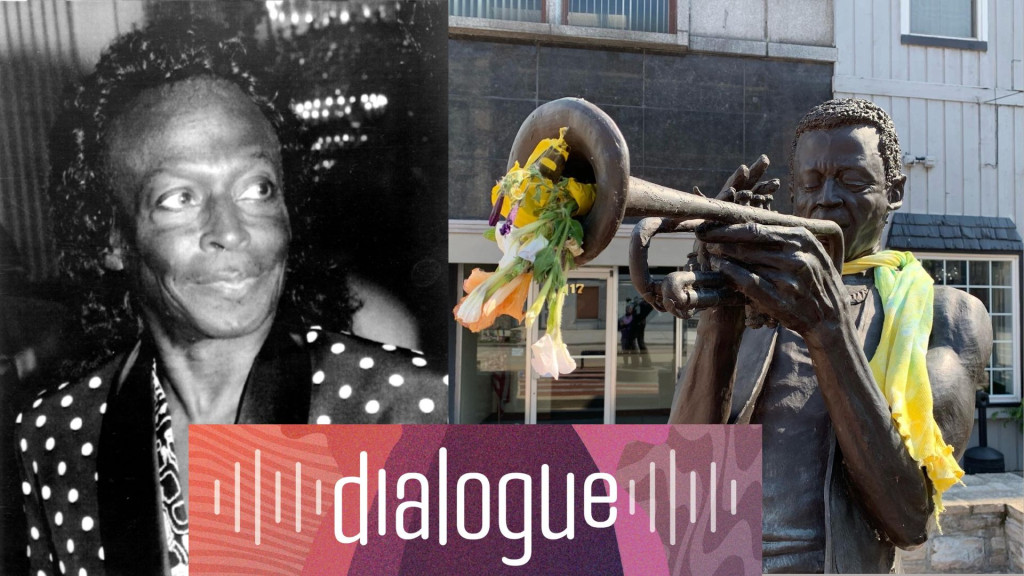
Transcript: Remembering Miles Davis and his musical genius on his 100th birthday
Dialogue
Remembering Miles Davis and his musical genius on his 100th birthday
Read the full story at https://will.illinois.edu/tags/remembering-miles-davis-and-his-musical-genius.
Transcript
// This is a machine generated transcript. Please report any transcription errors to will-help@illinois.edu.

[00:00:00]
Reginald Hardwick: From Illinois Soul, this is Dialogue. I'm Reginald Hardwick, news and public affairs director at Illinois Public Media. Dialogue is an exchange about culture straight from the soul.

You're listening to "So What," released by the legendary jazz musician and composer Miles Davis in 1959. It was part of "Kind of Blue," one of the best-selling jazz albums of all time.

May 26, 2026, would have been the 100th birthday of Miles Davis, a man raised in Illinois who would grow up to change the course of music several times. In 2020, I produced a segment of our weekday talk program "The 21st Show" that remembered Davis. Host Brian Mackey started by talking with Miles Davis' son Erin and Vince Wilburn Jr., nephew of Miles, and also served as bandleader and drummer in the Miles Electric Band. Let's take you back.

[00:01:15]
Brian Mackey: Erin, I want to start with you. Your father was born in Alton, Illinois, but grew up in East St. Louis. What did he tell you about his childhood? When and where did he find his love of music?

[00:01:25]
Erin Davis: When did he discover his love of music? I think early on. I think his parents wanted him to play music. His mom wanted him to play violin, right? And he said his dad overruled her. He got a trumpet.

[00:01:43]
Brian Mackey: Man, imagine how differently the world would be if he had taken up the violin instead of the trumpet. So eventually he goes to the Juilliard School in New York City. Erin, I wonder, how did that time in his life help shape his music?

[00:01:57]
Erin Davis: Well, I mean, in my opinion, that time in his life, when he went to Juilliard — he really got into some of the classical stuff, because, obviously, they weren't teaching jazz back then, so he was just diving into all the charts and scores of all those great composers and seeing what they're doing from the inside out. And then I think when he got what he wanted, he's like, well, all the stuff I really wanna learn is down there with Diz and Bird. He was just getting more out of that.

I watched something on YouTube last night where he was talking to Marcus Miller back in the '80s on "Night Music," on David Sanborn's "Night Music" show. And he said he wanted to quit every night with those guys, but obviously he was getting so much out of that, you know what I mean? Like, what did he say — that they played ahead and left him up there.

[00:02:50]
Vince Wilburn Jr.: Yeah, yeah, one of his first gigs with Bird was — they didn't have a trumpet player, somebody couldn't make it. And so they said, well, Bird, who do you see who's gonna play trumpet tonight in your band? He pointed at Uncle Miles, and Uncle Miles was looking around like, who, me? It's in the documentary too.

[00:03:06]
Brian Mackey: Yeah, and for people who aren't familiar — Bird is, of course, Charlie Parker, the great saxophonist, and Diz is Dizzy Gillespie. And I think that's like half his education in New York, right? So he spends the days at Juilliard, but then at night he's playing with these jazz legends.

[00:03:21]
Vince Wilburn Jr.: Yeah, yeah, yeah, I mean, yeah, yeah, hanging out.

[00:03:24]
Brian Mackey: So from cool jazz to bebop to hard bop jazz, Miles' compositions, his trumpet playing and orchestral arrangements were legendary. And Vince, I wonder, what was it like to play music with your uncle?

[00:03:36]
Vince Wilburn Jr.: I refer to it as Miles Davis University. You just had to be on your toes every night. I mean, even though we had a set list, there would be variations in the setlist every night, because what he did — he would listen to the concerts. He had board tapes, cassettes from the house, from the mixer. And he would critique and change things, and he'd have us come up to his room. And he'd add or take away things he heard in his head, and then we'd try it the next night. So that's how the tour developed, and the songs would take shape and move around — and like what did Lenny say, an amoeba, you know.

But he had that knack for knowing — and he would know how to shift the concert, shift the songs during the concerts, you know, cut them off, go to the next song, put something else in, change the setlist. It was amazing.

[00:04:31]
Reginald Hardwick: In 2020, a documentary called "Miles Davis: Birth of the Cool" debuted on PBS. Here's what [Herbie] Hancock, another jazz icon who was born in Chicago, said about working with Miles.

[00:04:45]
Herbie Hancock: Miles wanted us to live on the stage in front of the people, creating in front of the people. In other words, don't lean on what you know. What he was looking for is the stuff that you don't know.

[00:05:00]
Reginald Hardwick: That was a clip from "Miles Davis: Birth of the Cool," a documentary that aired on PBS six years ago. If you have a favorite tune of Miles Davis, leave me a voicemail at 217-244-1989. Again, 217-244-1989.

Today on Dialogue, we're talking about Miles Davis, who would have turned 100 years old on May 26, 2026. Let's get back to a recorded conversation on "The 21st Show," which I produced back in 2020, with Miles' son Erin and his nephew and bandleader [Vince Wilburn Jr.], talking with Brian Mackey.

[00:05:37]
Brian Mackey: Vince, you were a drummer in his band. Do you have any distinct memories of crowd reaction to his playing?

[00:05:45]
Vince Wilburn Jr.: Just when he would walk on stage, everybody would — you know, it was like you could hear it, you could feel it. And when you could really kind of vibe it. From the first downbeat, the second song was a ballad, you know, it's a blues. So when you can hear the muted quietness of the audience, it was like they were in a trance. And he had a wireless, so everywhere on stage he would go, the audiences' faces would shift and follow him, like the Pied Piper. It was amazing to see that Uncle Miles would have a spell, so to speak, over the audience. That was incredible.

Then I remember one concert at Giants Stadium — it was Amnesty [International's] Live Aid. I think it was about 70,000 people at Giants Stadium. And it's like a sea of people, and Uncle Miles had everybody focused on him. I mean, it was just numerous concerts — and Erin can attest to this, absolutely — everywhere all over the world. He had that magic, that aura.

[00:07:13]
Brian Mackey: Miles Davis was not shy about talking about the Black experience in America and around the world. And we're going to listen to an excerpt from "60 Minutes" about an exchange he had with a teacher at Juilliard when she tried to explain the connection between Black people and blues music.

[00:07:29]
Miles Davis: I saw a student teacher of mine like that in Juilliard. She started talking about, 'well, you know, the Black people was despondent at night and they say that's where the blues came from.' So I raised my hand and I said, listen. My father's rich, my mom is good looking. And I can play the blues. I never suffered and don't intend to suffer.

[00:07:57]
Brian Mackey: That was Miles Davis on "60 Minutes." In 1959. Davis was beaten by a New York police officer who accused him of loitering in front of the jazz club he was performing at that same night. Pictures of him in bloody clothes are on the internet, and in an interview with Dick Cavett in 1986, Davis talked about being stopped in his expensive cars weekly by police officers who thought he'd stolen them.

Erin, I wonder — despite your father being a world superstar, he still dealt with discrimination and racism. Can you talk about what toll that took on him? And I wonder, what do you think your father being so open about his experiences has to teach the world about the broader Black experience?

[00:08:36]
Erin Davis: Well, I mean, I think he went through more than enough of that kind of stuff, you know, when he was younger and even when he was older sometimes. And I think when he realized that he could go to Europe and get treated like an artist, instead of just a Black musician, or a Black man — it was a whole new experience. And once you get back to America and you have to go through this all again, I think that was probably the hardest part about it. It's like realizing that there are people who see things differently, but they're just not here.

And with me, he always — we did talk about it. He was always making sure that I was aware of what I should be doing, how I should be doing it, what I can expect from the police at times and things like that.

[00:09:39]
Brian Mackey: I was so interested in the documentary pretty early on — I think Quincy Jones talks about the evolution of the music. We were talking about Bird, Charlie Parker, and Dizzy Gillespie and Miles, and that jazz was evolving the way it was as sort of a reaction against the minstrelsy-type music — no smiling and laughing, no grinning, no dancing, no entertaining. That's what Quincy Jones said in the documentary. Can you talk about that, how that influenced the music, that sort of anti-reaction, or reaction, to what had come before?

[00:10:13]
Erin Davis: You know, he really, really frowned on that minstrel-type stuff, man. And that's probably — it's not something I had to grow up with, so I don't really, can't really speak on what that feels like. But just from the stuff I saw in the documentary, that must have been rough. You know, you're trying to get your ideas across musically, and you're thinking on the same level as [Stravinsky] — or, you know, whoever you wanna name — and you gotta deal with this minstrel stuff. You don't get taken as seriously that way. I'm glad I didn't have to come up with that, man.

[00:10:58]
Brian Mackey: And Vince, in the 1970s, '80s and '90s, jazz's popularity — at least as a sort of mass popular form of music — is lessening. Miles Davis' innovation keeps going, and you're a bandleader in the Miles Electric Band. When you're playing with him, can you talk about how he adapted as music fans turned to rock and disco and other forms of popular music?

[00:11:23]
Vince Wilburn Jr.: Well, you gotta figure the way his mind worked. He didn't — he was always evolving, so he wasn't gonna play "Stella by Starlight" in 1970, or "Bye Bye Blackbird." When the times changed, he changed, but he was ahead of the curve. Always ahead of the curve, always thinking about advancing the music. Or if there was a ballad — he wanted his interpretation of "Human Nature," his interpretation of "Time After Time," "Someday My Prince Will Come" — you know, I just use those three songs. But his mind was always pushing the music.

I think Herbie Hancock's first time he ever played an electric piano was with Uncle Miles. They never saw an electric piano before. But it's not surprising because that's the way his mind worked. He called his music social music, so he was always trying to change and evolve and stay a step ahead of the curve. That was just Miles. He didn't set out to be a rock musician. He wanted his music to reach as many people as he possibly could, and that's what happened.

[00:12:56]
Brian Mackey: And Vince, what do you think Miles would think of today's music?

[00:13:01]
Vince Wilburn Jr.: I don't know what you think, cause some things he would probably dig and some things he wouldn't.

[00:13:07]
Erin Davis: Yeah, I mean, there's always gonna be somebody that he's gonna be like, oh, you gotta hear this. But I mean, the vast majority of the stuff that's on the radio has been played for the last 40 years, so I don't think there's gonna be too much new stuff that he's gonna be excited about on the radio. But there'll be somebody out there, sure, somebody doing something. I don't wanna start saying who I think he would like, but I know there are definitely some acts out there.

[00:13:33]
Vince Wilburn Jr.: Erin, tell the story about the drummer when you were looking at TV. And the drummer — he thought he was cool.

[00:13:41]
Erin Davis: I was watching — this is like back in the '80s — I was watching MTV. And I think it was a Slayer video on, and he came down. And I was like, oh, you're probably gonna hate this. And he walked by and he kind of looked at it for a second. And he said, damn, the drummer's really laying it down, huh? And he just walked away.

[00:14:03]
Brian Mackey: That's pretty cool. Miles Davis and Slayer. I don't think people would have expected that.

[00:14:08]
Vince Wilburn Jr.: He kept an open mind.

[00:14:11]
Brian Mackey: So we're coming to the end of our conversation here, just about a minute left. Erin, I wonder, do you have a favorite work by your father?

[00:14:19]
Erin Davis: Oh, well, it's funny you say that because it usually changes week by week or whatever. And this week — we've been looking at a lot of his music, looking at celebrating his birthday today. And for me today, my favorite track right now is called ["Sivad"] from "Live Evil." It's just an amazing live track with Michael Henderson on bass, and it's just killing.

[00:15:07]
Brian Mackey: And Vince, same question to you. What's your favorite work by your uncle and bandmate Miles Davis?

[00:15:12]
Vince Wilburn Jr.: Well, OK, so you can't have a favorite. Well, three favorites. We just received a plaque for ["Kind of Blue"] — 5 million now. So that's the largest jazz record of all time, so that's still a go-to. But I've gotta agree with my cousin — ["Agartha"], you know. That was recorded in Japan with Mike and those guys. That's like, woof, you know. And then "7 Steps to Heaven," cause I was talking to Ron Carter the other day and we were talking about that. So I have three that I rotate — like meditation every morning, you know, and then I get on with my day. So sorry, I don't have one.

Brian Mackey: Fair enough, fair enough. That's my three go-to's.

[00:16:15]
Reginald Hardwick: You're listening to Dialogue from Illinois Soul. I'm Reginald Hardwick. And we were playing a 2020 interview that I produced for "The 21st Show," our weekday talk program. Host Brian Mackey spoke with Vince Wilburn Jr., nephew, drummer and bandleader of the Miles Electric Band, and Erin Davis, son of the legendary musician Miles Davis, who would have turned 100 years old on May 26, 2026.

Now let's hear another memorable piece of music, "Milestones." That was "Milestones," a composition by Miles Davis. He, of course, is performing on the trumpet and is joined by other jazz greats Cannonball Adderley on alto saxophone and John Coltrane on tenor saxophone.

Davis was born on May 26, 1926, in Alton, Illinois. He grew up in East St. Louis.

Now let's hear from two other perspectives. Lauren Parks is the president and founder of the House of Miles in East St. Louis. She oversaw the renovation of Miles Davis' boyhood home, which has attracted people from around the world. And Tammy Kernodle of Miami University in Oxford, Ohio. She teaches courses in classical and popular African American music, jazz, and much more. She has a Ph.D. in music history from the Ohio State University. She appeared in the 2020 PBS documentary "Miles Davis: Birth of the Cool." Here's their conversation with Brian Mackey, recorded back in 2020.

[00:18:04]
Brian Mackey: Professor Kernodle, in what ways would you say that Miles Davis' music was transformative?

[00:18:10]
Dr. Tammy Kernodle: I think Miles really helped stretch the definition of the word jazz and shifted it beyond this kind of public consumer culture to a different level of intellectual engagement. You know, he was perhaps one of the most experimental, most creative voices to come out of this idiom that we signify as jazz — constantly shifting and constantly willing to take creative chances that many of his peers were unable to take.

[00:18:51]
Brian Mackey: Lauren Parks, I'd like to bring you into the conversation now. If we were to drive up to 1701 Kansas Avenue in East St. Louis, I wonder, would we hear and see Miles Davis as soon as we pull up to the House of Miles?

[00:19:05]
Lauren Parks: Absolutely. The energy greets you as you pull up, and that's interesting that you say that, Brian, because we've been told that by numerous visitors. We had a young man and his family drive from Louisiana, and we did not know they were coming. We just happened to be working out in the yard, and he pulled up, got out of his family's car and began playing trumpet right in front of the house. And his dad said there was no way that we could take our vacation without stopping by and feeling the spirit of Miles Davis and not have my son play on the very site where Miles grew up. And so that was an incredible testament for us and how this project has motivated, has inspired and has built this huge community — nationally and internationally — and that is what keeps us going and keeps us moving. And we are just so honored to be a part of preserving such a rich, rich legacy and history of Miles Davis and the East St. Louis community.

[00:20:39]
Brian Mackey: What was East St. Louis like when a young Miles Davis was growing up there?

[00:20:44]
Lauren Parks: During the time Miles grew up, East St. Louis was a very hustling and bustling industry town. There were a lot of businesses there in town, of course, including his father's dental practice, which was on 15th and Broadway, which was not far from 17th and Kansas where he grew up. And so East St. Louis was a very thriving community. East St. Louis is rebuilding — in the process of rebuilding — and that is what makes this project inspiring, to be a part of the resurgence and the rebuilding of East St. Louis.

[00:21:30]
Brian Mackey: We're talking with Lauren Parks, president of the House of Miles in East St. Louis. The childhood home of Miles Davis is now a museum to the jazz icon. We're also talking with Dr. Tammy Kernodle, a music professor at Miami University. Professor Kernodle, Miles Davis' music became really popular in the 1950s as African Americans and the civil rights movement were starting to percolate. Can you describe what he and his music represented to Black people at that time?

[00:21:57]
Dr. Tammy Kernodle: I think it embodied the type of radical transgressiveness that we ascribe to the civil rights movement. You know, Miles was never a very open supporter of the movement, but he embodied much of what the movement represented — the resistance to play up to the crowd, his way of envisioning himself as a serious artist, as a composer, as an intellectual, the way that he dressed. All that was a part of his personification as a Black man that really mirrored the rhetoric, the ideology, the progressive politics that fueled the civil rights movement.

And so, while we don't oftentimes associate him with the civil rights movement in the way that we associate Nina Simone or Charles Mingus or Thelonious Monk — who actually performed in some of the benefit concerts that helped fuel the direct action campaigns of the South — in many ways, Miles was embodying in a different space, because of the way that his music was engaged with by white middle America, a place of creating a different reading or context of Blackness.

[00:23:30]
Brian Mackey: And Professor Kernodle at Miami University, you teach about Black music, including hip-hop and other popular forms of current music. And I wonder, other than your jazz students, do young people today know who Miles Davis is, and how do they react to his music when you play it?

[00:23:47]
Dr. Tammy Kernodle: Yeah, very much they react. I am oftentimes struck by the students who will come into class and they will have Miles Davis and all these iconic Black musicians on T-shirts or items of clothing. And when you ask them, are you just wearing that for a fashion statement? Oftentimes they will reveal to you that they don't know — there's been a study of the life, there's been a study of the music. And Miles, in many ways, particularly because he kept experimenting and shifting jazz into contexts that aligned it with other forms of popular music — especially from the 1970s on — many of them became connected with Miles through like "Bitches Brew," or even through Herbie Hancock have come into Miles. So there's a different level of engagement and introduction to him.

So we talk about Miles in my history of hip-hop class, because we talk about the level of experimentation he was engaged in in the latter part of his life, and the last album that he was working on prior to his death, "Doo-Bop." And what did that mean in terms of creating a different instrumental hip-hop aesthetic, right? Because we only wanna center hip-hop in the rap aesthetic. So he's an iconic figure and an iconic musical voice that can be integrated in so many different discussions.

[00:25:34]
Brian Mackey: Yeah, you're speaking to me there directly, because "Bitches Brew" — for people who aren't familiar — is an album that came out in 1970 and has a lot of electric elements. That was my first, sort of my way into Miles Davis' music.

And as we're talking about young people — and we just have, unfortunately, a couple of minutes left in our conversation — Lauren, there at the House of Miles in East St. Louis, part of the goal is to connect young people with the arts. And I understand, before the pandemic at least, the building was a community center of sorts. Can you tell us about some of the activities there?

[00:26:04]
Lauren Parks: Yes, we offer numerous educational enrichment opportunities as well as tours, of course by appointment. We offer the arts. We have a "Movement with Miles" which incorporates healthy living. That's one aspect of Miles that many may or may not know — that he enjoyed boxing. So we incorporate healthy living with our students as well.

[00:26:34]
Brian Mackey: I want to end just with sort of a reflection on Davis' role in each of your lives. Professor Kernodle, you're a musicologist, but I understand you were not allowed to listen to jazz in your childhood home. I wonder if you can talk, again briefly — we're almost out of time — but when did you first hear Miles Davis, and how did it change your life?

[00:26:54]
Dr. Tammy Kernodle: I first heard Miles when I was in college. I grew up in a religious home, and ironically I listened to a lot of funk and soul, country and gospel, but my father in particular had a disposition against blues and jazz. He saw those as the devil's music and never quite understood that. And I really didn't understand it after I — I was surprised to find an 8-track tape of "Kind of Blue" in the basement of my parents' home where they had their record collection. I oftentimes ascribe that to probably my mother and not my father, and I will have to ask her about that one day.

[00:27:39]
Brian Mackey: And Lauren, last question to you. Do you have a favorite work by Miles Davis?

[00:27:45]
Lauren Parks: Yes, "It Never Entered My Mind." That is one of the most soul-stirring songs I've ever heard. So I would say, of course, it's hard to pick a favorite, but that's definitely in the top five for me — let me say that — because, you know, Miles transcends various decades and so his music evolved. From "It Never Entered My Mind" to "Doo-Bop," our students love that song and they love to dance and create dance moves off that song. So I have numerous favorites, but "It Never Entered My Mind" is definitely in my top five.

[00:28:58]
Reginald Hardwick: You've been listening to an interview with Lauren Parks, president of the House of Miles in East St. Louis, the childhood home of Miles Davis, which you can visit. If you want to schedule a tour of the museum, go to our website, illinoisoul.org. We also heard from Miami University musicology professor Tammy Kernodle.

Let's take another listen to a musical moment from Miles Davis, who would have turned 100 years old on May 26, 2026. His version of Michael Jackson's "Human Nature."

Coming up on Dialogue: After one year in office, Urbana Mayor [DeShawn] Williams reflects on progress and future goals. We'll visit a one-room schoolhouse here in the Midwest for Black schoolchildren, and later, Grammy-winning musician Mya discusses her new album "Retrospect." I'm Reginald Hardwick. You're listening to Dialogue from Illinois Soul. Dialogue is an exchange about culture straight from the soul. We'll be right back.

---

**Flags for Human Review:**

- **[00:04:31]** — The host refers to the documentary subject as "Harribie Hancock." The transcript has been corrected to read "Herbie Hancock," but the original spoken name should be verified.
- **[00:05:00]** — The host's outro refers to "Vince Wilb Junir" in the original transcript. This has been inferred as "Vince Wilburn Jr." and corrected accordingly, but the audio should be verified.
- **[00:14:19]** — The song title is rendered as "Savad" in the original transcript. It has been inferred as "Sivad" (a Miles Davis track from "Live Evil"), but the audio should be verified.
- **[00:15:12]** — The original transcript renders the album title as "Kin of Blew it," inferred as "Kind of Blue." The word "it" may be a transcription artifact. Audio should be verified. Additionally, "Agarartha" has been inferred as "Agartha." Both should be verified against the audio.
- **[00:16:15]** — The original transcript renders the professor's name inconsistently as "Cnoole," "Cornuole," and "Knodel." The name has been inferred throughout as "Kernodle" based on contextual research, but should be verified against the audio and confirmed with station staff.
- **[00:21:57]** — The original transcript renders "aniina Simone" — inferred as "Nina Simone" — but should be verified against the audio.
- **[00:23:47]** — The original transcript renders the album title as "bititch's brew," inferred as "Bitches Brew." Audio should be verified.
- **[00:28:58]** — The mayor's name is rendered as "Deshawn Williams" in the original transcript. Corrected to "DeShawn Williams," but capitalization should be verified against official sources.
- **[00:28:58]** — The Grammy-winning musician is identified only as "Maya" with the album "Retrospect." If a full name is available, it should be added for accessibility and clarity.
- **[00:07:29]** — The Miles Davis "60 Minutes" clip contains an unclear passage rendered in the original transcript as "well you know black people po s and at night and they just." This has been flagged with a [pause] notation, but the audio should be reviewed to determine whether any words were omitted or unclear in the original broadcast.
Transcript Assistance
Illinois Public Media may use AI assistance for transcript generation and/or formatting. Transcripts that have not yet been reviewed for accuracy will be labeled.
To report a transcription error, or to request transcription of archival material, please contact will-help@illinois.edu.