What a longer growing season means for Illinois crops
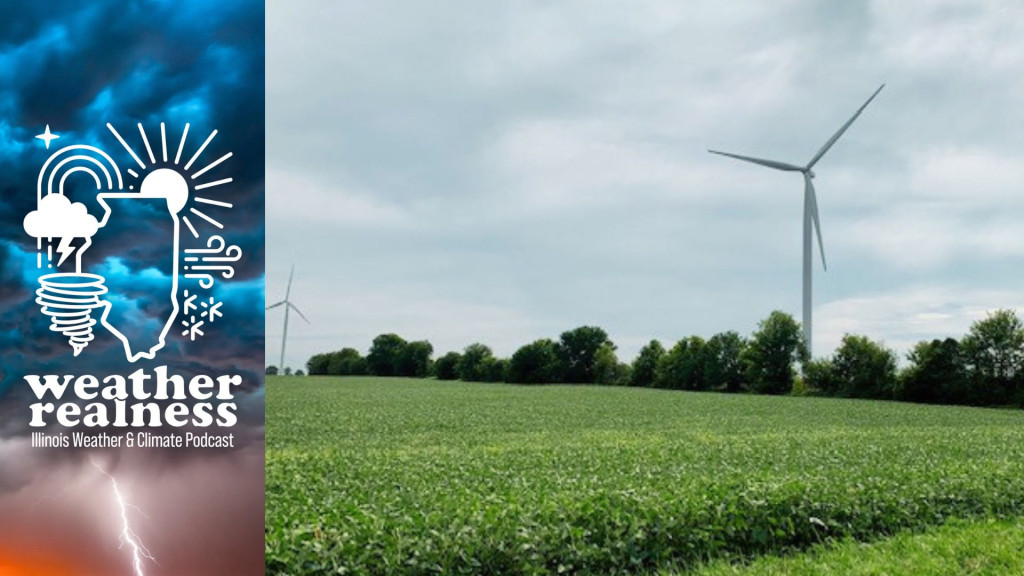
Soybeans grow by a wind turbine on farmland in Vermilion County, Illinois. Reginald Hardwick/Illinois Public Media
Growing seasons are getting longer because of warmer springs and later autumn frosts. Rising temperatures are the culprit.
The average growing season in the U.S. has increased by nearly two weeks since the early 20th century. While this might increase crop production, there are challenges that come along with it.
Longer growing seasons can affect planting strategies. Some farmers might be tempted to plant their corn and soybeans early and others might feel more pressure from pests due to warmer temperatures.
University of Illinois Urbana-Champaign Department of Climate, Meteorology & Atmospheric Sciences professor Stephen Nesbitt and Commercial Agriculture Specialist with Illinois Extension, Steven Brand, explore what a longer growing season looks like in Illinois.
Funding for Weather Realness is partially provided by the Backlund Charitable Trust. If you have a question for a local scientist on this program, please leave a voicemail at 217.333.2141 or email weatherrealness@illinois.edu.