What Bad Bunny’s Super Bowl halftime show says about climate challenges in Puerto Rico
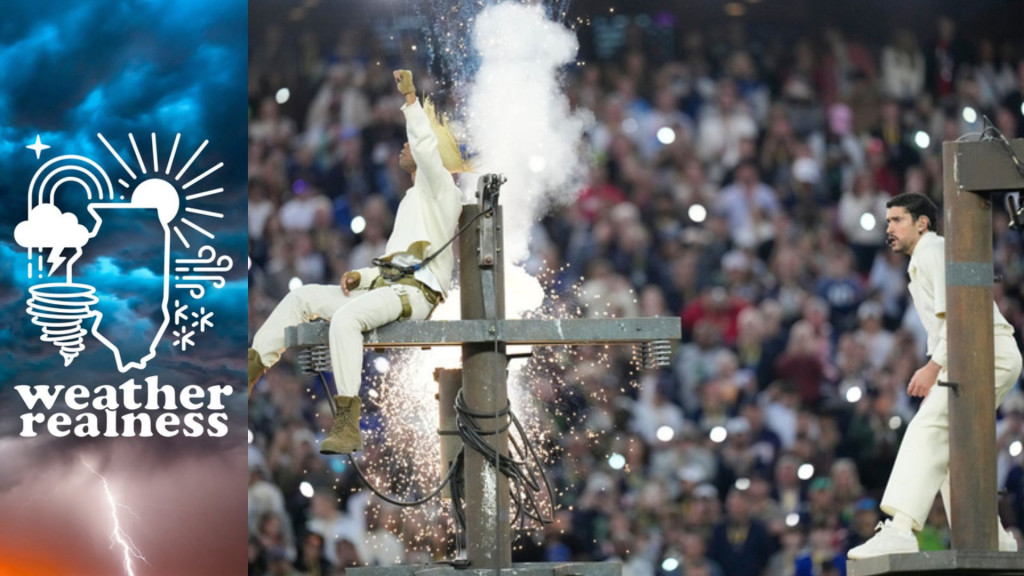
Bad Bunny performs during the halftime show of the NFL Super Bowl 60 football game between the Seattle Seahawks and the New England Patriots, Sunday, Feb. 8, 2026, in Santa Clara, Calif. AP Photo/Julio Cortez
Bad Bunny’s Super Bowl Halftime performance had over 100 million viewers, ranking as the fourth most watched half-time show in history. The show touches on Puerto Rico’s underlying history with climate issues, extreme weather events and how it has impacted the archipelago.
The most extreme example was when Hurricane Maria struck Puerto Rico as a high-end Category 4 storm in 2017, which damaged most wooden structures, stripped vegetation, and even annihilated the National Weather Service's Doppler radar meant to protect the island. This hurricane also damaged an already fragile electric grid, creating the longest blackout in U.S. History. Puerto Rico still experiences power outages, but has developed methods to generate their own electricity through solar energy.
University of Illinois Urbana-Champaign Department of Climate, Meteorology & Atmospheric Sciences professor Stephen Nesbitt and Assistant Professor of Urban and Regional Planning at the University of Illinois, Dr. Omar Pérez Figueroa, talked about how the Bad Bunny Superbowl Halftime show brings awareness to climate issues and resilience in Puerto Rico.
Funding for Weather Realness is partially provided by the Backlund Charitable Trust. If you have a question for a local scientist on this program, please leave a voicemail at 217.333.2141 or email weatherrealness@illinois.edu