








After earthquakes, Illinois man worries over countrymen in Venezuela
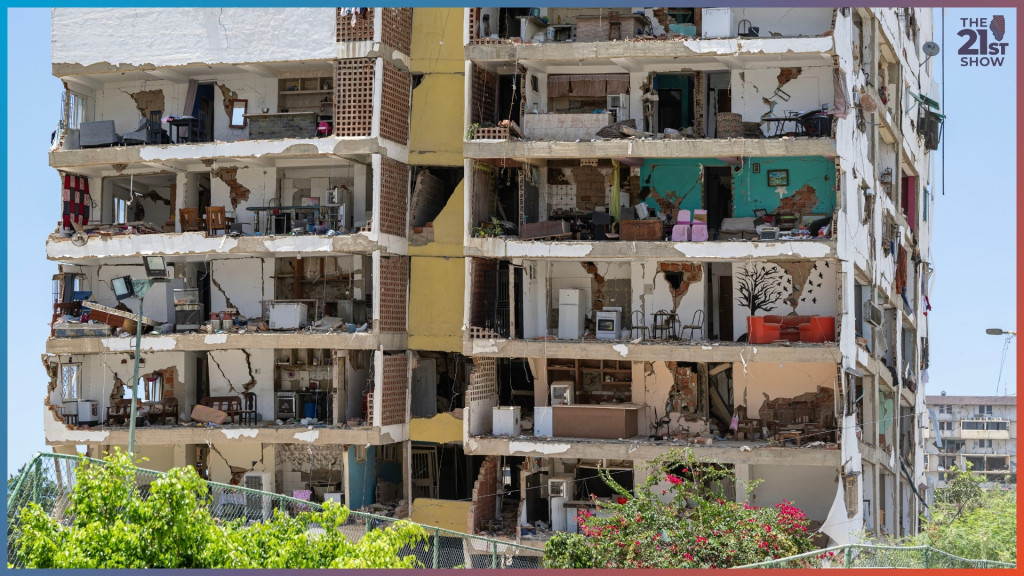
A damaged building in the Playa Grande neighborhood of Catia la Mar, La Guaira state, Venezuela, on July 1, 2026, after earthquakes the previous week. Miguel Medina/Pool Photo via AP
// This is a machine generated transcript. Please report any transcription errors to will-help@illinois.edu.

[00:00:00]
Brian Mackey: It's the 21st show. I'm Brian Mackey. It's been a little more than a week since two powerful earthquakes struck the Venezuelan capital of Caracas. The first was 7.1 magnitude. It was immediately followed by a 7.5 magnitude quake less than a minute later. As we're going to air this morning, there have been more than 2,200 people killed, uh, linked to these earthquakes, and more than 40,000 people are unaccounted for.

[00:00:40]
Speaker 1: Lay, lay back, lay down.

[00:00:57]
Brian Mackey: Slow, slow, smooth, very good, gentle, very good. Sound of American and Venezuelan rescue workers pulling a father and son out of the rubble. We turn now to Alvaro [Beo]. He works with the Immigration Project, helping people with their paperwork, though he's with us today as a private citizen, not for the organization. We wanted to speak with him because he is from Venezuela, still has family there. He joins us now to tell us what he knows and talk about efforts to help those who have been affected. Alvaro [Bao], welcome to the 21st show. Thanks for being here.

[00:01:27]
Alvaro [Bao]: Good morning. Thank you for the invitation. Yeah, I mean, I'm glad that we're having this conversation so, you know, people can be aware of what is the situation right now down there.

[00:01:41]
Brian Mackey: Yeah. And if anyone has questions, or if you maybe also have ties to Venezuela and are listening right now, you can call in at 800-222-9455. We'd love to hear what you have heard from there. 800-222-9455. So, tell me, where were you when you first heard about these quakes? What was — how did you learn about it?

[00:02:04]
Alvaro [Bao]: Uh, I was at home. I was actually with my kids and my wife at home here in Bloomington. I do have family in Venezuela right now. I'm from Barquisimeto, which is 5 hours west of Caracas, which is the main city, the capital, and the city that got impacted the most.

[00:02:29]
Brian Mackey: Tell me more about your family there.

[00:02:33]
Alvaro [Bao]: Well, at first I was — we have a group chat, and one of my aunts, she sent a voicemail, a voice message, telling us that there was an earthquake going on. I didn't think much about it at first because they do have earthquakes quite often, but not that, you know, impactful. I thought it was, you know, same as usual. It lasted a few seconds, I think like 12 seconds or something, and to be honest, that's a lot for, you know, for an earthquake. But again, this is 5 hours west of Caracas driving, so they definitely feel it. My family members, they live in a building, a four-story building, and nothing happened to them, thank God. But then after, you know, checking my social media, I started seeing buildings collapsing in Caracas and in La Guaira, which is the coast, the north coast in Venezuela near Caracas, and that's when I really noticed that this was serious.

[00:04:02]
Brian Mackey: Yeah, even 5 hours away, you mentioned being able to feel it. I think that speaks to how powerful it was. You think about — I don't know how fast people travel in Venezuela, but you know, 5 hours in Illinois would be Chicago to St. Louis, for example.

[00:04:16]
Alvaro [Bao]: That's quite a distance, yeah. I know that the earthquake — people in Colombia, which is another country right by west of Venezuela, they also felt the earthquake, you know, so we're talking about two earthquakes, massive earthquakes, back to back. Wow. I think they also had some earthquake in Puerto Rico. I saw that in the news also, you know, tsunami alerts coming back and forth. Luckily that didn't happen, but it was definitely there.

[00:04:57]
Brian Mackey: So we've mentioned these two earthquakes back to back. Talk more about the destruction that it caused to the areas that were most affected.

[00:05:07]
Alvaro [Bao]: Yeah, I mean, I don't think there is any country that will, you know, have the infrastructure to support two earthquakes like that and not have any damage. It's just terrible. I mean, the area of La Guaira, which is the northern coast — they are in a, you know, in a shadow of a mountain, so they have the sea and then the mountain right behind them in that coast city. Similar to, I don't know, maybe San Diego, but with the mountains closer to the coast. So what happened is they don't have much space to build. So what, you know, added to the poor quality of the buildings and the infrastructure that had no, uh, seismic protection systems — you know, if you add that to two earthquakes, disaster will come. So that's what actually happened. Many, many buildings collapsed, you know, with many, many people inside them and, you know, they're still rescuing people, but this is terrible.

And the people of La Guaira — they had a similar situation like 27 years ago. I do remember, I mean, I was a kid and they had a massive flood that destroyed like a whole city, you know, near La Guaira, which is like a suburb of La Guaira. They had this massive flood and over 50,000 people died also — that in 1998, I remember. So we're having like the same history here but with earthquakes. So it's terrible.

[00:07:23]
Brian Mackey: You know, I've watched these documentaries on how different countries are, you know, well or less prepared for earthquakes. Japan has invested a lot in this. America, frankly, has not in some places — I saw one recently about Seattle and how vulnerable people are there. How would you say Venezuela's infrastructure was — was it ready or not ready for this sort of disaster?

[00:07:48]
Alvaro [Bao]: Definitely not ready. As you know, Venezuela right now has — well, they have been on the same government for over 26 years. It's sad to say it, but the buildings that were there that collapsed, they were older buildings that were constructed under different codes with no earthquake protection systems, and they — I mean, I've been watching these documentaries and they interview engineers, and they all come to the same conclusion that the buildings were not properly maintained. The ones that were newly built did not have the proper systems for earthquakes, and added to two massive earthquakes and no planning whatsoever in how to build in areas where earthquakes often happen.

Added to all that, you know, we have what's going on right now. Many, many people died and I know this is nature, this is nature, but there is also a human [blame] here. I think the government should be accountable for what happened, and they are definitely responsible — not only because of the infrastructure, not only because of how things were built, but also the rescuers — there is no machinery. They are definitely not prepared. Luckily, we have people from abroad that are helping, like people from this country that gladly agreed to go down there and help with the, uh, you know, help in the rubble. People from many countries, but this is a shame. It's a shame that the government was not at all prepared for what happened.

[00:10:15]
Brian Mackey: I heard a story on NPR this morning where it was a team from Los Angeles. There was also a team from Jordan, the country of Jordan, down there helping. So you link this to the — I don't know what term to use here, right? Ever since Hugo Chavez was in power, America and Venezuela have been at odds. There's been some — some would call it economic warfare against that country from America, but they certainly were, you know, happy to antagonize the American government. Of course, the U.S. ousted Nicolas Maduro earlier this year. Can you speak to how Venezuela's been doing since that time? I think there was a lot of hope — I got the impression there was a lot of hope for some significant change, but it seems like a lot of the Maduro government is in place just with a different person at the top.

[00:11:03]
Alvaro [Bao]: Definitely, definitely. You are 100% correct. We were — I myself was super happy. I actually was talking to our local radio as well about it, about how happy we were because of how Nicolas Maduro was arrested, and his wife. We definitely had hope. And you know how things evolved after that — it's just made me sad that they have the same government, same people. They only took away Nicolas Maduro and that did not change anything at all in my country, in my home country. And you know, people are lacking basic services, for example. They don't have power for 6 hours, uh, most days, and —

[00:12:01]
Brian Mackey: To be clear, this is before the earthquake you're talking about.

[00:12:05]
Alvaro [Bao]: Before the earthquake, yeah, before the earthquake, but after the arrest of Maduro, so nothing actually changed. Things really got worse, to be honest. I haven't been there in years, but I do speak with people, you know, my family members, and they suffer — not only because of the earthquake, but because they don't have power most of the days for many, many hours. They don't see any changes. The government is still in place and, you know, same methods. I don't know — to be honest with you, I don't know what changed.

[00:12:46]
Brian Mackey: Yeah, so what are Venezuelans that you know of in Illinois trying to do to help people that are still there, particularly after this earthquake?

[00:12:57]
Alvaro [Bao]: Yeah, for example, I myself bought towels and, you know, things like clothing, and I know that people in Champaign and Chicago, they have these places like Venezuelan restaurants that are collecting people's donations and are sending them to Miami where they will put it in an airplane and then that will go to Venezuela. So I did that, and you know, that's a way to help. And I will be happy if you on the radio help us to, you know, funnel all these donations, share the information to the other people so they can support and send their donations. They definitely need, you know, clothing or things — food that they can use down there. So anything helps, to be honest. They have airplanes going to Venezuela with the supplies.

[00:14:13]
Brian Mackey: Do you have any recommendations for, you know, people if — if maybe they don't know of a Venezuelan in their life — of how to do this in a more formal way or organizations they can try and seek out?

[00:14:25]
Alvaro [Bao]: I don't have that information right now. I do know that there's a restaurant in Champaign, Illinois, Urbana-Champaign, that they are gathering, like collecting all these items. I can definitely send you that later today so you can share it if you can.

[00:14:42]
Brian Mackey: Yeah, absolutely. We can put it on our website for sure, [21stshow.org]. Let me ask you — given everything, we've got just a couple of minutes left — do you feel safe or comfortable? Do you travel back to Venezuela to visit family? Especially given — I mean, obviously the earthquake is one thing, but the political situation is quite another.

[00:15:01]
Alvaro [Bao]: No, to be honest, I have my immediate family members here with me in Bloomington. I have a daughter, a kid, my wife, and I feel protected here. I thank God every day that they are here with me. Because now that I'm a parent, I've been looking at all those videos of the earthquake and how, you know, people lost their relatives within seconds, you know — entire families, you know, being under the rubble. Now that I'm a parent, things feel different. So I'm glad that they are here with me, and I don't have anything to do down there other than support with what we can. But yeah, I'm glad that I have my kids here with me. To be honest, I don't feel safe sending them there to know their family members. I think this is not a time to go there.

[00:16:21]
Brian Mackey: Well, just about 30 seconds and I'll have to hold you to it. What is one thing you would like your fellow Illinoisans to understand about the Venezuelan people at this time of many difficulties?

[00:16:34]
Alvaro [Bao]: Well, there is a lot of information out there on social media, but just imagine losing your family in a split second over an earthquake. I mean, I had to stay away from social media, to be honest, for a few days because this is overwhelming — complete entire families losing everything. Even if they survive, they lose their houses, their properties, and they don't have a place to live. Small kids being out there with no house. And even if they have a house, they probably, you know, lost a family member.

[00:17:19]
Brian Mackey: Yeah, we're gonna have to leave it there. I'm sorry, Alvaro [Bao]. Thank you so much. I'm so sorry for you and your family members still home in Venezuela. That's it. We'll be right back after a break. It's the 21st show.

---

**Flags for Human Review:**

- **[00:00:57] Guest surname spelling** — The host introduces the guest as both "Alvaro Beo" and "Alvaro Bao" within the same segment. The correct spelling of the guest's surname could not be confirmed and has been flagged throughout as [Bao] / [Beo]. A producer or the guest should confirm the correct spelling before publication.
- **[00:05:07] "shadow of a mountain"** — The guest says "shallow of a mountain," which has been transcribed as "shadow of a mountain" as the more likely intended word given context. Please verify against audio.
- **[00:09:30] "human blame"** — The guest's phrasing "there is a human blame here" is retained as spoken but may warrant clarification of intended meaning (e.g., "human fault" or "human culpability"). Flagged as [blame] for review.
- **[00:14:42] Website URL** — The host references the show's website as "2firstshow.org," which has been rendered as [21stshow.org] based on contextual inference from the show's name, "The 21st Show." Please verify the correct URL before publication.
Two powerful earthquakes struck Caracas, Venezuela's capital, in quick succession last week — a magnitude 7.1 followed less than a minute later by a magnitude 7.5. As of air time, more than 2,200 deaths have been linked to the quakes, with more than 40,000 people still unaccounted for.
Alvaro Bello grew up in Venezuela and still has friends and family there. he works with The Immigration Project, an organization accredited by the U.S. Department of Justice to help immigrants with paperwork, though he joins us today as a private citizen. Bello talks what he's heard from contacts in Venezuela, the scale of the destruction, and how Venezuelans in Illinois are responding.
Discussed
- NPR/Morning Edition: Search team from Los Angeles joins earthquake rescue efforts in Venezuela
- AP: Twin earthquakes strike Venezuela, in photos
- The New York Times: Venezuela’s Dead: A Seaport Is Now a Morgue
- WGLT: "There is a lot of joy" for [Bloomington-Normal] Venezuelans after President Maduro's removal
Guest
Alvaro Bello
Bloomington, Illinois (born in Venezuela)