








Best of: Why do so many people struggle in early adulthood?
// This is a machine generated transcript. Please report any transcription errors to will-help@illinois.edu.

[00:00:00]
Brian Mackey: Today on the 21st show, you've heard of the midlife crisis, but what about a quarter-life crisis? The years between adolescence and middle age come with their own challenges, but this stage of life is often overlooked. We'll talk with a psychotherapist about what it takes for young adults to not just survive, but thrive. I'm Brian Mackey. That's coming up today on the 21st show, which is a production of Illinois Public Media, airing on WILL in Urbana, WUIS in Springfield, WNIJ in Rockford DeKalb, WVIK in the Quad Cities, and WSIU in Carbondale. But first, news.

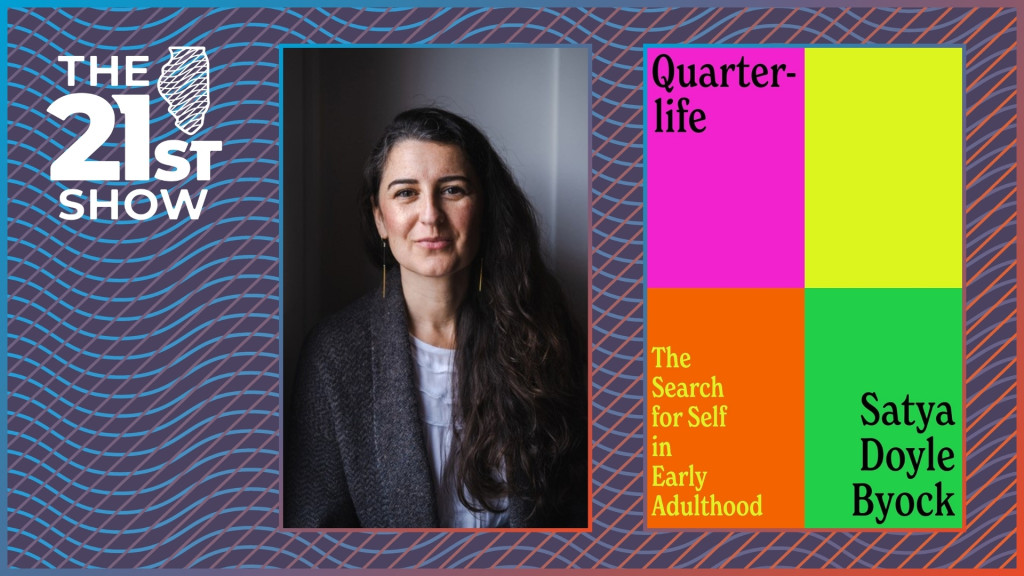
From Illinois Public Media, this is the 21st show. I'm Brian Mackey. Throughout childhood and the teenage years, many people find themselves following a fairly set path for their lives, full of all kinds of milestones. There's getting your driver's license, graduating high school, getting into college or trade school. And then you enter that stage of life where you're no longer a child, but you're still very much in the early stages of learning about the world and about yourself. Our guest for the hour today describes this stage of life as quarter-life, the young adult time when many people find themselves feeling confused and maybe in pain. Satya Doyle Bjo is a psychotherapist and author of the book Quarter Life, The Search for Self in Early Adulthood. She's based in Portland and joined us on the 21st show back in summer 2025 when my colleague Christine Herman was filling in. Because our conversation's on tape today, we're not taking calls live, but you can still let us know what you thought. Our email address is talk@21stshow.org.

I should say, for that program, we did hear from some of you by text message when this first aired. Tony in Champaign said, when he was in that time of life, I needed to find a good place to drop roots, a decent place to work, and a partner to do it with. All three were bereft of reliable information. It was an extremely difficult period. Hate even thinking about it. Meanwhile, Terry in Batavia said, I'm a retiree now, but I still remember my 23rd birthday, yes, 23rd, as my scariest. I realized I was a grown-up and had to figure out my future on my own. Navigating those mid-twenties was more emotionally fraught for me than any other decade so far. All right, thanks for those messages, Tony and Terry. With that, here's my colleague Christine Herman's conversation with Satya Doyle Byock.

[00:03:05]
Christine Herman: Satya, I'd love to give our listeners just a little sense of who you are and where you're coming from. So maybe start off by telling us what inspired you to write about this stage of life that we are referring to as quarter[-life].

[00:03:19]
Satya Doyle Byock: Well, thank you. I think that the texting group that has already weighed in really expresses what I was experiencing. You know, this is a very universally difficult and confusing stage of life that we're also taught to mask in many ways — that we're sort of taught that it's not supposed to be very difficult, that all we need to do is continue on, get a job, find a partner, maybe have children, get a house, these external expectations. But internally, there's often an enormous amount of turmoil, and that was certainly happening for me. I thrived in school. I really enjoyed school and learning, but the whole time I had this nagging feeling that college was going to end, and I had no sense of what was going to come after that. I was a history major. I loved studying, but I knew that that was not setting me up for an actual career. A liberal arts education was filling me with all sorts of interesting information and things to contemplate, but it wasn't really setting me up for clarity about life in the world beyond academia. And so once I did graduate and found myself in multiple overlapping crises in a world often experiencing enormous crisis, I started to research this time of life and try to make sense of what we were supposed to be learning and experiencing instead of what I was seeing in myself and my peers.

[00:04:56]
Christine Herman: And I understand around this time, you started getting interested in Jungian psychology, perhaps also referred to as analytical psychology. Can you tell us a little bit about this, just so that we can kind of understand the framework that you're coming from?

[00:05:12]
Satya Doyle Byock: Yeah, so Carl Jung was a psychiatrist in Switzerland about 100 years ago. I've since studied his work enormously, but I first encountered his work through his memoir, Memories, Dreams, Reflections, and it gave me points of orientation that I hadn't found anywhere else. And that was to really actually begin to look internally at the inner life, versus just at external markers like the economy, or, you know, how much was in my 401(k), those kinds of things. So, Jungian psychology really supported me to gain some framework to start listening to my body in different ways, listening to my instincts, even things like my dreams, which I know can make people immediately turn away and uncomfortable. But it's information that I think many — you know, our ancestors, indigenous peoples, people all around the world in different times of life — relied on completely in order to orient through the world. It's a lot of how animals are orienting through the world without logic and structures and game plans and, you know, five-year plans, those kinds of things. So, it really supported me to go back to my roots, and I think the roots that humans really are meant to be connected to.

[00:06:33]
Christine Herman: And there's a quote from Carl Jung at the front of your book. I'll just read it because I really kind of love it. It reads, "What is to come will be created in you and from you. Hence, look into yourself. Do not compare, do not measure. No other way is like yours. All other ways deceive and tempt you. You must fulfill the way that is in you."

I wonder if we can also talk about this concept of being disembodied. And I know it's not just for people who've experienced acute trauma, but there is often a disconnect that many young people — and perhaps people at any stage of life, really — can experience: this disconnect with their intuition or their inner compass. Tell us a little bit about that.

[00:07:19]
Satya Doyle Byock: Yeah, it's really quite universal, and I think you're right, it's not just about trauma, although that plays into it, certainly, or it enhances it. But we have really, by and large, dominant culture raises us to orient towards the external world, as I've said, not towards our own bodies and instincts. So this is what we received from a very young age — we're focused on learning from the mind, and even a lot of the reflective arts, philosophy and things like that, continue to point us back to the mind. And so, the work to really get back in touch with what embodiment is — not even just from sports or athletics or movement, but actually knitting the psychology of ourselves back into our bodies — it's really a lost art. It's something we aren't supported to learn. But again, just like animals who are never separated, wild animals who don't have that experience of that kind of separation, it's the markers of how we find our way. It's the markers of how we read our environments, read other people, learn about when we're hungry and what we need to eat and when we're thirsty, these kinds of things. A lot of my patients, quarter-lifers, and what I ended up doing after college and graduate school was really working with people in this time of life. That experience of disembodiment is almost universal, and it's no one's individual fault. It's not part of the culture in which the very vast majority of us have been raised.

[00:09:08]
Christine Herman: So, let's talk about this time in our lives, the quarter-life. You write that it spans roughly from age 20 to 40. Are there moments in our life that trigger or mark an official entry into quarter-life, such as graduation, moving away from your family of origin?

[00:09:24]
Satya Doyle Byock: My sense is that quarter-life really actually starts to develop around puberty, when psychologically people begin to understand themselves differently as individuals and begin to imagine a life that is not ensconced in a family system. So that psychological transformation really begins around the time of puberty, and we can see this with young people in our own household — we might experience this from the past. But we don't have support, again, culturally or socially, to sort of usher that in. That used to be part of human culture, that there were rites of passage happening around the puberty marker. But for us, more often, it's really unfolding in the late teen years and the early twenties, when the feeling — for many, many people — of needing to live elsewhere, live on their own, or create an independent life starts to push like a deep urge. So that's why I don't think there's a single date or single event that creates this for people, but certainly college graduation, or the end of any school — I mean, this can also happen for law students when they finally get done with law school, or medical students, even. It's when there is no structure, there is no ladder anymore that you know you can continue to climb. When that externally imposed structure ends, people tend to begin to really question what they need and what's ahead.

[00:11:01]
Brian Mackey: If you're just joining us, this is the 21st show. I'm Brian Mackey. We're listening back to a conversation my Illinois Public Media colleague Christine Herman had with Satya Doyle Byo, a psychotherapist and author of the book Quarter Life, The Search for Self in Early Adulthood. As the name of the book suggests, the topic for the hour is about our quarter lives — the time in life when it can be challenging to be a young adult in our society.

[00:11:27]
Christine Herman: Satya, is it safe to say that every generation experiences something like what you've described — the challenges of quarter-life — that this is not a new phenomenon?

[00:11:37]
Satya Doyle Byock: Exactly, absolutely. It's a stage of life, and it's the stage between adolescence and midlife. It's the first stage of adulthood. And we don't, as I've expressed — you know, psychology often sort of overlooks this stage of life. We kind of discuss early development. We have, more frequently in the last, I would say, 50 years, been speaking about adolescence, and then we sort of begin to talk about midlife and beyond. But this period of life in between is kind of spoken of as if you're just supposed to figure it out and sort it out on your own.

It used to be a stage of life that was much more tied to gender roles, to heteronormative gender roles. Women were expected, in the last many generations, to be homemakers, mothers, housekeepers, and men were expected to bring in an income and support their families in that way. I am very in favor of those rigid gender roles and heteronormative expectations being broken down. I don't think they served most people, and in the end, I think most folks then actually ended up having midlife crises, which led still to a question of who they are beyond those roles that they play for their family. That has been universal. That's really where the midlife crisis came from. But since we've really broken down these rigid roles, the crisis of "Who am I and what is my life about, and how do I support myself?" all come kind of crashing down in the same moment for people in quarter-life. So in that respect, this stage of life has really gotten harder in many ways, but really because we've lost certain of the rigid structures that used to hold it up for a time.

[00:13:34]
Christine Herman: I wonder if it's also important to consider what could be some unique challenges that 20-somethings face today that perhaps prior generations didn't. We were talking right before the show with our team. We've got three producers who are all quarter-lifers on this show. So I was picking their brains. All three of them graduated into the COVID-19 pandemic when everything was in lockdown and, you know, faced different struggles because of [that]. So what can you say about the kinds of unique things you're observing about the twenty-somethings of today, even though this is a phenomenon that's, you know, been historical?

[00:14:08]
Satya Doyle Byock: Sure. Well, I mean, I have so much sympathy for your producers and people in this stage of life. It's really an inconceivable moment to be coming of age because there are so many crises, and so much suffering and lack of support. The support that we had is kind of crumbling around us. I'm deeply sympathetic. I also often think about people graduating into the Vietnam War in the United States and facing the draft, being drafted. You know, people graduating during a time of World War II. There are so many different moments that quarter-lifers have had to, in a certain respect, carry the brunt of social crisis, and I do think that that's happening now. I think quarter-lifers, for all sorts of reasons, and certainly during the pandemic, were really shouldering an enormous amount of social crisis on their own.

[00:15:12]
Christine Herman: We asked our texting group about this. Christina in Hoopston texted us to say, I was pretty naive going into college. I'm 52 now. I wish I had known that alcohol is not as good as it seems to be at the moment. I also wish I had known how important it is to stay in contact with the people you love, whether it be friends or family. That being said, I wouldn't change a thing because I believe our experiences make us the people we are and I'm humbly a wonderful person.

We did [hear from] others — from people who, you know, had a whole list of things that they regret or they could have done differently. We're coming up on a break in about 30 seconds, but I wonder if you could just respond to some of these ideas — you know, the things that we go through that we struggle with make us who we are, but still we face regrets.

[00:16:03]
Satya Doyle Byock: Certainly. I mean, you know, we always hear that suffering makes you stronger, right? And I believe that in many ways, but I do think that a lot of suffering is unnecessary. We see this all over the world — there's suffering that can be prevented, there's suffering that [verges] on cruelty, and unfortunately, I think alcohol and various drugs and forms of avoidance on the internet — video games, pornography — there are many different ways that quarter-lifers sort of learn or fall into checking out. And that's part of what I hope to support and avoid, which is there are ways to find healing for suffering that don't involve numbing out or avoiding and kind of losing years or even potentially decades of your life.

[00:16:50]
Brian Mackey: All right, we'll pick this conversation up again after a short break. We're listening to my colleague Christine Herman speaking with psychotherapist Satya Doyle Byo about the quarter-life, that time when we're still learning about the world and ourselves, but we're expected to be a lot more independent. More to come. This is the 21st show. Stay with us.

It's the 21st show. I'm Brian Mackey. Let's get back to our conversation between my Illinois Public Media colleague Christine Herman and Satya Doyle Byock, a psychotherapist and author. Her book is Quarter Life, The Search for Self in Early Adulthood. Because the program today is on tape, we're not taking calls, but we did hear from you when this first aired in summer 2025. We return to the discussion and a call from Grace in DeKalb.

[00:18:05]
Grace: Hi, thank you so much for taking the time. I'm already a big fan. So I just turned 30. I'm going through my quarter-life [mid-]crisis of going to law school. And I was wondering — because I lost my father when I was 7 years old to multiple sclerosis — I'm wondering what you would recommend for people going through big challenges in their life, especially at this time in our lives, while navigating the grief or loss of a loved one.

[00:18:40]
Christine Herman: Thank you so much for your question, Grace, and for calling in. Satya, go ahead.

[00:18:45]
Satya Doyle Byock: Thank you, Grace, so much, and it's beautiful to have you as a first caller, because one of the characters in my book is also called Grace, so I'm feeling that connection. You know, I love your question — it's so poignant, and I know that the loss of a parent, even at that age, it lingers and lingers into adulthood. I always recommend people find a wonderful therapist with whom they feel deeply connected, to be able to process and sink into your own personal experience, which is really how we navigate out of any of these hard moments. There's so much talk now about optimizing life and the five steps you need to take to get better. I don't really believe that any of that works in the long term when our suffering and our struggles are so profoundly personal and individual. So I would strongly encourage — I mean, there are many other things, certainly, you know, little tips that we hear all the time in terms of meditation, self-care, journaling — but finding a trusted therapist to work with so that grief can be processed while life expectations, like law school, continue can just be so important. You know, the last thing I'll say on this is that the push forward of something like law school is so focused on ambition, logic, focus, intensity, and meanwhile, grief is so slow and hard and laborious and comes up at surprising moments. And so you're really caught in between this dance of polarizing forces, and I think it's so important to support yourself through that and maybe be able to sink into that more frequently, so it doesn't just feel like such a tug of war all the time.

[00:20:41]
Christine Herman: Satya, I wonder if now is a good time for us to dive into — in your book, you kind of explain that broadly speaking, there are kind of two categories of quarter-lifers: meaning types and stability types. I'll let you just kind of take it from there. How do you lay this out for people to understand?

[00:21:03]
Satya Doyle Byock: I talk about stability and meaning as being the goals that really all of us have in adulthood. We all are seeking a balance of security, stability, and a sense of purpose and meaning or connection with others. And often we start quarter-life on one side of this spectrum or the other. In other words, there are folks for whom stability and security feel like the primary [motiv]ation. They're often folks who end up in law school or end up more on a business track or career track. And then there are meaning types who are maybe more the artists, more of the activists, more people who feel like outsiders to the dominant culture. And I find both of them in my office. Both types are experiencing crisis in this time of life, but they come at it in different ways. Stability types will often feel as though they have all the markers of adulthood that they're supposed to have checked off, but they feel empty inside and they don't know why. And meaning types often have a very different experience — they feel as though they're really kind of failing at adulthood, and that they don't really want to participate in social expectations at all. And so, the reason that I delineate these two types — and again, I want to emphasize they're on a spectrum; I don't believe that humans can be easily divided into two types — is because they need essentially the opposite support. And if one is applied to the group as a whole, a lot of people are going to feel the lack of what they really need.

[00:22:52]
Christine Herman: We got a text message from Lex in Champaign that says, in part, post-adolescence to midlife is too large a life segment to think of as one discrete period. IMHO — in my humble opinion — life is not tidy, and ascribing negatives to any period more than another seems like a "poor me" kind of moment. Satya, how would you respond to this idea? Have you heard this kind of sentiment before?

[00:23:19]
Satya Doyle Byock: I think that most people get annoyed when people in this stage of life express any kind of pain or suffering. And so a lot of what I wrote the book for is to counter the feeling that anyone in quarter-life who's saying "this is really hard" is a narcissist, or navel-gazing, or being self-obsessed or being whiny. You know, we've heard other callers already express that was the hardest period of my life. I'm in my 50s now, and I can say certainly that my 23rd birthday was the scariest, right? So I take what this caller, or texter, says with a grain of salt. I think a lot of what happens is people who are struggling even in this time of life kind of roll their eyes because they're trying to avoid their own pain, and it's not something that I agree with.

[00:24:12]
Christine Herman: You include in your book a quote from Erik Erickson, developmental psychologist, in 1968. He said, "The youth of today is not the youth of 20 years ago. This much an elderly person would say at any point in history and think it was both new and true." I just found that to be so interesting. I mean, even in recent history, we've seen opposition to things like student loan forgiveness — like, older generations had to pay back their loans, so younger people should too. Sort of this idea like, "I suffered through, so you should too." And do you get the sense that that's kind of pervasive?

[00:24:47]
Satya Doyle Byock: Absolutely, exactly. And that's it, is that quarter-lifers are wrong no matter what, then. And the reality is — when you bring up student loans, I think that's an excellent example — a very large portion of social policy is in some way affecting people in this stage of life, often in an outsized way. And student loans is a great example because the reality is the cost of higher education has skyrocketed in the last decades and has not kept pace with income and cost of living, by any means. And so even that moment, even when older generations kind of roll their eyes and mock and say, "Well, I paid off my student loans," the reality is they have no idea what the cost of living actually now is. Same goes for buying a house, having basic savings — the cost of living has completely transformed in the last decades. But that kind of mockery is pretty common, and I do think it's often tied to a kind of hazing ritual instead of basic empathy — for all of us, for everyone, for people in every stage of life, and care and concern for each other. It's really based more in kind of mockery and hazing. It's not something that I support.

[00:26:09]
Brian Mackey: If you're just joining us, this is the 21st show. I'm Brian Mackey. We're listening back to a conversation my Illinois Public Media colleague Christine Herman had with Satya Doyle Bo, a psychotherapist and author of the book Quarter Life, The Search for Self in Early Adulthood. As the name of the book suggests, the topic for the hour is about our quarter lives — the time in life when it can be challenging to be a young adult in our society.

[00:26:36]
Christine Herman: I wonder — you know, for many young people who are out there and feel like, "Gosh, I'm all alone" or "I'm the only one who's going through this" — what can be done to help create solidarity and to help people in young adulthood realize that they're not alone in trying and feeling like they're failing at figuring out this thing called adulthood?

[00:27:00]
Satya Doyle Byock: Yeah, that really was so much of the intention for writing my book, because I think part of what supports us to not feel alone is not only connecting with others around us who are feeling the same way, but also really connecting to a time of life that goes back to the beginning — kind of learning about how earlier generations handled this, how it shows up in mythology and even fairy tales. I mean, something I write about in my book is how many fairy tales and myths really emphasize this stage of life specifically. Though we don't call it quarter-life in those older stories, a lot of what is happening is watching people pursue this journey out of their primary home and into a new life. And I think it's incredibly orienting for people who feel disoriented to touch back into those ancient roots and see that what they're experiencing now is not only shared by many of their peers in the current moment — because of things like COVID, and social change — but also that it's really quite universal as a stage of life, going back many, many, many generations.

[00:28:17]
Christine Herman: Are there people out there for whom quarter-life is actually a really incredible and amazing time, not a crisis at all? You know, what's their secret? I'm asking this also kind of as a parent thinking about raising my kids. My oldest is 12. We're like right on the cusp of the teen years here, and you know, what is it that can be done to help minimize suffering in quarter-life, perhaps in the earlier stages of life, whether it's as parents or as a broader society?

[00:28:45]
Satya DoyleByock: Yes, I think it's so important, and maybe speaks back to the most recent commenter about the fact that there are absolutely people in this stage of life that are thriving and that maybe don't share a lot of the experience of what we've been speaking about to this point. I think often — if I may say — those people may often be what I call stability types who are checking off the boxes and feeling pretty solid, but haven't necessarily looked internally to ask themselves if the life they're living is the life that is going to be satisfying later on down the road. The point that I make is that at the end of the day, we all do need a sense of stability and meaning. So, what I'm doing with my own stepson, who's almost 15 years old, and with other young people in my life and with clients who are in my office, is always supporting those two threads to be part of the conversation — that the sense of meaning, spirituality, purpose, relationships, [conne]ction with others, health, personal health, personal inquiry are always tied into the external goals and external expectations. And so the more that we can weave these things together consistently and allow space for both to be questions, the more we can really prevent big crises at any point and support our young people to find their way.

[00:30:14]
Christine Herman: I was having a conversation with my son. We were reading a graphic novel that was all about a child in her middle school years — which he's in middle school — and really struggling with concern about what other people think about them. And we were having a conversation like, you know, why is it so hard to not care what people think, sort of like, you know, feeling the pressure to meet certain expectations. But I know that also developmentally, teens' brains are kind of wired to care a lot about what other people think. So I wonder if that is part of what makes the quarter-life — well, whether it's the teen years or the early 20s — particularly difficult. Our brains are still developing. There are things that make it more difficult to try to be that person who can just live, be your authentic self without concern about what other people are going to think about you. Is there something there that you could speak to?

[00:31:12]
Satya Doyle Byock: Absolutely, absolutely. And you know, I love that you bring this up. You read the quote that opens my book — you know, the importance of really focusing on your own existence. And so I think you're absolutely right. So much of what is happening in this stage of life is comparing, noticing how you fit in or don't fit in. And I think this question that I'm always coming back to — which Carl Jung came back to, a huge influence on my life — is: What is your own individual existence seeking? You know, who are you as a unique human on this earth? And so again, that's what we're trying to weave together as much as possible, to create space for quarter-lifers when they are comparing themselves and really being compared — whether in sports or academia, jobs, all those things — to also have space to check in with themselves and where their longings are, where their jealousy is, where their desires are, and to find those things as markers of what their own individual soul, their own being, is really seeking in the world.

[00:32:22]
Christine Herman: And I hear a lot of young people talk about this — and even myself. I mean, I just turned 40. I read your book when it first came out and I related to a lot of what you talked about. And I wonder about how social media plays into what you were just speaking to, because it's so easy to be scrolling and seeing your friends and what they're posting and to do the comparison thing. Can you talk about how you see that affect perhaps some of the clients that you work with today?

[00:32:51]
Satya Doyle Byock: Yes, absolutely. I mean, it's such a major influence. And you know, I don't speak much about social media in my book. It just comes up very briefly with one client story, and I did that explicitly because I think there's so much information about the kind of dangers and evils of social media, much of which I agree with, but I wanted to kind of emphasize a more timeless energy. But what you're saying is very much what I was speaking to, which is there's so much emphasis on conformity, or being exactly — doing things just like this, or competing — and social media just magnifies that and magnifies that. And even though we intellectually know — most people now using social media know it's bad for them, know that mental health crises and diagnoses are really tied to the amount of time that people spend on screens and on social media scrolling — it still doesn't interrupt that kind of addictive quality of observing other people's lives, and it really does infiltrate how we perceive of ourselves. So yes, absolutely. Everything I'm speaking to, in the background, there's this bit of trying to counter the noise of social media and peer pressure that shows up in that.

[00:34:12]
Christine Herman: We got a text from Abby in Urbana who said, if I could redo anything, it would be to listen to my inner voice. You know yourself better than anyone else. Trust your gut. There are many times where I didn't, and I know my life trajectory would have shifted if I chose differently. I'm going through [a] divorce to find myself again. She's been lost for 20-some years.

[00:34:34]
Brian Mackey: All right, we have to take a short break on the program, but when we come back, the conclusion of our conversation with Satya Doyle Bo, psychotherapist, author of the book Quarter Life, The Search for Self in Early Adulthood. This is the 21st show. Stay with us.

It's the 21st show. I'm Brian Mackey. Let's get back to our conversation with Satya Doyle Bo. She's a psychotherapist and author of the book Quarter Life, The Search for Self in Early Adulthood. We first aired this back in summer 2025 when my colleague Christine Herman was filling in for me. This means no calls for the hour today, but we did hear from a lot of you back then by text. Amy in Wakanda said, for me, the difficulty of quarter-life was realizing I lived in a society in denial that twenty-somethings can be ill, and then overcoming that. "You're so young, you're fine, this is all normal. Everyone's sad sometimes, everyone's stressed sometimes. Everyone hates loud noises. Everyone does this, everyone's like that." Amy goes on to say, no one actually said, "You're the only one who can't cope," but the invisible implication rang in her head for years. No, she says, I was ill, I was sick, and also, I'm wired different to most of the population. I needed treatment and I would have loved understanding my differences and strategies I could have been using all this time to navigate the world with way less stress. Amy, thanks so much for sharing that. With that, we return to the conversation with Satya's response.

[00:36:23]
Satya Doyle Byock: Yes, I love what she expressed, and I think this really brings home for me why it's so important that we allow more introspective focus for people in this stage of life. And what I mean is that so often, if we're really using all those tropes and old phrases — like, "Oh, everyone's like this, everyone has a hard time, you'll get better, it'll get easier" — none of that is really, to her point, saying, "Let's take some time to find out what's really happening with you." And maybe that's physical, maybe it's emotional, maybe it's a neurodivergence, maybe it's spiritual. Maybe it has to do with basic forms of making a living and feeding oneself day to day. But the reality is this stage of life has so many competing expectations and requirements, and each person is an individual navigating those things. So, you know, I know I can be kind of a broken record here, but I really encourage folks earlier in life to find a therapist who's truly supportive and understands developmental psychology and trauma history and all these things, to support people to find their individual way. Very often, people don't enter therapy until much later in life, or really at the brink of a major, major crisis, and it's often at that point that folks feel, "I wish I'd done this earlier." And so I'm a big supporter of — just as she expresses — really seeking out individual support to make sense of all of these different pieces so that you don't end up regretting not having done it earlier.

[00:38:04]
Christine Herman: We've got a caller on the line in Champaign. 800-222-9455 is the number to join us. Joe, go ahead with your call.

[00:38:14]
Joe: Oh, good afternoon. As a former clinician — I mean, one of the things I've dealt with, at this point in life, is quite a few people between the ages of 20 and 40. But one of the things I encourage my students and my clients to have is community, because I think as we develop — I mean, women's prefrontal cortex and men's prefrontal cortex doesn't develop till their mid-twenties, and so they're still making some decisions that are not great. However, if you have community — I grew up in a different world, in a different community — having community to support you through college graduation, having that life partner, having kids, all those different life stages are important to have community around you. And one of the things in this individualistic society that we live in is many of us [and our] kids are alone and feeling very lonely, and I wanted to just pass that along and see if that's something that you also share with your clientele, because it's very important to create community. We're in a community of care rather than just individuals running around.

[00:39:27]
Christine Herman: Thank you so much for your call, Joe. Satya, to Joe's point, talk about the importance of community as people are navigating all of this — you know, tuning into their inner world, listening to their inner voice. Go ahead.

[00:39:42]
Satya Doyle Byock: Oh, I think it's an incredibly important point. You know, connection is the basis really of a sense of feeling like we all have a full cup, like we all really have a satisfying life. At the end of the day, we know that when people feel truly connected, they're much less likely to get addicted to substances, they're much less likely to have a mental health crisis that they can't recover from. So I think of community, and I think of the word connection, intimacy, vulnerability, ability to share and feel supported — that if a crisis happens, they're not alone and doing it on their own. So I think this is an important layer to weave in.

You know, the difficulty — again, I will say a little bit in defense of quarter-lifers on this topic — is that we are not providing structures of community past college. So past academia, we're throwing people into a very individualistic world and a very corporate world where towns are much less likely to have lots of small businesses and religious communities and support systems. Towns are much more likely to feel like they're cookie cutters of places all over the country or all over the world. And so there are ways in which we've really stripped community away from people in this stage of life. And so I absolutely encourage and support the development of community, but I think, ironically, it can start to feel like yet another thing that they're supposed to be doing on their own. So I try to find ways to bring this in, in terms of one-on-one connection, or find support groups that I can provide to people in this stage of life that isn't just another task they have to accomplish.

[00:41:34]
Christine Herman: Let's get into a little bit more of your advice for quarter-lifers today. And in your book, you talk about the four pillars of quarter-life development. And these are not linear things, but they are still separate, concrete things. I wonder if you can walk us through maybe some of these pillars. We have about six minutes left in this conversation, so let's see how much we can squeeze in.

[00:41:58]
Satya Doyle Byock: Thank you. Yes, so I talk about the four pillars of development in quarter-life as separation, listening, building, and integrating. And the first thing I'll say about this is that it's really beginning to understand that quarter-life development is human development — it's psychological development, it's not just the checking of boxes in the external world or in the economy. And so it takes a bit of a reframe, I think, for folks to understand this is really about psychological development and human development.

So what we're talking about with the idea of the first pillar, which is to separate, is that really age-old, ancient stage that we see in fairy tales and mythology, we see in cultures all around the world, when people need to begin to develop an independent life after living in some form of dependency forever. And so it involves psychological separation as much as physical or economic separation. That means really understanding that your anxiety is not necessarily yours — that it may in fact be your mother's anxiety, or your stress about money and your fears about the world might be coming from your father, or the sense that you're never supposed to leave might be something that's really coming again from your family system. There are all these different ways in which we're kind of microscopically tied into our family systems. Some of those are beautiful — we absolutely don't need to, to your former caller's point, become singular individuals without family connections at all. But developmentally, we need to learn about who we are as separate from the psychologies and belief systems of our families. So that first pillar is about separating and stepping out in many different ways to become a separate individual.

The next pillar I talk about is to listen, and this is really about a lot of what we've spoken about in this conversation, which is practicing and learning the tools that are very often not provided by dominant culture: genuinely how to listen to that inner voice, how to listen to your body, how to listen to your dreams. Again, even things like envy — what are you wishing you had? What are you wishing you could be? Sometimes that can be very important information for the life that is going to be aligned externally and internally and be much more satisfying.

I talk about the third pillar, which is to build, and ideally this is really constructing — often in mundane, methodical, hard work, often with a great deal of willpower and effort. It's very different from what we were speaking about with "listen." To build is to construct the life then based on that listening and self-understanding that's going to serve you. And I talk with a lot of folks, especially stability types, about the need often to deconstruct what we've already constructed in order to move forward. It's very hard, but people never regret getting on their life path.

And finally — I know I'm kind of breezing through these really quickly — I talk about integration as the final pillar. This is really a lot about the initiation journey and self-transformation, and integration is bringing all these things together and really being able to witness markers of transformation when they've occurred and celebrate those times.

[00:45:29]
Christine Herman: Thanks for that explanation. And, you know, as we were talking about inner voice, there's also this idea of the inner child theory, which I'm by no means an expert on, but I understand it has something to do with — within each adult, there's something about their childhood, complete with the emotions, experiences, memories, and unmet needs from that time. What are some ways to cultivate that inner child? And maybe you can talk about this concept for people who may not be familiar.

[00:45:57]
Satya Doyle Byock: I think it's a beautiful question. It continues to really emphasize who we are internally, right? And that we all were children with hopes and dreams and experiences. And very often, I think a lot of the hazing, mockery, eye-rolling culture that quarter-lifers come up against pushes them against ever listening to that inner child, or that inner soul, that inner self. And so a lot of this work really can receive mockery externally, but we have to push against that to say, "Oh no, I do actually care about the 2-year-olds, the 5-year-olds, the 6-year-olds, the 10-year-olds that I encounter in the world. I feel drawn to them, I feel worried about them. I was that age too. I was that person too." And so it's giving us that space for self-empathy and self-concern.

[00:46:49]
Christine Herman: We've had a lot of advice for the quarter-lifers out there. I was really kind of taken aback by the number of text messages we received from people — not all of whom we were able to share on the show today — who expressed a lot of regrets about how their quarter-life played out, maybe about decisions they made, things they would have changed sooner, all sorts of things. I wonder if you could just speak for a moment, as we're kind of starting to wind down our conversation here, to those listeners out there who might feel like they have regrets about their quarter-life.

[00:47:22]
Satya Doyle Byock: I'm so sympathetic. You know, I think I want to say it's never too late, and what I mean by that is I think regret can often put us into a freeze state where we wish we had done something sooner, and so we get kind of stuck in that regret. And I think time and the trajectory of our lives can be so surprising when we really do take the risks we always wished we had taken — that maybe we're still struggling to take — that they can end up feeling like time kind of resolves itself, that that regret not only disappears, but a sense of loss disappears. And so I really encourage folks to believe that, in certain ways — you know, it may not be that you can do the exact same thing, take the job you wish you'd taken, or take the risk for love that you had taken specifically in the past — but there's always some nugget underneath of what your individual self is really calling for. And so when I have folks in my office who are dealing with regret, we try to listen — and sometimes it takes a very long time — to really listen to what is at the core of that and what can still be resolved today.

[00:48:36]
Christine Herman: Satya Doyle Byo is a psychotherapist and author of the book Quarter Life, The Search for Self in Early Adulthood. Satya, I want to thank you personally for writing this book. I read it at a time when I was really struggling in my late 30s and it really helped me, and I just want to personally thank you for that and also thank you for joining us on the 21st show today.

[00:48:56]
Satya Doyle Byock: Thank you, Christine. What a pleasure to hear that and know that. I'm really honored and I'm so grateful to have been on your show. Thank you for having me.

[00:49:04]
Christine Herman: Thank you so much. And —

[00:49:05]
Brian Mackey: — that is all the time we have on our show today. Coming up Monday for Memorial Day, we'll learn about the ongoing work to find military personnel still missing from America's past wars, including Illinoisans who've finally been accounted for after decades. Plus, we'll talk about the symbolism and mythology of the missing soldier.

Before we go, please consider joining our texting group. It's the most popular way for listeners to share comments and questions on our program, and frequently before it even airs, you'll have an inside view of what's coming up. You can join that by sending the word "talk" to 217-803-0730. Again, the word is talk — T-A-L-K — and the number is 217-803-0730.

The 21st show was produced by Christine Hatfield and Jose Zepeda. Today's conversation was produced with help from our guest host, Christine Herman. Our digital producer is Kulsoom Khan. Technical direction and engineering comes from Jason Croft and Steve Morck. Reginald Hardwick is our news director. The 21st show is a production of Illinois Public Media. I'm Brian Mackey. Thanks for listening. We'll talk with you again next time.
You've heard of a midlife crisis — but what about one during quarterlife? The years between adolescence and middle ages come with their own challenges. Guest host Christine Herman talked about this with psychotherapist Satya Doyle Byock, author of Quarterlife: The Search for Self in Early Adulthood.
Guest
Satya Doyle Byock
Psychotherapist • author of Quarterlife: The Search for Self in Early Adulthood
A version of this conversation originally aired Aug. 8, 2025.