The new Food Pyramid and constantly changing dietary guidelines
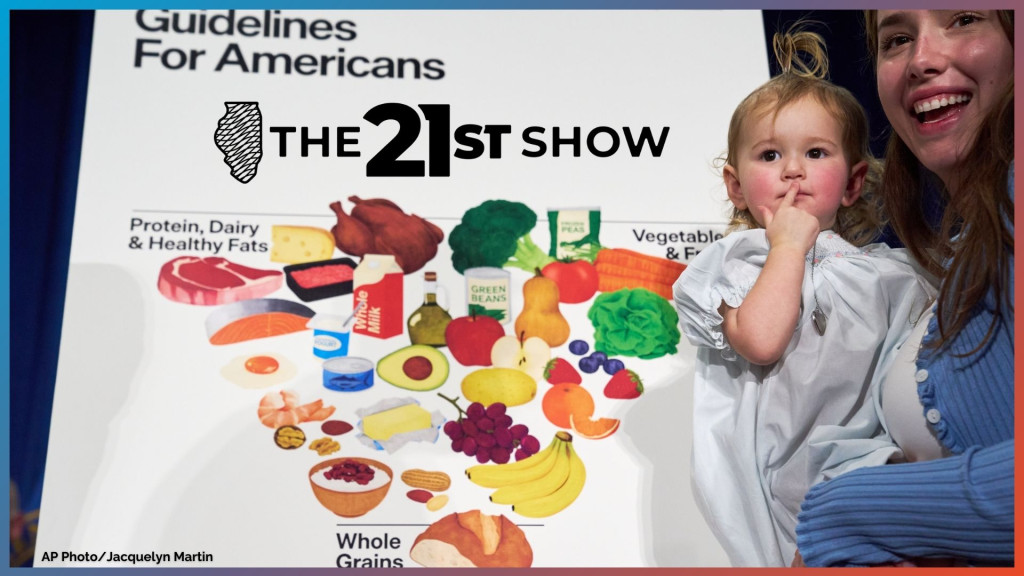
Elle, 18 months, and her mother Claire Dooley stands by the revised food pyramid, after an announcement by Health and Human Services Secretary Robert F. Kennedy Jr., about nutrition policy, at Health and Human Services Headquarters, Thursday, Jan. 8, 2026, in Washington. AP Photo/Jacquelyn Martin
Throughout the years, dieticians and nutritionists have offered different — and sometimes conflicting — advice when it comes to what we should eat to stay healthy. Arguably, the most visible expression of this advice has been the government food pyramid.
The original, from 1992, put a big emphasis on bread, cereal, grain and rice foods on the bottom and fats, oils and sweets at the top. It was changed in 2005 to look more like a tent — which seemed to balance the different foods you can eat, though fats weren’t mentioned at all.
Then in 2011, the pyramid was phased out in favor of a plate. Again, it was mostly balanced with no mention of fats. And now, the food pyramid is back, though this time it’s inverted. The present administration suggests whole grains should not be a significant portion of your diet, and instead puts a bigger emphasis on protein, whole-fat dairy and healthy fats. Fruits and vegetables make up a significant portion as well. Two nutrition experts join the conversation.
GUESTS
Carmen Ramos
Assistant Professor of Nutrition and Dietetics at Northern Illinois University
Jennifer Barnes
Professor of Food, Nutrition and Dietetics, Illinois State University