








Route 66 in Illinois: Exploring Old Joliet Prison
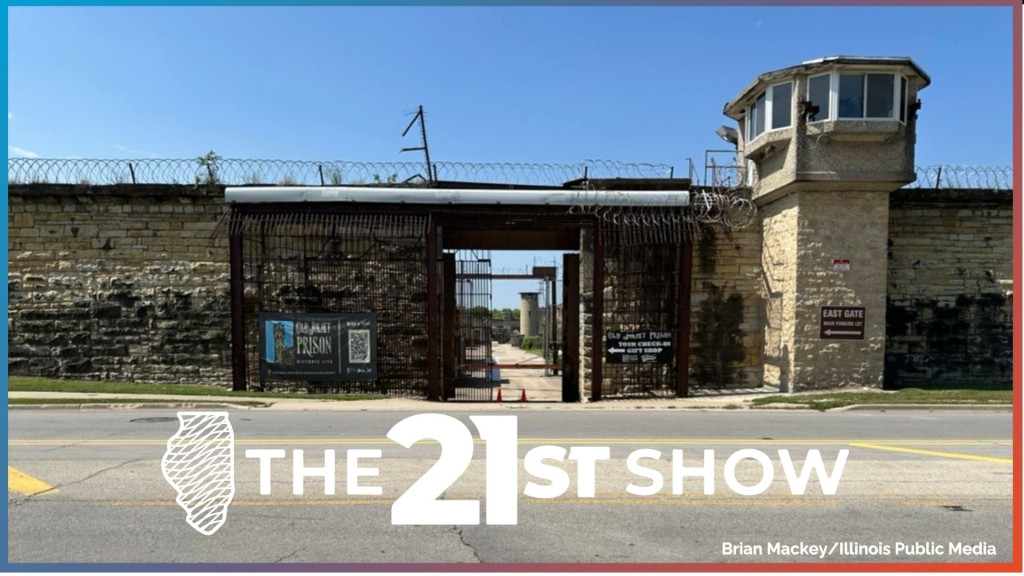
Old Joliet Prison in Joliet, Illinois Brian Mackey/Illinois Public Media
// This is a machine generated transcript. Please report any transcription errors to will-help@illinois.edu.

[00:00:00]
Brian Mackey: It's the 21st Show. I'm Brian Mackey, and we continue our Route 66 journey heading southwest to the city of Joliet. That is where for more than a century, Illinois sent many of its criminals for penitence and correction. Operating from 1858 through 2002, the prison there was known by several names over the years. Officially the Illinois State Penitentiary and later the Joliet Correctional Center. Locals, however, often called it the Collins Street Prison or the old Joliet Prison, and that is what it's known as today when it functions as a tourist attraction.

Before we begin, I want to clarify that this is not Stateville, which is a different state prison located in Joliet. Stateville was built in 1925 and it's famous for having a circular panopticon cellblock where a central guard tower could theoretically keep an eye on all the prisoners at once. The Joliet prison rather looks like a sandstone castle complete with crenelated turrets. It's appeared in many TV shows and movies over the years, including Prison Break on Fox and perhaps most famously, it's where Elwood picks up his brother Jake at the start of the Blues

[00:01:30]
Speaker 1: Brothers. The car's got

[00:01:31]
Speaker 2: a lot of pickup. It's got a cop motor, a 440 cubic inch plant. It's got cop tires, cop suspension, cop shocks. It was a model made before catalytic converters, so it'll run good on regular gas. What do you say? Is it the new Bluesmobile or what? Fix a cigarette

[00:01:51]
Speaker 1: lighter.

[00:01:52]
Brian Mackey: As I said, Joliet Correctional Center closed as a working prison in 2002. Several years later, the state largely abandoned the site, but now it's being reclaimed as a tourist destination. On a recent Friday morning, I met one of the leaders of that project.

[00:02:11]
Greg Pierbolt: Uh, my name's Greg Pierbolt, and I'm the chief executive officer of the Joliet Area Historical Museum, um, which also operates the old Joliet Prison historic district which we are standing in right now.

[00:02:22]
Speaker 1: Why don't we take a step outside and see what we can see. Oh, there's some construction, yeah, well. So where do we, I guess maybe just describe what what we're looking at right here, and there is construction happening and you know it's fine. It's real life.

[00:02:36]
Greg Pierbolt: Yeah, it's a good day, and it is sort of the, the evolution story of the site is we're slowly but surely reclaiming it, redefining it, um, both physically, philosophically, so we're standing outside the distinctive 1858 administration building. Um, it's a very famous castellated Gothic Joliet limestone structure. Um, actually, a one-time NPR reporter, Miles Bryan visited us and made a point that if you asked a child to draw what a prison should look like, you would probably get something like the Joliet prison looked like with its castellated look, its turrets, its stone, its high walls, its imposing demeanor. Um, you get all that, and if it looks and feels familiar, it should. The architect of the prison was W.W. Boyington, who also did the Chicago Water Tower and also utilized Joliet limestone to do that. Probably one of the meaningful differences is that the stone to construct this prison was quarried and constructed by the prisoners themselves throughout the 1860s.

[00:03:45]
Speaker 1: Wow, and you're right, it does have that feel of like if you were to imagine, you know, a kid's drawing of what a prison should look like, it's got the bars, the glass block, all those elements.

[00:03:56]
Greg Pierbolt: Yes, it is designed kind of to scare the heck outside, people, people standing outside of it and inside of it, of course, too. So, um, and this was an era, you know, in 1858 when the penitentiary was built, we were on the verge of civil war, of course, and um, we were still quite a young country. Illinois was quite a young state, so, uh, the state was still really imposing itself and certainly passing through a place like this and, and walking by it or, uh, taking a streetcar or horse-drawn carriage or whatever method of transportation, railroads, um, and railroad tracks ran very close by here, uh, it would certainly turn your head and it would probably make you think twice.

[00:04:37]
Speaker 1: So maybe we can, where if somebody was visiting, where would they start on a

[00:04:41]
Greg Pierbolt: tour right up Collins Street and we would go in the famous what we now call the Blues Brothers Gate or the Eastern Sallyport. Can we do that?

[00:04:49]
Speaker 1: We sure can. All right, let's go after you.

[00:04:52]
Greg Pierbolt: So we're passing by as we're walking. This is what is known as the East Cell House, and it is a um, a long high building that has bars that is constructed of native limestone, um, austere, you can also notice some of the prison's towers and turrets. Um, the guard towers were covered up in the late '40s and early '50s and kind of a big sitewide remodel um by then-Warden Joseph Reagan. Who is a fascinating name. He's one of the names you come across. He worked, um, in the prison system in Illinois in various capacities for 30, 40 years, um, between, uh, being warden and director of public safety and all kinds of different titles, but, um, he, he's a name that comes up, um, when you're researching prisons in Illinois.

[00:05:44]
Speaker 1: You know, one of the interesting things here is this was in use until, I mean, certainly in living memory, right? It had a long practical lifespan.

[00:05:51]
Greg Pierbolt: Yeah, one of the big wild moments when people visit is we tell them that this was in service until 2002. So, um, you know, quite a, quite a bit further and even I graduated high school in 2002, and I, you know, I'm not terribly young, but not terribly old either. So I think that is one that is very striking to people was that this facility was in service, um, for nearly 150 years.

[00:06:15]
Speaker 1: Through a lot of changes in the philosophy of what we do with people who have, you know, wronged society, so to speak, uh, and architecture and everything. Just the size of the average American. Yeah,

[00:06:30]
Greg Pierbolt: well, as we tell people, um, this facility was in service from before the Civil War until after 9/11. And when you frame it that way, when you think of how much American history, um, you know, forget even just about penal philosophy and criminology, but how much American history spans that period of time, um, and how those larger stories like wars, especially conflict, economic downturns do have an impact on what [was] happening here. Um, it, it's striking. And, uh, this was big. This was actually not even the first penitentiary in Illinois when it was built. It sure probably feels like it, but um, Illinois actually had a penitentiary in Alton, which is along the Mississippi River, also a Route 66 town. And the unique, um, maybe that's not quite the word, but a, a facet of that prison that it was a facet of this prison originally was that it was privately run. Um, the state leased it out and there was kind of minimal oversight from the state's perspective. Um, and actually it was the personal intercession of Dorothea Dix who petitioned the state legislature after inspecting the Alton [prison]. Um, to not only build, but oversee something that was much more humane and accountable. Um, the governor at the time, Joel [Matteson — review spelling], who was a famous political rival of Abraham Lincoln, um, knew a guy, knew a spot, of course. So later indicted after as governor. So for this or for something else, I believe it involved the I&M Canal and kind of falsifying canal script. There's a quote from Abraham Lincoln about [Matteson — review spelling] and usually you don't see Lincoln being very petty. But he did kind of when he lost the primary for, for Senate and [Matteson — review spelling] went on to lose, he made, Lincoln made a comment about, you know, his, his defeat gives me more satisfaction than my own victory. You know, it's not very Lincoln-like. Um, so, you know, again, going back to kind of all these, these stories intersecting, um. All of that to say, a 16-acre site, this would be the only penitentiary that Illinois would ever need because, you know, who would want to do something crazy like incarcerate a huge portion of their own population, right? No one would want to do that. Um, probably what was not fully anticipated was the Civil War was ensuing. PTSD ensuing problems having hundreds of thousands of young people fight, many die, um, and the penitentiary filled to capacity after about 20 years, 2,000 prisoners.

[00:08:59]
Speaker 1: Wow, 2,000 after 20 years,

[00:09:02]
Greg Pierbolt: correct.

[00:09:04]
Speaker 1: So we're standing here at the East Gate. This is the East Gate. Yes,

[00:09:07]
Greg Pierbolt: this is the East Gate or Sally Port to use the parlance, and this was made famous, of course, in Blues Brothers. So you're standing on a piece of Hollywood history right here where, um, even though the gate at the time in 1979 when the film [was shot] here was deactivated. Um, Universal paid to have it reopened and reworked, and we're standing right outside of Collins Street. You can hear the traffic. Um, so you can kind of picture looking across the street to where Dan Aykroyd in the Bluesmobile, um, is right across Collins Street and and [Joliet] Jake famously makes his exit from the Joliet

[00:09:42]
Speaker 1: prison. Cop car, cop tires, etc. etc.

[00:09:46]
Greg Pierbolt: It's a Mount Prospect police car, you know that? And you know what my job was before Joliet? It was Mount Prospect's Historical Society director. This movie has weirdly followed me around my entire career. Solid film though, still holds up. We still love the Blues Brothers here.

[00:10:01]
Speaker 1: So, I mean, I just want to take a moment to describe what what we're seeing. So there's the limestone, these thick brick walls. I mean, they look like they're probably 3 feet thick. Maybe that's just a trick of the way it's laid out here. Iron rusting metal bars like you can a grown man can, you know, couldn't get his fist through the gap in these things. There are spikes at the top. There's razor wire, so you have a blend of the old ways and the new ways. We walk in, there look to be some completely solid metal doors, a gate after that, a shed that maybe was purchased at a nice recent modern shed company, that's not period-appropriate, but just you do get the sense of doom and dread standing here. And,

[00:10:47]
Greg Pierbolt: um, we still actually manually open and close the gates, um, due to a lack of electricity. Um, there is some charm in it, of course, but, um, you can't, uh, I'll, as soon as these people walk by us, I'll crank the gate for you. We have kind of a big bicycle chain here that is.

[00:11:17]
Speaker 1: It does make you rethink your life choices, doesn't it? That's

[00:11:21]
Speaker 4: [what] a 5th grader needs to come here and scare straight.

[00:11:28]
Greg Pierbolt: Oh yeah, when it was live, they would do that.

[00:11:31]
Speaker 1: All right, thanks for taking the arm workout for the sake of journalism. 90 degrees. So would, would someone have been processed through here, or would this have been more of like a utility entrance or what?

[00:11:43]
Greg Pierbolt: This is more of a utility entrance and actually, um, probably post-1950 they stopped using it completely kind of due to its proximity to Collins Street, which is a state highway. Kind of an extension [of Route] 171 Archer Avenue, so, um. In the early days, you would arrive by train. You were either, as the newspapers at the time said, you were either sent down from Chicago or you were sent up from other parts of the state. And you would, in the early days, you would go right through the administration building into the well-appointed warden's quarters and you would have a short orientation, etc. Um, in later years, you were taken by bus typically through the West Sally Port, which is straight ahead of us, a little more of a secure entrance, um, dropped off at a building near the commissary and, um, orientated that way.

[00:12:37]
Speaker 1: So this was called the state penitentiary, right? And I was thinking about the roots of the word, you know, penitence, right? And maybe you can talk a little bit about, we can step in the shade here. What prison was for, what this prison was meant to do in society other than, you know, keep bad people away from the rest of us.

[00:12:55]
Greg Pierbolt: Well, I think you started with high hopes in the story I was telling earlier about Dorothea Dix. There was a desire to want to do better, um, to realize that this was not about punishment in and of itself. Um, a warden one time in the '60s said, we have to remember that the people in this prison are here as punishment, not for punishment. Um, but in the early days, there was not much thought to what about factors that maybe brought you here? What about poverty? What about education? Um, again, you were penitent. That was the root word. We didn't care whether you murdered your family or whether you stole a gold watch. Um, you were in here, you're out of here. Very little thought was given, um, to what was going on personally. Um, even the wardens themselves in the early days were typically, uh, it was a state patronage job and these guys were Civil War guys. They were majors, they were captains, um, they were officers out of the Civil War who ran this place like a military camp. Um, and in later years, you know, you did see a little more consideration to things like penology, criminology, um, worrying about root causes, uh, worrying about recidivism, um, but initially, yeah, this place was built with the notion that you, you messed up and you were here, um, to pay your debt back to society and we hoped it was enough to kind of scare you into not coming back

[00:14:22]
Speaker 1: here and that changes over time. I mean, at one point, the people, as you mentioned,

[00:14:28]
Brian Mackey: private labor contracts were used for the

[00:14:29]
Speaker 1: people here. They were making furniture and things like

[00:14:31]
Brian Mackey: that. Talk about that.

[00:14:32]
Greg Pierbolt: Yeah, so I think, uh, many surprising things to me again, I did not start my career thinking I was going to be a prison historian, um, but, uh, you think you kind of, you know, I think anyone, you, you, well, this is prison is where bad people go and, and, you know, even even if they don't get it right and they accidentally put an innocent person in there, you know, that never really, you know, and you kind of have these misnomers about what prison is and means and, um, when this prison started, uh, I always liken it to Shawshank Redemption, you know, I hope most of your listeners have, you know, been through this movie probably a few times. Um, and at the end, the warden, the big reveal is this guy is, you know, he's just bidding out his, his prisoners against private labor and this is extortion and this is, that was state practice. That was all legal, um. A lot of these buildings that you're seeing and when you come in here, you might have had the same effect a lot of people have where you're kind of surprised by the campus feel. Um, you maybe picture this big open yard fenced in, um, and what you have is almost two dozen different outbuildings that held various functions over the years. Um, but what a lot of them are from and the roots of them being built where private companies were making so much money off of prison labor, state-sanctioned prison labor, um, that they built their factories out here. So things like chairs, cigars, boots were all manufactured here. We have a sign with an ad from the Chicago Tribune in the 1870s where they are bidding out the labor um of prisoners in, in advertising it in the newspaper was not a secret. Um, so, and I think, you know, what, what is sort of the original sin here, um, that is now and with what we're doing and, and thinking about activities we do today versus even 160 years ago and, and maybe the profit motive was a problem then, uh, maybe that's something we should think about now.

[00:16:20]
Brian Mackey: Alright, let me reintroduce our conversation. We're talking with Greg Pierbolt, CEO of the Joliet Area Historical Museum, which manages the old Joliet Prison. It opened in 1858 and was built by some of its first inmates, and the last men to do time here were moved out in 2002. Today it's a tourist destination along a stretch of a road that was briefly Route 66 when another part of the highway was still under construction. We taped this segment on location in Joliet earlier this month. Because of that, we're not taking calls today, but we'd love to hear from you about this or Route 66 in general. Especially if you've taken a trip on the mother road or plan to. Call 217-300-2121. We'd love to hear about your Route 66 stories. 217-300-2121. [Repeat of phone number — review for accuracy.] More to come after a short break.

This is the 21st Show. It's the 21st Show. I'm Brian Mackey, and this is "The Entertainer" by Scott Joplin, originally composed in [1902 — review: audio says 2002, likely error], when the old Joliet [prison] had already been operating for 44 years. As we heard a few minutes ago, it opened before the Civil War and did not close until after 9/11. For a few years after that, the state of Illinois kept up basic maintenance at the site, but even that was eventually given up. As we return to my conversation with Greg Pierbolt, who runs the old Joliet Prison for the local historical museum, we talked about the toll from years of neglect.

[00:18:16]
Speaker 1: So I want to try and give a visual feel. Like I'm, I'm standing here and the thing that comes to mind is if anyone's played a, a video game with a post-apocalyptic landscape, we're standing in front of a building. That you can still see the, the, uh, plaque from 1940 when Henry Horner was the governor, but this wall has very little left of its glass block windows. There appears to be no roof here. I can see charred timbers on the inside, twisted metal graffiti is in there, which suggests some outside penetration here at one point. How does this go from flagship of the Illinois, you know, government's attempt to, you know, make people penitent for what they've done to post-apocalyptic landscape in spots.

[00:19:00]
Greg Pierbolt: Yeah, that's a great observation and question and definitely a part of this facility story was the period of abandonment. It closed in 2002. Um, of course there were some activities that happened here, notably Prison Break filmed here, um, immediately after the period of closure, um, right after the Great Recession is when staff was pulled out of here and the prison's abandonment became part of the story. So, uh, I started here in June of 2013. In July of 2013, uh, this building, which was at that time or when the prison closed an auto shop, burnt up and the story goes that the fire department did not know who to call to get the keys to this place and they fought the fire over the wall of the prison and unfortunately this would continue. This kind of started my interaction with the site and kind of visiting here and seeing it in 2013 and, and kind of having the reaction that everyone has when you first, you know, I visited Joliet enough but kind of not intentionally, you know, um. Visiting places as a museum director, but kind of that first day I came in and walked around the parking lot, you're, you're blown away by the site. Um, if nothing else, the architecture, the age, um, as I recently told, uh, another reporter, you know, any building that predates the Civil War in any town in Illinois is gonna be kind of historically important, right? Just because of its age, um, especially in this part of the country. So, um, but the abandonment continued and just for a variety of reasons, you know, you had economic issues in 2008. Um, I think this place still can be someday kind of a political hot potato. Um, who wants it, you know, um, is it a liability if you get it? What can you do? How can you do it, um, safely and in 2017, we actually had two acts of arson. Um, that really predicated, uh, the city of Joliet going to the governor's office and saying, hey, you know, we need keys to get in there, and at that point our organization was just saying, you know, we, we wanna try a tour program. We just understand that most people want to come in here and look around, um, and there's just a curiosity factor here that is eventually gonna kind of take care of itself and help with revenue, um, and that was true at other penitentiaries we were looking at. I mentioned the Ohio State Reformatory, uh, Eastern State was another model in, in, uh, Philadelphia. That we looked at closely and and that was really what they were doing there is just kind of opening up the gates, letting people tour and and slowly reclaiming the site, um, but yeah, we, the abandonment, the arson, the damage and um all that being compounded by what Mother Nature does kind of a life after people, um, a case study here. Uh, we had a lot to contend with and reclaim. So you still do see a lot of that abandonment here, and in some ways we want to preserve that abandonment. Um, it is part of the story.

[00:21:48]
Speaker 1: That's fascinating because there is this whole genre of people call like urban exploration, you know, people go to abandoned shopping malls. These are huge views on YouTube. So you're sort of almost like making it a legitimate and at least marginally safe to do that.

[00:22:04]
Greg Pierbolt: Well, and that was part of when we started originally, the, the [Urbex — review spelling] was, if nothing else, it was a safety argument but also an economic one. You know, charge them to do it and, uh, you know, like other practices in the history of it, why not regulate it and make it safe if people are doing it anyway. So, um, there certainly was that, but yeah, the, uh, but at the same time, you know, you don't want to be in [Urbex's — review spelling] place. I, I kind of, you know, remarked at one point. This was a hot potato locally, certainly when we were trying to get it off the ground and there were people locally tear it down, we don't want anything to do with it, um, and, and not for invalid reasons. Um, but I remember at one point saying, you know, what, what's worse than being in the prison city is being in the abandoned prison city. You don't want to market your city and have your economic development, you know, case for support being look at all these abandoned properties you can break into and and visit. So, um, so thankfully we were able to get that done, but yeah, we do, uh, kind of do a nod to the Urbex community and, um, safely, of course retain some of the abandonedness and that's something we also borrowed from Eastern State as well. Um, the term they adopt is a stabilized ruin or suspended decay, um, so they've also kind of intentionally um preserved some of that abandoned [aesthetic].

[00:23:22]
Speaker 1: So where, where is there, uh, you know, to the extent you can generalize, what is a typical profile of your visitors or profiles like, right? Who, who is drawn to

[00:23:30]
Brian Mackey: this sort of thing?

[00:23:31]
Greg Pierbolt: Sure, um, well, I think it, it starts a lot from pop culture history, of course, and, um, the Blues Brothers is a big one and going back to the notion of things intersecting right where we intersect, um, with. A demographic that joins the Blues Brothers and where it's still alive and well, um, are international visitors and we are adjacent to the Route 66 corridor. This actually was old Route 66, um, for a period of a couple of years while they were paving the main Route 66, um, so we see a lot of international traffic from Blues Brothers, um, but I think. You still service a high amount of regional people who are doing this from Chicago and just, uh, you know, every day you'll probably meet a handful of people who are doing Route 66 and groups of international tourists, um, but you also meet, I, I grew up around here. I used to drive past this place. I didn't know they were doing tours and I'm, I'm curious and. And that's kind of the word, you know, curious. You see these walls, what went on behind them. They were not only meant to keep prisoners out, they were meant to keep people's eyes from looking in as well. So there's definitely the curiosity factor.

[00:24:44]
Speaker 1: Can we see where someone would have lived, lived their daily lives. I'll just up there. Thank you. And we're like stumbling over sidewalks that are buckling here. I guess that's the, what's the term halt halted decay, preserved decay

[00:24:57]
Greg Pierbolt: suspended decay or stabilized ruin

[00:25:01]
Speaker 1: stabilized ruin, yes. Oh man. Yeah, this is the uh what you imagine a prison would be

[00:25:09]
Greg Pierbolt: if you're a kid staring down a, uh, a long gallery of cells. I believe there are 40 cells on each row. Um, so there's 80. We got a kind of a, a walkway catwalk here. Um, there's an identical cell block above this one, and there are two more on the west wing as well, um, so I believe 640 total cells and again addition, uh, areas where people were living in cubicles, dormitory type settings, um, but yeah, this is something that, you know, meets the expectations and I think this reinforces, you know, Joliet was always considered. Kind of a dark dungeon-esque place and this is the remodeled version um with with more lighting and, uh, high ceilings,

[00:25:53]
Speaker 1: yeah of medieval prisons so

[00:25:55]
Greg Pierbolt: yeah this is what you're getting and and this is the more progressive thing so, um, yeah, it is fascinating because again this was, you know, always driven by a desire to wanna do a little better than we've done before so, um, but you know, being removed from that and seeing it now you're like wow, this was the better, more humane option, huh, um

[00:26:13]
Speaker 1: yikes. Yeah, and those sinks look like the ones that you see today. Yeah,

[00:26:17]
Greg Pierbolt: some of the stuff here was from what we were told was repurposed to other prisons. Some of the bunks and stuff were taken out, but, uh, we recovered a massive amount of artifacts and, um, at one point I was, I literally dumpster dove. I dove into a dumpster that was a lot deeper than I thought, um, and I remember what I rescued. They were curtains from the chapel, um, because we did have. Uh, one day here in early 2018 in April of 2018, um, we were able to talk to, uh, some of the building trades, and, um, certainly in Joliet building trades are still a really important part of life here. So, um, we went right to them and like, hey, you know, we have this you wanna do some tours, but, um, you know, if you had been here nine years ago, uh, we would be up to our waists in, in grass and overgrowth. There were fences here, there were trees growing everywhere, um. So the effort to reclaim this, if you think it is a little rough today, you should have seen it, you know, and I, I have seen it over the years when it was truly abandoned, um, and our friends from the building trades came in. One of them said it was supposed to be only tradesmen and they kind of like, you know, within their own networks like, hey, we're grabbing a few volunteers. One of them actually put it on their social media and it went crazy and we had, I think when we shut it off there was like 250 people who were registered to volunteer. Um, so we just kind of leaned into that and we're like, all right, and we kind of went in every building and cleared out and we did our best to kind of preserve what we could, but you know I mean you had stuff that was straight up full of mold and you know stuff like that so, um, but we have everything that we kept, uh, is warehoused here and has since been, um, you know, fully archived in the [sessions — review: unclear], um. And you know we as we're we're doing this the hope is to some of the buildings we wanna fully restore and remodel um the chapel I think is one of them we wanna do things like gallery space and and exhibits, um, but some of it, you know, is gonna be just kinda made sure the buildings are solid the roofs are there that we're stabilized and secure, um, and just kinda, you know. Will retain kind of what you're seeing here which is just this is an abandoned site and um you know it does not make sense to maybe remodel it uh to what it looked like and when it functioned as an active penitentiary.

[00:28:36]
Speaker 1: Famous people who might have been here, I feel like that's something I, I haven't asked you about. Yeah,

[00:28:40]
Greg Pierbolt: well, you know, you mentioned the proximity of Chicago and and essentially this acted, you know, you hate to say it this way, but maybe Chicago's prison, um. Uh, because so many, you know, in the northern part of the state were coming out of Chicago, like you said, just because that's where the people were. So, um, you know, you had a Pug O'Leary who was one of Mrs. O'Leary's sons, so kind of going back to the cow being kicked, I believe, um, he, like a lot of people was in for burglary and larceny and, and even in the 1890s, um, upwards of 80% of people in here were in here for some form of larceny. So overwhelmingly, um, theft, theft, yeah, not even you pointed a gun and robbed at someone, you took something, um. So, uh, you had maybe lesser known characters now, but at the time, you know, Adolf Lut[g]ardt, the sausage king killer of Chicago that captivated the city in the 1890s, um, all of the Haymarket guys were incarcerated in here. Um, you had later, uh, of course, Leopold and Loeb, um, is, is a big one. The thrill killing of Bobby Franks in the 1920s, um, and right as Stateville was being constructed, they were housed here. Um, Richard Speck, uh, was here. He was moved between here and Stateville and he was very notably a, a problem person inside and outside of the penitentiary, and here they constantly moved him, um, for that reason. Uh, John Wayne Gacy was here very briefly. Um, prison administration officials in the '80s when he was eventually sentenced, they did a lot of smoke and mirrors because they were hounded by media who are following who want to know his every move. So, um, what we, we think happened, again, kind of going to this was the official narrative and it was not really what happened. Um, they told the media he was on his way to [Menard — review spelling] and they brought him here. We do have a card that we located that he was, um, he was, you know, part of intake and supposedly just did a 24-hour checkup at the hospital, so he's not here for a long time. Um, and then he did the sentence in [Menard — review spelling] and at Stateville was where the execution was carried out.

[00:30:45]
Speaker 1: That's a name. A lot of names from the past there.

[00:30:47]
Greg Pierbolt: Even the non-prisoners are interesting. Uh, I think, well, of course, you know, our probably our most famous one is fictional with [Joliet] Jake, but um I alluded to Saul Alinsky, who was a criminologist here, um and he did a really compelling interview about his time here in the '30s um when Joe Reagan was here. Um, also, Ida B. Wells worked cases out of here. She did two very prominent death penalty cases. Um, one involved the death of a warden's wife, which is a fascinating story. It was actually Edmund Allen who brought baseball, um, and a bunch of other reforms, um, into the prison. There was almost a kind of Shakespearean, uh, tragic end to that when his wife was found dead here. Um, the individual who was, uh, prosecuted for, we believe he was innocent, and, um. But Ida B. Wells got involved in that case very personally, and public opinion was able to um commute his sentence from a death sentence to life in prison, um, which was a very big deal at that time in 1915.

[00:31:42]
Speaker 1: Well, you've given me a lot of Wikipedia. All right,

[00:31:47]
Greg Pierbolt: well, come back anytime. We're always here. Yeah,

[00:31:50]
Speaker 1: thanks so much. This is great. Yeah, thanks. I appreciate it.

[00:32:10]
Brian Mackey: Greg Pierbolt is the chief executive officer of the Joliet Area Historical Museum,

[00:32:16]
Speaker 1: which

[00:32:16]
Brian Mackey: manages

[00:32:16]
Speaker 1: the old Joliet Prison.

[00:32:19]
Brian Mackey: This is day one of our Route 66 journey. Later this week we'll be visiting roadside attractions, museums, and learning about Brooklyn, Illinois with a scholar who argues it was America's first Black-run town. That's all coming up later this week here on the 21st Show, which is a production of Illinois Public Media. I'm Brian Mackey. Thanks for listening, and I'll see you on the road.
Route 66, America’s most famous highway is turning 100 this year, and Illinois is bound up in more than 300 miles of its stories. We’re highlighting some notable and historic places on the Illinois-portion of the Mother Road.
And we continue our Route 66 journey heading southwest to the city of Joliet. That is where, for more than a century, Illinois sent many of its criminals, for penitence and correction. Operating from 1858 through 2002, the prison there was known by several names over the years: officially the Illinois State Penitentiary and later the Joliet Correctional Center. Locals, however, often called it the Collins Street Prison — or, the Old Joliet Prison.
Today, it’s a tourist destination along a stretch of road that was briefly Route 66 — when another part of the highway was still under construction. A local history expert takes the 21st Show through the prison highlighting its history and significance to Joliet.
GUEST
Gregory Peerbolte
Chief Executive Officer, Joliet Area Historical Museum