








WILL-AM
WILL AM 580 Live Stream

The 21st Show
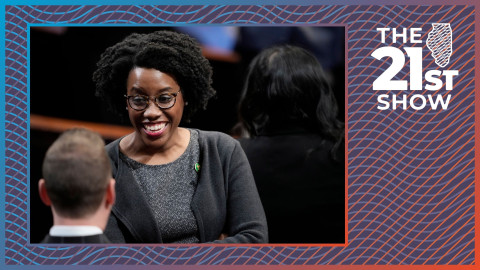
Congresswoman Lauren Underwood
U.S. Rep. Lauren Underwood has represented Illinois' 14th Congressional District since 2019. Today the 14th encompasses a large triangle in north-central Illinois, bounded by Joliet, DeKalb, and LaSalle-Peru.
The Democrat joined us live ahead of next week’s midterm elections, in which she’s facing a challenge from Republican Jim Marter (with whom we spoke on Sept. 21, 2026).
We talked with Underwood about a wide range of issues, including the war in Iran, tariffs, health care, government regulation of AI, abortion law, ICE accountability, generation gaps in Congress, and why so many people are disconnected from politics.
Weather Realness
What happens when flooding monitors shut down?
Two Stream gages have shut down in St. Joseph. We learn how this will affect how scientists and communities monitor flooding data.

The 21st Show
When calling 9-1-1 brings more harm than help
Americans have spent years arguing about how police, paramedics, and other emergency personnel respond when dispatched to help people in crisis. But UChicago researcher Rebecca Neusteter says that conversation overlooks an important part of our public safety system: the 9-1-1 call center.
She says too often, emergency call centers default to sending police, when a different type of response would be more appropriate. Neusteter's new book is called, “911, What’s Your Emergency? The Promise and Peril of Crisis Response.”
Weather Realness
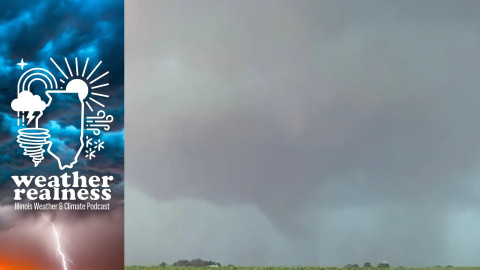
How do we know how strong tornadoes are?
After a tornado’s destruction, scientists determine how strong a tornado was. How do scientists measure the strength of a tornado and why is it important?
Weather Realness
Why did we have a slow Atlantic hurricane season in September?
September is typically the most active time for hurricanes in the Atlantic. So why did it take so long for a hurricane to develop in the Atlantic?
The 21st Show
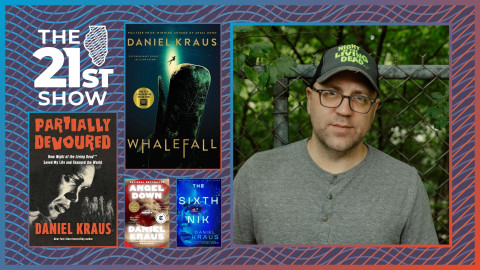
Illinois author Daniel Kraus, from ‘Night of the Living Dead’ to a Pulitzer Prize
Illinois-based writer Daniel Kraus has been having a remarkable year. He won a Pulitzer Prize for his novel Angel Down. Another, Whalefall, was made into a movie that hit theaters last week. And he's published his first book of nonfiction, about how the classic horror film Night of the Living Dead (1968) saved his life.
Kraus talks about researching how someone could survive being swallowed by a sperm whale, why he's watched Night of the Living Dead more than 300 times, and how winning a Pulitzer Prize has forced him into writing his next book on airplanes.
Kraus will be at the Virginia Theatre in Champaign on Tuesday, Oct. 27, for a screening of Night of the Living Dead and an onstage conversation about the film and his book.

The 21st Show
High costs put strain on Illinois farmers during harvest
Harvest season is well underway across Illinois. According to the USDA, 63% of corn and 66% of soybeans had been harvested as of Sunday, Oct. 18, 2026.
It’s been an expensive year, especially with the high cost of diesel and other inputs. We’ll talk about that and the outlook for next year.
The 21st Show
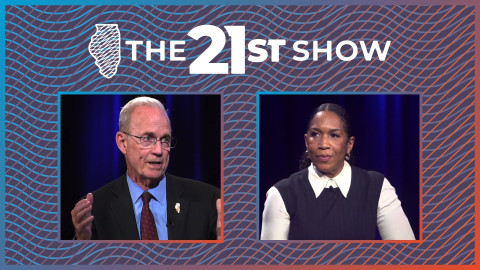
Recapping the only debate in the race to be Illinois’ next U.S. senator
Tuesday night was the only scheduled debate in the campaign to be the next U.S. Senator from Illinois. Republican Don Tracy faced off against Democratic Lieutenant Governor Juliana Stratton. We’ll recap what happened with Illinois public radio reporter Mawa Iqbal.

These programs are partially sponsored by a grant from the Illinois Arts Council Agency.